


Plot Summary
The Auction Wedding
Ilsevel wrote to Artoris, a mage she once loved, hoping he would help her escape the marriage her father arranged with the Shadow King. Instead, Artoris’s arrival at the Temple of Lamruil helped bring the fae attack that killed priests and ended with Ilsevel’s sister, Aurae, taken and killed after her War Gift emerged. Ilsevel believes her own choices caused the tragedy.
Taar, a Licornyn warlord, seized her during the assault, then bought her at auction to keep her from the monstrous Lurodos. He bound them in a Licornyn marriage, expecting to release her later. After Ilsevel and Taar survived his virulium poisoning, she wakes beside him, still wearing his cloak and still bound by the mysterious cord on her arm.
Ilsevel begins by interpreting every act of agency as evidence against herself: she tried to escape a political marriage, and the resulting catastrophe becomes, in her mind, a debt she must repay with her own body. Taar’s rescue complicates this accounting. He has taken control of her circumstances, yet his protection is not identical to the ownership she fears. The marriage cord makes that ambiguity physical. It can shelter her and expose him to danger at once, establishing the novel’s central question: whether a bond imposed under duress can ever become a chosen relationship.
Dead Men at the Gate
Taar carries Ilsevel through an unstable portal into Wanfriel, the Wood Between Worlds, and toward the hidden crossing into Cruor. At the bridge, three crimson-cloaked figures confront them. One is Ilanthor, a Licornyn warrior Taar knew to be dead. The attackers regenerate from wounds until decapitation destroys their bodies.
When Ilanthor reaches for Ilsevel, she sings without knowing how, and a spark of his former self returns long enough for him to remember his unicorn, Ulathyra, and call to Taar before he is killed. Taar recognizes the other corpses as Naerel and Morinar, then finds Shanaera’s ring among their clues. He understands that his former betrothed is involved and that Artoris’s death magic may be animating the dead.
The encounter turns singing from Ilsevel’s private gift into an intervention with moral consequences. She cannot undo Ilanthor’s death, but her voice briefly gives him back memory and recognition, allowing him to die as a person rather than merely as a weapon. Taar, meanwhile, has to face evidence that his past is not safely buried. The ring links the new threat to an intimacy he has tried to seal away. These reversals establish that bodies, loyalties, and even death itself are being manipulated, while song remains the one force capable of reaching what violence cannot.
The Hand of Darkness
After crossing into Cruor, Taar and Ilsevel see a herd of wild unicorns fleeing a spreading darkness. Elydark surrounds them with protective song as the vardimnar, the Hand of Darkness, swallows the sky. To keep Ilsevel anchored, Taar recounts how Morthiel and the Miphates came to his childhood home, Evisar, and how darkness erupted from the Citadel of the Stars.
His mother sent young Taar and his sister, Tassa, away on the queen’s unicorn, Mahra. The siblings survived, but their kingdom was lost. Taar believes the mages still draw power from the Rift, poisoning Cruor. When the darkness passes, he and Ilsevel reach the Luin Stone and see the empty ruins of Uvareth, proof of how thoroughly the disaster erased a civilization.
Taar’s history changes Cruor from an exotic destination into a homeland whose wounds are still being inflicted. His childhood escape survives in his adult habits: he protects others through discipline, keeps grief private, and treats vengeance as a duty that gives loss a direction. Yet the vardimnar exposes the limits of control. Even the king and his powerful unicorn can only endure it inside a fragile sphere of song. Ilsevel’s experience of the empty city challenges the stories she inherited about fae savagery, beginning a moral reorientation grounded not in abstract sympathy but in the visible consequences of her own people’s history.
The Letter She Sent
At the Luin Stone, Taar finds his people have missed their rendezvous, while the abandoned city of Uvareth lies below. When he tries to ease Ilsevel’s guilt over Aurae, she reveals that Artoris came to the temple because she had asked him to take her away.
Taar reacts with jealousy and anger, then forces himself to recognize that she did not cause the massacre. Their next encounter with the vardimnar leaves Ilsevel shaken and briefly draws them close enough for an almost-kiss.
She pulls away before it can happen, unwilling to trust comfort that might be only the marriage bond’s influence. The next day, Taar pauses at a stream to purify her drinking water with powdered ilsevel petals, but their growing intimacy is interrupted when Ilsevel asks about Shanaera.
The confession puts desire and responsibility in direct conflict. Ilsevel offers her guilt as if it were a verdict, hoping punishment will make her suffering morally proportionate to Aurae’s death. Taar resists that logic, but his jealousy reveals that his own restraint is not emotionally neutral. Both characters suspect the velra of manufacturing their attraction, which lets them dismiss feelings they are not ready to claim. The near-kiss matters less as a romantic milestone than as a test of trust: Ilsevel can accept his protection in danger, yet still fears that tenderness will become another form of control.
Ashika Beneath the Sword
As Taar and Ilsevel cross the Agandaur Fields, Elydark senses Shanaera’s presence. Taar finds his friend Ashika dead, marked by a sword and the remains of a crimson cloak. Nearby, her unicorn, Nyathri, burns with the anguish of a broken bond. Ilsevel approaches and sings to her, recognizing that the creature’s suffering echoes her own guilt.
For a moment their songs begin to meet, but Nyathri lunges, and Taar blocks the attack with his sword. The unicorn escapes into Cruor. Taar then prepares Ashika’s body for burial and sings the Licornyn farewell. Ilsevel joins his mourning song, giving him a first glimpse of her ability to enter Licornyn grief rather than merely observe it.
Ashika’s death makes the cost of Taar’s absence immediate, while Nyathri gives grief a living, dangerous form. Ilsevel recognizes the emotional structure of the unicorn’s song because she is trapped in a similar self-accusation, but recognition alone cannot heal either of them. Taar’s burial rite offers a contrasting response: he honors loss without pretending to reverse it. When Ilsevel joins the rite, her voice does not erase his sorrow, but it allows her to share its ritual shape. The scene shifts their connection beyond attraction toward a fragile capacity for mutual witness.
The Shepherd’s Storm
Days of riding leave Ilsevel exhausted, and a violent storm forces Taar to choose between a deserted manor and a cramped shepherd’s shelter. Ilsevel refuses to spend the night alone, so Taar joins her inside. He shares sweet leather, a potent dried fruit, and their teasing briefly loosens the tension between them. In the dark, Ilsevel reaches for him, and they become intimate.
By morning, Taar is ashamed of yielding and tells her it cannot happen again. He insists that his people would never accept her as their queen and that he can offer protection, not a future. Ilsevel hears rejection where she had hoped for commitment. They ride on toward Elanlein, both more attached and more determined to hide it.
The shelter compresses the conflict into a single room: physical closeness answers a need for warmth, while the morning restores the political and emotional distance Taar believes he must maintain. Ilsevel’s desire is not merely erotic. She is searching for evidence that someone might choose her without converting her usefulness into a contract. Taar’s retreat comes from responsibility as much as fear, but its effect is still abandonment. Their intimacy therefore deepens rather than resolves the problem, making the bond more consequential precisely because neither can yet trust it.
The Priest’s Knife
At Elanlein, the last surviving Holy House, Taar brings Ilsevel before Onor Gantarith and asks him to break their velra. The priest refuses: Licornyn law requires them to wait until the new moon, and their consummated vows bind them until then. He offers one earlier alternative. If the elders declare Ilsevel a traitor, Gantarith can sever the bond by cutting her throat on the altar.
Taar rejects that price and renews his vow to protect her. He also learns that remaining physically intimate could strengthen the bond, so he promises restraint. Rather than hide Ilsevel in the wild, he decides to ask the elders to let her stay in the Hidden City, where his people’s hostility will test the promise.
The priest’s ruling turns a private romantic dilemma into an institutional threat. The marriage is not simply a feeling the couple can leave behind; it is a legally and spiritually recognized bond whose alternatives are waiting or bloodshed. Taar’s renewed vow is therefore an ethical decision made under pressure, not a declaration of affection. He accepts responsibility for Ilsevel even when doing so complicates his kingship. The proposed sacrifice also exposes the violence hidden inside communal ideas of purity: the community can preserve its law by treating a human life as a disposable instrument.
A Bride Before Elders
Taar’s sister Tassa and the hearttorn warrior Halamar meet the couple on the way to the Hidden City. Tassa agrees to help Ilsevel prepare, though she distrusts her. Before the eight elders, Ilsevel sings the greeting Taar taught her, turning formal submission into a resonant performance.
When the elders consider ending the bond by killing her, Taar takes the ceremonial knife and offers his own life instead. They grant Ilsevel a stay until the new moon.
The reprieve lasts only moments before Kildorath, Taar’s trusted companion, lunges at her with a knife. Taar restrains him, and the elders enforce their decision. Kildorath reports that Shanaera ambushed the returning riders with undead Licornyn, leaving only seven survivors from the expedition.
The council scene forces Taar to choose between abstract authority and the person his authority was meant to protect. By offering his own blood, he makes the cost of treating Ilsevel as an expendable outsider impossible to ignore. Her sung greeting also unsettles the hierarchy: she performs respect in a way that changes the room rather than simply appeasing it. Yet the attack by Kildorath shows that legal permission cannot immediately transform collective hatred. The report of the ambush expands the private marriage crisis into a military emergency, binding Ilsevel’s precarious safety to the survival of Taar’s people.
Nyathri’s Failed Bond
The survivors bring Nyathri to Elanlein, and Licornyn volunteers attempt to form a new bond with her. The first candidate is badly mauled. Tassa then approaches, but Nyathri’s fire erupts before a bond can form, nearly burning her alive. Taar concludes that the unicorn must be killed to end her suffering. Ilsevel cannot accept that decision.
She slips away, reaches the altar, and cuts through the chaeora ropes binding Nyathri. Kildorath attacks her, but Ilsevel’s voice releases a burst of power that stuns two guards and their unicorns. Halamar knocks her unconscious before she can escape. When she wakes, the people of Elanlein have imprisoned her in a well, and the elders have decided she must die for breaking their law.
Ilsevel’s intervention repeats her defining risk: she acts before she can guarantee that her compassion will succeed. Her mistake is not indifference to Licornyn law, but an inability to accept that the only merciful outcome must be death. The failed bond attempts sharpen the stakes: Nyathri is not an abstract symbol of hope but a volatile being who can injure those trying to help. Ilsevel’s power also grows beyond what she understands, making her increasingly dangerous to the very people she wants to save. Her imprisonment marks the cost of acting on moral intuition without the trust or knowledge to make it legible to others.
A Well and a Warning
In the well, Ilsevel hears a voice resembling Aurae’s, urging her to keep fighting and suggesting her gift and name have purpose. Above, Taar incapacitates the guards and pulls her out. He takes her knife, lifts her onto Elydark, and escapes the Hidden City, abandoning his standing among the elders.
Licornyn riders pursue them to the Morrona River. As the vardimnar darkens the far bank, Taar drives Elydark into the water rather than surrender Ilsevel. They cross into the blighted wilderness under the unicorn’s protective song.
Taar says he intends to keep her alive until their bond can be safely broken and then return her home. Ilsevel realizes that his choice has made him an exile, and that she is no longer the only one risking everything.
The voice in the well does not absolve Ilsevel or explain her powers; it gives her a reason to continue acting despite the conviction that she only causes harm. Taar’s rescue answers that appeal with a parallel choice. He abandons not only institutional safety but the political legitimacy he spent years building. The river crossing makes the decision irreversible in practical terms: the pursuers will not enter Cruor while the darkness threatens. Their shared danger transforms the marriage from a binding imposed on Ilsevel into a mutual exposure, though the imbalance of power between them remains unresolved.
Shanaera’s Blood Harvest
Following a broken song across Cruor, Ilsevel and Taar find dead unicorns trapped in chaeora nets and drained of their blood. Shanaera appears, riding an animated unicorn, and explains that the Miphates use unicorn blood to power protected routes through the corrupted land. She is not merely helping them: she reveals that they are using her to harvest the creatures.
Shanaera also identifies Ilsevel as King Larongar’s daughter and a prize sought by Morthiel for her gods-gift. Taar is stunned by the revelation. Ilsevel cuts Nyathri free, triggering a blast of soulfire that burns her body. Shanaera’s forces overwhelm Taar and Elydark, capture them, and leave Ilsevel gravely injured in the valley.
Shanaera’s explanation fuses the book’s political and supernatural conflicts: the Miphates sustain their occupation by exploiting the very beings Licorna reveres. Her revelation about Ilsevel’s parentage reframes the heroine from a displaced pilgrim into an asset in a larger alliance, confirming her fear that powerful people value her for what they can extract. Yet Ilsevel’s choice to free Nyathri is not a strategic move. It is an act of refusal against a system that has repeatedly converted bodies into leverage. The cost is nearly fatal, making compassion neither easy nor automatically redemptive.
Diira’s New Song
As the vardimnar reaches her, Ilsevel finds herself in a spirit realm where Nyathri’s broken song meets her own guilt. The unicorn reveals that neither can be healed alone. They join their songs, form a new bond, and Nyathri takes the name Diira. Diira’s healing fire restores Ilsevel’s body, and she follows the velra to Rothiliar House, where Shanaera has bound Taar and Elydark.
Ilsevel’s song briefly restores the buried spirits of the undead, who help her free Elydark and turn against Shanaera’s guards. Diira and Elydark fight beside them. Shanaera escapes on an undead unicorn, and Taar starts after her, but the bond’s pull forces him to turn back. He finds Ilsevel alive and returns to her.
The healing arrives through reciprocity, not rescue from above. Ilsevel cannot impose harmony on Nyathri; the unicorn must answer her, and both must risk a bond that neither can fully control. The new song incorporates guilt rather than erasing it, offering a model of repair that allows pain to remain part of a life without ruling it. In the physical battle, Ilsevel’s voice also restores agency to the undead, though only briefly. The contrast matters: magic can recover personhood, but it cannot undo the structures that keep exploiting the dead. Shanaera’s escape leaves that larger conflict unfinished.
The Vows Chosen Freely
Taar returns from his failed pursuit of Shanaera to find Ilsevel waiting at Rothiliar House beside Diira. He embraces her and admits that his desire to protect her began before the velra could explain it away. He tells her he loves her and repeats the Licornyn wedding vows, this time with deliberate conviction.
Ilsevel remains wary, afraid that his people will reject her and that her own past makes her unworthy of his trust. Still, she tells him she loves him and sings the vows back in her own imperfect Licornyn. Their marriage becomes a choice rather than only a binding imposed during the attack on Lamruil. The immediate danger has passed, but Taar’s people, the Miphates, and Ilsevel’s newly revealed identity remain threats.
The romantic resolution does not cancel the coercive beginnings of the marriage; it changes what the vows mean through repeated, informed consent. Taar’s confession names the desire he previously attributed to magic, while Ilsevel’s answer remains tentative enough to preserve her agency. Her singing of the vows is especially important: she does not simply accept his language but makes it her own. The scene offers commitment as an ongoing practice of truth and choice, not proof that love dissolves political danger or guilt. Their happiness is real, but the unresolved threats ensure it cannot be mistaken for a secure ending.
Epilogue
In Gavaria, King Larongar examines the treaty binding his realm to the Shadow King and learns that it remains magically intact, despite the report that Ilsevel died at the temple. Artoris warns that the Miphates’ defenses are weakening and the fae may soon breach Evisar.
With the alliance imperiled, Larongar cannot simply replace Ilsevel with another daughter. Artoris hints that another way may exist. The book closes with the political bargain still active and a new scheme beginning to take shape.
The epilogue shifts the scale from the lovers’ immediate survival to the machinery of power that has shaped Ilsevel’s life. Larongar reads the marriage contract as a strategic instrument, while Artoris approaches the same crisis as an opportunity to manipulate its terms. Ilsevel’s absence does not dissolve the arrangement, suggesting that institutions preserve their claims even when the person they claim is presumed dead. The intact treaty also turns the romantic resolution into a precarious beginning: her personal choice may now collide with a political contract designed without her consent.
Analysis
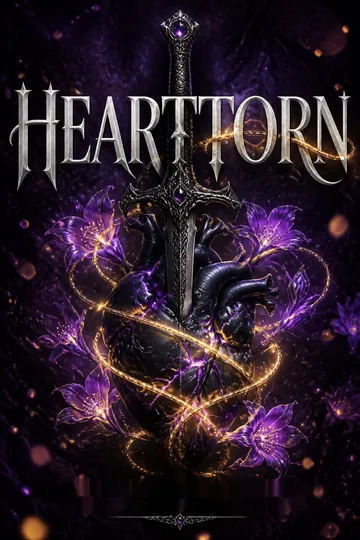
HeartTorn makes coercion concrete through institutions, magic, and family politics. Ilsevel’s arranged marriage, Taar’s rescue marriage, the Licornyn elders’ laws, and the Miphates’ experiments all treat a person or body as something to be assigned a purpose. The novel does not pretend that romantic devotion instantly escapes this structure. Taar and Ilsevel begin with unequal power, incomplete knowledge, and a supernatural tether that complicates consent. Their eventual commitment matters because they speak and answer their vows deliberately, after each has seen how the other behaves under pressure.
Ilsevel’s guilt over Aurae’s death is the emotional engine of her choices. She repeatedly confuses accountability with self-punishment, volunteering for danger because she believes suffering can settle an impossible debt. Her bond with Nyathri offers a different model. Neither can repair the other through force or pure sympathy; healing begins when each accepts the other’s imperfect song and answers it. Trauma remains present, but it becomes part of a larger life rather than the whole definition of one.
The political story complicates this intimate one. Taar’s people have been displaced by human and Miphates power, while the human kingdom treats Ilsevel’s marriage as leverage in a military contract. Neither side’s inherited narrative is sufficient. Ilsevel’s journey through Cruor gives her evidence of what her people’s history has erased, while Taar must decide whether leadership means preserving communal approval or protecting someone his people reject. The novel’s central claim is not that love resolves these conflicts. It is that truthful choice becomes possible only when people stop mistaking tradition, guilt, or magical compulsion for moral certainty. The epilogue keeps that claim under pressure: the contract survives, and political actors continue to plan around Ilsevel even after she has chosen a life of her own.
Review Summary
People Also Read

Characters
Ilsevel
Defiant gods-gifted singerIlsevel is a young human woman whose musical gift lets her perceive and reproduce songs beyond ordinary hearing. Raised in a royal household and expected to accept a political marriage, she has learned to use pride and sharp humor as shields against other people’s decisions. Her first instinct is often to act, then judge herself harshly for the consequences, especially where her beloved sister Aurae is concerned. She longs for freedom but has trouble imagining a life not organized around guilt, usefulness, or sacrifice. Her encounters with Taar and the Licornyn challenge her inherited account of who deserves compassion, while her unusual sensitivity to song gives her a way to approach pain that force cannot reach.
Taar
Exiled Licornyn kingTaar is the war-scarred ruler of the surviving Licornyn, a people scattered after the destruction of their kingdom. His loyalty to his people governs nearly every choice, and years of loss have taught him to treat restraint as a form of strength. He is disciplined in battle and attentive in practical care, yet reluctant to expose the grief and desire beneath his composure. His bond with Elydark gives him a source of trust unlike any ordinary alliance. Ilsevel unsettles his conviction that duty and personal attachment can always be kept separate, forcing him to examine whether protecting someone can also mean recognizing her right to choose.
Elydark
Starfire-bound companionElydark is Taar’s licorneir, a magical unicorn bound to him through a spiritual partnership called the velra. He is not a mount or weapon alone: he communicates directly with Taar’s soul, shares healing and protective power, and responds to the moral character of those around them. His ancient presence offers steadiness when Taar is overwhelmed by grief or political danger. Elydark’s interest in Ilsevel grows from her ability to hear and answer licorneir song, though he remains discerning rather than easily won. His bond with Taar embodies the trust and mutual responsibility that Taar struggles to build with other people.
Aurae
Beloved younger sisterAurae is Ilsevel’s gentle younger sister, whose closeness gives Ilsevel both comfort and a powerful sense of responsibility. Her rare War Gift makes her valuable to people who see power as something to claim. Aurae’s fear and vulnerability sharpen Ilsevel’s impulse to protect her, while their different temperaments reveal the pressures placed on royal daughters expected to submit to family plans.
Artoris
Dangerous former loverArtoris is a Miphates mage with a history of intimacy and conflict with Ilsevel. Once the focus of her hopes for escape, he is also associated with coercion and a hunger for control. His knowledge of her gift and his ties to powerful mage circles make him difficult to understand as either former beloved or political actor. Ilsevel’s memories of him expose how easily romantic longing can obscure the difference between mutual affection and possession.
Morthiel
Architect of forbidden magicMorthiel is an old and formidable Miphato mage whose experiments and pursuit of power have consequences far beyond his own circle. Taar associates him with the destruction of Licorna, while Artoris’s career is linked to his influence. Morthiel represents a form of ambition that treats mortality, magic, and other people as limitations to overcome rather than realities deserving respect.
Larongar
Strategic human monarchLarongar is the king of Gavaria, accustomed to treating family ties as part of statecraft. He arranged a marriage alliance with the Shadow King to secure military advantage against his enemies. The epilogue presents him as calculating and politically alert, but capable of personal pride and grief. His preference for power through contracts places his household under the same pressures he uses to govern the wider realm.
Faraine
Elder sister and guideFaraine is Ilsevel’s older sister, associated with a more measured approach to family obligations. Her example and influence help define the expectations Ilsevel resists, even when Ilsevel admires her.
Shadow King
Proposed fae bridegroomThe Shadow King is the powerful fae ruler promised a Gavarian bride as part of Larongar’s political strategy. Though he remains distant from the central journey, the prospect of marriage to him shapes Ilsevel’s initial plan and her idea of vengeance. He represents the future others have negotiated for her before she can decide what she wants.
Ruvaen
Fae prince in alliancePrince Ruvaen commands the fae forces operating against the Miphates. His campaign and efforts to obtain a talisman help shape Taar’s military priorities, even while he remains away from the central journey.
Lurodos
Virulium-fueled captorLurodos is a brutal Noxaurian war leader whose violence threatens Ilsevel and Aurae during the attack on the temple. His use of virulium turns aggression into something more dangerous and less controlled, making him an immediate symbol of the horrors surrounding the auction.
Shanaera
Warrior from Taar’s pastShanaera is a fierce Licornyn warrior who was once promised to Taar. She is known for her courage, her commitment to freeing her people, and her complicated history with virulium. Her choices left deep marks on Taar and on those who fought beside her. She embodies the difficult boundary between loyalty to a cause and the destructive means used in its name.
Tassa
Unbonded Licornyn princessTassa is Taar’s sister, a strong and outspoken woman who survived the fall of Licorna beside him. She has spent years supporting the remnant community while watching others leave to fight, and she resents the loneliness and waiting that this role demands. Her bluntness protects a deep longing for a meaningful bond and a future restored to her people. She is suspicious of Ilsevel, partly from inherited hostility toward humans and partly from fear that her brother’s choices could endanger the fragile unity he leads.
Halamar
Hearttorn Licornyn warriorHalamar is a seasoned Licornyn warrior and an old companion of Taar. His loss of a licorneir bond has left a quiet wound that informs his reserved manner and his complicated relationship with Tassa. He remains dependable in moments of danger, but considers himself diminished by what he has lost. His presence shows how deeply Licornyn identity depends on bonds that cannot be treated as ordinary partnerships.
Kildorath
Loyal chieftain’s heirKildorath is Taar’s close companion and the brother of Shanaera. He has endured grief without abandoning his duty to the Licornyn, and his loyalty is tested by the conflict between his king’s decisions and his own hatred of humans. His military skill makes him a formidable ally, while his personal history gives his judgments an emotional weight that Taar cannot dismiss.
Ashika
Fearless Licornyn scoutAshika is a skilled Licornyn rider and scout, known among her companions for speed, courage, and practical resourcefulness. Her close partnership with the unicorn Nyathri represents the depth of trust at the heart of Licornyn life. Taar’s memories of her help convey how much his people have sacrificed in the struggle to reclaim their homeland.
Nyathri
Ashika’s unicorn partnerNyathri is a licorneir whose bond with Ashika is central to how other Licornyn understand her. Like the other Star Children, she is a being of magical song and formidable power, not simply a creature to be ridden. Her connection to Ashika gives her a place within the community, while the fate of such bonds makes her a figure of hope and fear for those who know what loss can do.
Onor Gantarith
High priest of ElanleinGantarith is the senior priest at Elanlein and an authority on Licornyn marriage law and sacred rites. He balances compassion with a strong belief that communal traditions must be upheld, even when their consequences are painful. His judgment places Taar’s private choices before the laws that preserve Licornyn identity.
Halaema
Elder guarding old lawHalaema is the oldest and most influential of the Licornyn elders. Her age connects her to the kingdom before its destruction, and her authority rests on preserving the surviving tribes’ fragile unity. She is wary of Ilsevel and of any choice that might destabilize the community, even when Taar believes mercy requires risk.
Thalorkhir
Lost king of LicornaThalorkhir was Taar and Tassa’s father and the king of Licorna before the Rift’s catastrophe. He taught Taar about the sacred bond between Licornyn rulers and their licorneir, leaving his son with a sense of kingship as both inheritance and duty.
Ashtalora
Queen who saved heirsAshtalora was Taar and Tassa’s mother, remembered as a queen of resolve and devotion. When danger overtook Licorna, she acted to place her children in the care of her unicorn. Her sacrifice and courage shape Taar’s memories of home and his understanding of what leadership demands.
Malgathor
Would-be unicorn riderMalgathor is a Licornyn hunter who volunteers to attempt a bond with Nyathri. His determination reflects how much his people value the rider and licorneir partnership, as well as the risks desperate people will accept when that bond seems rare.
Plot Devices
The Velra
Marriage as magical tetherThe velra is a Licornyn marriage bond, made visible through a cord that cannot ordinarily be seen. Taar and Ilsevel’s vows make it physically consequential: separation weakens Taar, and intimacy can deepen the connection. Their marriage may be safely ended at the new moon, but an earlier severing would require a lethal ritual. The bond begins as a hurried means of saving Ilsevel from Lurodos, then becomes a pressure point in their political and emotional choices. Its magic raises a difficult question for both: whether the feelings it intensifies are imposed or reveal a commitment they would otherwise deny.
Wanfriel
Passage between worldsWanfriel, the Wood Between Worlds, is a shifting forest that connects separate realms through hidden gates and paths. It allows Taar’s force to move rapidly between worlds, but its crossings can disorient and injure travelers unused to them. The unstable gate from the human world sends Taar, Ilsevel, and Elydark into Cruor, where they must cross a bridge concealed as an ordinary structure. Wanfriel’s layered paths establish that the world’s borders are close, permeable, and dangerous, while giving the journey a physical threshold between Ilsevel’s inherited beliefs and the history she encounters in Licorna.
The Vardimnar
Darkness from the RiftThe vardimnar is a spreading darkness that overtakes Cruor when the Miphates draw power from the Rift. It threatens to consume souls and distort the land, making ordinary travel impossible without protection. Licorneir song can create a temporary sphere of safety, while the river marks a boundary the darkness does not readily cross. Taar’s account links the phenomenon to the catastrophe that destroyed Licorna, and the repeated attacks force the travelers to rely on one another rather than on weapons or political authority. The darkness also gives Ilsevel and Taar a recurring test of what they are willing to protect.
Licorneir Song
Magic through shared resonanceLicorneir communicate through soul-song, a form of magic that carries emotion, healing, protection, and the possibility of a bond. Taar and Elydark share a rider partnership that can defend them against the vardimnar and restore wounds. Ilsevel’s gift lets her hear and reproduce these songs, though she initially understands neither their limits nor her own power. Her voice reaches Ilanthor’s memory, approaches Nyathri’s broken song, and eventually allows a new partnership to form. Song functions as a counterforce to the Miphates’ death magic, but it cannot be imposed: meaningful harmony requires a response from the other soul.
Sacred Blooms and Chaeora
Healing opposed to restraintIlsevel blossoms carry pure magic associated with the Licornyn goddess Nornala. Their petals purify Cruor’s poisoned water and sustain licorneir, while the flowers themselves grow only on sacred ground. Chaeora, their corrupted counterpart, becomes the material for ropes strong enough to restrain a hearttorn unicorn. The contrast between bloom and binding gives the setting a practical moral vocabulary: one substance restores and nourishes, while the other suppresses and confines. Both are used in attempts to protect the Licornyn, but the ropes also expose how protection can become captivity when a suffering creature is treated only as a danger.
WarBride Series Series
About the Author

Download PDF
Download EPUB
.epub digital book format is ideal for reading ebooks on phones, tablets, and e-readers.








