

Plot Summary
The Third Bride
Everly Elarion, the unacknowledged daughter of a minor lord, arrives at Winter Palace because King Draven has ordered every eligible woman to attend his bride selection. She expects to return home: born without mana, she is a Hollow, condemned by fae law and supposedly incapable of continuing a royal line.
Instead, the blind Visionary names two women first. Draven freezes the first for treason and the second for consorting with the Unseelie, making the ceremony a public warning. When the Visionary names Everly third, Everly refuses to approach the throne.
Draven blocks her escape with rising walls of ice, dismisses the other candidates, and declares that she will marry him. Everly has entered expecting to survive by being overlooked. Now the king has made her impossible to ignore.
The selection turns a social ritual into a demonstration of state power. Draven does not merely choose a wife; he controls who may leave, who may speak, and who is allowed to remain alive. Everly’s refusal matters because it is not a bid for romantic autonomy in a safe setting. She has watched the king kill women who stood near her, yet still declines to perform willing submission. Her Hollow identity makes her seem politically useless, which is precisely why the choice feels ominous. The story begins with a mismatch between what the kingdom says Everly is and the role Fate imposes on her.
Blood Seals the Vow
Everly’s older sister, Wynnie, reaches her in the queen’s rooms and steadies her through the panic that follows Draven’s decree. Everly sends her away before the ceremony, hoping to keep her beyond the king’s reach.
The guards take Everly to the balcony, where the Visionary performs a silent rite: a blade cuts both spouses, their mingled blood forms rings, and the bond locks them together. The public kiss unsettles Everly, but it cannot make her forget that Draven has killed her relatives.
He takes her to their shared royal chambers, then leaves her alone rather than consummating the marriage. Everly retrieves the dagger she has hidden, discovers the ring will not come off, and spends the night in a chair. The bond has made her a queen, but not a willing one.
The wedding makes coercion tangible through the body: blood is taken, a ring becomes inescapable, and the ceremony silences Everly just as she might protest. The court sees a legitimate union; Everly experiences a new form of captivity. Wynnie’s brief visit supplies a counter-image to royal power, care offered without a price or demand. Draven’s departure complicates the expected threat without resolving it. His restraint does not erase the forced marriage, and Everly cannot yet tell whether the bond itself, political calculation, or some other motive explains his choice. The distinction between safety and freedom is established as the novel’s central emotional problem.
The Court’s Cold Teeth
As Everly learns the palace’s rituals, the king’s Visionary, Nevara, becomes her escort and cautiously gives her a personal name and fragments of honest information. Everly also shelters a stray young skathryn, whom she calls Batty, and smuggles her into a formal dinner.
There, courtiers mock Everly’s poor upbringing and bastard birth. Autumn emissary Soren Redthorne counters their contempt with a public show of support. Draven returns from a monster hunt in time to punish a lord who insults his queen, freezing the man’s arm until Everly asks him to stop.
The threat becomes more than court gossip when Draven explains that a village has been destroyed by a pack of Tharnoks, creatures that normally hunt alone. Everly’s new allies have offered company, but the kingdom outside is changing.
Court life teaches Everly that humiliation can be administered as efficiently as violence. Her mistake with a wineglass gives the nobles an excuse to mark her as an outsider, while Soren’s intervention exposes the political value of choosing whom to defend in public. Draven’s punishment protects her status and reinforces his authority at once, leaving her uneasy about accepting either benefit. Nevara and Soren provide different forms of help: one understands the dangerous machinery of prophecy, the other reads social maneuvering. Batty’s presence offers Everly a small, dependent creature to protect, while the pack of Tharnoks signals that the palace’s polished hostility is only one layer of danger.
The Garden Turns Red
During a palace garden visit, Everly overhears courtiers treating a Hollow child’s death as a joke, sharpening her anger at a society that calls people like her defective. Then the gardens erupt in screams. A Mirrorbane has hidden itself among the trees and attacks in daylight, killing courtiers as it shifts between bark, stone, and snow.
Nevara strikes it with her staff, Soren attacks with Autumn fire, and Lumen, Draven’s wolf, bites one of its limbs. When the creature traps Nevara and turns toward her, Everly throws her Unseelie dagger, piercing its body and forcing it to focus on her.
The Mirrorbane knocks her down, but Draven arrives and destroys it before she loses consciousness. Seventeen people die; Everly wakes in the infirmary with Lumen, Soren, and Nevara alive, and Draven’s intervention impossible to dismiss.
Everly’s action in the garden is small against the scale of the attack, but it changes her position from hidden observer to someone willing to risk herself for another. Her dagger, carried because she has no mana, becomes an effective weapon rather than a shameful sign of vulnerability. The Mirrorbane’s ability to imitate its surroundings gives physical form to the court’s habit of disguising cruelty as refinement. Its daytime appearance also breaks the rules Everly has relied on to understand danger. Draven’s rescue unsettles her because it places the king who represents her family’s losses between her and death. Gratitude arrives before trust, and the story lets that contradiction remain unresolved.
The Heartstone Fails
After Everly recovers, Draven abruptly summons her to the Hall of Stars for the Heartstone Ceremony, which should connect a queen’s mana to the kingdom. She tries to delay it, even inventing a ceremonial illness, but Draven takes her hands and presses them against the ancient crystal.
The Heartstone flares with power that Everly recognizes as his, not hers, and Nevara announces that the rite has accepted the royal marriage. Away from the court, Draven confronts Everly with the truth: she has no detectable mana, and her Unseelie dagger has made him suspect she might be a traitor.
Everly denies serving the Unseelie and asks him to spare her family. Draven refuses to release her from the unbreakable bond and orders a journey to Veilreach Sanctum, hoping its mages can find her power.
The ceremony turns Everly’s secret into a public test she cannot control. Its spectacular success conceals a private failure: the kingdom’s power comes from Draven, while the queen contributes nothing the court can detect. The performance preserves political legitimacy but makes the marriage more precarious. Draven’s discovery of the dagger links Everly’s concealment to his own history of war, so his suspicion is not arbitrary, even if it places her in immediate danger. Her plea for her family reveals what she protects first when exposed. By sending her to the mages, Draven frames the problem as repairable, while Everly knows that their attempts to extract her power have already scarred her.
The Sanctum’s Hidden Chamber
On the road to Veilreach, Everly and Draven endure a blizzard, share an inn’s single bed, and face the mountain’s Voidtouched, former Visionaries who steal the sight of anyone who looks at them. Draven carries Everly through the pass while she keeps her eyes shut.
At the Sanctum, an Elder mage tests her on a crystal dais and confirms that he can detect no mana. He proposes increasingly invasive procedures, so Draven takes Everly away and searches the forbidden lower chambers.
There he finds restraints, brands, and instruments built for torturing children presumed to be Hollows. The Elder admits that pain and fear are used to force mana to surface. Draven pins him to the wall with ice and kills him with one of the chamber’s own tools. The Archmage, Isren Vaelryn, agrees to meet them.
The mountain journey briefly makes Draven a protector in practice, but the Sanctum shows that protection is not the same as understanding. Everly’s body recognizes the testing chamber before she can explain her fear, and Draven initially needs to see its tools before he grasps what she has survived. His execution of the Elder is an act of vengeance as well as a refusal to let the abuse continue. The choice does not undo the damage or make Draven morally gentle; it shows that his capacity for violence can turn against an institution rather than only enforce it. The chapter also distinguishes healing from the coercive search for power.
Power Beneath the Seal
Isren offers Everly a gentler examination, letting her handle several crystals without pressure before placing an ancient obsidian one on the table. When Everly touches it, she remembers her mother conjuring magical butterflies and warning her to run after a tiny cut triggers alarm.
The crystal cracks with violet light. Isren concludes that Everly does possess powerful mana, but that someone bound it deliberately; he cannot yet say who or why. Before he can investigate, a message from Lord General Eryx reports another attack and Unseelie sightings near Winter’s border.
Draven icewalks Everly back to the palace, carrying her through a passage of frost and mist. Eryx’s report reveals that the Unseelie are now attacking villages as well as the monsters. Everly’s presumed emptiness is no longer a fact, but neither is her power accessible.
The crystal changes Everly’s self-understanding without offering the clean relief of a cure. She has spent years interpreting pain and exclusion as proof that she is fundamentally powerless; now the evidence suggests that her power was concealed by someone else. The recovered memory brings her mother back as a loving, magical presence and as the person who urged her to flee, making affection inseparable from an unexplained act of concealment. Isren’s restraint matters because he lets the revelation emerge without force. Yet the kingdom’s crisis continues before Everly can absorb the news. Personal recovery and political emergency are not separate plots; each makes the other harder to ignore.
A Queen Without Orders
Back at the palace, Draven learns from Eryx that Unseelie raiders are probing the borders while frostbeasts attack villages in growing numbers. He strengthens the palace wards with ancient mana, gives Everly back her dagger, and leaves to defend Winter.
Nevara and Soren bring Everly to the royal library, where she studies ward stones, monster lore, marriage rites, and the bond’s possible effects. Days later, four of Draven’s wolves return with bloodied villagers, including Serelith, a traumatized child whose village has fallen.
Everly orders the guards to bring the survivors to the infirmary, summons help for the wounded, and takes Serelith by the hand. She also argues against nobles who object to sheltering commoners. Without mana or experience, she begins ruling through attention, practical decisions, and refusal to let the court’s comfort outrank other people’s lives.
Everly’s first acts of authority do not resemble Draven’s rule. She cannot command winter or defeat a monster, but she can decide that frightened villagers deserve shelter and make the palace obey that decision. Her reading in the library is an attempt to replace inherited ignorance with usable knowledge, though books cannot immediately grant the power she lacks. The returned dagger is both a practical defense and a sign that Draven recognizes her need for one. Serelith makes the cost of the attacks personal without turning the child into a symbol alone: Everly responds to her as a specific person in need. Leadership begins here as caretaking backed by stubbornness.
Nevara Sees the Keep Fall
As Draven returns to the palace, Everly and he experience overlapping nightmares shaped by the war and his past. Everly wakes from her own terror, finds him trapped in a storm of mana, and presses against him until he wakes. He later admits that their bond lets them share dreams.
When Everly asks about the battlefield that haunts him, Draven says his victory cost him his kingdom, but gives no fuller account. Their strained breakfast is interrupted by Everly’s concern that she can still sense his power through the palace wards.
Nevara then admits that she cannot see every future and reveals that Thistlerun Keep, where Wynnie lives, has fallen to monsters. Everly races to Draven and begs him to take her there. He agrees only if she promises to stay beside him during the rescue.
The shared dreams create involuntary access to each other’s fear, a form of intimacy neither character has chosen and neither can easily interpret. Everly’s decision to wake Draven is not forgiveness; it is an extension of her instinct to answer suffering, even when the sufferer is her enemy. His brief account of the battle hints at a private cost beneath the public reputation of conquest. Nevara’s warning brings the conflict back to Everly’s first secure attachment, Wynnie. Her request to accompany Draven turns the marriage bond into a route toward action, but the promise to stay close also exposes how little control she has over the danger she is entering.
Thistlerun Under Siege
Draven icewalks Everly to the ruined keep, where dead guards and servants lie among the shattered buildings. Inside, they face a Wretch that imitates screams and another that attacks while Draven fights both.
Everly finds a maid alive and learns Wynnie is barricaded upstairs, then kills a Tharnok with her dagger when it comes for her. In Wynnie’s room, her sister is alive in a closet, while Yorrick lies dead after protecting her. Wynnie joins Everly in fighting the Tharnok, using her mana to hurl furniture and drive it over the balcony.
They escape through a hidden passage as another beast attacks. In the dining hall, Everly sees Draven surrounded by five Tharnoks. She runs to him despite Wynnie’s warning; Draven destroys the pack and reaches her alive, though wounded and exhausted.
The rescue denies Everly the fantasy that reaching Wynnie will make her safe. She arrives at a house already transformed by violence, and survival requires her to use the weapon she has carried for years. Wynnie is not simply the protected sister in this crisis; she fights beside Everly and helps kill the beast threatening them. Yorrick’s death complicates Everly’s old resentment of him: whatever their past, he used his final chance to protect Wynnie. Everly’s choice to run to Draven after finding her sister completes a reversal in her loyalties, not because she has forgotten his crimes, but because she now fears losing him too.
A Truce in the Bath
The survivors barricade themselves in the kitchen while Draven clears the keep and maintains the protective wards. Everly and Wynnie treat wounds with the herbal remedies Wynnie keeps in the house, then find a place to sleep among the wreckage.
In the bath, Everly cannot remove the blood and debris from her hair; the attack has overwhelmed the defenses she usually maintains against panic. Draven kneels beside her and carefully washes and combs it clean. The care revives memories of her mother braiding her hair, and Everly reaches for Draven when he turns to leave.
They kiss and move toward sex, but Everly stops him, recognizing that pain and the bond are driving them toward closeness neither has made safe. She returns to Wynnie’s room, where the sisters grieve Yorrick and acknowledge Everly’s feelings for Draven.
The scene’s intimacy grows out of bodily care rather than a sudden resolution of political or moral conflict. Draven’s patience gives Everly enough room to experience distress without being ordered through it, a stark contrast to the coercive handling she endured as a child. Her association between hair care and her mother links present tenderness to an older loss. Yet Everly stops the sexual encounter because physical desire cannot settle the question of whether she trusts Draven or whether the bond is making the choice for her. The moment marks movement toward mutual recognition, not reconciliation. Wynnie’s presence afterward restores the sisterly relationship as a grounding point outside the marriage.
Wings Beneath the Wards
During the night, Everly hears a child crying beyond the keep’s protective wards and goes outside to bring him in. Skaldwing Unseelie appear from the trees, take the child, and explain that monsters were lured toward the keep as part of their plan.
They intend to bring Everly to their Thane. Draven wakes and attacks, but one raider holds Everly at knifepoint while others prepare rowanwood and cold-iron arrows, weapons that can poison fae. When an Unseelie warrior aims at Draven, Everly’s hidden wings tear free and her nails sharpen into talons.
She breaks loose, flies across the clearing, and shoves Draven back through the ward before the arrow can strike him. The arrow hits his shoulder instead. The raiders seize Everly and carry her away; Draven collapses as the poison takes hold.
The abduction converts Everly’s concealed body into the decisive force in the scene. Her wings and talons have been hidden not because she lacks power, but because exposure has always carried danger; when Draven is threatened, she chooses revelation anyway. Her rescue of him repeats the pattern established with Nevara and Wynnie: she acts before calculating whether the person deserves her risk. Yet the outcome is not triumph. She saves Draven by giving up her own freedom, and the weapons used against him ensure he cannot immediately follow. The bond’s danger becomes concrete: love, loyalty, or even a reflexive urge to protect can be exploited as leverage.
The Thane Is Family
After three days in the air, the Unseelie deliver Everly to their settlement in the Wild Lands. She recognizes many clan members as relatives who blame her for abandoning them, while an injured warrior from her childhood travels with the captors and avoids her gaze.
They lead her into a familiar building where she once lived before being taken to the mages. The Thane waits inside. Everly refuses to kneel, despite Tavrik’s warning, and confronts the man who arranged her capture. He greets her as family and expects her to recognize him.
Everly identifies him as her uncle, the same man whose household and decisions shaped her childhood and whose world she escaped. The book ends before he explains why he wants her, leaving Draven poisoned, Wynnie at the ruined keep, and Everly in the power of the man she fled.
The final revelation folds the external conflict back into Everly’s childhood. The enemy who has orchestrated her capture is not a distant political force but someone connected to the home she lost and the injuries she carries. That recognition changes the meaning of her secrecy: the concealed parts of her identity were not merely private, but tied to a family history that remains active and dangerous. Her refusal to kneel preserves a fragment of agency in a place designed to make her submit. The ending withholds explanation rather than resolution, making the reader share Everly’s central uncertainty: whether the person who claims kinship intends reunion, control, or something worse.
Analysis
The novel makes power difficult to separate from permission. Everly is called Hollow because she lacks visible mana, then treated as a problem that institutions may solve by force. At the Sanctum, her body remembers what the official language of testing conceals: the search for power has often meant pain inflicted on children who cannot refuse. The revelation that her mana was bound revises her identity, but does not immediately liberate her. Knowledge arrives before control, just as royal status arrives before consent.
Draven embodies a related contradiction. His kingdom depends on the same immense force that makes him frightening, and his attempts to protect it repeatedly become exercises of domination. His violence is not excused by his burdens, but neither is it presented as a simple mask over a secretly harmless man. Everly’s growing attachment develops through specific acts of care and shared vulnerability, yet she repeatedly has to distinguish what she wants from what the magical bond pushes her to feel. Her refusal to continue their sexual encounter is therefore a meaningful assertion of agency, not a denial of desire.
The story also links private survival to public responsibility. Everly begins by trying to remain unnoticed, but villages, refugees, and Serelith make withdrawal morally impossible. She cannot command Winter’s magic, yet she can shelter people, challenge nobles, and fight with the dagger her mother left her. Her choices matter precisely because they are smaller than Draven’s power and still consequential.
The ending refuses an easy romantic resolution. Everly saves Draven, reveals a hidden part of herself, and is taken by the people connected to her past. Each act of protection creates new vulnerability. The book closes on a recognition rather than an explanation, leaving its central conflicts active: who shaped Everly’s identity, what Draven’s power has cost, and whether a bond imposed by fate can become a relationship chosen by its participants.
Review Summary
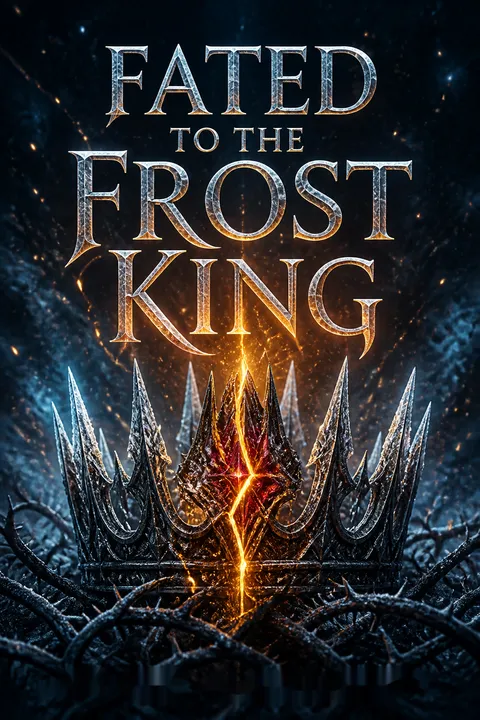
Fated to the Frost King receives overwhelmingly positive reviews (4.13/5 stars) for its well-executed enemies-to-lovers slow burn romance between Everly and Draven, the Frost King. Readers praise the compelling writing, world-building, character development, and witty banter between the sassy FMC and broody MMC. The magical system involving mana, compelling animal companions (especially Batty), and complex plot twists impress readers. Most note the intense cliffhanger ending leaves them desperate for book two. A few critics find the FMC immature or overly snarky, though most appreciate her growth and resilience.
People Also Read



Characters
Everly Elarion
The hidden-hearted queenEverly is a sharp-minded, guarded young fae raised under the stigma attached to her birth and supposed lack of mana. She reads obsessively, notices the details others overlook, and uses sarcasm to keep fear from dictating every choice. Her deepest loyalty is to Wynnie, the sister who gave her a home, but she is also quick to defend strangers who are being treated as disposable. Everly has learned to survive through concealment, practical preparation, and a refusal to accept the explanations powerful people offer about her worth. Her central conflict is not simply whether she can become powerful; it is whether she can claim agency in a life shaped by other people’s decisions.
Draven Ashwynter
Winter’s feared kingDraven is a ruler whose command of winter magic and history of mass killing have made him both feared and depended upon. He treats control as a duty because he believes his kingdom will collapse without it, and his bluntness often turns that belief into cruelty. Beneath his rigid authority, he is lonely, burdened by the consequences of war, and wary of anyone who might exploit weakness. His bond with Everly forces him into proximity with a woman who challenges his judgments and refuses to perform gratitude. Draven’s protective instincts do not erase his violence; the tension between the two is central to how others, and he himself, understand him.
Noerwyn Vaerith, called Wynnie
Everly’s steadfast sisterWynnie is Everly’s older sister and first source of genuine safety. Fierce, practical, and quick to challenge anyone who threatens Everly, she combines emotional warmth with a strong instinct for survival. Her herbal knowledge lets her care for ordinary injuries, while her mana gives her tools of her own. Wynnie is not defined only by protecting her younger sister: she manages an estate, resists the expectations of her marriage, and has clear opinions about the life she wants. Their closeness is built on small rituals and blunt honesty, allowing Everly to remember who she was before royal duty and danger began to claim her.
Nevara
The fate-seeing VisionaryNevara is the Winter King’s Visionary, a sightless fae who perceives possible threads of the past, present, and future. Her life is shaped by a sacred role she did not choose, and the court’s fear of her gives her influence while isolating her from ordinary companionship. She speaks carefully, often withholding more than she explains, partly because she cannot see every outcome and partly because knowledge can become another form of power. With Everly, Nevara tests the possibility of friendship beyond titles and obligations. Her dry humor and private vulnerability suggest a person who longs to be known, even as the demands of her position make closeness dangerous.
Soren Redthorne
The Autumn courtly allySoren is the Autumn Court’s emissary, a charming observer who uses humor and social ease to expose the Winter court’s hypocrisies. He treats Everly as a person when other nobles reduce her to her birth, and he reads political tension with more precision than his playful manner suggests. His interest in information makes him useful and potentially difficult to trust. He also shares a quiet attentiveness with Nevara, often describing the world around her in ways that respect her experience rather than pity it.
Mirelda
The queen’s guarded attendantMirelda is the palace maid assigned to prepare and attend Everly. At first she expresses loyalty through rigid procedure and sharp judgment, making her seem like another part of the court’s hostility. Her practical help, however, gradually becomes a form of care she rarely names. Mirelda values order and discretion, and her guarded manner protects both her place in the palace and the people she has chosen to serve.
Master Isren Vaelryn
The humane ArchmageIsren leads the Veilreach Sanctum and approaches magic as a discipline that must respect the person being examined. Unlike the Elder mage, he offers Everly information, time, and a real choice about whether to proceed. His curiosity is scholarly, but it is tempered by a clear opposition to harming children in pursuit of power. Isren’s measured manner makes him one of the rare authorities who does not assume that urgency grants him ownership of another person’s body.
Eryx
Winter’s field commanderEryx is Draven’s Lord General and a veteran of Winter’s military campaigns. He delivers reports plainly, stays steady under the king’s anger, and focuses on what soldiers and civilians need in the field. His long service makes him one of the few people able to speak to Draven without treating the crown as a reason for flattery.
Lumen
The queen’s wolf guardianLumen is one of Draven’s enormous, mana-bound wolves. He is alert, disciplined, and formidable in a fight, but his behavior toward Everly becomes unusually protective. By placing himself between her and danger, he offers a kind of loyalty that requires no courtly explanation. His presence also makes visible the bond between Winter’s ruler, his palace, and its guardians.
Batty
Everly’s snow-bat companionBatty is a young skathryn, a small, venomous, batlike creature who attaches herself to Everly after arriving alone at the palace. She is warm, needy, and far more expressive than Everly expects from a winter creature. Everly’s decision to care for her reveals the heroine’s instinct to protect the abandoned, even when she has little security herself. Batty becomes a portable comfort in rooms where Everly has few allies.
The Thane
The Unseelie clan leaderThe Thane leads the Unseelie clan whose movements threaten Winter’s borders. He commands loyalty through his position and is accustomed to others acknowledging his authority. His claim on Everly is personal as well as political, though he offers no explanation for his intentions at their first meeting. His presence connects the realm’s conflict to Everly’s unresolved past.
Tavrik
The Skaldwing captorTavrik is a Skaldwing warrior who helps lead Everly’s capture and escorts her to the Unseelie settlement. He values strength, follows the Thane’s wishes, and uses threats and mockery to control those in his custody.
Yorrick
Wynnie’s estranged husbandYorrick is Wynnie’s husband, a man whose support of her father’s restrictions helped estrange him from Everly. He is part of Wynnie’s complicated adult life, where duty and affection do not always align.
Serelith
The village survivorSerelith is a young fae rescued after a monster attack destroys her village. Traumatized and grieving, she becomes one of the first people Everly must care for as queen, making the cost of Winter’s crisis impossible to keep abstract.
Candra Nivhallow
The condemned court hopefulCandra is an ambitious noblewoman who enters the bride selection expecting to gain the Winter crown. Her confidence and desire for power blind her to the king’s suspicions, making her first of the candidates to expose how lethal the ceremony is.
Lady Thessara
The snobbish courtierLady Thessara is a Winter noblewoman who uses etiquette and class prejudice to test Everly’s place at court. She represents the polished hostility of nobles who prefer social cruelty to open confrontation.
Zerina
A ruthless Unseelie fighterZerina is an Unseelie warrior involved in the attempt to seize Everly. She is bold, impatient, and dismissive of the danger posed by Draven, treating the mission as a contest of nerve.
Plot Devices
The blood-forged marriage bond
A magical, inescapable tetherThe royal wedding rite mingles Everly and Draven’s blood to create rings and bind their mana and fates. The ring cannot simply be removed, and the bond intensifies their awareness of each other, including emotional and dream connections. Its effects complicate the romance because physical attraction and involuntary intimacy do not establish trust or consent. The ring also becomes a warning system, growing cold when danger threatens Draven. Everly and Draven must decide what their feelings mean while knowing that the bond itself may be shaping them.
The Heartstone
A test of royal manaThe Heartstone is an ancient crystal used to connect a royal couple’s mana with the land. Draven moves Everly’s ceremony forward because Winter faces mounting danger and needs a queen capable of supporting the realm. The stone accepts their union, but the power it displays is Draven’s, not Everly’s. The failed test confirms her apparent lack of mana and triggers the journey to Veilreach. Later evidence shows that the ceremony’s outcome was more complicated than either ruler first understood.
The obsidian crystal
A memory that breaks the sealAt Veilreach, Isren uses crystals as a nonviolent way to test Everly’s connection to mana. An ancient obsidian crystal reacts when she touches it, drawing up a memory of her mother using magic and warning her to flee. Its violet light reveals that Everly’s power is not absent but deliberately bound. The crystal provides a crucial revelation without telling Everly who performed the binding or why. It shifts the question from whether she has power to what was done to hide it.
Nevara’s visions
Futures that warn, never settleAs the Shard Mother’s Visionary, Nevara sees possible paths rather than possessing complete knowledge of the future. Her warnings help shape the bride selection and later alert Everly that Thistlerun Keep has fallen. Because Nevara cannot see everything, her silences can feel like betrayal even when she is trying to guide people through uncertainty. Her visions raise the stakes without removing choice: Everly and Draven still have to act, and neither can know whether the path ahead is fixed.
The ward stones
A fragile shield against invasionAncient ward stones can protect a place when infused with enough mana. Draven powers the stones around the palace and later maintains protection at the damaged keep, even while fighting monsters and traveling across Winter. Their shimmer lets Everly recognize that the defenses are active, but their strength depends on Draven’s scarce power. The wards offer temporary safety rather than a solution to the kingdom’s crisis, and the Unseelie learn to exploit gaps between protected spaces.
About the Author


Download PDF
Download EPUB
.epub digital book format is ideal for reading ebooks on phones, tablets, and e-readers.








