

Plot Summary
The King Wakes Alone
A week after Skaldwings carried off his wife, the wounded Frostgrave King Draven wakes in a ruined refuge, still haunted by his mother’s murder and convinced Everly has betrayed him. Lady Noerwyn, Everly’s sister, has spent the week tending his injuries and searching for a way to find her own missing sibling. She agrees to help him only after he vows not to kill Everly.
Draven offers that narrow promise, unwilling to guarantee more, and their bargain seals with magic. Elsewhere, Everly wakes from visions of blood and Draven calling her a traitor. Held in her childhood home among the Shadow Clan, she is summoned by her uncle, the Thane Vaerin, with no idea whether he intends to protect her or use her.
The opening makes both protagonists prisoners of interpretations formed under pressure. Draven reads Everly’s absence as proof of treason; Everly reads his anger as confirmation that she was never safe with him. Noerwyn’s bargain is practical, but its careful limit matters: loyalty here is not a clean moral category, and even rescue begins with a negotiated boundary. The marriage bond pulls Draven toward Everly while his suspicion pushes him away, establishing the book’s central conflict between involuntary connection and earned trust.
A Mother from the Past
Vaerin tells Everly that he brought her back to the Shadow Clan for the sake of family, then reveals that her mother, Mirevyn, is alive. Mirevyn appears as the clan’s battle-hardened second-in-command, and Everly’s relief quickly tangles with anger: her mother has been absent for ten years and remains allied with the uncle who sent Everly to be tortured by mages.
Vaerin says Everly is still heir to the clan, while Mirevyn insists the family can begin again. Everly cannot accept that promise at face value. Her mother says she will protect her from Draven, but Everly knows the king may come looking for her, and she cannot decide whether returning home has made her safer or simply changed the shape of her captivity.
Mirevyn’s return gives Everly what she has long wanted, but not in a form she can safely trust. The reunion exposes how care can coexist with coercion: her mother’s protectiveness is genuine, yet it arrives alongside secrecy and control. Vaerin’s family language also serves a political purpose, since Everly’s inheritance could benefit the clan. The scene denies a simple homecoming. Everly must weigh affection against evidence, a difficult task for someone taught that survival depends on hiding what she knows and what she is.
Blood on the Road
Draven and Noerwyn ride east toward the Unseelie Wilds, following what she knows about Everly’s family. When they find a cabin surrounded by abandoned limbs, gouged trees, and disturbed snow, Draven senses a danger unlike the familiar frostbeasts.
The unnatural signs deepen his fear that the threat to Winter is changing. Noerwyn then explains that Everly arrived in the Wilds badly injured, terrified of being taken back to the mages, and convinced someone was hunting her.
She had avoided contacting the clan because Everly did not want to be found, but Draven’s royal summons forced her to reconsider. Noerwyn’s account unsettles his certainty that Everly simply conspired against him: her silence may have begun as a means of surviving a life that had already taught her not to trust authority.
The roadside horror performs two jobs at once. It signals that Winter’s monsters are no longer behaving within familiar rules, while Noerwyn’s testimony gives Draven a new context for Everly’s secrecy. Her concealment was not necessarily a plot against him; it may have been an adaptation to repeated danger. Yet the revelation does not erase his fear for his kingdom. The novel keeps private trauma and public crisis entangled, so that understanding Everly does not automatically tell Draven what to do next.
A Dragon for Freedom
In the Wilds, Everly learns that Vaerin considers her suitable for a political match, despite her insistence that her marriage bond to Draven cannot simply be replaced. Her mother refuses to discuss the magic that keeps Everly’s mana inaccessible, and Vaerin treats her future as a clan decision.
A visit from Stormbreak Thane Kaelen and his aggressive twin, Kyros, makes the scheme unmistakable. Kaelen presents a new possibility: the Dragon may hold the power to break Everly’s bond, though Mirevyn warns that the creature is dangerous and nearly impossible to find.
Kaelen also hopes a union between their clans could restrain old feuds and prepare the Wilds for Winter’s collapse. Everly sees an opportunity for agency, but neither alliance nor escape has yet become her choice.
The proposed marriage turns Everly’s body and ancestry into political territory, echoing the earlier forced bond without repeating it. Kaelen’s reformist purpose offers a genuine alternative to Vaerin’s control, but his proposal still depends on Everly’s symbolic value. The Dragon, by contrast, represents a less legible possibility: freedom from an imposed bond at potentially enormous cost. Everly’s wish to choose for herself is real, but every available route has been framed by someone else’s needs.
The Rootwood Portal
Following the trail into the Wilds, Draven and Noerwyn discover a hidden den concealed behind a glamour of black pines. Skaldwings ambush them, and Draven kills several before forcing the others to reveal that Everly is safe for the moment. Alaric, a former friend of Everly’s, confirms that he helped take her and refuses to betray the people he loves.
Draven tortures him for information, then kills him when Nevara, Winter’s Visionary, arrives and warns him to stop. She admits she knew Everly faced danger and could not promise that she would survive it. Her warning that Everly is walking into a trap sends Draven searching the den, where he finds an ancient rune portal and a crystal key. He uses it to cross into the Wilds.
Draven’s rescue mission becomes a moral test he fails before he can reach Everly. His rage is fueled by grief, fear, and the belief that force is the only language his enemies understand, but Alaric’s loyalty makes the cost concrete. Nevara’s warning reveals the danger of treating foresight as control: she sees possible outcomes, yet her choices still shape them. The portal turns hidden knowledge into physical passage, carrying Draven deeper into the territory he distrusts and toward a confrontation he cannot manage through certainty alone.
Kyros’s Knife in Darkness
Everly sneaks out to meet Kaelen, hoping he will explain how the Dragon might free her. Kyros waits instead. He has gathered other Stormbreak warriors and arranged for Everly to be struck down before she can flee. Tavrik is present, initially allowing Kyros to proceed despite Everly’s protests.
Kyros accuses her of being a threat to his people and tortures her with a blade, while claiming her own clan will assume she chose Draven and will not search for her.
Everly keeps her wings hidden and tries to endure the assault without giving Kyros the satisfaction of her surrender. Draven follows the bond to the cave and kills the captors who attack him, including Kyros. He frees Everly, then escapes with her as a scarred warrior gives him an amulet and points him toward safety.
Kyros converts political disagreement into intimate violence, and his accusation about Everly’s supposed uselessness mirrors the shame she already carries about her inaccessible mana. Tavrik’s failure to intervene shows how complicity can look like hesitation rather than open cruelty. Everly’s refusal to reveal her wings is a small act of self-possession amid extreme helplessness. Draven’s arrival saves her life, but it does not settle the ethical question of his own violence; survival and moral repair remain separate tasks.
Winter’s Narrow Escape
Draven carries the unconscious Everly back through the Wilds, using the marriage bond to guide him toward the hidden refuge. Her wounds worsen during the journey, and Noerwyn recognizes that poison is preventing her blood from clotting.
She urges Draven to take Everly to Winter’s healer, despite the danger of traveling through the ice in her condition. Nevara confirms that Everly will die if they wait. Draven risks the journey and brings her to the palace, where the Spring healer Amias uses Draven’s mana to keep her alive.
Everly wakes three days later in Draven’s locked rooms, alive but disoriented and separated from Batty, her small skathryn companion. Draven tells her Noerwyn is safe, but his anger and the sealed windows make clear that rescue has not yet become freedom.
The journey home shows the bond as both a lifeline and a form of confinement. It directs Draven to Everly and supplies the power that helps preserve her, yet his first instinct after saving her is to lock her away. Noerwyn and Nevara interrupt the king’s self-sufficiency by naming what his urgency cannot solve: Everly needs treatment, not merely possession or protection. Her recovery begins with dependence, but the locked room makes the cost of that dependence impossible to ignore.
Wyverns Over Frostmere
As Nevara and Noerwyn return to Winter, a flight of wyverns attacks them over the Frostmere Plains. Draven, Eryx, and the Autumn emissary Soren race to help. Nevara and Soren combine starlight and fire against one beast, while Eryx and Noerwyn draw another away from the injured griffon. Noerwyn uses Everly’s dagger to strike a wyvern as Eryx creates an opening, and Draven brings down the largest creature.
The survivors reach the palace, where Noerwyn is reunited with her sister. Everly learns that Draven did not harm Noerwyn, despite holding her in Winter, and that Noerwyn helped lead him to the refuge. The attack also leaves a warning: the monsters are spreading and the wards are under pressure.
The battle shifts the story from a private rescue to a collective emergency. Noerwyn’s practical courage matters more than formal rank, while Nevara’s power is formidable but finite. Their survival brings the sisters together, but the wyverns ensure that reunion cannot become a retreat from the larger crisis. The image of Everly’s dagger in Noerwyn’s hand also makes their bond tangible: an object that once marked Everly’s vulnerability now helps her sister defend others.
The Amethyst Calls
While Everly and Noerwyn recover behind the palace’s locked doors, the sisters compare what happened in the Wilds and in Winter. Noerwyn explains that Draven froze her in a room when he arrived at the estate, then later accepted her help to find Everly. Their conversation gives Everly a more complicated picture of the king: he has threatened and confined her, but he also crossed the Wilds to save her.
Draven shows her the amethyst pendant Mirevyn gave him during the rescue. When he opens it, Everly senses a strange, ancient power inside a hidden crystal, unlike ordinary mana. The pendant draws her attention as if it recognizes her, but Draven shuts it before she can understand what it means.
The sisters’ exchange complicates the story’s moral divisions without absolving anyone. Noerwyn can condemn Draven’s coercion and still acknowledge that he acted to save Everly; Everly must likewise hold both truths at once. The pendant makes that unresolved history material. Its power links her mother’s hidden choices to a force older than the courts, suggesting that the family’s silences are not merely personal secrets but part of the realm’s buried structure.
A Bond Without Orders
After nightmares of Kyros’s attack, Everly goes to Draven to confirm that he killed her tormentor. His answer brings relief, and the two kiss, but the encounter falters when Draven asks whether she sought the Dragon in order to be with Kaelen. Everly cannot give a simple answer. Draven later confronts Nevara about her silence and learns that she has been trying to steer him away from Everly’s possible death, while carrying guilt over her own past choices.
Their exchange restores some trust between the old friends, though it does not undo what Nevara concealed. Everly and Noerwyn also begin to make room for grief and humor together, while the palace’s ward alarms and strange monster activity continue to intrude on their fragile calm.
Intimacy does not instantly repair the couple’s mistrust; instead, it exposes the questions each has been avoiding. Everly’s uncertainty reflects a genuine conflict between wanting freedom and wanting Draven, not a simple failure to decide. Nevara’s conversation with Draven broadens that conflict into a problem of care under uncertainty: she withheld information to protect him, yet doing so deprived him of agency. The story treats protective secrecy as emotionally understandable and politically dangerous at the same time.
The Wings Unhidden
Everly asks Draven to take her to her father’s estate so she can retrieve her monster notes. He agrees, and the abandoned house reveals how isolated she was before the palace: even its servants had often left her alone. The pair find the compendium, but Zerina arrives and sees Everly beside the king who killed her mate. Everly tries to explain her divided loyalties; Zerina rejects her and flees.
Back at the palace, Everly’s wings remain exposed. Draven asks before touching them, then handles them carefully instead of treating them as evidence against her. Seeing how long others have denied Everly meaningful choices, he tells her she will be free to leave once her mana is restored, and that he will help find another way if it cannot be.
The abandoned estate gives Draven a concrete glimpse of the childhood behind Everly’s evasions. He sees that her secrecy grew in a life where even ordinary care was unreliable, and his response changes from accusation toward consent. Zerina’s departure prevents that shift from becoming easy absolution: grief makes reconciliation impossible on demand. The scene’s crucial change is modest but consequential. Draven asks before touching Everly’s wings and offers a future she can refuse, replacing possession with the possibility of choice.
Blood Made Balance
Archmage Isren arrives with crystals from a cave associated with the last Dragon. Their power resembles the shard hidden in Mirevyn’s pendant, and Everly realizes the Dragon is connected to her bloodline.
Isren explains that the old dragon line passes extraordinary power through its descendants; Draven recognizes that Everly’s Seelie and Unseelie magic may be colliding, which explains why her mana was bound. Everly takes this as proof that she cannot help Winter and asks to find the Dragon so she can break her marriage bond.
Draven objects because the journey may kill her, then admits his protection is not simply the bond’s command. Everly chooses to stay with him, and they finally make love by mutual consent, recognizing a connection neither of them can attribute to magic alone.
The revelation reframes Everly’s apparent defect as a conflict between two systems of power, not an absence of worth. Yet knowledge does not deliver an easy cure: her mixed inheritance may be dangerous, and the Dragon remains beyond reliable reach. The decisive emotional movement is separate from the magical explanation. Draven offers protection without claiming the bond as justification, and Everly chooses him while still retaining the right to leave. Desire becomes meaningful here because it is no longer treated as proof of fate or ownership.
The Dragon’s Threshold
Soon after their reconciliation, an ancient Elderborne breaches Winter’s wards and attacks Draven. Everly sees the battle through their shared connection and finds a vulnerable seam in the creature’s armor in her compendium.
She sends Noerwyn to summon Nevara and Eryx, then follows the amethyst shard’s pull instead of remaining safely behind. The shard transports her to a cave where the last Dragon may be hiding. Its immense power forces her to the ground and demands that she name herself.
Everly draws together the identities others have kept apart: Winter’s queen, heir to the Shadow Clan, and daughter of the Dragon. She stands against the pressure and claims the power she believes belongs to her. The supplied story ends before the Dragon answers or Draven’s battle is resolved.
The final movement converts Everly’s divided identity from a liability into the basis of her claim. She does not wait for a prophecy or a rescuer to define her: she uses the knowledge she gathered, sends help to Draven, and enters the Dragon’s domain herself. Still, the ending withholds confirmation. Her claim is an act of self-definition, not proof that the Dragon accepts her or that her power will save Winter. The open threshold preserves the story’s central tension between chosen identity and forces that remain beyond anyone’s control.
Analysis
The story makes coercion difficult to distinguish from care because its characters repeatedly act to protect one another by withholding information, controlling movement, or using violence. Draven’s locked rooms and Mirevyn’s guarded silences arise from different motives, but both deny Everly knowledge and choice. The novel’s emotional argument is not that love excuses those actions; it is that affection becomes trustworthy only when it stops claiming authority over another person’s decisions.
Everly’s divided inheritance gives that argument a magical form. The courts treat her as a political symbol, while her inaccessible mana makes her feel like a failed instrument of salvation. Isren’s explanation suggests the problem may be conflict between powers rather than a lack of power. At the Dragon’s cave, Everly begins to name herself without accepting a single court’s definition. Her claim remains untested, which keeps identity from becoming a neat cure or a prophecy fulfilled.
The parallel crises also resist a simple enemies-to-lovers resolution. Draven and Everly’s intimacy grows while the monsters worsen, the wards falter, and the political divisions around them remain real. Their attraction cannot repair the deaths caused by their choices, including Draven’s killing of Alaric or Everly’s inability to reconcile with Zerina. Instead, the relationship changes when each begins to acknowledge the other’s agency: Draven offers the possibility of release, and Everly chooses to stay for now. The open ending places that choice beside a new danger. Everly can finally claim a self that contains both courts, but she must still prove what that self can do.
Review Summary
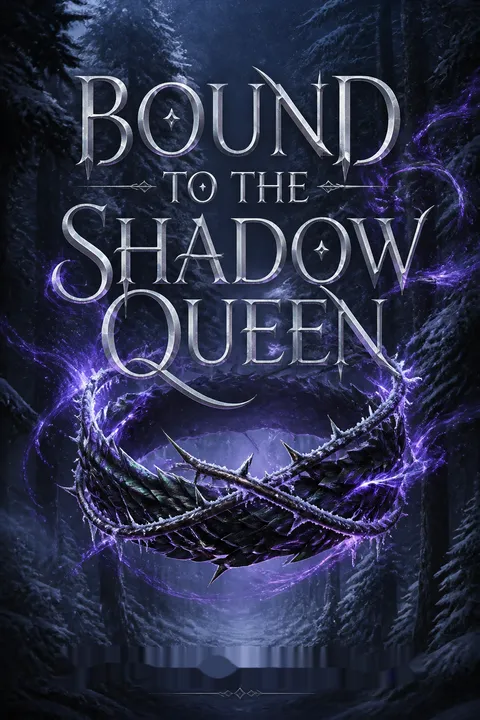
Bound to the Shadow Queen, the second book in the Frostbound Court trilogy, receives overwhelmingly positive reviews with a 4.32 rating. Readers praise the enemies-to-lovers slow burn between Everly and Draven, the character development, and the dual POV narrative. Many appreciate the darker themes, action, and emotional depth, though some note pacing issues and desire more plot progression. The cliffhanger ending left readers eager for book three. Reviewers highlight strong side characters, vivid world-building, and the authors' signature witty banter, while warning about trigger content including torture.
People Also Read


Characters
Everly
Reluctant Winter queenEverly is a sharp-minded survivor raised between histories she was never allowed to understand. She has learned to conceal her wings, distrust promises, and use observation where others have power. Her humor and stubbornness keep her from becoming only a victim of the people who control her life. She loves fiercely, especially her sister, but often mistakes secrecy for the only form of safety available. As queen, she is pulled between Winter’s needs and the Wilds that shaped her childhood. Her deepest struggle is not simply recovering magic; it is deciding which parts of herself she will stop hiding, even when other people treat her identity as a political instrument.
Draven
The frostbound Winter kingDraven rules a kingdom under siege from monsters and bears the grief of a war that took his family and damaged his court. He relies on discipline, force, and tightly guarded emotion because every lapse of control seems to endanger his people. Everly’s secrecy strikes directly at his fear that he cannot protect Winter, so he often confuses protection with possession and certainty with truth. Beneath his severity is a capacity for tenderness that he initially treats as a weakness or distraction. His bond with Everly challenges his belief that duty can be separated from personal feeling, while his choices reveal how easily a ruler’s protective power can become another person’s cage.
Noerwyn
Everly’s protective sisterNoerwyn, whom Everly calls Wynnie, is a healer and devoted older sister whose loyalty is expressed through action. She bargains with Draven, tends injuries, and keeps looking for Everly even when the search puts her in danger. Her directness and dry humor provide relief without denying the grief she carries. Noerwyn is not a neutral observer: she has her own anger toward Draven and the clans, but she can distinguish that anger from what Everly needs. Her bond with her sister is intimate and loving, yet it does not erase the years they spent apart or make their experiences interchangeable.
Mirevyn
The warrior motherMirevyn is Everly’s mother and a formidable warrior who serves the Shadow Clan. She shows affection through physical reassurance and vigilant protection, but she also withholds explanations she believes her daughter cannot safely bear. Her long absence has left Everly unsure whether love can be trusted when it arrives alongside secrecy. Mirevyn’s concern is sincere, yet her instinct to decide what is safest for Everly repeats the very loss of agency that has shaped their relationship.
Vaerin
The calculating clan ThaneVaerin, Everly’s uncle, governs the Shadow Clan through command and political calculation. He sees family lineage as both a responsibility and a resource, and he believes harsh choices can be justified by the survival of the clan. His history with Everly includes a traumatic decision about her childhood, leaving her unable to accept his claims of protection at face value. He is not softened by kinship, and his authority makes every private disagreement carry public consequences.
Nevara
Winter’s burdened seerNevara is Winter’s Visionary, a blind oracle bound to serve the crown and interpret possible futures. She is Draven’s oldest friend, though the obligations of her office complicate their trust. Her foresight is not omniscience: she must choose which dangers to disclose, and she knows that revealing a future can alter it. Nevara’s restraint comes from care as much as strategy, but those motives do not spare others the consequences of her silence. Her life in the Visionary’s tower reflects the personal cost of a role that turns intimate knowledge into public duty.
Kaelen
The reform-minded clan ThaneKaelen leads the Stormbreak Clan and argues that the Unseelie must end their internal feuds and the abuse of Seelie captives. He approaches Everly as a possible political partner, but he also speaks sincerely about building a less violent future. His reformist ambitions do not erase the fact that he belongs to a culture that has benefited from old cruelties. He is more measured than his twin and treats consent as part of any alliance.
Kyros
The violent Stormbreak twinKyros is Kaelen’s twin and a warrior who sees Everly as a threat to his clan. He resents the attention and political hopes attached to her, and turns that resentment into cruelty. Unlike Kaelen, he has little interest in negotiation or reform. His hostility exposes how prophecy and political symbolism can feed existing prejudice rather than overcome it.
Alaric
Everly’s uneasy old friendAlaric knew Everly in childhood and later became connected to the people who brought her back to the Wilds. His willingness to help her sister reflects a personal loyalty that cuts across clan and court divisions. He is also Zerina’s mate, a bond that shapes their household and his priorities. His place between old friendship and current allegiance makes him a reminder that the political enemy is often someone with a personal history.
Zerina
The grieving warrior mateZerina is a skilled warrior and Alaric’s mate. She begins as Everly’s hostile guard, suspicious of the queen’s place among the Shadow Clan and protective of the people she loves. Her sharp wit can make her seem careless, but her loyalty is intense. Grief and anger shape how she judges Everly, whose connection to Draven represents a wound Zerina cannot easily separate from the person standing before her.
Tavrik
The compromised clan soldierTavrik is a Shadow Clan warrior involved in bringing Everly back to the Wilds. He is observant and capable, but his caution can become passivity when a stronger personality takes control. His choices leave Everly unsure whether he is an ally, a captor, or simply someone trying to survive clan politics.
Isren
The curious ArchmageIsren is Winter’s Archmage, a scholar whose investigations range beyond conventional magic. He treats Everly’s consent as necessary before examining her mana and approaches strange evidence with curiosity rather than fear. His knowledge can clarify the history behind a crisis, but he is not able to promise a safe solution. He brings intellectual patience to a story where many powerful people prefer immediate control.
Soren
Autumn’s watchful emissarySoren is an Autumn emissary and Draven’s old friend, perceptive enough to notice the palace’s secrets and bold enough to ask about them. His humor softens tense rooms, while his diplomatic role lets him move between people who distrust one another. He offers Everly and Noerwyn companionship without demanding that they explain themselves, but his loyalty to Draven remains part of every interaction.
Eryx
Winter’s steadfast generalEryx is Draven’s Lord General, responsible for defending a court strained by monster attacks and political uncertainty. He is disciplined and pragmatic, but his loyalty includes concern for vulnerable people rather than only military success. He asks questions Draven would rather avoid and stands ready to act when danger reaches the kingdom’s borders.
Batty
Everly’s venomous companionBatty is Everly’s small skathryn, a winged and venomous creature with a strong sense of attachment and an even stronger capacity for indignation. She offers Everly familiar company when human relationships feel unsafe. Her presence is both a practical bond and a reminder that affection can be fierce without being controlling.
Mirelda
The palace’s observant maidMirelda is a capable palace maid trusted with the routines of Everly’s rooms. Her brisk manner hides concern, and she quietly looks after Batty when Everly is absent. She notices more than she says, navigating the distance between the king’s instructions and the needs of the queen he keeps secluded.
Amias
The gentle Spring healerAmias is a Spring healer who treats Everly after her rescue. He understands that physical recovery does not erase traumatic memory, and he speaks to her with patience rather than demanding immediate trust. His work provides care in a palace where healing and imprisonment occupy the same rooms.
Yorrick
Noerwyn’s complicated husbandYorrick was Noerwyn’s husband, and his history with her remains complicated. His absence shapes how she understands loyalty, grief, and what she owes to the past. Everly’s memories of him connect the sisters’ shared life to the losses that have accumulated around them.
The Dragon
The elusive ancient powerThe Dragon is an ancient and elusive presence tied to the origins of the Skaldwing clans and to a power hidden in crystal. Other characters speak of it as dangerous, territorial, and difficult to find. Its existence offers a possible answer to Everly’s bound mana, but the Dragon is not a tool that can simply be summoned to solve a political problem.
Plot Devices
The marriage bond
A tether of need and dutyThe magical marriage bond connects Everly and Draven through a ring and a shared pull that can guide them toward one another. It intensifies their awareness of each other’s fear, anger, and desire, while also tying Everly to Winter’s fate. At first, both treat it as an imposed chain and blame it for feelings they do not want to admit. As they begin to distinguish their own choices from the vow’s demands, the bond becomes less an explanation for intimacy than a test of whether intimacy can exist without coercion.
Everly’s bound mana
Power hidden behind a sealEverly has been unable to access her mana for much of her life, leaving her physically and politically vulnerable. The binding is connected to her mixed inheritance, and the adults around her have withheld different parts of its history. It fuels her fear that she cannot protect anyone, while also making her a focus of clan marriage politics and Winter’s hopes. Isren’s investigation links the problem to the collision of different kinds of magic, changing the question from whether Everly is powerless to whether she can survive the power she carries.
The Visionary’s foresight
Possible futures with costsNevara sees possible futures through her role as Winter’s Visionary, but her knowledge is partial and her choices about disclosure have consequences. She withholds some danger from Draven because she fears what he will do with it and what may happen to Everly. Her silence creates mistrust, while her warnings alter the course of events. Foresight therefore does not remove uncertainty from the story; it concentrates responsibility in the person who must decide which risks to reveal and which people to leave uninformed.
The amethyst shard
A key to ancient passageAn amethyst pendant given to Draven by Mirevyn contains a hidden crystal of unusual, ancient power. A related crystal activates the rune portal in the Skaldwing den, allowing Draven to cross into the Wilds. Everly feels the pendant calling to her because its power is linked to her ancestry. The same object therefore works as a practical key, a family clue, and a summons. Its physical presence turns the characters’ search for the Dragon from speculation into a dangerous route they can attempt to follow.
The monster compendium
Knowledge against brute forceEverly’s handwritten compendium gathers scattered information about the monsters threatening Winter. It reflects years spent studying what she could not fight and becomes useful when books in the palace prove incomplete or contradictory. Her notes help her recognize the Elderborne as an ancient creature and identify a vulnerable seam in its armor, which she passes to Draven through their connection. The compendium gives Everly a way to intervene without mana, showing that careful observation can alter a battle even when she is physically absent.
About the Author
Download PDF
Download EPUB
.epub digital book format is ideal for reading ebooks on phones, tablets, and e-readers.








