

Plot Summary
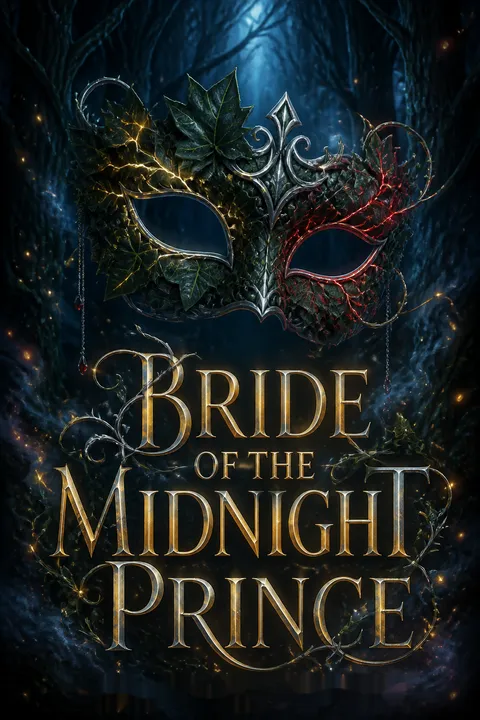
The Ivy Mask’s Raid
Kat, a masked human vigilante, slips into the Nothril Court to free Elizabeth, a young slave. When a servant warns that the girl’s disappearance may endanger others, Kat promises to return for them and heads back inside to steal ollea, a substance that can dull a fae’s sense of smell.
In another part of the night, Nothril Prince Rahk rescues his sister Pavi from Star City Prince Caspar, whose staged abduction was meant to deter Nothril from annexing his city. Back in his chambers, Rahk catches Kat under his bed. She escapes by pretending to be a mute servant, then gets Elizabeth and three other refugees safely to human lands. Rahk finds her ivy mask and learns the vigilante is operating near Harbright.
The raid establishes Kat’s defining contradiction: she is careful enough to enter a hostile court undetected, yet refuses to abandon even one person when retreat would be safer. Her promise to return for the servants turns rescue into a continuing obligation rather than a single daring act. Rahk’s rescue of Pavi mirrors Kat’s protective instinct, though his response is shaped by political power and threat. The two protagonists are introduced as hunters and protectors in the same dangerous system, each already carrying someone else’s safety as a private burden.
Three Moons to Hunt
After returning Pavi to the Nothril palace, Rahk learns that High King Trenian has assigned him to Harbright to oversee the receding border of Caphryl Wood and manage a dangerous troll. His parents add a harsher demand: he must bring the Ivy Mask to judgment within three human moons.
They bind the order with Pavi’s blood, making her life the consequence of failure, and threaten to send Rahk’s sister Pelarusa after him if he misses the second-month deadline. Rahk accepts the bargain, already determined to protect Pavi from their parents. He then discovers a human girl in his chambers, searching for ollea. He lets her leave, unaware that the apparent servant is the fugitive he has sworn to capture.
The blood oath converts Rahk’s private loyalty into political leverage. His parents do not need to persuade him that the Ivy Mask is dangerous; they only need to make refusal costly to Pavi. This clarifies why Rahk’s protectiveness is both a strength and a vulnerability. His decision to spare the disguised intruder complicates the simple hunter-and-quarry structure before either character understands the connection. Their first collision is governed by unequal knowledge: Kat knows exactly how dangerous Rahk is, while Rahk sees only a puzzling servant.
The Heiress Runs
At home in Harbright, Kat faces a different kind of captivity. Her stepmother, Agatha, offers to return Kat’s late mother’s glass wedding slippers only if she marries Lord Boreham, and sells Kat’s beloved horse, Bartholomew, to strengthen the pressure. Kat cannot marry before her twenty-first birthday without losing control of her inheritance, which she intends to use to support the people she rescues.
With Mary’s help, she cuts her hair, binds her chest, and takes a servant’s job under the name Nat at the newly arrived fae ambassador’s manor. Only after arriving does she recognize her employer as Rahk, the prince whose court she has raided and whose pursuit she fears.
Kat’s disguise is not a romantic game but a practical response to economic coercion. Agatha can control her through property, reputation, and the horse that connects her to her parents, while Kat’s inheritance offers a narrow path toward autonomy. Her decision to hide in Rahk’s household is strategically sound and personally dangerous, exposing how little safe space she has in either world. The contrast between a forced human marriage and a fae prince’s looming hunt binds the novel’s domestic and fantasy conflicts through the same question: who gets to decide Kat’s future?
A Game Between Enemies
Rahk makes Nat his personal attendant after witnessing Mrs. Banks strike the exhausted servant boy and noticing the disguise’s feminine scent. He keeps his suspicion to himself, while Kat concentrates on surviving the work and concealing her identity. Their awkward lessons in chopping wood and preparing his rooms give way to a more private connection when Kat recognizes Fool’s Circle, a fae strategy game she learned as a child.
Rahk teaches her the rules, loses none of his guardedness, but begins enjoying her unconventional play. He gives her a book about the game, and she reads the story of a human slave who used observation and disguise to win his freedom. Their nightly games become a refuge from the danger each is concealing.
Fool’s Circle lets the pair meet on more equal terms than their employment relationship allows. At work, Rahk commands and Kat performs; at the board, she can challenge him through attention, improvisation, and a willingness to risk an unusual move. The book’s account of a slave winning through accumulated knowledge also reflects Kat’s own survival method without making her explain herself. Rahk’s curiosity becomes intimacy before trust is possible. The game offers a provisional space where competence matters more than rank, even though the larger power imbalance remains firmly in place.
A Blade at the Ball
Rahk tracks Kat’s escape routes through Caphryl Wood and plants spells along nearby Paths, hoping to learn where the Ivy Mask enters the human world. During a raid into Revar Court, he follows Kat and is wounded by a trap she has set for her pursuer. Back at the manor, she finds her discarded ivy mask in his desk and realizes he is hunting her.
Before she can act on that discovery, human assassins attack Rahk’s study. Kat smashes a bust through the locked door and warns him in time to fight back, but a poisoned blade cuts her. Rahk pays for a doctor and stays beside her. As she recovers, their trust deepens, even while she continues hiding the truth.
The rescue reverses the expected power dynamic. Kat is Rahk’s quarry, yet she chooses to protect him when she could have let the assassins solve her problem. Rahk’s response is not simple gratitude: he struggles to understand an act without an obvious bargain attached, because his upbringing has taught him to interpret care as leverage. The poisoned wound makes that difference bodily consequential. Kat’s generosity is real, but it does not erase her fear or the blood oath that binds Rahk to pursue her. Their affection grows inside a conflict neither can safely disclose.
A Wedding for Protection
On a trip to Bellmast, Kat drinks too much during a servants’ card game and tells Rahk her real name, that she is a woman, and that she fears he may kill her. He already knows she is female but waits for her to confide in him. Later, Rahk visits Vandermore Manor intending to withdraw his interest in the heiress.
Agatha presents Bridget as Lady Vandermore and tries to charge Rahk a bride price, but Kat interrupts to stop the deception. Her disguise falls apart before her family, and she begs Rahk not to return her to Agatha. He agrees to marry her the next day, paying the price as a guarantee that Agatha will surrender her safely. At the wedding, he uses glamour to make their public kiss appear real.
The marriage is neither a conventional courtship nor a clean rescue. Rahk uses a contract to create leverage against Agatha, but Kat experiences the arrangement as another loss of control, especially when he treats her publicly as a purchased bride. His choice protects her from immediate harm while making their private relationship harder to name. The false wedding kiss captures that tension: he performs the social obligation without claiming physical intimacy. Both characters are trying to protect the other, but they act from incomplete knowledge and turn care into a new source of uncertainty.
The Horse Comes Home
After the wedding, Kat finds letters proving that Lord Boreham is Agatha’s hidden son and that Agatha planned to profit by marrying him to Kat. Rahk confronts Agatha, takes control of the Vandermore estate under Kat’s inheritance, and orders the family to leave.
He also tracks down Bartholomew, whom Agatha sold to a butcher, and buys the mare back before she is slaughtered. Kat’s reunion with the horse releases grief she has been suppressing, and she runs to Rahk in gratitude. He kisses her.
Soon afterward, Kat tells him that her mother vanished when Caphryl Wood expanded over their family picnic, and Rahk helps her see that Agatha’s greed, and her parents’ loss, were not her fault. Kat’s guilt softens, though the reason she entered the Wood remains hidden.
Bartholomew represents more than a cherished animal. The horse carries Kat’s shared childhood with her father and gives her a form of freedom she can feel in her body. Rahk’s recovery of her therefore answers a wound Agatha created deliberately, not merely a practical inconvenience. At the same time, taking the estate exposes the material basis of Agatha’s power. Rahk can offer restitution, but he cannot repair the family bond Kat still wishes she had. His comfort begins to challenge her belief that every loss is proof of her own guilt.
A Failed Star City Raid
As the forest border recedes, Harbright farmers race to plant the newly exposed land, where magic makes crops grow at impossible speed. Rahk warns that Ymer the troll may endanger them, but Queen Vivienne refuses to act until the threat becomes unavoidable. Kat’s next raid takes her to the independent Star City, where she hopes to free three people.
Rahk follows her into the swamp, and she wakes a tentacled kravok to distract him. He protects her from its blades, but she escapes with a deep cut to her leg. She gets a young couple out through another Path, yet cannot find the other targets. Rahk tracks their group and releases a frightened woman with a guiding stone, despite continuing to hunt the Ivy Mask.
This failed rescue marks the limit of Kat’s self-image as the person who can always get everyone out. She succeeds for some and fails for others, but her conscience treats the difference as a personal debt. Rahk’s choice to help one escaped woman complicates Kat’s belief that the fae are uniformly cruel, without absolving him of his assigned hunt. The rapidly growing crops make the border more than a political problem: the land’s unstable magic is drawing ordinary people into danger. Kat and Rahk are both trying to manage consequences produced by systems larger than either of them.
A Marriage Under Strain
Rahk learns from his sister Pelarusa that Pavi has again defied their parents, and he returns to Nothril to keep her from being punished. Kat sees him reveal his wings and learns that the receding Wood is producing dangerous land and crops. She and Rahk grow closer through games, dancing lessons, shared meals, and a kiss, but each knows the marriage may not survive their different worlds.
Rahk refuses to bind them by fae custom, which would make the union difficult to break, and worries that his human stay is shortening his life. Kat still intends one final rescue raid. They agree to consider whether their marriage can work, but she cannot tell him she is the Ivy Mask, while he keeps his pursuit secret.
The romance advances through repeated acts of attention, but the central obstacle is not a lack of feeling. It is the way each character understands protection as a reason to withhold information. Rahk fears binding Kat to a life he may have to abandon; Kat fears that honesty will force him to harm her or sacrifice Pavi. Their tenderness is genuine, yet secrecy makes it structurally unstable. The uncompleted fae bond becomes a material expression of their hesitation: they want a future together but cannot yet consent to its full cost.
The Mirror Tide Masquerade
On the night of Mirror Tide, Kat disguises herself with a costly liquid glamour that makes her appear fae for two hours. She enters Nothril to free eleven captives, including Pavi, while Rahk has discovered that the Valehaven tailor has visited every court the Ivy Mask raided. Rahk intercepts the tailor in Star City and locks him in a room, unaware he is creating a distraction.
At the celebration, Kat reaches one captive but cannot get to Pavi, who remains beside Lady Nothril. Rahk recognizes Kat after she speaks in a distinctly human way and kisses him, but believes she came only to reunite with him. He sends her toward the exit, then discovers guards have captured the tailor and realizes the real Ivy Mask is still loose.
Mirror Tide turns disguise into a literal and ethical threshold. Kat borrows a fae body to enter the court that has enslaved the people she intends to free, while Rahk’s determination to identify her finally collides with his desire not to believe she is his quarry. His misreading is not merely tactical; affection makes him choose the explanation that preserves his hope. The tailor’s decoy exposes the limits of Rahk’s investigative method, while Kat’s inability to reach Pavi establishes the rescue’s high cost. She can still escape, but cannot complete the mission cleanly.
The Mask Falls Away
Kat escapes Nothril with the eleven captives but leaves the tailor behind and runs into Caphryl Wood to draw Rahk away from them. The forest confuses her, wounds her arm, and nearly drives her toward a dangerous pool. When Rahk finally finds her, she stops running and tells him who she is. He brings the unconscious Kat back to his manor, where she explains the truth: as a child, she was swallowed by the Wood and enslaved in Nothril.
Her mother followed her into the forest, then later returned to Harbright as a broken survivor. Kat has spent years rescuing others from the fate she escaped. Rahk bonds with her through fae magic, knowing that taking her to Nothril without that bond would leave her exposed to his parents’ judgment.
The revelation changes Kat’s rescue work from a chosen cause into an attempt to answer childhood survival guilt. She did not lose her mother through a simple accident, yet she has organized her life as if every subsequent captive were a chance to repay that loss. Rahk’s bond is an act of protection, but also a binding decision made under emergency conditions. Their honesty arrives at the point when both have the least room to retreat. The forest’s disorientation externalizes the cost of Kat’s lifelong refusal to stop carrying responsibility alone.
Pelarusa Takes the Hostages
Rahk realizes the blood oath can be satisfied by presenting Kat’s ivy mask rather than Kat herself, giving him a possible way to save both his wife and Pavi. Before he can act, Pelarusa kidnaps Kat and takes Mary, Becky, Oliver, and Agatha as well. In the Nothril throne room, Pelarusa identifies Kat as the Ivy Mask, while Lord and Lady Nothril demand Rahk’s return and assume he has chosen Kat over his duty.
The Valehaven tailor is imprisoned in the dungeon. Kat is locked in a cell beside him and learns his real name, Jacob Everfells, as they accept that they may die. Jacob tells her that the rescue work can continue through others, allowing Kat, for the first time, to imagine relinquishing responsibility.
Pelarusa’s abduction makes the costs of secrecy communal. Kat’s friends and even Agatha become leverage in a conflict they did not choose, while Rahk’s blood oath reaches beyond the two people it was designed to control. Jacob’s belief that others will continue the work challenges Kat’s assumption that stopping means betraying every captive. His own loss gives that hope weight rather than easy optimism. The dungeon forces Kat to face a truth she has avoided: her efforts matter, but they do not make her solely responsible for every person still suffering.
Rahk Breaks the Court
Rahk enters the throne room in armor and refuses Lord and Lady Nothril’s demand that he execute Kat. Pavi intervenes, protesting their cruelty and refusing to accept the punishment they impose on others. When Pelarusa raises her blade against Kat, Rahk kills his sister to stop her. He fights through the guards, while Kat frees Oliver and moves to protect Becky.
Ymer, whom Rahk has persuaded to come repay Kat’s earlier kindness, crashes into the court and attacks the guards. Lord Nothril takes Pavi hostage, but Lady Nothril kills her bonded husband to prevent him from killing their daughter. Rahk and Pavi flee with the others through servant passages, then escape into the Wood as Lady Nothril destroys their Path.
Rahk’s rebellion is not a clean triumph. He kills Pelarusa to save Kat, and the battle leaves his family, his political future, and his identity as heir shattered. Pavi’s moral resistance is the catalyst, but it also exposes her to immediate danger. Ymer’s intervention repays kindness in a world where power usually demands payment, while Lady Nothril’s choice to kill her husband shows that love and violence can coexist inside the same family. The escape depends on alliances and choices made earlier, not on Rahk’s strength alone.
The Wood Shows the Way
With the Path destroyed, the group is trapped in the forest, where spirits, deceptive trees, and false images threaten to split them apart. Kat recognizes a blue light as the remnant of her mother’s spirit. Her mother guides the group toward the human border and explains, through her presence, that she entered the Wood to find Kat out of love, not blame.
Kat finally releases the belief that she caused her parents’ deaths. Rahk, Kat, Pavi, Mary, Becky, Oliver, and Agatha reach Harbright, but Queen Vivienne’s army surrounds them. Rahk’s earlier abduction of Prince Lionel has given the queen reason to demand his life. Meanwhile, Lady Nothril rises over the border and threatens to destroy the human lands unless Pavi is returned.
The Wood has been both a physical landscape and the place where Kat’s guilt has grown unchecked. Her mother’s spirit does not undo the loss, but it changes its meaning: the mother’s return is an act of love, not evidence that Kat was worth sacrificing. This allows Kat to leave the forest without treating survival as a debt she must repay forever. The rescue is also relational rather than solitary. Rahk and the others follow Kat’s recognition, and her recovery of the truth makes continued trust possible even as the political crisis remains unresolved.
Freedom at the Border
Lady Nothril offers Rahk his old position and long life if he returns Pavi and abandons Kat. Rahk refuses, accepting banishment from Faerieland rather than surrender his wife. Kat stops Pavi from returning to her mother and demands every human slave in Nothril in exchange for the princess. Lady Nothril retreats into the Wood, then releases hundreds of captives across the border.
Pavi chooses to return to Nothril despite knowing she may never see Rahk again, while the human refugees hail Rahk as Harbright’s protector. He rushes to Kat, and they reunite with the promise of no more secrets. The rescued friends survive, and Kat’s mission ends not with her death but with a mass release that exceeds the eleven-person raid.
The final bargain converts intimate loyalty into political leverage. Rahk’s choice makes clear that love is not a private refuge if it requires surrendering other people’s freedom, and Kat’s demand keeps Pavi’s return from being purchased at the cost of hundreds of lives. Pavi’s decision remains painful rather than triumphant: she returns to a dangerous home to finish what she believes she must. The release of the captives answers the book’s opening image of a single rescue with a collective consequence. Kat’s work becomes larger than her guilt, and Rahk accepts a future without the status that once defined him.
Epilogue
Kat and Rahk settle into life in Harbright, where Rahk serves as a trusted protector and helps Queen Vivienne manage the changing border. Kat uses her inheritance to support the hundreds of people freed from Nothril. Mary and Oliver begin a romance, while Edvear and Charity plan a life together with Becky.
On Kat’s belated birthday, Rahk takes her riding and flying through the fields, and they bring a lavish Fool’s Circle set along. The game that once gave them cautious common ground has become part of a home they chose together.
The epilogue measures resolution through ordinary continuity rather than a final victory alone. Kat’s fortune becomes practical aid for freed people, while the household forms new bonds that make safety communal. Rahk’s work in Harbright gives him purpose without requiring him to reclaim the Nothril throne, and Kat can ride with Bartholomew without turning every journey into an escape. Fool’s Circle returns as shared pleasure rather than a test of concealment. Their happiness does not erase the losses or political costs; it demonstrates that a life after crisis can include responsibility, affection, and play at once.
Analysis
Bride of the Midnight Prince builds its romance around a conflict that neither attraction nor good intentions can solve by themselves. Kat is a human rescuer who has learned to treat survival as a debt: because she escaped enslavement while her mother did not, she feels compelled to keep returning for everyone still trapped. Rahk has learned a parallel lesson from a brutal court. Those he loves become leverage, so protection means anticipating threats and withholding vulnerability. Each sees the other’s care clearly before either can trust the conditions around it.
The novel’s disguises make that conflict concrete. Kat’s boy-servant identity protects her from a forced marriage, but it also places her inside Rahk’s household and makes intimacy depend on his not knowing the truth. Rahk’s hidden pursuit likewise turns kindness into a source of danger. Their repeated games and acts of care do not magically resolve those secrets; instead, they show what each character might become if they could act outside fear. The tension comes from how long they can sustain that possibility while the political machinery of Nothril demands a sacrifice.
The story also interrogates rescue as a form of control. Kat’s courage saves many people, but her belief that she alone must save everyone nearly destroys her. Rahk’s protection can become another kind of unilateral decision, especially when he makes choices for Kat without giving her the facts. Their eventual movement toward trust requires more than romance: Kat must accept that a cause can continue beyond her, while Rahk must reject the rulers who made love a weakness to exploit.
The ending makes their private union consequential without suggesting that love cures political violence. Rahk loses his place in Nothril, Pavi chooses a dangerous return, and the released captives begin uncertain lives in Harbright. Kat’s inherited wealth helps those lives take root. The book’s strongest claim is therefore not that one heroic person can repair a broken world, but that responsibility becomes humane when it is shared, limited, and answered by others.
Review Summary
Bride of the Midnight Prince receives a 4.42/5 rating, with readers praising the hidden identity trope, slow-burn romance, and Cinderella retelling elements. Most reviewers loved the banter between protagonists Kat and Rahk, with many finding this second book superior to the first. Common criticisms include the 600+ page length feeling drawn out, pacing issues, and miscommunication between characters. Readers appreciated the clean romance (kissing only), detailed worldbuilding, and emotional depth. The secret identity premise—Kat disguised as a servant boy while Rahk hunts her vigilante alter ego—captivated audiences despite some finding it awkward initially.
People Also Read
Characters
Kat Vandermore
The stubborn heiressKat is an orphaned heiress raised among servants and a stepfamily that never quite becomes her own. She is quick-witted, physically capable, and inclined to act before caution can catch up with her. Her confidence often masks a deep fear that she is responsible for the people she cannot protect. She values independence not as a luxury but as the means to choose how her resources and energy are used. Kat’s instinct to challenge unfairness can become self-erasure when she treats every unmet need as hers alone to fix. Her humor, affection for animals, and fierce loyalty keep her from becoming defined only by grief.
Rahk
The wary Nothril princeRahk is a powerful fae warrior and heir to the Nothril Court, trained to survive by controlling what he reveals. He is perceptive, disciplined, and more comfortable acting than explaining his motives. His attachment to his youngest sister exposes the vulnerability his parents exploit, while his friendship with High King Trenian gives him a model of loyalty that is not purely political. Rahk’s dry humor emerges around people he trusts, especially through games and teasing. Beneath his intimidating manner is a man worried that power will make him cruel. His central struggle is whether he can protect others without repeating the violence that shaped him.
Mary
Kat’s steadfast companionMary has cared for Kat since childhood, first as her companion and later as a trusted servant and friend. Practical, perceptive, and protective, she is usually the person who notices what Kat has failed to plan for. She helps Kat with disguises and crises while refusing to romanticize her recklessness. Mary’s loyalty is not passive: she challenges Kat when self-sacrifice becomes a substitute for self-worth. Her warmth extends to the staff and vulnerable children around her, and she brings humor into moments when fear threatens to dominate. She serves as both chosen family and a grounded counterweight to Kat’s consuming sense of duty.
Jacob Everfells
The Valehaven tailorKnown to Kat as the Valehaven tailor, Jacob is a skilled craftsman who supplies clothing across Faerieland and quietly assists her work. He is cautious where Kat is impulsive, but his caution never hardens into indifference. His past has taught him that rescue can come too late, which fuels his commitment to helping others escape. Jacob offers practical knowledge, routes, disguises, and a steady presence when Kat is overwhelmed. He understands the danger of their undertaking and does not pretend that courage guarantees success. His calm perspective helps Kat imagine that a cause can survive beyond the person who first carried it.
Princess Pavi
The tender Nothril princessPavi is Rahk’s youngest sister, a playful and open-hearted fae who resists the cold expectations of her court. She loves games, seeks adventure, and forms attachments beyond the rigid lines between rulers and servants. Her innocence can put herself and others in danger, but it is not mere childishness: Pavi recognizes cruelty and cannot comfortably pretend not to see it. Her bond with Rahk gives him a reason to endure the court’s threats, while her own moral instincts challenge the family’s definition of strength. Pavi represents the possibility of kindness surviving in a culture that treats it as weakness.
Pelarusa
The courtly elder sisterPelarusa is Rahk’s older sister and a princess shaped by the same ruthless Nothril household. She is sharp-tongued, status-conscious, and impatient with Pavi’s refusal to conform. Her complaints often reveal how thoroughly she has internalized the court’s hierarchy. She understands the dangers surrounding her family, but tends to approach them through obedience and control rather than compassion. Pelarusa’s relationship with Rahk mixes sibling familiarity with political pressure, since her parents use her presence as leverage over him.
Lord Nothril
The brutal court rulerRahk’s father rules Nothril through intimidation, punishment, and a strict understanding of obedience. He treats servants as disposable and sees affection as a weakness to exploit in his heirs. His authority is sustained not only by physical power but by making others anticipate the consequences of defiance. Lord Nothril’s treatment of Rahk and Pavi reveals a court where family loyalty is demanded but rarely returned. He represents the political logic Rahk fears inheriting.
Lady Nothril
The calculating matriarchLady Nothril is a formidable ruler whose stillness can be more threatening than open anger. She observes before acting and uses bargains, blood, and family attachment to secure obedience. Her composed manner conceals a willingness to make devastating choices when her authority is challenged. She is especially attentive to the vulnerabilities of her children, but attention in Nothril does not necessarily mean tenderness. Her presence teaches Rahk that power can be exercised quietly and still leave no room for refusal.
Agatha Duxbury Vandermore
The controlling stepmotherAgatha is Kat’s stepmother and the mistress of Vandermore Manor while Kat is underage. She is socially polished, attentive to family standing, and skilled at presenting coercion as sensible household management. Her concern with marriage and money exposes how strongly she associates security with control over women’s choices. Agatha is not simply a caricature of cruelty; she has moments of ordinary family life that make Kat’s longing for a mother more painful. Her treatment of Kat ultimately reveals how affection without respect can become another instrument of power.
Bridget
The polished stepsisterBridget is Agatha’s elder daughter, sociable and attentive to clothes, reputation, and the prospects marriage offers. She can be warm toward Kat in private moments, but she is also shaped by her mother’s ambitions and by anxiety about her own future. Her wish for a dowry makes her vulnerable to family schemes that treat Kat’s inheritance as a shared resource. Bridget’s outward brightness often conceals insecurity about whether she will be chosen or provided for.
Edith
The sharp-tongued musicianEdith is Agatha’s younger daughter, a gifted and obsessive harpsichord player whose dry humor sets her apart from Bridget’s social polish. She often seems detached, but her wit gives her a way to criticize the household without openly challenging its authority. Edith’s relationship with Kat is complicated by shared childhood proximity and the family’s unequal fortunes. She is not easy to read, which makes her occasional signs of care feel more significant.
Edvear
Rahk’s vigilant stewardEdvear is Rahk’s lowborn fae steward, responsible for the practical workings of the household and for helping his master navigate human customs. He is observant, conscientious, and often more emotionally transparent than Rahk. His loyalty includes concern for the servants and their futures, not only for his prince. Edvear’s discomfort with uncertainty reveals how much stability and belonging matter to him. His professional formality softens around the household staff, especially Charity and Becky.
Charity Finch
The household’s warm anchorCharity is the manor’s cook and Becky’s widowed mother. Practical and kind, she notices Kat’s distress without forcing a confession and offers care in concrete forms: food, medicine, and a safe place to speak. Charity’s own experience of marriage gives her a grounded view of commitment, neither romanticizing it nor dismissing its possibility. She treats household members as people rather than ranks, making her kitchen one of the few spaces where vulnerability can be spoken plainly.
Becky
The young seamstressBecky is Charity’s young daughter, who lives and works among the manor staff after her father’s death. She is friendly, earnest, and proud of her careful sewing. Her openness helps expose the emotional texture of the household beyond the central romance, while her youth makes the danger around the adults feel especially immediate. Becky is drawn to connection and treats people with a directness that the older characters often struggle to manage.
Lord Oliver Cranswick
The respectful human allyOliver is a young Harbright lord and the son of Baron Cranswick. Friendly and politically observant, he helps Rahk understand the queen’s court and the human land claims tied to the receding border. He respects Kat’s choices and treats her as more than her fortune, while his willingness to learn from Rahk shows a competitive but generous temperament. Oliver is concerned with inheritance and social standing, yet he is also capable of acting on behalf of people with less power.
Queen Vivienne
Harbright’s guarded queenVivienne rules Harbright as regent for her young son and regards fae involvement with deep suspicion, especially because her sister was taken into Faerieland. She is intelligent, proud, and protective of her heir, but her distrust can delay cooperation even when danger is visible. Vivienne is also fascinated by romance and social intrigue, which gives Rahk a possible route into court life. Her attention to appearances never entirely conceals her practical concern for her people.
Prince Lionel
Harbright’s young heirLionel is Queen Vivienne’s young son and the future ruler of Harbright. He is curious about Rahk rather than immediately frightened by him, and he watches adult power struggles closely. His position makes him important to the border dispute, though he is still a child being prepared for responsibilities he did not choose.
Ymer
The stubborn border trollYmer is an ancient, enormous troll who insists that the farmland at the edge of Caphryl Wood belongs to him. He is irritable, frightening, and slow to trust, but he responds strongly to food and remembered kindness. His refusal to leave makes the border crisis dangerous for farmers, while his blunt sense of loyalty complicates the assumption that every powerful fae creature is simply malicious.
Caspar
The independent Starborn princeCaspar rules the independent Star City and resists Nothril’s attempts to claim it. He is strategic enough to use Pavi’s visit as a warning, but he treats her decently and allows her to finish their game. His political caution reflects the precarious position of a city outside the established fae courts.
Lord Boreham
The unwanted suitorLord Boreham is a titled human man whom Agatha pressures Kat to marry. He is uncomfortable in Kat’s company and more concerned with the arrangements made around her than with asking what she wants. His pursuit is shaped by family interests and financial calculation rather than mutual affection.
Plot Devices
Caphryl Wood and its Paths
A perilous borderlandCaphryl Wood separates human lands from Faerieland and rearranges space and time for those who enter it. Its Paths provide the only reliable routes between courts and the human world, but humans who stray from them risk disorientation, monsters, and the Wood’s influence. The forest’s expanding and receding border drives the political conflict, displaces land, and gives rise to magical crops that attract farmers. It also contains memories and spirits of those who have been lost there. The Paths make Kat’s rescue work possible, while the Wood’s power limits her control when she leaves them.
Ollea
A scent-hiding advantageOllea is a fae substance that dulls a sensitive nose. Kat steals it from Nothril and uses small amounts on her hands, clothing, or footwear to mask the scent trails Rahk relies on to track her. Its limited supply turns each raid into a logistical problem, and its use helps explain how a human can evade a fae hunter with extraordinary senses. When she runs out, Kat must rely on clean clothing, scent changes, glass slippers, and misdirection. The substance is useful but never a complete protection against Rahk’s growing knowledge of her habits.
The Blood Oath
Pavi’s life as leverageLord and Lady Nothril bind Rahk to the hunt for the Ivy Mask through a blood oath that uses Pavi as collateral. Rahk must deliver the fugitive for judgment within three human moons; if he fails to make progress by the second, Pelarusa will be sent to join the hunt. The oath makes the assignment more than a matter of duty and explains why Rahk cannot simply abandon it when his feelings change. Its wording later creates a possible loophole: the bargain requires the mask to be brought for judgment, leaving room to question whether the person beneath it must be surrendered.
Fool’s Circle
A shared language of strategyFool’s Circle is a fae board game in which players move minions to surround a central Fool. Kat learned it as a child from the tailor, and the game becomes one of the first things she and Rahk can share without confronting their conflicting roles. Their changing strategies register trust, rivalry, and growing affection more honestly than either can manage in conversation. The story of a human slave who studies the game to win freedom also offers a model of patient resistance through observation. Later, Kat’s victory gives the couple a glimpse of a future defined by companionship rather than pursuit.
Marriage and Fae Bonding
Two forms of commitmentKat and Rahk first marry according to human custom, under circumstances meant to protect Kat from Agatha. Rahk initially avoids the fae form of marriage, or bonding, because it is magical and difficult to break while both partners live. That distinction lets him imagine Kat could remain free if he had to return to Nothril. When her identity is exposed and he chooses to bring her to his court, he finally uses the binding magic to protect her status there. The device makes commitment both emotional and political: a bond can shelter Kat, but it also ties Rahk’s future to hers.
Download PDF
Download EPUB
.epub digital book format is ideal for reading ebooks on phones, tablets, and e-readers.








