

Plot Summary
The Search Below
Chosen guards flood the Castle’s lowest Underfolk level, searching for Tal, a young Chosen cast out of his order, and Milla, an Icecarl girl. Their commander is Shadowmaster Sushin, who still bears the clean, bloodless hole Milla’s Merwin-horn sword made through his chest.
He orders the fugitives killed, their belongings destroyed, and their Sunstones returned to him. The search is brutal enough that a deaf old woman is killed before guards discover she is no threat.
Tal and Milla escape through a concealed hatch in a belish field, with their Spiritshadows, Adras and Odris, following. They descend toward the fish pools, hoping to evade the guards and find Tal’s great-uncle Ebbitt, whose knowledge may explain the danger gathering around them.
The opening establishes power as a system that makes violence ordinary. The guards do not need to identify the old woman before killing her; the Castle’s hierarchy has trained them to treat Underfolk lives as expendable. Sushin’s wound complicates the apparent order of things: he has suffered a seemingly fatal injury and remains in command, making his authority feel less like that of a man than of a force using the institution. Tal and Milla flee together, but for different reasons. Tal is still trying to rescue his family and understand his world, while Milla is intent on returning to her own people. Their shared escape is therefore practical, not yet a shared purpose.
Freefolk in the Pond
In the darkness of the vast fish pools, Milla spots a group harvesting floating airweed rather than fish. Their leader, Crow, is a young Freefolk rebel who once helped carry Tal and Milla out of poisoned tunnels.
When the fugitives approach, Adras’s thunderous attempt to announce peace instead provokes Crow to throw a spear. Milla catches it, and Tal flares his Sunstone bright enough to expose the armed group. Crow resents Tal’s assumption that the Underfolk should obey him, and Milla has to stop the two boys from turning suspicion into a fight.
She explains that Tal has been cast out and asks the Freefolk to lead them to Ebbitt. With guards approaching, Crow agrees to guide them through hidden routes, but keeps them in front of his group.
The encounter forces Tal to confront the difference between being rejected by the Chosen and being trusted by those they have subordinated. He still reaches for the language of command, and Crow hears in it the same entitlement that has governed the Castle for generations. Milla’s intervention is not simply diplomatic. By translating Tal’s status into terms the Freefolk understand, she makes cooperation possible without pretending that past harm has disappeared. Crow’s willingness to guide them is conditional, while his insistence on controlling their route preserves his group’s safety. The brief truce is an uneasy political arrangement, not a sudden friendship, and that distinction will matter as the group moves deeper into Freefolk territory.
Across Molten Crystal
The Freefolk lead Tal and Milla through forge country, where old Sunstones melt and cool a cavern-sized lake of crystal on a dangerous cycle. Underfolk workers hurry across temporary paths to ladle the molten material into molds for the Chosen’s dishes.
An armored worker called the Thrower spots the group and hurls globs of liquid crystal at them. Tal sends Adras and Odris toward him, but the Thrower loses his balance and falls into the molten mass. Tal wants to wait and see whether he can be saved; Crow insists they must cross before the backflow closes their path.
Tal follows, shaken by the sudden death. At the far side, Crow tests Tal’s knowledge of how Chosen bodies are protected while their minds travel to Aenir, revealing a personal interest in the answer.
The forge makes the Castle’s comfortable surfaces visible as products of hidden labor and risk. Tal has used crystal plates without knowing the cost of their manufacture; the cavern connects privilege to the bodies exposed to its hazards. The Thrower is both aggressor and worker, so his death resists a clean moral accounting. Tal’s wish to help him signals an emerging capacity to see an enemy as a person, but the group cannot afford to act on that impulse without risking everyone’s escape. Crow, meanwhile, converts an observation about Chosen vulnerability into a possible weapon. His political anger is beginning to look strategic, which makes him more dangerous than mere resentment would.
The Spider Gate
After hours underground, the Freefolk spring a trap. Crow and his followers drop Tal into a sand chute, then blind Milla with a Sunstone hidden in a knife and send her after him. Milla, Odris, and Gill plunge into a cavern where water spiders swarm the pool.
Tal uses Red Rays to hold them back until one spider bites him and its venom knocks both him and Adras unconscious. Milla and Gill reach a barred gate, where Ebbitt arrives with a repellent that drives the spiders away.
Crow admits the trap is a test used against suspicious visitors. At the Freefolk refuge, Ebbitt gives Tal an antidote. Tal connects the venom’s sleep-inducing effect to the comas afflicting his mother, Graile, and brother, Gref, and realizes Sushin may be poisoning them.
The ambush shows how oppression breeds defensive customs that can reproduce the violence they oppose. Crow’s trap protects the Freefolk from intruders, but it also makes Milla and Tal disposable until they prove useful. Milla’s response is revealing: she fights to keep moving and to protect the others, even when the group has betrayed her. The spider venom then turns a physical danger into a clue about Tal’s family. His mother and brother may not be incurably ill; their condition may have been manufactured. Hope arrives with suspicion attached, because the cure does not yet reveal who administered the poison or how to reach the victims safely.
The Dead Lector
At the Freefolk refuge, Tal recognizes their leader, Jarnil, as his former Chief Lector, presumed dead for years. Jarnil explains that the Hall of Nightmares nearly killed him after he tried to persuade the Empress to let capable Underfolk rise into the Chosen orders.
He identifies Sushin as the secretive Dark Vizier who arranged his torture. Milla argues that Sushin is being driven by an ancient Spiritshadow and intends to weaken the Veil separating their world from Aenir. Ebbitt confirms that seven Keystones anchor the Veil, each guarded by a Guardian.
Tal’s father, Rerem, is the missing Guardian of the Orange Keystone; if it is resealed, he may live again. Tal chooses to seek the Red Keystone and its Guardian, while Milla insists on carrying the warning to the Icecarl Crones.
Jarnil’s survival exposes the gap between official history and lived experience. The Castle declared him dead, then tried to erase the reform he represented. His gradualist plan offers inclusion without dismantling the hierarchy, while Milla’s blunt description of the Underfolk as enslaved laborers exposes the moral limits of that compromise. The Keystones make Tal’s family crisis part of a world-scale danger: Rerem’s absence is not merely personal grief but evidence that the Veil is failing. Tal responds by choosing action over waiting for certainty. Milla, however, recognizes that the Icecarls have their own knowledge and obligations. Their paths diverge because the crisis demands cooperation, while neither culture has learned to trust the other.
Two Roads Out
Before leaving, Tal and Crow bargain over the Tower mission. Crow agrees to help only if Tal will work toward Freefolk freedom, and Tal promises to try, though he refuses to pledge violence against the Chosen. Milla slips away through the heatways with Odris, carrying the warning and the Sunstone she recovered earlier.
She collects the bones of the person who left the stone, then discovers a crystal fingernail fitted with tiny Sunstone fragments. Meanwhile, Tal learns the Chosen are beginning the Day of Ascension, when most will travel mentally to Aenir and leave their bodies behind.
Disguised as a caveroach sprayer, he and Crow climb through the Castle while Adras imitates Tal’s ordinary shadow. They reach the Red Commons and open the door to the Tower’s exterior, where Crow sees the Dark World for the first time.
The two departures show how duty can be both chosen and imposed. Milla acts from a sense of obligation to her people, but her plan also contains a private wish to accept punishment for losing her natural shadow. Tal’s promise to Crow is more tentative: he wants to make repair possible, yet knows he cannot guarantee political change. Their different routes preserve the emotional distance between them while deepening their dependence on one another’s worlds. The caveroach disguise sharpens the irony of the Castle’s social order. Tal can move safely through its corridors only by impersonating one of the workers it assigns to dangerous, exhausting labor.
Milla’s Dead-Walking
At the heatway exit, a Perawl seizes Odris and nearly carries Milla over a ravine. Milla escapes its claws but falls hard, while Odris drops into the darkness and begins to fade without light.
Milla feels their shared weakness and forces herself onward using the Icecarl Tenth Pattern, a breathing discipline that lets her continue until her task is done but will kill her afterward. She reaches Odris and drags the weakened Spiritshadow toward the Ruin Ship. There, Shield Mother Arla attacks Milla as an abomination.
In her disoriented state, Milla wounds Arla with the crystal fingernail, and Arla dies. Milla continues toward the ship while Odris tries to stop the advancing Icecarls. The Crones recover Milla before the Tenth Pattern kills her and bring her to judgment.
Milla’s endurance is not uncomplicated heroism. The Tenth Pattern gives her the means to complete her duty by making self-destruction seem like discipline. Its use reveals how thoroughly she has internalized the belief that failure must be paid for with her life. The danger to Odris briefly disrupts that logic: Milla runs not only to deliver information, but to preserve a companion she claims not to value. Arla’s death is the consequence of Milla’s impaired state and the Icecarls’ fear of shadows, not a deliberate execution. Yet intention cannot erase consequence, so Milla arrives at the Ruin Ship both a messenger and a defendant.
The Keeper’s Tower
Outside the Red Tower, Tal and Crow climb bronze rods and gold nets toward the Veil. Tal enters its airless darkness with Adras clinging to his sash, then emerges into sunlight on the other side. Crow follows and nearly falls when the brightness blinds him; Tal and Adras haul him onto a narrow pole.
The Keeper, a huge speaking Spiritshadow, descends from a balcony and attacks. Tal’s Red Ray wounds it, but the shadow repairs itself. Adras grapples with the creature while Tal forms a rope of orange light around its body.
Crow slips a golden shadow-sack over its head and captures it, revealing that shadows cannot touch the sack’s metal. The three continue upward, though the ready Sunstones have been replaced by weak Sunseeds, leaving them uncertain whether the Red Keystone is still accessible.
The ascent turns Tal’s earlier fear of the Veil into a test of practical competence. He can cross the boundary, but survival depends on learning quickly: a direct blast cannot destroy a shadow that reforms, so he must restrain it long enough for Crow’s specialized tool to work. The captured Keeper also exposes how incomplete Tal’s education has been. He knows the official techniques taught to Chosen, yet not the materials and methods that rebels have gathered outside those lessons. Crow’s knowledge is valuable, but their dependence remains uneasy. Each can save the other, and neither is willing to treat that dependence as trust.
The Bell-Tree Keystone
At the Red Tower’s summit, Tal and Crow find the Keystone protected by an upside-down crystal tree whose bells respond to red floor tiles. Tal climbs the branches to silence bells while Crow crosses the dangerous tiles toward the plinth.
When Crow touches the pulsing stone, the imprisoned Guardian, Lokar, identifies herself and explains that her stolen Sunstone is needed to release her. Crow ignores her warning that the Keystone must stay in place and lifts it from its silver supports. A bell rings, then the entire tree erupts in sound.
Tal sees hundreds of free Spiritshadows stream from the Tower’s windows, drawn toward the alarm. In the midst of the crisis, Lokar’s presence gives Tal and Crow access to knowledge neither could have found on their own, but Crow now carries the Keystone away from its place.
The bell mechanism makes knowledge of a system inseparable from the discipline to respect its limits. Tal and Crow succeed in reaching the Keystone, but Crow’s desire to possess it overrides Lokar’s warning about its function. His distrust of Chosen authority is understandable; the Tower’s protections have long excluded people like him. Yet taking control without understanding the consequences repeats the Castle’s own habit of treating power as property. The imprisoned Guardian’s voice complicates their assumptions about who can be trusted. Lokar is neither simply an obstacle nor a resource. Her advice matters, but neither boy has yet learned to subordinate personal certainty to shared knowledge.
A Veil Without Air
As the free shadows surge up the Tower, Lokar teaches Tal to weave a small Veil from all seven colors of light. Tal seals himself, Crow, and Adras inside it, but makes it so solid that no air can pass through. They wait in rising heat, each close to suffocation and suspicious of the other, until the barrier finally frays. Adras is reduced to a faint patch of shadow and needs Tal’s light to recover.
Lokar guides the boys down a secret stair past hidden traps and through the Veil. In a Castle corridor, Crow strikes Tal from behind, takes the Keystone, and explains that he intends to train the Freefolk in Sunstone magic so they can seize Chosen bodies as hostages. He hesitates when he could kill Tal, then escapes with the Keystone.
Tal’s improvised Veil saves the group from immediate attack but becomes a prison because his new power outruns his judgment. The mistake is not simple incompetence: he has discovered a force capable of hiding them from enemies, yet has not learned to account for breath, time, or Adras’s need for light. Crow’s betrayal follows the same pattern at a political scale. He wants freedom for the Freefolk, but his plan uses hostage-taking to reproduce the coercion he opposes. His decision not to kill Tal suggests that personal recognition has begun to weaken his rigid idea of justice, even as he still chooses the Keystone over their agreement.
The Ruined Passage
Tal follows Crow through service passages and finds him preparing to meet other Freefolk. Crow explains that he wants Lokar to teach his people to use hidden Sunstones, allowing them to seize Chosen bodies while their owners are in Aenir.
Tal argues that the Veil’s collapse threatens everyone, but Crow sees the warning as another demand to postpone Freefolk liberation. Crow throws his knife; Tal answers with a blast of Orange light aimed above him. The force breaks the ceiling supports. Rock collapses across the passage, burying Crow, Clovil, Ferek, Inkie, and Ebbitt from Tal’s view.
A ruptured steam pipe then drives Tal back before he can clear the rubble. Shaken and unable to help, Tal believes they have died. Lokar urges him to take her to the Empress in Aenir, and Tal runs for the Mausoleum to cross over.
The collapse turns Tal’s good intention into an irreversible danger. He chooses a nonlethal use of light, but the surrounding architecture makes that choice lethal in effect. His failure is not just technical; it exposes the burden of acting without allies he can fully trust. Crow’s plan is unjust and dangerous, yet Tal has no time to persuade him, and their argument ends in catastrophe. The assumed deaths of Ebbitt and the Freefolk compound Tal’s guilt with the possibility that his intervention has destroyed the very coalition the crisis required. His flight to Aenir is both an attempt to reach the Empress and a retreat toward someone else’s authority.
Epilogue
Three days after the collapse, Milla Talon-Hand oversees Shield Maidens building a rope bridge near the heatway entrance. More than forty Icecarls prepare to cross into the Castle, with Sword-Thanes guarding against threats and Malen, the young Crone assigned to accompany Milla, watching the darkness.
The larger host is still gathering, and the Crones must provide clean air before the first force can enter. Milla is no longer simply carrying a warning. As War-Chief, she must lead an expedition into a Castle where Tal may be pursuing the same danger by another route. The bridge is unfinished, but the invasion is being prepared.
The ending offers movement without resolution. Milla has been given a new name and authority, but the rope bridge makes clear that symbolic recognition is only the beginning of leadership: people must be organized, supplies secured, and a dangerous passage made usable. Her army is not yet the full Icecarl host, and its first task is an entry into the Castle rather than a decisive battle. Meanwhile, Tal’s fate and the Freefolk’s survival remain uncertain. The final image therefore refuses the comfort of a single hero solving the crisis. The threatened world is now a political field, and its defense will depend on whether divided groups can coordinate before Sushin’s plans reach completion.
Analysis
Above the Veil turns a fantasy adventure into a crisis of inherited authority. Tal begins by believing that a Chosen boy can solve his family’s troubles through effort and obedience. Each discovery widens the problem: his mother and brother may be poisoned, his father is tied to a Keystone, and the Castle’s social order depends on laborers denied names, education, and choice. The plot’s magic is therefore never only spectacle. Sunstones determine who can act; the Keystones determine whether the world remains protected; the Veil itself is a structure maintained by people whose knowledge has been selectively concealed.
Milla and Crow offer different answers to the same broken order. Milla’s Icecarl discipline teaches her to subordinate the self to duty, but the Tenth Pattern reveals the danger of treating self-destruction as proof of honor. Crow understands that incremental reform can preserve the privileges that make reform necessary. His anger is justified, but his plan to control Chosen bodies repeats the logic of coercion. Neither character is simply right or wrong. Each carries a moral insight that becomes dangerous when it is treated as sufficient on its own.
Tal’s development lies in learning that intention cannot guarantee a just result. He tries to spare Crow and brings down the ceiling; he creates a hiding place and nearly suffocates everyone inside it. His mistakes do not cancel his desire to protect others, but they force him to confront the costs of acting without understanding or consultation. The novel’s strongest political claim is that solidarity requires more than shared enemies. It requires listening across unequal histories, accepting limits, and building trust before a crisis makes cooperation unavoidable.
The ending refuses to reward the protagonists with unity or safety. Milla prepares an Icecarl expedition while Tal runs toward the Empress, and the Freefolk’s fate is uncertain. The Veil remains threatened, the Chosen remain divided, and Tal and Milla are separated. The story closes at the moment private quests become a conflict among whole peoples, making collective choice, rather than individual magical power, the next decisive test.
Review Summary
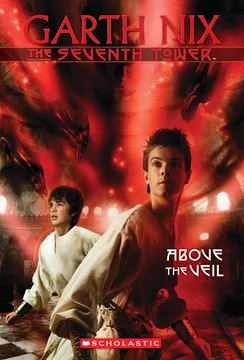
Above the Veil continues the exciting Seventh Tower series, with readers praising Nix's world-building and character development. The story follows Tal and Milla as they face new challenges and uncover secrets about their world. Many found this book an improvement over the previous installment, with increased action and intrigue. Readers appreciated the exploration of the Underfolk/Freefolk subplot and the deepening complexity of the Dark World. While some noted inconsistencies and pacing issues, overall the book was well-received, leaving fans eager for the next in the series.
Characters
Tal
Displaced Chosen heirTal is a young Chosen whose attempts to protect his family have carried him far beyond the rules and lessons that once shaped his life. He is earnest, quick to act, and prone to letting frustration outrun judgment. His relationships with Milla and Crow force him to see how the Castle’s comforts depend on people it keeps powerless. Tal wants to rescue his mother, brother, and father, but his growing sense of responsibility extends beyond his household. His most important psychological struggle is learning that good intentions do not erase consequences. He increasingly has to choose between obedience to the old order and accountability to people whom that order has harmed.
Milla
Icecarl warrior in exileMilla is an Icecarl raised to value discipline, clan loyalty, and competence under pressure. She is direct where Tal is hesitant and often sees a practical danger before he does. Her toughness is not a lack of feeling; it is a way of containing grief, fear, and the belief that she has failed her people. She distrusts the Chosen system but can recognize courage and honor in individuals within it. Milla’s bond with Tal is strained by the consequences of his choices, yet she repeatedly protects him when his survival is at stake. Her central tension lies between personal shame and a duty that keeps demanding more of her.
Crow
Freefolk rebel leaderCrow leads a small band of Freefolk who reject the Castle’s assignment of Underfolk to inherited, dangerous labor. He is guarded, sharp-minded, and fiercely protective of his people, with a hatred grounded in the damage the Chosen have done to his family. His command of the group gives him confidence, but his anger can make him treat individuals as symbols of the class that injured him. Crow’s exchanges with Tal reveal both his capacity for planning and the limits of his certainty. He wants liberation, not merely advancement within the Chosen hierarchy, and fears that reformers will ask the Freefolk to wait forever.
Adras
Tal’s unruly SpiritshadowAdras is a Storm Shepherd from Aenir who accompanies Tal as a free Spiritshadow rather than a conventional servant. He is loud, physically powerful, easily distracted, and often poor at following instructions. His connection to Tal is intimate enough that injuries and weakness can affect them both, yet Adras retains a will of his own. He brings humor to frightening situations without becoming merely comic relief: his need for light and his vulnerability make Tal’s decisions consequential. Adras’s loyalty is expressed through action, especially when he protects Tal, even when he complains about the danger.
Odris
Milla’s speaking shadowOdris is another Storm Shepherd bound by circumstance to the Dark World, where she becomes Milla’s Spiritshadow. She is expressive, sometimes self-pitying, and less eager for danger than Milla, but her concern for her companion is genuine. Odris’s ability to speak openly makes her an unsettling exception to the Chosen’s assumptions about shadows. She also has to learn the physical and emotional demands of remaining on the Dark World, including her dependence on light and her limited ability to separate from Milla. Her irreverence often gives Milla a reason to reveal care she would rather conceal.
Sushin
Hidden power in OrangeSushin is a high-ranking Chosen who can command guards and influence the Castle from a position of concealed authority. His plump, unremarkable appearance contrasts with the frightening Spiritshadow that accompanies him and the unexplained wound he carries without apparent pain. He is patient enough to have pursued a secret design over many years, and his interest in recovering Tal and Milla’s Sunstones suggests that their power matters to him. Sushin’s menace comes from the uncertainty around his identity and motives as much as from his access to force. He makes the Castle’s official hierarchy seem only one layer of its real politics.
Ebbitt
Tal’s eccentric great-uncleEbbitt is Tal’s great-uncle, an older Chosen with a maned-cat Spiritshadow and a mind that wanders through odd jokes, forgotten knowledge, and sudden clarity. His manner makes him easy to underestimate, but he has practical expertise that repeatedly proves valuable. Ebbitt’s knowledge connects parts of the Castle that its formal teaching leaves separate, from dangerous creatures to hidden routes and old political arrangements. He is affectionate toward Tal without being conventionally reassuring, often offering advice in riddles that only becomes useful later. Beneath his eccentricity is a willingness to help people across the divisions that define the Castle.
Jarnil
Teacher of reformJarnil was Tal’s Chief Lector and remains an advocate for changing the relationship between Chosen and Underfolk. His reforming instincts come from the conviction that birth should not determine who may learn Sunstone magic or rise in status. He prefers careful, incremental change, a position that puts him at odds with rebels who see patience as another form of submission. The Hall of Nightmares has left him physically and psychologically damaged, complicating his ability to lead. Jarnil’s warmth toward Tal is mixed with the authority of a former teacher, and his political caution reflects both hard experience and a lingering attachment to the Castle’s institutions.
Rerem
Tal’s absent fatherRerem is Tal’s father, a member of the reform-minded Chosen who taught Tal to feel responsible for his family. His absence shapes Tal’s choices more powerfully than his brief presence in the story. Tal interprets his father’s expectation that he protect the family as a duty he must fulfill, even when he lacks the knowledge or power to do so. Rerem is also connected to the Castle’s older secrets, which makes Tal’s search for him both intimate and political. He represents the family life Tal wants restored and the larger history Tal is only beginning to understand.
Graile
Tal’s ailing motherGraile is Tal’s mother, whose long illness leaves him anxious to find a cure. Her condition becomes a source of urgency as Tal recognizes that it resembles his brother Gref’s mysterious coma. Even while she is absent from the action, Tal’s memory of her keeps his choices rooted in family responsibility rather than ambition.
Gref
Tal’s vulnerable brotherGref is Tal’s brother, whose sudden coma has left Tal feeling that he failed to protect him. Tal’s concern for Gref helps turn the search for answers into a personal mission. He is part of the family Tal hopes to bring back together, not simply a clue in the mystery.
Gill
Resourceful Freefolk guideGill is a sharp-eyed Freefolk girl whose practical knowledge helps the group navigate dangerous routes below the Castle. She is wary of Tal and Milla at first, as the Freefolk have reason to distrust anyone associated with the Chosen. Her quick observations about the forge and the spider cavern make her an important survivor in unfamiliar territory. Gill also shows that Crow’s followers are not a single mind: she can question him, even when his temper makes disagreement risky.
Clovil
Defiant Freefolk scoutClovil is a tall Freefolk boy who challenges Crow’s control and is more willing than some of the others to explain his people’s beliefs. His outspokenness reveals internal tensions within the rebel group. He is practical enough to help guide travelers through dangerous passages, but not so obedient that he hides his disagreement.
Ferek
Nervous Freefolk followerFerek is a small, twitchy Freefolk boy whose fear shows the lasting effects of the Hall of Nightmares. He is eager to help but easily intimidated by Crow’s commands. His visible anxiety gives the Freefolk’s struggle a personal cost beyond political argument.
Inkie
Silent Freefolk mechanicInkie is a stout Freefolk girl who carries tools and knows how to operate hidden mechanisms. She communicates mostly through action, making her role in the group practical rather than rhetorical. Her presence reminds Tal that Freefolk knowledge is built from the Castle’s neglected spaces.
Bennem
Crow’s damaged brotherBennem is Crow’s older brother, a physically imposing man whose mind has been badly damaged by repeated visits to the Hall of Nightmares. He sometimes responds to familiar sounds or people but is often distant from the room around him. His condition gives Crow’s hatred of the Chosen a deeply personal source. It also makes clear that the Castle’s violence harms families long after its officials have stopped paying attention.
Lokar
Voice within the KeystoneLokar is the Guardian associated with the Red Keystone. Her knowledge of the Tower’s defenses and hidden stairways makes her a vital guide to Tal and Crow. She is direct about the danger of moving the Keystone and concerned with preserving the Veil, even when the boys’ decisions conflict with her advice. Her isolation inside the stone gives her a precise understanding of the system around her but limited power to alter events directly.
The Mother Crone
Voice of Icecarl wisdomThe Mother Crone leads the Crones of the Ruin Ship and speaks with the authority of a people whose decisions are shaped by shared memory and tradition. She is measured and difficult to sway, but she listens carefully before judging. Her presence gives Milla’s personal crisis a collective dimension: the Crones must weigh individual responsibility against the danger her information reveals.
Arla
Shield Mother of the IcecarlsArla is an experienced Shield Mother who responds to Milla’s arrival with suspicion and force. Her readiness to defend Icecarl customs makes her a formidable figure, though her reliance on violence narrows the possibility of understanding what Milla brings. She represents the real danger Milla faces among her own people.
Malen
Young Crone and advisorMalen is a young Crone selected to accompany Milla as the voice of the Crones during the coming expedition. Her age and composure make her an uncomfortable comparison for Milla, who is still uncertain of her own place. Malen carries institutional authority, even when she appears close to Milla’s age.
The Empress Kathild
Ruler of the ChosenKathild is the Empress who sits at the top of the Chosen order and is believed to control the Violet Keystone. Tal and his allies regard her as someone who may be able to act against Sushin, though she has not yet entered their struggle directly. Her distance from events raises questions about what the Castle’s ruler knows and what her authority can accomplish.
Plot Devices
The Veil and Keystones
World-spanning magical barrierSeven Keystones, each associated with a Tower and a Guardian, form the foundation of the Veil between the Dark World and Aenir. The Veil protects the peoples of the Castle and the Ice from creatures that might cross from Aenir. The Orange Keystone is linked to Tal’s missing father, while the Red Keystone contains its own Guardian. The stones make family mysteries part of a wider political and physical crisis. Their dependence on Guardians also means that knowledge, power, and survival cannot be separated from the people who maintain the system.
Sunstones
Light shaped into powerSunstones provide light, warmth, and the basis for the Chosen’s magic. Their colors correspond to distinct abilities, including healing and destructive force. Tal’s growing control lets him improvise beyond what he was taught, while Milla’s ability to use a Sunstone challenges the assumption that such power belongs only to the Chosen. For Crow, a Sunstone is also a political possibility: if the Freefolk can learn to use one, they may no longer have to rely on Chosen permission. The stones therefore function as tools, status symbols, and contested access to knowledge.
Free Spiritshadows
Unbound Aeniran companionsAdras and Odris are Storm Shepherds from Aenir who remain on the Dark World as free Spiritshadows, connected to Tal and Milla without becoming obedient servants. Their unusual speech, shape-shifting, and need for light distinguish them from the familiar Spiritshadows attached to Chosen. Their bond with the human characters creates both practical advantages and shared vulnerability. Because the Veil separates the worlds, the Storm Shepherds’ presence also tests the laws and customs of the Icecarls, Chosen, and Aenirans.
The Codex
A source of hidden answersThe Codex gives Tal information unavailable through his formal schooling, including the connection between Rerem and the Orange Keystone. It is too large to carry during the fugitives’ escape, so Milla hides it in the Castle’s Mausoleum. The Codex shifts the story from guesswork toward questions that can be tested, but it does not supply a complete explanation of the Keystones or how to repair them. Its mobility and uncertain whereabouts make knowledge itself something the characters must search for and protect.
Icecarl Practices
Discipline under mortal pressureThe Rovkir breathing patterns help Icecarls regulate fear, pain, and exhaustion. The Tenth Pattern is a last-resort discipline that lets a person continue toward a task at the cost of eventual death. Milla’s use of it makes her loyalty visible as bodily action rather than declaration. The crystal fingernail she discovers also becomes part of the Icecarl thread: an unfamiliar object connected to old histories and a new identity. Together these practices and objects show how inherited culture can both sustain a person and demand a terrible price.
Download PDF
Download EPUB
.epub digital book format is ideal for reading ebooks on phones, tablets, and e-readers.








