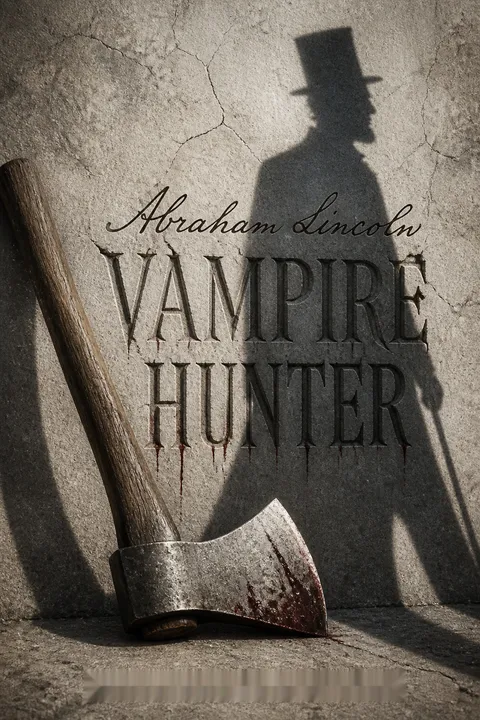


Plot Summary
Prologue
In 2007, a struggling writer in Rhinebeck receives a parcel from Henry, a wealthy, unsettling customer who has vanished from his shop. Inside are old letters and ten journals claiming to belong to Abraham Lincoln. Henry’s warning not to share them cannot survive what the writer reads: the books describe vampires woven into American history.
After Henry reveals himself as one of them, the writer abandons his family life to investigate the journals and the people named in them. The frame presents Lincoln’s secret history as both recovered evidence and a dangerous inheritance.
The frame makes storytelling itself an act of risk. The writer begins as someone who has surrendered his ambitions to ordinary pressures, then accepts a manuscript that asks him to sacrifice those ordinary ties for a truth others have buried. His uncertainty mirrors the reader’s: the journals may be authentic, fabricated, or evidence of a reality that respectable history cannot admit. Henry’s control over access to the documents also complicates the idea of disclosure. The story is not simply uncovered; it is deliberately entrusted, and its telling exacts a personal price.
A Boy Learns Grief
Young Abraham Lincoln grows up poor on the frontier, where his mother, Nancy, feeds his appetite for books and his father, Thomas, gives the family stories but little tenderness. After Abraham kills a turkey and is overcome by remorse, he refuses to eat meat, an early sign of the moral seriousness that will shape him.
He sees enslaved people pass along the road and cannot forget their misery. Then milk sickness kills Nancy and the elderly Sparrows. Abraham runs from home, but the screams in the night send him back. His father retreats into silence, while Abraham is left with a grief he cannot yet explain and a home that no longer feels safe.
The early losses make Abraham’s later violence emotionally legible without making it simple. His remorse over the turkey shows that he does not naturally welcome killing; his grief will force him to distinguish between cruelty and necessary resistance. Nancy’s reading gives him language and inwardness, while Thomas’s stories offer a rougher model of how memory can be shaped into narrative. Slavery enters the boy’s awareness as a visible human injury, not an abstract political question. These foundations connect his private bereavements to his eventual public struggle against a system that treats people as expendable.
The Debt Comes Due
After Thomas remarries Sarah Bush, he tells Abraham what he has hidden: a vampire killed his own father, and Jack Barts, the one-armed lender who threatened Thomas over an unpaid loan, killed Nancy and the Sparrows. Abraham is furious that his father kept the truth from him and ashamed that he could not protect his mother.
He records a vow to destroy vampires, then studies their supposed habits and prepares weapons. When Barts returns to collect his debt, Abraham hides a wooden stake in a small coffin and drives it into the vampire’s chest. Thomas warns that others will come. Abraham leaves him with the consequence: the hunt will continue, even if he must face it alone.
Abraham’s vow begins in grief, but it also answers a problem of helplessness. He cannot undo Nancy’s death or repair his father’s failure to act, so he converts sorrow into a task with visible targets. His action against Barts is both a first victory and a moral threshold: he discovers that revenge can feel empty even when the victim is monstrous. Thomas, meanwhile, is not simply a negligent parent; his confession exposes a man who has lived under fear and shame. Their damaged bond helps explain why Abraham’s sense of duty will later attach more easily to causes than to family intimacy.
Henry at the River
At sixteen, Abraham follows a trail of murdered children to a flatboat on the Ohio River. He attacks an elderly vampire carrying a stolen boy, but she breaks his ribs and holds him under the water. Henry Sturges intervenes, kills her, and keeps Abraham alive. When the boy wakes, he learns that Henry is a vampire who rejects the slaughter of innocents.
During Abraham’s recovery, Henry describes the disappearance of the Roanoke colony, where the vampire Thomas Crowley killed Henry’s wife and transformed him. Abraham initially resents the creature who saved him, then accepts his lessons. In a hidden underground home, Henry trains him to use patience, misdirection, and strength rather than folklore alone.
Henry’s appearance unsettles Abraham’s moral categories at precisely the moment his certainty has become dangerous. The vampire is both a rescuer and a member of the species Abraham has sworn to destroy, so their alliance must rest on judgment of conduct rather than identity alone. Henry’s Roanoke history gives that distinction personal weight: his restraint is formed by loss, not innocence. Training also changes the hunt from a fantasy of vengeance into skilled labor, requiring Abraham to control impulse and accept dependence. Their relationship begins with mistrust, but its central tension remains: can an enemy be a teacher without becoming a master?
Slavery Feeds Darkness
Henry sends Abraham names of vampires to hunt, and Abraham begins traveling beyond Indiana to kill them. On a trip downriver with Allen Gentry, he sees escaped slaves flee a plantation and glimpses a vampire pursuing them, but he cannot stop to intervene. In New Orleans, he watches a slave auction and follows a wealthy buyer to a plantation.
There, the buyer invites other vampires to select enslaved people, then allows them to feed on the captives. Abraham escapes with the knowledge that slavery gives vampires a protected supply of victims. Before leaving the city, he meets Edgar Allan Poe, who is fascinated by immortal life and challenges Abraham’s certainty that every vampire deserves destruction.
The plantation scene converts Abraham’s private war into a political diagnosis. Vampires do not merely exploit isolated victims; they benefit from an existing institution that has already denied those victims legal protection and public sympathy. Abraham’s inability to rescue the fugitives also marks a limit in individual heroism. Poe supplies a contrasting intellectual temptation: he can see immortality as a source of artistic and sensual possibility, while Abraham sees its cost in the people consumed. Their disagreement keeps the supernatural premise from becoming a simple morality tale, even as the plantation makes the material violence unmistakable.
New Salem Makes Friends
After leaving his family in 1831, Abraham reaches New Salem and works for the storekeeper Denton Offutt. Edgar Allan Poe crosses his path in New Orleans before Abraham settles there, but it is the rough local wrestler Jack Armstrong who becomes his closest ally. When the Clary’s Grove Boys force a fight, Abraham’s strength earns Jack’s respect; afterward, Jack tells him that fear of the woods has kept the gang together since a childhood killing.
Abraham shares the truth about vampires, and Jack joins his hunts. Together they pursue Henry’s targets while Abraham begins speaking publicly and enters Illinois politics. His growing reputation as a capable storyteller and fighter gives him a foothold beyond the frontier.
New Salem teaches Abraham that strength works best when it creates affiliation rather than submission. His victory over Jack could have secured only fear, but their later conversation transforms rivalry into trust by revealing the grief beneath Jack’s roughness. Jack’s local knowledge and loyalty make the hunts less solitary, while his impatience tests Abraham’s caution. The town also links violence to public identity: the same qualities that help Abraham survive a vampire encounter can make him credible to voters. His political voice grows from the storyteller’s skill inherited from Thomas, but it increasingly serves a purpose larger than entertainment.
Ann's Love Turns Fatal
In New Salem, Abraham falls deeply in love with Ann Rutledge, a bright young woman who shares his hunger for books and conversation. Their happiness is complicated by Ann’s engagement to John MacNamar, who has been absent for years. Abraham writes to MacNamar asking him to release her. When MacNamar returns, sickly and hostile, Ann becomes gravely ill with the same fever that killed Abraham’s mother.
Abraham recognizes the pattern too late: MacNamar is a vampire, and his visit has brought the sickness. Ann dies, and Abraham nearly kills himself. Henry offers to restore her as a vampire, but Abraham refuses to condemn her to immortal hunger. He then burns MacNamar alive, unable to separate justice from vengeance.
Ann’s death repeats Abraham’s childhood trauma while changing its emotional meaning. As a boy, he believed his own curiosity had caused Nancy’s suffering; now he blames himself for acting against MacNamar without understanding the danger. The offer to revive Ann tests whether love can justify imposing the very condition Abraham despises. His refusal is compassionate, but it does not purify him: the prolonged burning of MacNamar reveals grief turning into punitive excess. Henry’s later claim that Abraham has a purpose gives shape to his suffering, yet also risks making his life seem valuable only as an instrument.
A Family and a Warning
Abraham moves to Springfield to practice law and meets Joshua Speed, who gives him a room and becomes a trusted friend. He later falls for Mary Todd, but Henry warns that Mary’s father supports vampires and profits from selling enslaved people.
Abraham abruptly breaks their engagement rather than tell Mary the truth. Speed persuades him to return, and Mary accepts his apology; they marry and have Robert, then Edward. Fear of leaving his family fatherless leads Abraham to retire from hunting in 1843.
He still helps Speed and Jack face the vampire doctor Joseph McDowell, whose hidden laboratory holds living captives. Abraham enters Congress, then returns home after Edward dies of illness. Henry offers to revive the boy, but Abraham refuses to make his son a vampire.
This section places private attachment against Abraham’s habit of choosing duty through secrecy. He tries to protect Mary by withholding the truth, but the concealment itself becomes a betrayal that damages their relationship. Speed’s friendship offers a model of intimacy based on candor and shared risk, while fatherhood makes Abraham newly aware of what his own absences could cost. His retirement is not a surrender of conviction so much as a claim that family life deserves protection too. Edward’s death reopens the temptation to command loss through supernatural means, and Abraham’s refusal recognizes that love cannot make another person’s suffering acceptable.
The Union Reveals Itself
After Edward’s death and a period away from public life, Abraham returns to politics as slavery spreads into new territories. He opposes Stephen Douglas and the Kansas-Nebraska Act, while reports of violence make Edgar Allan Poe’s warning of a coming calamity harder to dismiss.
In 1857, Henry brings Abraham to a hidden gathering of vampires and human allies, including Senator William Seward. Abraham learns that two factions are at war: the Union, which seeks coexistence, and Southern vampires who want humanity chained as livestock.
Henry says Abraham must lead the human fight. Abraham agrees to oppose Douglas for the Senate, though he loses the election. Henry treats the defeat as part of a larger plan and continues preparing him for the presidency.
The Union meeting scales the story from a hunter’s private campaign to a conflict over political sovereignty. The revelation does not erase Abraham’s earlier choices; it reframes them as pieces of a struggle whose full architecture he could not see. Henry’s certainty about Abraham’s role is both sustaining and ethically uneasy, since it risks turning the protagonist into a tool of another faction. The Senate loss compounds that tension: public failure becomes acceptable only because Henry interprets it as strategic progress. The section asks whether destiny empowers a person or narrows the range of choices they are permitted to make.
Davis Sets the Trap
Abraham’s Senate debates with Douglas make slavery a national question, but Douglas wins reelection. The Union then warns Abraham that Douglas serves vampire interests and asks him to run for president.
On a mission to kill Jefferson Davis in Mississippi, Abraham, Speed, and Ward Hill Lamon discover they have been lured into a burning house surrounded by armed men and vampires. Davis argues that white political leaders can profit by helping vampires enslave Black people, then admits that the bargain may later include white victims.
Henry and Union allies rescue the hunters, confirming Abraham’s importance to their cause. Abraham wins the 1860 election on his own political strength. Southern states secede, and the first shots of war follow at Fort Sumter.
Davis’s argument exposes the logic of complicity: those who imagine themselves exempt from oppression can help build the machinery that will eventually consume them. Abraham’s refusal to surrender his ax in the trap preserves a connection to his childhood, but he survives only through collective action, not solitary prowess. The election establishes that his rise is not merely engineered by the Union, even though vampires shape the hidden conflict around it. Secession and Fort Sumter turn the political danger into open war, forcing Abraham to govern a crisis whose supernatural and human causes now reinforce one another.
The War's True Enemy
As the Confederacy forms, Stephen Douglas approaches Abraham with a warning that the South’s vampire allies intend to attack Washington. Abraham reveals his own knowledge of vampires, then tells Douglas the full plan: the Southern faction wants to enslave humanity, not merely Black people.
Douglas is shaken by his complicity and helps Abraham explain the danger to the Cabinet. The first major battle at Bull Run ends in a Union rout when vampire soldiers tear through inexperienced troops.
Abraham recognizes that the war will be long and costly, and calls for more men. While his generals struggle, Willie and Tad’s presence in the White House gives him rare relief. The family’s refuge remains vulnerable, and the war’s casualties begin to feel intimate.
Douglas’s change of allegiance demonstrates that political responsibility can begin after a person has already done harm. His remorse cannot undo his service to the Southern cause, but it makes the danger harder for the Cabinet to ignore. Bull Run then strips away the comforting assumption that conventional military superiority will suffice. The battle’s supernatural brutality exposes the limits of institutions built to fight ordinary enemies. Abraham’s sons offer an emotional counterweight, but their presence also raises the stakes: the president’s public duty and private vulnerability occupy the same house.
Willie and the Broken Bond
A stranger reaches Willie and Tad on the White House lawn and pours vampire blood into Willie’s mouth. The child falls ill over the next days and dies in Abraham’s arms. Grief overwhelms the president, who imagines joining his lost family in death. Henry offers the same terrible possibility he once offered after Ann’s death: Willie could return as a vampire.
Abraham refuses, unwilling to make his son live by feeding on others. When Henry presses him, Abraham accuses him of using his life for the Union’s war and attacks him with his ax. Henry disarms him but spares him. Abraham agrees to continue the war, while ordering Henry and the Union from his life. His resolve remains, but his trust in his supernatural allies is gone.
Willie’s death forces Abraham to confront the cost of the war through the one relationship he had tried hardest to protect. The attacker’s use of vampire blood makes the supernatural conflict personal without making the loss less human. Abraham’s refusal to resurrect Willie repeats his decision about Ann, but this time the choice is shaped by fatherhood: he will not preserve love by making his child a predator. His break with Henry is also a rejection of instrumental loyalty. He can continue fighting for emancipation while refusing to let the Union claim ownership of his grief or his consent.
Freedom Starves the Vampires
After the bloody Union defeat at Bull Run, Abraham sees that Confederate vampires depend on enslaved people as laborers and prey. At Antietam, Union forces halt Robert E. Lee’s advance, though General McClellan fails to pursue him. Abraham uses the battle’s outcome to issue the Emancipation Proclamation, freeing enslaved people in rebel states and undermining the vampires’ supply of victims.
Reports arrive of enslaved people resisting their captors and killing vampires. Abraham delivers the Gettysburg Address, survives the war’s continued strain, and wins reelection in 1864. He visits Fort Stevens under fire and insists on seeing the battle firsthand. By 1865, the Confederacy is collapsing, and the vampire exodus from America begins.
Emancipation functions here as both a moral commitment and a strategic intervention, but the two purposes do not cancel each other out. Abraham recognizes that freedom weakens the Confederacy precisely because the enslaved are people whose labor and lives have been stolen. Their resistance turns the vampire economy against itself, making liberation an active force rather than a gift bestowed from above. The section also refuses a clean victory: Antietam’s dead and McClellan’s caution show how human failures prolong suffering. Abraham’s reelection and continued exposure to battle suggest that political resolve must survive both grief and exhaustion.
Booth's Final Performance
As the war ends, the actor John Wilkes Booth, newly made immortal and devoted to Southern victory, recruits conspirators to kill Abraham, William Seward, and Vice President Andrew Johnson. On April 14, 1865, Booth enters Ford’s Theatre and shoots Abraham during a performance. His accomplices fail to kill Seward or Johnson, and Abraham dies the next morning.
Henry hunts Booth to a burning barn and kills him before he can escape. Abraham’s funeral train carries his body home through crowds of mourners, while Henry keeps watch at the cemetery. In the years that follow, Mary loses Tad, Robert survives into old age, and the Lincoln family’s private grief becomes part of the nation’s public memory.
Booth’s theatrical ambition makes the assassination a final contest over who gets to author the nation’s meaning. He treats political murder as performance, but the act cannot restore the South’s lost order or erase emancipation. Henry’s pursuit closes the immediate supernatural threat, yet it cannot reverse the human cost. The funeral train turns private bereavement into a national ritual, while Mary and the surviving sons remain people rather than symbols. Abraham’s story ends in the tension between historical commemoration and actual loss: a country can mourn its leader and still fail to repair every wound he tried to address.
Epilogue
In 1963, Henry and Abraham stand among the crowd listening to Martin Luther King Jr. speak at the Lincoln Memorial. The scene suggests that Abraham has survived beyond the funeral train and remains beside Henry, still watching the unfinished struggle for equality.
The public monument bears his likeness, but his presence beside the demonstrators connects the emancipation he helped begin to the continuing campaign for civil rights.
The closing scene refuses to let commemoration become completion. Abraham’s image is carved in stone, yet the living crowd beneath it demonstrates that the freedom he fought for remains contested. Henry’s presence links the private history of the vampire war to a public movement that does not depend on supernatural enemies to justify its demands. The ending’s implied survival gives Abraham no escape from history; instead, it makes him witness the distance between legal change and lived equality. The memorial becomes less a monument to a finished achievement than a place where unfinished obligations gather.
Analysis
The novel uses the vampire as a political predator, but its sharper claim is about the human systems that make predation ordinary. Vampires can feed in secret because slavery has already made certain lives legally disposable. The horror therefore does not arrive from outside history; it flourishes through familiar institutions, compromised politicians, and the public’s willingness to ignore victims who lack power. Abraham’s transformation from grieving child to hunter and president follows a parallel movement from personal injury to structural understanding. He first wants vengeance for Nancy, then discovers that individual killings cannot dismantle the conditions that produce more victims. The book also treats moral judgment as difficult rather than automatic. Henry’s restraint complicates Abraham’s categorical hatred, while Poe’s fascination with immortality exposes the seduction of power detached from consequence. Abraham’s repeated refusals to revive Ann and his sons insist that love does not authorize turning another person into a predator. Yet his violence against MacNamar and his dependence on the Union reveal that righteous purpose can still narrow moral vision. The novel’s central tension is not whether violence is justified in the abstract, but whether a person can use force without surrendering judgment to the institution or cause that directs it.
Its alternate history finally makes emancipation both ethical and strategic without reducing it to strategy. Freeing enslaved people deprives vampires of labor and prey, but the enslaved are not merely a resource whose liberation helps the Union win. Their resistance matters because they act for themselves. The closing movement toward the civil rights era refuses a triumphant endpoint: a president can alter the law, yet later generations must still contest the gap between declared equality and lived freedom. The story remembers Lincoln not as a solitary savior, but as a fallible man whose most consequential work depends on people continuing it.
Review Summary
Abraham Lincoln: Vampire Hunter received mixed reviews. Some praised its creative premise, historical research, and entertaining blend of fact and fiction. Others found it dry or disrespectful to Lincoln's legacy. Readers appreciated the vivid vampire lore and action scenes but criticized the book's pacing and characterization. Many felt it was better than expected, offering an engaging alternate history that explored slavery and vampirism. The audiobook received praise for its narration and musical interludes. Overall, opinions were divided, with some loving the unique concept and others preferring traditional historical accounts.
People Also Read
Characters
Abraham Lincoln
Reluctant vampire hunterA self-educated frontier boy with unusual physical strength, a storyteller’s gift, and a conscience easily troubled by suffering. His mother’s encouragement gives him an enduring attachment to books and moral reflection, while family loss makes him vulnerable to turning grief into a mission. Abraham’s hatred of vampires begins as personal vengeance, then expands as he sees their alliance with slavery. He is ambitious but wary of ambition, affectionate as a father, and capable of humor even when weighed down by melancholy. His central struggle is to serve a public cause without allowing any cause, even a just one, to claim every part of his private life.
Henry Sturges
Vampire mentor and allyAn old vampire who rejects the slaughter of innocents and possesses patience, education, and formidable combat skill. Henry recognizes Abraham’s potential early and teaches him how to hunt, but his guidance is never wholly free of strategic purpose. He believes that restraint matters even among predators and that a person’s actions count more than the species to which they belong. His calm manner can conceal grief and an unsettling certainty about the future. Henry’s bond with Abraham combines affection, instruction, and control, making him both the young hunter’s most valuable ally and the person most likely to test his independence.
Thomas Lincoln
Wounded frontier fatherAbraham’s hardworking but emotionally remote father is a gifted storyteller who struggles with ambition, grief, and fear. Thomas’s own childhood trauma shapes his silence, while his failure to act decisively haunts his relationship with Abraham. He holds antislavery convictions but cannot provide the education or security his son longs for. His eventual honesty about the vampires brings Abraham into the hidden conflict, though it cannot mend the years of distrust between them.
Nancy Hanks Lincoln
Abraham's first teacherAbraham’s mother is gentle, literate, and determined to nourish her son’s curiosity despite frontier poverty. She introduces him to books, religious stories, and the idea that a life should be measured by more than survival. Her warmth gives him a lasting image of tenderness, one that he recalls when later losses threaten to harden him. Her influence remains present in his moral imagination long after she is gone.
Sarah Bush Lincoln
Stepmother and encouragerThomas’s second wife arrives with children, belongings, and practical kindness. Abraham expects to resent her, but Sarah treats him with sensitivity and supports his love of reading. She helps make the household a family again without asking him to forget Nancy. Her steady care offers a quieter model of loyalty than the dramatic bonds Abraham later forms through hunting and politics.
Jack Armstrong
Rough-edged hunting companionA powerful young man from Clary’s Grove, Jack first measures people through physical courage and the ability to endure a hard frontier life. Beneath his bluster is a protective instinct shaped by childhood terror and the loss of a friend. Abraham’s strength earns Jack’s respect, but their friendship deepens when they exchange the grief beneath their public toughness. Jack is loyal and brave, though his eagerness can outrun caution.
Ann Rutledge
Abraham's first loveA thoughtful young woman with a strong appetite for literature and lively conversation, Ann meets Abraham through their shared interest in books. She is warm without being passive and brings him a happiness that briefly quiets his obsession with vampires and public ambition. Her independence and emotional candor make her a genuine partner in conversation, not merely an idealized object of affection.
Mary Todd Lincoln
Ambitious political partnerMary is clever, socially adept, and emotionally intense, with ambitions that match her sharp understanding of public life. She is drawn to Abraham’s wit and intelligence despite their differences in class and polish. Her early losses give her a private kinship with him, while her strong attachment to family shapes her hopes for marriage and motherhood. Mary can be perceptive and forceful, but grief and anxiety leave her vulnerable to isolation. Her relationship with Abraham combines devotion, conflict, and a shared burden of public scrutiny.
Joshua Speed
Confidant and fellow hunterA sociable Kentuckian who befriends Abraham when he arrives in Springfield, Speed offers him shelter, companionship, and a rare willingness to hear difficult truths. He has a taste for adventure and an instinct for friendship that helps draw Abraham out of isolation. His family history gives him reasons to confront the vampire economy, though his enthusiasm can make him reckless.
Edgar Allan Poe
Mortal observer of vampiresA brilliant, troubled writer fascinated by death, grief, and the possibility of immortal life. Poe approaches vampires as subjects of aesthetic and philosophical inquiry, unlike Abraham, who sees their victims first. His conversations with Abraham illuminate the seductions of power and eternity, while his own drinking and grief complicate his confidence in what immortality might offer.
Stephen A. Douglas
Rival with divided loyaltiesA gifted politician and Abraham’s longtime rival in love and public life, Douglas is ambitious, persuasive, and capable of changing positions when power demands it. His compromises on slavery place him near the interests of Southern vampires, even as his attachment to the Union complicates that alignment. He represents the danger of treating political expediency as morally neutral.
William Seward
Political ally and hunterA seasoned antislavery politician, Seward brings political experience and a hidden history of vampire hunting to Abraham’s cause. He understands how to translate secret intelligence into public strategy and often acts as a bridge between the Union and the government. His reserve reflects the burdens of maintaining a dangerous secret while working within imperfect institutions.
Ward Hill Lamon
Loyal human bodyguardA large, practical lawyer and friend, Lamon is steadfast under pressure and willing to place himself between Abraham and danger. His courage is not based on supernatural power; he depends on loyalty, weapons, and sound judgment. His presence gives Abraham a human ally who can challenge the risks he takes.
Jefferson Davis
Confederate political strategistAn accomplished Southern politician who believes he can bargain with vampires and preserve his own place in the hierarchy they intend to build. Davis’s confidence rests on political calculation and a belief that some people can be sacrificed to protect others. His reasoning exposes how self-interest can make a person serve a system that ultimately threatens everyone.
John Wilkes Booth
Immortal Confederate actorA celebrated performer whose hunger for fame and destiny makes him susceptible to the promise of immortality. Booth understands the power of spectacle and enjoys commanding an audience, but his ambitions are increasingly bound to the Confederate cause. His theatrical self-image allows him to recast violence as a historic role rather than a choice with human consequences.
Robert Lincoln
Eldest Lincoln sonAbraham and Mary’s eldest son is more measured than his younger brothers and grows up amid his father’s changing public responsibilities. He represents the future Abraham hopes to protect, even as political life repeatedly draws the family into danger and disruption.
Willie Lincoln
Book-loving middle sonA thoughtful, peaceable boy with a strong love of books and riddles, Willie is especially close to his father. His gentle temperament offers Abraham a glimpse of the kindness he believes the world needs, and the boys’ games provide the president with relief from public burdens.
Tad Lincoln
Mischievous youngest sonTad is energetic, playful, and rarely still. His closeness to Willie and his delight in games bring noise and life into the White House, giving Abraham moments of uncomplicated fatherhood amid political crisis.
Plot Devices
Lincoln's journals
Hidden history in inkThe journals give the novel its central evidence and its structure. They record Abraham’s private hunts, political doubts, family losses, and developing understanding of vampires. In the frame, a modern writer must decide whether the documents are authentic and whether their contents can safely be made public. The journals also let Abraham interpret his own life, though his entries are shaped by grief, youthful certainty, and the knowledge of later events. They make history feel simultaneously documented and contested.
Vampire rules and weaknesses
Folklore becomes fieldcraftThe novel adapts familiar vampire lore into practical but imperfect hunting knowledge. Stakes, axes, light, and careful observation matter more than garlic or holy water, which prove unreliable. Newly transformed vampires are more vulnerable to sunlight than older ones, while black eyes, fangs, unusual strength, and blood-drinking help reveal them. Henry teaches Abraham to use patience and misdirection because direct strength alone can be fatal. These rules create action while reinforcing the need to test assumptions rather than trust stories.
Slavery as vampire infrastructure
A political system feeds predatorsVampires exploit slavery because it supplies labor, hides victims, and weakens the chance that anyone will demand justice for the missing. The Southern faction’s alliance with slaveholders turns an established human institution into the material basis of a larger plan for domination. Abraham’s recognition of this connection changes his hunt from private vengeance into political struggle. The Emancipation Proclamation then attacks both slavery and the vampires’ access to captive people, while enslaved people’s resistance becomes an active force in the war.
The Union of vampires
A secret war behind historyThe Union is a clandestine faction of vampires and human allies who oppose the Southern vampires’ plan to enslave humanity. Henry’s messages guide Abraham’s early hunts, while Seward and other allies connect that work to national politics. The faction explains why vampires do not act as a single unified force, but it also complicates Abraham’s independence: Henry sees him as essential to the Union’s victory and sometimes conceals information to secure his cooperation. The secret alliance turns familiar political events into part of a hidden conflict.
The martyr match
A flash blinds the predatorAbraham makes a friction-lit weapon from chemicals and small sticks, naming it the martyr. Its sudden, brilliant flare can temporarily blind vampires, creating the brief opening he needs to strike with an ax. The device reflects his habit of combining reading and experiment with physical skill. It also gives the hunts a tactical rhythm: preparation matters, but a damp or faulty match can leave him exposed. The martyr’s effectiveness depends on timing rather than on magical power.
Download PDF
Download EPUB
.epub digital book format is ideal for reading ebooks on phones, tablets, and e-readers.








