

Plot Summary
A Funeral Turns Hungry
At Mr. Ford’s funeral in Meryton, the apothecary sits up in his coffin, though his legs were severed in the accident that killed him. His widow mistakes the movement for recovery; the congregation flees as he reaches for her. Mr. Bennet recognizes a dreadful, the name Hertfordshire gives the living dead, and leaves the pew to face it.
Elizabeth sees a knowledge in her father’s expression that he has kept from his family. He calls her and her bookish younger sister Mary to the altar, while the rest of the Bennets panic or escape. The funeral’s familiar rituals collapse in seconds, and Elizabeth follows her father toward the creature instead of running.
The funeral makes denial visible before it makes the danger lethal. Mrs. Ford clings to the idea that her husband has returned to life, while Mr. Bennet’s brisk recognition shows how much the family’s apparent normality depends on suppressed history. Elizabeth’s decision to approach the coffin marks her first break from the role of observer. The scene also lets the novel’s grim comedy sharpen, rather than soften, its central conflict: manners can govern a room, but they cannot make a corpse safe.
The Hidden Dojo Returns
Mr. Bennet orders Elizabeth and Mary to fetch tools, but neither can bring herself to behead their former neighbor. He does it himself, then reveals that the dreadfuls once threatened England and that he trained in China with a warrior order. After the danger supposedly ended, he hid his weapons and raised his daughters as ladies, breaking a promise to train them.
Now he empties Mrs. Bennet’s greenhouse of its plants and restores it as a dojo. He tells his daughters that the threat has returned and begins instruction at once. The family’s arguments about marriage, reputation, and propriety continue, but the girls now sit, stand, shout, and handle weapons under their father’s uncompromising direction.
The dojo is both a practical refuge and a material record of Mr. Bennet’s compromise. He did not merely conceal weapons; he postponed a duty that might have made his daughters safer, and the funeral forces him to admit the cost. His blunt teaching challenges the social script that equates femininity with helplessness, but his methods also expose how easily protection becomes control. Elizabeth’s willingness to begin, despite fear and grief, distinguishes curiosity from obedience: she wants to know what her father hid and what she herself can do.
The Hunt Finds Emily
Lord Lumpley, the local baron, turns Mr. Bennet’s warning into a drunken hunt, using Mr. Ford’s ears to set the hounds on a scent. At a lake, the party finds Emily Ward, Jane’s missing friend, returned as a dreadful and tethered to a stone. Mr. Bennet orders Jane to kill her, but Jane breaks down at the sight of someone she loved.
Elizabeth steps into the water and attacks instead. The creature grabs her sword, and Jane finally joins her, beheading Emily. The hunt’s revelers see the danger they had treated as sport. Then Geoffrey Hawksworth, a young warrior sent by Mr. Bennet’s secret order, arrives and announces that he will train the family.
Emily’s appearance turns the threat from an abstraction into a relationship Jane cannot sever cleanly. Mr. Bennet believes survival demands immediate violence, but Jane’s grief shows the psychological cost of making that demand before she is ready. Elizabeth’s intervention is courageous but not yet competent: her sword is taken, and she needs Jane’s help. The scene therefore refuses a simple opposition between softness and strength. Jane’s compassion is not a flaw to erase; it is part of what makes the act of fighting morally and emotionally difficult.
A Master Takes Command
Hawksworth imposes punishing drills on the Bennets, including repeated push-ups for mistakes, while Elizabeth proves eager and Jane remains graceful but reluctant to harm anyone. Their training costs them their invitation to the spring ball at Pulvis Lodge, leaving Jane devastated and Elizabeth newly conscious of the price of public disapproval.
During a night disturbance, the sisters arm themselves and discover that the intruder is their own mother, who has slipped into Mr. Bennet’s room seeking affection. The awkward interruption briefly punctures the family’s fear, but Elizabeth and Jane’s growing interest in Hawksworth, and his attention to Elizabeth, complicate a household already strained by discipline and danger.
Hawksworth supplies discipline, but his rigid authority does not resolve the Bennets’ conflict between safety and belonging. The rejected invitation gives that conflict a concrete social cost, especially for Jane, whose self-worth is closely tied to gentleness and acceptance. The nighttime misunderstanding makes the family’s ordinary intimacy look as alarming as the supernatural threat, then reveals the human need beneath the comedy. Elizabeth’s attraction to Hawksworth grows beside her resistance to his methods, suggesting that admiration and judgment can coexist without cancelling each other.
Painted Faces, Real Danger
During a training exercise in the woods, Elizabeth falls behind her sisters and finds two dreadfuls. She wounds one with a thrown dagger but cannot stop it before Dr. Bertram Keckilpenny shoots it. The eccentric doctor has been testing whether a person can disguise himself as undead and move unnoticed among them.
Elizabeth escorts him toward Meryton, where a company of soldiers has arrived under the limbless veteran Captain Cannon and the stiff young Lieutenant Tindall. On the road, the dead highwayman known as the Black Thistle attacks. The soldiers scatter, but Kitty and Lydia arrive with swords and help decapitate him. The sisters’ training has begun to serve them, even as the army’s weakness becomes plain.
Keckilpenny and Tindall introduce two competing forms of response: experimental curiosity and military order. Neither is immediately sufficient. The doctor’s disguise nearly gets him killed, while the soldiers’ uniforms cannot make them brave. Kitty and Lydia’s intervention matters because it converts training from a private performance into public action. The episode also exposes the novel’s interest in competence as something demonstrated under pressure, not guaranteed by rank, education, or a convincing costume.
Jane Guards Netherfield
Captain Cannon explains that only a small, poorly trained company has been sent to Hertfordshire, so Mr. Bennet needs Lord Lumpley’s influence and estate. The baron agrees to let Jane serve as his bodyguard, hoping the arrangement will also rehabilitate the Bennets’ reputation.
On the way to Netherfield, Mr. Bennet finds a fresh piece of human remains in dreadful droppings, proof that the dead are active nearby. In Meryton, Jane helps persuade the Reverend Cummings to permit a test at the cemetery. A buried woman then reaches from the soil and grabs a soldier. Mr. Bennet destroys her with a hammer, convincing the vicar that the burial grounds must be dealt with urgently.
The cemetery scene makes the crisis systemic: the danger is no longer a single corpse but the accumulated consequence of years of ordinary burials after the old protections were abandoned. Jane’s role in persuading Cummings shows that her gentleness can achieve what force alone cannot, while her new bodyguard position places her inside a morally dubious bargain. Mr. Bennet’s discovery of the remains gives his urgency evidence, not merely trauma. The scene shifts the family’s task from reacting to isolated attacks toward confronting a community’s neglected infrastructure.
A Zombie in a Net
After Tindall refuses to teach Elizabeth musketry, she turns away from the soldiers and joins Keckilpenny in the woods. They use a bait made from human remains, a bear trap, and the doctor’s reinforced net to capture a dreadful rather than kill it. Tindall reluctantly allows the creature to be hidden in Netherfield’s attic, where iron chains and a gag can contain it.
Keckilpenny names his captive Mr. Smith and hopes to restore some trace of its human identity through food, books, portraits, and music. Mr. Bennet distrusts the experiment, but Elizabeth stays to help, drawn to the possibility that understanding the enemy may matter as much as learning to destroy it.
The capture gives the book a laboratory counterpart to the dojo. Hawksworth seeks mastery through practiced force; Keckilpenny seeks knowledge through observation, though his methods risk treating a person as an object. Elizabeth’s choice to help him is not simply a rejection of martial training. She is testing whether the dreadfuls can be understood without pretending they are harmless. The captive’s imposed name also raises a pointed question: whether a label can restore personhood, or whether it only comforts the people who give it.
Mary Faces the Dreadful
While Elizabeth works with Keckilpenny, Hawksworth takes Mary, Kitty, and Lydia on patrol. A nearly fleshless dreadful charges Mary, who fires her pistol without stopping it, then uses her sword to destroy what remains of its head against a tree. The fight is messy, but Mary has finally faced the test she feared and wanted.
Hawksworth praises her effort, even as he points out flaws in her technique. At Netherfield, Jane also faces an attack: a dreadful enters her room after a servant has tried to make her drink drugged brandy. Jane escapes its blows by climbing onto the canopy and kills it with an axe before it reaches the maid.
Mary’s fight matters because it is neither graceful nor borrowed from a sister’s example. She acts amid fear, fails to stop the creature with her first weapon, and adapts. That pattern gives her competence a different texture from Elizabeth’s impulsiveness or Jane’s restraint. Jane’s encounter brings danger into the supposedly protected domestic interior and reveals how easily hospitality can be used to compromise a woman’s agency. Her quick decision to protect the maid suggests that her gentleness is becoming active judgment, not passive trust.
Netherfield Opens Its Doors
The Bennets attend the spring ball at Netherfield, now hosted by Lumpley, though most guests still treat Elizabeth and Jane as social outcasts. Elizabeth leaves the dance to visit Keckilpenny, who tries to provoke a response from Mr. Smith by pairing music with a waltz. The experiment unsettles the captive but produces no clear recovery.
Meanwhile, Mr. Bennet brings tradespeople and their families into the house, overruling Lumpley’s objections. He warns that a large horde is closing in. The ballroom’s polite performance gives way to a crowded refuge: the villagers who once shunned the Bennets now depend on their weapons, their judgment, and the protection of Netherfield’s walls.
The ball places public judgment and physical danger in the same room. Elizabeth discovers that she no longer needs the approval the gathering was meant to secure, while the villagers’ arrival reverses the social hierarchy without erasing its history. Keckilpenny’s experiment remains uncertain, a useful counterweight to the certainty of the coming violence. The house becomes a refuge only because Mr. Bennet makes it one, converting a space of aristocratic display into a shared shelter. Social belonging is tested here by who is admitted when admission becomes costly.
Hawksworth Runs at Dawn
The soldiers attempt to hold the lawn while the household boards the windows, but the dreadfuls overwhelm them. Hawksworth feigns an injury, takes a horse, and abandons Ensign Pratt to the horde. Tindall stays to protect Jane and, when the line fails, dies rather than be taken by the dead. Mr. Bennet and the survivors retreat inside.
In private, Cannon admits that the plague has spread far beyond Hertfordshire and that the War Office concealed the scale to prevent panic. He also reveals his longstanding love for Mrs. Bennet. Bennet postpones the duel his honor demands, and the two veterans agree to keep working together while the house remains under siege.
Hawksworth’s flight makes the distinction between martial display and courage brutally concrete. His polished movements have trained the sisters, but they cannot substitute for his willingness to risk himself. Tindall’s death, by contrast, completes a choice shaped by his ideals, even as those ideals had made him judge the Bennets too narrowly. Cannon’s confession expands the crisis from local outbreak to national catastrophe. Mr. Bennet’s delayed reckoning with Cannon shows how survival can require a temporary suspension of justice without making the underlying betrayal disappear.
Jane Uncovers Lumpley's Secret
As the dreadfuls tear at Netherfield, Mr. Bennet proposes hiding survivors in Lumpley’s cellar and secret passages. The servants reveal that Lumpley had kept the cellar locked after using it to conceal women whose deaths he had ordered Belgrave to make permanent. Mr. Bennet says Emily Ward was pregnant when she died, and suspects other victims met the same fate.
Lumpley denies responsibility and calls for Jane to protect him. Instead, Jane runs him through with her katana. Lydia pins Belgrave’s coat to the wall with throwing stars, preventing his escape through a hidden passage. The villagers take over the defense, while Mary, Kitty, and Lydia begin clearing the cellar.
Lumpley’s secret turns his appetite for control into the human source of several horrors the family has faced. The revelation does not make the supernatural threat a metaphor; rather, it shows how social power can create victims and then hide them among the dead. Jane’s action breaks with her habitual presumption of goodness in others, but it is not a rejection of compassion. She identifies that Lumpley has exploited the very trust she offered. The hidden passages embody the house’s second life, built to conceal what its public rooms were designed to display.
Blood Leads to the Attic
With the walls failing, Mr. Bennet moves the survivors toward the cellar and plans to hide himself and his daughters in the attic. Elizabeth goes to warn Keckilpenny and finds that Mr. Smith has bitten him. The doctor admits he has become infected and asks Elizabeth to kill him before the plague takes him.
As Mr. Smith breaks free, Keckilpenny restrains him long enough for Elizabeth to decapitate both. The Bennets then stand silent while the dreadfuls search the house below, but the doctor’s blood runs under the attic door and gives them away. Mr. Bennet tells his daughters that choosing to face death together has already made them warriors; they spread out as the door begins to break.
The attic forces Elizabeth to confront the limit of curiosity: knowledge cannot always be pursued without cost, and attachment does not guarantee rescue. Keckilpenny’s final request converts his abstract interest in the dead into a direct act of care for the living, though it cannot undo his earlier self-absorption. Elizabeth’s choice is decisive and traumatic. Her father’s definition of a warrior then shifts the emphasis from technique to chosen solidarity. The daughters’ readiness is not proof that fear has vanished; it is evidence that they can act while afraid and grieve without abandoning one another.
Lady Catherine Brings the Guns
Before the attic door gives way, the dreadfuls outside suddenly turn and flee. Mr. Bennet leads his daughters to a window, where they see cannon fire tear through the horde and mounted soldiers charge across the grounds. Ninjas emerge from the trees to cut down those escaping into the woods.
Lady Catherine de Bourgh, head of the warrior order, has arrived with the forces sent to relieve them. The survivors leave hiding and join the fighting. Mr. Bennet calls the victory a beginning rather than a final end, and the family prepares to continue its defense of England. At last, the sisters are not merely training for a war their father remembers; they have entered one themselves.
The rescue arrives not as a reward for individual heroism but as the return of an institution Mr. Bennet once belonged to and feared had failed him. Cannon fire, cavalry, and ninja tactics combine the book’s competing modes of defense, none sufficient alone. The sisters’ survival has depended on training, communal shelter, scientific inquiry, and military force, including imperfect or compromised versions of each. Calling the victory a beginning resists the comforting fiction that one battle can restore the old order. The family has changed, and the world around it has changed more.
Epilogue
After the battle, Lady Catherine orders her force back toward London, despite reports that survivors remain at Netherfield. A wounded man has been strapped into a box after she removed his bitten limbs. He asks whether Elizabeth Bennet survived.
Told that Bennet sisters fought among the defenders, he asks to be turned toward the house and waits there for help. The epilogue leaves his identity unstated, making his longing to see Elizabeth the final note of a war that has only begun.
The epilogue trades the main story’s crowded battlefield for a single injured man’s wait. His request to face Netherfield turns orientation into an act of hope: he cannot reach Elizabeth, but he can choose where to look. Lady Catherine’s brisk departure also widens the scale again, reminding readers that the rescue is only one movement in a larger campaign. By withholding the man’s identity, the scene makes recognition itself suspenseful and leaves Elizabeth’s future tied to relationships not yet repaired.
Analysis
Dawn of the Dreadfuls makes the return of the undead a crisis of both bodies and social arrangements. The dead rise because protections have been abandoned, while living people have been trained to trust rank, gender, and decorum more than evidence. The Bennet sisters’ martial education challenges that arrangement, but the story does not suggest that competence alone makes them invulnerable. Elizabeth’s boldness repeatedly needs correction or help; Jane’s gentleness can negotiate, defend, and eventually judge; Mary’s bookish certainty becomes meaningful only when tested physically. Their differences matter because survival depends on more than one temperament.
The novel’s comedy is structural rather than merely decorative. Mrs. Bennet’s marriage calculations, Lumpley’s vanity, military ceremony, and Keckilpenny’s eccentric science all expose ways people protect themselves from fear by turning it into a familiar performance. Those performances fail when the dead arrive. Yet the book does not simply replace manners with violence. Jane’s peacemaking persuades the vicar, and household connections help build a defense. The problem is not civility itself, but civility used to deny danger or preserve privilege.
The strongest moral question concerns what it means to remain human when facing creatures that may retain some trace of personhood. Keckilpenny’s experiment is hopeful and ethically unstable; the Bennets’ violence is necessary and emotionally costly. Neither response supplies a clean answer. At the climax, Elizabeth must choose action over the possibility that patience could save someone she cares about. The ending offers rescue, not restoration. The family survives by combining practical skill, communal cooperation, and outside military force, but the wider outbreak remains. Its hopeful beginning is therefore earned without being mistaken for a happy conclusion.
Review Summary
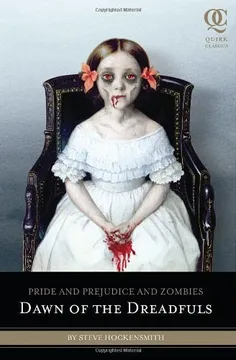
Dawn of the Dreadfuls is a prequel to Pride and Prejudice and Zombies, following the Bennet sisters as they train to become zombie-slaying warriors. Reviews are mostly positive, praising the book's humor, action, and faithfulness to Austen's characters. Many readers found it more enjoyable than its predecessor, appreciating the original storyline and character development. Some criticize the lack of continuity with the first book and occasional over-the-top moments. Overall, it's considered an entertaining blend of Regency romance and zombie fiction, appealing to fans of both genres.
People Also Read

Characters
Elizabeth Bennet
The questioning fighterThe second Bennet daughter is quick-witted, observant, and impatient with rules that seem designed to keep women powerless. She resists her father’s secrecy and tests the claims of both her martial instructor, Geoffrey Hawksworth, and the curious Dr. Keckilpenny. Her courage often arrives before her skill, which makes her both formidable and vulnerable. Elizabeth’s loyalty to her sisters anchors her choices, while her attraction to men who embody very different kinds of confidence complicates her judgment. She wants not simply to be protected or admired, but to understand what danger demands and decide for herself how to meet it.
Jane Bennet
The gentle eldest sisterJane is the eldest Bennet daughter, admired for her beauty and known for her patience, generosity, and trust in other people. She would rather reconcile a quarrel than win it, and she is reluctant to harm even when danger makes violence necessary. That gentleness is not stupidity: Jane listens closely, reads social situations, and often finds a humane compromise others miss. Her family’s expectations and the attention of powerful men place pressure on her to remain agreeable. Jane’s central tension is how to protect her kindness without letting others use it as permission to decide her life for her.
Oscar Bennet
The sardonic warrior fatherElizabeth’s father is a dry, intelligent gentleman with a private history as a trained warrior. He loves his daughters but has long concealed the danger that shaped his youth, partly to preserve their place in respectable society. When the dreadfuls return, he becomes an impatient instructor and strategist, willing to risk family reputation in the name of survival. His wit often masks regret, especially when his choices hurt the people he means to protect. Oscar’s struggle is not simply to make his daughters capable fighters; it is to admit that his old compromises helped leave them unprepared.
Mrs. Bennet
The matchmaking matriarchThe Bennet girls’ mother is excitable, talkative, and relentlessly focused on securing advantageous marriages for her daughters. Her alarm can overwhelm a room, and she often treats reputation, balls, and eligible men as urgent matters even when more immediate dangers loom. Yet her fixation grows from real vulnerability: the family estate is entailed away from the daughters, leaving marriage among the few protections society offers them. Her comic excess should not obscure her perceptiveness about social survival. She understands the rules her daughters are being asked to break, even when she cannot accept the cost of breaking them.
Mary Bennet
The earnest scholarMary is the Bennets’ middle daughter, serious, bookish, and eager to be considered morally and intellectually useful. She corrects her sisters and cites her reading, sometimes mistaking solemnity for wisdom. Training gives her a practical test beyond her usual role as the family’s commentator. She wants to matter, but also fears the moment when theory must become action.
Kitty Bennet
The giggling recruitKitty is one of the two youngest Bennet sisters, quick to laugh, easily flustered, and often swept along by Lydia’s schemes. Her first response to danger may be noise or nervousness, but she learns to handle weapons and work beside her sisters. She wants the ordinary pleasures of youth, especially the prospect of future balls, while discovering that responsibility can arrive before she feels ready.
Lydia Bennet
The bold youngest sisterLydia is the youngest Bennet, lively, flirtatious, and far more concerned with future romance than her family thinks sensible. She jokes when others grow grim and often ignores the rules meant to contain her. Her confidence can shade into recklessness, but she is also quick to act when danger becomes immediate. Lydia’s energy makes her difficult to discipline and hard to dismiss.
Geoffrey Hawksworth
The severe martial masterA young warrior sent by the Bennet family’s old order, Hawksworth arrives with impressive discipline, physical skill, and little patience for hesitation. He expects obedience and pushes his students through punishing exercises, believing that preparation must be harsher than the danger they will face. His sternness conceals a more complicated interior, though he rarely permits others to see it. Elizabeth’s independence unsettles him, even as her courage draws his attention. He represents the ideal of mastery, and the question of what that ideal demands from a person.
Dr. Bertram Keckilpenny
The curious necrosis doctorKeckilpenny is a young medical investigator fascinated by the dreadfuls and convinced that careful study may reveal how they function. He is brilliant, disorganized, exuberant, and poor at remembering names. His enthusiasm makes him an engaging companion for Elizabeth, who shares his appetite for questions, but his focus can narrow until the living people around him seem secondary to the experiment. He embodies the promise and danger of treating knowledge as a form of rescue.
Lord Lumpley
The powerful local baronThe baron of Lumpley is wealthy, vain, and accustomed to having his status smooth the way for his desires. He is attracted to Jane and enjoys the influence his title gives him over Hertfordshire society. His grand manners and self-regard make him difficult to read at first, especially for people inclined to believe the best of him. He wants to be seen as a consequential man, but his conduct repeatedly tests the difference between public importance and genuine responsibility.
Captain Cuthbert Cannon
The battle-scarred captainCannon is a veteran of the earlier dreadful wars, now left without arms or legs and transported by two attendants. He retains a soldier’s authority, tactical experience, and blunt sense of humor. His body records the cost of the previous conflict, while his command of a small, inexperienced company makes him responsible for a new generation of recruits. His return to Hertfordshire also connects the Bennets’ present crisis to personal ties from the past.
Lieutenant Tindall
The proper young officerTindall is a handsome, upright officer who believes military duty and English propriety should reinforce one another. He initially disapproves of young women taking up weapons, especially Jane, whose gentleness he admires. His respect for her grows as he sees the courage behind her reserve. Tindall’s rigid ideals can narrow his judgment, but his concern for the people he serves is sincere.
Reverend Cummings
The anxious village vicarThe local vicar is devout, nervous, and deeply protective of the sanctity of the parish grounds. The return of the dreadfuls forces him to weigh religious duty against the practical danger of leaving the dead undisturbed. His hesitation reflects a community that has lost the habits needed to face an old emergency.
Belgrave
Lumpley's watchful stewardBelgrave is Lord Lumpley’s gray, unflappable steward, trained to notice little and reveal less. His quiet service makes him a keeper of the household’s private workings, including its passages and secrets. He appears to value order, though his loyalty to his employer complicates any easy trust.
Emily Ward
Jane's missing friendEmily is a young woman from Meryton and a friend of Jane’s whose disappearance troubles the family before they understand what has happened. Her absence ties the dreadfuls’ return to the village’s ordinary lives and gives Jane a personal stake in the first encounters.
Lady Catherine de Bourgh
The formidable order leaderLady Catherine is a powerful figure associated with the warrior order and the defense of the realm. Her commanding presence and impatience with delay suggest a woman accustomed to making decisions under pressure. Even from a brief appearance, she seems far removed from the village’s social anxieties.
Jonathan Ward
Emily's grieving fatherJonathan Ward is Emily’s father, a Meryton tradesman who enters the crisis as a bereaved parent. His grief gives weight to the human cost hidden behind Netherfield’s respectable façade.
Plot Devices
The old burial rules
Makes every grave dangerousThe earlier crisis led to strict practices for preventing the dead from rising, including the removal of heads. When those protections lapse, the danger accumulates beneath ordinary cemeteries and private grounds. The device connects a past war to the present outbreak and turns public policy into immediate survival stakes. It also gives the characters a concrete reason to inspect graves and act before the entire dead population emerges.
The Bennet dojo
Turns social daughters into fightersMr. Bennet’s restored greenhouse becomes the sisters’ training space, where they learn stances, weapons, movement, and discipline. The dojo is both practical preparation and a challenge to the social limits placed on women. Its lessons are tested outside the household, where imperfect technique can still become decisive action. Training also gives the sisters distinct ways to respond rather than making them interchangeable warriors.
Keckilpenny's zombie net
Makes study possibleThe doctor’s reinforced net, used with bait and a trap, lets him capture a dreadful instead of immediately destroying it. The captive gives him a chance to test whether any memory or response survives death. The experiment introduces a scientific alternative to combat, while its risks and uncertain results keep that alternative from becoming an easy solution.
Netherfield's secret passages
Hide people and crimesThe baron’s manor contains concealed routes and a cellar that the household staff know more about than they are meant to. During the siege, these spaces offer ways to hide vulnerable survivors. Their discovery also exposes the darker uses to which secrecy has been put. The same architecture that enables shelter therefore carries both practical value and moral evidence.
The estate siege
Turns a ball into a refugeNetherfield begins as the baron’s display of wealth and social authority, then becomes the place where soldiers, villagers, servants, and the Bennets shelter together. Its doors and windows provide a temporary defense, while its supplies and hidden spaces shape the survivors’ choices. The siege forces the social world gathered for the ball to become a working community, with every person judged by what they can do under pressure.
Download PDF
Download EPUB
.epub digital book format is ideal for reading ebooks on phones, tablets, and e-readers.








