

Key Takeaways
Say yes to the frightening move before anxiety edits your life smaller.
The leap came first. In 2012, Chris Broad applied to the JET programme, a Japanese government exchange scheme placing English speakers in schools. At his embassy interview, he struggled to explain both his Japanese ability and wabi-sabi, then was accepted anyway. He arrived in Japan anxious, jet-lagged, and unsure where he had been sent. His assignment was Sakata, a rural town far from the famous cities he had imagined.
Anxiety did not disappear. Broad describes panic before departure and uncertainty after arrival, but later recognizes that refusing the move would have meant losing the relationships, work, and sense of home that followed. His test for big choices becomes whether walking away might bring regret.
The account distinguishes courage from fearlessness: the move is frightening precisely because it matters. That resembles exposure-based approaches to anxiety, where manageable contact with a feared situation can loosen avoidance. But the story is not a universal prescription to leap. Broad had a job placement and institutional support, resources that make risk different from a financially or physically unsafe gamble. The useful question is not whether fear should be ignored, but whether it is warning of concrete danger or merely defending the familiar.
Let lived experience replace the postcard version of Japan.
The real thing surprised him. Broad’s earlier encounters with supermarket sushi in Britain had left him unimpressed. In Tokyo, carefully prepared tuna and properly seasoned rice transformed his opinion. The meal also included fermented squid innards, a reminder that discovering a cuisine means meeting its less comfortable corners as well as its celebrated dishes.
One country contains many worlds. Tokyo’s vast crowds, Sakata’s quiet streets, and Kyoto’s temples offered radically different experiences. Kyoto first struck Broad as crowded and overrun by visitors. During the pandemic, its emptied streets let him notice the traditional machiya, narrow wooden townhouses, and the city’s quieter beauty. The same destination can look different depending on who lives there, who visits, and what the moment permits.
Travel becomes more than collecting sights when an expectation is allowed to change. The sushi scene works because it corrects a judgment formed from a poor version of the food, while Kyoto shows that tourism can both sustain local businesses and overwhelm daily life. There is a useful caution here: one traveler’s surprise is not a definitive account of a nation. Broad’s strongest observations remain grounded in particular meals, streets, and relationships rather than claims that every Japanese person or place behaves alike.
Learn the room before expecting your words to land.
Communication takes adjustment. On his first day in Sakata, Broad delivered a fast, slang-filled account of his flight. His new colleagues understood almost none of it. Speaking more slowly and simply worked better than trying to sound clever. He also found that long pauses were not necessarily signs of hostility. Chinmoku is the Japanese practice of allowing silence within conversation, rather than treating every quiet moment as a problem to fix.
Context changes the conversation. At work parties, colleagues who had seemed reserved became candid after drinks. Broad calls this nommunication, a playful blend of drinking and communication. It helped him understand that speech is shaped not only by vocabulary, but also by setting, status, and social expectations.
This is a practical lesson in communication accommodation: people understand one another more readily when speakers adjust pace, vocabulary, and assumptions to the listener. The memoir also shows why a pause cannot be interpreted through one culture’s conversational rules alone. Still, alcohol-fuelled candour has limits. It can create temporary openness, but it is not a substitute for trust, and it may not make every workplace safe for disagreement. Good communication means noticing both the invitation and the boundary.
Make belonging a weekly practice, not a lucky accident.
Friendship grew through repetition. Broad’s first close encounters in Sakata included an elderly local who shared a basket of exceptional cherries at a hot spring and Kengo sensei, a teacher who invited him to a Hiroshima memorial service. The relationships that lasted, though, came from regular contact: volunteering at an adult English class, studying Japanese with retired train conductor Fumio Itou, and meeting Natsuki for yakitori and conversation.
Small routines changed his role. At first Broad felt like a conspicuous foreign visitor. Over time, colleagues and locals became friends, people expected to see him, and he was invited into homes and community events. Familiarity was built less by one dramatic cultural gesture than by showing up, contributing, and letting others get to know him gradually.
Belonging is often treated as a feeling that either arrives or does not. This story makes it look more like a social structure built through repeated encounters, shared tasks, and reciprocal attention. Community psychology similarly emphasizes participation as a route to connection, not merely a reward for already feeling at home. The distinction matters: routines create opportunities, but they cannot guarantee acceptance. Broad’s account works because local people meet him halfway, turning his effort into genuine relationships rather than a one-sided performance.
Turn daunting study into vivid cues, then rehearse under pressure.
A memory method made the speech possible. The Roman Room method links information to familiar places in the mind. Broad imagined walking along his school corridor and placed a striking image in each room to prompt one section of his Japanese speech. A bear throwing fried chicken at a classroom board helped him recall a paragraph about his winter eating habits. Strange images were easier to remember than abstract lines.
The first attempt still failed. Broad lost his place during the speech contest and had to read the rest from the page. He returned the next year with a new speech, more preparation, and the same method, then won. The technique gave him retrieval cues, but repeated practice was still essential.
The method resembles a memory palace, using spatial navigation to create retrieval prompts. It is a useful example of matching a strategy to the task: a speech has a sequence, and an imagined route can preserve that sequence. The failure is equally instructive. Recalling material in a quiet room does not automatically prepare someone for a live audience, where stress disrupts retrieval. The practical improvement is to rehearse in conditions that resemble the performance, not to assume that a clever mnemonic removes the need for practice.
Protect mistakes if you want people to risk learning.
A laugh can close a classroom. During a British-food vocabulary game, a shy student misspelled the dessert name Knickerbocker Glory. The class laughed, Broad joined in, and the student angrily slammed his books down. Broad realized that what felt like harmless fun to others had made one student feel exposed.
The stakes were not abstract. A first-year student at Sakata Senior High later jumped from a fourth-floor window after enduring bullying and theft by classmates. He survived and eventually returned to school. A 2013 survey of 9,000 children, cited in the book, found that 66.2 per cent had experienced bullying. Broad argues that fear of standing out can silence students, and that teachers must take exclusion seriously before harm becomes visible.
Psychological safety, the sense that a person can speak or make an error without humiliation, is central to learning in classrooms and workplaces alike. The student’s reaction exposes how a group’s shared laughter can feel very different to its target. The memoir also warns against explaining bullying through a single national trait: peer cruelty occurs across societies, while institutions and local norms shape how it is handled. The concrete responsibility remains clear: adults should notice exclusion, interrupt it, and make mistakes survivable.
Let creative ambition grow, but do not promise beyond your capacity.
Small experiments opened doors. Broad began his YouTube channel with simple videos about life in rural Japan. One early hit showed him trying McDonald’s fries with chocolate sauce. A later video, filmed after J-Alert, Japan’s emergency warning system, announced a North Korean missile, reached a huge audience and unexpectedly put him in the news.
Attention is not the same as stability. Broad’s channel grew, but he still faced financial uncertainty. On Journey Across Japan, he promised daily episodes while cycling, filming, presenting, and editing alone. The schedule nearly broke him; by the final stretch, he was too ill to produce usable footage. The episode illustrates both the creative potential of online media and the cost of treating control as more important than sustainable production.
Digital platforms reward work that is immediate, unusual, and easy to share, but the same systems offer little protection against burnout or erratic income. Broad’s viral videos show how an unexpected event can expand an audience; they do not prove that attention can be reliably reproduced. A durable creative practice needs processes that survive after the novelty fades. Delegation, realistic deadlines, and financial planning are not enemies of artistic control. They are conditions that let creative work continue.
Show what survivors rebuild, not only what disaster destroys.
Recovery has human detail. Broad and his collaborator Ryotaro filmed in Tohoku after the 2011 earthquake and tsunami, which killed almost 20,000 people and devastated communities along the coast. In Onagawa, Mayor Yoshiaki Suda kept a damaged building as a warning and gave younger residents influence over the town’s redesign. Farmers whose land had been ruined by saltwater turned to growing premium strawberries.
Resilience is not a slogan. Broad also interviewed innkeeper Ichiyo Kanno, who lost her home and later her husband, daughter, and son-in-law in a separate fishing accident. She reopened her inn and found purpose in welcoming guests. The documentary sought to make visible the continuing lives and decisions behind a disaster headline.
Disaster reporting can reduce communities to casualty counts, damage estimates, and images of ruin. Following local decisions restores agency without hiding the scale of loss. The strawberry growers and Onagawa’s redevelopment also show that recovery is economic and political, not simply emotional resilience. There is a necessary caution: celebrating ingenuity should not imply that survivors can rebuild without public resources or that grief is overcome by optimism. The strongest version of this approach holds individual initiative and structural responsibility in view together.
Leave a successful chapter when it no longer fits your growth.
A good life can still become too small. After three years in Sakata, Broad had friends, conversational Japanese, and a settled routine. He chose to leave because teaching felt increasingly limited and his growing channel needed more time. He moved to Sendai, despite knowing almost nobody there and facing rejection from a landlord who did not want a foreign tenant.
Starting over was messy. He spent months in hotels and short-term apartments, worried about money, and questioned the move. A simple video about chocolate-covered fries unexpectedly attracted a large audience, helping revive the channel. The transition was not a clean leap from one success to another. It was a period of uncertainty that made room for a different kind of work.
The decision reframes success as a changing fit between a person and a role, rather than a stable destination. Leaving a nourishing community is costly, and Broad does not pretend otherwise; the sadness of his farewell matters as much as the excitement of the move. His story also shows that a chosen transition can expose people to discrimination and financial precarity. Growth is not automatically virtuous, but staying only because a life once worked can quietly close off other possibilities.
Do not let real danger make the decision on your behalf.
Fear became physical. In 2022, a magnitude 7.4 earthquake shook Broad’s Sendai apartment, sent dishes crashing, and damaged the studio he had built. For the first time, he believed he might die. He and his partner fled downstairs with their cat, then learned that three people had died and 247 had been injured.
Staying was a choice, not denial. Broad remained in Sendai, even while afraid of another major earthquake. He did not claim the risk was imaginary. Instead, he refused to let fear alone decide whether he belonged in the city. His closing reflection returns to the question that began his life in Japan: whether avoiding a frightening choice would leave him with lasting regret.
This ending avoids the easy claim that fear should simply be conquered. The earthquake was real, and risk assessment matters, especially when other people depend on the decision. What changes is who gets to make the choice: a person can acknowledge danger without allowing it to become the only consideration. The distinction between informed caution and avoidance is useful far beyond travel. It also has limits. Staying is not inherently braver than leaving; the meaningful outcome is a decision grounded in values and circumstances.
Analysis
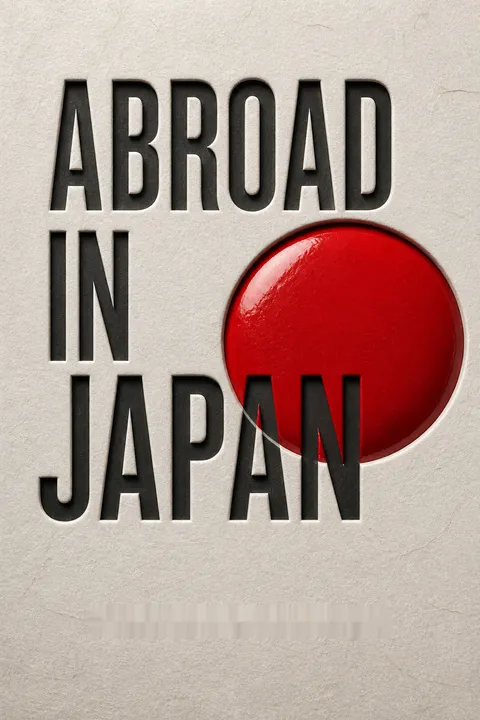
Abroad in Japan is a memoir of gradual conversion from visitor to participant. Its shape is episodic, but the deeper arc is coherent: a nervous young teacher enters a life he barely understands, makes repeated social and professional mistakes, and acquires fluency through work, friendship, and creative risk. Japan is not simply a destination in this story. It is the setting that makes Broad confront his dependence on familiar language, familiar institutions, and familiar measures of success.
The book’s most effective scenes join comedy to vulnerability. A mistaken answer at a toll booth, an awkward classroom game, a disastrous first speech, and a failed apartment search are funny or humiliating in the moment, but they also reveal how much independence depends on being understood. The recurring food stories make this learning tangible: the narrator’s palate, habits, and assumptions change alongside his language and relationships. Humor keeps the memoir accessible without erasing its serious subjects, including bullying, discrimination, disaster, and grief.
The narrative also shifts its idea of achievement. Early triumphs involve survival and adaptation. Later, the more meaningful work is making stories about Tohoku that give attention to local rebuilding and individual lives. That movement from self-focused adventure to public storytelling is the memoir’s strongest ethical development. Broad’s YouTube career complicates the arc: viral success creates opportunity, but platform attention is unpredictable, and the pressure to control every detail becomes destructive.
As cultural interpretation, the book is strongest when it stays specific. A school, a town, a friendship, or a meal can reveal a social pattern, but cannot stand for all of Japan. Broad sometimes generalizes from his own encounters, especially about conformity and politeness. Read carefully, those moments are useful less as a definitive guide to Japanese society than as a record of how an outsider learns to revise his assumptions. The central lesson is not that discomfort guarantees growth. It is that attention, humility, and sustained participation can turn unfamiliarity into a life with real ties.
Review Summary
Abroad in Japan receives mostly positive reviews, with readers praising its humor, authenticity, and insights into Japanese culture. Many appreciate Chris Broad's personal anecdotes and experiences as an English teacher. Some readers find the latter part of the book less engaging, focusing more on his YouTube career. A few criticize the writing style and typos in Japanese words. Overall, fans of Broad's YouTube channel seem to enjoy the book most, while others find it an entertaining but sometimes superficial look at life in Japan.
People Also Read










Glossary
JET programme
Government exchange teaching schemeThe Japan Exchange and Teaching programme places foreign participants in Japanese schools and communities. In Broad’s case, it provided his first job in Japan as an English-language assistant. The programme is designed to support English education and local international exchange, while also giving participants a structured way to live and work in Japan.
chinmoku
Meaningful conversational silenceChinmoku is the Japanese term for silence in conversation. Broad encounters it when a school principal and colleague pause for an unexpectedly long time. Rather than necessarily indicating discomfort or disapproval, silence can be an ordinary part of interaction and can carry meaning without spoken words.
nommunication
Communication over drinksNommunication is a playful blend of the Japanese verb nomu, meaning to drink, and the English word communication. Broad uses it for the candid conversation that can emerge at Japanese work parties or after-work drinks, where alcohol relaxes the formal restraint of the workplace. The term describes a social practice, not a guarantee of honest or safe discussion.
Roman Room method
Place-based memory techniqueThe Roman Room method is a memorization technique that links pieces of information to familiar places and visual images. A person imagines moving through a known building and associates an item or scene in each location with a point to remember. Broad used a mental version of his school corridor to recall the sequence of his Japanese speech.
ijime
Bullying or peer harassmentIjime is the Japanese term Broad uses for bullying among students. In the book, it includes physical harassment, theft, exclusion, and being ignored by a peer group. Broad describes how fear of standing out can compound the harm, while also showing that teachers and schools have a responsibility to identify and address bullying.
keigo
Japanese honorific speechKeigo is the system of honorific and polite forms used in Japanese speech. The appropriate form can depend on a speaker’s relationship to the listener, including age, status, or customer and service roles. Broad encounters the difficulty of choosing the right form while preparing a speech, since the same idea can be expressed more or less formally.
J-Alert
Public emergency warning systemJ-Alert is Japan’s national system for rapidly distributing emergency warnings, including information about missiles and natural disasters. Broad hears its alerts during a North Korean missile launch, when his phone and local warning system wake him. His spontaneous video about the event spreads widely online and brings him unexpected media attention.
machiya
Traditional Kyoto townhouseMachiya are traditional wooden townhouses found in Kyoto, often narrow at the street and extending deep into the block. Their layouts could include a street-facing shop, private rooms, and a small interior garden that brought in light and air. Broad describes their architectural character and the pressure they face from demolition and changing city life.
FAQ
What's Abroad in Japan: Ten Years In The Land Of The Rising Sun about?
- Personal Journey: The book chronicles Chris Broad's decade-long experience living in Japan, detailing his adventures, cultural encounters, and personal growth.
- Cultural Insights: It provides a deep dive into Japanese culture, from food and language to societal norms and challenges faced by foreigners.
- Humorous Anecdotes: Broad shares humorous and sometimes absurd stories, such as his encounters with eccentric locals and the challenges of adapting to life in Japan.
Why should I read Abroad in Japan by Chris Broad?
- Engaging Storytelling: Chris Broad's writing is filled with humor and relatable experiences, making it an enjoyable read for anyone interested in travel or cultural exchange.
- Cultural Education: The book offers valuable insights into Japanese culture, making it a great read for anyone interested in Japan or planning to visit.
- Inspiration for Adventure: Broad's journey encourages readers to step out of their comfort zones and embrace new experiences, showcasing the transformative power of travel.
What are the key takeaways of Abroad in Japan?
- Embrace Cultural Differences: Broad emphasizes the importance of understanding and respecting cultural differences when living abroad.
- Language Learning is Essential: The book highlights the challenges of learning Japanese and its impact on connecting with locals.
- Personal Growth: Broad's journey illustrates how living abroad can lead to significant personal development and a broader worldview.
What are the best quotes from Abroad in Japan and what do they mean?
- "I was merely a cog in a well-oiled machine.": Reflects Broad's initial feelings of insignificance as a foreign teacher in Japan.
- "If I walk away, will I live to regret this?": Encapsulates Broad's philosophy of embracing challenges and opportunities.
- "To live in fear is to never live at all.": Urges readers to overcome anxieties and fully engage with life, particularly in unfamiliar environments.
How did Chris Broad adapt to life in Japan?
- Embracing the Culture: Broad gradually embraced Japanese culture by participating in local customs, trying new foods, and learning the language.
- Building Relationships: He formed friendships with colleagues and locals, which provided him with a support system.
- Finding Humor in Challenges: Broad's ability to find humor in his experiences allowed him to cope with the difficulties he faced.
What challenges did Chris Broad face in Abroad in Japan?
- Cultural Shock: Broad experienced significant cultural shock upon arriving in Japan, struggling to adapt to the language barrier and social norms.
- Teaching Difficulties: As an English teacher, Broad faced challenges in engaging students who were often shy or reluctant to speak.
- Language Barrier: Learning Japanese proved to be a daunting task, as he grappled with kanji and grammar.
What role does food play in Abroad in Japan?
- Culinary Exploration: Food is a central theme, as Broad explores various Japanese dishes and dining experiences.
- Cultural Connection: Sharing meals with colleagues and friends serves as a way for Broad to connect with others.
- Personal Growth: Broad's evolving palate reflects his journey of adaptation and acceptance of Japanese culture.
How did Chris Broad's experiences in Japan change him?
- Increased Confidence: Living abroad helped him develop confidence in public speaking and navigating unfamiliar situations.
- Broader Perspective: His time in Japan expanded his worldview, allowing him to appreciate cultural differences.
- Personal Growth: The challenges he faced led to significant personal development, making him more resilient and adaptable.
What is the significance of the JET program in Abroad in Japan?
- Cultural Exchange: The JET program promotes cultural exchange between Japan and other countries through language education.
- Professional Development: It offers valuable teaching experience and personal growth opportunities for participants like Broad.
- Community Impact: The program places native English speakers in Japanese schools, impacting both students and teachers.
How does Chris Broad address the topic of bullying in Japanese schools?
- Personal Observations: Broad shares his experiences witnessing bullying (ijime) in schools, reflecting on its impact on students.
- Cultural Context: He provides insights into the societal pressures that contribute to bullying, emphasizing the need for awareness.
- Empathy and Understanding: Broad's reflections encourage readers to consider the emotional toll of bullying and the importance of supportive environments.
What is the significance of Natsuki in Abroad in Japan?
- Cultural Guide: Natsuki serves as a bridge between Broad and Japanese culture, helping him navigate social norms and language barriers.
- Friendship: Their friendship highlights the importance of human connections in overcoming loneliness and adapting to a new environment.
- Eccentricity: Natsuki's unique personality adds humor and depth to the narrative, showcasing the colorful characters Broad encounters.
What lessons does Chris Broad learn in Abroad in Japan?
- Importance of Adaptability: Broad learns that adaptability is key to thriving in a foreign environment.
- Value of Language: He discovers that language is a powerful tool for connection and understanding.
- Cultural Sensitivity: Broad's journey emphasizes the importance of cultural sensitivity and respect, highlighting the need to approach new cultures with an open mind.
Download PDF
Download EPUB
.epub digital book format is ideal for reading ebooks on phones, tablets, and e-readers.








