

Key Takeaways
Treat money as a tool for a life that feels abundant, not its measure
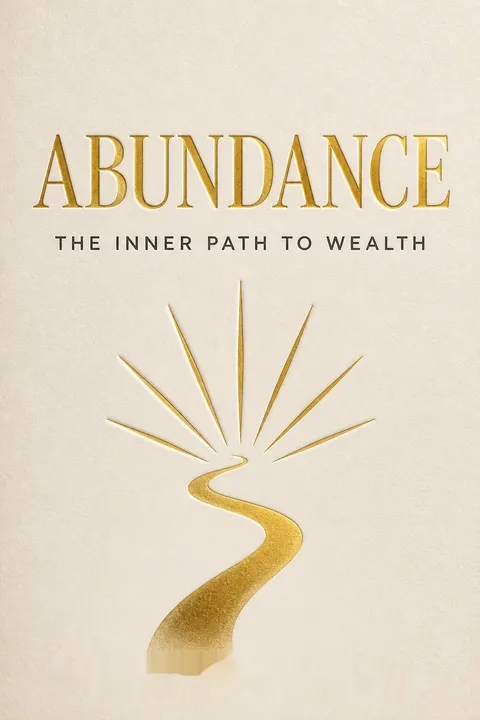
Wealth means fulfillment. Chopra’s central claim is that abundance begins as a way of experiencing life, not as a bank balance. Yoga, understood here as joining inner awareness with outer life, treats money as a tool for meeting needs and supporting a meaningful life. Money serves as reward, a signal of value, a means of meeting needs, and a way to exchange goods and services. It matters, but it cannot supply love, self-worth, or purpose by itself.
Lack can outlive a windfall. Chopra cites Gallup findings that only about one-third of people in even prosperous societies say they are thriving. He recounts a man who received over a million dollars yet eventually returned to his familiar income level, saying that wealth did not fit his self-image. The example suggests that financial change and inner change do not always arrive together.
The useful distinction is between money as a resource and money as a verdict on personal worth. Research on subjective well-being broadly supports the idea that income helps most when it relieves material strain, while its emotional return can diminish once basic needs are secure. Still, the windfall story should not be mistaken for proof that mindset determines income. Wages, health, discrimination, caregiving, and luck shape financial outcomes too. The strongest reading is not that money follows consciousness automatically, but that a fuller life requires both material resources and values that money cannot purchase.
Notice repeated money habits before they quietly shape your finances
Karma means accumulated action. Chopra uses the term not as cosmic punishment, but as the effects of past actions that become habits, automatic reactions, and familiar ways of behaving. Money karma includes patterns such as avoiding bills, spending impulsively, carrying debt, or fighting with a partner about finances. The first step is to identify the specific behavior that keeps recurring, rather than treating money trouble as a mysterious force or a personal defect.
Move toward solutions. The book recommends replacing denial, worry, and self-blame with clear accounting, honest reflection, expert advice, persistence, and practical action. A quiet pause can help someone ask what they are avoiding or what information they need. The point is not that awareness pays a bill by itself. It makes the next useful choice visible, and repeated choices can change a financial pattern.
This approach resembles behavioral finance, which studies how habits, avoidance, and emotional cues influence decisions involving money. Naming a pattern can turn an amorphous source of shame into a problem that can be addressed, such as setting a spending limit or asking for professional guidance. The framework is most humane when it distinguishes responsibility from blame. A person can take action without being responsible for every condition that produced financial hardship. Awareness expands agency, but it cannot erase low wages, sudden illness, or unequal access to opportunity.
Choose work by its daily conditions, not its prestige or paycheck
Job titles can mislead. Chopra contrasts high reported job satisfaction with the finding that fewer than one-third of people describe themselves as thriving. In the survey he cites, job satisfaction rose from 81 percent in 2013 to 88 percent in 2016, yet that did not mean most workers felt their lives were going well. His argument is that work satisfaction depends on conditions such as fair pay, manageable stress, security, supportive colleagues, being heard, opportunities to grow, and meaningful challenge.
Look at the working day. A prestigious or well-paid role may still be draining, while a less glamorous job can offer care, cooperation, and a sense of contribution. The author recommends examining what the job actually provides, and whether it leaves enough room for relationships, rest, and personal interests. He also urges workers to take unfair treatment seriously, rather than assuming a higher salary will make a damaging workplace worthwhile.
The focus on conditions is a useful correction to career advice that treats salary and status as complete measures of success. Work-design research likewise emphasizes autonomy, supportive relationships, manageable demands, and opportunities to use skills. But individual choice has limits: workers cannot always change jobs, and the book’s advice to move on can understate financial risk or labor-market barriers. A practical application is to separate what can be negotiated, what can be improved locally, and what may require a longer-term exit plan.
Use quiet awareness to widen your choices before reacting
Simple awareness is a pause. Chopra defines it as a quiet interval between thoughts, marked by calm, openness, and a sense of being present. Rather than forcing the mind to stop, a person can sit quietly, breathe slowly, and let the mind settle. The book also recommends noticing whether a repeated negative belief comes from an old message, and whether past emotional pain is coloring the present.
Return to the current moment. For boredom or agitation, Chopra suggests a few slow breaths, with attention on the chest and belly. For a persistent belief, he proposes asking who first taught it and whether there is evidence for another view. For a painful memory, he recommends noticing the emotion without feeding or fighting it. These practices aim to create room for a response beyond the mind’s automatic script.
This is one of the book’s most practical ideas because it translates spiritual language into a pause that can interrupt reactivity. Mindfulness-based approaches use a similar move: notice a thought or feeling as an event in awareness, rather than treating it as an order or a fact. That does not mean every distressing belief is easily revised through reflection. Trauma, depression, and persistent anxiety can require skilled clinical care. The pause is best understood as a useful opening for choice, not a substitute for treatment.
Set intentions, release control, and watch for the next useful signal
Sankalpa is subtle intention. In Chopra’s account, attention helps a possibility develop, while intention gives it direction. He recommends forming an intention from a calm state, stating it clearly, then letting it go rather than obsessing over it. Afterward, stay attentive to information, opportunities, or actions that could move the intention forward. Wanting a relationship, for example, would not mean waiting passively at home. It would mean remaining open to the ordinary steps that could help create one.
Keep the conditions in view. The book says intentions work best when they are clear, aligned with personal values, and not harmful to others. Mixed motives, passing whims, inattention, and rigid attachment to one outcome can get in the way. Chopra treats the process as more than planning, but its grounded value is that a clear aim can shape what a person notices and does.
This practice can be read as a spiritual account of goal setting: clarify a desired direction, reduce anxious overcontrol, and stay receptive to relevant information. In psychology, goals can guide attention and persistence, though they do not guarantee outcomes. The author’s stronger suggestion that intention can organize events beyond the self is a metaphysical belief, not an established causal mechanism. A balanced use preserves the reflective ritual while pairing it with practical steps, feedback, and acceptance that other people and circumstances have agency too.
Trade exhausting struggle for alert, unforced action
Creative intelligence is awareness in motion. Chopra uses this term for the organizing, inventive capacity he believes underlies both personal insight and the development of life. He contrasts its movement toward discovery with entropy, the drift toward disorder and depletion. In everyday terms, creativity, learning, and purposeful work can renew energy, while constant stress, stale routines, and unconscious habits can drain it.
Notice the zone. Athletes describe moments when attention is sharp, action feels fluid, and self-conscious effort fades. Chopra argues that this state can occur beyond sports. He recommends witnessing what is happening, letting go of needless control, and avoiding interference that comes from fear. His account includes Nannerl Mozart, a gifted musician whose prospects were constrained by the expectations placed on women in her era, a reminder that talent alone does not overcome social limits.
The idea of a zone connects well with flow research, which describes deep absorption when challenge and skill are well matched. The book’s emphasis on attention and reduced self-monitoring can help explain why overthinking sometimes disrupts performance. Yet effortless action is not a universal route to achievement: practice, preparation, and sustained effort matter, particularly where conditions are difficult. Nannerl’s story makes an important counterweight to purely inward explanations. Some obstacles are not products of mindset and must be addressed in the world.
Use the seven chakras as a map from inner wholeness to daily life
The chakras organize the book’s model. Chopra presents seven centers of awareness, not anatomical organs, as a way to explore different capacities: root, security; sacral, desire and sensuality; solar plexus, action; heart, emotion and love; throat, expression; forehead, intelligence; crown, bliss. The sequence links basic safety and physical life with communication, insight, and a sense of wholeness. Each center is a lens for asking what area of life needs attention.
Practice without treating the map as anatomy. The book offers meditation using seed sounds or short centering thoughts associated with each chakra. It also argues that pleasure is not the same as lasting fulfillment: repeated consumption can become a way to numb distress rather than meet it. Desires are most useful, in this framework, when they support growth and well-being rather than only answering a feeling of lack.
The chakra model gives the book a memorable architecture: basic safety, desire, agency, emotion, expression, understanding, and transcendence are presented as connected dimensions rather than isolated problems. As a contemplative map, it can prompt useful self-inquiry. It should not be confused with a scientific description of bodily structures or a clinical diagnostic system. Its practical value depends on the reader’s relationship to its spiritual assumptions. Someone may use the categories reflectively without accepting the claim that consciousness is the universe’s underlying substance.
Stop passing emotional pain around; take responsibility for your part
Emotional debt is unresolved hurt. Chopra uses this term for the residue left by painful experiences, especially when anger, fear, or shame becomes tied to an intention to wound, control, or withdraw. He describes how old patterns can spill into present relationships through attacking, blaming, manipulating, or dominating. A story about a mother who often directed anger at her sons shows how children may remember not only the emotion, but the message that their feelings do not matter.
Interrupt the handoff. The book advises noticing when a conversation turns into blame or control, pausing, and taking responsibility for one’s own feelings rather than forcing the other person to carry them. Listening, speaking honestly without cruelty, and seeking a mutually workable solution are alternatives to winning at the other person’s expense. If a situation is harmful, stepping away is also a legitimate response.
The account usefully separates having an emotion from choosing what to do with it. Anger can signal a boundary or injustice; it becomes damaging when used to intimidate, punish, or deny another person’s experience. This distinction fits emotion-regulation research, which favors recognizing and regulating feelings over suppressing them. The language of releasing emotional debt should not imply that people can simply breathe away trauma or that injured parties owe forgiveness. Accountability, safety, and professional support may be essential parts of repair.
Analysis
The book’s core move is to redefine wealth as a relationship between inner life and material circumstances. Money is neither condemned as spiritually corrupt nor crowned as the final measure of success. It is treated as an instrument whose meaning depends on the awareness, values, and habits of the person using it. That position gives the book a distinctive bridge between practical questions about work and finances and a spiritual account of consciousness.
Its most serviceable ideas are also its least metaphysical: inspect recurring financial behavior, judge work by lived conditions, pause before reacting, and notice whether desire serves fulfillment or momentary relief. The chakra sequence supplies an accessible memory structure for these concerns. It moves from security and desire toward agency, emotional connection, expression, discernment, and a wider sense of self. The structure is evocative, but its usefulness does not establish the chakras as physical or empirically measured entities.
The book is strongest when awareness is treated as a condition for better choices. It is less persuasive when awareness appears to promise that external reality will respond to intention. Attention can change what a person notices and pursues, but it cannot guarantee money, a job, health, love, or fair treatment. The distinction matters because structural barriers are real, and a spiritual account can accidentally turn hardship into evidence of personal failure. Chopra’s own workplace and Nannerl Mozart examples point toward a more balanced conclusion: inner agency matters, while institutions and history constrain what agency can accomplish.
Read this as a spiritual practice for aligning means with values, not as a financial plan or a universal law of manifestation. Its enduring question is practical: Does the way a person earns, spends, speaks, and relates create a life that feels more whole? The answer requires both inward reflection and outward action.
Review Summary
Abundance receives mixed reviews, with ratings ranging from 2 to 5 stars. Some readers find it insightful and practical, offering valuable guidance on spirituality, chakras, and inner wealth. Others feel it lacks depth or practical financial advice. Many appreciate Chopra's accessible writing style and meditation techniques. Critics argue the book oversimplifies complex concepts and doesn't offer much new information for those familiar with chakras and abundance philosophies. Overall, readers seeking spiritual growth and inner fulfillment may find value, while those expecting traditional financial advice may be disappointed.
People Also Read






Glossary
Yoga
Union of inner and outerChopra uses Yoga to mean the joining of inner awareness and outer life, rather than only physical postures or religious practice. In this book, it is a framework for aligning consciousness, choices, work, relationships, and material needs so that money supports a fulfilling life.
Dharma
A personally aligned pathDharma is the path of action and values that Chopra believes supports a person’s fulfillment and growth. It is not simply a fixed career or moral code. In the book, acting with care, honesty, responsibility, and attention to others is more aligned with dharma than pursuing wealth at any cost.
Money karma
Repeated financial behaviorMoney karma refers to recurring habits and automatic reactions that shape a person’s financial life. Examples include impulsive spending, avoiding bills, persistent money worry, and conflict with a partner about finances. Chopra treats these patterns as changeable through awareness, honest assessment, practical action, and seeking appropriate advice.
Simple awareness
Calm, open presenceSimple awareness is Chopra’s term for a quiet, centered state in which attention is not dominated by racing thoughts, fear, or desire. He describes it as an accessible baseline rather than a special achievement. Breathing, meditation, and noticing old reactions are offered as ways to return to it.
Sankalpa
Intention guiding an outcomeSankalpa is described as a subtle intention, a clear desire held from a calm state of awareness. Chopra’s practice is to form the intention, release anxious fixation on it, and remain alert to information or actions that may help it unfold. The term carries a spiritual claim beyond ordinary goal setting in the book.
Creative intelligence
Awareness expressed as creativityCreative intelligence is Chopra’s name for the inventive and organizing force he believes moves through consciousness and life. At the personal level, it appears as insight, creativity, emotional growth, and effective action. He contrasts this evolutionary movement with habits and conditions that waste energy or reinforce disorder.
Chakra system
Seven-part awareness mapThe chakra system is a traditional Yoga model that Chopra uses to organize seven dimensions of awareness, from grounding and desire to action, emotion, expression, intelligence, and bliss. The chakras are presented as centers of awareness along the spine, not as physical anatomical organs.
Shakti
Creative power in actionShakti is a Sanskrit term Chopra uses for the energy, capacity, and power through which possibility becomes action and physical experience. In the book, it connects the mind and body and, in its broadest sense, links personal awareness with the wider creative activity of the universe.
Emotional debt
Residue from past hurtEmotional debt describes lingering hurt from past experiences that continues to shape present feelings and behavior. Chopra connects it to painful events such as betrayal, bullying, or controlling anger. The term highlights how old emotional patterns can be repeated in relationships, while leaving room for awareness, boundaries, and repair.
FAQ
What is "Abundance: The Inner Path to Wealth" by Deepak Chopra about?
- Inner Path to Wealth: The book explores how true abundance and wealth are rooted in a state of consciousness and self-awareness, rather than just material accumulation.
- Yoga and Consciousness: Chopra draws on the ancient Indian tradition of Yoga (beyond physical postures) as a science of consciousness that unites the inner and outer worlds.
- Holistic Fulfillment: The book covers how abundance encompasses not just money, but also love, creativity, purpose, and spiritual growth.
- Practical Tools: It offers practical exercises, meditations, and self-assessment quizzes to help readers shift their mindset and align with the flow of creative intelligence.
Why should I read "Abundance: The Inner Path to Wealth" by Deepak Chopra?
- Shift Your Money Mindset: The book helps readers move from a scarcity mindset to an attitude of abundance, which can transform their relationship with money and success.
- Integrative Approach: Chopra combines spiritual wisdom, psychological insights, and practical advice, making it accessible for both spiritual seekers and those looking for real-world results.
- Personal Growth: Readers are guided to discover their true self, clarify their life purpose, and cultivate self-awareness for lasting fulfillment.
- Actionable Practices: The book is filled with meditations, self-reflection exercises, and step-by-step methods to apply the teachings in daily life.
What are the key takeaways from "Abundance: The Inner Path to Wealth"?
- Abundance is Awareness: True wealth is a state of consciousness, not just material gain.
- Dharma and Fulfillment: Living in alignment with your dharma (life purpose) naturally attracts abundance and joy.
- Creative Intelligence: Tapping into the flow of creative intelligence allows for effortless success and fulfillment.
- Chakra System: The seven chakras represent different aspects of abundance, from security to bliss, and can be activated through meditation and intention.
How does Deepak Chopra define "abundance" in "Abundance: The Inner Path to Wealth"?
- State of Being: Abundance is defined as a state of awareness where you feel whole, fulfilled, and connected to infinite possibilities.
- Beyond Material Wealth: It includes love, creativity, joy, purpose, and spiritual growth, not just financial prosperity.
- Generosity of Spirit: Abundance is rooted in the generosity of spirit, which naturally leads to giving, compassion, and fulfillment.
- Alignment with Dharma: When you live in your dharma, abundance flows effortlessly as a reflection of your true self.
What is the role of Yoga in achieving abundance according to Deepak Chopra?
- Yoga as Union: Yoga is presented as the union of inner and outer worlds, not just physical exercise.
- Science of Consciousness: It is described as a practical system for understanding and transforming consciousness to achieve fulfillment.
- Practical Application: The book uses yogic principles to address money, work, relationships, and personal growth.
- Chakra System: The seven chakras are used as a framework for evolving awareness and unlocking different forms of abundance.
What is "dharma" and how does it relate to wealth in "Abundance: The Inner Path to Wealth"?
- Dharma Defined: Dharma is your unique path or purpose in life, supported by the flow of creative intelligence.
- Wealth Follows Dharma: When you live in alignment with your dharma, abundance and fulfillment naturally follow.
- Values and Choices: The book outlines values and behaviors that support or block your dharma, emphasizing self-awareness and responsibility.
- Soul Profile Exercise: Chopra provides a "soul profile" questionnaire to help readers clarify their dharma and align their actions accordingly.
How does Deepak Chopra address "money karma" in "Abundance: The Inner Path to Wealth"?
- Karma as Patterns: Money karma refers to unconscious habits, beliefs, and behaviors that shape your financial reality.
- Self-Assessment: The book includes a quiz to help readers identify their money karma and areas for improvement.
- Awareness as Solution: Becoming more conscious of your patterns is the key to changing your money karma and attracting abundance.
- Practical Steps: Chopra offers actionable steps to shift from worry, denial, and pessimism to clarity, honesty, and responsibility.
What is the "attitude of abundance" and how can it be cultivated according to Deepak Chopra?
- Mindset Shift: The attitude of abundance is a psychological and emotional state that focuses on possibilities, generosity, and self-worth.
- Self-Reflection: The book provides quizzes to help readers assess whether they have an attitude of lack or abundance.
- Practical Practices: Cultivating abundance involves living in the present, acting generously, letting go of blame, and embracing your true self.
- Fulfillment First: Chopra emphasizes putting fulfillment and meaning before material gain, using models like Ikigai and the four aims of life from Indian tradition.
How does the chakra system relate to abundance in "Abundance: The Inner Path to Wealth"?
- Seven Chakras, Seven Gifts: Each chakra represents a different aspect of abundance, from security (root) to bliss (crown).
- Meditation and Mantras: The book provides specific mantras and centering thoughts for each chakra to activate their qualities.
- Personal Evolution: Working with the chakras helps you evolve your awareness and unlock new levels of fulfillment.
- Practical Exercises: Chopra includes meditations and visualizations for each chakra to help readers experience abundance in all areas of life.
What practical methods and exercises does Deepak Chopra recommend in "Abundance: The Inner Path to Wealth"?
- Self-Assessment Quizzes: The book features quizzes on money karma, attitude of abundance, needs fulfillment, and more.
- Meditation Practices: Step-by-step instructions for mantra meditation, intentional meditation, and chakra activation.
- Visualization Techniques: Exercises to reframe negative beliefs, upgrade your personal story, and envision positive outcomes.
- Daily Actions: Suggestions for reducing stress, expanding possibilities, and aligning daily activities with your dharma and creative intelligence.
What are the most important concepts and definitions introduced in "Abundance: The Inner Path to Wealth"?
- Abundance: A state of consciousness characterized by fulfillment, generosity, and infinite possibilities.
- Dharma: Your unique life path or purpose, supported by creative intelligence.
- Creative Intelligence: The dynamic aspect of consciousness that organizes and fulfills desires effortlessly.
- Sankalpa: The power of subtle intention to manifest outcomes when aligned with dharma and simple awareness.
- Chakra System: A framework for understanding and evolving different dimensions of abundance in your life.
What are the best quotes from "Abundance: The Inner Path to Wealth" by Deepak Chopra and what do they mean?
- "Abundance is a state of awareness." – True wealth comes from consciousness, not external circumstances.
- "The real purpose of life is the same for everyone. It is this: Connect with the generosity of spirit, and let it provide everything you need." – Fulfillment is found by aligning with your true self and giving spirit.
- "You can only change what you are aware of." – Self-awareness is the foundation for transformation in any area of life.
- "Follow your bliss, don’t be afraid, and doors will open where you didn’t know they were going to be." – When you pursue what brings you joy, the universe supports your journey in unexpected ways.
- "I am enough." – The ultimate expression of abundance is realizing your inherent wholeness and sufficiency.
About the Author
Other books by Deepak Chopra





Download PDF
Download EPUB
.epub digital book format is ideal for reading ebooks on phones, tablets, and e-readers.








