

Key Takeaways
Define abundance by the life you value, not the lifestyle television sells.
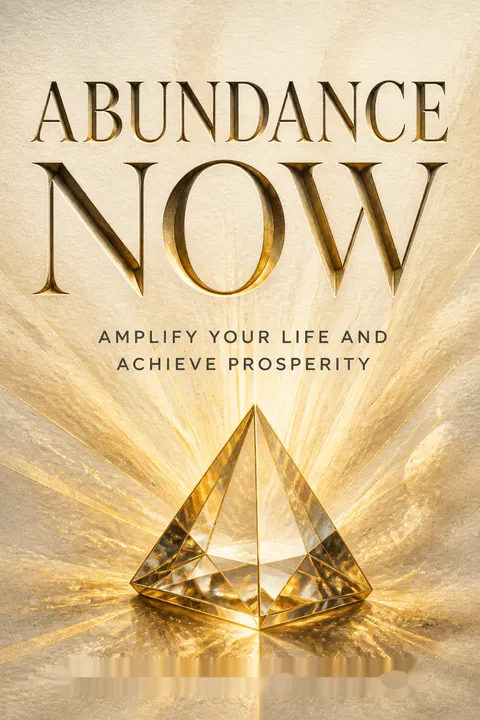
Start with her reversal. Nichols frames abundance as a life that feels full across money, health, meaningful work, spiritual life, and relationships, rather than a pile of expensive possessions. Her own journey began in poverty: in 1994, pregnant and without enough money for food, she applied for public assistance. Years later, she took her company public. The transformation is the book’s central story, but its measure of success is broader than that business milestone.
Choose your own measure. Her grandmother Bernice, who had little money, made family and neighbors feel cared for, even cooking when the electricity was off. Nichols asks readers to define what “enough” means for themselves, then assess whether daily life reflects it. The book organizes this work around self, relationships, work, and money.
The useful provocation is that income and well-being are related but not interchangeable. A person can have strong relationships and purpose without wealth, while financial security can still remove real constraints. Nichols’s definition makes room for both truths. Her personal story gives the idea force, but it should not be mistaken for proof that mindset alone can carry anyone from poverty to prosperity. Individual agency matters, and so do wages, health, discrimination, caregiving burdens, and access to opportunity. A personal definition of abundance is most empowering when it clarifies what to pursue without pretending that external barriers are imaginary.
Turn your future vision into small milestones you can start this week.
Make the target concrete. Nichols recommends picturing the life you want in specific terms: what your workday looks like, what kind of relationships surround you, and what financial resources your plans require. A broad wish such as “be successful” offers little guidance. A clear picture helps identify the next decision, while a date and measurable target make progress easier to track.
Build through small wins. She calls achievable, near-term steps “micro wins,” the smaller actions that accumulate toward larger “macro wins.” Rather than leaping from a modest starting point to an overwhelming outcome, set milestones that are challenging but believable for your current circumstances. Nichols also urges readers to pursue enjoyable parts of life before becoming wealthy. Cooking with her son over inexpensive meals made their present richer, not just their imagined future.
This is a practical bridge between ambition and behavior. A vivid goal can orient attention, but milestones turn intention into a sequence of decisions that can be scheduled and reviewed. The approach also protects motivation: progress becomes visible before the distant prize arrives. There is a useful tension here. Goals should stretch a person, yet overconfident timelines can create discouragement or reckless choices. Treating milestones as hypotheses, then revising them when costs, health, or family responsibilities change, preserves ambition without making flexibility feel like failure.
Train attention with constructive self-talk, then prove the vision through action.
Words shape the next move. Nichols uses affirmations, short present-tense statements about a desired identity or outcome, to interrupt habitual negative self-talk. She recalls being a teenage swimmer who routinely finished last. Before a meet, her grandmother reminded her of the perseverance that had carried earlier generations through hardship. Nichols changed the story she repeated to herself, swam with greater resolve, and set a community record in the older age group’s 400-meter freestyle.
Pair imagery with behavior. The book’s visualization exercises ask readers to imagine a goal with sensory and emotional detail, then act on ideas or opportunities that emerge. Nichols argues that attention can become more alert to relevant people and openings. The Law of Attraction, as she describes it, links intention, belief, and action. She also warns that visualization without action is ineffective.
The strongest, least mystical reading is that self-talk can change what a person notices, expects, and attempts. This resembles a basic principle of attention: a goal becomes easier to detect when it has been made salient. Rehearsing a difficult performance can also make action feel less unfamiliar. But the book sometimes moves from these plausible mechanisms toward claims that the Universe delivers outcomes. That claim is not established by the examples given. Affirmations are most useful when believable and tied to specific behaviors, not when they substitute for skill, feedback, or material resources.
Build relationships that challenge you, repair with honesty, and honor boundaries.
Treat connection as infrastructure. Nichols argues that relationships shape both quality of life and the ability to pursue goals. She encourages readers to seek people who offer encouragement and honest challenge, while also contributing value themselves. Her “care-frontation” is a respectful conversation about a problem that names what is appreciated, explains what needs to change, and listens for the other person’s view. Clear boundaries matter too, especially around time, respectful speech, and safety.
Let relationships have seasons. The book distinguishes lifetime relationships, life-giving relationships that restore confidence for a period, and purposeful relationships built around a particular shared task or stage of life. Nichols also cautions against abruptly discarding an entire circle while seeking a better fit. Repair what can be repaired, create new connections, and leave abusive situations with a focus on protection.
This section avoids a common trap in self-improvement advice: treating other people as either assets or obstacles. Relationships involve mutual obligations, history, and unequal power, so a simple “upgrade your circle” slogan can encourage needless disposability. The more durable insight is to combine discernment with communication. Naming a need gives another person a fair chance to respond; boundaries clarify what participation requires. The three relationship categories can help people make sense of change, but they should be used as reflective labels, not as destiny or a reason to excuse mistreatment.
Let work fund purpose, and change course when your season changes.
Purpose need not pay today. Nichols calls a meaningful pursuit a “life assignment,” her term for work or service that feels connected to a person’s gifts and current stage of life. It may be a job, a business, family care, volunteering, or a passion outside paid employment. A less inspiring job can still finance a future transition. Nichols advises against quitting without a dependable replacement income, since financial panic can make it harder to choose well.
Follow the work as it evolves. She began by serving teenagers through programs that eventually reached more than 211,000 young people. Invitations to speak to adults led her into writing and a broader training business. The expansion required learning business operations, not only delivering inspiring talks. She also rejects the idea that everyone must become an entrepreneur: employees, specialists, and partners can all build valuable, purposeful careers.
The “job as investor” idea is unusually helpful because it breaks the false choice between meaningful work and immediate financial stability. It also recognizes that purpose can be expressed outside a job title. Nichols’s career illustrates how a calling can evolve as capability and opportunity change, rather than arriving as one permanent revelation. The caution is that reframing a harmful or exploitative job as an investment can keep someone stuck. The framework works best when paired with an honest appraisal of health, compensation, working conditions, and realistic alternatives.
Replace inherited money scripts with a measurable plan for earning and keeping.
Notice the old blueprint. Nichols calls a “money blueprint” the learned beliefs and habits shaped by culture, family finances, gender expectations, geography, and spirituality. These influences can quietly determine whether someone saves, spends, avoids financial information, or feels guilty about earning. The goal is not to condemn one’s upbringing, but to identify which lessons still help and which now obstruct a chosen future.
Give the numbers a job. Nichols describes saving from modest paychecks, increasing her regular deposits, and directing income from a second job toward her future. After three and a half years, she discovered she had accumulated more than $62,000. Her practical advice is to write a budget, track spending, reduce costly debt, identify an additional income source when feasible, and invest deliberately. A financial readiness assessment helps reveal gaps in planning, tracking, debt management, and savings.
The distinction between inherited beliefs and current financial systems is valuable: shame is a poor substitute for a budget, and a budget cannot resolve every emotional association with money. The concrete practices make the argument more useful than a promise to “think rich.” At the same time, financial behavior is not merely an individual mindset. Income volatility, medical costs, housing prices, and unequal access to credit shape what is possible. A sound reading uses the blueprint exercise to understand behavior, then uses professional financial guidance and realistic numbers to make decisions.
Take the next frightening step with preparation and a reliable team.
Courage can be practical. Nichols says fear need not disappear before action begins. Research, advice, practice, and coaching can reduce uncertainty, while permission to make mistakes keeps imperfection from becoming paralysis. She calls intense periods of fear “fear-storms,” moments that signal a person is facing unfamiliar work and may need preparation or support.
Do not travel alone. Her “Breakthrough Team” is a small group, usually three to five people, who can offer honest counsel, encouragement, and accountability. One student, Michael James, prepared for a cross-country bicycle trip by training on weekends and sharing his plan. People then helped him obtain equipment. He rode about 3,500 miles over 42 days, meeting serious difficulties along the way. The book’s related advice is to focus on one’s own strongest contribution and enlist others for work they can do better.
This is a more grounded account of courage than the familiar instruction to leap and trust. Michael’s preparation, training, and help from others show that action can generate support without making planning irrelevant. A dependable team also counters the distortions of isolation: trusted people can question a risky assumption as well as encourage a worthy ambition. The phrase “fear-storm” is useful if fear prompts preparation; it is less useful if every warning is interpreted as proof that a bigger risk is required. Discernment belongs beside boldness.
Practice prosperity today and pass on more than money.
Do not postpone the life. Nichols recommends beginning the day with gratitude for existing sources of support and making room for present-moment experiences while building toward future goals. Her own memories of cooking with her son in a small kitchen show how joy can exist before financial security arrives. Gratitude, in this account, is not a reason to stop striving. It is a way to recognize what is already sustaining the effort.
Make legacy a current practice. The book’s Living Legacy Planner asks readers to consider what successors might inherit beyond assets: financial knowledge, relationships, charitable work, professional experience, and family traditions. Nichols’s family rituals with her son, including their playful cooking roles, illustrate how modest repeated experiences can become part of what a family carries forward. A legacy is not only a future bequest; it is also what others can learn and continue now.
The combination of present enjoyment and long-term planning resists two opposing errors: postponing life until a distant financial threshold, and spending as though the future does not matter. The legacy idea is especially strong when it includes transferable knowledge and shared practices, not just wealth or public recognition. Gratitude may support attention and emotional steadiness, but it cannot guarantee that desirable outcomes will arrive. Its clearest value here is more immediate: it helps people notice existing sources of meaning while still making concrete choices about what to build.
Analysis
Abundance Now is both a personal transformation story and a practical program. Its narrative arc, from Nichols’s experience of public assistance to leading a publicly traded company, gives emotional shape to a broad framework: develop the self, cultivate relationships, engage with work, and build financial resources. The framework’s strongest feature is its insistence that prosperity is multidimensional. Money matters, but so do health, agency, meaningful contribution, connection, and the ability to enjoy ordinary life before reaching a distant goal.
The book is most persuasive when it converts motivation into observable behavior. Define what a desired life costs, break goals into milestones, track finances, ask for help, establish boundaries, and keep a dependable income while exploring alternatives. These steps align with research-informed approaches to goal pursuit: specific plans and feedback generally support follow-through better than vague intention alone. A useful extension is to translate each milestone into an if-then plan, such as specifying when and where a task will happen. That makes action less dependent on mood.
Its main conceptual weakness is the tendency to treat scarcity as a mindset that individuals can choose away. Learned expectations can constrain initiative, but poverty is not simply an internal story. Low wages, discrimination, caregiving demands, illness, debt, and local opportunity structures affect both resources and choices. Some claims about visualization and the Law of Attraction also exceed the evidence presented. Mental rehearsal may direct attention and strengthen readiness; it does not establish that thoughts cause external events to align.
Read charitably, the book offers a vocabulary for agency, not a complete theory of economic mobility. Its best use is to pair the inspirational practices with structural realism: define a personally meaningful life, act on what can be influenced, seek qualified financial or health advice where needed, and avoid blaming oneself for conditions outside one’s control. The lasting contribution is the insistence that prosperity should be designed across the whole life, then practiced in manageable ways now.
Review Summary
Abundance Now receives mostly positive reviews, with readers praising its motivational content and practical advice for achieving success. Many find Lisa Nichols' personal story inspiring and appreciate her straightforward approach. The book is particularly well-received by entrepreneurs and those seeking personal development. Some criticisms include repetitiveness and a focus on business over general life advice. Overall, readers value the book's emphasis on mindset, visualization, and actionable steps for creating abundance in various aspects of life.
People Also Read









Glossary
Abundance
Personally defined fulfillmentNichols uses abundance to mean more than wealth or possessions. It is a personally defined life of fulfillment that may include financial security, health, supportive relationships, meaningful work, spiritual connection, service, and enjoyable experiences. The reader is encouraged to decide what abundance means in their own circumstances rather than adopting a public image of luxury.
The 4 Es
Four domains of prosperityThe book’s organizing framework for building a fuller life across four areas: the self, relationships, work, and money. Nichols names these Enrichment, Enchantment, Engagement, and Endowment. In practice, the framework asks readers to develop their capabilities, invest in supportive connections, find purpose or value in work, and manage money as a resource for present needs and future plans.
Micro wins
Small steps toward goalsMicro wins are modest, attainable actions or milestones that move a person toward a larger outcome. Nichols contrasts them with “macro wins,” the major results they can collectively support. Examples include completing a piece of research, making a planned deposit, or having a needed conversation. The concept is intended to make progress visible and reduce the intimidation of distant goals.
Money blueprint
Learned money habitsA money blueprint is the combination of beliefs and behaviors, often learned early, that shapes how a person earns, spends, saves, and reacts to money. Nichols traces its influences to cultural, economic, gender, geographic, and spiritual experience. Examining the blueprint can reveal inherited assumptions that no longer fit, while helping distinguish emotional habits from the practical financial systems a person needs.
Life assignment
Purpose in a life seasonNichols’s term for meaningful work, service, or contribution that feels suited to a person’s gifts and current stage of life. A life assignment may be paid employment, business ownership, family responsibility, volunteer work, or a pursuit outside one’s job. It can change as circumstances and abilities change, and need not be monetized to be important.
Care-frontation
Compassionate conflict conversationA structured way to discuss a relationship problem without treating the other person as an enemy. Nichols recommends expressing appreciation, clearly describing what support or change is needed, listening carefully, taking responsibility for one’s own part, and making specific requests. The method aims to address hurt before resentment hardens, while preserving respect and personal boundaries.
Breakthrough Team
Trusted support groupA small group, often three to five people, selected to support a person’s significant goals. Members may provide honest advice, practical expertise, accountability, encouragement, or emotional steadiness during difficult periods. Nichols stresses that the group should be trustworthy and focused on the person’s well-being, rather than pursuing hidden advantages from the relationship.
Rocket Booster friends
Encouraging growth alliesNichols’s term for friends who encourage a person’s development, recognize strengths, and help sustain confidence without removing accountability. They are not merely cheerleaders: the ideal friend offers support while respecting the person’s goals and boundaries. The term contrasts with relationships that consistently discourage growth, feed drama, or leave one person carrying all the emotional work.
Financial Readiness Assessment
Personal finance checkupA self-rating tool in the book that asks readers to assess their preparation for managing money and greater income. Topics include written plans, financial tracking, realistic goals, saving and investing, budgeting, debt, productivity, and the influence of one’s social circle. Its purpose is diagnostic, not judgmental: a low score identifies an area for attention rather than a permanent financial identity.
The Law of Attraction
Intention-focused practiceNichols presents this as the idea that thoughts, words, beliefs, and emotions influence the outcomes a person pursues and experiences. She organizes its practical use around asking clearly for a desired result, believing through action, and receiving by recognizing and responding to opportunities. The book also connects the practice to gratitude and visualization, while emphasizing that intention must be accompanied by action.
FAQ
What's Abundance Now about?
- Focus on Abundance: Abundance Now by Lisa Nichols emphasizes creating a personal definition of abundance that includes fulfilling relationships, personal growth, and a meaningful life, beyond just financial wealth.
- Transformation Journey: The book provides a step-by-step guide to transforming your mindset from scarcity to abundance, encouraging actionable steps toward achieving dreams.
- The 4 Es Framework: Nichols introduces the "4 Es"—Enrichment, Enchantment, Engagement, and Endowment—as essential pillars for cultivating an abundant life.
Why should I read Abundance Now?
- Personal Empowerment: The book empowers readers to redefine abundance on their own terms, rather than adhering to societal norms.
- Practical Strategies: It offers tools like affirmations and visualization techniques to help manifest goals and desires.
- Inspiring Stories: Nichols shares her journey from public assistance to success, providing relatable anecdotes that inspire hope and resilience.
What are the key takeaways of Abundance Now?
- Define Your Abundance: Readers are encouraged to create their own definitions of abundance, focusing on what truly matters to them.
- Mindset Shift: Emphasizes the necessity of shifting from a scarcity mindset to one of abundance through intentional actions and thoughts.
- Importance of Relationships: Highlights that the quality of relationships significantly impacts overall abundance and fulfillment.
What are the best quotes from Abundance Now and what do they mean?
- “Living a life that you love...”: Suggests that true abundance is about finding joy and fulfillment in everyday life.
- “You can’t hit a moving target.”: Emphasizes the importance of clarity in goals; without a clear vision, achieving desires is challenging.
- “Gratitude helps you move forward...”: Highlights the power of gratitude in shifting mindset and attracting positive experiences.
What is the 4 Es framework in Abundance Now?
- Enrichment: Focuses on personal development and acquiring new skills necessary for an abundant life.
- Enchantment: Emphasizes nurturing high-quality relationships that inspire and support your journey.
- Engagement: Encourages finding fulfilling work that aligns with passions, not just financial rewards.
- Endowment: Relates to developing a healthy relationship with money, viewing it as a tool for a beautiful future.
How can I create a life I love according to Abundance Now?
- Assess Fulfillment: Evaluate satisfaction in key life areas—spirituality, relationships, finances, and health—to identify needed changes.
- Set Clear Goals: Be crystal clear about what you want in each life area, as clarity is crucial for achieving goals.
- Practice Gratitude: Incorporate daily gratitude practices to shift mindset and attract more abundance.
How does visualization work in Abundance Now?
- Creating Mental Images: Involves creating vivid mental images of goals and desires to program the subconscious mind.
- Emotional Connection: Attaching emotions to visualizations enhances their effectiveness.
- Daily Routine: Incorporating visualization into daily life helps reinforce goals and maintain focus.
How can I improve my relationships based on Abundance Now?
- Assess Relationship Quality: Evaluate current relationships to identify those that uplift versus those that drain energy.
- Communicate Openly: Use “care-frontation” techniques to address issues without blame, fostering healthier communication.
- Invest Time: Dedicate time to nurturing relationships, as quality of life is determined by relationship quality.
How does Abundance Now define financial abundance?
- Beyond Money: Encompasses a holistic view of wealth, including emotional, spiritual, and relational richness.
- Investment in Future: Encourages viewing money as a tool for creating opportunities and experiences, not stress.
- Creating a Legacy: Involves planning for a legacy that benefits others, sharing wealth, knowledge, and experiences.
What is the significance of gratitude in Abundance Now?
- Mindset Shift: Gratitude is a powerful tool for shifting from scarcity to abundance, recognizing life's positives.
- Attracting More Good: Expressing gratitude opens the door for more good things, as “Energy grows where energy goes.”
- Daily Practice: Encourages daily gratitude practice for a more fulfilling and abundant life.
How can I take action toward my goals as suggested in Abundance Now?
- Set Clear Intentions: Clearly define and write down what you want to achieve, making goals more tangible.
- Break Down Goals: Divide larger goals into smaller, manageable steps for easier action and progress tracking.
- Stay Accountable: Share goals with a trusted friend or accountability partner for motivation and tracking.
What is the significance of the Living Legacy Planner in Abundance Now?
- Planning for the Future: Helps outline goals and desired impact on others, considering future generations.
- Holistic Approach: Encompasses financial wealth, relationships, charitable pursuits, and career experiences.
- Empowerment: Empowers individuals to live intentionally and make choices aligning with values and aspirations.
Download PDF
Download EPUB
.epub digital book format is ideal for reading ebooks on phones, tablets, and e-readers.








