Key Takeaways
1. Black Women Face Dual Oppression: Racism and Sexism
At a time in American history when black women in every area of the country might have joined together to demand social equality for women and a recognition of the impact of sexism on our social status, we were by and large silent.
Unacknowledged reality. Black women in America have historically been subjected to a unique form of oppression, simultaneously battling both racial and sexual discrimination. This dual burden meant that their experiences were often overlooked or dismissed by both white-dominated feminist movements and black-led anti-racist struggles. They were caught in a bind, asked to deny a part of themselves—their womanhood or their race—to fit into existing liberation narratives.
Historical silence. In the 20th century, black women were conditioned to devalue their femaleness, believing that racism was the sole significant oppressive force. This led to a profound silence regarding sexism within their communities, as they clung to the hope that racial liberation alone would bring complete freedom. This contrasted sharply with 19th-century black women who actively participated in both racial equality and women's rights movements, understanding that true freedom encompassed both.
Intertwined destiny. The author's personal experience highlights this inseparability: "at the moment of my birth, two factors determined my destiny, my having been born black and my having been born female." This foundational truth underscores the need for an intersectional approach to liberation, recognizing that race and sex are immutable facets of identity that cannot be divorced in the struggle against oppression.
2. Slavery's Unique Brutality Devalued Black Womanhood
Although it in no way diminishes the suffering and oppressions of enslaved black men, it is obvious that the two forces, sexism and racism, intensified and magnified the sufferings and oppressions of black women.
Compounded suffering. Enslaved black women faced a distinct and intensified form of brutality under American slavery, where institutionalized sexism (patriarchy) combined with racial imperialism. While black men were primarily exploited as laborers, black women were exploited in multiple capacities:
- Laborers in fields, often working longer hours than men.
- Workers in domestic households, subjected to constant surveillance and abuse.
- Forced breeders, valued for their reproductive capacity to increase slave property.
- Objects of white male sexual assault, living in perpetual fear of rape.
Masculinization of labor. Unlike black men, who were not forced into roles traditionally deemed "feminine," black women were compelled to perform "masculine" tasks in the fields alongside men. This contradicted patriarchal notions of female physical inferiority, leading white men to rationalize it by portraying black women as "masculinized sub-human creatures" rather than acknowledging their strength. This unique exploitation further stripped them of dignity and womanhood in the eyes of the dominant society.
Sexual terrorism. Rape was not merely an act of lust but an institutionalized method of terrorism, specifically designed to demoralize and dehumanize black women and assert absolute white male power. This constant sexual vulnerability, coupled with the barbaric conditions of pregnancy and childbirth on slave ships and plantations, inflicted profound physical and psychological trauma, leaving an indelible mark on black womanhood.
3. Post-Emancipation Stereotypes Perpetuated Devaluation
The success of sexist-racist conditioning of American people to regard black women as creatures of little worth or value is evident when politically conscious white feminists minimize sexist oppression of black women, as Brownmiller does.
Enduring legacy. The sexual exploitation of black women during slavery led to a profound devaluation of black womanhood that persisted long after emancipation. This devaluation was not merely historical but actively perpetuated through pervasive stereotypes that permeated American society, influencing how black women were perceived by whites and even by themselves.
Stereotypes as social control:
- "Fallen" woman/whore/slut: Rooted in the justification of sexual exploitation during slavery, this stereotype labeled all black women as sexually depraved, making them seem undeserving of respect or protection from sexual assault.
- Matriarch/Amazon: These images, while seemingly powerful, were used to portray black women as masculinized, domineering, and castrating, undermining their femininity and blaming them for black male "emasculation."
- Mammy/Sapphire: The "mammy" idealized a passive, self-sacrificing, asexual black woman devoted to whites, while the "sapphire" depicted her as evil, treacherous, and shrewish, embodying negative anti-woman traits.
Sabotaging self-worth. These negative images were a deliberate effort by whites to sabotage black female self-confidence and self-respect, ensuring their continued subordinate status. Even as black women achieved professional success, they were still often categorized as "available sex objects" or "matriarchs," making it difficult to develop a positive self-concept in a society that constantly bombarded them with dehumanizing portrayals.
4. Early Feminism's Racist Foundation Excluded Black Women
Every women’s movement in America from its earliest origin to the present day has been built on a racist foundation—a fact which in no way invalidates feminism as a political ideology.
Inherent bias. From its inception, the American women's rights movement, though advocating for women's equality, was deeply rooted in a racist framework. White women's rights advocates, while often involved in abolitionism, were not necessarily anti-racist and frequently prioritized their own racial caste status over genuine solidarity with black people. They sought equality for white women, not all women.
Self-serving alliances. White suffragists, like Elizabeth Cady Stanton, openly expressed outrage that "inferior 'niggers'" might gain the vote before "superior" white women. They used racist arguments to advance their cause, appealing to white men to protect white womanhood's position on the race/sex hierarchy. This opportunistic approach revealed a fundamental lack of political solidarity with black women.
Active exclusion. Black women like Sojourner Truth and Mary Church Terrell, despite their fervent advocacy for women's rights, faced active discrimination and exclusion from white women's organizations. White women feared being "contaminated" by association with black women, whom they perceived as morally impure due to prevailing racist-sexist stereotypes. This racial segregation within the women's movement was a constant reminder that white women were unwilling to relinquish their support of white supremacy.
5. Black Liberation Movements Often Embraced Patriarchy
Black male leaders, male and female, have been unwilling to acknowledge black male sexist oppression of black women because they do not want to acknowledge that racism is not the only oppressive force in our lives.
Reinforced sexism. While fighting against racial oppression, many black liberation movements, from the 19th-century to the Black Power era, paradoxically adopted and reinforced patriarchal values. Black male leaders, having internalized the societal belief that men inherently possess higher status, often shaped these movements to reflect a patriarchal bias, relegating black women to subordinate roles.
"Manhood" over equality. Figures like Frederick Douglass, Martin Delaney, and later, Malcolm X and Amiri Baraka, emphasized the restoration of black men's "manhood" as a primary goal, often at the expense of black women's autonomy. This "manhood" was frequently defined by traditional patriarchal roles of protector and provider, and by the ability to dominate women, mirroring the very white patriarchal structures they claimed to oppose.
Compromised liberation. The intense focus on black male "emasculation" by racism led to a convenient dismissal of black male sexism. Black women were often pressured to be "supportive and patient" so black men could "regain their manhood," effectively being asked to sacrifice their own liberation for the perceived benefit of the race. This compromised the revolutionary potential of these movements, as they sought to gain power within a patriarchal framework rather than dismantle it.
6. White Feminism's Classist and Racist Blind Spots
Not only did white women act as if feminist ideology existed solely to serve their own interests because they were able to draw public attention to feminist concerns. They were unwilling to acknowledge that non-white women were part of the collective group women in American society.
Narcissistic framing. The contemporary women's movement, largely initiated and dominated by college-educated white middle and upper-class women, often exhibited a narcissistic, classist, and racist perspective. They universalized their own experiences, assuming that "woman" was synonymous with "white woman," and failed to acknowledge the diverse realities of women from different racial and class backgrounds.
Ignoring intersectionality. White feminists frequently drew analogies between "women" and "blacks" (meaning white women and black men), appropriating the suffering of black people to highlight their own oppression, without recognizing the unique, compounded oppression faced by black women. This linguistic practice effectively erased black women from the feminist discourse and deflected attention from white women's own racial privilege.
Opportunistic goals. Many white feminists defined liberation in terms of gaining economic status and power within the existing capitalist patriarchy, rather than dismantling it. Their emphasis on "work as liberation" ignored the reality that for working-class women, especially black women, labor was often exploitative and not liberating. This focus on individual advancement within the system, rather than collective transformation, alienated many non-white women.
7. The "Matriarchy Myth" as a Tool of Oppression
The designation of the black woman as a matriarch is a cruel misnomer because it ignores the profound traumas the black woman must have experienced when she had to surrender her child-bearing to alien and predatory economic interest.
False empowerment. The "black matriarchy" myth, popularized by white male sociologists like Daniel Moynihan, was a racist and sexist construct designed to discredit black women and blame them for the perceived dysfunction of black families. It falsely implied that black women wielded significant social and political power, despite their actual status as one of the most economically and socially deprived groups in America.
Undermining black women. This myth served multiple oppressive purposes:
- It shifted blame for black male unemployment and family issues from systemic racism to "domineering" black women.
- It portrayed black women as "masculinized, castrating, ball-busters," reinforcing negative stereotypes.
- It discouraged black women from seeking social equality, as they were led to believe they already possessed "power" and were therefore not in need of liberation movements.
Distorted reality. The term "matriarch" implies economic security, property ownership, and authoritative roles, none of which accurately described the vast majority of black women in the U.S. By embracing this label, even some black women unknowingly perpetuated a distorted reality that ultimately did them more harm than good, preventing collective action against their true oppressors.
8. Inter-racial Dynamics Fueled Competition and Division
White men have always deliberately promoted hostility and divisiveness between white and black women.
Divide and conquer. White patriarchal power structures actively fostered hostility and competition between white and black women to maintain racial and gender hierarchies. By flaunting their sexual lust for black women and simultaneously idealizing white women, white men pitted the two groups against each other, ensuring that women remained a subordinate class under patriarchy.
Sexual politics of race:
- White men used black women as sexual objects, often through rape, while simultaneously portraying them as "immoral" to justify their actions and prevent white women from associating with them.
- White women, fearing their own subordinate position and potential sexual competition, often directed their anger and rage at black women, sometimes resorting to brutal punishment of enslaved black females.
- After slavery, white men used myths of the "bad" black woman and the "black male rapist" to discourage inter-racial marriage and maintain white supremacy, particularly fearing unions between white men and black women.
Perpetuated animosity. This historical dynamic created deep-seated jealousy, envy, and anger between black and white women. White women's privileged social status was often contingent on the continued subjugation of black women, making genuine solidarity difficult. This competition, often centered on male favor and perceived "chosen" female status, continues to undermine collective feminist action.
9. Feminism's Corruption: Individual Gain Over Collective Liberation
A feminist ideology that mouths radical rhetoric about resistance and revolution while actively seeking to establish itself within the capitalist patriarchal system is essentially corrupt.
Illusory radicalism. The contemporary feminist movement, despite its rhetoric of resistance and revolution, often became corrupted by the individual opportunism of its leading exponents. Many white feminists, rather than challenging the fundamental structures of capitalist patriarchy, sought to gain entrance and privilege within that very system.
Self-serving agenda:
- Feminism was appropriated as a tool for white middle and upper-class women to advance their careers and gain economic status, equating liberation with material success.
- Issues like tenure for professors or access to corporate jobs were prioritized, while the plight of poor, working-class, or non-white women was often ignored or minimized.
- The focus shifted from dismantling systemic oppression to achieving individual success within the existing oppressive framework.
Failure to transform. This corruption meant that while feminism raised awareness of sexist discrimination, it did little to eliminate sexist oppression at its roots. Teaching self-defense, establishing shelters, or denouncing housework, while important, did not fundamentally change the patriarchal psyches of men or the cultural systems that promote violence and devaluation of women. The movement's inability to transcend its own class and race biases prevented it from becoming a truly radical, transformative force.
10. True Sisterhood Requires Confronting Internal Biases
The process begins with the individual woman’s acceptance that American women, without exception, are socialized to be racist, classist, and sexist, in varying degrees, and that labeling ourselves feminists does not change the fact that we must consciously work to rid ourselves of the legacy of negative socialization.
Beyond rhetoric. Genuine sisterhood, essential for a transformative feminist revolution, cannot be achieved through mere words or superficial alliances. It demands a profound internal shift, requiring all women to acknowledge and actively dismantle the racist, classist, and sexist biases they have internalized from patriarchal society.
Accountability and self-reflection:
- Women, both black and white, must take responsibility for the forces that divide them, particularly racism.
- This accountability should not stem from guilt but from a sincere desire for solidarity and the intellectual understanding that racism undermines feminism's radical potential.
- It means moving beyond endless debates about who is "more oppressed" or "who put the obstacle there" and focusing on removing the obstacles themselves.
Bridging divides. The historical animosity, jealousy, and competition between black and white women, deliberately fostered by white patriarchy, must be overcome. This requires a willingness to:
- Challenge existing myths and stereotypes that deny shared human experience.
- Recognize the capacity to bridge gaps created by race, sex, and class.
- Engage in continuous growth and change, moving towards a process of becoming truly liberated.
11. Holistic Liberation Demands Intertwined Struggles
There can be no freedom for black men as long as they advocate subjugation of black women. There can be no freedom for patriarchal men of all races as long as they advocate subjugation of women.
Interconnected oppressions. True human liberation is indivisible. It cannot be achieved by fighting only one form of oppression while upholding others. The struggle against sexism is fundamentally intertwined with the struggle against racism, classism, and capitalism. To ignore one is to compromise the fight against all.
Beyond partial victories. Black liberation movements that sought to establish black patriarchy, or feminist movements that aimed for white women's integration into capitalist power structures, ultimately failed to achieve genuine freedom. These partial victories merely restructured oppression, leaving the core systems of dominance intact.
A transformative vision: A truly liberating movement must:
- Challenge the "imperialism of patriarchy" that makes the oppression of women a cultural necessity for all men, regardless of race.
- Recognize that power based on subjugation is dehumanizing for both oppressor and oppressed.
- Strive for positive social equality that grants all humans the opportunity to shape their destinies in healthy, communally productive ways.
This holistic approach acknowledges that our human experience is complex, and understanding it requires confronting all oppressive forces simultaneously to achieve a world that is no longer racist or sexist.
Last updated:
Review Summary
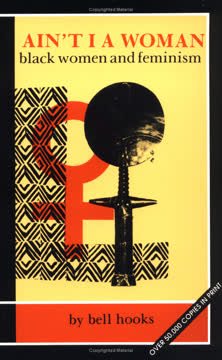
Ain't I a Woman by bell hooks is widely praised as essential intersectional feminist reading that examines how Black women face both racism and sexism. Published in 1981 when hooks was just 19, the book critiques white feminism's exclusion of Black women and sexism within civil rights movements. Reviewers appreciate hooks' powerful, accessible writing and historical analysis of slavery through modern times. Some note dated perspectives and generalizations, while others find certain arguments questionable. Overall, readers consider it groundbreaking, transformative work that remains highly relevant for understanding how race, class, and gender intersect.
Similar Books