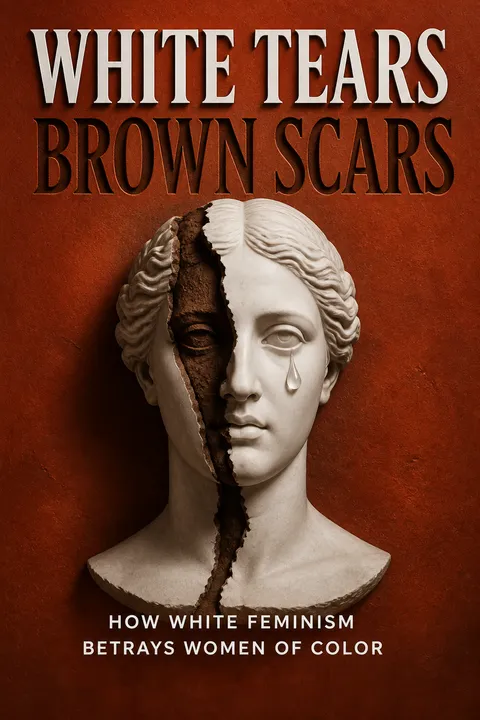


Key Takeaways
Read conflict through power, not just the personalities in the room
A workplace dispute becomes a pattern. Ruby Hamad’s starting point is the case of Lisa Benson, a Black television journalist who shared Hamad’s article about white women’s tears with colleagues. Two white coworkers complained, Benson was suspended and then lost her job. She had already alleged racial discrimination at the station. A jury later rejected her discrimination claim but found that her dismissal was retaliation for filing an earlier complaint.
The same script repeats. Hamad connects Benson’s experience to accounts from women of colour who say that when they challenge a white woman, the issue shifts from the original harm to the white woman’s distress. The challenger is recast as aggressive, and may be pressured to apologize or risk her job, reputation, or relationships.
The value of this account is its attention to the audience around a conflict. A manager, jury, or colleague does not merely observe a dispute; their judgment can determine whose account becomes credible and whose conduct is punished. Organizational research on procedural fairness likewise shows that people assess institutions partly by whether rules are applied consistently and voices are heard. The pattern Hamad identifies is a useful prompt to inspect outcomes, not assume intent: a person may feel genuinely hurt while still benefiting from a system that protects her more readily than the person she challenged.
Treat representation as infrastructure: stereotypes shape who receives protection
Images teach audiences whom to trust. Hamad traces stereotypes that frame Black women as sexually available, Native women as exotic or submissive, and Asian women as either compliant companions or dangerous seductresses. These images are not harmless shorthand: they influence who is imagined as innocent, desirable, threatening, or deserving of care.
Rue exposes the reflex. In The Hunger Games, the character Rue is described with dark skin, yet some fans objected when a Black actor played her, insisting they had imagined a blonde, innocent child. Hamad links that reaction to a longer history of denying Black girls protection. A 2017 study surveying 325 people found that Black girls were more likely than white girls to be perceived as older, less in need of nurturing, and more knowledgeable about sex.
The argument treats popular culture as a training ground for social perception, not merely a mirror of it. That is a strong claim because repeated images can make a stereotype feel like ordinary common sense, even when viewers do not consciously endorse it. Still, representation does not mechanically dictate behavior: people interpret images differently, and institutional rules also shape outcomes. The most useful question is therefore not whether one casting choice fixes prejudice, but whether a pattern of stories expands the range of people audiences can recognize as fully human.
Expect racial stereotypes to change costumes, not surrender their power
The stereotypes form traps. Hamad describes a shifting set of roles for women of colour: the submissive China Doll, the calculating Dragon Lady, the angry Sapphire, the Spicy Sexpot, or the Arab woman cast as either helpless victim or dangerous threat. A woman can be praised for being agreeable, then condemned as aggressive when she sets a boundary. The stereotype changes according to what best discredits her in the moment.
A public example is Alexandria Ocasio-Cortez. After winning a congressional seat, the young Puerto Rican representative was described by some critics as frightening or hostile for pointed political remarks. Hamad argues that this framing echoes the Angry Brown Woman stereotype, which treats criticism as evidence of a woman’s supposed nature rather than a response to what is happening.
This is a powerful account of categorization as a form of social control. In cognitive science, categories help people process complex information quickly, but they can also make expectations resistant to correction: evidence that contradicts a stereotype is reinterpreted to preserve it. Hamad’s examples show how a person can be judged negatively whether she complies or resists. The framework should not imply that every criticism of a woman of colour is racist. It instead invites a sharper test: are comparable actions being described and judged differently across race and gender?
Ask whose safety the white damsel is really protecting
Protection had racial conditions. Hamad traces the white damsel ideal to colonial societies that presented white women as uniquely innocent and in need of male protection, while denying comparable vulnerability to women of colour. In early twentieth-century Southern Rhodesia, panic about Black men supposedly threatening white women led to severe punishments, including for men whose cases rested on weak or mistaken evidence. A woman who did not fit the ideal of respectable chastity could receive little sympathy.
The cost could be fatal. In 1955, fourteen-year-old Emmett Till was murdered after a white woman accused him of misconduct. She later recanted. Hamad argues that the imagined threat to white womanhood has repeatedly been used to justify violence against men of colour, while the abuse of women of colour by white men was minimized.
The historical record complicates the idea that protection is automatically benevolent. Protection can safeguard someone while also restricting her freedom and defining whose body matters. The damsel role could offer white women limited influence, yet it tied their security to racial hierarchy and male authority. This does not erase genuine danger faced by women, nor does it make every accusation false. It makes due process and equal credibility essential: a just response to violence cannot depend on the race of the accused or on whether a victim fits an ideal of respectability.
Do not confuse sincere distress with harmless consequences
White fragility names a defensive response. Sociologist Robin DiAngelo uses the term for the anxiety and defensiveness some white people display when racial assumptions are challenged. Hamad applies the idea to moments when a white woman’s distress draws attention away from a woman of colour’s complaint. The tears may be real; their social effect can still be to redirect sympathy and shield the person challenged from accountability.
Workplace stories make the pattern concrete. Zeina, a Palestinian woman, said a coworker touched her hair despite her objections, then portrayed Zeina as unfriendly when she complained. Her employer ultimately demanded an apology from Zeina. Hamad calls this broader performance Strategic White Womanhood: an appeal to innocence and vulnerability that can preserve racial advantage, whether or not the person consciously plans that result.
Separating emotional sincerity from social consequence is a useful analytic move. Feelings are real experiences, but they do not settle what happened or who should bear the cost. In conflict mediation, attention to observable behavior and agreed procedures can prevent the most emotionally compelling account from automatically winning. Hamad’s framing is strongest when it identifies a repeated imbalance, not when it presumes calculation. The practical response is to keep the original concern visible, ask what remedy would address it, and ensure the person who raised it is not made responsible for soothing everyone else.
Build sisterhood by sharing power, not claiming common womanhood
Solidarity has a history to answer for. Hamad challenges the idea that shared gender automatically creates a shared political interest. White women participated in slavery, colonial child removal, and campaigns that excluded women of colour. Some white maternalists claimed to rescue Indigenous children from supposedly deficient families, then supported policies that separated children from their mothers permanently. Their care language helped justify coercion.
The suffrage movement offers another example. Black women were excluded from some white-led organizing, while prominent white suffragists opposed Black men receiving the vote before white women. Frances Ellen Watkins Harper urged white women to confront the harms they ignored. Hamad’s point is not that every white woman acted alike, but that feminism can challenge sexism while leaving racial power intact.
This history distinguishes solidarity from simple identification. A coalition becomes credible when its members share decision-making, resources, and risk, rather than merely declaring a common cause. It also shows why good intentions are insufficient: benevolent language can coexist with policies that deny agency. Historical cases should not be flattened into a claim that all members of a group behave identically. Their value lies in revealing how institutions can reward some women’s advancement while transferring costs to others, even inside movements organized around equality.
Measure feminism by redistributed power, not visibility or promotion
A milestone is not the same as liberation. Hamad contrasts the casting of an Arab actor as Aladdin with the excitement around a white woman becoming Doctor Who. Both could matter, but the first challenged the chronic absence and vilification of Arabs on screen, while the second was often celebrated as progress for all women. For women of colour, being visible in a story is not the same as having power over the story.
Intersectionality is structural. Kimberlé Crenshaw’s term describes how race and gender can combine to create forms of exclusion that cannot be understood by examining either category alone. Hamad cites research arguing that affirmative action in the United States benefited white women substantially, while Australian leadership remained overwhelmingly Anglo-Celtic. More women at the top does not guarantee that power reaches women of colour.
This distinction helps separate symbolic inclusion from institutional change. A screen role, promotion, or campaign slogan may improve recognition while leaving hiring, ownership, and policy untouched. Intersectionality is most useful as an analysis of how systems interact, rather than as a checklist of identities or a contest over who suffers most. The argument also leaves room for real gains: visibility can challenge assumptions and open doors. The test is whether those gains alter who sets agendas, controls resources, and can safely disagree once inside the room.
When concern arrives suddenly, check what debate it is replacing
The Lovejoy Trap redirects attention. Hamad uses this term for a tactic in which someone invokes concern for children or women to shift a debate away from the issue being discussed and onto the challenger’s supposed lack of compassion. The phrase refers to a character on The Simpsons who repeatedly cries out for someone to think of the children.
The tactic has a long history. Charles Loring Brace’s nineteenth-century charity sent roughly 100,000 children from poor immigrant families west to live and work with other households, describing the intervention as child welfare. In Australia, television host Yumi Stynes challenged Kerri-Anne Kennerley’s claims about Aboriginal communities during a debate about Australia Day. Coverage soon focused on whether Stynes had been rude, rather than on the original debate or Indigenous activists’ claims.
Concern for vulnerable people can be entirely sincere, which is why the trap works. The diagnostic is not whether children or women deserve protection, but whether the proposed response addresses the stated harm, listens to affected communities, and accounts for prior policy choices. This resembles agenda-setting in political communication: controlling which question receives attention can be as consequential as winning an argument. The framework should be applied carefully, since some crises genuinely demand a change of focus. Its value is prompting a return to the original issue before accepting a new moral accusation.
Notice how proximity to whiteness grants access, then sets its limits
Whiteness is a shifting boundary. Hamad describes it not simply as skin colour but as access to privileges associated with dominant Western identities. Passing, or being treated as closer to white, can offer advantages while remaining conditional: a person may be accepted until her background becomes known or she challenges a stereotype. Colourism, prejudice favoring lighter skin, can also operate within communities of colour and reinforce anti-Blackness.
The pressure is global. Hamad notes that skin-lightening products were part of a multibillion-dollar market, marketed with promises of better work, marriage, and status. She also describes how non-Black communities can reproduce anti-Black hierarchies while facing racism themselves. Her closing appeal is for women of colour to recognize these patterns, build collective platforms, and refuse the idea that access to white approval is the same as freedom.
The account shows that racial hierarchy is reproduced through institutions and everyday preferences, not only through explicit hostility. Colorism is especially revealing because it can reward proximity to dominant standards inside communities that are themselves marginalized. That does not make every preference reducible to racism, but it makes the social rewards attached to appearance worth examining. The emphasis on collective platforms also offers a practical counterweight to isolation: shared interpretation can help people name patterns that individual experience alone makes easy to doubt.
Analysis
White Tears/Brown Scars is a history-driven argument about how racial power is performed in everyday relationships. Its distinctive move is to link small interpersonal scenes, such as a workplace complaint or a public display of tears, to the longer histories that determine whose distress is legible and whose anger is suspect. The book’s examples range from colonial law and slavery to film casting, suffrage, social media, and contemporary politics. Together they show how racial stereotypes do not merely insult individuals; they distribute credibility, safety, and institutional attention.
The central concept is not that white women’s feelings are false, or that every white woman consciously manipulates others. It is that a social script can produce unequal consequences without conscious design. A distressed person may sincerely feel attacked, while observers still grant her more protection than the person who raised the concern. This distinction between intent and effect is essential to the book’s argument and to fair analysis of conflict.
The book is also deliberately polemical. Its historical range gives force to its claim that gender equality can coexist with racial exclusion, but the scope can make varied societies and experiences seem more unified than they are. The author acknowledges differences among women of colour, yet readers should retain that caution when applying broad categories. The strongest use of the framework is not to diagnose an individual’s hidden motive from one interaction, but to examine patterns: whose account is believed, whose conduct is disciplined, and whether the original issue receives a remedy.
That approach makes the work relevant beyond feminism. It is a study of institutional credibility, narrative control, and the way ostensibly neutral ideals, such as innocence, civility, or protection, acquire unequal meanings. Its challenge is concrete: do not measure progress by representation alone, and do not let a change in emotional tone erase the question of power.
Review Summary
White Tears/Brown Scars is praised for its insightful analysis of white women's role in upholding racism and oppression. Readers appreciate Hamad's intersectional approach, historical context, and personal anecdotes. The book is commended for its comprehensive research and accessible writing style. Many reviewers found it eye-opening and validating, especially women of color. Some critics noted repetitive points and occasional weak arguments. Overall, the book is widely recommended as an important contribution to discussions on race, feminism, and white privilege.
People Also Read

Glossary
White Womanhood
Racialized ideal of femininityA historically constructed ideal that associates white women with innocence, virtue, vulnerability, and moral authority. Hamad argues that this ideal can offer white women limited protection and social power while helping preserve racial hierarchy. Women of colour are excluded from its presumed innocence and are more readily cast as threatening, overly sexual, or undeserving of care.
white tears
Distress that redirects sympathyA term for the way some white people’s visible distress during challenges about race can shift attention away from the original concern. In Hamad’s account, observers may then focus on comforting the distressed white person and judge the person who raised the issue as aggressive. The phrase describes a social effect, not proof that the emotion is insincere.
white fragility
Defensive reaction to racial challengeSociologist Robin DiAngelo’s term for defensive responses some white people have when racial assumptions or privilege are discussed. These responses can include anger, withdrawal, argument, or emotional distress. Hamad uses the concept to explain how discomfort may interrupt discussion and restore the comfort of people whose racial position is being questioned.
Strategic White Womanhood
Innocence used to retain advantageHamad’s term for invoking the socially privileged image of white female innocence, vulnerability, or moral goodness in ways that can discredit women of colour. The behavior may be deliberate or unconscious. Its defining feature is its effect: discussion shifts from the original grievance to the white woman’s feelings, while the challenger risks being labeled hostile or unreasonable.
Pets or Threats
A binary imposed on Arab womenHamad’s description of a reductive framework that portrays Arab women either as helpless victims needing Western rescue or as dangerous figures who must be controlled. Both roles deny complexity and agency. The binary lets observers treat Arab women as symbols in political arguments instead of as people with varied identities, views, and experiences.
Lovejoy Trap
Moral concern that diverts debateHamad’s term for shifting a discussion by invoking vulnerable children or women and implying that critics do not care about them. The diversion can move attention away from the original question and toward the challenger’s character. The term refers to the repeated appeal to think of the children by Helen Lovejoy, a character in The Simpsons.
classwashing
Class used to excuse racial powerHamad’s term for explaining racism primarily through class disadvantage in ways that obscure racial hierarchy. She argues that this can exclude people of colour from accounts of the working class, excuse racist political behavior as ignorance, and shift attention from the systems that produce racial inequality. It does not mean class is irrelevant.
gas-whiting
Racialized denial of lived experienceHamad’s adaptation of gaslighting for attempts to undermine a person of colour’s account of racism or to make that person question their interpretation of events. It describes a conversational and institutional effect, especially when a complaint is reframed as evidence that the complainant is divisive, hostile, or prejudiced.
intersectionality
Interlocking structures of oppressionA framework developed by legal scholar Kimberlé Crenshaw to explain how forms of discrimination, especially race and gender, can combine in ways that are not captured by treating each separately. Hamad emphasizes that intersectionality concerns institutions and power, not merely the number of identities a person holds. It explains why the experiences of women of colour may be missed by single-axis analysis.
colourism
Preference for lighter skinDiscrimination or social preference that advantages lighter skin over darker skin, including within communities of colour. Hamad connects colourism to colonial histories and to the elevated status attached to proximity to Western standards of beauty and power. It can affect access, self-image, and social treatment, and may reinforce anti-Blackness.
FAQ
1. What is White Tears/Brown Scars by Ruby Hamad about?
- Core critique of white feminism: The book examines how white feminism often betrays women of color by centering white women’s experiences and upholding white supremacy.
- Intersection of race and gender: Hamad explores how race and gender oppression are inseparable, focusing on the ways white women’s victimhood is weaponized to silence women of color.
- Historical and contemporary analysis: The book traces the roles white women have played in colonialism, slavery, and systemic racism, showing how these dynamics persist today.
- Call for reckoning: Hamad urges a collective re-examination of feminism to include and liberate all women, not just white women.
2. Why should I read White Tears/Brown Scars by Ruby Hamad?
- Unveils hidden histories: The book exposes overlooked roles of white women in colonialism and racial oppression, challenging sanitized narratives.
- Challenges mainstream feminism: It critiques the limitations of white feminism and its failure to address intersectionality authentically.
- Empowers marginalized voices: Hamad amplifies the experiences of women of color, offering insights into their struggles and resilience.
- Encourages critical self-reflection: Readers, especially white women, are invited to confront uncomfortable truths about privilege and complicity.
3. What are the key takeaways and calls to action from White Tears/Brown Scars by Ruby Hamad?
- Recognize complicity and fragility: White women must confront their role in upholding white supremacy and the limitations of their feminism.
- Dismantle racial and gender hierarchies: The book calls for breaking down damaging archetypes and binaries that sustain systemic oppression.
- Center women of color: Genuine feminism must be led by and include women of color, acknowledging their intersecting oppressions.
- Build true solidarity: Only by rejecting white supremacy and embracing intersectionality can feminism become a global movement for all women.
4. What is the concept of "White Womanhood" in White Tears/Brown Scars by Ruby Hamad?
- Constructed identity: White Womanhood is a social and cultural construct positioning white women as both victims and protectors within white supremacy.
- Damsel in distress/defense: Historically, white women played the "damsel in distress" to justify protection by white men, and the "damsel in defense" to uphold white male power.
- Instrument of white supremacy: This identity enables white women to downplay violence, uphold colonial systems, and silence women of color.
- Contemporary relevance: White Womanhood persists today through behaviors like "white tears," strategic victimhood, and the White Savior Complex.
5. How does Ruby Hamad define and explain the weaponization of "white tears" in White Tears/Brown Scars?
- Strategic emotional displays: "White tears" refer to white women’s emotional reactions used to silence or discredit women of color’s critiques of racism.
- Historical roots: This tactic has been used since colonial times to justify violence against people of color and reinforce racial hierarchies.
- Social function: While the tears may be genuine, their effect is to maintain white privilege and control, often resulting in women of color being blamed or disbelieved.
- Impact on solidarity: The weaponization of white tears undermines genuine feminist sisterhood and prevents intersectional progress.
6. What are the key concepts and terms introduced in White Tears/Brown Scars by Ruby Hamad?
- White Womanhood and White Tears: These are constructed identities and behaviors that maintain white innocence and racial control.
- White Fragility: Coined by Robin DiAngelo and discussed by Hamad, it describes defensive reactions by white people when their racial worldviews are challenged.
- Racialized Gender Binaries: Colonialism created damaging binaries, such as the innocent white damsel versus the hypersexualized or angry woman of color.
- Lovejoy Trap: A rhetorical tactic that derails conversations about systemic issues by accusing critics of lacking compassion for vulnerable groups.
7. How does White Tears/Brown Scars by Ruby Hamad address the history of white women in colonialism and slavery?
- Active complicity: White women were not passive bystanders but active participants and enforcers of colonial and slave systems.
- Maternal colonialism: They used maternalist rhetoric to justify the removal of Indigenous children, claiming to "save" them while perpetuating oppression.
- Slave ownership: Many white women in the American South owned and managed enslaved people, asserting power within the system.
- Enforcement of racial hierarchy: White women helped maintain racial boundaries and sometimes joined groups like the Ku Klux Klan.
8. What are the damaging racialized archetypes of women of color discussed in White Tears/Brown Scars by Ruby Hamad?
- Angry Brown/Black Woman: These tropes depict women of color as inherently aggressive or irrational, invalidating their legitimate emotions.
- Spicy Sexpot and Dragon Lady: Latina and Asian women are hypersexualized, portrayed as seductive, manipulative, or submissive.
- Bad Arab and Princess Pocahontas: Arab and Indigenous women are either seen as repressed victims or sexualized, justifying their erasure and violence against them.
- Impact on perception: These stereotypes persist, shaping how women of color are treated in society and within feminism.
9. How does White Tears/Brown Scars by Ruby Hamad explain the concept of "passing" and colorism?
- Passing defined: Passing is when lighter-skinned people of color benefit from white privilege by appearing closer to whiteness.
- Colorism explained: Colorism is discrimination favoring lighter skin within communities of color, rooted in colonialism and anti-blackness.
- Global impact: The book discusses colorism’s prevalence worldwide, including in South Asia, Africa, Latin America, and the Middle East.
- Peril of passing: Passing offers only conditional inclusion and often forces individuals to distance themselves from their racial or cultural identities.
10. What does Ruby Hamad say about the relationship between white feminism and women of color in White Tears/Brown Scars?
- No universal sisterhood: White feminism often excludes or betrays women of color by centering white women’s experiences and ignoring racial oppression.
- Appropriation and silencing: White feminists frequently appropriate the work of women of color while dismissing their critiques as divisive.
- Intersectionality betrayed: White feminism often reduces intersectionality to identity politics without addressing systemic power imbalances.
- Call for accountability: Hamad insists white women must acknowledge their privilege and complicity for genuine, inclusive feminism.
11. How do the dynamics described in White Tears/Brown Scars by Ruby Hamad play out in workplaces and social settings?
- Systemic racism in workplaces: Women of color face undermining, tokenism, and microaggressions from white female colleagues and managers.
- Weaponization of victimhood: White women may use tears and victimhood to avoid accountability, often resulting in women of color being blamed or ostracized.
- Lack of recourse: Complaints by women of color are often dismissed or turned against them, leading to emotional harm or job loss.
- Social conflicts: These dynamics also appear in friendships and social groups, especially around discussions of racism or cultural appropriation.
12. What are some key examples Ruby Hamad uses to illustrate the failures of white feminism in White Tears/Brown Scars?
- Brett Kavanaugh hearings: White women’s support for Kavanaugh despite credible sexual assault allegations highlights racialized disbelief and protection of white men.
- #SaveRahaf campaign: The portrayal of a Saudi asylum seeker as a victim needing rescue exemplifies the White Savior Complex and erasure of Indigenous struggles.
- Media representation: The overshadowing of Arab actor Mena Massoud’s casting by white women’s celebration of a female Doctor Who shows racialized prioritization.
- Lisa Benson’s lawsuit: The retaliation against a Black journalist for sharing Hamad’s article demonstrates institutional resistance to confronting white feminism’s racism.
Download PDF
Download EPUB
.epub digital book format is ideal for reading ebooks on phones, tablets, and e-readers.








