

Key Takeaways
Name the desire, its deeper purpose, and the person it asks you to become
Clarify the real target. The book argues that a goal is more useful when paired with its underlying reason. Wanting money, for instance, may really mean wanting security, freedom, or the ability to help others. The author’s “Seven Levels of Why” exercise asks the same question repeatedly until a surface wish reaches a core motivation. Those motivations may involve certainty, variety, significance, connection, growth, or contribution.
Give your mind a heading. Describe a satisfying ordinary day, then decide what standards, habits, and relationships would support it. The author calls this a North Star: a clear direction for choices about time and energy. Review the vision as your priorities change. The point is not to predict every detail, but to tell yourself what matters and what kind of person could sustain it.
What's useful here is the move from a status symbol to the need beneath it. In goal-setting research, specific, meaningful aims tend to guide effort better than vague wishes, while values-based motivation can make effort feel more self-directed. The repeated “why” questions can expose a mismatch between the thing pursued and the need it is meant to meet. There is a caveat: the exercise does not reveal a single hidden, unquestionable truth. Motivations can be mixed, socially shaped, and change over time, so the answers are prompts for reflection, not a diagnosis.
Treat the present as your steering point, not an obstacle to escape
Start with what is happening. Shinohara’s argument is that fighting the facts of today consumes attention that could be used to choose a next step. Dwelling on an ideal future can make the distance feel larger, while replaying the past can make old interpretations seem permanent. The book instead recommends noticing circumstances without treating them as a verdict on personal worth.
Interrupt autopilot. A brief check-in asks: Who am I, where am I, and what am I doing? The “Everything Green” exercise illustrates selective attention: after scanning a room for green objects, people may struggle to recall red ones. Attention directs what is noticed, so a habitual focus on problems can hide available options. The practical aim is not to ignore hardship, but to make a conscious choice within it.
This present-focused approach has a strong practical basis: attention is selective, and mindfulness practices can help people notice thoughts without immediately acting on them. That pause is especially valuable when a familiar trigger produces an automatic response. Still, acceptance should not be confused with approval or passivity. Some conditions require protest, boundaries, or urgent change. Present awareness is most useful as a way to see reality clearly enough to respond, not as a reason to call every circumstance beneficial.
Turn wanting into small actions that make the desired outcome more likely
Desire points; intention moves. The book distinguishes wanting an outcome from choosing thoughts and actions that create opportunities for it. Someone hoping to form close relationships, for example, could join an activity they genuinely enjoy, where meeting people becomes more likely. The value lies both in creating chances and in living well during the process, rather than treating each encounter as a test of whether the desired person has appeared.
Choose the next workable step. Shinohara calls the range of actions one can influence the “Circle of Power.” If joining a group feels intimidating, the next step might be understanding the anxiety or trying a smaller social setting. Use the simplest obvious action, then learn from what happens. The book’s raffle analogy makes the basic point: taking relevant steps increases the number of opportunities, though it cannot guarantee the outcome.
This is the book’s clearest corrective to passive wishful thinking. Behavioral science similarly distinguishes imagining a goal from forming implementation plans that specify what to do when an opportunity or obstacle appears. The relationship example works because the action creates exposure to possible connections without making every interaction carry the burden of destiny. The limit is important: effort changes probabilities, not other people’s choices or every external condition. A useful intention therefore combines agency with realistic expectations about what remains outside one’s control.
Practice manageable discomfort, but don't confuse growth with pain
Stretch by degrees. The book treats unfamiliar situations as opportunities to expand identity, the story a person tells about who they can be. Someone afraid of public speaking might first record a short video for a trusted friend rather than leap onto a large stage. Imagining a difficult situation and rehearsing a calm response is offered as another way to make it less intimidating.
Use discomfort as a signal, not a command. The author distinguishes moderate unease from pain that signals a need to stop, recover, or reconsider. He also advises changing course when there is no meaningful progress despite adequate effort and time, and the process no longer matters to the person. These tests are intended to prevent both premature retreat and endless persistence in a direction that is not working.
Gradual exposure is a recognizable psychological method: approaching a feared situation in manageable steps can help update expectations and build skill. The distinction between unease and harm is also valuable, particularly when “growth” is used to rationalize overwork or unsafe choices. But discomfort alone does not prove that a path is right, and pain is not always a simple stop signal. Physical symptoms, trauma responses, and structural risks require context. The book’s strongest practical safeguard is to pair courage with observation and course correction.
Loosen your grip on outcomes without surrendering the effort
Reduce the stakes you assign. Shinohara uses “Excess Potential” for the imbalance he believes arises when a person gives a goal or fear overwhelming importance. In practical terms, a single outcome can become so loaded that every delay feels like a threat. The proposed remedies include making a backup plan, considering several possible routes, and taking useful action instead of endlessly rehearsing scenarios.
Separate flexibility from apathy. The book draws on Sunyata, a Buddhist concept associated with emptiness, to question rigid attachment to identities and expectations. Here, letting go means releasing the demand that reality follow one exact script, not abandoning the underlying aim. A person can remain committed to finding meaningful work while being open to different roles or routes. The author presents this as a spiritual account of manifestation; its everyday value is in reducing fixation and preserving adaptability.
The distinction between commitment and fixation is psychologically productive. Flexible goal pursuit allows a person to preserve a valued aim while changing strategies when evidence changes, a pattern associated with resilience. Backup plans can also reduce the feeling that one decision contains the whole future. The metaphysical explanation of “Excess Potential,” however, is not established evidence about how reality responds to desire. The practical case does not depend on accepting that claim: lower stakes can reduce rumination and make experimentation easier.
Audit what gets your attention, then choose people and inputs deliberately
Track the leaks. The author treats attention as a limited resource that shapes what people notice and act on. His attention audit asks readers to set a half-hour reminder for a week and record what they are doing each time it rings. The resulting snapshot can reveal how much focus goes to media, arguments, or routines that do not serve stated priorities.
Shape the surrounding cues. The book also recommends spending time with people who support growth, seeking mentors or peers with relevant experience, and choosing useful content over habitual negativity. Its “Moving with Love” technique means trying to add value without keeping score, while taking space when emotions make a constructive response unlikely. These are not claims that positive company guarantees success. They are ways to make supportive behavior and learning more available in daily life.
The attention audit turns an abstract complaint about distraction into observable data, much like a basic behavioral log. Social environments matter too: norms, encouragement, and accountability can make some actions easier to repeat. The emphasis on contribution adds a relational dimension that purely individual goal-setting can miss. Yet positivity should not become a filter that silences criticism or pain. A supportive circle is not simply one that agrees; it should help people stay honest, challenge weak assumptions, and respond constructively to setbacks.
Borrow your future self's behaviors until they become today's defaults
Let identity guide practice. The book’s “future presence” idea asks a person to picture who could sustain a desired result, then act from that imagined perspective. In its “Be-do-have” formula, being shapes doing, and repeated doing supports having. Someone who wants to become a confident speaker might study a respected speaker’s preparation and composure, then practice selected behaviors while keeping their own style.
Repetition builds familiarity. Shinohara connects this process to the Hebbian principle, the idea that repeated activity can strengthen connections among neurons. The useful claim is modest: rehearsal and repeated action can make a behavior more familiar and easier to perform. The author cautions against merely pretending to possess a result. The aim is to develop capacities and habits that can support it, rather than making false claims about credentials or achievements.
Future-self thinking can make distant goals concrete by translating them into behaviors available now. Modeling a skilled person can also provide a script when a task feels unfamiliar, while practice gradually makes the script more personal. This fits learning research better than the stronger implication that imagining a future identity itself attracts external outcomes. Identity can motivate action, but it should remain revisable: copying a role model’s visible traits without understanding their context can produce imitation rather than competence.
Treat setbacks as information, not verdicts, and adjust the next attempt
Review the method, not your worth. The book reframes a missed goal as evidence about what needs adjustment. If a planned reading routine repeatedly fails, the useful response might be to reserve a realistic time or reduce the initial commitment, rather than concluding that reading is impossible. Self-compassion is presented not as an excuse, but as a way to examine the trigger and prepare a different response.
Redirect emotion into learning. Shinohara cites Alison Wood Brooks’s research on reappraising pre-performance anxiety as excitement. In the study described, participants who used excitement language performed better on certain tasks than those told to calm down. The book also calls accelerated learning under intense emotion “Hyper-Learning.” That term is the author’s label, not a promise that every highly emotional experience teaches well; the practical suggestion is to ask what can be learned while the experience is fresh.
A setback becomes useful when it generates information about the plan, the environment, or the skill gap. That resembles iterative problem-solving: test an approach, observe the result, and revise. Brooks’s study supports a specific reappraisal technique in particular performance settings, not a universal rule that anxiety should be renamed excitement. Nor should traumatic experiences be treated as chosen lessons. The book’s most defensible point is narrower: emotions can be noticed and interpreted in ways that preserve agency, while harmful events still deserve care and support.
Build momentum through steady intention, flexible routes, and deliberate recovery
Pair action with openness. Shinohara describes effective practice as a balance between intention and surrender: keep a clear direction, but do not demand one precise route or timetable. The book warns that forcing more effort can produce fatigue and frustration. Its morning routine suggestions, such as journaling, meditation, or movement, are ways to begin the day with deliberate attention rather than immediate distraction.
Redirect before reacting. When difficult thoughts or emotions arise, the author recommends moving first toward neutrality, then choosing a constructive response. The analogy is Aikido, a martial art that redirects an opponent’s force rather than meeting it head-on. Applied to daily life, a pause, a breath, or a short break can prevent a heated moment from dictating the next decision. Rest is not framed as failure; it can preserve the capacity to continue.
Momentum is more sustainable when progress includes recovery. Research on self-regulation suggests that routines can reduce the number of decisions required, while breaks can protect attention and performance. The book’s emphasis on flexible routes also guards against confusing persistence with repeating an ineffective strategy. Its spiritual language about surrender may appeal to readers who find uncertainty difficult, but surrender should not mean waiting for outside forces to solve practical problems. The productive balance is to act where agency exists and adapt where prediction does not.
Analysis
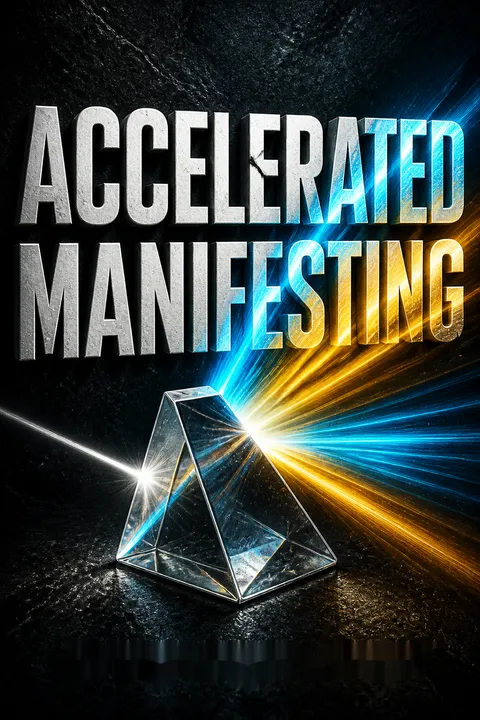
Accelerated Manifesting is a hybrid self-help book: part Law of Attraction guide, part behavioral coaching, and part spiritual philosophy. Its central correction is unusually practical for the genre. Instead of promising that desire alone rearranges the world, it insists on clarity, action, attention, experimentation, and adaptation. The seven “secrets” form a progression: identify what matters, attend to the present, act toward opportunities, tolerate manageable uncertainty, loosen fixation, shape the environment, and rehearse a more capable identity.
The book’s most durable value lies in this behavioral translation. “Manifestation” can be read as a motivational vocabulary for directing attention and organizing action. A clear aim helps a person notice relevant opportunities; small steps increase exposure to them; reflection improves the next attempt; and supportive relationships can provide information and accountability. These mechanisms have plausible counterparts in goal-setting, learning, mindfulness, and social psychology. The author’s examples work best when interpreted this way, rather than as proof that thought directly controls external events.
That distinction matters because the text repeatedly presents metaphysical claims as explanations, including the idea that the Universe tests intentions or balances excessive importance. Such claims are not demonstrated by the cited practical examples. The book also risks spiritualizing hardship when it suggests that people chose their suffering for growth. That interpretation may comfort some readers, but it can burden people facing trauma or injustice with an unwarranted sense of responsibility. Acceptance should mean acknowledging conditions, not endorsing them.
A grounded reading keeps the useful engine and rejects the overclaim: clarify a meaningful aim, take a controllable step, observe what happens, and revise without turning a result into a judgment of personal worth. The book’s strongest promise is not supernatural speed. It is reduced delay between wanting change and participating in it. Its best practices are valuable even for readers who regard manifestation as metaphor, because they make intention more specific, behavior more deliberate, and setbacks more informative.
Review Summary
Accelerated Manifesting receives high praise from readers, with an average rating of 4.51/5. Reviewers commend its advanced techniques for supercharging manifestation, noting it builds upon foundational concepts. Many appreciate the author's clear explanations of complex ideas and practical advice. Readers report significant personal growth and shifts in reality after applying the book's principles. While some suggest it's best for those already familiar with manifesting, others find it accessible and transformative. The book is often described as a must-read that stands out from typical Law of Attraction literature.
Glossary
Seven Levels of Why
Repeatedly uncovering motivationA reflection exercise that begins with a stated desire and asks why it matters repeatedly, ideally seven times. Each answer becomes the subject of the next question, helping reveal the deeper needs or values behind the original aim. The book presents it as a way to distinguish a surface goal from the motivation that can sustain effort.
Circle of Power
Actions within personal influenceThe set of actions and responses a person can influence in a given situation. In the book, this idea redirects attention from controlling circumstances to choosing a useful next step, such as examining anxiety about joining a group or practicing a social skill. It functions as a practical boundary around agency, rather than a claim that every outcome is controllable.
Dark Waters of Reality
Unfamiliar routes through changeThe author’s metaphor for uncertain experiences that fall outside a person’s familiar routines and expectations. These experiences may be uncomfortable and can challenge an established identity. The book treats them as possible routes to learning and opportunity, while acknowledging that the unknown can contain unwanted outcomes as well as desired ones.
Sunyata
Emptiness beyond fixed labelsA Buddhist concept often translated as emptiness or voidness, used in the book to question rigid identification with possessions, memories, beliefs, and personal narratives. Shinohara applies it as a metaphor for remaining adaptable while pursuing aims. The term has a broader Buddhist philosophical history and should not be reduced to the book’s specific self-help interpretation.
Excess Potential
Importance that intensifies fixationA term the book attributes to Vadim Zeland’s Reality Transurfing. It describes the supposed imbalance created when a person gives a desired or feared outcome excessive importance. The author argues that this fixation can increase resistance and recommends reducing the stakes through backup plans, openness to alternatives, and practical action. This is a metaphysical framework, not an established scientific mechanism.
Thinker
Conscious focus and interpretationIn the book’s account of Robert Anton Wilson’s terminology, the Thinker is the conscious mind that holds a limited focus and forms interpretations. It directs attention toward particular evidence, such as signs of progress or signs of failure. The book pairs it with the Prover to explain how expectations influence what people notice, rather than demonstrating that attention creates external events.
Prover
Unconscious support for a beliefThe book’s use of Robert Anton Wilson’s term for unconscious processes that find or organize evidence consistent with what the conscious mind expects. For example, someone focused on green objects may overlook red ones. The idea resembles selective attention and confirmation bias, but it is not evidence that the mind can make an external desire objectively manifest.
future presence
Rehearsing a desired identityThe practice of imagining a future version of oneself and bringing its relevant qualities into present behavior. The book asks readers to consider how that future self might respond to current challenges, then to act on suitable behaviors now. The method is intended to make a distant goal more concrete, not to claim that imagining alone produces the result.
Be-do-have formula
Identity guides action and resultsA sequence in which a person first identifies a way of being associated with a desired outcome, then practices actions that fit that identity, with the hoped-for result following over time. The book uses it to connect self-concept, behavior, and achievement. Its practical force depends on developing relevant skills and taking effective action, rather than assuming identity by itself guarantees success.
Hyper-Learning
Learning during intense emotionThe author’s label for the possibility of learning quickly when strong emotions heighten attention. The proposed practice is to notice an emotionally charged moment and ask what can be learned from it, then reinforce a useful insight. The book compares this with how distressing events can leave strong memories, but the term is not a clinical learning category and intense emotion does not ensure beneficial learning.
Bagha technique
Anchoring a positive stateA technique the book describes as a way to mark a positive emotional moment for later recall. The reader places the tongue against the roof of the mouth and silently pairs the gesture with a statement about the capability demonstrated. The author presents this as a cue for attention and memory. The book provides no independent evidence establishing the method’s historical origin or distinct effectiveness.
FAQ
1. What is "Accelerated Manifesting" by Ryuu Shinohara about?
- Practical Manifestation Guide: The book is a practical guide to manifesting your desires faster by combining advanced Law of Attraction principles with neuroscience, quantum mechanics, and spirituality.
- Focus on Acceleration: It specifically addresses how to speed up the manifestation process by shifting your identity, clarifying your intentions, and removing internal resistance.
- Beyond Wishful Thinking: Shinohara debunks the myth of "wishful thinking" and emphasizes the importance of action, clarity, and alignment between your conscious and unconscious mind.
- Step-by-Step Framework: The book is structured around seven "hidden secrets" that provide actionable steps, exercises, and mindset shifts to supercharge your reality.
2. Why should I read "Accelerated Manifesting" by Ryuu Shinohara?
- For Faster Results: If you feel stuck or frustrated with slow or inconsistent manifestation results, this book offers strategies to accelerate your progress.
- Advanced Law of Attraction: It goes beyond basic Law of Attraction teachings, introducing advanced concepts and practical exercises for deeper transformation.
- Holistic Approach: The book integrates neuroscience, quantum principles, and spiritual wisdom, making it suitable for readers seeking a comprehensive understanding.
- Actionable Exercises: Each chapter includes practical exercises and real-life examples, making it easy to apply the concepts to your own life.
3. What are the key takeaways from "Accelerated Manifesting" by Ryuu Shinohara?
- Clarity is Power: Gaining clarity on what you want, why you want it, and who you need to become is foundational for accelerated manifestation.
- Intention Over Desire: Manifestation is driven by clear intentions and proactive action, not just by wishing or wanting.
- Embrace Discomfort: Growth and rapid change require stepping outside your comfort zone and finding comfort in discomfort.
- Letting Go of Attachments: Non-attachment and reducing the importance of outcomes remove resistance and allow manifestations to flow more easily.
- Present-Moment Awareness: Being conscious and present enables you to make empowered choices and recognize opportunities from the universe.
4. How does Ryuu Shinohara define "accelerated manifesting" and how is it different from regular manifesting?
- Not Instant Manifestation: Accelerated manifesting is not about instant results, but about reducing the time and resistance between intention and outcome.
- Optimized Internal Alignment: It involves aligning your conscious and unconscious mind, so your internal programming supports your desires.
- Active Participation: Unlike passive wishing, accelerated manifesting requires proactive action, self-reflection, and continuous growth.
- Integration of Science and Spirit: The approach combines practical neuroscience and quantum principles with spiritual practices for holistic change.
5. What are the "7 Hidden Secrets" in "Accelerated Manifesting" by Ryuu Shinohara?
- Secret #1: Clarity of What, Who, and Why: Define your desires, motivations, and the identity you need to embody.
- Secret #2: Accepting the Present: Acknowledge and accept your current reality before trying to change it.
- Secret #3: Turning Desires into Intentions: Move from passive wanting to active intending and action.
- Secret #4: Comfort in Discomfort: Embrace the unknown and stretch your identity beyond your comfort zone.
- Secret #5: Non-Attachment (Sunyata): Let go of attachments, reduce importance, and allow manifestations to unfold.
- Secret #6: Beautify Your Reality: Focus your attention on what you want to find and surround yourself with positive influences.
- Secret #7: Live from the End: Embody your future self now, using the be-do-have formula to create momentum.
6. How does "Accelerated Manifesting" by Ryuu Shinohara recommend gaining clarity on your desires?
- The 7 Levels of Why Exercise: Repeatedly ask yourself "Why is this important to you?" to uncover the core motivation behind your desires.
- Perfect Day Visualization: Write out your ideal day in detail to clarify what you truly want in different life areas (health, wealth, love, self).
- Define Your North Star: Establish clear standards and values to guide your decisions and actions toward your goals.
- Regular Reassessment: Update your vision every 90 days as you grow and gain new insights about yourself.
7. What role does resistance and acceptance of the present play in "Accelerated Manifesting" by Ryuu Shinohara?
- Resistance Slows Manifestation: Fighting or avoiding your current reality creates resistance and delays your desires.
- Acceptance as a Starting Point: Acknowledging "what is" allows you to redirect your energy and make empowered choices.
- Present-Moment Power: Staying present helps you notice opportunities and cues from the universe that support your goals.
- Growth Through Challenges: Challenges and setbacks are seen as necessary for spiritual and personal development, not as obstacles to avoid.
8. How does "Accelerated Manifesting" by Ryuu Shinohara address the importance of intention versus desire?
- Desire Signals Lack: Desires alone affirm what you don’t have, which can reinforce a state of lack.
- Intention Drives Creation: Intentions are proactive, focusing on being and doing, which leads to having.
- Action Over Waiting: The book emphasizes taking action and creating opportunities, rather than waiting passively for results.
- Non-Attachment to Outcomes: Intend and act, but release attachment to specific results to allow the universe to deliver in the best way.
9. What practical exercises and techniques does "Accelerated Manifesting" by Ryuu Shinohara provide?
- 7 Levels of Why: Deeply explore your motivations for any desire.
- Centering Your Awareness: Regularly ask "Who am I? Where am I? What am I doing?" to stay present and conscious.
- Attention Auditing: Track where your attention goes throughout the day to identify and redirect energy drains.
- Conjuring the Uncomfortable: Visualize and mentally rehearse uncomfortable scenarios to expand your comfort zone.
- Good Morning Momentum: Start your day with positive, intentional activities to build momentum.
10. How does "Accelerated Manifesting" by Ryuu Shinohara suggest dealing with setbacks, discomfort, and failure?
- Reframe Setbacks: View setbacks as opportunities for learning and refining your approach, not as failures.
- Embrace Discomfort: Growth happens outside your comfort zone; discomfort is a sign you’re on the right path.
- Discern Pain vs. Discomfort: Learn to distinguish between productive discomfort (growth) and harmful pain (signals to stop or redirect).
- Faith Over Belief: Cultivate faith in the process, which allows you to move forward even when evidence is lacking.
11. What is the "be-do-have" formula in "Accelerated Manifesting" by Ryuu Shinohara and how does it accelerate manifestation?
- Be: Embody the identity and energy of your future self who already has what you desire.
- Do: Take actions aligned with this new identity, allowing behaviors to flow naturally from your state of being.
- Have: As a result, you attract and receive the outcomes you want, closing the gap between desire and reality.
- Neuroscientific Basis: The process rewires your brain through repeated action and focus, making new habits and outcomes more likely.
12. What are the best quotes from "Accelerated Manifesting" by Ryuu Shinohara and what do they mean?
- "Clarity is power." — Tony Robbins: Emphasizes the importance of knowing exactly what you want to direct your brain and energy effectively.
- "What the Thinker Thinks, the Prover Proves." — Robert Anton Wilson: Highlights how your beliefs shape your perception and experience of reality.
- "Empty your mind, be formless. Shapeless, like water." — Bruce Lee: Encourages adaptability and non-attachment, allowing you to flow with life’s changes.
- "Faith has no preconceptions; it is a plunge into the unknown. Belief clings, but faith lets go." — Alan Watts: Stresses the value of faith over rigid belief in the manifestation process.
- "Everywhere you look, you see what you are looking for. When you are looking for God, all you see is God." — Ram Dass: Reminds readers that your focus determines your experience, so seek and expect positive confirmations.
About the Author

Download PDF
Download EPUB
.epub digital book format is ideal for reading ebooks on phones, tablets, and e-readers.








