

Key Takeaways
Treat manifestation as aligned attention followed by concrete action
The book’s central claim is that people help shape their lives by choosing what to focus on, feeling aligned with that direction, and acting on it. Shinohara describes reality as a field of possibilities filtered by beliefs and attention. His own story begins with anxiety and depression, when spiritual practices led him to notice links between his thoughts and his experience. He interprets this as evidence of conscious creation.
A practical reading is less mystical: attention affects what people notice, the choices they make, and the opportunities they pursue. The book’s recurring advice is to name a desired direction, imagine it, and take the next useful step. It does not establish that thoughts alone cause external events to appear.
The strongest version of this idea does not require the universe to rearrange itself around a wish. Attention can shape perception, and repeated action can make an aspiration more reachable by changing what a person notices and attempts. That is a meaningful account of agency without supernatural claims. The distinction matters because spiritual language can motivate, but it can also imply that hardship reflects faulty thinking. Structural barriers, illness, and chance do not disappear when someone adopts a positive focus.
Return to the present before planning becomes rumination
Clock time has a job. It helps organize work, appointments, and deadlines. Shinohara contrasts it with psychological time, his term for mentally replaying the past or rehearsing an imagined future until the present feels intolerable. In his account, this mental time-travel feeds the ego, which thrives on comparison, judgment, and emotional drama.
Practice presence deliberately. The book suggests noticing the breath, body, and immediate sensory details, then returning attention without scolding yourself when it wanders. It also recommends using schedules to structure focused work, rather than worrying constantly about what a deadline means. When there is nothing useful to do about a problem now, acknowledge it and wait for the next actionable moment.
This distinction resembles a practical divide between planning and rumination. Planning identifies a future task and returns attention to what can be done; rumination repeatedly revisits threat without producing a decision. Mindfulness practices can help people notice that shift, though they are not a cure-all and should not replace treatment when distress is severe. The useful test is not whether the mind mentions the past or future, but whether the thought helps guide a present action.
Feel emotions without obeying every story they tell
Make room for discomfort. Shinohara argues that trying to smother negative feelings with forced positivity can delay adaptation. Instead, notice an emotion, let it be present, and avoid turning it into a verdict about yourself or your future. He presents emotions and bodily hunches as messages from the heart, which he sees as a link to deeper wisdom.
Treat intuition as a clue. The book distinguishes fear, which may bring urgent physical alarm and relief when avoided, from intuition, which it describes as a quieter sense of comfort. It recommends mindfulness, attention to bodily reactions, and recording dreams. These practices can reveal concerns or preferences, but the book’s claim that feelings deliver knowledge from a soul is a spiritual interpretation, not a demonstrated fact.
Allowing an emotion to exist is different from endorsing its interpretation. That distinction is valuable: fear can signal danger, but it can also arise from novelty, memory, or uncertainty. Likewise, a calm feeling is not proof that a choice is safe. Emotional awareness works best as one input alongside evidence, reflection, and trusted advice. The book’s language of heart and soul may help readers take inner experience seriously, while a grounded approach keeps intuition from becoming an unquestioned authority.
Choose work where curiosity, ability, usefulness, and livelihood overlap
Purpose can be explored. The book uses Ikigai as a way to think about purpose through four questions: What do you love? What does the world need? What are you good at? What can provide a living? It acknowledges that these elements may not neatly converge at first, and recommends following curiosity rather than forcing an instant answer.
Small interests can travel far. Shinohara recounts Steve Jobs taking a calligraphy class out of curiosity. The lessons later influenced the fonts used on Apple computers. The point is not that every hobby becomes a career, but that exploration can build skills and reveal connections that a rigid plan would miss. The book encourages learning, trying things, and noticing what feels meaningful.
The four-part model usefully prevents purpose from becoming pure fantasy: enjoyment, contribution, competence, and economic viability each constrain the others. Yet it can make a life seem successful only when one occupation satisfies every need. Many people find meaning across several roles, or need a stable job to support meaningful work elsewhere. Jobs’s calligraphy story illustrates the value of curiosity, not a guarantee that an apparently unrelated interest will become commercially important.
Release control of the route, not responsibility for the journey
Detachment is not indifference. In Shinohara’s account, it means choosing a direction and working toward it without treating one exact outcome as the only acceptable result. Fixating on whether a wish has arrived can feed anxiety and narrow attention to obstacles. Remaining open allows a person to notice alternatives and revise a plan when circumstances change.
Keep moving while staying flexible. The book compares this approach to a river navigating around rocks rather than insisting on a straight line. Its account of Jobs’s calligraphy class also illustrates how an unexpected experience can prove useful in a different way than intended. The practical instruction is to make a plan, take the next step, and remain willing to adjust the route.
This is a productive correction to both passivity and overcontrol. Goals provide direction, while flexible plans let people respond to information they could not anticipate. In organizational psychology, this is close to holding an objective steady while adapting tactics. The book’s claim that detachment helps wishes manifest is not established, but its behavioral benefit is plausible: less fixation can reduce avoidable stress and improve responsiveness. Detachment should never become an excuse to abandon effort or tolerate a harmful situation.
Give every goal an intention that governs today's behavior
A destination is not a motive. Shinohara distinguishes a goal, the result someone wants, from an intention, the reason and manner in which they act. He criticizes people who endlessly analyze ideas while avoiding the vulnerability of doing the work. An intention can direct attention toward useful tasks and help a person decide what deserves effort.
Make the wording believable. The book recommends writing a specific statement about how to live or what to pursue, then repeating and visualizing it. If a bold claim such as being wealthy feels false, use language that expresses willingness or intention instead. The statement should focus on one’s own choices rather than trying to control another person. Most important, action must follow the statement.
The distinction between destination and operating principle makes goals more actionable. A person may want a promotion, for example, while an intention about learning, collaboration, or careful work can guide behavior before the promotion is available. Statements alone do not create competence or guarantee an outcome. Their value depends on whether they clarify a choice and prompt observable action. The book is most convincing when affirmations are treated as cues for behavior, rather than as forces that alter reality independently.
Shape your surroundings instead of blaming invisible vibrations
The book calls this resonance. It argues that people tend to absorb the emotional tone of their surroundings, including company, music, media, and the condition of their homes. It describes this through vibrational frequency, the idea that similar energies attract one another. Shinohara recommends choosing influences that support the state of mind and life a person wants.
There is a grounded version. A critical workplace, a cluttered room, or a steady diet of discouraging media can affect mood and attention. The book’s related concept of ontological design describes a feedback loop: environments shape people, and people in turn shape their environments. Adjusting routines and surroundings can therefore make desired actions easier, even without assuming that emotions emit a force that attracts matching events.
The environmental insight is stronger than its physics explanation. Social settings, cues, and material surroundings can shape behavior through ordinary mechanisms such as attention, imitation, and friction. That makes this advice testable: change a recurring cue and observe whether behavior changes. By contrast, physical resonance in bridges or sound waves does not show that people attract jobs or relationships through a matching emotional frequency. Keeping the metaphor separate from scientific evidence preserves the practical point without overstating what physics supports.
Use vivid visualization to prepare for action, not replace it
Imagination gives a goal texture. Shinohara recommends pairing meditation with detailed mental scenes. Rather than seeing only a finished result, imagine relevant sounds, sensations, emotions, and actions. He also describes preparing a short, positive mental image in advance so it can interrupt a spiraling train of thought. In his Sticky Thoughts Technique, the image is a few seconds long and practiced while calm.
Rehearse the process. The book suggests visualizing intermediate steps as well as the destination, then carrying out those steps in daily life. Its beach scene demonstrates how adding sensory detail can make imagery more vivid. Visualization may help focus attention and clarify what a person wants, but Shinohara’s stronger claim that imagined scenes manifest externally is not proven. He also proposes revisiting difficult memories with a revised response.
Mental imagery is most useful when it rehearses controllable actions rather than merely decorating an ideal outcome. A detailed picture of a successful performance can clarify preparation, while imagining obstacles and responses may make a plan more realistic. The book’s advice to revise a memory deserves care: recollection is malleable, and repeated imagination can affect confidence in what happened. Visualization can support practice and emotional regulation, but it should complement real-world preparation rather than substitute for it.
Count wealth in security, purpose, and generosity, not money alone
Money matters, but it is not the whole measure. The book argues that income can relieve insecurity and provide food, shelter, and opportunities, while additional money may deliver diminishing emotional returns. It distinguishes short-lived pleasure from a steadier sense of happiness connected to security, love, and meaningful use of time. It cites an income range of about $70,000 to $80,000 as a point beyond which extra income may add little happiness, though it presents this as a general figure.
Practice abundance through attention and giving. Shinohara contrasts scarcity thinking, in which success is treated as a fixed pie, with the belief that people can create new opportunities. He recommends gratitude, learning, and generosity without expecting repayment. Giving, in this account, is a way to notice what one can contribute, not a transaction for future rewards.
The distinction between income and well-being is useful, but the quoted income threshold should not be treated as universal. The value of money depends on local costs, debt, health, dependents, and the security a household already has. Gratitude and generosity can broaden attention beyond personal scarcity, yet they do not make material deprivation harmless. The most balanced reading is that money is a means with real protective value, while relationships, purpose, and contribution shape forms of well-being that a bank balance cannot fully capture.
Stop shrinking your purpose to match other people's expectations
The Jonah Complex names a fear of potential. Drawing on the biblical story of Jonah, who resists delivering a warning to Nineveh before eventually doing so, Shinohara focuses on the tendency to avoid a demanding calling. He links this to Abraham Maslow’s idea that people may fear their own capacity as much as they fear failure. Ambitious goals can provoke self-doubt, especially when they seem far beyond current skill.
Treat purpose as something to approach. The book does not suggest that every grand aspiration is a destiny. Instead, it urges readers to notice which possibilities they dismiss because they feel intimidating, then engage with life through concrete experiments. A person need not feel fully prepared before beginning. Practice and feedback can reveal whether an aspiration deserves deeper commitment.
This section usefully names a form of self-protection: a person can avoid exposure to failure by never testing an ambition. But fear alone cannot certify that a goal is a calling, and a grand vision can also reflect pressure or unrealistic expectations. Small experiments offer a better test than either surrender or blind certainty. They allow skill, interest, and real-world feedback to develop together. The Jonah story is therefore most helpful as an invitation to investigate capacity, not as proof of a predetermined mission.
Analysis
The book’s most coherent practical argument is that people can change their lives by redirecting attention, tolerating emotion, choosing goals that matter, and taking repeated action. Its narrative moves from a sweeping account of reality toward increasingly usable practices: mindfulness, intention setting, visualization, flexible planning, gratitude, and generosity. That progression gives the work a memorable through-line: decide what matters, act in the present, and stay open to feedback.
Its central weakness is the way it presents spiritual interpretation as scientific explanation. Quantum mechanics does not demonstrate that people select parallel realities through belief, or that emotional states attract corresponding events. Physical resonance is a measurable process, but it does not establish the book’s law of vibrational attraction. Claims about heart-generated fields transmitting emotion, and Masaru Emoto’s water experiments, are not reliable evidence for those conclusions. The book’s scientific vocabulary often lends certainty to claims that are better understood as metaphors or personal beliefs.
That distinction need not erase the practical value. Attention can influence what people notice; repeated behavior can strengthen skills; surroundings can cue habits; and mindfulness can help people observe thoughts without immediately acting on them. Those mechanisms offer a persuasive account of how inner change can affect outer circumstances, without promising that it controls other people, chance, or structural conditions. The book is most useful when read as a motivational guide to agency and reflection, not as a physics-based theory of manifestation. Its optimism also needs a boundary: people are not responsible for every hardship they face, and positive thinking is not a substitute for medical, financial, or social support. The durable lesson is to cultivate purpose and action while remaining honest about uncertainty and constraint.
Review Summary
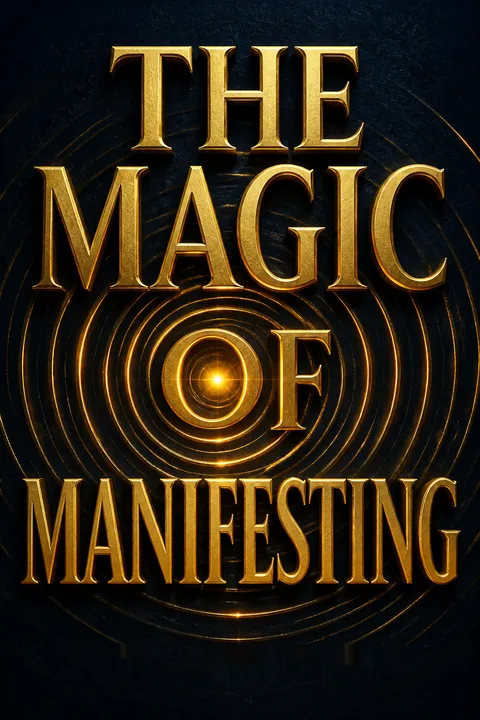
The Magic of Manifesting receives mostly positive reviews, with an average rating of 4.23/5. Readers appreciate its insights on manifestation, quantum physics, and personal development. Many find it helpful for beginners, while some experienced readers consider it basic. The book is praised for its practical techniques and motivational content. Criticisms include repetitive concepts, editing issues, and unprofessional requests for reviews mid-book. Overall, readers value the book's messages on positivity, abundance, and self-improvement, despite some flaws in presentation and depth.
People Also Read






Glossary
Psychological time
Mental past and futureThe book’s term for attention that repeatedly travels into memories or imagined futures rather than engaging with the present. It contrasts this with clock time, which helps organize practical tasks. Shinohara associates psychological time with worry, judgment, and ego-driven drama, and recommends mindfulness to notice when reflection stops helping and becomes repetitive.
Ikigai
A model of purposeA Japanese term the book uses for a sense of purpose, represented through the overlap of four questions: what someone loves, what the world needs, what they are good at, and what can support a livelihood. Shinohara recommends using curiosity to explore possible directions rather than expecting all four elements to align immediately.
Flow state
Absorbed, focused actionA condition of deep involvement in an activity, described in the book as reduced inner commentary and a strong focus on what is happening now. Shinohara connects it with practiced action, challenging goals, and receptivity to feedback. He also gives it a spiritual interpretation as access to broader universal information, a claim distinct from the ordinary psychological description.
Vibrational Frequency
The book’s energy metaphorThe book’s proposed idea that people, objects, and experiences have characteristic energetic states, and that similar states attract or influence one another. Shinohara applies it to mood, social company, media, and manifestation. The term borrows language from physics, but the claim that emotional frequency attracts matching life events is a spiritual belief, not an established physical law.
Quantum field
A field of possibilitiesShinohara uses this term for an underlying field containing multiple possible realities that a person’s beliefs and attention supposedly filter into experience. In physics, quantum fields have technical meanings within theories of particles and interactions. The book’s account of a field that responds to personal intentions is a metaphysical interpretation, not a conclusion established by quantum physics.
Ontological design
People and environments co-shapeA feedback-loop view of design: the structures people create, including language and technology, shape how people think and behave, while people also modify those structures. The book applies the idea to personal change by recommending that readers consider what kind of person they want to become and how their interactions with the environment can reinforce that development.
Jonah Complex
Fear of one's potentialA concept associated with Abraham Maslow that describes reluctance to develop or act on one’s full potential. The book illustrates it through the biblical Jonah, who resists a difficult mission. Shinohara uses the term to encourage readers to examine whether self-doubt or a preference for conformity is causing them to dismiss an ambitious possibility without testing it.
Sticky Thoughts Technique
Recall a prepared positive imageA visualization practice for interrupting a recurring negative thought pattern. The book recommends preparing a brief, vivid mental scene while calm, then recalling it when rumination begins. The scene is meant to redirect attention toward a more reassuring image. Shinohara suggests that repeated practice makes the image easier to access when distress arises.
Assemblage Point Exercise
Visualize flowing energyA guided visualization in which a person imagines golden energy moving through the body from the feet and head, then forming a sphere around them. Shinohara presents it as a way to relax and clear blocks to universal energy. Its imagery can be used as a relaxation exercise, but the claimed energy flow is not a measured physical process.
FAQ
What's "The Magic of Manifesting" about?
- Overview: "The Magic of Manifesting" by Ryuu Shinohara is a guide to using advanced manifestation techniques to attract your best life, even if it seems impossible now.
- Core Concept: The book emphasizes the importance of aligning your vibrational frequency with your desires to manifest them into reality.
- Techniques: It provides 15 advanced techniques to enhance your manifesting abilities, focusing on the power of the subconscious mind, faith, and the interconnectedness of all things.
- Goal: The ultimate aim is to help readers understand and utilize the laws of the universe to create a life filled with abundance, love, and happiness.
Why should I read "The Magic of Manifesting"?
- Practical Techniques: The book offers practical, actionable techniques that can be applied daily to improve your manifesting abilities.
- Holistic Approach: It combines scientific principles with spiritual insights, providing a comprehensive understanding of manifestation.
- Empowerment: Reading this book can empower you to take control of your life by understanding the power of your thoughts and emotions.
- Personal Growth: It encourages personal growth by helping you align with your true purpose and live a life of abundance and fulfillment.
What are the key takeaways of "The Magic of Manifesting"?
- Vibrational Frequency: Everything in the universe is energy, and aligning your vibrational frequency with your desires is crucial for manifestation.
- Faith Over Belief: Faith is about keeping an open mind and accepting the unknown, while belief is rigid and can hinder growth.
- Present Moment: The present moment is the only reality, and focusing on it helps dissolve the ego and enhances manifestation.
- Interconnectedness: Understanding that everything is connected helps you realize the power of your choices and their impact on your reality.
How does Ryuu Shinohara define "manifestation" in the book?
- Subconscious Utilization: Manifestation involves using your subconscious mind to bring your desires into reality.
- Vibrational Alignment: It requires aligning your vibrational frequency with what you want to attract.
- Faith and Intuition: Having faith in the process and listening to your intuition are key components.
- Daily Practice: Making manifestation a daily habit through specific techniques and practices is essential for success.
What are the 15 advanced techniques mentioned in "The Magic of Manifesting"?
- Daily Habits: The book emphasizes the importance of daily habits to maximize manifesting abilities.
- Heart-Mind Synchronicity: Techniques to synchronize your heart and mind for better alignment with your desires.
- Detachment: Learning to detach from outcomes and trust the universe to bring your desires to fruition.
- Visualization and Meditation: Using visualization and meditation to create a clear mental image of your desired reality.
How does "The Magic of Manifesting" explain the concept of vibrational frequency?
- Energy and Vibration: Everything is energy, and each object or thought has a specific vibrational frequency.
- Resonance: To attract something, you must vibrate at the same frequency as your desire.
- Influence of Environment: Your environment and the people around you can affect your vibrational frequency.
- Positive Focus: Focusing on positive thoughts and emotions raises your vibrational frequency, attracting similar energies.
What role does faith play in manifestation according to Ryuu Shinohara?
- Open Mind: Faith involves keeping an open mind and being comfortable with the unknown.
- Acceptance: It requires accepting whatever comes your way and trusting the process.
- Contrast with Belief: Unlike belief, which is rigid, faith allows for growth and adaptation.
- Foundation for Manifestation: Faith is essential for aligning with the universe and manifesting your desires.
How does "The Magic of Manifesting" address the concept of time?
- Psychological Time: The book distinguishes between clock time and psychological time, emphasizing the latter's role in ego-driven behavior.
- Present Focus: It stresses the importance of focusing on the present moment, as it is the only reality.
- Ego Dissolution: By living in the present, you can dissolve the ego and reduce its influence on your life.
- Manifestation: The present moment is where manifestation occurs, and aligning with it enhances your ability to attract your desires.
What is the significance of the heart-mind connection in "The Magic of Manifesting"?
- Communication Center: The heart is a powerful center of communication, influencing emotions and intuition.
- Electromagnetic Field: The heart generates a strong electromagnetic field that can affect others and your environment.
- Truth and Love: The heart speaks the truth and operates from a place of love, guiding you toward your true purpose.
- Synchronicity: Synchronizing the heart and mind enhances your ability to manifest by aligning your thoughts and emotions.
How does Ryuu Shinohara suggest dealing with obstacles in manifestation?
- Detachment: Detach from the outcome and trust the universe to bring your desires to fruition.
- Balance: Maintain balance by not giving undue importance to obstacles, which can drain your energy.
- Focus on Solutions: Instead of focusing on obstacles, concentrate on finding solutions and moving past them.
- Acceptance: Accept that obstacles are a natural part of life and use them as opportunities for growth and learning.
What are the best quotes from "The Magic of Manifesting" and what do they mean?
- "Faith is what moves mountains": This quote emphasizes the power of faith in overcoming obstacles and manifesting desires.
- "The present moment is the only reality": It highlights the importance of focusing on the now for effective manifestation.
- "Everything is connected": This quote underscores the interconnectedness of all things and the impact of your choices on your reality.
- "You are a creator": It serves as a reminder of your inherent power to shape your life and manifest your desires.
How can "The Magic of Manifesting" help me create my best life?
- Empowerment: The book empowers you to take control of your life by understanding the power of your thoughts and emotions.
- Practical Techniques: It provides practical techniques to enhance your manifesting abilities and align with your true purpose.
- Holistic Approach: Combining scientific principles with spiritual insights, it offers a comprehensive guide to manifestation.
- Personal Growth: By following the book's teachings, you can achieve personal growth and live a life of abundance and fulfillment.
About the Author
Other books by Ryuu Shinohara
Download PDF
Download EPUB
.epub digital book format is ideal for reading ebooks on phones, tablets, and e-readers.








