

Key Takeaways
Stop outsourcing your life's direction: this book locates God in your inner voice.
A startling beginning. Erin Werley describes herself as insecure and unsure what to do with her life. After reading spiritual books, she wrote that everyone was God and everyone was one, though she did not yet understand the idea. The next day, alone in the shower, she asked whether she was God and heard an answer in her mind. She later spoke those answers aloud while her husband, Phil, asked questions. Their conversations became the book.
The central claim. The voice calls itself I Am and says it is not an outside being but the shared divine self within every person. The book's core message is that people can seek guidance directly rather than depend on a spiritual intermediary. This is the book's spiritual framework, not an established scientific finding.
What's striking is the shift from searching for an expert to treating inner experience as a source of meaning. That can be psychologically useful: people often make better choices when they notice their own values instead of reflexively seeking approval. The book goes further, identifying that inner voice as universal God-consciousness. Readers can engage with that as a spiritual interpretation without assuming that a vivid inner answer proves a supernatural source. The practical invitation to listen for personal insight remains available even for someone who understands the experience in psychological rather than metaphysical terms.
Make quiet space, ask one honest question, and listen without forcing an answer.
A simple practice. The book recommends sitting or lying somewhere quiet, slowing the breath, asking a question, and paying attention to what follows. Erin says she practiced observing her thoughts for months before her shower experience. The answer, in the book's account, may arrive as words, a sudden intuition, or insight while writing. If nothing comes immediately, the instruction is to stay open rather than strain for a response.
Notice the mental traffic. The practice begins with recognizing that thoughts can run automatically. The book distinguishes the inner voice it calls I Am from the persona's fearful or doubtful thoughts. It suggests that regular attention makes those patterns easier to notice, and encourages readers to practice briefly and consistently rather than wait for a dramatic revelation.
This practice overlaps with mindfulness and metacognition, which help people observe thoughts instead of immediately obeying them. A pause can reveal assumptions that ordinary mental noise conceals. The book's distinction between a loving inner voice and a fearful persona is more absolute than everyday experience supports: caution can be wise, and confidence can be mistaken. A useful test is not simply whether a thought feels calm or positive, but whether it is coherent, responsive to evidence, and compatible with care for oneself and others.
Notice when learned self-protection is speaking louder than your considered values.
A learned mask. The book calls the socially shaped identity a persona. In its account, a persona forms through names, expectations, praise, criticism, and warnings absorbed while growing up. It can make a person feel separate from the deeper self the book calls I Am. This identity is not portrayed only as a problem: it gives people a sense of individuality and allows them to experience life as a particular person.
Question the reflex. The persona's protective side, according to the book, generates fear and self-doubt to avoid danger or embarrassment. A child's warning that a thought or action is foolish can become an adult's lasting inhibition. The recommended response is to notice the thought and ask whether it reflects a considered value or an old defense, rather than assume every inner judgment is true.
The persona is a spiritual concept, but its developmental description resembles the psychological idea of a self-schema: beliefs about who someone is, formed partly through relationships and repeated feedback. Naming a learned pattern can create distance from it, making change feel possible. The limitation is that fear is not always a false alarm. Protective reactions can preserve boundaries or flag genuine risk. The most helpful distinction is therefore not positive thought versus negative thought, but automatic reaction versus reflective judgment informed by context.
Let action test a possibility instead of waiting for doubt to disappear.
Build confidence through doing. The book calls practical steps building: action taken while a person still has doubts, so the idea can become tangible. It recommends recording perceived creations, including small outcomes, to strengthen confidence that thoughts matter. It interprets coincidences as evidence of thought creating events, a claim readers can treat as the book's belief rather than a demonstrated causal rule.
Possibility can spread. Phil brings up Roger Bannister, whose four-minute mile was followed within months by other runners breaking the same barrier. The book uses this to show how one achievement can alter what others believe is possible. That example supports a social lesson about expectations and imitation. It does not, by itself, show that thought alone caused the physical result.
The strongest practical idea here is that action can generate evidence, while endless preparation often leaves uncertainty untouched. This connects to behavioral learning: trying a manageable step can reveal that a feared task is possible, or clarify what needs to change. Bannister's example also shows how visible success can shift a group's sense of what is attainable. The book's broader claim that thought directly creates every event is not established by such examples. Keeping the observable lesson separate from the metaphysical explanation protects the useful insight from overstatement.
Follow the desire you keep dismissing as unrealistic; it may point toward purpose.
A purpose within. The book calls a person's intended contribution a blueprint. It describes this as something they have long wanted to do, even if they have dismissed it as impractical. According to I Am, listening to this desire and acting on it can bring a sense of love, joy, and contribution. The book emphasizes that age, income, or education should not automatically disqualify someone from pursuing meaningful work.
Purpose takes shape. Erin's own instruction is to share the material, which she and Phil develop into a book. The example makes purpose less like a job title handed down from above and more like a direction discovered by listening and doing. The text presents the blueprint as a spiritual plan, but its advice can also be read as an invitation to explore durable interests through concrete steps.
The blueprint idea gives purpose an intimate starting point: recurring desire, rather than social prestige. That resonates with research on intrinsic motivation, where sustained interest and a sense of agency can support persistence. Still, one cherished ambition is not automatically a destiny or a moral obligation. Circumstances, responsibilities, and changing interests matter. Purpose can be treated as a working hypothesis: follow an interest far enough to learn from experience, then revise the plan without interpreting every detour as failure.
Feel grief and fear honestly, without turning either into your identity.
Emotions need room. The book treats emotions as experiences influenced by thoughts, rather than thoughts that independently create events. It argues that feelings can influence what a person thinks next, so tending to emotional life matters. It specifically cautions against pretending to be happy while grief remains unprocessed. Grief after losing someone is presented as a human response that can be felt and allowed to pass, not a flaw to conceal.
Use feeling as information. The book also interprets joy as a sign of alignment with the inner self and misery as a sign of being blocked by the persona. That interpretation is part of its spiritual model. Its more grounded practical counsel is to notice emotions, process them, and avoid treating a forced display of positivity as healing.
The distinction between feeling an emotion and becoming defined by it is valuable. Emotion research broadly supports the idea that labeling and acknowledging feelings can help people respond more flexibly than suppression does. But distress is not a reliable scorecard for spiritual alignment. Grief, depression, and anxiety can arise for many reasons, including loss, biology, and hardship, not a failure to trust oneself. The book's permission to feel difficult emotions is strongest when separated from the suggestion that suffering means a person is blocking their true self.
Use oneness to challenge scarcity, domination, and the impulse to victimize.
From separation to solidarity. The book argues that a belief in separateness and scarcity encourages people to protect their own status by diminishing others. It applies this idea to racism, victimization, violence, and authority based on fear. Its alternative is a sense of oneness, expressed through love, respect, and calm rather than coercion. In this view, genuine spiritual guidance should help people trust their own inner direction instead of demanding obedience.
Change without force. The text favors patient, nonthreatening communication, suggesting that fear cannot be overcome by creating more fear. It also says social power structures are human-made thoughts that can be changed. This offers an ethical challenge to domination, though its claim that external protest or collective action cannot accomplish much is not necessary to its case for empathy and nonviolence.
The book's oneness ethic usefully asks readers to see other people as more than rivals for limited worth. That perspective can support empathy and reduce the moral distance that makes cruelty easier. Nonviolent communication can also invite reflection where coercion hardens opposition. Yet material inequalities and institutions are not merely private beliefs; they shape access to safety and opportunity. Inner change can motivate collective action, but it cannot substitute for practical protections, organizing, or accountability when people are harmed.
Choose guides who return authority to you rather than hoarding answers.
Guidance without dependency. The book argues that each person can seek answers through an inner voice, so a spiritual teacher should help people develop that capacity rather than claim exclusive access to truth. Werley's story begins with her own interest in channeling, but the book's stated destination is not dependence on her or Phil. Readers are encouraged to ask their own questions and interpret their own lives.
Check the source. The text advises evaluating whether someone follows their own values or seems mainly concerned with pleasing or impressing others. It does not say all outside advice is useless: it allows that a guide can help, provided the guide supports a person's independent judgment. The practical test is whether guidance makes a reader more capable of deciding, or more reliant on the adviser.
This is a strong safeguard against charismatic authority. In education and counseling, good guidance often increases a learner's agency instead of making the expert indispensable. Asking whether advice supports independent thought can expose relationships built on dependence. At the same time, autonomy need not mean isolation. Trusted people can notice blind spots, and expert knowledge matters in fields such as medicine, law, and finance. Inner conviction is one input to judgment, not a replacement for expertise or accountable advice.
Treat thought as influential, not as proof that people cause every hardship.
A claim with consequences. The book's most sweeping assertion is that every thought creates, and it extends that claim to illness, injury, suffering, and difficult circumstances. It presents this as empowering because people need not feel helpless. But read literally, the idea can imply that people caused their own disease or victimization through fearful thoughts, despite the book's simultaneous appeal to compassion and oneness.
Keep responsibility humane. The book includes a disclaimer that its material is not a substitute for medical advice. That caution matters because its spiritual claims about health go beyond what the text establishes. Readers can preserve the useful emphasis on agency, such as choosing a next step or seeking support, without treating every unwanted event as evidence of a personal failure.
Thoughts clearly influence attention, behavior, stress, and how people interpret events. That does not mean thought controls every event or explains illness and trauma. Disease and injury have biological, environmental, and social causes that no positive mindset can reliably erase. A framework that turns every hardship into evidence of the sufferer's thoughts risks compounding pain with guilt. The most defensible version of the book's agency message is narrower: people may shape some responses and choices, while deserving care and compassion for what they did not choose.
Analysis
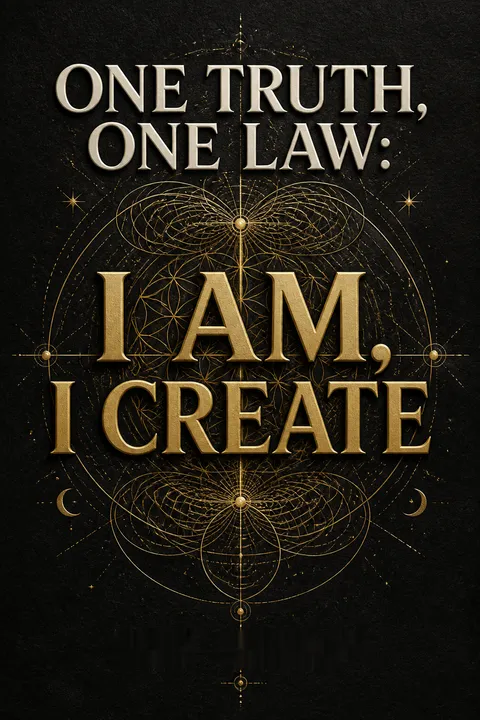
One Truth, One Law is a short spiritual self-help book arranged as ten days of dialogues between Erin Werley, her husband Phil, and a voice Werley calls I Am. The narrative gives an intimate origin story: a woman who feels lost asks a question in the shower, hears an answer, and begins exploring what it means to trust it. The conversations then move from a sweeping metaphysics of universal oneness to practical advice about attention, purpose, action, emotion, and authority.
The book's central proposition, that one divine consciousness is everyone and that thought creates physical reality, is also its largest evidentiary leap. Its examples, including coincidences and Bannister's mile, can illustrate expectation, interpretation, and social learning, but do not establish that thought alone causes events or overrides biology. The claim that people create their own illness or suffering carries particular ethical risk. It can convert agency into blame, especially for readers facing trauma or disease. The book's medical disclaimer is important, but does not resolve that tension.
Its most durable contribution is practical rather than cosmological. Werley urges readers to observe self-talk, question inherited limits, act on meaningful interests, process emotion, and distrust teachers who make themselves indispensable. Those ideas can be useful without requiring belief in a literal universal mind. The author's method for distinguishing the benevolent inner voice from the fearful persona, however, relies heavily on labeling positive thoughts as divine and negative ones as persona. That shortcut can miss the fact that caution may be adaptive and confidence can be wrong.
A careful reader can therefore keep the book's invitation to self-trust while treating inner certainty as a starting point, not proof. Personal reflection can reveal values; evidence, other people, and appropriate expertise help test whether a chosen path is safe and sound. That separation allows the book's emphasis on agency and compassion to remain available without accepting its unsupported claims about causation as fact.
Review Summary
One Truth, One Law receives overwhelmingly positive reviews, with readers praising its simplicity and life-changing message. Many find it a powerful spiritual guide that resonates with their inner beliefs. Readers appreciate the book's focus on connecting with one's inner voice and the concept of "I Am" as a source of wisdom and creation. Some reviewers mention how it aligns with other spiritual teachings, while others describe it as a unique perspective. A few critics express skepticism about the book's core message.
People Also Read




Glossary
I Am
Universal divine consciousnessThe name the book gives to the divine consciousness it says is present in every person and is identical with God. I Am is described as the source of thought, love, and creation, not as a separate being outside the individual. The term expresses the book's spiritual claim that all people share one underlying self.
One Truth, One Law
Thought creates realityThe book's central principle that I Am exists and creates through thought. It treats this as the only ultimate truth, while physical laws and other ideas are human-created patterns that can change. The principle is presented as spiritual doctrine, not as a scientific law demonstrated by the examples in the book.
persona
Learned individual identityThe book's term for the identity built from social expectations, personal beliefs, fear, and doubt. The persona allows a person to experience life as an individual, but can obscure the deeper self the book calls I Am. It is described as a creation rather than a person's ultimate identity, and as both a source of individuality and a barrier to inner guidance.
universal mind
Storehouse of all thoughtsThe book's name for the nonphysical realm containing thoughts and memories. It describes the physical world as a projection of this realm and says every thought is held within it. Individual inner voices are presented as direct links to universal mind. This concept belongs to the book's spiritual cosmology rather than an established scientific account of consciousness.
blueprint
Personal purpose or directionA person's intended contribution or life direction, which the book says can be sensed through inner guidance. A blueprint is associated with something a person has long wanted to create, even if it seems unrealistic. The book presents it as a spiritual plan, while also emphasizing that people can choose whether or not to pursue it.
knowing
Calm certainty without doubtThe book's specialized term for a settled sense of certainty, associated with love, calm, and trust in creative power. It contrasts knowing with fear and doubt, which it describes as signs that the persona is blocking the inner self. The term underpins its advice to act on guidance, while its definition does not provide an independent test that a belief is true.
building
Acting while certainty growsThe book's term for taking practical steps toward a desired creation while doubts remain. Action is said to make an idea tangible, increase confidence, and help a person learn to trust inner guidance. Building allows for the book's distinction between immediate creation in a state of complete knowing and gradual progress by people who still experience themselves as individuals.
Download PDF
Download EPUB
.epub digital book format is ideal for reading ebooks on phones, tablets, and e-readers.








