


Plot Summary
A Prisoner Meets Knox
Weeks into her captivity, Lark Jackson is still refusing to reveal where the Dead Soldiers, her father Rufus’s gang, hide their headquarters. Their men have whipped and burned her, pulled out her fingernails, and left her naked in a freezing cell. Lark endures it to protect her younger brother, Rook, and keeps herself going with bitter jokes and thoughts of escape.
Then Knox, a tall member of the rival Tailor gang, enters her cell. Lark flirts with him, and he responds with a rough, intensely physical encounter that leaves her overwhelmed and unconscious. Aeron, the Tailors’ controlled heir, orders Knox to carry her upstairs instead of back to the torture room. The decision places Lark among the four men assigned to break her.
Lark’s humor is not evidence that captivity has made her invulnerable. It is one of the few tools she still controls, letting her shape an encounter that would otherwise be entirely dictated by her captors. Knox’s desire complicates that strategy: she chooses to engage him, but the setting and her injuries make freedom an impossible condition. Aeron’s decision to move her upstairs begins the novel’s central contradiction. The Tailors claim the right to hurt her while also becoming the first captors to notice what their violence has done.
The Tailor House
Knox brings Lark to Aeron’s room feverish and unconscious, and the group finally sees how badly the dungeon torture has damaged her. Tarl, the Tailors’ medic and interrogator, treats her infected lashes and burns.
Jude, Aeron’s younger brother, watches her with an unnerving blend of tenderness and appetite, feeding her and provoking her with deliberate cruelty. Lark discovers that each man’s attention awakens a different response: Knox steadies her, Jude unsettles and excites her, Tarl soothes her wounds, and Aeron’s distance feels strangely protective.
Aeron stays away until one of her nightmares brings him to her bedside. He helps her breathe through a panic attack, drawing on what he learned when Jude suffered similar episodes after a family tragedy. Lark sleeps more peacefully, although she knows none of them has released her.
The household’s care does not cancel its violence. Tarl’s medicine repairs injuries inflicted by other Tailors, while Jude’s feeding and Aeron’s vigil keep Lark close to the people who still intend to interrogate her. That instability is precisely what makes the arrangement compelling and dangerous: the same hands can comfort and threaten her. Aeron’s breathing exercise also reveals that his knowledge of trauma comes from family grief, not simple compassion. Lark begins to distinguish among the men, but the practical consequence of that intimacy is dependence within captivity, not safety beyond it.
The Glass Coffin
Once Lark’s injuries begin to heal, Jude has a glass coffin engraved with her new nickname brought into the basement. Knox carries her into it, and the Tailors lock the lid before extinguishing the candles, leaving her trapped in darkness.
The ordeal drags Lark into memories of her mother’s murder and the sexual abuse that followed under Rufus’s command. Aeron hears her panic and stays beside the coffin, guiding her breathing rather than leaving her alone.
In the days that follow, the Tailors strap Lark to a St Andrew’s cross and try to extract the Dead Soldiers’ location through threats, touch, and denied pleasure. She refuses to tell them, because protecting Rook matters more than relief. Aeron realizes her silence is for her brother, not their father.
The coffin is more than a torture prop: it reproduces the helplessness Lark already associates with her past, making the Tailors’ psychological strategy effective precisely because it touches an older wound. Aeron’s presence interrupts the panic without changing the fact that he helped create the trap. Likewise, Lark’s refusal is not stubbornness for its own sake. Rook is the person she believes she can still protect, so silence becomes a form of loyalty and agency, however narrow. The men’s eroticized interrogation makes their growing attachment inseparable from the coercion they continue to exert.
The Darling's Secret
While Jude tattoos Lark, Tarl and Aeron torture a captured Dead Soldier spy. He reveals that Rufus has made his daughter the gang’s Soldier’s Darling, offered to recruits as a sexual reward. The discovery changes the Tailors’ understanding of her silence and turns their rivalry with the Soldiers into a personal vow of vengeance. Aeron later asks Lark how long her father has allowed his men to abuse her.
She explains that it began after her twelfth birthday, the day after her mother was killed. The revelation forces the Tailors to confront what their captive has endured outside their own dungeon. Jude’s tattoo gives her body delicate chains held by birds, a design that echoes both the Tailors’ claim over her and her longing to be free.
The spy’s information recasts Lark’s captivity as part of a larger system of organized abuse, not an isolated crime committed by a few men. That knowledge gives the Tailors a new motive to protect her, but it also intensifies their possessive language: they oppose her father’s use of her body while continuing to mark and claim it themselves. The tattoo crystallizes that conflict. Birds support the chains, suggesting that attachment might feel different from imprisonment, yet Lark has not chosen the conditions under which the design is placed. The scene leaves freedom unresolved rather than decorating it as an easy romance.
The Woods Become a Trap
The Tailors take Lark from their warehouse to their horse stables, where she meets Bluebell, the mare belonging to their absent mother, and Samson, Aeron’s stallion. For the first time in years, Lark rides beyond the city and experiences the landscape without walls around her.
The freedom lasts only until the men turn a punishment for her defiance into a hunt: they order her to run into the woods, then pursue her on horseback and on foot. Tarl catches her first, and Jude joins him; the chase turns into another charged encounter that leaves Lark more entangled with her captors. Her reaction troubles her because she knows the pleasure is real, but so is the fact that she cannot simply walk away from them.
The countryside offers Lark a glimpse of what freedom might feel like, but the Tailors convert that landscape into another place where they control the rules. The shift from riding freely to being hunted makes the outing both a genuine pleasure and a reminder of her status as captive. Lark’s attraction does not erase that imbalance; it gives her a way to experience desire on her own terms inside a situation she did not choose. The scene makes the novel’s central psychological problem concrete: she can feel alive with these men and still be unable to leave them.
A Claim in Public
At the Tailors’ race meeting, Aeron introduces Lark to the wealthy world his family uses to launder gang money through horse racing. Rufus is there, and his stare leaves her frozen until Knox gives her whiskey and the others close ranks around her. Aeron’s uncles and staff treat the Tailors as powerful hosts, but Lark recognizes the violence beneath the polished event.
She also sees Rook, her younger brother, across the neighboring balcony. With her consent, the Tailors sexually claim her where Rufus can understand what has changed, while their bodies shield her from the crowd. Rook watches part of the encounter. Aeron’s display turns protection into a public challenge, but it also exposes Lark’s most intimate connection to the gang war.
The racecourse lets the Tailors display two kinds of power at once: the respectable wealth of a family business and the coercive force of a gang. Lark is brought into both worlds as a person the men claim, not an ordinary guest. Her willingness to be touched matters, yet the audience includes the father who abused her and the brother whose safety she fears. The public encounter therefore functions as both defiance and risk. By making their possession visible, the Tailors challenge Rufus, but they also make Lark’s body a message in a conflict she wants to escape.
The Trigger's Name
After the race, Lark and the Tailors visit Heather, Aeron and Jude’s mother, at Mount Pleasant. Before that visit, a call from Adam reveals that the Dead Soldiers have bombed the stables and killed horses, including Bluebell. Adam sends Earl, a brutal enforcer, to force information from Lark. When she still refuses, the Tailors waterboard and beat her until Aeron promises on his life to protect Rook.
Lark agrees to guide them to the Dead Soldiers’ headquarters. Then Earl reveals the secret Aeron has hidden: Aeron fired the shot that killed Lark’s mother. Aeron confirms it. Lark can no longer reconcile the man who comforted her with the child whose mother he killed, so she withdraws to the dungeon cell.
The confession destroys the clean division between Lark’s protectors and her enemies. Aeron’s act belongs to the inherited gang war, but it also sits at the beginning of Lark’s personal catastrophe, because her mother’s death exposed her to years of abuse. His remorse cannot undo that causal chain. At the same time, the Tailors have just hurt Lark to secure her cooperation, even as they promise Rook’s safety. Her retreat to the cell is therefore not a simple rejection of love. It is a return to the only emotional position that seems honest when trust has become impossible.
A Mother's Promise
Lark spends four days shut away from the Tailors, refusing food and Tarl’s treatment for her injuries. Jude finally reaches her by bringing pancakes and singing a song from a Disney film they had watched together.
She lets him comfort her, then chooses to forgive Aeron, not because his role in her mother’s death has become harmless, but because she will not let the old feud dictate every choice she makes. The Tailors take her to visit Heather.
There Lark learns that Heather and her mother, Julie, were friends long before their husbands’ gangs went to war, and that Julie trusted Heather to protect her daughter. Heather’s promise gives Lark a connection to her mother that the feud had hidden, while Aeron promises the Tailors will keep her safe.
Jude’s return does not argue Lark out of grief; it reaches her through a shared ritual, food and music, that gives her room to re-enter the relationship on her own terms. Her forgiveness is a decision to continue, not a declaration that Aeron’s actions are absolved. The visit to Heather then revises Lark’s history: the women at the center of the gang feud had a friendship that preceded and outlasted its violence. That connection offers a different inheritance from the fathers’ hatred, though the promise of protection still comes from men who remain deeply involved in that same conflict.
Judy's Hidden Entrance
After securing Aeron’s promise about Rook, Lark explains how to reach the Dead Soldiers’ base beneath Judy’s Laundromat. A concealed coal chute opens into a storage room, bypassing the electrified entrance and watched alley. In a Tailor planning meeting, she describes the route, the cages beyond it, and why Friday night brings the gang together.
When one Tailor challenges her, Tarl throws a knife into his shoulder and Jude makes the injured man endure the rest of the meeting. The group sets a time and assigns Knox to watch the chute. Lark is treated as a strategist, not merely an informant. Jude later takes her shopping, spending freely on clothes she has never been able to buy for herself, a brief taste of ordinary care before the raid.
Lark’s map turns knowledge learned through confinement into practical power: she can now shape the Tailors’ plan and determine how they enter her father’s domain. But the planning meeting also shows that her new authority remains conditional. The Tailors answer a challenge to her credibility with casual violence, and their protection is still backed by force. Shopping afterward offers a gentler contrast, but it does not erase the impending assault. By accepting gifts and sharing intelligence, Lark becomes more deeply woven into the group just as she approaches the decision that will test that belonging.
The Darling's Betrayal
On Friday night, the Tailors meet outside Danny’s Diner and approach the hidden entrance. Lark climbs through the coal chute first, then signals the others that the storage room is clear. They pass through the cells and reach the headquarters, where sudden lights expose them to Rufus and dozens of waiting Dead Soldiers.
Lark’s earlier unease becomes clear: she has kept silent about the danger, apparently because Rufus’s threat against Rook has left her trying to save her brother. The Soldiers tear off her clothes and hold a knife to her throat while the Tailors are disarmed and beaten.
Rufus orders four accompanying Tailors shot, then sends Aeron, Jude, Knox, and Tarl toward the cages as bargaining pieces. Lark is left with her father, and the book ends with the men believing she chose to betray them.
The ending turns the route Lark supplied into a test of loyalty with no painless answer. Her silence protects the possibility of saving Rook, but it exposes the four men who have become her chosen family to capture and death. Rufus exploits the same leverage that has governed Lark’s choices throughout the story: threats against someone she loves. The Tailors, meanwhile, read the ambush through the language of betrayal, although the reader has seen the pressure behind her decision. The cliffhanger refuses a tidy verdict, leaving love, coercion, and responsibility entangled at the exact moment consequences become unavoidable.
Analysis
Addicted to the Pain builds its romance inside a coercive structure and refuses to let desire erase that structure. Lark’s attraction to the Tailors is not presented as proof that her captivity is harmless: she remains injured, unable to leave, and responsible for protecting Rook. Instead, the story tracks how tenderness can become meaningful to someone who has rarely received it, even when it comes from the people holding the keys. That tension makes the men’s caretaking emotionally powerful and ethically unstable.
The novel also shows how inherited violence shapes identity before its characters understand its origins. Lark and Aeron are bound by events their fathers helped create, while the memory of June deepens the fracture between Aeron and Knox. Discovering that Heather and Julie were friends offers a counter-history to the men’s feud: the families were not always enemies, and their conflict is not inevitable simply because it is old. Still, knowledge does not dissolve the consequences. Lark must decide whether to trust people whose past actions helped make her life unbearable.
The bird imagery holds that contradiction in a compact form. Lark is branded, named, tattooed, and claimed, yet the same motifs point toward her wish to fly beyond the gangs. The ending makes that wish costly. Rufus’s threat against Rook constrains her choices, and the Tailors interpret the resulting ambush as betrayal. The book closes before either side can learn the full truth or repair what has happened. Its cliffhanger leaves the reader with the central question intact: when love grows inside a system of ownership, can anyone distinguish protection from possession, or escape without hurting those they love?
Review Summary
Addicted to the Pain receives mixed reviews, with ratings ranging from 1 to 5 stars. Readers praise the intense spice and dark themes, while others criticize the incest undertones and unrealistic character reactions. The audiobook narration is highly regarded. Some appreciate the complex characters and emotional depth, while others find the plot lacking and the writing problematic. Trigger warnings are emphasized for various dark themes. The book ends on a cliffhanger, leaving readers eager for the sequel despite divided opinions.
People Also Read






Characters
Lark Jackson
The guarded captiveLark is the daughter of Rufus Jackson, leader of the Dead Soldiers, and the older sister of Rook. She has learned to survive by reading men quickly, using sharp humor, and hiding the fear that might make her vulnerable. Her online work reflects a need to turn her own body into a source of income and choice, even within a life controlled by gang demands. Lark is fiercely protective of Rook and carries grief for her mother alongside anger at the family that failed to protect her. Her resilience is not invulnerability: she can be funny, desirous, frightened, and exhausted at once. She wants a life beyond the gangs, but loyalty keeps complicating what escape would require.
Aeron Taylor
The controlled heirAeron is the eldest Taylor son and the disciplined leader of the four men tasked with interrogating Lark. He relies on order, immaculate routines, and emotional restraint, presenting control as a safeguard against the grief and anger he carries. His commitment to the Tailors’ vendetta conflicts with a growing impulse to protect Lark, making his tenderness difficult to separate from his authority over her. Aeron is strategic and observant, but not emotionally neutral; jealousy and guilt surface in the small fractures of his composure. He wants to honor his family and avenge past injuries, yet Lark forces him to confront the human cost of treating inherited enmity as a sufficient moral explanation.
Jude Taylor
The volatile brotherJude is Aeron’s younger brother, a flamboyant, unpredictable member of the Tailors whose humor can turn from playful to frightening without warning. He uses teasing, music, food, and elaborate sexual games to seize control of a room, but his theatrics conceal profound grief and a need for pain when his emotions become difficult to manage. Jude is drawn to Lark’s defiance and vulnerability, and he responds to her not only as a desired partner but as someone he wants to feed, entertain, and keep close. His relationship with Aeron is affectionate and combative, shaped by shared loss and blame. Beneath his chaos, Jude is unusually attentive to loneliness.
Knox
The fierce protectorKnox is the Tailors’ tall, tattooed enforcer and the first of the four men to meet Lark inside her cell. He is physically formidable, warm in manner, and strongly protective of people he considers his own. His confidence in violence has limits, especially when women and children are involved, though loyalty to the Tailors can place him in painful conflict with those boundaries. Knox carries guilt about June and a long-running disagreement with Aeron that has made their brotherhood tense. Lark’s openness and hunger for affection draw out his gentler instincts, but also expose his fear of failing someone he cares about. He values action over confession and often struggles to forgive himself.
Tarl
The healer interrogatorTarl is the Tailors’ medic and feared interrogator, recognized by his mismatched eyes and measured manner. He was taken in by Adam Taylor as a child after losing his family, and he has built a place for himself through competence, loyalty, and a willingness to perform the gang’s most brutal work. His skill at treating wounds sits uneasily beside his skill at causing pain. Tarl’s calm can make him difficult to read, but he is attentive to others’ physical and emotional states, especially Lark’s. He carries a connection to his Iranian upbringing through language, music, and memory. His private tenderness does not erase the violence of his public role.
Rook Jackson
Lark's younger brotherRook is Lark’s younger brother and the person she most wants to protect from their father’s gang. He remains largely outside the action, but his safety governs Lark’s refusal to give the Tailors information and shapes the risks she takes. Their shared childhood with their mother gives Lark a reason to keep imagining a life beyond the Dead Soldiers. Rook represents family love without the authority or violence that define the older generation.
Rufus Jackson
The ruthless gang patriarchRufus is Lark and Rook’s father and the leader of the Dead Soldiers. He rules through intimidation, treats family members as instruments of his authority, and expects loyalty to be proved through obedience. His feud with the Tailors predates Lark’s adult life, but its consequences have shaped her childhood and choices. Rufus understands the power of leverage and uses the people his enemies love as a way to control them.
Adam Taylor
The absent gang leaderAdam is Aeron and Jude’s father and the leader of the Tailors. He is a powerful businessman and gang patriarch whose approval matters deeply to his sons. Adam’s instructions reinforce the family’s expectation that revenge and loyalty come before hesitation. His wealth, including the racing operation, gives the Tailors a polished public face alongside their criminal power. He is also Tarl’s adoptive father, a relationship that binds Tarl to the family.
Heather Taylor
The fragile matriarchHeather is the mother of Aeron and Jude, living at Mount Pleasant while recovering from profound psychological distress. She remains affectionate toward her sons and attentive to the people they bring to see her. Her memories connect the younger generation to a history that the rival gangs have obscured. Heather carries both tenderness and the lasting effects of violence, making her presence a reminder that a gang war damages people far beyond those who wield weapons.
June Taylor
The absent twinJune was Jude’s twin sister and Aeron’s younger sister. Her memory continues to shape the brothers’ grief, their blame of one another, and the violence between the Tailors and Dead Soldiers.
Julie Jackson
Lark's remembered motherJulie is Lark and Rook’s mother, remembered by her children as a rare source of affection and ordinary happiness. Her birthday outings with them remain among Lark’s most vivid memories of safety.
Earl
The brutal enforcerEarl is a senior Tailor enforcer who specializes in intimidation and physical interrogation. He treats pain as an efficient route to information and regards Lark’s suffering with little restraint. His authority comes from his place in Adam Taylor’s organization, but he can clash with Aeron over who controls a captive and how far the Tailors should go.
Jim
The stable managerJim works at the Tailor stables and helps introduce Lark to the family’s horses. His welcoming manner gives her a rare, low-pressure encounter outside the warehouse and gang hierarchy.
Rick Taylor
The racecourse uncleRick is Aeron and Jude’s uncle and a senior figure at the Tailors’ race venue. He moves comfortably between family warmth and the polished public world the gang uses to display its wealth.
Plot Devices
The Glass Coffin
A chamber of controlJude’s custom glass coffin turns captivity into a psychological spectacle. Lark can see the Tailors above her but cannot escape their locks or the darkness they create. It intensifies memories of earlier helplessness and gives Aeron a chance to show care without ending the threat. The St Andrew’s Cross later extends the same logic through restraint and prolonged interrogation. Together, the devices make the Tailors’ torture methods concrete while exposing how their treatment of Lark mixes danger, erotic attention, and attempts at caretaking.
Birds and Chains
A contested mark of belongingBird names, the Tailors’ burned insignia, and Jude’s chain-and-bird tattoo design give the story a visible language for ownership and escape. Lark is called a bird by her captors, branded with the gang emblem, and later tattooed with chains supported by small birds. The imagery does not settle whether belonging is safety or confinement. Instead, it tracks how Lark understands herself as she becomes emotionally attached to the men who claim her. Its meaning remains unstable because she is still trying to reach freedom on her own terms.
The Gang Feud
An inherited engine of violenceThe feud between the Tailors and Dead Soldiers supplies the practical reason for Lark’s kidnapping and the emotional history behind nearly every relationship. The older generation’s violence has shaped the younger characters’ grief, loyalties, and assumptions about who counts as an enemy. The feud is not a distant backdrop: Rufus uses Lark to control his men, Adam demands action from his sons, and Aeron’s past is tied directly to Lark’s family losses. By making private intimacy develop inside a public conflict, the story keeps love and gang allegiance in constant competition.
The Coal Chute
A hidden route into dangerThe old coal chute beneath Judy’s Laundromat lets Lark slip out of the Dead Soldiers’ headquarters without using the watched alley and its electrified entrance. She turns that childhood escape route into a plan for the Tailors, who use it to bypass the visible defenses. The passage also gives her knowledge a physical form: she knows the rooms, cages, and doors because she has lived inside her father’s world. Its usefulness depends on what she chooses to disclose and what she leaves unsaid.
The Tailor Races
Respectability masking crimeThe Tailors’ racing operation gives the gang a wealthy public identity and a method for laundering money. The racecourse is where business, influence, and spectacle meet: Aeron manages jockeys, Rick hosts the event, and the family presents itself among the rich. It also becomes the setting for Lark’s first public encounter with Rufus after her capture. The contrast between immaculate suits and criminal power clarifies how the Tailors can operate openly while violence remains close at hand.
Dead Soldiers vs Tailors Duet Series
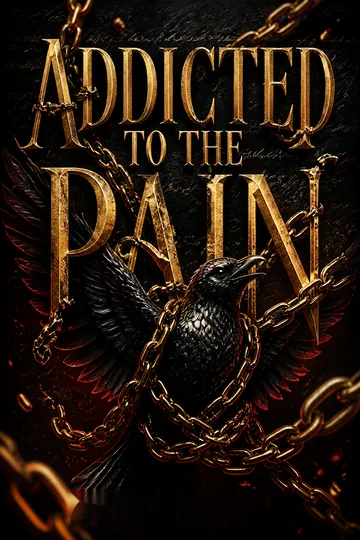
About the Author
Other books by Rosa Lee




Download PDF
Download EPUB
.epub digital book format is ideal for reading ebooks on phones, tablets, and e-readers.








