


Plot Summary
Prologue
Ten years before the main story, twelve-year-old Lark shares a birthday sundae with her mother and younger brother, Rook. Outside the diner, gunshots drop her mother onto the pavement. As Lark holds her, her mother makes her promise to get Rook away from their abusive father, Rufus, leader of the Dead Soldiers.
Lark knows the gang's violence too well to mistake what happened, and she makes the promise even as her mother dies. From that moment, protecting Rook becomes the purpose around which Lark builds her life.
The birthday meal gives Lark a brief experience of ordinary family tenderness, then the shooting makes that tenderness inseparable from danger. Her promise is both an act of love and a burden placed on a child who has little power. It explains why adult Lark treats escape as a duty, not a private desire, and why she later chooses deception when she believes Rook's safety depends on it. The prologue also complicates her resilience: she survives not because fear leaves her, but because she converts grief into a plan.
The Betrayal Beneath the Trap
When Rufus's men drag Aeron, Jude, Knox, and Tarl toward the cells, Lark is already wounded and in her father's custody. The Tailors see only the woman who lured them into their enemy's headquarters. Across the corridor, Lark explains that after her mother's death she promised to get Rook out, and that she used Aeron's phone to send Adam Taylor the location and a route into the building.
She had hoped to escape with the men she loves, but could not risk Rook's future by refusing Rufus. Her plan depends on Adam arriving before Rufus can kill the captives. It may save them, but leaves the Tailors feeling that Lark chose for them without trusting them.
Lark's deception is not a clean reversal from loyalty to betrayal. She has been trying to keep two promises at once: protect Rook and preserve a new bond with the Tailors. Sending Adam a message gives her a way to act against Rufus from inside his own territory, but the plan also repeats the control she has endured: she withholds information because she assumes she must carry the risk alone. The Tailors' anger therefore registers as more than wounded pride. They recognize that her strategy has kept them alive, yet understand that she did not believe they could help her.
Bars Between Five
The Soldiers put Lark in a separate cage opposite the four men, where new recruits leer at her and threaten to assault her. Knox, furious at her deception and at his own helplessness, fights Jude until Aeron and Tarl break them apart. Lark explains the rescue plan in full: Rufus expects to use the Tailors as leverage over Adam, so the gang will likely keep them alive until help arrives.
Knox still resists her reassurance, but Lark admits she may face violence while they wait. In the dark, Jude sings to calm her, and Aeron reaches through the bars to hold her hand. Their touch does not erase the betrayal, but it gives Lark a reason to endure the week ahead.
The separate cages make the conflict physical: love is present, but the prisoners cannot reach one another. Knox's fight with Jude shows how fear and anger are displaced onto the people closest to them, while Lark's certainty about Rufus's intentions is an adaptation to long captivity. The handclasp with Aeron offers a small counterimage to the bars. It cannot free her, but it lets her ask for comfort rather than perform composure. Her relationship with the Tailors begins to shift from a rescue fantasy into a mutual, if imperfect, practice of staying present.
The Doctor’s Borrowed Key
Rufus takes Knox from the cage and has him shocked and beaten, then orders Dean, a vicious Soldier, to punish Lark. Dean assaults her while the other Tailors can only watch. When Doc arrives, he treats her fractured ribs and other injuries, stitches her, and leaves clothes, medicine, food, and a blanket.
He is not merely a Soldier doctor: he has worked for the Tailors and has tried to find Lark a way out before. During later visits, Doc secretly gives Aeron a key copied from a mold, creating the first practical chance to escape the cages. Lark's injuries begin to heal, but Doc can only delay the next abuse, not prevent it.
Doc's help is deliberately limited by the danger around him. He can offer medical care, food, and a copied key, yet cannot openly challenge Rufus without losing access to Lark and the prisoners. That narrow space between complicity and resistance reflects the novel's attention to survival under coercive power: small acts matter, but they do not undo the violence that made them necessary. The scene also tests the Tailors' protective identity. They love Lark, but their captivity makes their inability to stop Dean painfully literal.
The Ring as Warning
During the days that follow, Rufus sends each Tailor into a chalk ring and lets the Soldiers beat him, filming the fights to pressure Adam into accepting his terms. Lark shares the food Doc brings and endures the waiting by pacing and holding on to the men's presence across the corridor.
Jude uses Doc's copied key to slip into her cage at night, offering gentle, nonpenetrative intimacy that helps quiet her nightmares. On Friday, Rufus finally sends Lark away from the cages to prepare for the Soldiers' gathering. Doc cannot keep her there any longer. As Lark walks away, the men are left locked up, listening to the celebration beyond the door and unable to protect her.
The ring turns violence into political theater: Rufus makes the Tailors' pain a message for Adam, while Lark's forced departure makes the same power personal. The videos imply that humiliation, not only physical injury, is part of the leverage. Jude's nighttime visits create a different use of touch, built around consent and Lark's limits rather than Rufus's claims over her body. Yet the comfort cannot alter the immediate danger. The scene's emotional force comes from the collision between private tenderness and public coercion, with Lark walking back into the role her father imposed.
Rook’s Impossible Initiation
Rufus sends Lark to the room called the Soldiers' Darling, where she prepares for the abuse he expects his recruits to inflict. Instead, Rook arrives. Rufus has ordered him to assault his sister as proof that he deserves a place among the Soldiers. Rook pins her briefly, but cannot go through with it; Lark reminds him that he does not want to hurt her, and he admits Rufus threatened to kill them both.
While they wait, he explains that he hopes to reform the gang rather than inherit its cruelty. The power then cuts out, followed by an explosion. Adam and an armed Tailor team have entered through the coal chute. Knox breaks into the room and finds Lark and Rook together, ending their isolation.
Rufus makes Rook's initiation a test of whether he will reproduce the abuse that shaped their family. Rook's refusal is not presented as effortless heroism: he is frightened, pressured, and still loyal to a possible future for the gang. Lark's appeal to what he wants helps him separate belonging from obedience. The rescue interrupts a choice Rufus designed to destroy both siblings, while Rook's stated wish to reform the Soldiers foreshadows a different model of leadership. Their reunion gives Lark back the family bond that her original promise was meant to protect.
Blood Answers Blood
The Tailors subdue the Soldiers, and Adam confronts Rufus, who insults Lark and her dead mother. Lark answers by stabbing her father in the stomach. Adam gives Rook a gun, and Rook executes Rufus and the other captured Soldiers, stopping before Dean. The Tailors take Dean, whose assault on Lark has made him their personal target.
They break his arms while Jude brings Lark to orgasm, turning revenge into an unsettling blend of punishment and erotic control. Aeron then guides Lark's hand as she shoots Dean in the groin and, finally, in the head. Rook leaves with Adam to discuss rebuilding the Soldiers; Lark leaves the old regime's violence behind, though not the memories it has left her.
The climax gives Lark agency in a form the book refuses to make morally simple. She does not merely survive Rufus and Dean; she chooses their punishment, and Rook chooses to end the gang's old leadership. The scene links erotic pleasure to vengeance in a way that belongs to this dark romance's particular emotional logic, not to a general claim that violence heals trauma. Lark's control over the final act matters, but it cannot erase what happened. The aftermath must still address how freedom feels when the body remembers captivity.
Home After the Slaughter
Outside the ruined headquarters, Lark reunites with Rook and learns that Adam will help him build a different kind of Soldiers. Back at the Tailors' warehouse, Lark breaks down over the abuse she survived and the anger she feels toward nearly everyone, including herself. Aeron insists she was not responsible for her assaults, and the men bathe and care for her.
At the stables, Adam apologizes for his earlier torture of Lark, ordered while he pursued revenge, and she accepts his attempt to make amends. The Tailors give her Firebrand, a red mare, and Lark begins to imagine a future beyond escape. Her recovery remains uneven, but she is no longer facing it without a family around her.
The rescue resolves immediate captivity, not its psychological aftermath. Lark's anger refuses a tidy gratitude narrative: she can be free and still resent those who harmed her, those who failed to intervene, and even herself. Aeron's insistence that she is not to blame counters a familiar survivor's self-accusation, while the bath and the horse offer concrete forms of care rather than a claim that care fixes everything. Adam's apology matters because it names his wrongdoing without demanding instant absolution. Firebrand gives Lark a new object of attachment that belongs to a chosen future.
The Shot Behind the Feud
At the Taylor mansion, Adam tries to explain why the Tailors and Soldiers have hated each other for generations. His account reveals that he ordered Aeron to shoot Lark's mother in retaliation for violence against his own family. Aeron, overwhelmed by anger, also tells Adam what happened to Lark after the shooting, information Lark had not chosen to share.
She leaves with Knox, furious that Aeron has taken control of her story just as her abusers once did. Later, while she sleeps in Knox's room, someone drugs and abducts her. Tarl is taken too. When Lark wakes handcuffed aboard a plane, Tarl admits that he had drawn the people from his past toward him, but never intended to put her in their hands.
The revelation changes the feud from inherited abstraction into a chain of specific choices: Adam ordered the shot, and Lark endured its consequences. Aeron's anger at his father is understandable, but his disclosure of Lark's history repeats the very violation he wants to condemn. Her reaction establishes that protection without consent can become another form of control. Tarl's confession introduces a second breach of trust, more deliberate and more dangerous. Each man believes he is acting for a larger purpose; Lark is once again the person who bears the cost of decisions made around her.
Tarl’s Return to Iran
On the flight to Iran, Tarl tells Lark that his parents and sisters were murdered for their political opposition, and that he has spent years tracing the men responsible. He came to the United States to become strong enough to return and exact revenge. Afshin, the man he identifies as his family's killer, interrogates them in an isolated barn and demands names of other resistance members.
When Tarl refuses, Afshin stabs Lark's shoulder and threatens further torture. Tarl remains silent long enough for the guards to cut off his little finger, then uses a concealed obsidian blade hidden beneath the stitches in his arm to attack. He kills Afshin and the guards, frees Lark, and gets them out of the barn.
Tarl's revenge has been built as a private obligation, but bringing Lark into it makes the cost impossible to keep private. His silence during her torture is part of a plan, yet from her position it looks like he has chosen vengeance over her life. The hidden blade shows how long he has prepared to act, while the severed finger makes that preparation bodily rather than abstract. Killing Afshin fulfills the mission Tarl carried from childhood, but the escape only begins his reckoning with what he risked and whom he endangered.
Afshin’s Last Mistake
Wounded and weak, Lark and Tarl reach a safe house connected to Tarl's family, where he treats her shoulder and arranges to meet the Tailors. Aeron, Jude, and Knox have crossed into Turkey searching for them. When the group reunites at a stable, Knox punches Tarl for bringing Lark into danger, but Lark makes him stop and insists that Tarl is injured too.
Jude admits he felt abandoned; Tarl apologizes and promises not to disappear from their lives again. The Tailors smuggle Lark and Tarl back to the United States in a horse box, with Lark's injured shoulder and Tarl's missing finger marking the cost of the journey. They return alive, but must rebuild trust alongside their recovery.
The reunion does not erase betrayal through a kiss or a rescue. Knox's anger and Jude's hurt give Tarl's choice consequences inside the family, while Lark's intervention prevents punishment from replacing the conversation they need. The horse box makes their return an awkward, physical ordeal rather than a triumphant homecoming. Their injuries keep the violence present even after the immediate threat has passed. Tarl's promise to stay is meaningful because the group has learned that love alone cannot guarantee trust; it has to be reinforced by choices made after danger.
A Room Full of Birds
As her shoulder heals, Lark and the Tailors return to the former Soldiers' headquarters. She chooses to transform it into a 1920s-style speakeasy, keeping the bullet holes in the bar and proposing red velvet, a stage, and private rooms. The ruined building becomes a business she can shape rather than a place that defines her only through abuse.
Jude paints a bedroom for her with birds flying across blue walls, and Lark and Jude seal promises to stay together with matching cuts in their palms. At the Tailors' Christmas ball, Aeron proposes a shared commitment with a ring, and Lark accepts, choosing the Taylor name. The party also brings the masked Fallen, whose leader signals that the new Soldiers may soon be needed.
Lark's club is a practical form of reclamation: she makes a plan for the old headquarters that preserves evidence of the violence instead of pretending it never happened. The bullet holes become part of the design, while the business gives her authority and independence. Jude's painted birds transform an image associated with captivity into one of movement and chosen space. The blood promise and Aeron's ring offer different kinds of commitment, one private and one public. The Fallen's appearance complicates the celebration, reminding the family that their chosen future still sits inside a dangerous world.
Christmas Gives Them Tomorrow
After Lark decides she wants children with the Tailors, Knox removes her contraceptive implant, and the men treat that choice as a shared future rather than a passing fantasy. On Christmas morning, she gives each of them a pregnancy test. They open them together and find one positive result.
Aeron kneels to kiss her stomach, Jude celebrates loudly, and Knox promises that their child will grow up surrounded by love. Rook, now working with Adam to reform the Soldiers, joins the family celebration as a future uncle. Heather, Adam's wife and a friend of Lark's mother, is home for the holiday. Lark has not erased the past, but she enters a family life built by choices that her father never controlled.
The pregnancy resolves the story's movement from survival toward deliberate futurity. Lark's choice to remove contraception comes after the men have promised care and after she has begun imagining a life of her own, so the child represents agency rather than an imposed solution to trauma. The Christmas gathering also places Rook, Heather, Adam, and the Tailors in one room, a counterimage to the divided households and rival gangs that shaped Lark's childhood. The ending offers continuity without claiming that the past disappears: it places the next generation inside a family determined to behave differently.
Analysis
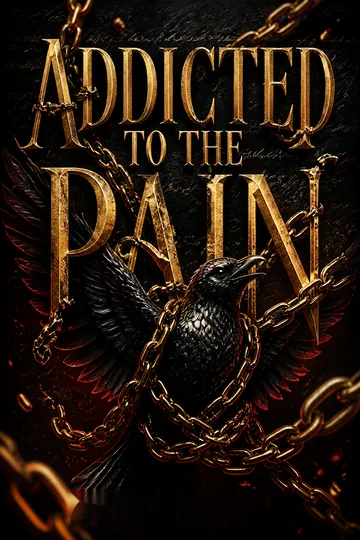
Addicted to the Ruin makes survival depend on more than physical escape. Lark must learn that she can be loved without surrendering the right to decide what happens to her, while the Tailors must recognize that protection can become coercive when they hide information or act without her consent. Her deception saves the men, yet exposes how thoroughly Rufus has taught her to trust her own planning more than anyone else's care. Aeron's disclosure of her abuse repeats this injury in a different form, making the book's central question not whether the men love Lark, but whether they can respect her agency when fear makes them want control.
The two family histories mirror each other without making them equivalent. Lark and Rook grow up beneath Rufus's direct abuse; the Tailors inherit Adam's feud and its retaliatory logic. Adam's confession reveals that Lark's mother's death was not simply gang violence but a choice made by a man who believed revenge could restore what he had lost. Rook's wish to remake the Soldiers as a family offers a countermodel to that inherited cycle. His leadership becomes meaningful because it requires him to reject the very practices that might have secured his authority.
The novel also treats trauma as embodied and uneven. Lark's numbness, nightmares, anger, and desire coexist; neither pleasure nor revenge cancels the harm she endured. Her decision to reclaim the old headquarters as a club gives her a practical stake in a place that once belonged entirely to her abusers. Keeping its bullet holes acknowledges history while changing the building's use. By ending with a pregnancy welcomed by a chosen family, the book imagines a future rather than claiming a cure. Its hope is specific: people shaped by violence can make different promises, then prove them through repeated acts of care.
Review Summary
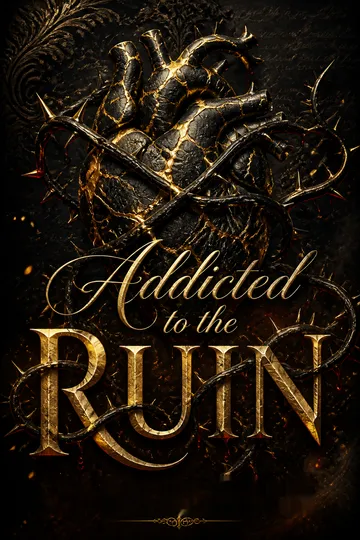
Addicted to the Ruin is the second book in Rosa Lee's Dark Romance duet. Readers praise its emotional intensity, character development, and steamy scenes. The story continues Lark's journey with the Tailor boys, exploring themes of betrayal, forgiveness, and healing. While some found it gripping and well-written, others criticized plot inconsistencies and triggering content. The book features graphic violence and sexual content, with many readers emphasizing the importance of checking trigger warnings before reading. Overall, fans of dark romance and why-choose stories highly recommend this duet.
People Also Read





Characters
Lark Jackson
The stubborn survivorLark is a young woman raised under Rufus Jackson's brutal rule, with a lifelong determination to protect her younger brother, Rook. She survives by planning carefully, reading danger, and containing memories when no safe alternative is available. Her attraction to the four Tailors grows into a bond in which she is loved but also challenged to trust others with decisions she has always carried alone. Lark's sharp humor and capacity for tenderness coexist with anger, desire, and a fierce appetite for self-determination. She is not simply rescued by stronger men; her choices repeatedly redirect their plans and force them to confront the difference between protection and control.
Aeron Taylor
The controlled heirAeron is Adam Taylor's eldest son and the measured leader among the four Tailors. He relies on discipline, strategic thinking, and a sense of responsibility toward his brothers. Lark draws out both his tenderness and the anger he has spent years containing, while their relationship asks him to distinguish keeping someone safe from deciding what she may know. His instinct is to protect the family as a whole, but Lark's independence forces him to reckon with how authority can injure even when it claims benevolent motives. Aeron's reserve makes his rare displays of emotion especially revealing.
Jude Taylor
The singing wild cardJude is Aeron's younger brother, an openly affectionate man whose playful, Disney-filled manner sits beside a taste for violence and an intimate knowledge of pain. He uses songs, humor, and physical closeness to comfort Lark, especially when darkness and nightmares threaten to pull her back into old memories. His bond with his brothers is deeply intimate, and he does not hide his need for Lark's presence. Jude's apparent lightness is not innocence; it is one of the ways he keeps despair at bay and makes room for tenderness in a dangerous life.
Knox
The possessive protectorKnox is the most physically imposing and quick-tempered of the Tailors. He expresses care through vigilance, strength, and a possessiveness that Lark both enjoys and sometimes challenges. His anger often arrives faster than his words, especially when he cannot protect someone he loves, but his loyalty is equally immediate. Lark's trust allows him to accept parts of himself he has kept guarded. He is protective without being emotionally simple: the more he fears losing Lark, the harder he must work to let her make her own choices.
Tarl
The watchful avengerTarl is a quiet, observant member of the Tailors whose composure masks a history of profound family loss. He is methodical, multilingual, and capable of both care and frightening violence. His Persian endearments and measured manner give him a tenderness that contrasts with his controlled approach to danger. Lark's presence draws him toward connection, but his instinct to shoulder painful obligations alone strains that bond. Tarl's story explores how a person can mistake secrecy for protection and how long-held grief can govern the choices he makes in the present.
Rook Jackson
The reform-minded brotherRook is Lark's younger brother, raised in the same violent household but shaped by a different hope for the Dead Soldiers. He loves Lark and knows that she has often borne risks on his behalf. He wants the gang to become a community rather than a machine for drugs, exploitation, and fear. His loyalty to Lark does not prevent him from imagining a future in which he has responsibility of his own. Rook's struggle is to separate the possibility of leading the Soldiers from the legacy of the man who raised him.
Rufus Jackson
The abusive patriarchRufus leads the Dead Soldiers and governs his household through violence, control, and entitlement. He treats Lark's body and Rook's future as instruments for maintaining power. His hatred of the Tailors is inherited and fed by a history of retaliation, but he uses that rivalry to excuse his own cruelty. Rufus represents the family structure Lark and Rook must escape, as well as the gang culture Rook hopes to change.
Adam Taylor
The remorseful gang leaderAdam is the Tailors' leader and the father of Aeron, Jude, and June. He cares deeply for the men he has raised, including those who are not his biological sons, and his authority carries genuine weight. Grief and inherited hatred have also driven him to choices he later regrets. His relationship with Lark requires him to acknowledge harm rather than relying on status or affection to excuse it. He offers Rook guidance and a chance to imagine leadership beyond Rufus's example.
Doc
The discreet physicianKnown simply as Doc, he treats the people caught between the Soldiers and the Tailors. His medical role gives him access to Lark when other allies cannot reach her. He has a quiet conscience and uses that access to provide care, food, and practical help, while remaining cautious enough to avoid exposing himself too soon. Doc's limits are real, but so is the difference his small acts make.
Heather Taylor
The family's gentle centerHeather is Adam's wife and the mother of Aeron, Jude, and June. She has a warm, affectionate presence and a past friendship with Lark's mother. Her recovery matters to the Tailors, who measure family not only through power but through the possibility of caring for one another. Heather offers Lark a welcoming connection to a family history that might otherwise feel closed to her.
June Taylor
The absent sisterJune is Aeron and Jude's sister. Her place in the family's history shapes their protectiveness and their understanding of grief, even when she is not present in the events of the story.
Dean
Rufus's sadistic enforcerDean belongs to Rufus's inner circle and is feared for his cruelty. His presence makes clear how the Soldiers' violence is enforced by men who enjoy having permission to hurt others.
Afshin
Tarl's old enemyAfshin is a powerful, calculating figure tied to Tarl's history in Iran. He uses interrogation and physical violence to control captives, and his smooth manner makes his cruelty more unsettling. He embodies the danger that Tarl's private past can bring into the lives of the people he loves.
Lucifer
The masked emissaryLucifer is the composed representative of the secretive Fallen, a group with influence and its own code. His brief appearance at the Tailors' ball brings a new pressure into the room and hints that Rook's reform plans may attract powerful attention.
Plot Devices
The divided cages
Physicalized mistrustRufus locks Lark in one cage and the four Tailors in another, placing them close enough to see one another but too far apart to intervene. The arrangement turns Lark's betrayal into a daily, visible fact and makes the men experience the limits of their protective instincts. Their attempts to reach across the bars, especially Aeron's handclasp with Lark, create moments of intimacy without undoing the danger. The cages also make captivity a shared condition rather than Lark's isolated burden.
The coal chute
A hidden rescue routeLark sends Adam information about a concealed way into the Dead Soldiers' headquarters through the coal chute. This route gives the Tailors a chance to reach the prisoners despite the normal entrance and its defenses. Its setup turns Lark's apparent betrayal into a tactical choice, then gives Adam's rescue team a concrete path into the building. The hidden entrance links her planning to the eventual break from captivity.
Doc's copied key
A quiet openingDuring his visits, Doc makes a mold of the key Rufus uses to open the cages and secretly passes a copy to Aeron. The key changes the captives' situation from pure waiting to a possible escape, even though the Tailors must judge when using it would put Lark at greater risk. Jude also uses it to reach Lark at night, making the same object a means of comfort as well as a tool for escape.
The filmed ring fights
Violence as leverageRufus forces each Tailor into a chalk circle and has the Soldiers beat him while recording the punishment. The videos are intended to pressure Adam into accepting Rufus's demands. The ring gives the captives a recurring ordeal and turns their physical pain into political communication. It also shows how Rufus uses spectacle: the beatings are not simply punishment, but a performance meant to make the Tailors' suffering useful to him.
Blood-marked commitments
Promises made physicalAcross the story, touch and blood mark different kinds of relationship. The cages limit touch, while shared hands comfort Lark; later, she and Jude cut their palms as they promise to remain together. At the climax, Lark's acts of revenge put her own choices into the violence that once controlled her. These physical marks do not guarantee safety or erase trauma. They make attachment, consent, and responsibility visible in a world where spoken assurances alone have repeatedly failed.
Dead Soldiers vs Tailors Duet Series
About the Author
Other books by Rosa Lee




Download PDF
Download EPUB
.epub digital book format is ideal for reading ebooks on phones, tablets, and e-readers.








