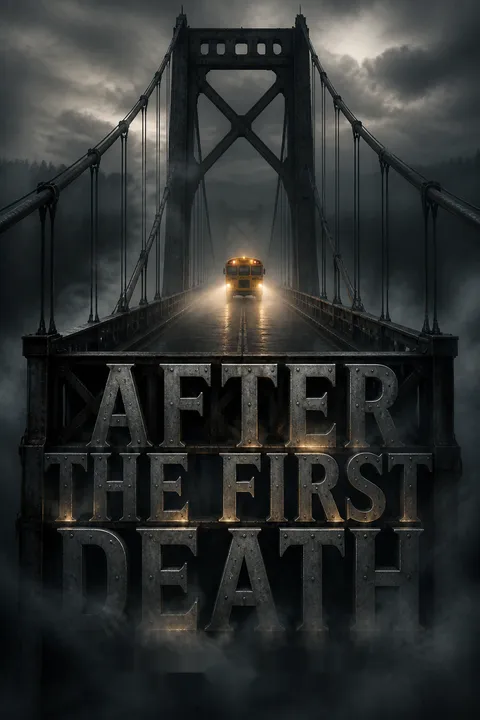


Plot Summary
A Chest Wound at Castle
At Castleton Academy, Benjamin Marchand writes about the bullet that passed through his chest and the bus hijacking that left him wounded. Months after the bridge, he has tried to kill himself with sleeping pills, but memories of the children make him sick before the pills can take effect. He still imagines jumping from a bridge and has gone to look at one that morning.
His father, Mark, is due to visit, the first time they have faced each other since the crisis. Ben delays his plan because he wants to see him, though he is unsure whether he can bear the meeting. His typed pages begin to disclose why a traumatized boy believes his father helped put him on that bridge.
The frame makes survival feel less like a resolution than an unfinished sentence. Ben's body has healed enough to leave no active pain, yet he experiences the wound as a passage connecting the present to an event he cannot metabolize. His aborted overdose reveals a divided will: he seeks erasure, but the memory of endangered children interrupts him. The father's visit becomes a test of whether family intimacy can survive a state secret. By making Ben the author of the account, the novel places memory under pressure too: his narration is an effort to recover agency, not a neutral report.
Miro's First Assignment
Before Ben's account reaches the bridge, it returns to the operation's preparation. Miro Shantas, a sixteen-year-old trained by the militant Artkin, expects his first killing to complete his initiation. Artkin has taught him to obey plans and suppress the grief left by his brother Aniel's death.
With Stroll driving and the hulking Antibbe beside him, Miro waits for a bus carrying preschool children to camp. They seize it on a rural road, but the driver is not the man Miro expected.
It is Kate Forrester, a teenage substitute for her sick uncle. Artkin has her continue toward an abandoned railroad bridge while he gives the children drugged candy. Miro's anticipated first kill is postponed, leaving him to watch Kate and the increasingly unresponsive children.
Miro's initiation is framed as a borrowed identity: he believes violence will prove that he belongs to a cause, while his hesitation around Kate exposes a self that training has not erased. Artkin turns procedure into moral anesthesia, insisting that every act serves a larger plan. The unexpected female driver disrupts that choreography before Miro has even fired a shot. This mismatch matters because the operation's victims are no longer abstractions. Miro must look at an actual frightened person, and the gap between his rehearsed role and his bodily response begins to widen.
The Dead Child's Bargain
On the bridge, Artkin discovers that one child, Kevin McMann, has stopped breathing after eating the tranquilizer-laced candy. He tries to revive him, but Kevin is dead. Rather than abandon the operation, Artkin makes the accidental death part of its threat, displaying Kevin's body to the authorities and then lowering it from the bridge.
Kate is ordered to care for the remaining children, while the masked hijackers seal the bus windows and lock its doors. The authorities gather across the ravine as the kidnappers issue three demands: release political prisoners, provide ten million dollars, and expose and dismantle Inner Delta, a secret government agency. Kate now understands that the children are bargaining power, and that her own presence makes her a witness the hijackers may not release.
The accidental death of Kevin exposes the machinery of coercion in its starkest form: Artkin converts a consequence he did not intend into evidence that the threat is real. The children are simultaneously individuals in Kate's care and instruments in a political negotiation. Her new responsibility gives her something to do with terror, but it also binds her to the bus. The sealed windows and doors make the vehicle both a prison and a public display, visible to officials but inaccessible to help. The novel's violence is therefore not hidden; it is staged for an audience and shaped by the response that audience can be forced to make.
A Key and a Listener
As the hostage crisis unfolds, Ben's own memories trace how he entered it. He had met Nettie Halversham at the Hallowell Y and mistaken her polite attention for mutual love; her cold refusal of a date left him isolated just before his father called about the hijacking.
Mark then explained that the kidnappers were targeting Inner Delta, the clandestine agency he served. On the bus, Kate learns that Raymond has avoided the candy and is pretending to sleep. She also finds the bus key hidden in her shoe.
Meanwhile, Miro tells her about the refugee camps where he and Aniel grew up, and the training that sent him to America. Kate sees a lonely boy beneath his militant certainty, but his involvement in bombings keeps sympathy from becoming trust.
These parallel stories turn secrecy into a form of mistaken intimacy. Ben assumes Nettie's friendliness means love; Kate tries to read Miro's disclosures as an opening; Mark's professional silence has kept his family near him without allowing them to know him. In each case, the desire to connect runs ahead of what the other person is willing or able to give. Raymond's alertness and the hidden key offer Kate practical possibilities rather than emotional reassurance. Miro's history makes him legible without making him innocent. The novel resists the comforting idea that understanding someone's wounds automatically dissolves responsibility for what they do.
Reverse Gear, No Escape
When the children grow restless and the heat thickens inside the sealed bus, Kate decides to use the hidden key. She waits until Miro steps outside, starts the engine, closes the door, and drives backward over the railroad ties.
The bus begins to move, but the bridge's uneven track and the hijackers' pursuit ruin her escape. Antibbe climbs onto the hood with his gun; the engine stalls before Kate can reach the end of the span. Artkin restores the bus to its place, takes the key, and searches Kate's clothes and shoes.
He warns that another attempt will cost her life. Miro, who had failed to watch her, is reprimanded by Artkin. Kate has lost her secret advantage, but her failed bid proves to Miro and herself that she can act against the roles imposed on her.
Kate's attempt is both a tactical failure and a psychological threshold. She does not escape, and the consequences are immediate: the key is taken, her body is searched, and the threat against her becomes explicit. Yet the choice marks a change from endurance to intervention. Miro's lapse also complicates his standing with Artkin, whose authority depends on absolute vigilance. Their separate failures expose the pressure beneath the kidnappers' performance of control. The stalled bus becomes a precise image of the larger crisis: movement is possible, but the machinery of fear, force, and compromised judgment can halt it at the moment of greatest effort.
A Life for Antibbe
During the night, Artkin uses a coded radio link to bargain for proof that the revolutionary leader Sedeete has been captured. He demands a gray stone hidden in Sedeete's Boston room and insists that it be brought to the bridge.
Before the exchange can settle the crisis, a sniper kills Antibbe near the van. The authorities call it an accidental shot, but Artkin treats it as a deliberate attack and decides a child must die in retaliation. He selects Raymond, the boy who had first refused the candy.
Kate tries to stop him and offers herself instead, but Artkin insists on taking a child. Miro restrains her as Artkin leads Raymond away. A single shot follows. Kate understands that the child has been killed, while Miro remains bound to the operation's brutal arithmetic.
The retaliatory killing shows how quickly an accidental act becomes a rule that everyone is forced to inhabit. The state says Antibbe's death was unintended, but Artkin's response makes intention almost irrelevant: a child dies because the balance of power must be restored. Kate's offer to take Raymond's place reveals courage mixed with a desperate wish to survive, and she hates herself for both. Miro's obedience is no longer simply abstract discipline; he helps hold Kate while the consequence becomes irreversible. The scene also strips away the claim that hostages are protected by negotiation. Each side's attempt to control risk transfers danger onto someone with the least power.
The Messenger's Hidden Script
Mark sends Ben across the woods with the gray stone, hoping its delivery will prove that Sedeete has been captured and move negotiations forward. Artkin has the boy stripped and searched, then questions him about his father's plans.
When Ben cannot provide more, Artkin uses painful pressure on his injured hand until Ben reveals what he saw: a telephone call and the time 9:30, when special forces are expected to attack. Artkin believes the information and keeps Ben on the bridge rather than sending him back.
Ben's fear has given the kidnappers a crucial warning, though he does not yet know why the detail mattered so much. In the bus, Kate and the children remain trapped while the deadline approaches and the operation begins to move toward violence.
Ben's breakdown is not presented as a simple failure of courage. Artkin's interrogation exploits a frightened teenager's ordinary need to stop pain, while Ben has been deliberately placed where that vulnerability can be used. The stone, a small object carrying enormous political weight, gets him onto the bridge but cannot protect him once he arrives. His disclosure also shows how information changes meaning according to who controls it: a glimpse of a time on a desk becomes a tactical advantage. The scene prepares the later revelation that Ben's apparent innocence was not a shield. It was precisely what made him useful to people who planned around his limits.
The Bridge Breaks Open
The assault begins at 8:35, earlier than the time Ben disclosed. Chemical fog rolls across the bridge as soldiers advance, helicopters hammer the air, and gunfire erupts around the bus and van. Stroll is killed in the opening violence.
Artkin takes Ben as a shield, but a shot hits Artkin; as he falls, his gun fires and strikes Ben in the chest. A helicopter crashes into the van, scattering the fighters and rescuers. Miro grabs Kate and drags her toward the woods, while soldiers reach the bus and rescue the surviving children.
The rescue succeeds, but it leaves Ben badly wounded, Artkin dead, and Kate in Miro's hands. The operation that was meant to control every variable collapses into smoke, accidental gunfire, and people trying to get out alive.
The assault turns the bridge from a stage for deliberate threats into a space where control disintegrates. Its timing is possible because Ben's information was useful, but the event itself is not clean or triumphant: Artkin's fall sends a bullet into the boy he used as a shield, and the helicopter crash adds another unpredictable force. The children are rescued, yet that outcome does not erase the deaths already caused. Miro's flight with Kate extends the crisis beyond the bridge, while Ben's wound carries the operation into his family life. The sequence denies the fantasy that superior planning can make violence predictable.
The Last Hostage
Wounded in the leg and pursued through the woods, Miro forces Kate into a cramped hiding place with him. She tells him that the soldiers will catch him and offers to help if he surrenders, but he insists that survival is secondary to the cause. Desperate to reach him, Kate suggests that Artkin may have been his father, the stranger who found him and Aniel in the camps.
Miro cannot accept the claim, yet it opens a wound: he has just failed to warn Artkin about the soldiers and may have caused the man's death. Kate holds him as he cries out in grief. Then Miro shoots her in the chest. Her attempt to reach the boy has briefly made him feel, but it has not displaced the command to keep feeling at a distance.
Kate's final appeal works because it touches the relationship Miro has built his identity around, not because it proves the claim about Artkin. The possibility of a father makes Miro's loyalty suddenly personal, and his grief exposes the dependence beneath his discipline. Kate's tenderness is real, even as she uses it to survive; the novel refuses to make care pure or strategically innocent. Miro's killing of her is the terrible limit of that contact. Feeling becomes possible, but he cannot yet imagine a life organized around it. He chooses the familiar logic of the mission over the uncertain demands of attachment.
A Son's Second Betrayal
After Ben wakes from a coma in hospital, he apologizes for giving Artkin the 9:30 time. Mark explains that the time was planted for him to see: Inner Delta expected Artkin to interrogate him, and the false detail would make the terrorists believe the attack was coming later than it was. The early assault depended on Ben being frightened enough to disclose it.
Mark called this service to country, but Ben experiences it as his father deliberately making him betray his trust. In the Castle frame, Mark later finds Ben's pages and realizes he has vanished toward a bridge. Ben's inward confrontation with his father ends in forgiveness, though not in easy reconciliation. He sends his father away and claims the right to return to himself.
The revelation turns Ben's wound into a moral injury: he was not merely unable to withstand torture but selected because officials anticipated that he would fail in a useful way. Mark's patriotism is sincere, yet sincerity does not cancel the personal cost of treating his son as an instrument. Ben's imagined exchange gives him a measure of authorship that the actual operation denied him. Forgiveness appears less as absolution than as a boundary: he can recognize his father's motive without consenting to remain defined by it. The missing son and the inward conversation keep the frame unresolved, suggesting that survival requires more than medical recovery.
Miro Chooses the Road
Miro escapes the search by moving through the woods and river, binding his wounded leg with strips of his shirt. Rain soaks him, but he keeps going until darkness gives him a place to hide beside a highway. He thinks of Artkin and Kate as the people he has lost, and briefly considers whether the cause could continue without them.
Rather than surrender, he decides that reaching Boston matters more than dying on the bridge. When a station wagon stops and its driver walks into the trees, Miro sees a way forward. He still has a loaded gun, but decides to use his hands instead, intending to take the car and leave the driver behind. The book ends with Miro stepping out of hiding, choosing another act of violence over capture or reflection.
Miro's escape is not a victory so much as a continuation of the system that made him. He has experienced grief and attachment, but he converts both into reasons to keep moving rather than occasions to reconsider the mission. His choice to spare a bullet does not mark restraint; it is a practical adjustment that makes the next killing easier. The open ending leaves him at the threshold of another crime, carrying the conflict beyond the bridge and beyond the dead. Against Ben's uncertain movement toward self-forgiveness, Miro chooses the certainty of action. The contrast makes transformation possible but far from guaranteed.
Analysis
After the First Death places two adolescents inside different systems that claim to give their lives meaning. Miro has been trained to see violence as service to a displaced people; Ben is raised near a secret government agency that can describe his vulnerability as a national resource. Their situations are not morally equivalent: Miro participates in kidnappings and killings, while Ben is a boy coerced by people who should protect him. But the novel draws a sharp parallel in how institutions convert individual limits into instruments. Artkin calculates that hostages can force concessions. Mark calculates that his son will break under interrogation and reveal a false time. Each plan depends on knowing how a person is likely to fail.
Kate interrupts that logic without becoming a simple emblem of innocence. She manipulates Miro, uses Raymond's alertness, and tries to escape; fear and strategy coexist in her. Her recognition of Miro's history opens a human connection, but it cannot undo the danger he poses. The book is unsparing about the difference between understanding violence and excusing it. Miro's grief is genuine, yet he continues toward another victim. Ben's movement is less certain: his father's explanation cannot restore the trust that was spent, and forgiveness does not erase the injury.
The bridge makes public spectacle part of the violence. Authorities, militants, and media all depend on what can be seen, believed, or concealed. The children become leverage because adults argue over principles while their bodies bear the cost. The title's allusion to a first death suggests that killing changes the moral landscape, but the novel refuses a clean before and after. Kevin's death is accidental, Raymond's retaliatory, and the later deaths arise from choices layered on earlier choices. No single act closes the account. The ending leaves Miro moving toward another crime and Ben working toward an inward return, so survival is shown not as victory but as a difficult, uneven refusal to let other people's calculations become one's whole identity.
Review Summary
After the First Death is a dark, unsettling novel about terrorists hijacking a bus of children. Readers praise Cormier's powerful writing and character development, but warn of its bleak tone and disturbing content. Many find the book thought-provoking and relevant, exploring themes of terrorism, patriotism, and manipulation. Some criticize its portrayal of people of color and excessive focus on bodily functions. Overall, reviewers acknowledge the book's literary merit but caution it may be too intense for some readers.
People Also Read



Characters
Benjamin Marchand
The wounded witnessBen is the adolescent son of Mark Marchand, a senior officer connected to the secret agency Inner Delta. He attends Castleton Academy, where he writes about the hostage crisis and his own place in it. Before the crisis, his life is shaped by loneliness, a sheltered upbringing on Fort Delta, and an awkward first experience of romantic rejection. He is intelligent and observant, but he often uses humor and self-mockery to keep painful feelings at a distance. His relationship with his father is complicated by Mark's secrecy and Ben's wish to be recognized as more than a dependent child. Ben's story asks how a young person can recover a sense of self after adults turn his vulnerability into part of a plan.
Mark Marchand
The calculating fatherMark is Ben's father, a career military officer who serves a covert government mission at Fort Delta. He is deeply disciplined and accustomed to dividing private life from professional duty, a division that has shaped his marriage and his relationship with Ben. He loves his family, but his understanding of care is strained by a job that rewards secrecy, risk calculation, and emotional control. At Castleton, the distance between the father he intends to be and the official he has become is made painfully visible. Mark's character raises a difficult question: whether patriotic purpose can excuse the use of intimate knowledge about one's own child.
Kate Forrester
The captive caretakerKate is a teenage substitute bus driver who takes her sick uncle's route to a children's camp and becomes trapped with the young passengers. She is bright, socially skilled, and accustomed to using charm to shape how others see her. Under pressure, she turns those skills toward keeping the children calm and probing Miro's defenses. Her self-awareness includes less flattering truths: she knows she manipulates people and is not naturally fearless. Yet she continues to act even while frightened, first through practical care and then through attempts to resist the hijackers. Kate's perspective exposes the difference between looking brave and making a difficult choice when nobody can promise it will work.
Miro Shantas
The trained young fighterMiro is a teenage militant raised in refugee camps and trained for clandestine operations. He has been taught to treat sacrifice as proof of commitment and to make his own identity subordinate to a political cause. His discipline is real, but so are his curiosity, his grief for his brother Aniel, and his private fascination with American music and everyday life. Kate unsettles him because she responds to him as a person even while recognizing the danger he poses. Miro's inner conflict is not a simple contest between good and evil. It is a struggle between unpracticed human feeling and a worldview that gives him purpose by forbidding him to question violence.
Artkin
The revolutionary handlerArtkin is the experienced militant directing the bus seizure. He can shift from intimidation to apparent tenderness, using both modes to control the people around him. His damaged hand and long record of violent operations mark him as a veteran, while his patience with Miro shows that he also acts as teacher and authority figure. Artkin believes that tactics, sacrifice, and public attention can advance a political cause, and he treats people according to their usefulness within that design. His relationship with Miro mixes instruction, approval, and domination, giving the younger fighter a model of identity that is difficult to separate from obedience.
Raymond
The alert small allyRaymond is a five-year-old passenger whose round, sleepy appearance hides a keen awareness of what is happening. His mother's rules about candy keep him from taking the drugged sweets at first, and he recognizes that the adults on the bus are dangerous. He wants to be helpful and takes pride in behaving well, especially when adults depend on him. His mixture of intelligence and childlike trust gives Kate a brief source of hope, while his smallness emphasizes how little protection children have in a crisis engineered by adults.
Antibbe
The silent enforcerAntibbe is a large, intimidating member of Artkin's group. He speaks rarely, moves with blunt physical force, and helps secure the bus and its doors. His presence adds muscle to Artkin's operation, but his sparse speech gives others little insight into what he thinks. To Miro, Antibbe is part of the professional world of violence he has been trained to enter.
Stroll
The getaway driverStroll is the group's driver, a quiet and highly capable man who handles vehicles with unusual ease. He is most animated while driving and otherwise keeps to himself, watching events without offering much commentary. His technical skill makes him essential to the operation's logistics, while his silence reinforces the group's habit of treating personal connection as a liability.
Aniel
Miro's lost brotherAniel is Miro's older brother, remembered through their childhood in refugee camps. He scavenged food and clothing, protected Miro, and found him small moments of play in a life with little security. His death leaves Miro without his closest family bond and helps make Artkin's attention especially powerful. Miro's memories of Aniel preserve an earlier version of himself, one shaped by dependence and affection rather than military discipline.
Sedeete
The distant strategistSedeete is a senior revolutionary organizer whose plans extend beyond the immediate group on the bridge. Miro has seen him only briefly and regards him with awe, while Artkin's operation depends on instructions and signals associated with him. His presence reveals that the hostage crisis is part of a wider network of alliances and political calculations, even though Miro knows little about the people making those decisions.
Mrs. Marchand
The steady motherBen's mother is a warm, composed presence who visits him at Castle and notices what he cannot say directly. Her strength is expressed through ordinary attentiveness rather than authority. She recognizes Ben's emotional distance and can bring him back from it without forcing an explanation. Her relationship with Mark is shaped by his secret work, but she remains a source of affection and stability for their son.
Nettie Halversham
Ben's first heartbreakNettie is the Hallowell girl Ben meets at the Y and quickly idealizes. She is attractive and socially self-possessed, but her polite manner does not carry the romantic meaning Ben assigns to it. Her role in the story is brief but consequential: the rejection exposes Ben's inexperience with unreciprocated desire and leaves him feeling isolated just before the hostage crisis begins.
Jackie Brenner
Ben's school friendJackie is Ben's friend and companion on trips from Fort Delta into Hallowell. Through Jackie, Ben meets Nettie and encounters a world beyond the military post's familiar routines.
Elliot Martingale
The blunt classmateElliot is a lively Castle student known for pranks and social confidence. His straightforward recognition of Ben helps the new student feel noticed, even as Ben knows the public account of the bridge crisis is incomplete.
Biff Donateli
The rough-edged classmateBiff is a Castle student with a tough appearance and a playful, florid way of speaking. He invites Ben to join the other boys, offering a small but meaningful opening into the school's social life.
Dean Albertson
The Castle deanDean Albertson is a familiar authority figure at Castleton who knew the school when Mark was a student. He offers Mark access to the institution and its history, though his rambling manner can make him difficult to leave.
Kevin McMann
The youngest hostageKevin is one of the preschool children on Kate's bus. A small membership card, a piece of gum, and a crayon are among the ordinary objects that briefly distinguish him from the group, emphasizing the life each child had before the hijacking.
Plot Devices
Inner Delta
The secret at stakeInner Delta is a covert government agency directed in part by Mark Marchand. Its existence and operations are the central target of the hijackers' demands, alongside the release of political prisoners and a ransom. The agency gives the crisis its political stakes, but it also brings the private life of the Marchand family into the operation. Mark's work has shaped Ben's home, schooling, and sense of his father without Ben understanding why. The agency's secrecy is therefore both a tactical asset and a source of intimate harm. The book asks what happens when protecting an institution becomes indistinguishable from sacrificing the people closest to it.
The Railroad Bridge
A visible prisonThe abandoned bridge over the Moosock River traps the bus and van high above a ravine, leaving the hijackers exposed to police and soldiers but protected by the children they hold. Its decaying railroad ties make movement physically dangerous, while the distance across the ravine gives both sides a narrow view of each other. The bridge also becomes a public theater: television crews, officials, and armed forces gather to watch a crisis whose victims cannot simply be reached. It concentrates the novel's central conflict into a single space where every choice has visible consequences and escape is harder than it first appears.
Drugged Candy
A false comfortArtkin gives the children candy treated with a strong tranquilizer to keep them quiet during the hostage crisis. The sweets turn an ordinary pleasure into a means of control, leaving most of the children drowsy and less able to understand their danger. One child dies after taking the drug, and the accident forces the hijackers to adjust their plan. The candy also creates the conditions for Kate and Raymond to notice one another: Raymond avoids it and becomes an alert observer while the others sleep. This device links care, danger, and deception in a form children would normally associate with comfort.
The Gray Stone
A dangerous proofArtkin demands a gray stone from Sedeete's Boston room as proof that the revolutionary leader has been captured. The object is small and apparently harmless, but its delivery creates a reason to send a messenger from the authorities onto the bridge. The exchange is a test of trust in which both sides hope to learn what the other knows. Mark chooses Ben for the task because the boy will appear to be an untrained civilian rather than an operative. The stone thus turns a negotiation into a channel for transferring both a person and information.
Ben's Typed Account
A fractured testimonyBen's typed pages frame the hostage narrative from Castleton Academy, where he writes after the bridge crisis and tries to understand his father's role. His account shifts between the present visit, his memories of the hijacking, and his private history with Nettie. Mark's later recollections add another perspective, making the story's chronology and reliability part of its suspense. The frame is not simply a container for events: writing gives Ben a way to approach experiences he cannot yet discuss directly. Its gaps and returns reflect a mind struggling to distinguish personal memory from the versions of events constructed by institutions and family.
FAQ
Synopsis & Basic Details
What is After the First Death about?
- Hostage Crisis Unfolds: After the First Death plunges readers into a harrowing bus hijacking where young children are taken hostage by a ruthless terrorist group, led by the enigmatic Artkin and his young protégé, Miro, on an isolated bridge. The narrative explores the immediate, terrifying events on the bus and the desperate efforts of the authorities to respond.
- Intertwined Perspectives: The story is told through the alternating viewpoints of Miro, a conflicted young terrorist, and Ben Marchand, the son of a high-ranking general, who becomes an unwitting pawn in his father's counter-terrorism strategy. This dual narrative offers a chilling look at the motivations and psychological toll on both sides of the conflict.
- Moral Dilemmas Explored: As the crisis escalates, the novel delves into profound moral questions about patriotism, sacrifice, and the dehumanizing effects of war and ideology. It examines the blurred lines between good and evil, and the devastating personal costs incurred when individuals are used as instruments in a larger, deadly game.
Why should I read After the First Death?
- Masterful Psychological Thriller: Robert Cormier crafts a taut, suspenseful narrative that is as much a psychological exploration as it is a thriller. Readers are drawn into the characters' minds, experiencing their fear, conflict, and moral quandaries, making it a deeply unsettling and thought-provoking read.
- Unflinching Look at Conflict: The novel doesn't shy away from the brutal realities of terrorism and state-sponsored manipulation, offering a raw and unflinching portrayal of innocence lost and the dehumanization inherent in extreme ideologies. It challenges readers to confront uncomfortable truths about power, control, and the value of human life.
- Literary Depth and Impact: Beyond its gripping plot, After the First Death is celebrated for its literary craftsmanship, including its innovative narrative structure, rich symbolism, and profound thematic resonance. It leaves a lasting impression, prompting reflection on the nature of good and evil, the complexities of patriotism, and the enduring scars of trauma.
What is the background of After the First Death?
- Cold War Era Tensions: Published in 1979, the novel reflects the pervasive anxieties of the Cold War era, particularly the rise of international terrorism and the fear of covert government operations. The concept of "Inner Delta" and the shadowy "freedom fighters" directly taps into contemporary concerns about state secrets and global political unrest.
- Psychological Warfare Focus: Cormier draws on the burgeoning field of psychological warfare and behavioral science, particularly through General Marchand's character and his "tests and measurements." Fort Delta, with its specialized training and secret operations, mirrors real-world military installations and their involvement in intelligence and counter-terrorism.
- Exploration of Youth in Conflict: The book's setting, involving a school bus and young protagonists like Miro, Ben, and Kate, highlights the vulnerability of youth caught in adult conflicts. It implicitly critiques how children are indoctrinated or exploited in the service of political agendas, a theme relevant to various global conflicts.
What are the most memorable quotes in After the First Death?
- "After the first death, there is no other.": This epigraph, from Dylan Thomas, is the most iconic quote, setting the tone for the novel's exploration of psychological death, loss of innocence, and the idea that the initial profound trauma fundamentally alters a person, making subsequent "deaths" (emotional or literal) less impactful. It foreshadows the characters' journeys through irreversible change.
- "Is a country worth that much, Dad? How could I have gone through life knowing what I had done? Knowing that my cowardice had served my country. Where did that leave me, Dad?": Ben Marchand's poignant question encapsulates the novel's central theme of the cost of patriotism and the moral compromises made in its name. It highlights his profound internal conflict and the devastating realization that his perceived failure was, in fact, his intended role, leaving him with an unbearable burden of self-betrayal.
- "He looked at her with innocent eyes as he told her of killing people. She'd always thought of innocence as something good, something to cherish. People mourned the death of innocence. Someone had written a theme paper on the topic in school. But innocence, she saw now, could also be evil. Monstrous.": This internal reflection by Kate Forrester profoundly redefines the concept of innocence, revealing its terrifying potential when coupled with indoctrination and a lack of empathy. It underscores the novel's exploration of how individuals, particularly those raised in violent environments like Miro, can become "monsters" without recognizing their own monstrosity.
What writing style, narrative choices, and literary techniques does Robert Cormier use?
- Alternating First-Person Perspectives: Cormier masterfully employs a shifting first-person point of view between Ben Marchand and Miro, creating a deeply intimate and often unreliable narrative. This technique allows readers direct access to their internal monologues, fears, and justifications, blurring the lines of protagonist and antagonist and fostering complex empathy.
- Sparse, Direct Prose with Poetic Undercurrents: Cormier's writing is characterized by its lean, unadorned style, yet it is punctuated by moments of stark poetry and vivid imagery. He uses short sentences and paragraphs to build tension and convey psychological intensity, while metaphors (like Ben's "tunnel in his chest" or Kate's "disguises") add layers of symbolic meaning.
- Psychological Realism and Unflinching Tone: The novel delves into the raw, often uncomfortable psychological states of its characters, portraying their trauma, fear, and moral decay with unflinching realism. Cormier avoids sentimentality, presenting a bleak and challenging world where innocence is irrevocably lost and the consequences of violence are deeply personal and enduring.
Hidden Details & Subtle Connections
What are some minor details that add significant meaning?
- Ben's "Tunnel in his Chest": This recurring physical sensation, described as the path the bullet took, symbolizes Ben's profound psychological wound and the indelible mark of trauma. It's not just a scar, but a constant, internal reminder of his "first death"—the death of his innocence and self-respect due to his father's manipulation, foreshadowing his ultimate psychological collapse.
- Miro's Lost Elephant Toy: The small, orange wooden elephant toy, a rare comfort from his childhood with Aniel, represents Miro's fleeting connection to innocence and normalcy. Its theft reinforces his learned belief that "Do not seek to own anything... It will be taken from you," explaining his emotional detachment and the dehumanization he embraces as a survival mechanism.
- Kate's "Disguises" and Bladder Weakness: Kate's internal monologue about her many "disguises" (cheerleader, actress, etc.) and her physical vulnerability (wetting her pants, migraines) reveals a deeper insecurity beneath her brave exterior. This subtle detail highlights her struggle with authenticity and control, making her moments of genuine courage more impactful as she sheds her performative self.
What are some subtle foreshadowing and callbacks?
- Ben's Suicide Ideation: From the very first page, Ben contemplates suicide at Brimmler's Bridge, linking it to "poetic justice" for the bus incident. This constant return to the idea of self-destruction subtly foreshadows his ultimate psychological demise, suggesting that the trauma of his betrayal is a wound he cannot escape, leading to his final, symbolic "plummet into nothingness."
- Artkin's "Myra" Game: Artkin's unsettling interaction with the waitress, insisting her name is "Myra" despite her protests, subtly foreshadows his manipulative nature and his ability to sow doubt and control perception. It's a chilling demonstration of his psychological tactics, mirroring how he later manipulates Ben and even Miro's understanding of reality.
- Miro's "First Death" Assignment: Miro's initial task to kill the bus driver, which he anticipates as his "initiation," is repeatedly delayed and ultimately thwarted. This ongoing deferral of his "first death" (the girl's) ironically leads to Artkin's death becoming Miro's true "first death" in a profound, personal sense, fulfilling the epigraph's meaning in an unexpected way.
What are some unexpected character connections?
- Artkin as Miro's Implied Father: The novel strongly hints that Artkin is Miro's biological father, a revelation Kate uses to destabilize Miro. Artkin's unique mentorship, his knowledge of Miro's past, and Miro's deep need for Artkin's approval suggest a paternal bond, making Artkin's death a profound, personal betrayal for Miro, far beyond that of a mere leader.
- Ben and Miro's Parallel Vulnerabilities: Despite being on opposite sides, Ben and Miro share a striking parallel in their vulnerability to manipulation by their respective father figures. Both are used as pawns, their "innocence" exploited for strategic gain, highlighting a universal theme of youth being sacrificed in adult conflicts, regardless of ideology.
- Kate and Raymond's Unlikely Alliance: The bond between Kate and Raymond, the "awake" child, is a subtle but crucial connection. Raymond's intelligence and Kate's desperate hope create a brief, fragile alliance that underscores the resilience of innocence and the human need for connection even in dire circumstances, contrasting with the pervasive dehumanization.
Who are the most significant supporting characters?
- Raymond, the "Awake" Child: Raymond is pivotal as the only child not fully subdued by the drugs, serving as a symbol of uncorrupted innocence and keen observation. His awareness provides Kate with a fleeting sense of hope and an ally, highlighting the novel's theme of truth piercing through deception, even if only momentarily.
- Aniel, Miro's Deceased Brother: Though never physically present, Aniel profoundly shapes Miro's character and worldview. He represents Miro's lost family and a past where he experienced a semblance of human connection, making Miro's later emotional detachment and his struggle with Kate's humanity more poignant.
- Nettie Halversham, Ben's Unrequited Love: Nettie's cruel rejection of Ben is a seemingly minor detail that profoundly impacts his emotional state leading up to the hijacking. It establishes Ben's vulnerability and self-consciousness, making him ripe for his father's manipulation and contributing to his later feelings of worthlessness and betrayal.
Psychological, Emotional, & Relational Analysis
What are some unspoken motivations of the characters?
- General Marchand's Self-Justification: Beyond patriotism, General Marchand's motivation to use Ben is subtly driven by a need to validate his life's work ("I have given my life to it") and perhaps to prove his own unwavering commitment to Inner Delta, even at the cost of his son's psychological well-being. His regret comes only after Ben's breakdown, not before.
- Artkin's Quest for "Effect": Artkin's coldness is not just fanaticism; it's a calculated pursuit of "effect" and a desire to prove his group's unwavering resolve. His willingness to sacrifice children, and even his own implied son, stems from a belief that such extreme acts are necessary to force the world to acknowledge their cause, prioritizing ideological impact over human life.
- Kate's Drive for Control Amidst Helplessness: Kate's defiance and escape attempts are not solely about bravery; they are also a desperate struggle for agency in a situation where she is utterly powerless. Her internal monologues reveal a deep-seated need to control her own narrative and actions, even if it means risking her life, as a way to combat the dehumanization she experiences.
What psychological complexities do the characters exhibit?
- Ben's Dissociation and Self-Loathing: Ben exhibits profound dissociation, referring to himself in the third person ("this person who is by an accident of birth his son") and struggling with his identity after being manipulated. His self-loathing stems from the belief that he was a "coward" and that his father expected him to break, leading to a complete fracturing of his self-concept.
- Miro's Emotional Awakening and Dehumanization: Miro is a complex paradox: a trained killer who experiences moments of unexpected human connection (with Kate, his memories of Aniel, his love for Elvis). His initial contempt for "American girls" gives way to fascination and a nascent emotional stirring, which ultimately conflicts with his indoctrinated dehumanization, leading to his final, desperate act.
- Kate's Internal "Disguises" and Authenticity: Kate's internal struggle with her "disguises" reveals a deep psychological complexity. She constantly performs roles (cheerleader, actress) and uses manipulation, but the crisis forces her to confront her authentic self, including her fears and vulnerabilities. Her journey is one of shedding these layers to find genuine courage and compassion.
What are the major emotional turning points?
- Miro's Hesitation to Kill Kate: The moment Miro sees Kate is a girl, not a man, and hesitates to kill her, marks his first significant emotional turning point. It introduces a crack in his indoctrinated resolve, setting the stage for his internal conflict and the gradual re-emergence of his humanity, despite his training.
- Ben's Realization of His Father's Betrayal: The most devastating emotional turning point for Ben is his father's confession that Ben was meant to break under torture and reveal the attack time. This shatters Ben's perception of his father and himself, transforming his guilt into a profound sense of betrayal and leading to his psychological retreat.
- Kate's Decision to Fight Back: After her initial paralysis and fear, Kate's decision to use the hidden key and attempt to drive the bus marks a crucial emotional shift from victimhood to agency. This moment, fueled by a "new-found hope" and the realization she has "nothing to lose," signifies her embrace of active resistance and her commitment to protecting the children.
How do relationship dynamics evolve?
- Ben and General Marchand: From Trust to Profound Betrayal: Their relationship devolves from a seemingly normal father-son bond, albeit one with a distant, "shadowy" father, into a devastating betrayal. The General's calculated use of Ben for military strategy irrevocably shatters Ben's trust, leading to his psychological breakdown and the symbolic "burial" of his father within himself.
- Miro and Artkin: From Mentor-Disciple to Disillusioned Son: Miro views Artkin as a revered mentor and father figure, seeking his praise and guidance. However, Artkin's cold manipulation, his willingness to sacrifice Miro, and the implied revelation of their biological connection ultimately lead to Miro's profound disillusionment and anguish, culminating in his accidental responsibility for Artkin's death.
- Kate and Miro: From Captor-Victim to Complex Human Connection: Their dynamic evolves from a clear power imbalance to a nuanced, unsettling connection. Kate attempts to humanize Miro, appealing to his empathy, while Miro experiences unfamiliar emotions (curiosity, attraction, confusion) towards her. This complex bond makes Miro's final act of killing Kate a tragic failure of his nascent humanity.
Interpretation & Debate
Which parts of the story remain ambiguous or open-ended?
- Miro's Ultimate Fate: The novel ends with Miro wounded and alone, deciding to "move out of the bushes into the world that was waiting for him," with the intention to kill a man for a car. His future is left ambiguous, leaving readers to ponder whether he will continue his path of violence or if his recent emotional turmoil will lead to a different outcome.
- The Nature of Ben's "Return": The final dialogue between Ben and his father is highly symbolic and open to interpretation. It's unclear if Ben is literally "back" from a coma or if the entire conversation is a manifestation of his father's guilt and Ben's fractured psyche, suggesting a permanent psychological break rather than a physical recovery.
- Artkin's True Identity and Motivations: While Kate suggests Artkin is Miro's father, this is never explicitly confirmed, leaving it as a powerful, unverified truth. Artkin's motivations, beyond his stated "cause" and "effect," remain somewhat opaque, allowing for debate on whether he is a pure fanatic, a deeply damaged individual, or a calculated strategist.
What are some debatable, controversial scenes or moments in After the First Death?
- Raymond's Death and Artkin's "Dance": The scene where Artkin "dances" with Raymond's dead body and then lowers it from the bridge is highly controversial for its graphic depiction of child death and Artkin's chilling dehumanization. It sparks debate about the necessity of such extreme imagery to convey the horror of terrorism and the loss of innocence.
- General Marchand's Deliberate Manipulation of Ben: The revelation that General Marchand intended for Ben to break under torture and reveal false information is a deeply disturbing and debatable ethical choice. It forces readers to confront the moral compromises made in the name of national security and whether the "greater good" justifies such profound personal betrayal.
- Kate's Final Attempt to Humanize Miro: Kate's desperate act of touching Miro and trying to appeal to his humanity, followed by his immediate killing of her, is a moment of intense debate. It questions the efficacy of empathy in the face of ingrained violence and whether Kate's actions were a brave, final attempt at connection or a naive miscalculation of Miro's capacity for change.
After the First Death Ending Explained: How It Ends & What It Means
- Ben's Psychological Imprisonment: The novel concludes with Ben's internal dialogue with his father, revealing that Ben has been in a hospital, likely in a coma or a state of profound psychological withdrawal, since the bridge incident. The "return" is not physical but a mental struggle, where Ben confronts his father about the manipulation and betrayal. This signifies Ben's permanent psychological scarring, trapped in a cycle of reliving his trauma and unable to escape the "ghost" of his father's actions.
- The Father's Unbearable Guilt: General Marchand's desperate pleas for forgiveness and his admission of having "buried" Ben twice (literally and figuratively) highlight his overwhelming guilt. He is haunted by the consequences of his "patriotism" and the sacrifice of his son's innocence, revealing the profound personal cost of his calculated decisions. His inability to escape Ben's presence in his mind underscores the enduring burden of his actions.
- A Cycle of Trauma and Lost Innocence: The ending emphasizes that the "first death" (the loss of innocence, the initial trauma) is indeed the only one that truly matters, as it irrevocably shapes the characters' futures. Ben is left psychologically broken, unable to move past his betrayal, while Miro, having committed his "first death" (Kate's), is set on a path of continued violence, devoid of the human connection he briefly glimpsed. The novel suggests that the cycle of violence and manipulation perpetuates, leaving its victims, on both sides, profoundly damaged.
About the Author
Other books by Robert Cormier
Download PDF
Download EPUB
.epub digital book format is ideal for reading ebooks on phones, tablets, and e-readers.








