

Plot Summary
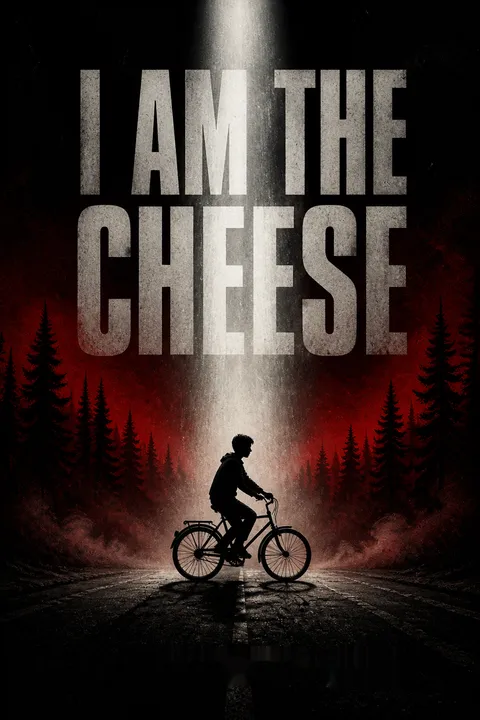
The Ride Begins
Adam, a shy teenager from Monument, Massachusetts, wakes convinced he must reach his hospitalized father in Rutterburg, Vermont. He wraps a present, takes his father’s old cap and jacket, and chooses a battered bicycle over a bus because he wants to travel under his own power. His fears crowd the decision: dogs, confinement, open space, and the road itself.
Still, he leaves without telling anyone, including Amy Hertz, the girl he loves. He also pours away the prescribed capsules he relies on, determined to make the trip unaided. At a gas station, an old man supplies a map, doubts Adam can cover the distance, and warns him to trust no one. Adam pedals on.
The journey begins as an act of devotion, but Adam’s preparations turn it into a test of whether he can act without the supports that have managed his fear. The old bicycle, inherited clothing, and wrapped present tether him to his father, while refusing medication becomes a bid for authorship over his own body. Yet his determination is fragile: he leaves without saying goodbye and avoids Amy, the person who might steady him. The gas-station stranger’s warning sounds like ordinary roadside caution, but it also gives shape to the story’s deeper problem. Adam cannot tell whether danger is real, remembered, or planted in his imagination.
The Dog in the Woods
In Brint’s taped sessions, Adam reaches back to age nine, when his father abruptly diverted their walk to the library into a wooded path. His father glanced behind them, hurried Adam along, and used jokes to hide his alarm. A strange dog blocked the trail. When it attacked, Adam’s father made his son retreat toward the highway, then fought the animal with branches until it fled.
Adam remembered the dog as the danger, but Brint presses him to consider what made his father run into the woods in the first place. The incident leaves Adam with a lasting image of his father as both frightened and capable, and with the first clue that the family had once been pursued.
The memory’s importance lies in its reversal of a child’s usual explanation. Adam initially stores the dog as a self-contained terror, because a visible animal is easier to understand than his father’s unexplained panic. Brint’s questions redirect attention from the attack to the decision that preceded it, making the memory evidence rather than anecdote. Adam’s father also becomes newly legible: not the fixed role of a dependable parent, but a man improvising under pressure. The boy’s admiration after the fight and his unasked question about the flight coexist. That split between comforting appearances and unexplained behavior will govern Adam’s later search.
Amy Finds the Missing Town
Adam meets Amy Hertz at the Monument library after they collide among their books. Amy’s quick humor draws the withdrawn boy into her elaborate store pranks, which she calls Numbers; their friendship grows into love, and she becomes the person with whom he most wants to share his thoughts.
Then Amy phones from her father’s newspaper office with a strange report: a visiting editor from Rawlings, Pennsylvania, cannot remember any Farmer family there. Adam’s parents have always said they came from Rawlings.
Rather than ask his father, Adam instantly invents a story that they stayed only briefly and that his father had been injured. Amy accepts the explanation, but Adam is disturbed by how readily he lied and by the memory of his family fleeing through the night.
Amy gives Adam a rare experience of being accepted without having to perform sociability, while their Numbers let him participate through play rather than confession. That intimacy makes his silence more consequential: he longs to tell her everything, yet protects both his family’s secrets and his image in her eyes. Her question about Rawlings punctures the ordinary story without proving it false. Adam’s quick fabrication reveals that his uncertainty is not merely intellectual; some part of him already behaves as if the family history must be defended. The scene makes curiosity dangerous because the first person who notices the inconsistency is also the person he most wants to trust.
Two Birthdays, One Secret
After Amy’s call, Adam searches his father’s locked desk while his father mows the lawn. Official documents confirm the family’s names and Rawlings connection, but a sealed envelope holds another birth certificate bearing Adam’s name and a different birthday.
He hides it, then tries to dismiss it as a clerical error. His suspicions deepen when he listens to his mother’s regular Thursday phone call and hears her speak with a woman named Martha, who calls Adam her nephew. His father had insisted they had no living relatives.
Adam begins watching his parents, listening at doors, and treating familiar routines as possible evidence. The two certificates and secret aunt do not explain the family’s past, but they make his parents’ reassurances impossible to accept without question.
Adam’s investigation turns domestic space into a field of surveillance. A desk drawer, a weekly phone hour, and a closed bedroom door acquire new meanings because he can no longer separate care from concealment. The second certificate is especially destabilizing: it is an official document, yet its contradiction cannot be resolved by appealing to official authority. Martha’s existence then converts an abstract irregularity into a human relationship his parents withheld. Adam’s spying is both a breach of trust and an attempt to recover trust through proof. His guilt keeps him from confronting his parents, so knowledge accumulates privately, isolating him precisely when he most needs an honest explanation.
The Name Beneath Adam
On a Saturday visit from the gray-haired Mr. Grey, Adam creeps toward the paneled cellar room where his father and the visitor meet. He later overhears his parents arguing about Grey’s changing names and whether Adam has become suspicious. Rather than return to Amy, Adam waits in the cellar until his father finds him and asks what is happening.
His father finally admits that Adam is not his birth name: he is Paul Delmonte, and his father was born Anthony Delmonte. Their life as the Farmers is an assumed identity. The disclosure gives Adam a history he never knew he lacked, but it also makes every ordinary detail of home feel staged. He asks his father for the full story, and the two begin talking openly.
The revelation alters more than Adam’s name. It breaks the assumption that intimacy guarantees complete knowledge, while showing that his parents’ concealment was built into daily life rather than confined to dramatic emergencies. His father’s decision to tell him restores a measure of relationship, but the new truth immediately makes the old one unstable: Adam must hold his parents’ love alongside their long deception. The cellar, previously a room for recreation and work, becomes the site where the family’s identities are renegotiated. Adam’s request for explanation is a threshold action. He can no longer return to innocent trust, but he can begin replacing suspicion with shared knowledge.
A Reporter Disappears
Adam learns that his father was a reporter in Blount, New York, who uncovered links between government corruption and organized crime. After testifying secretly to a Senate committee, Anthony Delmonte returned to work, only to find a bomb planted in his car and a supposed police guard revealed as an assassin.
Mr. Grey, a government operative, then urged the family to enter a new identity program designed to protect witnesses. A threat against Adam and his mother persuaded his father to accept.
They moved to Monument as the Farmers, complete with manufactured records and a false account of their origins. A newspaper clipping records the supposed deaths of Anthony, Louise, and their child in a highway crash. Adam sees that the cover story did not merely hide them; it declared them dead.
The family’s disguise is presented as a state response to violence, but it also exposes how protection can become a form of control. The government gives the Delmontes new names, documents, and work, while deciding which parts of their former lives are safe to keep. The false death notice is the sharpest instrument of that transformation: it protects the living by making their public existence a finished fact. Adam’s father acted from civic duty, yet the consequences fall on his wife and child as well as on him. The story refuses a clean division between heroism and harm. A principled choice can save a family and still deprive them of agency.
The Never Knows
Once Adam knows the truth, his parents become more present to him, though fear never leaves their house. His mother explains that she lives with the possibility that any stranger, phone call, or passing car may signal discovery; she calls these uncertainties her Never Knows.
She resents Mr. Grey’s authority but also knows the family depends on him. Adam wants to confide in Amy, yet his father insists the secret could endanger them, so Adam begins avoiding her. Then Grey reports that a tapped conversation mentioned Monument and a date.
He cannot confirm that the family is at risk, but orders them to leave town while his men investigate. Adam, Louise, and David set out north together, presenting the journey as a short vacation while bracing for another forced change of life.
The family’s renewed closeness is built under pressure, not restored by disclosure alone. Adam’s mother’s account names the psychological cost of permanent protection: vigilance turns ordinary perception into threat detection, and the absence of an attack never proves safety. Her resentment of Grey matters because it prevents the family’s dependence from appearing uncomplicated. Adam’s silence toward Amy repeats the parents’ strategy on a smaller scale: he withholds truth to protect someone he loves, then experiences protection as separation. The new warning converts that tension into action. Their drive north is both a family outing and a rehearsal of flight, with the parents performing normalcy for their son even after he knows the script.
Carver’s Roadside Trap
On the bicycle journey Adam believes he is making, a German shepherd lunges at his front wheel, and he reaches Carver shaken but still moving. At a small lunchroom, Whipper and his two companions mock his decision to leave the bicycle at the police station. Adam refuses to surrender the package meant for his father, then flees when the boys approach after a failed phone call to Amy.
Outside town, their car repeatedly sweeps past him; one passenger strikes his shoulder, and the final pass sends Adam and the bicycle into a ditch. An elderly couple stop, pull him out, and carry him toward Hookset with the bicycle in their station wagon. The episodes sharpen his sense that the road is hostile, though their reality remains uncertain.
The roadside episodes translate Adam’s private fears into physical obstacles, each one testing the same fragile claim: that he can keep moving without help. The dog threatens balance, the boys threaten the gift, and the car converts a passing vehicle into a weapon. His defense of the package is a defense of his bond with his father, even when that bond is the reason for his dangerous journey. The elderly couple’s rescue briefly interrupts the pattern of threat, but it also exposes Adam’s dependence on strangers. By keeping these events inside his unstable travel narrative, the novel asks readers to experience danger before deciding whether it belongs to memory, fantasy, or both.
The Motel That Closed
In Hookset, Adam discovers that his bicycle has been stolen while he steps into a drugstore. Arthur Haynes, watching from a fire escape, identifies the thief as Junior Varney. Adam waits until he can confront Junior, wrestles the bicycle away, and rides on to the Rest-A-While Motel where his family once stayed. The cabins are abandoned.
He calls the number he believes belongs to Amy, but a stranger answers and says he has held that number for years; directory assistance finds no Hertz family in Monument. The gas-station attendant confirms the motel has been closed for years, not since Adam’s supposed visit the previous summer. Adam crosses to the dark cabin, crying and pounding at its door, as his road story begins to collapse.
The bicycle’s theft briefly makes Adam’s journey concrete: he has to observe, wait, confront another person, and reclaim what he needs. The motel and phone call do something different. They undermine the chronology that has allowed him to treat the journey as a present-tense mission, exposing details that cannot fit his account. His repeated calls to Amy are not simply attempts at comfort; they test whether a sustaining relationship still exists outside his mind. When the number fails, he loses more than contact. The closed motel removes the place where he expected to reunite past and present, and his return to the cabin becomes a plea for a reality that will admit him.
The Car at the Overlook
The sessions eventually lead Adam back to the family’s actual drive north after Grey’s warning. The Delmontes share a cramped front seat, sing together, and stop to admire a mountain view. David notices a car following them but believes its occupants are Grey’s men, so the family continues. At the overlook, another vehicle rushes around the curve and strikes them.
Adam sees Louise thrown to the road and recognizes that she is dead. A man approaches, orders her body removed, and has Adam checked because he may be useful. David is absent from the scene, and Adam loses consciousness before learning what happened to him. The memory explains why Adam’s imagined trip ends in terror, while leaving him with a father whose fate he cannot grasp.
The overlook gives the family a brief, chosen pause, then turns their trust in routine into vulnerability. David sees a follower and interprets it through the family’s established system of surveillance, where even Grey’s protection resembles pursuit. The attack destroys the distinction between a safe outing and an operation they cannot control. Adam’s perception fractures under trauma: he can register his mother’s death but cannot assemble a reliable account of his father’s fate or his own capture. That unevenness is psychologically credible and structurally essential. The story does not offer a complete witness statement; it shows how catastrophic experience can leave vivid images surrounded by blankness.
The Cheese Stands Alone
Adam’s bicycle journey ends where it began: at the hospital where Dr. Dupont returns him to a familiar room and gives him the old cap, jacket, and stuffed pig from his childhood. Adam calls himself by the name he has been taught and cannot hold on to the identity his memories uncovered.
The final recorded report reframes Brint’s sessions as government interrogation: officials have repeatedly failed to extract information from Adam, who withdraws whenever questions approach his father’s testimony.
The report says his father and mother were terminated, notes circumstantial suspicion that personnel number 2222 helped the adversaries locate them, and recommends keeping Adam confined or ending his life. The novel closes by returning to Adam’s cycling image, a loop that preserves motion while leaving him alone.
The final frame converts the apparent therapeutic process into an institutional struggle over who controls Adam’s memories and what they are worth. Brint’s patient language has always carried pressure; the report reveals that the questioning serves an agency seeking information, not simply a boy seeking coherence. Yet the record cannot make Adam disclose what he does not remember or cannot bear to know. The report’s competing recommendations expose a bureaucracy that treats a traumatized person as both evidence and liability. The closing return to the bicycle offers no escape from that system. Its circularity is at once protective and devastating: Adam can continue moving only by repeating a journey whose destination has already become loss.
Analysis
I Am the Cheese makes the search for identity inseparable from the question of who controls a person’s story. Adam’s parents conceal the truth to protect him, the government invents a history to protect the family, and Brint elicits memories under the guise of helping Adam recover himself. Each account offers a form of safety, but each also limits what Adam can know and choose. The novel’s central tension is not simply whether Adam can distinguish truth from delusion. It is that the people and institutions claiming to know what is best for him possess the power to define what counts as truth.
The alternating forms make that tension experiential. The bicycle narrative moves forward with the apparent clarity of a quest, while the tapes proceed through hesitant recollection and the final report reduces a human life to a classified subject. As the road’s details fail to match the world around Adam, the reader experiences how trauma can make a coherent story feel more bearable than a broken one. His journey is not merely an escape fantasy; it is a mental structure that lets him approach the loss he cannot yet hold directly.
The family’s love remains genuine, but the novel refuses to treat love as a cure for secrecy. David’s sacrifice protects his wife and son while also removing them from their former lives. Louise’s devotion coexists with fear and anger at their dependence on Grey. Adam’s longing for Amy is similarly compromised by the belief that intimacy could expose everyone to danger. His parents’ choices arise from real threats, yet the system around them turns protection into lifelong surveillance.
The ending’s circular return refuses the comfort of recovery as a neat revelation. Adam remembers, but remembering does not free him; the agency still regards him as a possible source of information and a problem to manage. The book’s hardest insight is that a person can be surrounded by explanations and remain alone inside them. Its title names that solitude without making it simple: Adam’s persistence is real, but so is the machinery trying to decide what he is allowed to remember.
Review Summary
I Am the Cheese is a psychological thriller that captivates readers with its complex narrative structure and dark themes. Many praise Cormier's skillful storytelling, comparing it to works like "Shutter Island." The book explores identity, memory, and government conspiracy through a young protagonist's journey. While some found the ending unsatisfying or confusing, others appreciated its thought-provoking nature. The novel's pessimistic tone and challenging content sparked debates about its suitability for young readers, but it remains a powerful and memorable work for many.
People Also Read



Characters
Adam Farmer
The frightened young travelerAdam is a withdrawn teenager who prefers books, observation, and private writing to the attention of other people. He struggles with fears of confinement, open spaces, dogs, and social exposure, yet he can show startling persistence when someone he loves is involved. His attachment to his parents gives his journey its purpose, while his bond with Amy offers a glimpse of the intimacy he wants but finds difficult to risk. Adam tends to observe before acting, storing details and searching them for meaning. As the story unfolds through his memories and recorded sessions, his uncertainty about what is true becomes central to how readers understand both his character and the danger around him.
David Farmer
The protective, guarded fatherAdam’s father is outwardly a conventional insurance agent, a husband and parent who reads widely and values family rituals. His private life is shaped by a past he tries to keep from his son, and his instinct is to protect Adam by controlling what Adam knows. That protection is loving but costly: it requires performance, vigilance, and the suppression of a career he valued. He uses humor and stories to connect with his child, while his composure in moments of danger suggests a man accustomed to acting before fear can show. His relationship with Adam rests on tenderness, but also on secrets that make their closeness difficult to interpret.
Louise Farmer
The watchful, loving motherLouise is a devoted mother whose sadness and caution shape Adam’s earliest picture of home. She cares for him through food, routines, and close attention, while a private religious life and connection to a distant relative preserve parts of herself beyond family fear. Louise is more defiant than she first appears: she questions the authority governing the family and keeps small objects from an earlier life despite the risks. Her vigilance is not simple timidity. It reflects years of living without certainty about who might be watching or what a call at the door might mean. She wants Adam safe, but she also wants the family to remain emotionally alive.
Amy Hertz
Adam’s daring confidanteAmy is a quick-witted classmate who invents elaborate pranks and refuses to treat ordinary life as solemn. She meets Adam at the library, recognizes his reserve, and draws him into games that give him a reason to take social risks. Beneath her wisecracks, she is attentive to his moods and interested in his writing and private thoughts. Adam loves her partly because she makes room for his seriousness without demanding that he abandon it. Their closeness gives him a rare chance at openness, but his fear of exposing family secrets keeps him from trusting that chance fully.
Mr. Grey
The keeper of new identitiesMr. Grey is a government operative who visits the Farmers’ home and manages the family’s security arrangements. He is efficient, controlled, and difficult to know, appearing to the family as both protector and authority. His work requires him to build identities and limit choices, so even his reassurances carry the weight of surveillance. Adam initially sees him as an ordinary adult in the background, then becomes increasingly aware of how much power Grey holds over his family’s movements and daily life. His presence embodies the uneasy bargain at the center of the family’s safety: they depend on a man who also decides the boundaries of their lives.
Brint
The persistent questionerBrint conducts Adam’s recorded sessions and presents himself as a guide helping him recover his past. He listens carefully, asks about specific memories, and adjusts his manner when Adam becomes distressed. Yet his persistence can feel less like reassurance than pressure, especially when he steers Adam toward people and information Adam resists discussing. Brint’s calm professional voice gives the sessions structure, but Adam’s uncertainty about his role makes every question double-edged. He is important not only for what he elicits, but for the power imbalance he creates: Adam needs help understanding himself and cannot be sure what Brint wants from him.
Dr. Dupont
The gentle attending doctorDr. Dupont cares for Adam in the hospital and tries to make the institution feel domestic rather than punitive. He speaks softly, manages Adam’s medication, and offers familiar objects that help calm him. His manner contrasts with Brint’s probing approach, though he cannot give Adam the answers he wants about his family. Dupont represents practical care within a setting that remains confusing and restrictive to Adam.
Martha
Louise’s distant relativeMartha is the woman Louise contacts during her private weekly telephone hour. Her presence reveals that Louise maintains a connection beyond the household, one that carries family history and emotional comfort. Though Adam hears only a small portion of their conversations, Martha’s relationship to him becomes a crucial sign that his parents have withheld parts of their past.
Whipper
The roadside bullyWhipper is a teenage troublemaker in Carver who uses mockery and intimidation to provoke Adam. His companions amplify his confidence, and he turns Adam’s bicycle and carefully guarded package into targets. In Adam’s travel narrative, Whipper embodies the ordinary cruelty that can become dangerous when no trusted adult is nearby.
Dobbie and Lewis
Whipper’s laughing companionsDobbie and Lewis accompany Whipper and reinforce his bullying with taunts and reckless behavior. They function as a group rather than as distinct personalities, making Adam feel outnumbered and isolated.
Arthur Haynes
The watchful fire-escape neighborArthur Haynes is a large, lonely man who watches the Hookset alley from his apartment fire escape. His teasing manner initially unsettles Adam, but he eventually identifies the boy who took the bicycle. Arthur’s brief act of help complicates Adam’s habit of sorting strangers into threats and allies.
Junior Varney
The bicycle thiefJunior Varney is the boy Arthur identifies as the person who took Adam’s bicycle. He denies the theft and claims he bought it, forcing Adam to confront him if he wants to continue his journey.
Arnold and Edna
The wary rescuing coupleArnold and Edna are an older couple who find Adam after he falls into a ditch. Arnold offers practical help and a ride, while Edna is uncomfortable with a stranger in their car. Their mixed response gives Adam a moment of rescue without removing his unease around dependence.
Mr. Harvester
The house-minded caretakerMr. Harvester maintains the hospital grounds and spends his spare time studying maps and travel books. His plans to go places contrast gently with his rooted life and make him a familiar presence in Adam’s surroundings.
Luke
The familiar switchboard operatorLuke works the hospital switchboard and sometimes helps serve meals. He offers Adam small gestures of attention that make the institution feel more like a household.
Silver
The hospital’s shepherdSilver is the German shepherd kept around the hospital. His growling and tendency to chase Adam echo the boy’s longstanding fear of dogs, making an ordinary animal part of Adam’s unsettled sense of danger.
Plot Devices
Recorded sessions
Memory under interrogationThe numbered recordings alternate with Adam’s bicycle journey and remembered scenes. Brint’s questions prompt him to revisit childhood incidents, family secrets, and the events he cannot fully recall. The format lets the reader hear both what Adam can say and where he stops, while Brint’s repeated requests for specifics create doubt about whether the sessions are therapy or something more coercive. The recordings also widen the story’s perspective: a final institutional report reframes the earlier conversations as an attempt to extract information. Their clinical structure offers apparent order, but the gaps and silences reveal how little control Adam has over the process.
The bicycle journey
A quest through unstable memoryAdam’s journey from Monument toward Rutterburg gives the novel a continuous physical goal: deliver a wrapped present to his father. The rough bicycle, changing weather, dangerous roads, and repeated attempts to contact Amy make the trip feel immediate. At the same time, the route passes places tied to the family’s earlier escape, and apparent inconsistencies gradually unsettle its reality. The bicycle becomes an image of self-reliance, but also a way for Adam’s mind to organize traumatic events into a journey with a destination. The ending returns to the opening ride, turning forward motion into a loop rather than a clear escape.
The Farmer in the Dell
A family song and refrainThe song is associated with Adam’s childhood play with his parents and returns during the bicycle journey and in his hospital room. Its changing verses trace the family’s movement from togetherness toward separation, while the final image of the cheese left alone gives the refrain a stark new meaning. Because the song is simple and familiar, it can comfort Adam when memory becomes unbearable. It also carries feelings he cannot directly explain, linking present distress to a past in which his parents made him feel protected.
False identities
Safety built from fabricated livesThe family’s assumed names, papers, employment, and backstory are created to protect them after Adam’s father testifies against criminal and political corruption. The system allows the family to live under a new identity, but it also requires them to give up careers, relationships, and freedom of movement. Details such as the conflicting birth certificates and the false report of the family’s deaths become clues Adam encounters before he understands their purpose. The device therefore works in two directions: it shields the family from those pursuing them and makes Adam doubt the life he has always known.
Amy’s Numbers
Mischief as shared intimacyAmy’s Numbers are carefully planned pranks, such as filling shopping carts and abandoning them for store clerks to discover. They give Amy and Adam a playful way to share risk and build closeness without requiring Adam to explain his private fears. The pranks also reveal Amy’s intelligence: she studies how people behave and uses ordinary settings to create confusion. As Adam’s family secrets intensify, the Numbers become a measure of the ordinary friendship he wants to keep. Their lightness stands in contrast to the secrecy governing his home, while his growing inability to participate freely signals how much fear has narrowed his life.
About the Author
Other books by Robert Cormier


Download PDF
Download EPUB
.epub digital book format is ideal for reading ebooks on phones, tablets, and e-readers.








