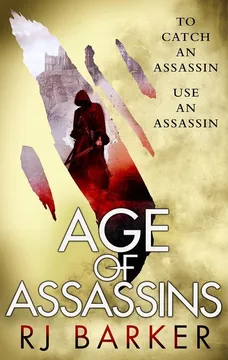


Plot Summary
Prologue
At the edge of a sourland, the Landsmen execute Darik, a young blacksmith accused of sorcery, along with other condemned people. As the blade reaches his throat, a power he has long feared erupts from within him. The land dies in a widening circle, and the guards are torn apart.
Darik sees the girl he hoped to marry among the dead, yet spares a wounded Landsman and leaves him alive. His escape makes the book’s central danger immediate: the persecuted can become powerful, but power can destroy the very people it might have saved.
Darik’s awakening establishes the brutal logic that shapes Girton’s world: authorities claim violence is necessary to protect the land, while their methods create the terror they claim to prevent. The scene refuses an easy distinction between victim and threat. Darik’s power destroys the guards, but his grief is inseparable from the loss of the people he was meant to save. His decision to forgive one of them complicates the spectacle of vengeance, suggesting that an act of restraint can survive even after catastrophe. The prologue therefore works as both warning and moral question: what does a persecuted person owe a violent world?
The Sewer Bargain
Assassin Merela Karn and her fifteen-year-old apprentice, Girton, enter Castle Maniyadoc through its filthy night-soil drain. Guards trap them, and Queen Adran exposes Merela’s identity before using Girton’s life to force her cooperation. Someone may be planning to kill Adran’s son, Prince Aydor, and Merela must uncover the plot and stop it.
Adran threatens to expose Merela as a woman and a Death’s Jester, risking the destruction of that artistic tradition. In private, Merela tells Girton he can escape and leave her to the danger. He stays, unable to imagine a life apart from the woman who rescued and raised him. He does not yet understand that Adran’s strongest leverage is precisely that attachment.
The mission begins as coercion, but its emotional engine is Girton’s choice to remain. He understands loyalty as a personal bond, not as obedience to an institution, while Merela sees the political cost of that bond more clearly than he does. Adran exploits both positions: she weaponizes Merela’s public identity and Girton’s private dependence. The sewer entrance sharpens the contrast between the castle’s polished authority and the degrading work imposed on those who enter it. What looks like an adventure in disguise is already a test of whether affection can be separated from duty, and Girton is not prepared to make that separation.
A Hostage in Harlequin Armour
To move among Maniyadoc’s nobles, Merela invents a country family for Girton and presents him as its neglected youngest son, sent as a hostage over unpaid taxes. He receives battered armour and chooses rusty paired swords after recognizing them as quality Conwy copies. At the squireyard, the heir Aydor humiliates him, while the confident Tomas leads a rival group of boys.
Rufra, an awkward and isolated squire, tries to befriend him, but Girton initially turns him away in hopes of winning Tomas’s acceptance. In the stables, Girton meets Drusl, a red-haired groom who calms his mount Xus by placing her hand beneath his. Their unexpected closeness unsettles him more than any fight.
Girton’s disguise gives him social access by making his disability and low status plausible, but it also forces him to perform weakness among boys who treat weakness as an invitation. His rusty swords quietly preserve a private identity beneath the costume: he knows what quality looks like, even when the court assumes he does not. The squireyard’s rival groups offer competing fantasies of belonging, and Girton misreads Tomas’s polish as virtue while discounting Rufra’s awkward kindness. Drusl’s ease with Xus gives Girton a first glimpse of intimacy that does not depend on rank or martial ability, making the false role harder to inhabit.
The Feast of Masks
At the welcome feast for Festival, Merela performs a rare Death’s Jester dance about the dead gods and their broken balance. The performance unsettles the priests and gives the ailing King Doran an unexpected moment of pleasure.
Adran then announces that the keep and its gates will close once Festival arrives, provoking the Festival Lords, whose trade the castle depends on. From the crowd, Girton and Merela read the court’s divisions: Tomas has a possible claim through the old ap Dhyrrin line, Aydor’s supporters expect advancement, and the ambitious priest Neander belongs to the ap Vthyr family.
Merela insists that every faction deserves scrutiny. Adran’s decision to confine the court makes the castle a sealed arena, where suspicion can only grow.
The feast turns performance into political speech. Merela’s dance recalls a world where balance mattered, while Adran’s lockdown asserts that present danger justifies breaking custom. The Festival Lords’ resistance shows that the queen’s power depends on relationships she cannot simply command. Girton’s new access to the court reveals that succession is not a clean contest between good and bad candidates: lineage, money, fear, and ambition overlap. The sealed castle intensifies those pressures by removing escape and making ordinary movements legible as possible threats. Merela’s insistence on watching everyone is practical, but it also exposes the cost of treating a whole community as a field of suspects.
The Kennel Trap
During training, someone locks Girton inside the kennel and raises the gates of four hungry war dogs. He survives by trapping himself in a cage, then Merela arrives and calms the animals with a skill he has never mastered. The attack leaves Girton shaken and angry, but Merela warns him that the guard outside may know nothing.
She uses a hypnotic technique to question him and learns that Captain Dollis arranged the guard’s post. Meanwhile, Girton grows closer to Rufra, who explains that Aydor’s failure at the Rider trials has kept every other squire from advancing. At night, Girton secretly watches Merela duel Sayda Halfhand, another assassin. The rivals part without bloodshed, and Sayda grants Merela two weeks before returning.
The kennel episode strips away Girton’s practiced composure without making fear a failure. He survives not by dominating the dogs but by using the narrow protection available to him, an early lesson in adaptation rather than force. Merela’s interrogation shows how skill can gather information without punishing an expendable guard. The duel with Sayda widens the mystery beyond the castle: the assassin’s craft is not a single uniform tradition, and even professional enemies can recognize limits. Girton’s growing trust in Rufra offers a counterweight to his secrecy, though both boys remain caught in structures they did not create.
The Secret Under Skin
Squire Kyril is found dead without a visible wound, giving Queen Adran an opportunity to blame Girton, whom Kyril had bullied. Merela examines the body and tells Adran that no assassin’s blade or poison killed him, but later reveals the bruise over Kyril’s heart was made by sorcery.
She recognizes the smell of magic and realizes Girton’s supposedly secret assassin techniques are partly supernatural. Girton learns that he and Merela are magic users, descended from people persecuted as sorcerers.
He has believed magic destroys the land and makes its users monsters. Merela insists that discipline and restraint distinguish their small, controlled abilities from the devastation of the Black Sorcerer. Girton cannot accept her reassurance and feels betrayed that she kept his nature from him.
The revelation does more than revise Girton’s understanding of his skills. It collapses the moral categories that have organized his childhood: the Landsmen’s branded monsters may be people like him, and the techniques he trusts may be magic after all. Merela’s silence was intended as protection, but it has denied Girton the chance to understand himself on his own terms. His fear is therefore both ethical and relational. He worries about harming the land, but he also questions whether the person who raised him has ever told him the whole truth. Kyril’s death makes that private crisis impossible to postpone.
Dollis Pays in Blood
After discovering a five-tailed whip, a hooked knife, and strange anti-magic symbols hidden among Heamus’s belongings, Girton goes to First of Festival despite Merela’s cautions. Drunk and lost among the tents, he is dragged into an alley and beaten by men acting for the squires. Captain Dollis threatens to blind him, but Squiremaster Nywulf intervenes, removes one of Dollis’s eyes, and kills him before the captain can strike.
Girton returns bruised and shaken, then learns that his earlier kennel ordeal was also Dollis’s work. Heamus’s room offers another troubling clue: old love letters hint at grief, while the symbols resemble devices used by the Landsmen to restrain magic users. Girton’s suspects now include men he had trusted.
The beating makes the court’s violence physical and intimate. Girton’s disguise can protect him from suspicion, but it cannot protect him from the cruelty of people who mistake vulnerability for permission. Nywulf’s intervention saves him while revealing that justice in Maniyadoc is not the same as lawful process: the squiremaster answers violence with more violence. The symbols in Heamus’s room connect personal histories to institutional persecution, but they do not yet establish guilt. Girton must learn that evidence can deepen uncertainty as easily as it resolves it, especially in a castle where almost everyone has a private grievance.
The King Knows
King Doran, visibly failing, tells Girton how he defeated the Black Sorcerer and watched an army vanish when the land was stripped of life. Doran admits the sorcerer was a frightened blacksmith, but still believes magic must be destroyed to protect the Tired Lands. Then he recognizes that Girton’s invented family does not exist and understands what the boy really is.
Rather than expose him, the king gives him the formal sign of a ruler receiving an assassin. That night, Merela sends Girton to search Neander’s and Daana’s rooms. He finds coded initials in Neander’s religious book, and in Daana’s quarters, petitions from squires asking that Aydor be removed from Rider training. Rufra’s petition lies conspicuously on top.
Doran’s history gives Girton a human account of the catastrophe that official stories simplify into a battle against evil. The king’s compassion for the Black Sorcerer does not alter his policy, showing how empathy can coexist with a commitment to lethal institutions. His recognition of Girton changes the balance of secrecy: the disguise has failed, yet the king chooses not to expose him. The petitions in Daana’s room appear to be evidence of political maneuvering, but their placement and handling are suspicious. Girton is learning to read not only what a document says, but who has arranged for it to be seen.
Rufra’s Hidden Claim
After Girton misses their meeting, Rufra sees him kill attackers in the woods and confronts him in a Festival tent. He accuses Girton of having pretended to be a helpless friend. Girton admits to concealing his assassin training but explains that Queen Adran’s mission forced him to keep his identity secret.
Rufra accepts the explanation and reveals that he is not Neander’s son: he is the legitimate child of Dolan ap Dhyrrin and Acearis Vthyr, making him a serious claimant to the throne.
His older half-brother Tomas and their great-grandfather Daana have reason to fear that claim. Rufra introduces Girton to his aunt Cearis, a woman Rider who has brought fifteen loyal riders to Festival. The friends reconcile and spend a rare happy evening with Drusl.
The friendship survives because Rufra distinguishes secrecy from betrayal once he understands the pressure behind it. Girton’s truth does not erase the deception, but it gives Rufra room to judge him by action rather than appearance. Rufra’s lineage turns a private bond into a political danger: he is not merely an outsider among the squires, but someone whose existence unsettles several powerful families. Cearis’s presence offers a possible force for change, though Rufra is cautious about the cost of rebellion. The evening at Festival briefly lets the boys experience belonging without rank, while the reader can see how fragile that freedom is.
Seven Men in the Wood
On a cattle-protection ride, Nywulf is called away, leaving Aydor in command and warning Girton to watch Rufra. When raiders attack the village of Calfey, Rufra pursues a swordsman into Barnew’s Wood and rides into a trap. Girton finds Rufra’s mount dead and his friend surrounded by armed men.
He shoots one attacker, then uses his paired blades to kill several more and disables the last, learning only that someone at the castle hired the group. To protect Rufra from suspicion, Girton bloodies his weapons and arranges the bodies to make it appear that Rufra fought them alone. He returns to Calfey and finds Aydor’s men preparing to punish villagers, while Nywulf recognizes that the attack was not what it seemed.
The ambush forces Girton to choose between preserving his cover and preserving his friend. He chooses Rufra, then immediately begins shaping the evidence to protect him, making care itself a form of deception. His violence is efficient but not emotionally neutral: afterward, he is shaken by how easily the trained assassin emerges when someone he loves is threatened. The supposed raid on Calfey also exposes the political function of violence. Aydor’s men treat vulnerable villagers as disposable suspects, while Nywulf sees that the attack has been engineered. The scene shifts the investigation from court gossip to a conspiracy willing to spend lives.
Drusl’s Last Gift
After the ride, Girton hears screaming from the stables and finds Leiss dead from a sorcerous wound. Drusl admits that her power has been awakened through pain and that she has lost control whenever threatened. When the magic surges again, it drains Xus until the mount is nearly dead. Drusl believes there is no escape from what has been done to her, and she takes her own life, directing her blood into Xus and restoring him.
Before dying, she confirms that others were trained too. Girton recognizes the coded initials from Neander’s book as names and locations, including Drusl at the stables. He identifies Neander as the recruiter, then nearly unleashes his own power against the guards before Merela knocks him unconscious.
Drusl’s death converts Girton’s abstract fear of magic into grief with a face and a body. Her power is not evil by nature, but the people who awakened it treated pain as a method of control and left her without the means to govern it. Her final choice saves Xus, yet it cannot be mistaken for a clean victory: restoration is purchased through her death. Girton’s response shows how easily grief can become destructive power, precisely the danger Merela has tried to teach him to contain. The coded list gives that grief a direction, turning private loss into evidence of a larger system.
A Letter for Rufra
In the days after Drusl’s death, Merela restrains Girton’s magic with a painful pattern cut into his chest and tells him to leave with her. She also reports that Neander has escaped with several girls and that a written request linking Rufra to Aydor’s death has been found.
Girton realizes the request resembles the petitions he saw in Daana’s room: Daana altered Rufra’s harmless demand to remove Aydor from Rider training, making it look like a murder order. Girton and Merela also discover that Heamus had been helping Neander gather gifted children, though his motives remain conflicted. Girton refuses to abandon Rufra, and Merela agrees to help him escape before the Landsmen arrive and condemn him.
The forged letter demonstrates how power manufactures guilt from ordinary records. Daana does not need to invent Rufra’s handwriting or create a wholly false document; he needs only to change the context so a legitimate petition becomes evidence of treason. Girton’s capacity to read that manipulation marks a shift from apprentice to investigator. At the same time, grief has made him vulnerable to the promise of revenge through magic, and Merela’s restraint is both a rescue and a violation of his bodily autonomy. Their decision to return for Rufra begins a new kind of loyalty, one chosen with full awareness of its cost.
The King’s Intended Murder
Girton frees Rufra from the dungeon by killing four guards, disguises him as a slave, and sends him to Cearis and the waiting riders. He then leads Adran to Doran’s chamber, where Merela lays out the scheme: Adran and Neander had been gathering sorcerers to strengthen Aydor’s future rule, while Daana tried to frame Rufra and preserve Tomas’s prospects.
The actual assassin was hired by Doran, who knew of Adran’s magic project and wanted his own son dead rather than let sorcery return. Doran confirms the charge. Adran reaches for a dagger, but Daana kills her with a thrown knife and cries out that assassins have attacked. As the court’s factions erupt into fighting, Merela and Girton flee.
The solution is not a tidy revelation of one villain. Adran’s love for Aydor has become a justification for recruiting the very people her husband considers an existential threat; Doran’s defense of the land has curdled into a willingness to kill his own child. Daana exploits both positions to advance his family. Merela’s deductions expose a system in which every faction can describe its violence as protection. Doran’s confirmation gives the accusation authority, but it cannot repair the damage. Adran’s murder by Daana prevents any legal reckoning and turns a political investigation into open civil conflict.
The Bonemount Rises
As the castle factions battle, a crossbow bolt wounds Merela and Girton guides her through hidden passages beneath the keep. They kill guards and open the main gate, but refuse Festival sanctuary because its leaders will not take sides. On the road, Borniya and Hallin attack them. Girton kills Borniya, and the exhausted boy is close to losing to Hallin when Rufra arrives and kills him.
Nywulf brings Rufra’s riders from the stables, and Rufra prepares to challenge for the throne. Girton gives him the Conwy longsword, keeping its matching stabsword as a sign of their bond. Merela and Girton do not stay to rule: they leave Maniyadoc, while Rufra rides back toward the castle with his new force.
The final movement resolves the personal and political arcs without pretending they have become safe. Girton has stopped hiding his skill when survival requires it, but he uses that skill to protect others rather than claim power. Rufra’s return is meaningful because he arrives not as a solitary claimant but with riders who have chosen to follow him. The paired swords make their friendship tangible: one blade goes with the future king, the other remains with the boy who helped him reach that moment. Their separation is not a failure of loyalty. Merela and Girton leave because the new order must be built by those prepared to govern it.
Epilogue
Looking back as an old man, Girton says the popular account wrongly credits Rufra with murdering Adran and Doran. He and Merela leave Maniyadoc, still haunted by the assassins who might pursue them, but Girton knows their actions changed the Tired Lands.
He cannot decide whether the bloodshed that followed made the world better. He remains certain that, despite knowing the grief and danger ahead, he would make the same choices. His memories settle on Rufra at the moment he rode toward the castle, hopeful and armed with Girton’s blade.
The epilogue denies the comfort of a clean historical verdict. Public memory turns a complicated chain of choices into a simpler story of royal murder, while Girton remembers the private motives and costs that official accounts omit. His uncertainty about whether the upheaval served the good does not undo his conviction that friendship and resistance were worth the risk. The aging narrator also reframes the adventure as the beginning of a life shaped by consequences he could not yet foresee. The final image of Rufra carrying Girton’s sword preserves hope, but not certainty: a promising moment is not proof of a just future.
Analysis
Age of Assassins makes political mystery and personal coming-of-age depend on the same problem: people are forced to act through identities assigned by others. Girton enters Maniyadoc as a fictional hostage, while the court sorts children, servants, magic users, and heirs into categories that determine whose suffering counts. The investigation reveals that those categories are neither stable nor morally reliable. Adran’s maternal devotion supports a dangerous political project; Doran’s defence of the land permits him to seek his son’s death; Daana’s patience conceals a willingness to manipulate evidence; and Heamus’s wish to repair old harm leaves him vulnerable to recruitment. No faction owns virtue simply because it can name its enemies.
The novel’s treatment of magic sharpens this critique. Sorcery genuinely can devastate the land, yet persecution does not prevent disaster. Instead, it drives gifted people into secrecy and lets powerful figures use fear as a tool. Girton’s central task is not to prove magic harmless, but to learn whether restraint can be taught without reproducing the cruelty of the Landsmen. Merela’s training offers one model: discipline, practiced movement, and responsibility for consequences. Her secrecy, however, shows how protection can become another form of control when the protected person is denied knowledge.
Girton’s relationships make the political argument emotionally legible. He chooses Rufra before understanding his claim, and he cares for Drusl before learning that the court’s hidden violence has reached her. Friendship, desire, and grief expose the human costs that factions reduce to strategy. The paired Conwy blades finally make loyalty visible without making it ownership: Girton gives Rufra the weapon he needs, then keeps its twin. The ending offers no assurance that the new order will be just. It offers only the possibility that people who know the cost of power might use it differently, and Girton’s painful willingness to act when certainty is impossible.
Review Summary
Age of Assassins receives mostly positive reviews, averaging 3.94/5. Readers frequently praise the compelling master-apprentice relationship between Girton Club-Foot and Merela, the blending of mystery and fantasy genres, and the unique combat system described through dance-like "iterations." Many compare it favorably to Robin Hobb's Assassin's Apprentice. Critics note the slower pace and lack of action-heavy assassin sequences disappointed those expecting something more akin to Assassin's Creed. Most agree it's an impressive debut with strong character development and an engaging mystery.
Characters
Girton Club-Foot
Apprentice assassinGirton is a small, club-footed teenager raised from slavery by Merela and trained in assassination. His quick observation, dry humour, and command of movement often let him pass beneath the notice of people who judge him by his body. He wants the belonging other boys take for granted, which makes him vulnerable to idealizing status and approval. His instinct is to protect those he loves, even when secrecy and violence are the tools he has been taught. The older Girton who narrates understands that youth’s loyalty could be both courageous and costly. His central tension is whether he can inherit Merela’s discipline without inheriting her emotional distance.
Merela Karn
Assassin and guardianMerela is a renowned assassin who also performs as a Death’s Jester, using theatrical movement as camouflage and craft. She rescued Girton when he was a child and raised him with rigorous training, practical care, and a fierce commitment to protecting him. Her habits of withholding information and making decisions alone arise partly from experience: she expects danger to punish hesitation. Yet her certainty can wound the person she means to protect. She has a complicated history with Adran and holds ideals about ending cruelty that collide with the compromises required to survive court politics. Girton’s growing independence forces Merela to face him as a person who must choose, not merely obey.
Rufra
Outcast squireRufra is a watchful, awkward squire who expects rejection and often hides his vulnerability behind caution. He is skilled with weapons and mounts, but his sharper strength lies in noticing how people are treated and remembering what they owe one another. He offers Girton friendship when others offer ridicule, then struggles to reconcile that bond with the secrets Girton must keep. Rufra’s connection to the old ap Vthyr family makes him wary of political ambition, even as his sense of justice draws him toward responsibility. He does not confuse kindness with weakness, and his loyalty is strongest when it is freely chosen rather than demanded.
Queen Adran
Ambitious queenAdran rules Maniyadoc with calculation, theatrical confidence, and an intimate knowledge of how people can be pressured. She loves her son and believes political power can protect him, but her maternal devotion does not prevent her from using threats and coercion. Her past with Merela contains both shared ideals and old injuries, so their encounters carry the strain of people who once imagined a different world. Adran understands the value of appearances and controls the castle’s rituals, guards, and access wherever she can. Her difficulty is not a lack of feeling, but the way she converts feeling into permission to dominate others.
Aydor ap Mennix
Unready heirAydor is the heir to Maniyadoc, physically powerful and accustomed to privilege, but insecure about the abilities expected of a future ruler. He uses humiliation and force to protect his position, especially against people whose weakness is visible or whose independence unsettles him. His dependence on his mother gives him security while also limiting his authority among the court and squires. Aydor is not a simple caricature of a spoiled prince: he has been shaped by a system that treats inheritance as proof of merit and obedience as loyalty. His temperament makes him dangerous, particularly when other people pay the price for his need to appear strong.
Drusl
Stablehand and confidanteDrusl is a red-haired stablehand who understands mounts through patience rather than force. Her ease around Xus and her kindness toward Girton make her one of the first people to see him as more than a crippled hostage or a useful weapon. She wants a life that holds more than mere security, yet she remains attentive to the vulnerable animals and people around her. Her relationship with Girton offers both of them a brief experience of tenderness outside the castle’s hierarchies. Drusl’s compassion is not passivity: she is willing to speak against cruelty, though the world around her gives her few safe ways to do so.
King Doran ap Mennix
Dying warrior kingDoran is an aging ruler whose reputation was built through military strength and victory over the Black Sorcerer. Illness has reduced his physical power, but his attention remains sharp and his memories complicate the heroic version of his past. He can recognize fear and suffering in an enemy without changing the policies he believes necessary to protect the land. Doran’s understanding of kingship is shaped by war: he trusts force more readily than reform and regards magical danger as a threat that cannot be negotiated with. His presence unsettles the court because the man who once commanded armies is still capable of making consequential choices.
Nywulf
Squiremaster and warriorNywulf is the blunt, formidable squiremaster charged with training Maniyadoc’s divided boys. He prizes discipline and mutual responsibility over the privileges that divide them, and he is willing to challenge Aydor when the heir abuses his authority. His severity can conceal a protective streak, but he does not offer trust cheaply. Nywulf reads physical skill with the practiced eye of someone who has served as a warrior himself. His decisions show that loyalty in the castle is rarely uncomplicated: protecting someone may require deception, force, or a willingness to accept blame.
Heamus
Haunted former LandsmanHeamus is an elderly former Landsman who guides Girton around the castle and treats him with more warmth than most of its inhabitants. Age has softened his manner but not erased the history of his service, when he helped enforce the harsh laws against magic users. He tries to repair some of the damage he has witnessed, especially by finding work for children without protection. His kindness is burdened by guilt and by the knowledge that good intentions can be absorbed into dangerous schemes. Heamus embodies the uneasy possibility of remorse in a system that offers little room for atonement.
Neander
Priest of HeissalNeander is the priest of Heissal, outwardly a spiritual guide but conspicuously worldly in his interests. He asks probing questions about Girton’s family, property, and ambitions, presenting himself as a potential ally while measuring what the boy might offer. His position gives him access to both the court and people who would not ordinarily trust nobles. Neander is controlled in conversation and skilled at turning concern into influence. The contrast between his religious office and his appetite for power makes him difficult to read, especially in a castle where a public role often conceals a private agenda.
Daana ap Dhyrrin
King’s long-serving adviserDaana is an elderly adviser from the displaced royal family, physically stooped but politically alert. His elaborate gold garments and fire-lizard cages make him a vivid court presence, while his long memory lets him speak with unusual frankness about succession and past violence. He believes history leaves obligations that cannot be dismissed merely because the people involved are old. His affection for his family is intertwined with a desire to restore their standing, so personal loyalty and political calculation are hard to separate. Daana’s patience can look like wisdom, but it also makes him a formidable player in a court built on waiting.
Tomas
Rival squire leaderTomas is a confident, accomplished squire who leads the boys outside Aydor’s immediate circle. His martial skill and polished bearing make him seem to Girton like a hero from a traditional tale, but his pride and social instincts are more complicated. Tomas expects loyalty from his followers and treats status as something earned through strength, yet he can also use exclusion to maintain his position. He represents an alternative to Aydor’s rule without automatically offering a better kind of leadership. Girton’s changing view of Tomas reflects his own education in judging people by what they do rather than the stories they resemble.
Cearis ap Vthyr
Woman Rider and auntCearis is Rufra’s aunt, a seasoned woman Rider who refuses to accept that tradition must confine women to domestic roles. She brings a small, capable band of riders to Festival and thinks strategically about what political action would cost. Her loyalty to Rufra comes with frank warnings rather than romantic promises. Cearis has seen how powerful families absorb customs that serve them and discard those that do not. She offers Rufra a possible source of strength while respecting his judgment about when to act.
Sayda Halfhand
Rival assassinSayda Halfhand is an assassin whose defensive, steady fighting style contrasts with Merela’s swift and acrobatic approach. She has lost two fingers, but her injury does not diminish her control or skill. Her encounter with Merela shows Girton that the assassin’s craft is not a single inherited system, but a set of traditions shaped by different teachers and temperaments. Sayda respects ability without mistaking a duel for a reason to kill. She is a professional whose measured restraint makes her more unsettling, not less.
Captain Dollis
Aydor’s brutal guard captainDollis commands Aydor’s dayguard and supplements his income with work that serves whoever can pay. He resents the privileged people he protects while remaining willing to exploit their power against others. His threats toward Girton reveal a man who enjoys turning official authority into personal cruelty. Dollis is not a master strategist, but his willingness to act makes him a useful instrument for more powerful people. He represents the everyday violence that political leaders can deny while benefiting from it.
Gusteffa
The king’s jesterGusteffa is a dwarf and a skilled performer who works in King Doran’s household. As a jester, she can move through the castle’s social spaces with unusual freedom, noticing gossip and passing information that formal officials overlook. She takes her art seriously even when the court treats it as decoration. Her exchange with Girton shows a generous pragmatism: she helps him, but makes clear that help creates an obligation. Gusteffa understands that performance can be both livelihood and protection.
Celot
Aydor’s HeartbladeCelot is the warrior assigned to protect Aydor. His unusual stillness and limited social awareness make him difficult for the other squires to understand, but his attention to physical technique is precise. He can be kind without recognizing the cruelty happening around him, and his loyalty to Aydor is more habitual than political. Celot’s presence reminds Girton that someone can be dangerous in combat without being manipulative or malicious.
Kyril
Aydor’s bullying squireKyril is one of Aydor’s closest companions and uses his size and position to intimidate weaker squires and servants. He treats humiliation as entertainment and expects the people around him to accept his cruelty as ordinary. His behaviour helps Girton see how the heir’s circle enforces its power among boys. Kyril is less a political thinker than a willing participant in the habits that protect privilege.
Borniya
Aydor’s heavy enforcerBorniya is a large, physically imposing squire with a damaged cheek and a taste for intimidation. He follows Aydor’s circle and uses his strength to make threats credible. His relationship with Hallin combines blunt force with a readiness to prey on outsiders. Borniya is dangerous not because he is subtle, but because he expects size and rank to settle every argument.
Hallin
Aydor’s calculating bullyHallin is a sharp-featured squire with a blind eye and a habit of carrying a small knife. Unlike Borniya’s direct intimidation, Hallin often seems to take pleasure in planning how to frighten or injure someone. He understands the social permissions that let Aydor’s group act without immediate consequence. His carefulness makes him especially unsettling to Girton, who recognizes the danger of someone who enjoys cruelty as a private craft.
Blue-Eyes
Girton’s childhood companionBlue-Eyes is a girl from Girton’s childhood in the slave pens, where she shared his narrow world of fear and routine. Girton remembers her as a friend who called him by his childhood nickname and reached for him when the children were separated. Those memories shape his understanding of helplessness and his desire to protect people who have been treated as property. She remains a measure of the life Girton lost before Merela took him in.
Plot Devices
The sourlands and magic
Makes power costlySorcery can draw life from the land, leaving dead yellow stretches called sourings. The Landsmen use that danger to justify hunting suspected magic users, often branding and executing people with little regard for whether they pose a genuine threat. The resulting fear shapes religion, law, and ordinary behaviour. Girton’s hidden abilities complicate the system because his assassin techniques are partly magical, while Drusl’s uncontrolled power shows the danger of awakening talent through pain rather than teaching restraint. This device turns a fantasy power into a political and ethical problem: the risk is real, but so is the violence used in its name.
The assassin’s iterations
Turns movement into craftMerela teaches Girton a codified fighting style built from named steps, falls, turns, and feints. The techniques let him conceal exceptional ability beneath the appearance of a clumsy country squire, while his club foot forces him to adapt rather than imitate a conventional fighter. Other assassins follow different traditions, as Sayda’s defensive method demonstrates. The iterations also connect Merela’s theatrical work to her violence: the same body that can entertain a court can become lethal in a narrow corridor. In moments of danger, Girton’s training shifts from conscious sequence to instinctive response.
Festival
Offers a moving refugeFestival is a vast traveling city of caravans, performers, traders, guards, and livestock. It carries goods the castle needs, but its scale and loose boundaries also make it a place where people can disappear or begin again. The Festival Lords protect their independence through custom and economic leverage, refusing to be treated as another part of Adran’s court. For Girton, Festival becomes a rare space where status is less rigid and he can share an ordinary evening with Rufra and Drusl. Its leaders’ refusal to grant sanctuary during the final fighting shows that openness does not mean freedom from political limits.
Scratch and coded records
Hides meaning in plain sightAssassins leave messages in scratch marks on wood, while the castle’s petitions and religious books preserve information in forms their owners may underestimate. Girton can recognize writing others see as damage, but decoding it requires attention to context as well as skill. Neander’s initials first seem obscure; later, their connection to people and locations turns them into evidence of a hidden recruitment effort. Daana’s handling of a genuine petition similarly shows how documents can be altered through framing rather than wholly fabricated. The device makes investigation depend on what has been erased, rearranged, or dismissed as insignificant.
The squire’s false identity
Opens doors, invites dangerMerela invents a family and a history that allow Girton to enter the court as a low-ranking hostage. His club foot and poor armour make the story believable, but the role also requires him to hide his skill, endure insult, and act like a boy who has never been trained to kill. The disguise gives him access to conversations and rooms that an assassin could not approach openly. It also encourages him to seek acceptance as Girton ap Gwynr, creating friendships whose meaning becomes complicated by the lies he must maintain. The cover is not merely a trick; it becomes a competing version of who Girton might have been.
Download PDF
Download EPUB
.epub digital book format is ideal for reading ebooks on phones, tablets, and e-readers.








