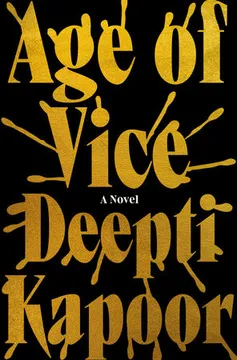


Plot Summary
The Mercedes Takes Five
At three in the morning, Delhi police find five pavement-dwellers dead beside the Ring Road and a Mercedes lodged nearby. Ajay,1 the young chauffeur,1 sits at the wheel, drunk and unable to explain himself. The car belongs to Gautam Rathore,6 son of a powerful politician, but Gautam6 has an alibi and says Ajay1 took the vehicle without permission.
Police accept his account, beat Ajay1 in custody, and charge him with negligent homicide. Newspapers quickly turn the case into a story about a reckless servant, while the dead poor recede from view. Ajay1 is sent to Tihar Jail, where his name and his employer make him a curiosity before anyone knows what really happened.
The opening makes class power visible through the official story rather than through a courtroom argument. The dead are poor enough to disappear from public attention; the surviving driver is poor enough to be punished in their place. Ajay’s silence is misread as guilt, while Gautam’s wealth gives his absence the authority of evidence. The case establishes a pattern the novel keeps testing: institutions do not simply fail to see the vulnerable. They organize what can be seen, then call that arrangement truth.
A Goat, a Debt, a Cage
Years earlier, Ajay1 grows up Dalit in a village in eastern Uttar Pradesh, where his parents earn their living as manual scavengers. When their goat eats a landlord’s spinach, village strongman Kuldeep Singh kills the animal and beats Ajay’s father1 so badly that he dies. The family cannot afford proper treatment or a funeral.
A contractor offers to clear their debt by taking Ajay1 to work; his mother12 accepts, and before dawn the boy is locked in a truck with other children. One boy escapes at a roadside stop and is chased into the fog, where a scream and the assistant’s bloodied return end any hope of flight. Ajay1 reaches the mountains convinced he will never get home.
Ajay’s departure is not a choice between good and bad options. It is a transaction made under conditions where caste violence has already stripped his family of money, safety, and recourse. The escape attempt teaches him that even movement can be controlled by force. His later obedience is therefore not simple loyalty or passivity; it begins as a survival skill formed in a world where refusal carries immediate physical consequences.
Seven Years in the Mountains
A mountain farmer everyone calls Daddy16 buys Ajay1 and puts him to work in his household, while Daddy’s wife,15 Mummy,15 teaches him cooking, reading, and writing. Ajay1 receives food and relative safety, but no wages; Daddy16 claims the money goes to Ajay’s mother. The boy learns to anticipate every need and gradually accepts the comforting fiction that his family prospers because of him.
Foreign visitors bring him English and the nickname Matchbox Kid. Years later, Daddy16 dies in a road accident, Mummy15 leaves, and a relative takes over the house. Ajay1 is expelled with his few possessions and savings. Café owner Surjeet hires him, and Ajay1 eventually leaves the mountains for Delhi, still carrying a business card Sunny Wadia2 gave him.
The household offers real care and real exploitation at once. Mummy feeds and educates Ajay, while Daddy’s lie about wages keeps him emotionally attached to a life that denies him ownership of his labor. Ajay survives by making service feel like affection and by treating usefulness as proof that he belongs. When the household vanishes, he has practical skills but no secure identity, family contact, or recognized claim on the years he has given.
The Wadia Card
In the mountains, Ajay1 meets Sunny Wadia,2 a wealthy young man whose lavish group treats the local cafés as its private stage. Ajay1 serves Sunny2 with the same meticulous attention he once gave Daddy.16 After a drug-fueled absence leaves Sunny2 disoriented, he recognizes Ajay1 as a fellow son of Uttar Pradesh and gives him a card directing him to a Wadia residence in Delhi.
On arrival, Ajay1 is beaten and robbed, but the card survives in his pocket. The household’s manager, Tinu,9 admits him, arranges clothes, a bank account, and a salary, then assigns him to Sunny.2 Ajay1 becomes a valet, driver, and armed bodyguard, learning the routines and weapons that make him indispensable to the family.
The invitation offers Ajay a way to turn service into status. The uniform, salary, and weapon make his body legible as someone protected by power, yet his security remains borrowed from the people he serves. Sunny’s recognition feels intimate because Ajay has rarely been addressed as a person rather than a function. That emotional debt helps explain why Ajay later follows orders that endanger him: the Wadia household gives him belonging in a form that can also be withdrawn.
A Love Above the Rubble
Neda Kapur,3 a young Delhi journalist, meets Sunny2 through her old friend Hari22 and is drawn to his confidence and plans to remake the city. She begins an affair with him while working for Dean Saldanha,10 a reporter covering evictions along the Yamuna. At Laxmi Camp, Neda3 witnesses bulldozers crush homes and kill two infants.
Sunny2 responds with a public compensation offer, but his father Bunty4 arrives at the farmhouse and pushes Sunny2 back into the pool in front of Neda.3 Ajay1 hides her and drives her home. Afterward, Sunny’s2 parties and businesses disappear; Neda3 cannot reach him, while Ajay1 remains close enough to notice Sunny’s2 growing secrecy and distress.
Neda is drawn to Sunny partly because his vision gives her a way to imagine Delhi as remade, but her reporting forces that vision against the lives its redevelopment displaces. The dead children make abstraction unbearable; Sunny’s compensation cannot repair the underlying violence. Bunty’s public humiliation of his son reveals that Sunny’s freedom is also staged. Neda and Ajay each see different pieces of the same household: she sees its emotional captivity, while he is trained to make its machinery run.
The Village Comes Back
On a trip to meet Sunny’s uncle5 Vicky Wadia5 at a sugar mill, Ajay1 recognizes the surrounding fields and migrant camp as the landscape of his childhood. The memory returns with the image of a cockroach crushed beneath his foot, recalling the day he ran from the men beating his father and threatening his family. Sunny2 eventually gives Ajay1 the location of his mother12 and sister.13
Ajay1 travels there with three lakh rupees, expecting to arrive as a successful provider. Instead, his mother,12 now called Mary,12 rejects him and says she received none of the wages Daddy promised. Ajay1 learns that his older sister Hema13 disappeared years earlier, while his younger sister Sarah14 is alive but estranged from him.
The return home dismantles the story Ajay has used to endure exile. He had converted unpaid labor into a sacrifice that supposedly saved his family; his mother’s account shows that the sacrifice did not buy security or reconciliation. His shame is not only that he left, but that he has mistaken survival for repair. The village has changed, yet the old hierarchy remains recognizable in the fear of the people who live beneath the Singh brothers’ rule.
The Price of Loyalty
After his mother’s12 rejection, Ajay1 asks where the Singh brothers are and learns they control the Palace Grande hotel. He kills three men who try to rob him while arranging a meeting, then moves through a public rally where Vicky5 promises that the Singh brothers will eventually be his to punish. Back in Delhi, Sunny’s2 friendship with Gautam Rathore6 deepens through drinking and cocaine.
When Gautam’s Mercedes kills the pavement sleepers, Sunny2 chooses to rescue Gautam6 and protect the Wadia alliance. He puts the unconscious Gautam6 in his own vehicle, leaves Ajay1 to take the blame, and lets Chandra11 arrange the cover-up. Ajay1 is arrested; Neda3 is sent abroad and kept from contacting Sunny.2
Ajay’s violence in the village briefly feels like a refusal to remain prey, but Vicky absorbs that refusal into the Wadia family’s machinery. The crash then exposes the cost of Ajay’s loyalty: Sunny protects a politically valuable heir and sacrifices the servant who has protected him for years. The betrayal is not a sudden lapse in an otherwise equal friendship. It is the consequence of a relationship in which Sunny can grant Ajay personhood, then decide that his life is expendable.
A VIP Behind Bars
Tihar’s crowded cells immediately mark Ajay1 as the Mercedes killer, and rival gangs press him to buy protection or join them. When three prisoners attack him with razor blades, Ajay1 breaks bones and cuts one man’s tongue, then is locked in solitary. The warden later moves him to the comfortable cell of Sikandar,18 an Acharya gang boss, after learning Ajay1 belongs to Bunty Wadia.4
Outside the jail, Neda3 reaches London and tries to live beyond the affair, while Dean10 investigates the Wadias. Ajay,1 however, is trapped among men who know his reputation but not his grief. He avoids gang politics until a frightened young prisoner named Prem17 draws his attention.
The prison replicates the social order beyond its walls: protection is sold, violence enforces status, and a powerful employer’s name can improve a prisoner’s conditions without making him free. Ajay’s attack is both self-defense and a release of force he has been trained to contain. The new cell grants material comfort, but it does not restore agency. The difference between safety and freedom becomes especially sharp when Ajay watches another vulnerable person enter the same system.
The Price of Prem
Sikandar18 protects Prem17 from rival prisoners, then renames him Khushboo17 and forces him into sexual servitude, using drugs and threats to make the role stick. Ajay1 watches, disturbed but initially unable to intervene. When Sikandar18 beats Prem17 in a jealous rage, Ajay1 strikes Sikandar18 with a dumbbell and tends to the injured boy.
Prem17 later returns to the cell, and Sikandar18 offers him for sale. A photograph arrives showing a woman Ajay believes is Hema, with a command that he obey Vicky’s5 people. To protect the woman in the image, Ajay1 accepts responsibility for delivering Prem17 to Karan,19 a Sissodia gunman who loves him. At the handover, Ajay1 kills Karan,19 and Prem17 cuts both wrists.
Ajay recognizes coercion in Prem’s life but cannot initially separate compassion from the shame he feels about his own past. Sikandar’s protection is simply another form of ownership, a lesson Ajay knows yet struggles to apply. The photograph weaponizes his longing for Hema, making rescue seem possible only through obedience and murder. By killing Karan, Ajay repeats the logic of the powerful: he decides another person’s future for him, even while believing he is acting to save someone.
A City Called Shunya
After the crash, Sunny2 returns to public life under Bunty’s4 control and is assigned to develop a vast new city in Uttar Pradesh. He works with Dinesh Singh,7 the chief minister’s son, whose family depends on the Wadia business network. Their project promises a modern city, but land acquisition displaces farmers and turns compensation into a source of anger.
Dinesh7 eventually joins the protest and publicly condemns the development as a land grab, breaking with the agreement between their fathers. Sunny2 drives out to confront him, accompanied by Eli,8 and Dinesh7 gives him a file that exposes what Bunty hid about Neda. Before Sunny2 can act on it, a group kidnaps him and takes him to a rural godown.
Sunny’s urban dream has always treated land as a blank surface on which he can build beauty and status. The farmers’ resistance makes visible the people erased by that design, while Dinesh’s public break turns private doubts into political risk. Sunny’s position is especially compromised because he wants independence without relinquishing the methods and assets that made him powerful. The file and kidnapping force his family history and business ambitions into the same crisis.
The Sonogram in the File
In the godown, Sunil Rastogi21 tells Sunny2 that he once helped invent the dreaded Chaddi Baniyan gang, later worked for political operators, and survived a frightening encounter with Vicky,5 whom people called Himmatgiri.5 His story is both confession and performance, making it hard to know where criminal history ends and legend begins.
Before the kidnapping, Dinesh’s7 file showed Sunny2 a sonogram and records of Neda’s abortion. Sunny2 realizes that Chandra11 arranged the procedure and told Neda3 he rejected the child, while Bunty4 kept the evidence from him. Rastogi21 kills Manoj,24 one of the kidnappers, takes the ransom, and leaves Sunny2 alive with the knowledge that his father controlled even the loss he believed was his own choice.
The sonogram changes Sunny’s understanding without absolving him. Bunty’s concealment and Chandra’s intervention helped determine what Neda could do, but Sunny had also disappeared when she needed him and left her alone with the decision. Rastogi’s unstable account complicates the idea of a clean truth: violence becomes myth, and myth becomes a tool of power. Sunny receives evidence, not a way to undo what happened, and must decide what responsibility means when so many people have acted in his name.
The Wedding Call
On his wedding day, Sunny2 calls Neda3 in London and asks whether she ended their pregnancy. She tells him that he abandoned her and that the responsibility belongs to him, not to Bunty4 or to her. Sunny2 then calls Dinesh7 and confirms that their plan to remove their fathers from power should proceed.
His marriage to Farah Dhillon20 is itself part of the Wadia family’s political expansion, joining Bunty4 to Punjab’s influential Sikh leadership. Sunny2 reaches the ceremony exhausted and already using drugs to blunt panic. Farah,20 meanwhile, enters the household with clear eyes about the marriage’s political purpose and her own ability to shape its future.
Neda refuses Sunny the absolution he seems to be seeking through a single factual answer. Her judgment names the moral pattern he has avoided: choices made by powerful men remain choices, even when fathers and fixers narrow the available options. Sunny’s decision to proceed with Dinesh’s plan does not emerge as a clean conversion to justice. It is entangled with grief, resentment, and the need to strike back at Bunty.
The False Sister
During the wedding celebration, Ajay1 is brought from jail to the Wadia estate and told to kill Rastogi,21 who has been found living under the name Peter Mathews21 in a church community. Ajay1 reaches the house with a pistol and a photograph he believes proves Hema is trapped in a brothel. Inside, Brother Sanjay23 offers him food and water; Rastogi21 then takes Sanjay23 hostage and escapes upstairs.
Ajay1 fights Rastogi21 but cannot bring himself to shoot. Rastogi21 claims the woman in the photograph is Neha, a stranger from Bihar, not Ajay’s sister.13 Ajay1 cannot verify the claim, but the doubt breaks his resolve. He flees through a window, leaving the photograph behind, while Rastogi21 slips out with a bag and a motorcycle.
Ajay’s hesitation is not a sudden loss of courage. It marks the first time he questions an order before carrying it out, even though the order has been framed as the price of saving family. Rastogi exploits that opening by attacking the one story Ajay has been forced to believe. The photograph’s uncertain identity matters because Ajay’s obedience has been made to depend on an image rather than a living relationship or verifiable knowledge.
The Empire Bleeds
As the wedding reception fills with politicians, business figures, and media leaders, a dossier of evidence sends the Special Task Force and CBI to the estate. Officers arrive with warrants for Bunty4 and Ram Singh, disrupting the public display of unity between the families. While officials and security men struggle to contain the commotion, Rastogi21 rides into the convoy and fires an automatic rifle into Bunty’s4 police vehicle.
Bunty4 is killed, and Sunny2 watches the father whose approval shaped his life die under the protection of a human shield. In the confusion, Sunny2 is taken away by Tinu9 and Eli.8 The wedding’s polished spectacle collapses into arrests, gunfire, and the sudden exposure of the network that had seemed untouchable.
The raid makes political power briefly answerable to evidence, but the result is not a stable victory for justice. Bunty’s arrest is overtaken by Rastogi’s execution, another act of violence that leaves the public record entangled with private revenge. Sunny’s most intimate conflict ends without reconciliation: his father is neither forgiven nor confronted in a way that can repair their relationship. The wedding, meant to secure succession, instead becomes the setting where inheritance turns suddenly into loss.
Northbound Without a Name
Ajay1 escapes the search at the church and boards a night bus bound for Manali. He has only a few thousand rupees, his grief, and the uncertain freedom of having refused the order to kill. At a roadside dhaba in Punjab, he watches a news report about the events unfolding in Delhi.
The book leaves him on the road rather than promising a reunion with Sarah14 or a return to the life he knew in the mountains. His journey turns back toward the place where he first learned both work and captivity, but this time he travels without a master’s instructions. Whether he can build a life beyond the Wadias remains unanswered.
The ending grants Ajay movement, not resolution. His departure is meaningful because it is chosen, but freedom arrives without the relationships or certainty he has spent years trying to purchase through obedience. The mountains carry both refuge and the memory of his first captivity, so returning is not a clean homecoming. By withholding proof that Sarah is safe or that Ajay will remain free, the novel resists the comforting idea that one brave refusal can repair a life shaped by structural violence.
Analysis
Age of Vice links personal betrayal to systems that make betrayal profitable. Ajay1’s life is the clearest example: caste violence removes his family’s choices, a contractor sells his labor, and powerful employers repeatedly rename coercion as care. He is not simply a passive victim. He learns to fight, serve, and read danger with extraordinary precision. The tragedy is that these skills are repeatedly recruited by people who promise belonging while withholding control over his own life.
Sunny2’s story mirrors Ajay1’s from the opposite side of class. Both men want a father’s recognition, but Sunny2 can convert that hunger into buildings, parties, alliances, and political plans. His visions of modern cities may contain genuine aesthetic hope, yet the land beneath them is already inhabited. Neda3’s reporting brings that contradiction into focus. Her discomfort does not automatically make her innocent; she moves between witnessing displacement and enjoying the protected world built by the people responsible for it. The novel treats complicity as a series of choices, not a fixed moral identity.
The book’s recurring bargains, wages for a child, security for a prisoner, money for a displaced farmer, protection for a servant, make power feel intimate. People are not only controlled by force. They are controlled by promises that attach survival to obedience. Photographs, records, and stories then become instruments of that control, because characters often have to act before they can know whether the claims made to them are true.
The ending refuses a neat moral settlement. Bunty4’s power is exposed, but violence immediately answers exposure; Sunny2 gains no uncomplicated freedom, and Ajay1’s escape does not restore the family he lost. His northbound journey matters because it is the first major decision he makes without obeying a master. Yet the open ending keeps that decision fragile. The novel’s bleakness is not that change is impossible, but that a single refusal cannot undo the structures that taught people to sell, use, and abandon one another.
Review Summary
Reviews for Age of Vice are largely positive, with many praising the richly drawn characters, immersive storytelling, and vivid portrayal of India's class divides and corruption. Ajay's narrative is consistently highlighted as the most compelling element. However, a common criticism is that the novel's quality deteriorates in its second half, becoming disjointed and losing narrative momentum. The introduction of new characters late in the story frustrated many readers. Despite these flaws, most readers remained engaged and expressed interest in the upcoming sequels.
People Also Read










Characters
Ajay
The obedient survivorAjay is a Dalit boy from eastern Uttar Pradesh whose childhood is shaped by caste violence, poverty, and a forced departure from home. He learns to read people by anticipating what they need, first in a mountain household and later in the service of Sunny Wadia2. His quietness can look like submission, but it is also a practiced way of staying alive when refusal invites punishment. Ajay is drawn to belonging and to the promise that sacrifice can protect those he loves. His struggle is to distinguish chosen loyalty from the roles powerful people assign him, and to discover whether he can act without becoming another person who controls someone else.
Sunny Wadia
The heir seeking escapeSunny is the charismatic son of Bunty Wadia4, a business magnate whose wealth rests on political influence and coercion. Stylish, ambitious, and drawn to art and architecture, Sunny wants to build a modern Delhi and to be recognized as more than his father’s creation. Yet he depends on the very network he resents, and his generosity often carries an expectation of admiration or access. His relationships expose a deep hunger for approval, especially from Bunty4, alongside a capacity to treat others as pieces in a private design. Sunny’s central tension is between the humane future he can imagine and the ruthless inheritance that gives him power to pursue it.
Neda Kapur
The divided witnessNeda is a young Delhi journalist from an educated, socially secure family. Curious and sharp-tongued, she is attracted to Sunny’s2 energy and vision even as her work brings her close to the people displaced by redevelopment. She can observe injustice closely while remaining unsure how much responsibility observation creates. Her affair with Sunny2 gives her access to wealth and power, but also divides her life between professional reporting and private complicity. Neda is not simply a conscience for the men around her; she has her own ambition, appetite for escape, and fear of being ordinary. Her struggle is to face the difference between understanding a system and refusing to participate in it.
Bunty Wadia
The empire's architectBunty is Sunny’s2 father and the quiet center of an expansive business and political network. He understands loyalty as something cultivated through favors, threats, and careful control of information. His public manner is composed and paternal, but he treats family members and employees as parts of an inheritance he expects to manage. Bunty’s affection for Sunny2 is genuine in its own terms, yet it cannot be separated from his desire to shape the young man into a useful heir. He is most powerful when others do not know what he knows. His presence tests whether care can remain care when it is inseparable from ownership.
Vicky Wadia
The feared country powerVicky, Bunty’s4 brother and Sunny’s2 uncle, is a feared political strongman in eastern Uttar Pradesh. He carries himself as both criminal enforcer and mystical figure, cultivating a reputation that makes people uncertain where violence ends and supernatural authority begins. Sunny2 remembers him as exciting and brave, a contrast to his father’s more controlled power. Vicky’s world is rooted in local loyalties, intimidation, and stories that grow larger each time they are told. He understands how myth can govern people as effectively as money. His relationship with the Wadia family is shaped by shared history, old injury, and incompatible ideas about what power is for.
Gautam Rathore
The ruined royal heirGautam is the heir to a formerly royal family whose status exceeds its reliable wealth. He is witty, cruel, and steeped in alcohol and drugs, using excess to avoid the responsibilities attached to his name. Sunny2 approaches him as a possible ally and as a route into political and business opportunities beyond Uttar Pradesh. Gautam’s contempt for Sunny’s2 ambition masks his own dependence on family money and inherited privilege. His life shows how social rank can cushion a person from consequences even while addiction and appetite corrode his private world. He is both a potential partner and a reminder that inherited power can survive personal collapse.
Dinesh Singh
The reforming political heirDinesh is the son of Uttar Pradesh chief minister Ram Singh and Sunny’s2 business and political counterpart. He is ambitious, disciplined, and alert to the public costs of the arrangement that enriched their fathers. His interest in art and political ideas develops into a more serious concern with empathy and democratic accountability. Dinesh understands that reform requires power, but he also knows that power built through family bargains can consume its heirs. His relationship with Sunny2 mixes friendship, rivalry, and strategic necessity. He presses Sunny2 to recognize that personal disgust with their fathers is not the same thing as a public commitment to change.
Eli
The armed companionEli is an Israeli security specialist hired by the Wadia household. He trains Ajay1 in firearms and hand-to-hand combat, then becomes Sunny’s2 bodyguard and reluctant caretaker. His dry humor allows him to challenge Sunny2 in ways few people around the heir can. Beneath the sarcasm, Eli has professional discipline and a clear-eyed sense of how dangerous the family’s world is. He respects Ajay’s1 focus and notices the harm done to him, though his own choices remain tied to employment and survival.
Tinu
The household's gatekeeperTinu is Bunty Wadia’s4 longtime aide and the manager of the household’s personnel and security. He decides who enters the family’s world, assigns duties, and helps keep Sunny’s2 life functioning. Tinu can show practical kindness, but his loyalty is ultimately to Bunty4 and the structure Bunty4 commands. He understands that information and discipline are forms of power, and he treats staff accordingly. To Ajay1, he is the first human face of a household that will offer opportunity on conditions it does not fully explain.
Dean Saldanha
The stubborn reporterDean is Neda’s3 senior colleague and a journalist focused on Delhi’s evictions and the lives of its displaced residents. He believes reporting must make visible the people that official plans reduce to obstacles or statistics. His moral certainty can make him difficult to work with, but it also gives Neda3 a standard against which she measures her own compromises. Dean investigates the Wadia network despite pressure from media owners and political interests, insisting that a documented truth still matters even when publication is uncertain.
Chandra
The polished fixerChandra is a discreet representative of Bunty Wadia4 who handles delicate problems with courtesy and precision. He arranges travel, manages consequences, and presents coercion as a reasonable offer. His calm manner contrasts with the violence used by other Wadia agents, but it serves the same purpose: keeping events under control and protecting the family. Chandra understands that people in crisis may accept a new life when they are exhausted enough, then call that acceptance their own choice.
Rupa, later Mary
Ajay's estranged motherRupa is Ajay’s mother1, a Dalit woman forced to make desperate choices after her husband’s death and the family’s crushing debt. In the community where Ajay1 eventually finds her, she lives under the name Mary. Her grief has hardened into anger, and she sees Ajay’s1 return through the pain of the years in which he was absent. She is not simply a lost home waiting to welcome him back. Her history makes clear that the child’s departure did not end the family’s suffering.
Hema
The sister Ajay remembersHema is Ajay’s1 elder sister, who cared for their family’s goat when they were children. Ajay’s1 memory of her is bound to the day their father was beaten and to his own flight from danger. Her later absence becomes the focus of his longing and a point others can use to influence him. Hema matters to Ajay1 as a person he loves, but also as the last living link to the childhood from which he was taken.
Sarah
Ajay's younger sisterSarah is the younger daughter born after Ajay1 was taken from his village. She has grown up without knowing him and is wary when he appears in her community. Her presence shows how much time has passed and how little a returned brother can assume about the family he hopes to recover.
Mummy
The mountain-house teacherMummy is the warm, capable woman in the mountain household where Ajay1 is sent as a child. She feeds him generously and teaches him to cook and read, offering tenderness that contrasts with his earlier deprivation. Her kindness is real, but it exists inside an arrangement in which Ajay1 works without wages and remains dependent on his employers. She represents the complicated comfort of a home that can feel loving without belonging to the child who serves it.
Daddy
The mountain-house masterDaddy is the farmer who takes Ajay1 into his mountain household and gives him food, work, and a carefully constructed story about his family. He can be generous and instructive, yet he also denies Ajay1 wages and discourages him from returning home. His influence teaches Ajay1 to equate obedience with safety and service with belonging. The relationship is formative precisely because care and control are difficult to separate.
Prem
The captive young prisonerPrem is a young man imprisoned for theft who arrives terrified and without protection. He is drawn into Sikandar’s18 cell under the promise of safety, then subjected to abuse and forced into a feminine identity imposed by his captor. Prem’s attachment to Karan19 gives him a glimpse of affection that is not based on ownership. His vulnerability forces Ajay1 to confront the difference between being protected and being possessed.
Sikandar
The prison-cell bossSikandar is a powerful jailhouse gang leader, feared for his temper and his capacity for violence. He presents himself as a protector to prisoners who have nowhere else to turn, but his protection is conditional and possessive. His public humor and generous meals conceal an appetite for control. Sikandar’s cell provides Ajay1 with shelter from other gangs while exposing him to another version of the coercive bargains he has encountered outside prison.
Karan
Prem's devoted loverKaran is a Sissodia gang member and a skilled gunman whose quiet manner distinguishes him from the men around him. He visits Prem17 in the infirmary and offers money to take him away from Sikandar18. His stated love challenges the prison’s treatment of people as property, even as the surrounding gang structure makes any rescue dangerous.
Farah Dhillon
The strategic brideFarah is a poised, sharp-minded woman from an influential Punjabi family. She understands that her marriage to Sunny2 is also a political and commercial alliance, and she enters the Wadia household with a clear view of the bargain. Her confidence and ability to command a room distinguish her from the people who treat marriage as a private romance alone. Farah is prepared to shape the family’s future rather than simply inhabit the role assigned to her.
Sunil Rastogi
The elusive criminalRastogi is a criminal figure whose name surfaces in the networks of Uttar Pradesh and whose history is difficult to separate from the legends built around him. He survives by adapting his identity to the people and places around him. His past connects ordinary criminal enterprise with the political violence that powerful families exploit. Rastogi’s ability to turn stories into leverage makes him dangerous even when his actual motives remain uncertain.
Hari
Neda's old friendHari is Neda’s3 school friend, now a DJ and part of Delhi’s emerging arts scene. He reconnects her with Sunny2 and helps her enter the circles around his parties. His affection for Neda3 is sincere, but he also feels her drifting away as Sunny’s2 world takes hold.
Brother Sanjay
The generous church hostBrother Sanjay welcomes travelers into the church community where he lives, offering Ajay1 a meal and a place to rest. His openhandedness contrasts with the suspicion and bargaining Ajay1 has learned to expect. He is a brief but important reminder that kindness can be offered without demanding service in return.
Manoj
The resentful kidnapperManoj is a farmer whose land was acquired for development, leaving him with money that did not provide the stable life he expected. He joins the kidnapping of Sunny2 after another prisoner promises a way to recover what was lost. His grievance is grounded in real dispossession, even as the plan turns that grievance into another act of violence.
Plot Devices
The crash case
A servant takes the fallThe deaths on Delhi’s Ring Road create the novel’s central legal and moral crisis. The Mercedes belongs to Gautam Rathore6, but the first public account identifies Ajay1 as the driver and makes his social position seem like proof of guilt. Later events reveal how a powerful family can manipulate the scene, the witnesses, and the official explanation. The case links Ajay’s1 history of service to the novel’s larger question of who is made responsible when wealth and political influence must be protected.
The wages promise
Hope becomes a restraintDaddy16 tells Ajay1 that his wages are sent to his mother12, giving the child a reason to believe that his separation benefits his family. Ajay1 never sees proof and is not paid, yet he gradually absorbs the story as a source of comfort. The promise lets him endure the loss of home by imagining that his labor has rescued the people he left behind. When he returns to his village, the truth destroys not only a financial assumption but the meaning he has attached to years of work.
The worn photograph
A family image becomes leverageA photograph of a woman in a brothel is presented to Ajay1 as evidence that Hema13 is alive and in danger. The image gives him a concrete target for his longing and makes obedience seem necessary to protect his sister13. He carries it through prison and into the final pursuit of Rastogi21. Its meaning remains unstable because Rastogi21 claims the woman is someone else, and Ajay1 cannot confirm the claim. The photograph demonstrates how a powerful person can make a person act by controlling the story attached to an image.
The redevelopment vision
Utopia conceals a land bargainSunny’s2 plans for a modern Yamuna riverfront and later a vast Uttar Pradesh city express his belief that design can remake a damaged world. The projects are also tied to land acquisition, political deals, and the displacement of people who already live and work on that land. Neda3 encounters the human cost in Delhi, while Dinesh7 and the farmers challenge the later project. The vision functions as both sincere ambition and a persuasive cover for the transfer of land and wealth to the powerful.
The hidden sonogram
A concealed loss reshapes allegianceThe medical record and sonogram in Dinesh’s7 file reveal to Sunny2 that Neda3 was pregnant and that Bunty’s4 network concealed what happened afterward. The evidence gives Sunny2 new information about a deeply personal loss, but it cannot restore the relationship or undo Neda’s3 experience. It intensifies his distrust of his father and helps drive his decision to join Dinesh’s7 political move. The device turns an unseen private history into leverage within the larger struggle for succession.
Download PDF
Download EPUB
.epub digital book format is ideal for reading ebooks on phones, tablets, and e-readers.








