

Plot Summary
Two Ewes, One Island
Jake Whyte lives alone on a remote English island, tending sheep with her dog, Dog, and avoiding the neighbors who watch her from a distance. When a ewe is found gutted, it is the second unexplained death in a month. At the farm shop, Jake notices a smashed greenhouse and a bruised, frightened shopkeeper’s daughter, but neither offers a clear explanation.
Neighbor Don Murphy doubts that local teenagers are responsible and cannot identify what tore the sheep apart. Jake drives home, breaks down in her truck, then insists she is fine. The animal deaths unsettle the careful isolation she built around her cottage, and the woods begin to seem less like empty land than a presence observing her.
The opening makes practical labor Jake’s defense against distress: she inventories a dead ewe, drives for supplies, and returns to chores, but her body betrays what her composure conceals. The mutilation matters because it resists the ordinary explanations she depends on as a farmer. Don’s skepticism does not reassure her; it leaves her alone with evidence no one can interpret. The damaged greenhouse and the daughter’s bruise extend the sense of violence beyond the flock, while Jake’s attempt to blame bored teenagers shows how urgently she needs a human cause. Her isolation is a chosen refuge, but already it has become a place where fear can grow unchecked.
A Client's Country Offer
Years earlier in Port Hedland, Jake earns money through sex work and shares a room with Karen, another worker who insists they still have choices beyond the town. Karen offers companionship, cigarettes, and an imagined route out, but neither woman can yet make a clean break.
Jake’s regular client Otto is different from the men who treat her roughly: he pays fairly, talks with her, and describes a sheep station near Marble Bar where he lives with his dog, Kelly. He invites Jake to stay and work there, presenting the offer as a chance to leave the streets. Jake accepts, packing for what she expects will be a brief visit. The promise of quiet work and open land begins as an escape, but depends entirely on Otto’s hospitality.
Jake’s choice is shaped by scarcity, not naïveté alone. Otto offers what the city has denied her: predictable terms, food, shelter, and a role that seems to involve useful work. Karen’s insistence that they have options sounds empowering, yet the women’s poverty makes the available options dangerously narrow. The station’s remoteness magnifies the appeal of escape while concealing its cost. Jake wants a life in which her body is not constantly priced and negotiated, so Otto’s offer feels like a route from being used toward belonging. The novel makes that hope emotionally intelligible before showing how easily apparent refuge can reproduce control.
The Station's Hidden Hook
At Otto’s isolated station, Jake finds starving sheep, a slaughter shed, and a house organized around his routines. Otto calls her his niece in town, restricts her movements, and treats sex as part of the arrangement despite the paternal care he performs.
Jake tries to improve the sheep’s conditions, but Otto makes her participate in slaughter and mocks her distress. She discovers traces of Carole, Otto’s former wife, among discarded belongings and finds a woman’s earring in the shed.
When Jake tries to escape, Otto blocks her; she eventually takes the station truck and a hidden roll of cash while he is outside. She smashes through the gate and drives away, leaving Otto and Kelly behind. The road offers distance, but not yet safety or a settled future.
Otto’s control works because it borrows the gestures of care. He feeds Jake, teaches her to drive, and frames the station as a family home, while his language and locked doors make clear that she has little authority over her own life. The sheep become a moral measure of the arrangement: Jake tries to grant them space even as Otto forces her to witness their slaughter. Carole’s belongings suggest that Jake is not the first woman absorbed into Otto’s private world. Her escape is therefore more than a flight from one man. Taking the truck and money is her first deliberate claim to mobility, though survival still requires her to keep moving.
A Place in the Shed
After crossing the country, Jake reaches Kalgoorlie and persuades Alan, a sheep-station boss, to hire her as a roustabout. She proves she can handle sheep and earns the respect of Greg, a skilled shearer whose easy affection becomes a relationship. The crew’s jokes and rough hierarchy make room for Jake, though Clare resents her closeness to Greg and needles the younger worker called Bean, whose real name is Arthur.
When Bean loses part of his hand on a grinder while sharpening Clare’s gear, Alan demotes Clare and moves Jake into the shearing line. Around this time, Jake learns from her sister Iris that their father has died. She hides the news and the money their mother sent, unable to make herself rejoin her family’s life.
The shearing shed gives Jake something rarer than approval: competence recognized through work. She earns her place by handling sheep, not by persuading the men to revise their ideas about gender. Greg’s affection offers intimacy without requiring her to explain herself, while Clare’s jealousy exposes how quickly male camaraderie can become coercive. Bean’s injury reveals the cost of that hierarchy in physical terms, and Alan’s decision to promote Jake is both practical and corrective. The news of her father’s death interrupts this hard-won belonging. Jake can perform strength in the shed, but the family loss remains outside the language she can use with the crew.
The Poster and the Punch
Near the end of the Boodarie job, Clare returns from a week away with a missing-person poster of Jake and has contacted Otto to learn her history. He uses the information to threaten to expose her and begins trying to assault her in her quarters. Jake punches Clare in the jaw, leaving him bleeding on the floor, then walks out rather than wait for the consequences.
Greg has not understood the danger she faced, and Jake cannot explain why she must leave immediately. Her years of moving from place to place have not ended; even the station where she found work and affection can turn unsafe once someone gains leverage over her past. The confrontation becomes another rupture in the life she was trying to build.
Clare’s threat transforms Jake’s hidden history into a weapon. The missing poster is not simply a clue to her identity; it gives a man who already feels entitled to her access to the person she has been fleeing. Jake’s punch interrupts the assault, but it does not restore the trust that made the shearing crew feel like a home. Her departure is urgent rather than triumphant. She has learned to act decisively when cornered, yet the need to disappear again confirms the limits of individual toughness. The scene also sharpens the novel’s distinction between being accepted socially and being safe: Greg’s affection cannot protect Jake from the crew’s blind spots.
The Man in the Shed
Back on the island, unnerving sounds in Jake’s house make her flee into the night, though by morning she can find no clear evidence of an intruder. A masked man on the bridleway prompts her to report trespassing and dead sheep, but the local sergeant dismisses her concerns and advises her to make friends.
Later, during a storm, Jake finds the same man hiding in her woolshed. Dog bites his hand, and Jake fires her gun without hitting him. The stranger says he only needs sleep. Jake allows him to stay one night, then gets trapped with him when they try to drive through the storm and bog the truck in a field. His name is Lloyd, and the stranger she feared is now under her roof.
The island’s authorities do not merely fail to solve the mystery; they recast Jake’s report as a problem of loneliness. That dismissal deepens her reliance on her own senses, even when those senses are strained by memory and fear. Lloyd’s arrival complicates the boundary between threat and need. Jake has a weapon and the home advantage, yet she still chooses to offer shelter after discovering that he is cold, injured, and apparently harmless. Their truck sinking in the mud makes their dependence literal. The storm prevents Jake from controlling the encounter through distance, forcing the beginning of a relationship built from awkward acts of care.
Ashes Beside the Sheep
As Lloyd helps Jake free a ewe from a drainage ditch, Don watches from above and later tows their truck out of the mud. Don’s son Samson arrives at Jake’s cottage believing his father still lives there; agitated and insulting, he is driven away after Lloyd steps between him and Jake. Don explains that Samson has struggled since his mother died and was sent to borstal after setting fires.
He insists his son is not responsible for the sheep. Lloyd, meanwhile, reveals that he is carrying the ashes of a beloved man who died suddenly and has been trying to scatter them at meaningful places across Britain. Jake lets him stay. His grief gives her a reason to recognize a pain that does not need to be explained before it can be shared.
Don’s account prevents Samson from becoming a convenient villain. His history of fires makes suspicion plausible, but Don’s regret and Samson’s vulnerability complicate the story the island might tell about him. Lloyd’s presence likewise shifts from accidental intrusion to chosen companionship. His ashes represent a grief he cannot complete by following a tidy ritual, just as Jake cannot dispose of her past by changing locations. Both characters resist easy disclosure, yet share practical labor: helping a trapped ewe, towing a truck, staying through a difficult night. Their bond grows through actions that do not demand confession as the price of care.
The Beast in the Bracken
Jake meets Marcie, the farm-shop girl, on a stile overlooking the fields. Marcie is restless to leave the island and repeats stories Samson has told about a huge, cat-eyed animal near the woods. Jake has already seen a fox with cubs and is reluctant to poison it, but another sheep goes missing without a break in the fence.
Lloyd digs in the hillside, scattering some of his companion’s ashes and attempting to plant apple seeds in remembrance. Jake’s suspicion shifts away from local teenagers and toward something neither she nor the island can name. The sheep still need feeding and protection, however, so she cannot stop working to search for an answer. The mystery grows alongside her attachment to Lloyd and the flock.
Marcie’s account supplies the first local version of the predator, but it arrives wrapped in gossip and Samson’s reputation for strange stories. The uncertainty matters: Jake cannot cleanly separate observation from rumor, nor can she dismiss the possibility just because it sounds impossible. The missing ewe makes the question concrete, while the undisturbed fence weakens the simplest explanation. Lloyd’s ritual of seeds and ashes offers a counterpoint to Jake’s urgent need for evidence. He accepts symbolic action where she wants a cause she can confront. Both forms of response arise from helplessness, but neither yet resolves what the woods contain.
Denver's Borrowed Affection
In a memory of adolescence, Jake is bullied at school until Flora Carter intervenes. Denver Cobby, an older boy Jake admires, then walks her home, and Jake mistakes his attention for the beginning of a romance. She dresses carefully and imagines a future with him. On their next walk, Denver reveals that he is secretly seeing Flora and asks Jake to hide their belongings and lend them money so they can run away together.
Jake refuses, recognizing that he approached her for practical help rather than affection. Denver shoves her and threatens her. Alone on the dry path, Jake smokes a joint and drops its glowing end among brittle leaves. The brush catches fire. Denver runs toward the Carter property as the flames race ahead.
Jake’s humiliation comes from discovering that the future she imagined was never shared. Flora’s kindness gives her a rare moment of being defended, but Denver’s attention seems to promise something more intimate than it is. His request exposes the gap between being desired as a useful ally and being seen as a person. Jake’s refusal is a small act of self-respect, immediately followed by anger and a fire whose intent remains uncertain even to her. The scene binds emotional rejection to physical catastrophe without reducing the blaze to a simple metaphor. Her action has consequences beyond what she can control, and that uncertainty becomes a lasting burden.
The Fire Reaches Home
The fire spreads through the bush and reaches the Carter property. Flora dies, while Denver survives with catastrophic burns and lies in hospital under guard. At Flora’s memorial, Jake hears her father speak as if Denver is the guilty party. Jake visits Denver and admits that she started the fire, promising to take responsibility if he wakes.
A policeman allows the visit, but the confession reaches others. On the beach, Flora’s father and a group of townspeople tackle Jake and beat her with a stick; some bystanders eventually pull them away. The beating leaves the scars on Jake’s back that she later hides from clients and employers. Her childhood home no longer offers refuge, and the violence pushes her toward a life of flight.
The fire’s aftermath reveals how communities distribute guilt when facts are incomplete and grief demands a target. Jake accepts responsibility for starting the blaze, but she cannot control how others interpret the deaths or Denver’s condition. Her private confession is an attempt to restore moral order by naming her own action; the public beating instead turns accountability into retaliation. The scars become a bodily record that travels with her even when she changes countries and names. The episode also reframes her later self-reliance: strength is not simply a personality trait but an adaptation to a world in which the people claiming justice can inflict their own violence.
Lambs Under Watch
As lambing begins, Jake and Lloyd spend the night in the woolshed helping ewes give birth. Lloyd is awkward with the work but stays beside her, and together they care for a weak lamb rejected by its mother. Later, Jake hears something enter the house while she is bathing, falls, and wakes with a head injury and no convincing explanation for the sounds.
Lloyd takes care of her while she recovers. Don then brings Samson and Marcie to the cottage after finding them near the shed with matches and firelighters. They say they meant to sit beside the flock and protect it. Jake believes Samson may have seen the animal stalking the sheep. Their presence turns local rumors into a warning, though no one can prove what is out there.
Birth gives the novel a brief counterweight to its recurring scenes of injury. Jake knows how to help the ewes, and Lloyd’s willingness to remain despite his fear lets him participate in care without pretending expertise. The lamb’s fragility makes the flock more than a livelihood: each animal is now a dependent being Jake feels responsible for. Her fall and concussion blur the line between an external visitor and a mind shaped by old terror. Samson and Marcie’s vigil echoes Jake’s own protective impulse, but their matches also revive the danger of fire. The past does not simply return as memory; it alters how every new threat is read.
What the Woods Keep
A nighttime attack sends Jake into the field with her gun. She fires at a large, moving shape but discovers she has shot a ewe in the neck; Lloyd finishes the animal to end its suffering. Jake wants to bring the flock inside, but Lloyd stops her, and the rescued lamb later disappears from its place by the stove. The losses leave Jake shaking and ashamed.
As she recovers, Lloyd accompanies her into the woods, where both sense something enormous moving through the bracken. They stand holding hands, unable to identify or pursue it. Lloyd later trims Jake’s hair badly, an intimate act she accepts without retreating. The novel closes not with proof of the creature or a return home, but with Jake imagining the family life she lost.
The mistaken shot is the story’s sharpest collision between protection and harm: Jake acts on fear to save the flock, yet kills one of her own animals. Her guilt echoes the childhood fire, when an impulsive act also outran her control. Lloyd does not solve the danger or demand that she revise her account; he shares the watch and the uncertainty. Their joined hands mark a modest form of trust, not a cure. The final imagined home is likewise not a literal resolution. It is a memory-shaped refuge in which ordinary family noise can be pictured again, even though Jake knows that such permanence is unavailable.
Analysis
All the Birds, Singing asks what it means to make a home when safety has repeatedly been offered as a form of possession. Jake is competent at tasks that can be measured: she can shear a sheep cleanly, drive across a continent, or manage a difficult birth. Human attachment is harder. Otto disguises control as care; the shearing crew offers belonging but cannot protect her from Clare; the island community sees her as lonely before it takes her warnings seriously. Jake’s independence is therefore both a genuine achievement and a defense against dependence becoming dangerous.
The novel’s alternating structure refuses to let the past stay past. The island’s unexplained animal attacks and Jake’s childhood fire echo one another without becoming identical. In both cases, she must act under uncertainty, and her actions can injure the beings she means to protect. Her guilt over the fire and the ewe she shoots is not simply a lesson that she should have known better. It exposes the impossible demand that a traumatized person be both vigilant and perfectly accurate. The body keeps what explanation cannot settle, most visibly in Jake’s scars and in the labor through which she tries to reclaim strength.
Animals make this moral world concrete. Sheep can be killed, lambs can be rejected, and dogs can protect or frighten, while people project stories onto them. The flock needs care whether the predator is real in the way Jake believes or not. This obligation gives the narrative a practical center amid its ambiguity.
Lloyd matters because he does not cure Jake or solve the mystery. His grief is unfinished, his help imperfect, and his willingness to stay creates companionship without demanding that she surrender her self-possession. The final imagined family scene offers neither a return nor a promise. It is a momentary shelter built from memory, held beside the harder knowledge that a livable future may have to be made with what remains.
Review Summary
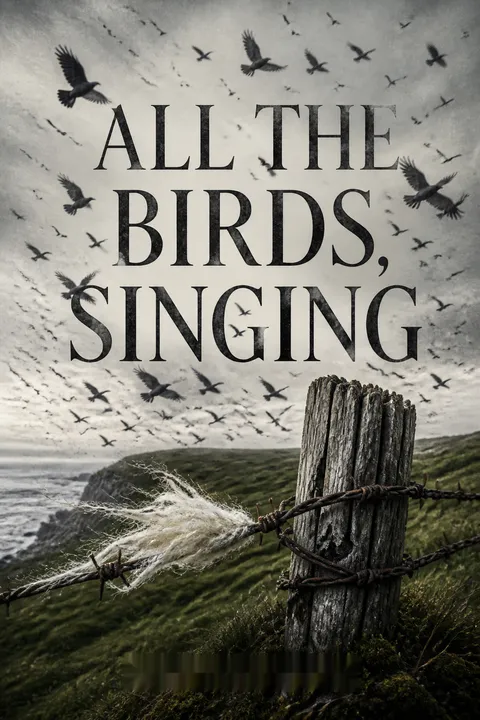
All the Birds, Singing is a dark, atmospheric novel that follows Jake Whyte, a troubled woman living on an isolated sheep farm. The story alternates between Jake's present life in England and her mysterious past in Australia, told in reverse chronology. Readers praised Wyld's lyrical prose, tense atmosphere, and complex character development. While some found the narrative structure confusing and the ending unsatisfying, many appreciated the book's exploration of trauma, isolation, and resilience. Critics noted its unique blend of literary fiction and thriller elements.
People Also Read






Characters
Jake Whyte
Shearer on the runJake is a tall, physically capable sheep farmer who uses a masculine name and resists the roles others try to impose on her. She is observant, guarded, and often more comfortable tending animals than explaining herself to people. Her past has taught her to read danger quickly and leave before others can decide her fate, but that vigilance also makes intimacy difficult. Jake wants work that gives her independence and relationships that do not require her to perform gratitude or softness. Her humor can be abrasive, and her self-reliance sometimes becomes a refusal of help. The story follows her attempt to make a home without surrendering the freedom she has fought to keep.
Otto
The station's keeperOtto is an older sheep farmer who meets Jake while she is doing sex work and offers her a place at his remote station. He presents himself as lonely, practical, and paternal, with a fondness for television, routine, and telling stories about his past. His farm reflects both his self-sufficiency and his isolation. Otto wants company and help, but his desire to define the relationship on his terms gives his kindness an unsettling edge. He is an important early test of Jake’s ability to distinguish shelter from safety, and of the ways care can become possessive when one person controls the other’s access to the world.
Lloyd
Grieving, stranded travelerLloyd is a middle-aged traveler from England who reaches Jake’s island carrying the ashes of someone he loved. He is physically awkward, prone to drinking, and often out of his depth around sheep, dogs, and farm work. His grief is direct but not neatly organized; he keeps trying to complete a ritual that no longer seems to help. Lloyd’s willingness to be foolish, accept correction, and remain present makes him a rare kind of companion for Jake. He does not always believe what she sees, yet he stays when she is frightened. Their relationship develops through shared tasks and silences rather than declarations.
Dog
Watchful farm companionJake’s dog is a loyal, sharp-eared presence on the island. He reacts to disturbances before Jake can explain them, protects her space, and gives her a daily companion who requires no account of her past. His instincts are not infallible, and his sometimes rough behavior reminds Jake that affection does not erase an animal’s own nature. Dog anchors her routines and becomes a point of contact between Jake and Lloyd.
Karen
Roadside confidanteKaren is Jake’s friend and roommate during their years in sex work in Port Hedland. Funny, theatrical, and fiercely alert to the dangers around them, she imagines a life beyond the town even when neither woman has an easy route out. She offers Jake practical warmth, shares cigarettes, and helps her manage frightening memories. Karen’s confidence can be a shield against fear, but her friendship gives Jake an experience of closeness that is not bought or demanded.
Greg
Gentle shearing partnerGreg is a skilled shearer on Alan’s crew and becomes Jake’s closest relationship during her time in the Australian shearing sheds. He is affectionate, physically confident, and at ease with Jake’s strength. Their companionship grows through jokes, work, and private moments rather than formal promises. Greg’s loyalty to his crew and his limited understanding of Jake’s urgency reveal the difference between caring for someone and fully grasping what they fear.
Clare
Jealous crew bullyClare is a shearer on Alan’s crew, a loud joker whose roughness often finds its target in younger or less powerful workers. He is close to Greg and resents Jake’s place in the group. Clare’s humor helps maintain the crew’s masculine pecking order, but his insecurity makes that performance unstable. He matters because he understands how to turn private information into leverage.
Alan
Pragmatic station bossAlan runs the shearing crew that gives Jake work after her flight across Australia. He is blunt, practical, and more attentive to skill than convention, though he still manages the crew through its established hierarchies. His response to workplace injury shows a sense of responsibility that extends beyond the day’s quota. Alan offers Jake a chance to prove herself through labor, not a promise that the crew will always understand her.
Bean, or Arthur
Young roustaboutBean, whose given name is Arthur, is a young worker on Alan’s crew who hopes to study agriculture. He is inexperienced, eager to impress, and an easy target for the older shearers’ teasing. Jake recognizes the vulnerability beneath his bluster and helps him learn the work. His presence shows how a workplace can both train and exploit the young people who depend on it.
Don Murphy
Neighbor and reluctant allyDon is Jake’s older neighbor, a seasoned farmer who sold her the cottage and knows the island’s people and practical demands. He speaks bluntly, takes an interest in Jake’s isolation, and repeatedly nudges her toward accepting help. His memories of his wife and son complicate his gruff manner, revealing a man who recognizes that good intentions do not guarantee good parenting. Don is both a source of local knowledge and a reminder that community can be useful even when it is intrusive.
Samson
Don's troubled sonSamson is Don’s adult son, whose difficult history and uneven grasp of the present make other islanders wary of him. He has been associated with fires and carries a reputation for telling improbable stories. Beneath his unsettling behavior is a need for connection, especially with his father. Jake’s encounters with Samson force her to distinguish disturbing conduct from proof of guilt.
Marcie
Restless island teenagerMarcie is the farm-shop owner’s daughter, a teenager who drinks, smokes, and wants to leave the island for a larger city. She is guarded around adults but candid about the town’s gossip and its young people. Her stories connect local rumors to Jake’s fear of something moving through the woods. Marcie’s impatience with the island reflects Jake’s own former desire to escape, though the two are separated by age and circumstance.
Denver Cobby
The popular older boyDenver is an older boy Jake admires during adolescence. He is confident, socially magnetic, and accustomed to being watched with interest. His attention makes Jake feel newly visible, while his ambitions and loyalties remain difficult for her to read. Through Denver, the novel explores the vulnerability of first desire and the danger of mistaking proximity for mutual understanding.
Flora Carter
Kind schoolmateFlora is a schoolmate who intervenes when Jake is being bullied. Her straightforward kindness makes her memorable to Jake and shapes the way Jake interprets the people around her. Flora belongs to a family whose social position and expectations influence the young people’s choices. She is a figure of generosity in Jake’s adolescence, though Jake’s understanding of her life is incomplete.
Iris
Jake's sharp older sisterIris is Jake’s older sister, quick-tongued and practical, with little patience for evasions. Their phone calls reveal the distance between Jake and the family she left behind. Iris is a link to home, but not an uncomplicated source of comfort.
Jake's mother
Anxious family centerJake’s mother keeps a noisy household moving and worries about her children in ways that can feel both loving and overwhelming. Her calls and silences connect Jake to the family life she has left behind.
Jake's father
Distant, complicated parentJake’s father is a practical, emotionally difficult presence in her childhood memories. He teaches her to shoot and shares occasional moments of closeness, but family tensions keep those memories unsettled.
Plot Devices
Alternating timelines
Memory interrupts the presentThe novel moves between Jake’s isolated life on an English island and episodes from her earlier years in Australia. Each strand changes how the other is understood: present-day fear gains a history, while memories acquire new meaning as Jake forms relationships in the present. The sequence is not a simple confession from past to present. Information arrives in fragments, shaped by what Jake can bear to remember and what current events stir up. The structure makes the reader perform the same uncertain work Jake does, connecting violence, flight, and care without assuming that every answer will be complete.
Animal wounds
Threat enters through the flockThe mutilated and missing sheep make the island’s danger measurable. Jake has to respond as a farmer before she can decide what the attacks mean: inspect bodies, count the flock, protect lambs, and judge whether a fox, a person, or something unknown is responsible. Animals also recall Jake’s earlier life, when Otto’s station made sheep both her work and witnesses to his violence. Their vulnerability exposes Jake’s own fear of failing those who depend on her. The flock is not only a mystery clue but a daily obligation that keeps the story grounded in practical consequences.
Scars and the body
The past remains visibleJake’s scars connect her present physical strength to violence she cannot simply outwork. She hides them from strangers, and their discovery changes how others understand her while also forcing her to decide what she will disclose. Her body is alternately a source of competence, as she shears and handles sheep, and a surface on which other people try to claim authority. The scars make memory tangible without making it fully legible: they testify that something happened, but do not tell the story on their own. Their meaning depends on Jake’s difficult choices about when, and whether, to speak.
Birdsong and animal signs
Nature carries uncertain messagesBird calls, tracks, animal behavior, and sudden silences repeatedly shape Jake’s attention. She reads the land through the habits of a farmer, yet those signs never provide perfect certainty. Dog’s reactions alert her to disturbance; birdsong recalls home and traumatic memories; the movement of foxes and sheep forces practical decisions. The same natural world can be ordinary habitat, a source of beauty, or the setting for a threat Jake cannot name. These details keep the novel’s uncanny events tied to sensory observation while leaving room for doubt about what the characters truly see.
The unnamed predator
Mystery resists easy proofStories of a large animal, unexplained sheep deaths, and Jake’s glimpses of a shape in the woods create a mystery that never settles into a clean explanation. Samson has his own account, Marcie repeats it, and Jake’s senses are compromised by fear and injury. Yet the flock’s losses have real consequences regardless of whether the creature is supernatural, a known animal, or a product of incomplete perception. The unresolved predator gives Jake and Lloyd a shared problem without turning their bond into a conventional investigation. Its uncertainty is part of the ending, not a clue the novel promises to decode.
Download PDF
Download EPUB
.epub digital book format is ideal for reading ebooks on phones, tablets, and e-readers.








