

Key Takeaways
Give daughters trust and room, or protection can become the danger
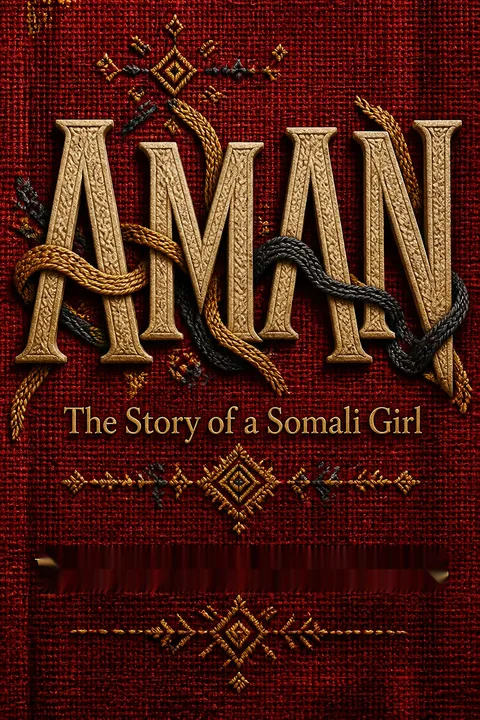
A family story first. Aman begins with her grandmother, a survivor of tribal warfare who fled with six other girls after their family was killed and their animals seized. Her mother’s story follows: married young, divorced repeatedly, and determined to preserve her own household. Aman herself was born on the move, while her family searched for water and pasture.
One girl's testimony. The memoir carries that family history into the 1950s and 1960s, as Somalia changes through colonial rule, independence, urban growth, and, finally, military takeover. Aman’s central struggle is to find safety and choice without losing the ties she loves. Her experience is personal, not a portrait of every Somali girl, but it reveals how protection can slide into control.
What's striking is how the story makes a large political argument through ordinary household decisions. A family’s rules about marriage, work, and reputation are not abstract customs to Aman. They determine where she sleeps, whether she can earn money, and who can claim authority over her. This is one strength of life history: it shows how public change reaches people through intimate relationships. The account also invites caution. One vivid life can challenge a stereotype, but it cannot stand in for every Somali woman or every Somali household.
Kinship can shelter a runaway and police her at the same time
Father defines belonging. In Aman’s community, descent and political identity are traced through the father. A person’s lineage can offer protection, connections, and a way to locate relatives. The same ties create obligations and give male relatives power over women’s choices. The system also includes a negotiated form of group compensation called diya: members of a kin group share responsibility for paying for serious injury or death.
Family has contradictions. Aman recounts a story about two brothers whose descendants split after one was cast out for disobeying his father. The rejected group, the Midgaans, became socially marginalized, though Aman insists they remain fellow Somalis. Her grandmother’s lesson is that people become “low” through social systems, not because they deserve it. Meanwhile, maternal relatives often shelter Aman when paternal relatives pursue her.
Kinship here works like both a safety net and a governing institution. Social-network research often distinguishes the support a network provides from the conformity it demands; Aman’s relatives make that tension unusually visible. A cousin can offer food or a hiding place, while another relative can help enforce a marriage. The system should not be reduced to a single story of oppression or solidarity. Its practical effects depend on which relationship is activated, who controls resources, and whether the person seeking help can refuse the obligations attached to it.
Learn from Aman's mother: keep resources and decisions within reach
Her mother sets terms. After losing her father and brother, Aman’s mother refuses to merge her animals and property with a husband’s or move away from her sick mother and children. She sells produce, bread, and milk to support the household, adjusting her business when one source of income fails. Her determination is not abstract independence. It is the ability to keep food, family care, and decisions under her own roof.
Grief has its own language. After her mother’s death and years of losses, Aman’s mother is diagnosed with zar possession, a spirit-related illness treated through a ritual involving prayer, incense, music, and sacrifice. The ceremony calms her. Then, after roughly twenty-five years apart, her brother, lost during wartime, is identified by family scars and reunited with her. These bonds, not marriage alone, shape her security.
Aman’s mother models a form of agency grounded in control over assets and relationships. In economics, bargaining power often depends less on confidence than on a person’s credible alternatives: the ability to leave, earn, or support dependents. Her animals, inherited property, and relatives give her some alternatives, though many women lacked the same resources. The zar episode also shows why distress cannot always be understood through an individual medical lens alone. A communal ritual can offer recognition and care, even when its explanation of illness differs from clinical accounts.
A ritual can make obedience feel like pride before a child can consent
Belonging shapes the body. At nine, Aman is circumcised in a ceremony arranged by her aunts despite her mother’s objection. The procedure includes excision and infibulation, meaning tissue is removed and the vaginal opening is stitched nearly closed. The celebration frames the operation as family honor, and Aman tries to appear brave because she wants people to be proud of her. She also describes intense pain, fear, and a difficult recovery.
The rules continue afterward. Girls are taught that this bodily seal proves virginity and protects family reputation. Adults inspect whether the opening is small enough, and Aman later faces further cutting to permit intercourse. The memoir shows how a practice can be reinforced by status, marriage expectations, and peer pressure, even when it harms girls. Aman’s pride and distress coexist; neither cancels the other.
The episode shows social norms working through more than direct force. A child is promised praise, surrounded by celebration, and warned that refusal would bring shame. Developmental psychology helps explain why approval from family and peers can carry enormous weight before a child has the power to assess long-term consequences. Cultural sensitivity matters, but it does not require treating physical harm as harmless. The book’s own account makes room for both realities: the practice has social meaning for participants, and the girl undergoing it bears the pain and risk.
A forbidden romance exposed how race and respectability policed Aman
Love crosses a boundary. Around twelve, Aman falls for Antony, a white teenager whose family is Italian. Their relationship consists largely of secret meetings and conversation, but both families and the town treat it as a threat. His father is racist; Somali relatives fear damage to family reputation. Children and adults insult and stone the couple, and Aman’s relatives beat her and try to keep them apart.
Violence makes the boundary plain. After repeated assaults, Antony is sent to Europe. A Somali family friend, Khamisi, is killed while accompanying him to safety. Aman is left with grief and blame. Her story captures more than a romance blocked by prejudice: colonial racial hierarchy and local rules about marriage and lineage both shape who is allowed to love whom, and at what cost.
Aman’s relationship with Antony makes competing racial orders visible. His father’s contempt echoes colonial hierarchy, while Somali relatives defend their own boundaries around kinship and marriage. Those systems are not equivalent in power, but they converge on the young couple. Interracial love can expose the rules a society takes for granted, yet it should not be romanticized as a simple escape from tradition. In this story, affection offers a glimpse of mutual recognition, while the surrounding adults and institutions make that recognition dangerous.
Marriage without consent turns family protection into a locked door
A bargain becomes a trap. At thirteen, Aman agrees to marry a wealthy man in his mid-fifties, hoping the money will help her family and give her a way out. She hides the marriage from relatives, but her father’s family validates it after she returns. She repeatedly runs away. When her husband tries to force intercourse, she fears injury and escapes; a judge then classifies her as nashuusha, a woman left neither fully married nor divorced and barred from marrying someone else.
Choice is not a single moment. Aman did agree to the initial marriage, but that decision did not make her a consenting adult or erase her later refusals. Her relatives’ concern for her safety becomes coercive when they return her to a man she fears. The memoir follows her attempts to secure a divorce and regain control over where she lives.
This story resists a common mistake: treating one decision as permanent consent to everything that follows. Aman’s initial agreement was shaped by poverty, age, and the belief that marriage might secure her family. Her repeated refusals show that consent must remain meaningful over time. The judge’s category also illustrates how legal systems can trap people in rigid statuses rather than resolve the harm they report. A protective family role is valuable only when the person being protected has a real voice in the outcome.
Being branded sharmuuto made survival itself look like proof of guilt
A label sticks. Sharmuuto is a derogatory label Aman says people apply to women they regard as sexually disreputable, including girls who are simply out alone or working outside the home. In Mango Village, Aman is insulted for going to movies, working for white families, and seeing Antony. The same word follows her in Mogadishu, where she is a runaway trying to find food, shelter, and safety.
Reputation has consequences. Aman’s family fears that gossip will damage its name; employers and relatives restrict her choices, while police sometimes treat young women in public as criminals. Even after sexual assault, Aman feels shame and fears being judged rather than helped. The memoir shows how a label can erase distinctions between rebellion, poverty, work, and violence done to a woman.
Stigma is not merely an insult here. It acts as an informal system of surveillance, shaping who can work, travel, ask for help, or return home without humiliation. Sociologists describe stigma as a mark that changes how others interpret a person’s actions; Aman shows that process at street level. Once the label is attached, even ordinary conduct can be read as evidence against her. The important nuance is that reputational rules may help communities coordinate expectations, but they become unjust when they make a vulnerable person less credible than the rumor about her.
Treat survival bargains as constrained choices, not evidence of consent
Money buys options, not freedom. With little schooling and few acceptable jobs for unmarried girls, Aman turns to men for food, gifts, and cash. Some relationships involve affection or a negotiated exchange; others are dangerous. Nuur, a man she trusts, rapes her while friends fail to intervene. Aman is left injured and ashamed, then tries to make him take responsibility. She later accepts support from Carlo, a European shop owner who provides money and a home without forcing her, as she describes it.
The motive is security. Aman sends money and gifts to her mother and wants a stable place to live. Her choices are real, but narrow, shaped by age, poverty, gender rules, and the absence of dependable work. The account distinguishes sexual violence from the exchanges she enters to survive; both occur within a system that leaves her few safe routes.
A useful ethical distinction emerges between constrained bargaining and assault. Poverty can narrow a person’s choices without making every choice meaningless, while coercion remains coercion even if the victim has previously accepted help or affection. Contemporary discussions of agency sometimes flatten this complexity into either total victimhood or complete freedom. Aman’s story supports neither extreme. It asks readers to examine the conditions around a decision, including age, safety, money, and the ability to say no without losing shelter or food.
A coup can turn private instability into a border-crossing emergency
Politics enters the home. In 1969, after Somalia’s president is assassinated and Parliament fails to settle on a successor, the military seizes power. Soldiers impose curfews, arrest people connected to the former government, and expel foreigners. Paul, Aman’s husband, is ordered to leave. Aman is pregnant and has a young son, but officials repeatedly deny her a passport and accuse her of wanting to leave for immoral reasons.
Escape has a price. With her son left in her mother’s care, Aman travels toward Kenya with another pregnant woman. The journey means muddy roads, bribery, harassment, and dangerous border crossings. In Kenya, their lack of papers makes them vulnerable to officials and intermediaries who exploit their need to pass. Aman eventually reaches Tanzania. Political upheaval turns an already precarious family life into a decision about survival across borders.
The coup shows how state power can make private solutions impossible. A couple’s marriage, a mother’s travel plans, and a child’s safety suddenly depend on passports, curfews, and officials who can refuse or extort. Research on forced migration often emphasizes this administrative dimension: displacement is not only flight from violence, but also the loss of legal recognition and ordinary mobility. Aman’s account is one person’s view of a national rupture, not a comprehensive political history, yet its domestic detail makes the consequences unusually tangible.
After exile, turn survival skills into a livelihood that restores choice
Trade becomes a new beginning. In Tanzania, Aman marries a Somali truck driver who shares her determination to build a life outside conventional roles. She starts trading spices across the region, then buys used cars in Zambia to sell in Dar es Salaam. Her husband’s transport business grows, and she continues sending money to her family in Somalia. This work turns her quick judgment and willingness to travel into income she controls.
Care remains the destination. After years apart, Aman returns to see her son, now living with her mother, and finds him safe. She pays for her mother to make the pilgrimage to Mecca. The ending does not erase what happened or restore the country she left. Aman’s hope is specific: girls should be able to stay in school and receive enough trust and freedom that escape is not their only route to adulthood.
The ending connects economic agency with care across borders. Aman does not define success as leaving family behind; she uses income to support her mother and recover a relationship with her son. That pattern challenges the idea that independence requires detachment. At the same time, her eventual business success should not be mistaken for proof that the earlier constraints were manageable or fair. Her route depended on migration, supportive relationships, and opportunity. The closing appeal is therefore practical: give girls education and room to act before crisis becomes their only teacher.
Analysis
Aman is best read as intimate political history. The narrative begins with her grandmother’s displacement and follows a family through pastoral life, colonial rule, independence, urban change, and the 1969 coup. Large systems become legible through household questions: who owns the animals, who can choose a spouse, and who will protect a girl who runs away? The memoir’s most revealing contradiction is that kinship supplies both refuge and enforcement. Patrilineal identity can locate allies and distribute responsibility, while the same obligations let relatives control a woman’s movement and reputation. Maternal ties and women’s economic work create openings, but neither dissolves that structure.
The book’s account of agency is similarly unsentimental. Aman lies, bargains, works, flees, returns, and asks for help. These actions show intelligence and resolve, but they do not make her circumstances free. Her choices are shaped by age, poverty, stigma, sexual violence, and the availability of trustworthy people. Reading her as either simply rebellious or simply victimized would flatten the narrative’s central insight: agency can be real even when its options are brutally narrow.
The text also has a distinctive form. Aman’s words were recorded and transcribed by anthropologist Virginia Lee Barnes, then edited and supplemented after Barnes’s death; Aman later reviewed and approved the manuscript. It is therefore a collaborative oral autobiography, not an unmediated transcript. That process matters because the narrative’s vivid voice sits beside editorial chronology and an anthropological afterword. The afterword offers valuable context on descent, marriage, and colonial history, while Aman’s testimony shows how those categories feel in daily life. The foreword rightly cautions that one life cannot represent all Somali girls. Its value is different: it makes the human stakes of social rules difficult to dismiss, while preserving the tension between cultural belonging and a young woman’s claim to choose.
Review Summary
Aman receives mixed reviews, with ratings ranging from 1 to 5 stars. Readers appreciate the insight into Somali culture and the protagonist's candid storytelling. However, many struggle with Aman's choices and her defense of female genital mutilation. Some find the narrative engaging and educational, while others criticize the writing style and abrupt ending. The book sparks discussions about cultural practices, women's roles, and survival in challenging circumstances. Despite its flaws, many readers find value in Aman's unique perspective on Somali life.
People Also Read







Glossary
sahan
search for waterAman uses sahan for the search for water and pasture that moves pastoral families across the countryside. Because rain and grazing are uneven, families travel with their animals to find places where both can survive. The search shapes daily life, housing, work, and even the circumstances of Aman’s birth.
daash
household courtyardA daash is the courtyard space within a household compound. Aman describes it as a place for cooking, storing water, sitting with visitors, and carrying out daily activities. The surrounding homes may open onto it, making it a practical shared living area rather than simply an outdoor passage.
diya
shared injury compensationDiya is compensation paid when someone causes serious injury or death. In the Somali system described in the book, a group of related lineages shares responsibility for paying or receiving it, often in livestock. The arrangement can settle disputes between groups and sets agreed values for different kinds of harm.
infibulation
genital excision and closureInfibulation is the form of female genital cutting Aman describes in her community. Tissue is removed from the external genitals, and the remaining tissue is stitched so that the vaginal opening is left very small. The book explains how the procedure is tied to ideas about virginity and family honor, while recounting the pain and risks girls experience.
zar
spirit-related illness and ritualZar refers to a spirit believed to cause or worsen illness. In the account, a ritual led by a zar practitioner uses incense, prayer-like recitation, music, dancing, and sacrifice. The afterword describes the ceremony as a way for a woman and spirit to communicate and negotiate, and as a culturally recognized response to distress.
nashuusha
neither wife nor divorcedNashuusha is the status assigned to Aman by a judge after she refuses to return to her husband. She is treated as neither fully married nor divorced, and cannot marry another man. The label carries severe social stigma, leaving her in a precarious position without granting the freedom of a formal divorce.
sharmuuto
derogatory sexual labelSharmuuto is a derogatory label Aman says people use for women they judge to be sexually disreputable. In her experience, the label is applied not only to women who sell sex, but also to girls who go out alone, work, or cross accepted social boundaries. It damages reputation and can invite exclusion or abuse.
mahr
marital gift owed to wifeMahr is a gift specified in the marriage contract for the wife’s personal use, including in the event of divorce. Aman explains that it can be money, livestock, jewelry, or another agreed asset. It is distinct from other marriage payments, and a woman seeking divorce may have to give up her right to it.
sunna
less extensive genital cuttingSunna is the term Aman uses for a less extensive form of female genital cutting. She describes it as a small cut or pinprick that does not involve the excision and stitching used in infibulation. The book notes disagreement over whether this practice is religiously required, and records calls within Somali communities for it to replace infibulation.
Download PDF
Download EPUB
.epub digital book format is ideal for reading ebooks on phones, tablets, and e-readers.








