

Key Takeaways
Read Israel beside its neighbors, but test function before alleging borrowing.
Comparison needs balance. John H. Walton argues that the Old Testament becomes clearer when read within the shared cultural world of ancient Egypt, Mesopotamia, Canaan, and Israel. A resemblance between texts does not, by itself, prove that one borrowed from another. Similar ideas may reflect a common setting; claims of literary borrowing need evidence of contact and transmission. Comparisons should first establish what each text meant in its own setting, then examine both likenesses and differences.
Context beats parallel hunting. The Babel story offers an example: the phrase describing a tower reaching heaven fits familiar descriptions of Mesopotamian ziggurats, which were built as a route for a god to descend, not for people to climb into heaven. This background changes the likely meaning of the story without proving that Genesis copied a particular text.
What's valuable here is the refusal to treat similarity as a verdict. Comparative reading works more like translation: it supplies meanings an ancient audience could take for granted, while preserving the possibility that a biblical author reshaped those meanings. That distinction is useful well beyond biblical study, since cultural echoes can arise without direct borrowing. The method still depends on uncertain reconstructions of ancient beliefs, so conclusions should be held in proportion to the evidence. Walton's strongest safeguard is procedural: understand each source in context before making the comparison.
Treat creation as the ordering of a working cosmos, not automatically its material manufacture.
Existence meant function. Walton’s term “function-oriented ontology” describes an ancient outlook in which something counts as established when it is distinguished, named, and assigned a role. This differs from a modern emphasis on physical substance and material origins. Across the ancient sources surveyed, creation accounts often describe how the world is organized and made operational, rather than how its matter was produced.
Genesis fits this ancient frame. Walton reads Genesis 1 as establishing key functions: time, weather, and the conditions for growth, followed by the inhabitants and functionaries of those realms. He argues that the Hebrew verb bara’ does not, by itself, mean that matter was manufactured from nothing. This is an interpretive proposal, not a claim that the text settles every later theological question about the origin of matter.
This reading usefully separates a text's own questions from questions later readers bring to it. A creation account can make claims about order, purpose, and human life without functioning as a technical account of physical origins. The model also helps explain why naming and assigning roles matter so much in these texts. Its reach should not be overstated, though: showing that a word often has functional uses does not prove that it excludes material creation in every context. The distinction is a strong interpretive lens, not a shortcut to consensus.
Compare Israel's rituals with its neighbors, then notice who needs whom.
Shared practices, different claims. Israel’s neighbors treated religious life as inseparable from ordinary life. Temples, sacrifices, priests, and rituals helped maintain a stable relationship between people and gods. In many surrounding traditions, the deity’s image represented divine presence, and people cared for the image with food, clothing, and daily service. Ritual performance mattered more than subscribing to a defined set of beliefs.
Yahweh changes the relationship. Walton emphasizes that biblical Israel shared many outward practices with its neighbors, but its stated theology denied that Yahweh needed human care or an image to mediate his presence. Israel’s obligations were framed by covenant, not by an effort to feed or appease a needy god. In practice, however, Israel’s state religion and household religion often diverged, and the biblical writers repeatedly condemn worship of other deities.
The comparison avoids a common mistake: assuming that similar rituals must express identical theology. An action such as sacrifice can be shared while its meaning changes with the relationship it represents. The distinction between state and household practice also explains why official religious ideals cannot be treated as a full portrait of what every family did. One caution is that the evidence is uneven: temples and palaces left more records than ordinary homes. The result is a persuasive account of official ideals, alongside a less complete picture of everyday belief.
Read Eden and Babel as temple stories, not just geography.
A temple modeled the cosmos. In ancient Near Eastern thought, the temple was a god’s residence and a symbolic center of cosmic order. The deity’s “rest” there meant more than sleep: it signaled stability and continuing rule. A ziggurat, the stepped structure beside a Mesopotamian temple, represented a route between divine and human realms. This background makes the Babel tower’s function legible as a divine access point, not a human ladder to heaven.
Eden carries sanctuary imagery. Walton reads the garden as sacred space associated with God’s presence, life-giving water, and human service. He argues that Genesis 1 also resembles a temple dedication: the world is ordered, its functions and inhabitants are set in place, and God rests as sovereign. These readings connect creation, temple, and human vocation, though they are interpretations of the text rather than explicit architectural blueprints.
The temple lens links ideas that can otherwise seem scattered: creation, sacred space, divine presence, and human responsibility. It also corrects a modern assumption that a temple is mainly a building where worshippers gather. In this model, the structure represents a larger claim about how order is sustained. The risk is that symbolic interpretation can become too comprehensive, making every garden or river a temple reference. The reading is most compelling where several clues converge, as Walton argues they do in Eden and in the creation account.
Ancient histories interpret outcomes; they rarely aim at neutral event logs.
History served a purpose. Ancient writers did not share the modern ideal of reconstructing events through eyewitness detail alone. They often understood events as acts of the gods, then interpreted what those events meant for kings, cities, and communities. Royal inscriptions commonly promoted the ruler and presented victories as evidence of divine support. Their silences and emphases are part of their purpose, not proof that they were meant to be neutral records.
One siege, two perspectives. Sennacherib’s inscription describes Hezekiah as trapped in Jerusalem and records tribute, but does not say how the siege ended. The biblical account interprets the episode differently. Walton argues that readers should evaluate ancient accounts by their genre and aims, while recognizing that narrative organizes events into a meaningful story. This does not make ancient history fiction; it means its truth claims need to be understood on their own terms.
This approach makes room for both evidence and interpretation. A royal inscription can preserve useful historical details while also serving the ruler’s reputation, much as a modern institution can publish accurate information in a self-promotional report. The comparison does not erase the difference between evidence-based history and propaganda; it asks what each source is trying to establish. Walton’s caution is especially useful when a text omits inconvenient outcomes. Yet reconstructing an ancient author’s intention is itself an inference, so genre offers guidance rather than certainty.
Israel's covenant, not its king, supplies history's governing plot.
A different center of gravity. Many ancient Near Eastern histories legitimated a king by showing that the gods supported his rule. Israel’s biblical histories also present events as shaped by God, but Walton argues that their central concern is the covenant: the relationship between Yahweh and Israel, including its obligations, consequences, and promises. Kings matter, but their success is assessed within that larger relationship.
Prophecy interprets the record. Israel’s prophets explain events through covenant breaches and call the people back to faithfulness. This differs from many ancient royal prophecies, which chiefly reassure the king of divine support for political or military action. Biblical history is therefore not a secular chronicle, nor simply royal publicity. It presents an interpretation of the past aimed at explaining Israel’s identity and its relationship with God.
The covenant gives biblical history a recurring standard against which both rulers and the people can be judged. That standard makes the unfavorable portrayal of Israel’s kings significant: the narrative is not merely an advertisement for whoever holds power. It also gives historical failure a communal meaning, not just a political one. At the same time, covenant-centered interpretation can shape which events receive attention and how they are connected. Recognizing that shaping does not discredit the account; it clarifies the question the text is designed to answer.
Treat omens as decision aids, not as forecasts with guaranteed outcomes.
Divination managed uncertainty. Mesopotamian specialists interpreted dreams, animal organs, celestial movements, and unusual events as possible messages from the gods. A vast series of celestial omens, known as Enuma Anu Enlil, collected thousands of interpretations. Walton argues that these signs usually did not offer certain predictions. They helped rulers assess risks, justify decisions, or notice dangers, and unfavorable omens could sometimes be countered through ritual.
Israel narrowed the channels. Biblical texts accept that God may speak through prophets and dreams, while rejecting many forms of deductive divination, especially systems that relied on elaborate interpretation of signs. Walton’s reading of Joshua 10 is a striking example: he proposes that the sun and moon language evokes celestial omen terminology, rather than describing a change in astronomy. This proposal is debated, but it illustrates how ancient divination can illuminate a passage’s imagery.
The distinction between prediction and guidance helps make divination intelligible without treating it as either primitive science or empty superstition. The practice could reduce anxiety and authorize a course of action even when it did not provide certainty. This resembles how decision-makers use forecasts today: information influences choices without guaranteeing results. The comparison has limits, since ancient omens were understood as divine communication, not statistical estimates. Walton’s Joshua proposal shows both the payoff and the risk of contextual interpretation: background can unlock unfamiliar language, but a proposed allusion still needs careful testing.
Read Hammurabi's laws as judicial teaching, not a modern statute book.
Collections offered models. Walton follows the view that ancient collections such as Hammurabi’s 282 case decisions were not comprehensive legal codes in the modern sense. They functioned more like teaching materials: examples that illustrated judicial wisdom and how a ruler might administer justice. Actual courts relied on custom, experience, and royal decisions, and surviving court records do not simply cite these collections as binding statutes.
The Torah has another frame. Biblical legal material includes case examples, commands, and instructions, but the Pentateuch places these within a covenant. Walton therefore stresses that their force is not merely legislative: they define expectations for a people bound to Yahweh and contribute to holiness. This does not mean the material has no practical obligations. It means that reading it only as a modern code misses its literary and religious setting.
The distinction between a rulebook and a collection of exemplary judgments changes how legal texts are interpreted. Examples can teach patterns of fairness without functioning as an exhaustive list of rules, a form of instruction still familiar in case-based professions. Walton’s account also keeps the covenant context in view, where obligation arises from a relationship and shared identity. The argument that ancient collections were not legislation remains a scholarly interpretation, not a self-evident fact. Its practical value is clear nonetheless: legal form, social practice, and religious purpose should not be collapsed into one category.
Humanity represents God in the world, rather than supplying divine labor.
Creation assigns a role. In Mesopotamian accounts such as Atrahasis, humans are created to take over exhausting work from the gods. Walton contrasts this with Genesis, where people are made in God’s image and given responsibility within the created order. “Image” here concerns representation and delegated work, not simply physical resemblance. The garden’s food is provided for people, rather than humans existing to feed a deity.
The difference reshapes human worth. Many neighboring traditions associate divine representation especially with the king; Genesis extends the image of God to humanity. Walton reads this as a democratizing claim about human vocation and dignity. The shared ancient language of roles and representation remains, but Genesis assigns the role broadly and directs it toward care for the world and service in sacred space.
The contrast changes the implied answer to a basic question: who benefits from the world’s order? In the Mesopotamian stories Walton surveys, human work sustains divine life; in Genesis, the created order serves human life under God’s authority. Extending divine representation beyond kings also gives ordinary people a status that royal ideology often reserves for a ruler. The idea should not be mistaken for modern individualism: Walton’s account still places humans within communal and cosmic responsibilities. Dignity here comes with a task, not merely a status.
Job rejects appeasement by insisting that integrity matters without reward.
Suffering exposed a dilemma. Mesopotamian sufferers often described illness or disaster as evidence that a god had been offended, even when they could not identify the offense. They might confess broadly and offer gifts to regain favor. Walton sees Job’s friends as voicing a version of this appeasement logic: suffering must mean guilt, so Job should admit wrongdoing and seek restoration.
Job refuses the bargain. Job maintains that he has acted with integrity, even though he cannot explain his suffering. Walton argues that the book challenges the idea that righteousness is simply a way to earn protection and prosperity. Its answer does not provide a neat account of every misfortune. Instead, it presents divine wisdom as larger than the human ability to judge a case from incomplete evidence.
The book’s force comes from refusing two easy explanations: that suffering proves guilt, or that good conduct guarantees a trouble-free life. This makes Job a critique of transactional religion, where devotion functions as insurance. Walton’s comparison with Mesopotamian laments sharpens the contrast without requiring those texts to be caricatures; they, too, record confusion and distress. The harder question is whether appeal to divine wisdom satisfies someone seeking justice. Job does not dissolve that tension, and the unresolved pressure is part of its intellectual honesty.
Ancient afterlife centered on burial and family memory, not moral sorting.
The dead remained connected. In Mesopotamian and Levantine traditions, proper burial and ongoing family offerings helped the dead retain a place in the family community. A monthly remembrance meal could include food and drink for ancestors. Being forgotten or left without burial was feared because it meant isolation, not simply a lower rank in a moral afterlife.
Judgment was not the usual model. Egyptian traditions developed a more elaborate afterlife, including a test of the deceased’s conduct. By contrast, Walton finds no clear biblical teaching that Sheol is a place where the dead are sorted into reward and punishment. Sheol is generally a dim state of death, separated from ordinary life and from praise of God. Israel’s hope for a renewed future on earth, he argues, rests chiefly on the covenant rather than a detailed map of life after death.
This picture makes social belonging central to how ancient people imagined survival. The family’s memory and care mattered because identity was understood through relationships, not only as an inner possession. That perspective helps explain the importance of burial customs and descendants across the ancient world. The evidence is uneven, however, and Walton notes that beliefs differed by culture, period, and social class. A careful summary should therefore resist turning Sheol, Egyptian judgment, and Mesopotamian ancestor rites into a single universal doctrine of the afterlife.
Analysis
Walton’s central contribution is methodological as much as historical: ancient texts should be interpreted within the assumptions their first audiences shared, rather than being forced into modern categories such as science, private religion, or neutral journalism. This approach explains why familiar words and images can carry unfamiliar functions. A ziggurat is not simply a tall building, a legal collection is not automatically a statute book, and a creation narrative need not answer modern questions about physical matter.
The book’s comparative method is most persuasive when it distinguishes surface resemblance from conceptual purpose. Israel shares temples, ritual forms, royal language, and cosmic imagery with neighboring cultures, yet gives these forms a different theological center in Yahweh and the covenant. Difference does not require cultural isolation; continuity does not prove literary dependence. That is a subtle but powerful corrective to both defensive apologetics and reductive claims of borrowing.
Some of Walton’s broadest proposals, especially the function-oriented reading of creation and the temple-dedication interpretation of Genesis 1, are better treated as interpretive models than settled conclusions. They make neglected features visible, but their coherence can also encourage readers to see one organizing pattern everywhere. Ancient evidence is fragmentary, genres have different purposes, and elite written sources cannot fully represent ordinary practice. The book acknowledges these hazards, though its synthesis sometimes speaks more confidently than the archive warrants.
The lasting value is a disciplined shift in questions. Instead of asking only whether a biblical passage resembles another text, ask what each text does in its own world, what its audience assumed, and where Israel revises the shared tradition. That practice produces neither a flattened Bible nor an isolated one. It makes the text more historically intelligible while preserving the distinctive claims it makes about divine authority, human vocation, and covenant identity.
Review Summary
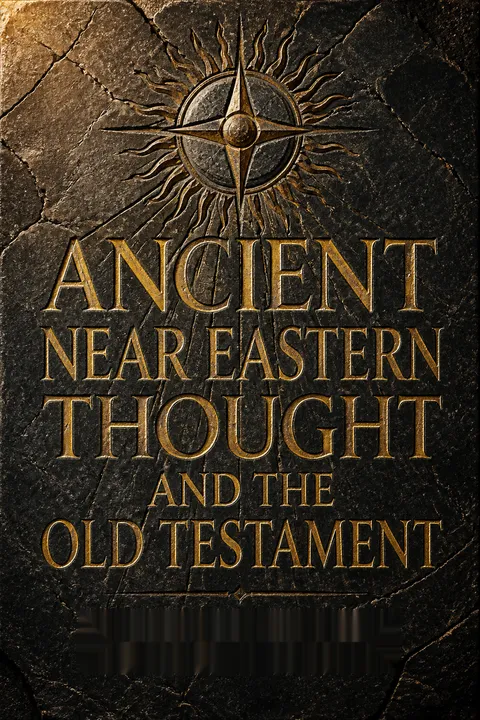
Ancient Near Eastern Thought and the Old Testament provides valuable insight into the cultural context of the Old Testament. Reviewers praise Walton's comprehensive analysis of Ancient Near Eastern (ANE) concepts and their relation to biblical texts. The book illuminates similarities and differences between Israelite and surrounding cultures' worldviews. While some readers find the content dense, many appreciate its contribution to understanding biblical passages in their original context. Critics argue that Walton's approach may overemphasize ANE influence on biblical texts, potentially undermining their uniqueness.
People Also Read


Glossary
cognitive environment
shared cultural assumptionsThe shared ideas, values, conventions, and expectations through which a culture understands language, society, the cosmos, and the divine. Walton uses the term to describe the ancient Near Eastern assumptions Israel shared with neighboring peoples. Recognizing this background can clarify what biblical writers expected their original audiences to understand without explanation.
contextual approach
compare similarities and differencesA method of comparative study associated in the book with W. W. Hallo. It places biblical texts alongside ancient Near Eastern evidence to illuminate their cultural setting, while attending to both similarities and differences. The goal is not to find a source for every biblical idea, but to understand how Israelite literature works within its broader environment.
function-oriented ontology
existence defined by roleWalton’s label for an ancient way of understanding existence chiefly through distinction, naming, and assigned function. In this model, creation can mean establishing something’s role within an ordered world, rather than focusing on the production of its material substance. He uses the concept to interpret ancient creation accounts and, controversially, Genesis 1.
cosmic geography
a culture's world mapA culture’s account of the structure and organization of the world. Walton describes a widely shared ancient Near Eastern picture of earth between the heavens and the netherworld, surrounded by cosmic waters, with the sky holding back waters above. This model shaped how people understood weather, divine activity, and the world described in biblical texts.
control attributes
rules governing cosmic orderWalton’s translation for the Mesopotamian concept ME or parṣu. These are the standing parameters, powers, practices, or norms that make the cosmos function. In his account, Mesopotamian gods administer or maintain these attributes but do not originate them; Walton contrasts this with the biblical portrayal of Yahweh as their source.
destinies
assigned roles and functionsWalton’s translation for the Mesopotamian concept NAM or šīmtu. Destinies assign roles and functions to gods, people, temples, and cities within the ordered cosmos. In Mesopotamian texts, these roles could be decreed or renewed by the gods. Walton uses the term to distinguish assigned functions from the broader rules governing how the world operates.
inspired divination
direct divine communicationA form of divination understood as initiated by the divine realm and conveyed through a human intermediary or a dream. Prophecy and some dreams fall into this category. Ancient Near Eastern oracles often advised kings about ritual, political, or military decisions, while biblical prophecy is presented as closely tied to Yahweh and covenant accountability.
deductive divination
reading signs for guidanceA form of divination in which divine communication is inferred from observable events or phenomena. Mesopotamian examples include examining animal organs, watching celestial movements, and interpreting unusual occurrences. Walton argues that these signs generally guided decisions and expressed risks or divine support, rather than guaranteeing a precise future outcome.
Sitz im Leben
setting within social lifeA scholarly term for the social or cultural setting in which a text, practice, or literary form functions. In comparative study, identifying a parallel is not enough; its role in its own culture must also be understood. The same custom or image may carry different meanings depending on the surrounding practices and institutions.
FAQ
What is Ancient Near Eastern Thought and the Old Testament by John H. Walton about?
- Cultural and historical context: The book explores the conceptual world of the Hebrew Bible by examining the literature, religion, and worldview of the ancient Near East, providing essential background for understanding the Old Testament.
- Comparative methodology: Walton uses comparative studies to highlight both the similarities and differences between Israelite thought and that of its ancient neighbors.
- Integration of disciplines: The work draws on archaeology, ancient texts, and theology to reconstruct the cognitive environment in which the Old Testament was written.
Why should I read Ancient Near Eastern Thought and the Old Testament by John H. Walton?
- Avoids anachronistic interpretation: The book helps readers interpret the Old Testament within its original cultural and linguistic context, preventing modern misreadings.
- Balanced comparative approach: Walton advocates for a nuanced understanding that recognizes both shared and unique elements in Israelite thought.
- Theological insight: Readers gain a deeper appreciation for how ancient Near Eastern concepts shaped, but did not determine, Israelite theology.
What are the key takeaways from Ancient Near Eastern Thought and the Old Testament by John H. Walton?
- Shared cognitive environment: Israelite thought was part of a broader ancient Near Eastern milieu, sharing many assumptions about the world, gods, and society.
- Distinctive Israelite theology: Despite similarities, Israel’s monotheism, covenant, and ethical focus set it apart from its neighbors.
- Importance of context: Understanding the ancient context is crucial for accurate biblical interpretation and theological reflection.
How does John H. Walton use comparative studies in Ancient Near Eastern Thought and the Old Testament?
- Definition and purpose: Comparative studies involve examining ancient Near Eastern texts and practices alongside the Old Testament to illuminate shared worldviews and unique developments.
- Methodological principles: Walton outlines principles for comparison, emphasizing the need to consider both similarities and differences and to avoid simplistic claims of borrowing.
- Interpretive value: Comparative analysis helps fill interpretive gaps and provides culturally informed meanings for biblical texts.
How does Ancient Near Eastern Thought and the Old Testament by John H. Walton describe the concept of deity and its relation to humans?
- Polytheistic context: Ancient Near Eastern peoples believed in multiple gods with human-like traits, often organized in familial pantheons.
- Israelite monotheism: Israel’s understanding of Yahweh is unique—He is transcendent, without origin, and not part of a divine assembly or consort system.
- Relational dynamics: While other cultures sought favor from personal gods, Israel’s relationship with Yahweh emphasized obedience, loyalty, and covenant faithfulness.
What is the ancient Near Eastern and Israelite understanding of cosmic geography according to John H. Walton?
- Three-tiered cosmos: The ancient Near East envisioned the world as a flat earth between heavens above and netherworld below, surrounded by cosmic waters.
- Metaphysical focus: The structure was less important than the roles of gods who inhabited and controlled these realms.
- Israelite adaptation: The Hebrew Bible shares much of this geography but reinterprets it to emphasize Yahweh’s sovereignty over all creation.
How does John H. Walton explain the concept of creation in Ancient Near Eastern Thought and the Old Testament?
- Function over substance: Creation is primarily about assigning roles and functions within an ordered cosmos, not about material origins.
- Hebrew bara’: The biblical verb for “create” focuses on bringing order and function, aligning with ancient Near Eastern functional ontology.
- Temple-cosmos analogy: Genesis 1 is seen as a temple dedication narrative, with God establishing the cosmos as His dwelling and resting place.
What does Ancient Near Eastern Thought and the Old Testament by John H. Walton say about human origins and the nature of humanity?
- Polygenesis vs. monogenesis: Ancient texts often depict collective human origins, while the Bible presents Adam and Eve as archetypes for all humanity.
- Materials of creation: Ancient myths use various materials (clay, blood), but Israel uniquely emphasizes dust and divine breath, highlighting mortality and divine life.
- Archetypal identity: Adam and Eve represent humanity’s connection to earth, each other, and God, focusing on roles and relationships.
How does John H. Walton describe law and justice in the ancient Near East and the Old Testament?
- Model decisions, not codes: Ancient “laws” were collections of exemplary verdicts, not prescriptive legal codes.
- Role of kings and deities: Kings executed justice as divine representatives, with wisdom and tradition guiding decisions rather than abstract law.
- Biblical law as covenant: Israelite law is framed as covenant stipulations from Yahweh, emphasizing sanctification and faithfulness over social control.
What is the significance of wisdom literature in Ancient Near Eastern Thought and the Old Testament by John H. Walton?
- Societal guidance: Wisdom literature provided principles for living and maintaining social order, often overlapping with legal treatises.
- Practical and didactic: These texts offered advice and examples to anticipate and prevent disorder, serving both rulers and citizens.
- Israelite distinctiveness: Biblical wisdom literature grounds its principles in relationship with Yahweh and covenant faithfulness, integrating ethical and theological concerns.
How does John H. Walton address the concepts of afterlife, Sheol, and the cult of the dead in the ancient Near East and Israel?
- Shadowy afterlife: The ancient Near East viewed the afterlife as a gloomy netherworld, with rituals for the dead ensuring their well-being.
- Sheol in Israel: Sheol is a place of darkness and separation from God, not punishment, and is often a metaphor for death.
- Israelite distinctives: Israel rejected necromancy and the cult of the dead, focusing instead on covenant faithfulness and obedience in this life.
What are the key differences between covenant and law as discussed by John H. Walton in Ancient Near Eastern Thought and the Old Testament?
- Covenant as relationship: Covenant creates a community based on relationship, gratitude, and grace, while law is about social order and control.
- Voluntary vs. imposed: Covenant obligations are voluntarily accepted and universally binding; law is imposed by authority and context-dependent.
- Sanctions and norms: Covenant sanctions are unpredictable and divinely enforced, while law sanctions are formal and socially enforced.
About the Author
Other books by John H. Walton
Download PDF
Download EPUB
.epub digital book format is ideal for reading ebooks on phones, tablets, and e-readers.








