


Plot Summary
Prologue
In 1943, angelologists descend into Bulgaria’s Devil’s Throat cavern and find a dead angel, its body untouched by the centuries. They expected a ruin; instead, the pale creature looks almost alive, with brilliant blue eyes and immaculate robes. Their discovery makes the scholarly pursuit suddenly physical: this is not an image in a book but a body that can be examined, and perhaps feared.
The opening makes beauty a source of danger before the main story has named its conflict. The angel’s preserved body seems to promise that scholarship can become certainty, yet its unsettling vitality also resists being reduced to evidence. By showing the discovery before explaining the expedition, the novel places the reader in the same unstable position as the researchers: looking closely, wanting knowledge, and already sensing that contact has a cost.
The Rockefeller Letter
At St. Rose Convent in 1999, twenty-three-year-old Sister Evangeline Cacciatore sorts the correspondence she normally answers without thought. A request from art historian Verlaine asks about a possible 1943 connection between Abigail Rockefeller and the convent’s former abbess, Mother Innocenta.
Evangeline checks the archive, finds a letter from Rockefeller mentioning an expedition in Bulgaria, and burns her routine refusal rather than send it.
The date recalls the convent’s devastating 1944 fire, which killed Mother Innocenta and left the sisters dependent on Rockefeller money for repairs. The letter’s unexplained expedition unsettles Evangeline’s faith in the tidy history she has been taught, so she begins searching records her superiors have forbidden outsiders to see.
Evangeline’s first breach is small in outward form but decisive in psychological terms. She does not yet reject the convent or her vows; she chooses evidence over procedure, and that choice exposes how much of her obedient identity depends on not asking certain questions. The archive functions as both memory and institutional gatekeeping. Rockefeller’s letter links private wealth, religious preservation, and an unexplained expedition, turning a seemingly harmless historical inquiry into a challenge to the convent’s self-understanding. Evangeline’s curiosity is also personal: the past she investigates has been kept near her family but withheld from her.
Plans Beneath the Snow
In New York, Percival Grigori hires Verlaine to investigate Rockefeller’s connection to St. Rose. Verlaine, a struggling art historian, finds original convent plans in a county archive and brings them to Percival, who dismisses the drawings but sends him north with cash to get answers.
At St. Rose, Verlaine notices the buildings do not match the plans and slips into the convent through a basement entrance. Evangeline catches him in the library.
When he shows her the plans, she recognizes the lyre seal at the chapel altar as identical to the pendant inherited from her mother. She shares Rockefeller’s letter with him. Their first exchange joins two separate investigations, while Evangeline’s choice to help him deepens her breach of convent rules.
The matching lyre turns an archival puzzle into an inheritance problem. Verlaine approaches the past as an art historian, attentive to provenance and visual detail; Evangeline approaches it as a custodian who has unknowingly worn one of its signs. The pendant makes abstract history intimate without explaining it. Their meeting also introduces a productive contrast in how they know things: Verlaine tests documents against buildings, while Evangeline recognizes a pattern through memory and material attachment. Neither has enough knowledge alone, which makes collaboration both necessary and dangerous.
A Stranded Researcher
After Verlaine leaves the convent, two men sent by Percival break into his car, smash its windows, and steal his research. He escapes through the snowy grounds, cuts his hand on barbed wire, and reaches Milton by hitching a ride with a truck driver. At a local bar, he studies his copy of Rockefeller’s letter and realizes that Celestine Clochette, named in it, may still be alive at St. Rose.
Evangeline, worried by the day’s revelations and unable to call from the convent, drives into town and finds him there. She learns that Grigori has tried to silence him and agrees to look for more letters. Their uneasy alliance now has a practical urgency: someone is willing to use violence to control what the documents reveal.
Verlaine’s professional curiosity becomes bodily vulnerability. The destroyed car and stolen files strip away the reassuring protections of academic work, making clear that the archive is not neutral ground. His survival depends on improvisation, while Evangeline’s decision to find him shows that curiosity has become responsibility. The bar provides a temporary shelter, not safety: it is where the two recognize that the research has consequences beyond careers. The scene also changes their relationship from accidental contact to mutual reliance, though neither yet understands the scale of the threat.
Celestine’s Hidden Past
Evangeline visits Sister Celestine Clochette, an ailing French nun who remembers arriving at St. Rose with Rockefeller’s help in 1944. Celestine explains that she once belonged to an organization of angelologists, scholars who investigate the Nephilim, descendants of angels and human women.
During the war, she carried a case from Europe containing the product of an expedition to the Rhodope Mountains. She also recognizes Evangeline’s pendant as a sign of her family’s connection to the work.
Celestine’s account recalls Evangeline’s childhood memory of following her father into a warehouse, where he examined winged beings held in cages. The revelation links her father’s secrecy, her mother’s death, and the convent’s guarded archives to a hidden conflict.
Celestine’s testimony makes the supernatural credible through accumulated particulars: a wartime journey, a guarded case, a child’s remembered warehouse, and a pendant whose origin was sentimental rather than understood. Evangeline’s early experience was not fantasy, but her father deliberately left it unprocessed. This creates a familiar psychological divide between perception and permissible belief. The convent’s piety and the angelologists’ empirical methods are not opposites here; both preserve fragments of the same reality, while each has its own silences. Celestine’s frailty makes disclosure feel urgent, as though the past is being handed over before the body can no longer carry it.
Paris Before the War
Celestine’s memories take the story back to 1939, when she studies angelology in Paris beside Gabriella Lévi-Franche, a brilliant, wealthy classmate who is both her closest companion and her academic rival.
As the German invasion threatens their school, their teachers, Seraphina and Raphael Valko, recruit them to organize research for a new expedition. Celestine discovers that Gabriella is involved with a mysterious older man and later sees Raphael comforting her, misreading the intimacy as an affair between student and teacher.
The Valkos send Celestine to analyze geological records while Gabriella studies myth and history. Gabriella’s absences and self-inflicted burns unsettle Celestine, but her need to earn a place among the scholars keeps her focused on the work.
Celestine’s account complicates the polished authority of the academic world. Its institutions claim merit and disciplined inquiry, yet access is shaped by family standing, secrecy, and personal loyalties. Celestine’s jealousy is not mere pettiness: it registers her fear that talent may not be enough to secure belonging. Gabriella’s self-harm and evasions signal distress that Celestine cannot interpret because she views their lives through competition. The looming war makes private uncertainty consequential, since their research is not detached from political violence but is being reorganized under its pressure.
The Lyre’s First Expedition
By comparing the original transcription of a tenth-century expedition with early Bulgarian place-names, Celestine corrects the Valkos’ mistaken search area and identifies the Devil’s Throat cavern. In 1943 she joins Seraphina and other scholars on a winter expedition.
They descend into the gorge, find the angel’s ancient body, and search for the lyre. Celestine crosses the subterranean river alone, discovers the instrument, and hears its music, which draws her toward the imprisoned Watchers. The angels’ force burns her, but Seraphina retrieves her and the lyre.
Back in Paris, the council debates trading the treasure for captured colleagues. Celestine’s vote helps determine the decision, while Gabriella carries a replica to Percival and hides the genuine instrument for Celestine’s escape to America.
The expedition converts scholarship into an ordeal in which knowledge cannot guarantee control. Celestine’s linguistic correction succeeds because she attends to the cultural context the senior scholars overlook, yet her discovery exposes her to a force that overwhelms expertise. The lyre’s music makes perception itself unreliable: beauty is not evidence of goodness, and fascination becomes physical compulsion. The decoy operation reveals a second kind of intelligence, Gabriella’s strategic performance, against Celestine’s empirical diligence. Both women contribute to survival, but secrecy leaves each interpreting the other’s choices through incomplete information.
The Letters Come Together
In New York, Evangeline assembles the fragments of Gabriella’s annual Christmas cards and reads the full letter her grandmother wrote years earlier. It explains that Evangeline’s mother, Angela, was an angelologist whose research on music and Nephilim biology led to her abduction and death.
Gabriella warns that the Grigori family was responsible and that the lyre may restore their failing powers. Evangeline finds the final card in the convent mail and realizes Verlaine works for Percival Grigori.
Meanwhile, Gabriella reaches Verlaine’s apartment before two attackers, helps him escape by fire escape, and takes him into hiding. He hands over the Rockefeller letters and learns that his employer is part of the threat he has been investigating.
The letter turns family memory into a dangerous form of inheritance. Gabriella has withheld information not because it lacks importance but because knowledge itself can expose its bearer. Evangeline’s new understanding arrives as a collage, literally assembled from fragments, mirroring the way her identity must be reconstructed from documents and omissions. Verlaine’s rescue shows the cost of his earlier decision to serve Grigori without knowing the client’s nature. Both protagonists now face the same ethical threshold: they can no longer treat evidence as something to collect and then safely set aside.
The Convent’s Second Secret
As Evangeline searches for the missing Rockefeller cards, Sister Philomena confesses that the 1944 convent fire was no accident. Nephilim attackers killed Mother Innocenta and several sisters, and the survivors concealed their angelological work to protect the hidden object Celestine had brought from Europe.
Philomena wants to resume the fight; Mother Perpetua and Celestine defend the convent’s policy of peaceful resistance. Celestine then takes Evangeline beneath the cellar to a concealed reading room and safe.
There she reveals that the leather case contains the Rockefeller correspondence and gives Evangeline the address of Gabriella’s New York home. The case does not hold the lyre itself, but the letters may lead to it, so Celestine sends Evangeline out of St. Rose with the archive.
The convent’s apparent retreat is revealed as an ethical strategy, not simple ignorance. Its silence protected a community after a massacre, though that protection also left younger members unprepared. Philomena’s militancy is understandable but shaped by trauma: she experiences restraint as complicity because she witnessed the attack. Celestine instead distinguishes resistance from vengeance. The hidden room makes the convent’s architecture a record of contested choices, with public prayer above and guarded scholarship below. Evangeline’s departure is not merely escape; she inherits the burden of deciding what kind of resistance can preserve life without reproducing violence.
Fire in the Chapel
Percival’s forces surround St. Rose and set the convent ablaze as Evangeline tries to leave with the case and her grandmother’s research. Smoke drives her into the Adoration Chapel, where she finds dead sisters and Philomena searching the monstrance for a hidden key. Philomena tears away a Gibborim’s wings before the remaining attackers kill her.
Celestine arrives with the other sisters and performs a dangerous summoning ritual. A radiant angel appears in her likeness, then divides into fighting figures that kill the invading creatures. Celestine dies from the cost of the rite. The summoned angel clears the chapel, allowing Gabriella and Evangeline to recover the key and open the tabernacle, where they find the lyre’s plectrum.
The chapel battle brings the convent’s two forms of protection into collision: perpetual prayer and active defense. Philomena’s violence is an attempt to answer remembered helplessness, while Celestine’s summoning uses knowledge that she understands may consume her. The angel’s appearance does not resolve the moral ambiguity of invoking power; it makes the price visible in Celestine’s body. Sacred space is damaged, but the sisters do not simply abandon its meaning. The plectrum’s discovery turns the attack into a costly transfer of responsibility, and Evangeline leaves with proof that the hidden history is also a present danger.
Gabriella’s Confession
Gabriella and Verlaine drive north toward St. Rose, followed by a black SUV. Gabriella swerves onto a snowy road; when the pursuers shoot, Verlaine fires back and sends their vehicle over a guardrail. The attackers’ bodies reveal their red wings. During the drive, Gabriella tells Verlaine that she fell in love with Percival as a teenager, then became a spy after learning his family’s power.
She helped arrange a wartime exchange using a replica lyre, but the council’s refusal to trade for Seraphina led Percival to kill her. Gabriella later bore Percival’s daughter, Angela, and Raphael married her to protect the child. Verlaine now understands why Grigori wants the research and why Evangeline is in danger.
Gabriella’s confession replaces a simple betrayal narrative with the harder account of compromised agency. Her youthful attachment to Percival was genuine, but he converted intimacy into leverage; she then used the relationship as a weapon against his family. The distinction between love and coercion remains painful rather than clean. Her history also clarifies that institutions can exploit private bonds even when acting against a monstrous enemy. Verlaine’s first act of violence, taken to protect himself and Gabriella, marks a break from detached observation. He is no longer merely interpreting a conflict; he has entered its moral and physical consequences.
Four Rockefeller Addresses
At Gabriella’s brownstone, Evangeline meets the surviving angelologists and helps them examine Rockefeller’s cards beside Mother Innocenta’s letters. Verlaine notices that four illustrations show lyres with different string counts: the numbers point to the opening years of the Museum of Modern Art, the Cloisters, Riverside Church, and Rockefeller Center.
Abigail Rockefeller did not hide the instrument intact; she separated its components among places tied to art, religion, and commerce. The group divides to search.
At the Museum of Modern Art, Evangeline and Bruno find Rockefeller’s assistant Alistair Carroll, who produces the lyre’s crossbars and explains the intended retrieval order. Gabriella and Verlaine reach the Cloisters, where a conservator locates the strings concealed within the Unicorn in Captivity tapestry.
The code depends on an art historian’s habit of reading form as information. What appears ornamental becomes a map because Verlaine understands both Rockefeller’s artistic choices and the chronology of her public projects. The solution also redefines preservation: the lyre’s parts are protected not by isolation but by embedding them in institutions people continually use. That strategy is elegant, yet it spreads danger across public spaces and asks the scholars to trust custodians they have never met. The recovery team’s division accelerates the search but weakens its collective safety, a structural risk that becomes increasingly important.
Riverside Church Ambush
At Riverside Church, Vladimir Ivanov and Saitou-san find Mr. Gray, Rockefeller’s former assistant, who shows them a concealed safe beneath the center of the marble labyrinth. They use the sequence from the coded cards to retrieve the lyre’s sound chest.
Percival and a group of Gibborim appear before they can leave. Percival kills Gray, then orders the creatures to seize Vladimir and pursue Saitou-san. Vladimir refuses to reveal Gabriella’s location, and Percival kills him with a touch that burns him from within.
Saitou-san escapes with the sound chest. The loss of Vladimir and Gray leaves the team divided and confirms that Percival has anticipated their route. At Rockefeller Center, the remaining searchers must decide whether to proceed without them.
The church’s labyrinth makes the recovery literal: the team reaches the center of the puzzle only to find that their enemy has already entered its structure. Mr. Gray’s long service and Vladimir’s return to the work both expose the cost of waiting for a past promise to become actionable. Vladimir’s refusal is an ethical choice made under coercion, but it cannot protect him or guarantee the mission’s success. Saitou-san’s escape preserves the sound chest while separating it from the group. The scene strips away any comforting belief that good intentions or institutional safeguards can neutralize a prepared adversary.
The Prometheus Seizure
At Rockefeller Center, Evangeline and Bruno wait with Alistair and the crossbars as Gabriella and Verlaine arrive carrying the lyre’s strings. Saitou-san returns with the sound chest, but Percival’s Gibborim are already hidden among the holiday crowd.
Alistair retrieves the tuning pegs from a case concealed in the Prometheus statue and throws it to Evangeline. Gabriella and Alistair draw Percival’s attention while Bruno tries to move Evangeline, Verlaine, and Saitou-san to safety.
Evangeline refuses to leave her grandmother. Percival reaches her, takes the bronze case and the larger leather case containing the other pieces, then forces Gabriella and Evangeline into a van. Verlaine watches helplessly as the vehicle disappears into Manhattan traffic.
The public holiday setting sharpens the violence of the capture: the threat can hide in plain sight because ordinary spectators interpret it as eccentricity or spectacle. Rockefeller’s division of the instrument succeeds in keeping its pieces from one immediate seizure, yet the scattered team cannot protect one another once the attack begins. Evangeline’s choice to return to Gabriella is emotionally coherent and strategically costly. It rejects the angelologists’ utilitarian calculus, which treats one person as expendable for the artifact. Her loyalty preserves a human bond even as it makes both women captives.
The Lyre’s Awakening
On a subway car, Percival lays out the lyre’s separated pieces and finds Angela’s copied research in the angelological journal. Gabriella tells him that Evangeline is his granddaughter, born from Angela, the daughter Gabriella had with him.
As Evangeline handles the metal, the lyre’s music overwhelms her and draws the instrument’s parts together in her hands. She assembles it, plays a note, and grows luminous wings. The music restores Percival’s strength as well. Gabriella begs Evangeline not to continue, but Percival kills her after dragging her from the train.
Under the lyre’s spell, Evangeline first watches without intervention; when its influence breaks, she understands what she has done. She attacks Percival, tears his emerging wing, and kills him, then takes the lyre toward the Brooklyn Bridge.
The revelation of Evangeline’s ancestry makes identity a bodily and ethical problem at once. She inherits the traits of the enemy she has resisted, but the novel refuses to treat biology as destiny: the decisive test is what she does when the lyre’s enchantment loosens. Its music reveals how quickly perception can be commandeered, making passive complicity possible without eliminating responsibility. Gabriella’s death is the emotional cost of that ambiguity. Evangeline’s attack on Percival repeats the method by which he is vulnerable, but she uses it to stop him rather than reclaim power for herself.
A Winged Flight
At the Brooklyn Bridge, Evangeline softens the lyre’s celestial metal in her hands and hurls its burning remains into the East River. The act ends Percival’s immediate chance to use it, but leaves her alone with wings she cannot explain away. Verlaine reaches the bridge before dawn and sees her on the tower. Believing she has become one of the beings they fought, he runs back to warn the angelologists.
Evangeline wakes as the sky lightens, steps from the tower, and discovers that her wings carry her. She rises into the air rather than return to the life she knew at St. Rose. The story closes without revealing whether she will join the angelologists, flee them, or find a way to live with what she has become.
The ending resolves the immediate contest over the lyre but not the problem of inheritance. Destroying the instrument is an act of refusal, yet it cannot restore Evangeline’s former identity or repair the losses surrounding her. Verlaine’s retreat shows how fear can reproduce the very divisions the story has challenged: he sees wings and assumes allegiance, repeating the tendency to classify before understanding. Evangeline’s flight is both liberation and exile. She has escaped Percival’s offer of power, but the final ascent leaves her without community, making freedom feel less like arrival than an uncharted condition.
Analysis
Angelology makes the struggle over angels a conflict about who gets to define reality. The angelologists depend on archives, translations, family records, and physical specimens because theology alone cannot protect them from a hidden ruling class. Yet the novel refuses to treat scientific evidence as morally neutral. The lyre offers knowledge and healing, but its music can also commandeer perception, making beauty a route to domination. The characters are therefore tested not simply by what they know but by what they do when knowledge becomes physically seductive.
The novel’s history of the Nephilim draws power from familiar structures of inherited privilege: wealth, dynasty, elite networks, and the ability to turn other people’s labor into private advantage. Their decline complicates the fantasy of an invulnerable ruling caste. Percival’s disease makes the body he uses to justify supremacy vulnerable, while the family’s obsession with restoring purity reveals how fear of weakness can become a program of violence. The angelologists oppose that program, but they are not morally untouched by it. Their secrecy, tactical deception, and willingness to sacrifice individuals repeatedly threaten to reproduce the instrumental logic they resist. Women carry much of the novel’s intellectual and ethical labor. Celestine corrects a major scholarly error through language and local memory; Seraphina directs dangerous research; Gabriella turns intimacy into espionage; Angela studies biological change; Evangeline must judge what these inheritances mean. Their conflicts are not reducible to victimhood or heroism. Each has to decide how much protection becomes control, and how much courage becomes recklessness.
The ending leaves that question open. Evangeline rejects Percival’s claim on her and destroys the instrument, yet she cannot erase the body and history she has inherited. Verlaine’s fearful response to her wings shows how easily visible difference can be mistaken for moral allegiance. The final flight grants her mobility without belonging. The novel closes not with a settled victory, but with the harder possibility that resisting inherited power requires building an identity beyond the categories that made the conflict seem inevitable.
Review Summary
Angelology received mixed reviews. Some praised its intriguing premise, complex plot, and well-researched angel lore. However, many criticized the slow pacing, excessive descriptions, and underdeveloped characters. Readers found the story engaging but often confusing and overly long. The book's ending was controversial, with some finding it abrupt and unsatisfying. While some compared it favorably to works like The Da Vinci Code, others felt it fell short of its potential. Overall, opinions were divided, with some readers captivated by the unique concept and others frustrated by its execution.
Characters
Evangeline Cacciatore
The convent’s questioning archivistA young Franciscan sister raised at St. Rose, Evangeline is disciplined, observant, and more curious than her orderly habits suggest. Her library work and historical training have taught her to trust records, but her strongest attachments are personal: her mother’s memory, her father’s silence, and the gold lyre pendant she wears. She wants certainty about where she belongs, yet she has been trained to mistake obedience for safety. Evangeline’s intelligence is patient and concrete; she follows dates, plans, and physical clues rather than accepting a story because an authority gives it to her. Her central tension is between the refuge she has built within routine and the truth that routine cannot contain.
Verlaine
The art historian turned investigatorA Columbia art historian and freelance researcher, Verlaine is clever, informal, and often more interested in beauty than professional advancement. His work on Abigail Rockefeller begins as a precarious job, but his instinct for visual pattern makes him unusually useful when the correspondence becomes a code. He is accustomed to observing art at a safe distance, interpreting objects without risking much beyond his reputation. His encounters with Evangeline and the Nephilim break that distance. Verlaine’s humor and self-consciousness mask a desire to be taken seriously, and his commitment grows as he learns that historical interpretation can place real people in danger.
Gabriella Lévi-Franche Valko
The formidable angelologistEvangeline’s grandmother and a veteran of the angelologists’ struggle, Gabriella is controlled, stylish, intellectually formidable, and difficult to read. She has spent a lifetime converting private feeling into strategy, which makes her appear ruthless even when she is protecting someone. Her history with Percival Grigori taught her how easily attraction can become leverage, and her work as an infiltrator demands that she conceal her motives from allies as well as enemies. Gabriella values competence and independence, but her guarded manner leaves little room for uncomplicated intimacy. Her care for Evangeline is real, though she expresses it through warnings, plans, and the difficult act of letting the younger woman make her own choices.
Sister Celestine Clochette
The keeper of wartime memoryAn elderly French nun with a past in the Paris Angelological Society, Celestine carries the memories of scholarship, war, and a mission that never reached a clean conclusion. As a young student she was diligent, ambitious, and eager to earn a place among the scholars she admired. Age and illness have weakened her body without erasing her judgment. She believes knowledge must be paired with restraint, especially when the object of study can seduce its investigators. Her mentorship of Evangeline is shaped by regret: she wants to pass on what she knows, but also to spare the younger woman from confusing courage with appetite for danger.
Percival Grigori
The failing Nephilim heirA wealthy and ancient member of the Grigori family, Percival combines aristocratic entitlement with a growing terror of physical decline. His degenerating wings threaten the beauty and superiority on which his identity depends, so he treats the lyre as both cure and proof that his family can regain its former dominance. He is cultivated, vain, and capable of charm, but his relationships are organized around possession and control. Percival’s illness brings him into contact with human weakness, which he despises even as he begins to experience it himself. He remains dangerous because he sees other people not as equals but as instruments, obstacles, or inheritances.
Angela Valko
The scientist whose work vanishedEvangeline’s mother, Angela was a brilliant chemist and angelologist whose research joined biology with the effects of music. She could hold scientific rigor and apparently fantastic possibilities in the same mind, making her work unusually challenging to the established scholars. Her ambition was intellectual rather than social; she pursued questions about Nephilistic decline even when the answers carried personal danger. Angela’s memory reaches Evangeline through fragments, family stories, and a research notebook, so she is both a person and an unfinished inquiry. Her absence shapes the choices of Luca, Gabriella, and Evangeline, each of whom protects her memory in a different way.
Dr. Seraphina Valko
The expedition’s determined scholarA respected Parisian angelologist and Celestine’s teacher, Seraphina combines empirical discipline with forceful belief in the Society’s mission. She organizes research carefully and is willing to challenge received conclusions, but the urgency of the war pushes her toward risks she might otherwise question. Her partnership with Raphael gives her intellectual and institutional influence, while her loyalty to the work demands difficult sacrifices. Seraphina sees younger scholars as capable of discovering what established experts have missed.
Dr. Raphael Valko
The resistance’s strategic scholarSeraphina’s husband and a leading angelologist, Raphael is a gifted historian whose translation of Clematis’s account becomes central to the search for the cavern. He can be charming and pedagogically generous, but he also thinks in terms of strategy, deception, and what a resistance can afford to lose. His decisions shape the lives of Celestine and Gabriella, though his motives are not always visible to them. Raphael represents the moral strain of a clandestine movement that must sometimes use methods resembling those of its enemies.
Luca Cacciatore
Evangeline’s protective fatherA grieving Italian scholar and Evangeline’s father, Luca tries to shelter his daughter from the world that took Angela from him. He values discipline and privacy, and his silence is partly an attempt to preserve a normal childhood after catastrophe. That protection also leaves Evangeline without the knowledge needed to interpret her own memories. Luca’s love is intense but constrained by fear; he would rather choose safety for his daughter than let her choose a dangerous truth for herself.
Sister Philomena
The convent’s restless guardianEvangeline’s older prayer partner and a long-serving librarian, Philomena is devoted to St. Rose and fiercely protective of its history. Her memories of the 1944 attack have hardened into anger at the sisters’ later policy of silence. She believes restraint can become surrender, a conviction that gives her courage but also narrows her judgment. Philomena’s affection for Evangeline is genuine, although her wish to guide the younger woman into the struggle risks placing too much of her own grief upon her.
Sneja Grigori
The family’s imposing matriarchPercival and Otterley’s mother, Sneja is socially commanding and intensely invested in Nephilim prestige. She uses wealth, beauty, and carefully managed gatherings to keep influence close, while measuring her children against the family’s ideal of strength and breeding. Her affection is entangled with expectation: she wants her children to embody the family’s power, not merely survive. Sneja’s confidence in the old hierarchy makes her slow to recognize how illness and changing circumstances have weakened the people who once seemed untouchable.
Otterley Grigori
The family’s wary operatorPercival’s sister, Otterley is socially adept, sharp, and accustomed to managing the Grigori family’s interests. She has spent centuries maintaining a polished public presence and keeping her own vulnerabilities private. Her relationship with Percival mixes rivalry with family loyalty, while her mother’s expectations make every strategic failure feel personal. Otterley’s authority is real, but she operates in a society that ranks its members by visible angelic traits, leaving her position more precarious than her confident manner suggests.
Vladimir Ivanov
The returning musicologistA Russian angelologist and specialist in ethereal musicology, Vladimir once withdrew from the struggle to lead a quieter life as a baker. Gabriella persuades him to return because his knowledge of celestial instruments is difficult to replace. He is reflective, humane, and wary of grand claims, shaped by experience into a man who values practical kindness as much as scholarship. His fascination with the lyre is intellectual, but he understands that the instrument’s beauty may be inseparable from its danger.
Abigail Rockefeller
The discreet benefactorA wealthy patron of art and founder of the Museum of Modern Art, Abigail Rockefeller supports the angelologists during the Second World War. Her taste, access, and wealth allow her to make plans that a hidden scholarly group could not carry out alone. She is practical as well as generous, favoring public institutions and familiar landmarks over an obvious vault. The surviving correspondence reveals a woman who understands that concealment can depend on being visible, though her private reasoning remains difficult for later investigators to reconstruct.
Bruno Bechstein
The practical council scholarA middle-aged angelological scholar based in New York, Bruno is direct, organized, and inclined to turn uncertainty into a plan. He helps coordinate the search and tries to protect younger allies even when the odds are poor. His manner is practical rather than theatrical; he is more concerned with what can be done next than with the prestige of being right. Bruno’s instincts make him a stabilizing presence in a group increasingly pressured by haste.
Michiko Saitou
The international strategistA young angelologist who manages international coordination and the Society’s finances, Saitou is intelligent, composed, and quick to recognize when a plan has become a trap. She brings organizational precision to a search that depends on scattered contacts and incomplete information. Her discipline is not passivity: she can make rapid decisions under pressure and adapt when the expected route closes. Saitou’s work connects the local crisis in New York to a much larger network of scholars.
Alistair Carroll
Rockefeller’s patient custodianA longtime Museum of Modern Art trustee and Abigail Rockefeller’s former assistant, Alistair preserves the instructions she left for the lyre’s recovery. He is courteous, exact, and proud of having remained faithful to a promise across decades. His loyalty rests less on angelological conviction than on personal trust in Rockefeller. Because he knows the hiding places and their history, he becomes the bridge between her careful plan and the investigators who arrive long after she expected.
Mother Innocenta
The abbess behind the correspondenceThe former abbess of St. Rose, Innocenta is remembered as a leading American angelologist and a devoted guardian of the convent’s traditions. Her letters to Abigail Rockefeller conceal practical information beneath polite references to art, charity, and daily life. She appears to have understood that an effective secret must look ordinary to anyone who does not know how to read it.
Sabine Clementine
The Cloisters conservatorAn associate director of restoration at the Cloisters, Sabine is a trained angelologist whose professional expertise allows her to remove the lyre’s strings without damaging a tapestry. She is efficient, discreet, and confident in both scholarship and conservation practice. Her presence shows how angelological knowledge has survived inside institutions that outwardly appear to have no connection to the hidden conflict.
Mr. Gray
The church’s appointed custodianA former assistant to Abigail Rockefeller, Mr. Gray has spent decades waiting at Riverside Church for the angelologists to claim the object entrusted to him. He is fussy, anxious, and preoccupied with the promise of payment that will end his long service. His detailed knowledge of the church’s hidden compartment makes him useful, but his self-interest leaves him vulnerable to pressure.
Plot Devices
The Lyre of Orpheus
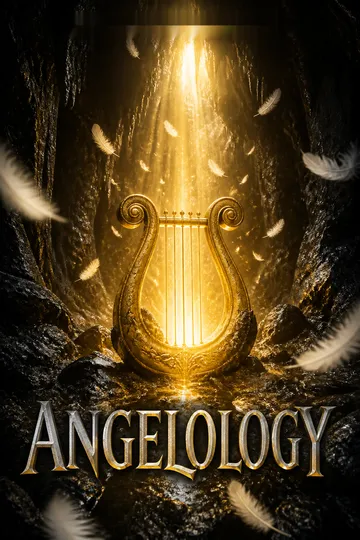
A beautiful, dangerous instrumentThe lyre is an ancient celestial instrument associated with the Watchers and the power of music to alter living matter. Angelologists believe it can change the Nephilim’s physical condition, while its sound can also overwhelm listeners and distort their judgment. Rockefeller and Mother Innocenta divide its components among New York landmarks so no single discovery immediately yields the whole instrument. Its music ultimately exposes the conflict between the desire to heal, the desire to dominate, and the ethical danger of wielding power whose consequences no one can reliably predict.
The Lyre Pendant
A family clue and inherited signEvangeline wears a gold lyre pendant inherited from her mother, treating it as a keepsake rather than an emblem. Verlaine notices that it matches the seal stamped on the original plans for St. Rose’s Adoration Chapel. The pendant links Evangeline’s private family memories to the convent’s hidden history and helps establish that her past has been deliberately shielded from her. Its resemblance to the lyre also foreshadows how music and inheritance will shape her choices.
The Rockefeller Correspondence
A coded map across ManhattanAbigail Rockefeller and Mother Innocenta disguise instructions as polite correspondence about art and charitable work. Rockefeller’s illustrated cards contain varying string counts on the lyres printed beside cherubs. Verlaine recognizes that these numbers correspond to dates associated with Rockefeller projects, directing the angelologists to the Museum of Modern Art, Riverside Church, the Cloisters, and Rockefeller Center. The code turns aesthetic detail into a practical route, while the ordinary tone of the letters helps the secret survive decades of archival storage.
The Hidden Architecture
Buildings conceal contested memoryThe convent’s mismatched plans, concealed reading room, tabernacle, and chapel furnishings preserve layers of angelological history inside spaces the sisters use every day. Mother Francesca’s drawings and the lyre seal help Verlaine and Evangeline identify where to search. Later, Rockefeller’s public landmarks conceal separate parts of the lyre in a museum, church, medieval tapestry, and commercial monument. The device makes architecture more than a setting: it stores knowledge, determines who can access it, and converts ordinary places into both refuge and battleground.
The Angelological Journal
A manual of science and ritualThe leather-bound journal moves through generations of scholars, carrying angelological history, maps, sigils, and Angela’s research into music’s effects on Nephilistic biology. Its compact form allows dangerous knowledge to survive fire, war, and family separation. The journal also demonstrates how different kinds of inquiry coexist in the novel: measurement and genetics sit beside ritual and theological speculation. Its contents are sought by the Grigoris because they may explain how the lyre can alter their bodies.
Angelology Series

Download PDF
Download EPUB
.epub digital book format is ideal for reading ebooks on phones, tablets, and e-readers.








