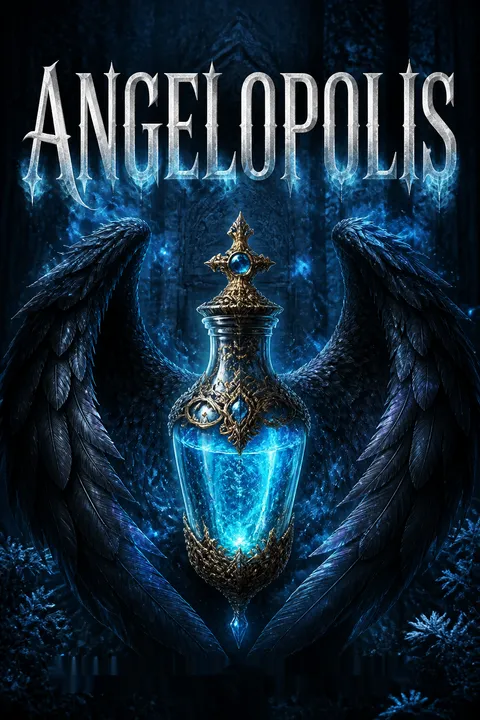


Plot Summary
Prologue
In 1983, a young girl endures a scientist’s examination while her mother watches. Needles draw her blood as she holds still and recalls her mother’s stories of angels, transformation, and brave children.
The girl cannot know what the tests are meant to uncover, only that the adults have made her body a subject of study. Her faith in fairy tales gives the sterile room a promise of rescue, though the examination itself points toward a darker inheritance.
The opening places childhood wonder beside clinical scrutiny. The girl’s body is already being treated as evidence, while her mother’s stories offer a language of transformation that the adults’ instruments cannot provide. This contrast prepares the novel’s central tension between inheritance as biology and identity as choice. The fairy-tale expectation that a nightmare will end also becomes an uneasy promise: the story will repeatedly ask whether transformation is rescue, contamination, or simply a new kind of captivity.
A Body Beneath the Tower
At the Eiffel Tower, Parisian angel hunter V. A. Verlaine examines a blue-blooded corpse whose injuries point to an Emim attack. Her driver’s license bears the name Evangeline Cacciatore, the woman he loved and lost ten years earlier. Verlaine has concealed Evangeline’s angelic nature from the Angelogical Society ever since she flew away from him.
He recognizes that the body is not hers, but the discovery makes him turn from the scene and search for the living woman. Near the Seine he spots Evangeline moving through the crowd in disguise and follows her, torn between the hunter’s duty to capture her and his need to learn why she vanished.
The corpse makes private longing collide with professional procedure. Verlaine has built his identity around seeing and classifying angels, yet the case becomes impossible to treat as ordinary because he once chose silence to protect Evangeline. His concealment is not merely romantic loyalty; it has made him answerable to two incompatible communities. The false identification also establishes the novel’s interest in bodies as unreliable evidence. A face, blood color, or family name may mislead, while the observer’s emotional investment can disclose truths that official systems miss.
The Woman Who Flew
In a shadowed passage, Evangeline explains that she planted her license on a Nephil woman who resembled her, allowing Eno, an Emim mercenary, to believe the target was dead. She came to Paris because a Fabergé egg found among the belongings of her friend Xenia Ivanova drew Nephilim attackers to New York.
Evangeline fought off intruders, hid Xenia, and brought the egg to seek help. She entrusts it to Verlaine and reveals her wings, asking him to judge her by more than her Grigori ancestry. Before he can investigate, Eno arrives. Evangeline wins their aerial duel but refuses to kill her opponent, submits instead, and is carried off into the night.
Evangeline’s refusal to kill is the first clear distinction between inherited capacity and chosen conduct. She has the strength to dominate Eno, but she will not let victory require adopting the enemy’s violence. Her decision is also a message to Verlaine: she wants him to recognize her ethical life, not simply catalogue her species. Yet mercy has a material cost. Eno captures her, showing how moral restraint can expose a person to danger without becoming a moral failure. The egg gives their reunion a practical purpose, even as desire complicates every choice Verlaine makes.
The Egg Opens History
Verlaine and his mentor Bruno fly to St. Petersburg with the egg, hoping to identify why the Grigoris want it. Hermitage researcher Vera Varvara recognizes it as one of eight missing imperial Fabergé eggs. A tiny archival plate hidden in its mechanism leads the group to an 8mm film stored at the museum.
The footage shows Evangeline’s parents, Angela Valko and Luca Cacciatore, interrogating Percival Grigori, Evangeline’s Nephil grandfather. Percival describes the Angelopolis, a project to restore Nephilim purity with stolen research and Valkine, the rare metal associated with angelic artifacts. Angela also displays blood samples labeled with Evangeline’s name. The film ends before explaining what she intended to do with them.
The egg functions as an archive disguised as ornament. Its beauty encourages the assumption that it is merely a luxury object, but its concealed plate and film turn it into a chain of evidence spanning generations. This is also where the story unsettles the clean division between hunter and hunted: Angela’s scientific methods and Percival’s plans both treat living beings as material for a desired future. Verlaine’s search for Evangeline therefore widens into a question about what her parents, enemies, and protectors believed her body could produce.
Rasputin’s Flower Book
The film’s missing context leads Verlaine, Bruno, and Vera to Nadia Ivanova, widow of angelologist Vladimir Ivanov. Nadia identifies the egg as part of her family’s history and shows them a flower album once connected to Grigory Rasputin. Its pressed specimens carry Enochian notes and chemical calculations.
Nadia believes it may preserve a medicine described in an ancient text as a way to prevent evil spirits from harming Noah’s descendants. Before they can pursue the clue, Axicore and Armigus Grigori attack with Eno. The twins seize the egg, but Verlaine and the Russian hunters recover it during a street battle. Verlaine stuns Eno and helps capture her, then suffers a near-fatal electrical attack when she strikes back.
Nadia turns inherited objects into contested testimony. Her album is not valuable because it is old or beautiful, but because generations of women preserved knowledge that formal institutions overlooked. The assault immediately tests whether scholarship can remain detached from the violence it studies. Verlaine’s attempt to capture Eno repeats the hunter’s familiar procedure, yet his near death makes that procedure bodily rather than abstract. His fixation on Evangeline and Bruno’s long obsession with Eno also reveal that hunters are not immune to the attractions and compulsions they claim to manage.
Seeds Beneath the Black Sea
While Verlaine and Bruno travel east with the captured Eno, Vera takes Nadia’s album to Hristo Azov’s research station on St. Ivan Island. Azov has recovered submerged tablets written in Enochian, along with stores of ancient seeds, and has spent decades searching for Noah’s medicine. The album’s notes match the tablets and identify silphium, a plant thought extinct, as one ingredient.
Azov has a single surviving seed, but the formula also requires Valkine. Before they can consult Raphael Valko, Gibborim attack their helicopter. Pilot Sveti shakes them off against power lines and lands safely, allowing Vera, Azov, and Sveti to drive into the Rhodope Mountains and seek Valko’s help.
The underwater discoveries make history less like a settled record than a landscape that can still yield evidence. Vera’s scholarly ambition becomes consequential because she connects objects that separate institutions had kept apart: the album, the tablets, and the seed collection. The mission also shifts her from the safety of cataloguing to embodied risk. Sveti’s improvised escape demonstrates that expertise is not confined to the archive; practical courage and technical skill are equally necessary. The scarce silphium seed makes knowledge fragile, since recovering a formula is not enough if its ingredients cannot survive the attempt to use it.
The Child in the Egg
Raphael Valko receives the visitors in his mountain home, where he grows plants from ancient seeds. He explains that Rasputin’s flower album concerns both Noah’s medicine and a larger history of angelic reproduction. A Romanov egg hatched into Lucien, a radiant being descended from the Archangel Gabriel.
Angela Valko met him, fell in love, and bore Evangeline, whose biological father was Lucien rather than Luca Cacciatore. Angela had hoped to create a powerful being capable of defeating the Nephilim, and later tried again to conceive a son. Valko says that Godwin imprisoned Lucien in Siberia and that he rescued him. Lucien now lives in the Devil’s Throat, near the Watchers’ prison.
This revelation reframes family as an engineered and contested structure. Evangeline is not simply the descendant of an enemy line; she is the outcome of Angela’s scientific ambition, Lucien’s otherworldly inheritance, and a human life shaped by secrets. Valko’s account complicates the idea of benevolent protection, because Angela’s care for her daughter coexisted with a plan to make her useful as a weapon. The novel does not erase love from that history, but it refuses to let love excuse instrumentalization. Evangeline’s unknown parentage becomes a question about whether origins dictate purpose.
The Medicine Takes Shape
Valko leads Vera, Azov, and Sveti into the Devil’s Throat, where they meet Lucien and find a dead Watcher preserved in the cavern. Lucien provides the missing angelic blood, while Valko uses the Nécessaire Fabergé egg as an alchemical vessel. He combines flowers from Rasputin’s album, silphium, Valkine taken from a pendant, and Lucien’s blood to create a small vial of concentrated medicine.
Valko then frees the Watchers, believing they can help defeat the Nephilim. The Watchers reject Lucien’s attempt to unite them with humanity against a common enemy. Their light devastates the group: Valko dies, Sveti disappears into the cavern, and Vera survives with severe burns. Semyaza stays behind, choosing exile over the surface world.
The recipe’s completion is a triumph of collaboration, but its use exposes the danger of turning knowledge into salvation before understanding its costs. Valko believes the medicine and the Watchers can be deployed as coordinated weapons; the Watchers instead assert their own history and refuse his strategic script. Their release is not a simple liberation, since freedom does not guarantee reconciliation or allegiance. Semyaza’s decision to remain underground gives the scene an intimate counterpoint to grand plans: a being offered escape chooses the familiar conditions of exile because freedom without belonging may feel unbearable.
Sneja’s Moving Trap
Aboard the Trans-Siberian Railway, Verlaine wakes from Eno’s attack with serious burns and learns that Yana Demidova, a Russian hunter, helped save him. The team has recovered the egg and captured Eno, but the Grigori twins later storm the prisoner cars and free her. Meanwhile, Verlaine encounters Sneja Grigori in a private lounge.
She demands information about Evangeline, then orders him tied to the train’s exterior in the freezing air. Bruno and Yana reach him before he dies, and Verlaine tells them Sneja is aboard. Yana uses an old connection with Dmitri Melachev, the prison’s security chief, to get the group inside the panopticon. Dmitri warns that Godwin has planted explosives throughout the facility.
The train compresses the novel’s competing forms of power into a moving enclosure: Yana has local knowledge, Sneja commands through family rank, and Verlaine relies on the instincts that make him an effective hunter. His exposure to the cold is a literal punishment for refusing to answer Sneja, but it also marks the limits of individual bravado. Survival depends on Bruno and Yana acting together. The explosives introduce a threat larger than rescue, since Godwin’s private project can destroy captors, prisoners, records, and the prison itself in one calculated act.
The Panopticon Burns
Inside the prison, Verlaine abandons Bruno’s plan and searches alone for Evangeline. He finds her caged in Godwin’s laboratory, with Eno and the Grigori twins nearby. Godwin intends to filter Evangeline’s unusual blood for a breeding experiment. Yana and Bruno break in, free the prisoners, and confront Godwin, but explosions begin tearing apart the panopticon.
In the smoke, Evangeline senses the direction of the surviving exit and carries Verlaine through the chaos. They encounter Lucien, who reveals that he is Evangeline’s father. As the facility collapses and the imprisoned angels escape, Evangeline sends Verlaine toward safety and remains with Lucien. The disaster releases the prison’s creatures into a world already losing control.
Godwin’s laboratory makes the novel’s central ethical conflict brutally concrete: he treats blood, kinship, and reproduction as tools for designing a population. Verlaine’s unsanctioned search breaks the discipline that has defined his career, but he cannot reduce Evangeline to an assignment. Her rescue of him reverses their familiar roles, with the supposed object of protection becoming the one who guides survival. Lucien’s recognition arrives amid institutional collapse, so the truth about her family offers no tidy refuge. The prison’s destruction turns private experimentation into public catastrophe.
A Leader Without Her
Outside the ruined facility, Azov offers Evangeline the medicine, which could return her and other angelic creatures to human vulnerability. She takes the vial but does not drink it, then leaves with Lucien rather than follow Verlaine.
The escape of the Watchers and other imprisoned beings brings violence and environmental destruction across Siberia. Yana drives the survivors away as Bruno, injured and shaken, accepts that the battle has only begun.
On Easter Sunday in Paris, the Angelogical Society’s council dissolves itself and looks to Verlaine for leadership. He agrees to organize the fight against the Nephilim and the newly freed Watchers, but his private intention is harsher: when he finds Evangeline again, he believes he may have to kill her.
The ending refuses the comfort of a completed rescue. Evangeline possesses a possible route back to human life, but retaining the medicine preserves her right to decide later. Verlaine’s elevation to leadership therefore coincides with a profound personal separation: the institution gives him authority precisely as the woman he loves chooses another path. His vow to kill her converts grief into a political necessity, or perhaps disguises it as one. The novel closes with an unresolved moral problem, asking whether a leader can defend humanity without reproducing the coercion that made angels and humans enemies.
Analysis
Angelopolis builds its thriller around the unstable boundary between protection and possession. Angelologists claim to defend humanity, yet they imprison, dissect, and weaponize the beings they study. The Nephilim claim superiority through lineage, while Godwin translates that hierarchy into a laboratory program. Both sides imagine that a better future can be manufactured by controlling bodies. Against them, Evangeline’s moral significance lies less in her unusual biology than in her refusal to let inherited power dictate action. Her mercy toward Eno and her hesitation over the medicine preserve a space for choice, even when that choice is dangerous.
The novel’s objects make this conflict legible. Fabergé eggs, a flower album, ancient tablets, and Valkine pendants are not decorative historical details; they are containers through which knowledge travels when institutions suppress or forget it. Women such as Nadia, Vera, Angela, and the Romanov grand duchesses preserve pieces of the record, though their roles range from careful stewardship to risky experimentation. The archive becomes a form of agency, but recovered knowledge is never innocent. The medicine may undo angelic advantages, yet its creation depends on Lucien’s blood and carries consequences no one can fully predict.
The ending refuses a clean distinction between victory and catastrophe. The prison’s collapse frees captives, but it also releases forces that threaten the world. Verlaine becomes a leader by accepting a mission that may require him to kill Evangeline, the person whose humanity he has spent the story trying to recognize. His final resolve is both an act of duty and a defense against grief. The book leaves its central question open: can resistance defeat a system of domination without adopting its logic?
Review Summary
People Also Read


Characters
Evangeline Cacciatore
The divided inheritanceEvangeline is the daughter raised among humans by angelologists, though her body carries traits that separate her from ordinary human life. She is observant, self-reliant, and wary of anyone who assumes ancestry determines character. Her relationship with Verlaine is marked by attraction and distrust, since he once hunted angels and she once disappeared without explaining herself. She seeks answers about her nature without surrendering her moral judgment to either the Angelogical Society or the Nephilim. Her refusal to use power simply because she possesses it makes restraint an active choice, not a sign of weakness. She is driven by the need to understand what she has become and to remain responsible for what she does.
V. A. Verlaine
The conflicted hunterVerlaine is an American scholar turned Parisian angel hunter, trained by Bruno after discovering that his unusual eyesight lets him perceive angelic forms. He combines intellectual precision with physical courage, but his devotion to procedure falters whenever Evangeline is involved. He has kept her nature secret, making his love inseparable from a breach of professional trust. His attraction to danger is not only a hunter’s appetite for the exceptional; it also lets him postpone the harder work of accepting uncertainty. Verlaine wants to understand Evangeline and protect her, yet he repeatedly risks treating her as a problem he can solve. His defining struggle is learning whether loyalty can survive without possession or control.
Bruno
The seasoned mentorBruno directs the Paris hunters and recruited Verlaine from academic life, recognizing his unusual capacity to identify and capture angels. He is strategic, experienced, and protective of his agents, though he distrusts the institution’s complacency as Nephilim behavior grows more public. His long pursuit of Eno compromises the detachment he expects from others, making him alert to obsession even when he cannot master his own. Bruno carries memories of Angela and Gabriella, whose work shaped the society he serves. He functions as Verlaine’s mentor without becoming a simple moral authority: his decisions are practical, sometimes unsanctioned, and often colored by personal history.
Vera Varvara
The archival risk-takerVera is a junior Hermitage researcher whose specialty is Russian Nephilim history, imperial artifacts, and genealogies. She trusts evidence but is willing to pursue ideas that senior scholars dismiss, even smuggling material from restricted collections to advance her work. Her intellectual ambition is sharpened by a preference for solitude and a tendency to keep emotion behind scholarly composure. The search for Noah’s medicine takes her beyond the archive and forces her to rely on collaborators whose methods differ from hers. Vera’s curiosity is not merely antiquarian: she wants to know how hidden histories shape the present, and whether recovered knowledge can be used without repeating the violence of those who concealed it.
Eno
The mercenary angelEno is an Emim warrior who works for the Grigori and is known for her strength, daring, and extreme violence. She prefers to move openly rather than hide her angelic features, and her contempt for human beings is sharpened by an old betrayal that taught her to expect treachery from them. Her relationship with Bruno is charged by their prolonged pursuit of one another, while her service to the Grigori binds her to masters she both fears and resents. Eno understands hunting as a contest she can control, but her appetite for risk often makes her unpredictable. She is both an antagonist and a portrait of how humiliation can harden into a chosen identity.
Merlin Godwin
The ambitious scientistGodwin is a British chemist and angelologist who once worked under Angela Valko. He is patient, calculating, and skilled at presenting ambition as scientific necessity. His interest in bodies is primarily instrumental: blood, heredity, and captive subjects matter to him as means of producing a desired population. He can manipulate institutional systems while maintaining the appearance of a respectable researcher. Godwin’s ambition grows from vanity and hunger for control as much as from any coherent scientific ideal. His work exposes the danger of treating technical competence as moral neutrality, especially when research is conducted in a prison where the subjects have no meaningful power to refuse.
Raphael Valko
The guarded elder scientistRaphael Valko is a legendary angelologist who withdrew from the society after personal losses and built a secluded life in Bulgaria. He is resourceful, secretive, and deeply invested in preserving knowledge, especially ancient seeds and materials connected to angelic history. His scientific achievements coexist with a private appetite for longevity and a tendency to keep crucial information to himself. Raphael’s attachment to his daughter Angela shapes his reading of her work and his willingness to continue it. He is both a custodian of the past and an ambitious interpreter of it, convinced that dangerous action may be justified when the stakes appear civilizational.
Lucien
The luminous outsiderLucien is a being of angelic origin raised in human surroundings by Katya Badmaiova. His manner is gentle and contemplative, and he records songs and praises rather than seeking authority over others. His extraordinary nature gives him power, but he does not automatically share the political aims of either the angelologists or the Nephilim. His bond with Angela becomes part of Evangeline’s hidden family history, while his long isolation leaves him uncertain about belonging in the human world. Lucien’s presence tests the assumption that all angels must be classified by their usefulness or threat. He is motivated by spiritual devotion and a longing for connection, not by the struggle for supremacy.
Hristo Azov
The patient excavatorAzov is a Bulgarian angelologist who has spent decades investigating Noah, the Flood, and the submerged settlements of the Black Sea. He is methodical and humble about the limits of his evidence, yet his commitment to the Book of Medicines has sustained a lifelong pursuit. He mentors Vera and works closely with Sveti, combining underwater archaeology, ancient language study, and botany. Azov values preservation, but his research also carries the possibility of a weapon whose consequences cannot be fully predicted.
Nadia Ivanova
The keeper of recordsNadia is an antique dealer and former angelology assistant whose family history connects her to the Romanovs, Rasputin, and the Ivanov researchers. She has lost loved ones to the Nephilim and carries her grief with disciplined clarity rather than spectacle. Her knowledge of imperial objects helps the investigators understand the Fabergé egg and the flower album. Nadia protects the history entrusted to her, even when that history carries danger, and she wants Vladimir’s memory treated with dignity.
Yana Demidova
The Siberian hunterYana is a Russian angel hunter accustomed to tracking creatures across a vast, difficult territory with limited personnel. She is decisive, practical, and far less impressed by the Paris team’s prestige than by their ability to survive. Her old connection to Dmitri gives her access to the panopticon, while her skill in the field helps save Verlaine and Bruno. Yana values results over display and understands that local knowledge can matter more than institutional authority.
Sveti
The field linguistSveti is a linguist and expedition pilot working with Azov on the Black Sea. She explains the archaeological and historical context of the submerged settlements, then proves her practical nerve when Gibborim attack the helicopter. Her knowledge links ancient scripts to present research, while her composure helps keep the expedition moving when scholarly inquiry becomes dangerous.
Axicore Grigori
The imperious twinAxicore is one of the Grigori twins and the more openly commanding of the two in his dealings with Eno. He regards humans with disgust and prizes lineage, appearance, and family rank as signs of superiority. His elegant composure masks a readiness to use violence through agents and relatives. He represents the old aristocratic certainty that power is an inheritance rather than a responsibility.
Armigus Grigori
The indulgent twinArmigus is Axicore’s identical twin, distinguished by the reversed colors of his eyes. He shares the Grigori sense of entitlement but has a more conflicted appetite for human company. His private indulgences make him less disciplined than his brother, though he remains part of the family’s pursuit of Evangeline. The twins’ closeness blurs individuality into a shared performance of aristocratic power.
Sneja Grigori
The family matriarchSneja is the formidable elder of the Grigori family and the grandmother whose lineage gives Evangeline political importance to the Nephilim. She wields rank through appetite, intimidation, and the confidence that others will obey. Her interest in Evangeline is dynastic rather than tender, reflecting a family culture that treats descendants as assets. She is not easily impressed by human threats and considers cruelty a tool of authority.
Angela Valko
The brilliant experimenterAngela is an accomplished angelologist and scientist, daughter of Raphael and Gabriella, and mother to Evangeline. She is intellectually daring and impatient with institutional limits, helping establish the society’s hunter unit and developing research aimed at weakening the Nephilim. Her care for her family exists alongside a willingness to submit bodies, including her own and her child’s, to scientific purpose. Angela’s legacy is therefore both inspiring and morally unsettled: she can be read as a defender of humanity and as someone who risks confusing love with design.
Luca Cacciatore
The hunter and father figureLuca is an accomplished angel hunter who helped Angela create the society’s covert hunting unit. He is energetic, protective, and devoted to Angela, bringing practical field experience to her scientific work. He raises Evangeline as his daughter and stands between his family and the dangers their research attracts. His life is shaped by the difficult alliance between intimate loyalty and a profession built on capturing others.
Gabriella Lévi-Franche
The hidden family anchorGabriella is an experienced angelologist, Raphael’s wife, Angela’s mother, and a close friend to Bruno. She protects family secrets while participating in dangerous work against the Nephilim. Her history is preserved in field notes that reveal how personal loyalty and institutional duty can become entangled. Gabriella’s example influences the people who inherit both her research and its silences.
Dmitri Melachev
The prison security chiefDmitri is the security chief at the Siberian panopticon and Yana’s former childhood sweetheart. He has spent years monitoring Godwin while working inside an institution with extreme secrecy and destructive safeguards. Though cautious, he risks his position to help the hunters enter the facility. His access gives the group a chance to act, but his knowledge also reveals how little control the official security system has over Godwin.
Semyaza
The Watcher who staysSemyaza is a Watcher who has endured millennia of imprisonment in the Devil’s Throat. He is thoughtful and weary, more interested in understanding human experience than reclaiming a place among the freed angels. His decision to remain in the cavern reflects how long confinement can reshape the meaning of freedom.
Katya Badmaiova
Lucien’s human guardianKatya is the daughter of Rasputin’s herbalist associate and the human guardian who raises Lucien after his unusual birth. She teaches him ordinary skills and gives him a childhood away from public attention. Her care preserves his connection to human life while the political world around him remains dangerous.
Xenia Ivanova
The endangered friendXenia is Nadia and Vladimir’s daughter, a café owner and friend who gives Evangeline work and shelter in New York. She discovers the Fabergé egg among her father’s effects, unknowingly drawing Nephilim attention to herself. Her kindness gives Evangeline a rare human bond outside the convent and the angelological world.
Plot Devices
The Fabergé eggs
Ornament conceals evidenceThe imperial eggs appear to be extravagant collectibles, but their hidden mechanisms preserve clues, records, and objects essential to the plot. The Cherub with Chariot Egg contains an archival plate that leads the investigators to Angela Valko’s film. The Nécessaire Egg later serves as an alchemical vessel, while other eggs connect the Romanov court to the history of angelic reproduction. Their layered construction gives the story a physical model of concealed history: each polished exterior opens onto another enclosure, and each surprise changes what the investigators believe they are looking at.
Rasputin’s flower album
A recipe hidden in memoryThe album combines pressed flowers with Enochian symbols and chemical notes. Passed through the hands of imperial women, Rasputin, Katya’s family, and Nadia, it survives because its keepers do not fully understand its purpose but recognize its importance. Vera and Azov connect its writing to submerged tablets attributed to Noah and identify its role in the search for a medicine that can weaken angelic creatures. The album makes preservation an active form of resistance, while its uncertain interpretation warns that a recovered formula may be more dangerous than its custodians expect.
Valkine pendants
Rare metal bridges generationsValkine is a rare material associated with ancient angelic instruments and identified through Raphael Valko’s research. Three pendants made from it pass through the Valko family and into the present conflict. Their metal is needed to complete the medicine described in Rasputin’s album, turning heirlooms into functional components of a weapon. The pendants also embody the novel’s repeated conversion of private inheritance into public consequence: an object worn for remembrance can become an ingredient in a plan affecting whole populations.
The Angelopolis
A utopia built on controlThe Angelopolis is the Grigori vision of a renewed, purified Nephilim world, created through genetic experimentation and the exploitation of human and angelic subjects. It is first described by Percival Grigori in Angela’s film, then linked to Godwin’s work in the Siberian panopticon. The name promises a perfected homeland, but the project depends on imprisoning bodies, selecting desirable traits, and treating life as raw material. It functions as the story’s political counterpoint to human society, exposing how the language of paradise can conceal a program of domination.
The Siberian panopticon
Surveillance becomes a weaponThe vast underground prison holds thousands of angelic creatures in cells arranged around a central observation tower. Its design makes observation constant and resistance difficult, while its laboratories give Godwin access to captive bodies for experiments. The institution is officially associated with angelological containment, but Godwin uses it to serve the Grigoris’ ambitions. Hidden explosives turn the prison itself into a destructive mechanism, ensuring that a failed experiment can erase both evidence and lives. The panopticon literalizes the novel’s concern with who is permitted to observe, classify, and control another being.
Angelology Series
Download PDF
Download EPUB
.epub digital book format is ideal for reading ebooks on phones, tablets, and e-readers.








