


Plot Summary
A Face in Ipswich
In the summer of 1920, Sylvia Ashe travels from London to Ipswich with Gabe Glass, her friend Daisy, and Gabe's friend Alex, hoping to learn whether the Folgates, a rare family of silver magicians, connect to her own family. A tailor who knew the Folgates shows Sylvia an old photograph of Marianne Folgate. Sylvia recognizes the young woman as her mother, who had lived under the name Alice Ashe and never spoke of her past.
The tailor says Marianne fled home at eighteen, shortly before her parents died in a fire. He also recalls a controlling father who belittled and confined her. Sylvia leaves with her first proof that her mother's silence concealed a life of its own, and a photograph that makes that lost history suddenly personal.
The photograph changes Sylvia's search from genealogy into an encounter with a stranger who happens to be her mother. The contrast between Marianne's youthful face and Sylvia's memory of a guarded, rule-bound parent opens a psychological question: how does a person become what she feared? The tailor's account suggests that Marianne's secrecy may have been an adaptation to control, not simple coldness. Sylvia's desire for facts is therefore also a desire to imagine her mother as a person before motherhood and fear narrowed her life.
Dead Letters, Dangerous Offers
The tailor directs Sylvia's party to the post office, where they recover twenty-two letters held because their recipients are dead or untraceable. Among them, Sylvia finds repeated proposals from wealthy magician families offering money to marry Marianne, a rare silver magician.
One letter suggests her father planned to trade her future for a powerful magical lineage. Another, written years later by Bernard Reid, asks John Folgate for help finding his missing son Robin, who had been eager to meet Marianne.
Since Sylvia was born in 1894, she wonders whether Robin could be her father. Gabe and Alex agree to investigate the Reids, while Sylvia is unsettled by how quickly her private family history becomes a possible transaction between magician families.
The letters make the past tangible but do not make it trustworthy. Their businesslike proposals reduce Marianne to the reproductive promise of rare magic, while the delayed plea about Robin opens an emotionally charged but unproven possibility for Sylvia. The archive gives her evidence and multiplies uncertainty at the same time. This tension is central to her investigation: documents preserve what people chose to record, not the feelings or coercions that shaped their choices. Sylvia's hope of finding a father begins inside a system that valued lineage more clearly than individual consent.
The Missing Reid
Bernard Reid receives Sylvia and Gabe in a grand, neglected house and explains that his son Robin vanished in 1894 after years of withdrawal and trouble with debts. An IOU bearing the name Thurlow links Robin to a dangerous bookmaker already known to Gabe's circle.
Bernard believes Robin later died at Ypres, but Gabe's inquiry at the War Office reveals that the stretcher-bearer who enlisted under Robin's name served at the front. Dr. Collier, who knew the man, rejects Robin's photograph: the soldier had a different face and a birthmark.
At Robin's old school, a former friend recalls that Robin grew anxious and fixated on becoming extraordinarily rich. The presumed wartime death is now a false trail, and the real Robin may have survived beyond his disappearance.
The false military identity turns a family mystery into a problem of evidence: a name on a form can create a convincing history for the wrong body. Robin's fixation on wealth also complicates the image of a simple runaway. His ambition may have been shaped by a father who wanted a magician heir, and his unexplained anxiety hints at harm rather than mere rebellion. Sylvia's investigation moves forward by testing documents against people who remember faces, habits, and fear. The section asks which kind of record deserves belief when official paperwork is built on an alias.
Records Behind Locked Doors
The military file points to Rosebank Gardens, a hospital for returned soldiers that had once treated people believed capable of being made into magicians. Its director, Dr. McGowan, refuses to share staff or patient records. With a map from former patient Stanley Greville, Gabe, Sylvia, and Willie break in after dark while Alex waits in the Vauxhall.
They find Bill Foster's staff file but no record for Robin, and Sylvia spots a file for Bertie Hobson, Ivy's brother, admitted in 1913. A guard catches them before they can escape. The three are held overnight until Alex's father, Inspector Bailey, secures their release. The missing file does not end the inquiry. It makes the hospital's secrecy part of the mystery.
The break-in marks a shift from asking institutions for knowledge to confronting what their rules protect. Sylvia's discovery of Bertie Hobson's file connects Rosebank to a powerful family beyond the Reids, but the absence of Robin's file is more suggestive than conclusive. Their arrest also exposes the cost of urgency: the group is willing to risk liberty because official procedure has yielded nothing. Yet the hospital's vulnerable patients complicate that bravado. The investigation must seek accountability without treating those already harmed as scenery or obstacles.
The Cure for Artlessness
When Gabe confronts Bernard with the hospital's name, the old man finally explains why Robin went there. In 1891, at sixteen, Robin was admitted so doctors could supposedly draw out magic from his magician bloodline.
Bernard hoped a magical marriage to Marianne would secure Robin's future and the family business. After five or six weeks, Robin returned frightened and diminished, but his parents never sent him back. Bernard insists the treatment has nothing to do with Robin's later disappearance.
Sylvia also learns that Rosebank once attracted families desperate to change artless children into magicians. The disclosure reframes Robin's ambition and withdrawal: his father had made his natural limits feel like a failure, then handed him to doctors who promised to erase them.
Bernard's confession reveals how parental love can be entangled with conditional acceptance. He believes he acted for Robin's future, yet his decision made his son an object of correction, much like Marianne had been treated as a valuable magical match. The hospital's promise gave scientific authority to a social prejudice: that artlessness was a defect requiring intervention. Sylvia's sympathy for Robin grows without excusing the forces that harmed him. His story also mirrors Gabe's experience as an artless child of a magician, sharpening the distinction between support that accepts a child and care that tries to remake one.
Thurlow Names His Price
The group discovers that Robin's old creditor is Thurlow, a bookmaker who once sent a thug after Gabe. When Thurlow learns Gabe is investigating Robin, he denies knowing him and instead presses for access to Francis Stray, Gabe's brilliant but deeply honest friend.
Thurlow wants Francis's mathematical talent for his own enterprise. Sylvia explains that Francis's nature makes him useless to a criminal scheme, persuading Thurlow to leave him alone for now. Gabe moves Francis into his household for protection.
Meanwhile, Daisy's insecurity keeps her at arm's length from Alex, despite their mutual attraction, and Huon Barratt's visits to stationery shop owner Petra Conway turn their old rivalry into flirtation. These tangled loyalties give the investigation a human cost beyond the missing man.
Thurlow's power lies less in violence than in treating people as assets: Francis is a mind to recruit, Marianne was a lineage to acquire, and Robin may have been a debtor to exploit. Sylvia counters him not with force but with precise knowledge of Francis's limits and integrity. Her reading of character becomes a form of protection. The romantic subplots echo this question of whether people see one another as they are. Daisy assumes she is intellectually inferior to Alex, while Petra sees through Huon's performed carelessness. Both couples must distinguish genuine affection from the roles they have learned to play.
Rosebank's Buried History
The search for Bill Foster brings Gabe and Sylvia to Mrs. O'Brien, who at first denies knowing him. Her lodger, Mr. Tovey, reveals that a large, kind former lodger loved her and left for the war, but he does not yet explain why she hid the connection.
At Rosebank, Stanley tells Gabe that doctors subjected the most severely shell-shocked soldiers to ice baths and electric shocks that appeared to worsen their condition. The General Medical Council's records show earlier complaints about Rosebank's dangerous treatments and a police inquiry into two young patient deaths in 1894, both ruled natural.
Dr. McGowan dismisses the concerns and denies knowledge of Robin. With three patients now linked to the same hospital and year, the group shifts its goal from finding Sylvia's father to uncovering whether Rosebank concealed deaths.
The hospital's past and present begin to overlap: treatments once used to manufacture magic may resemble the methods now imposed on traumatized soldiers. The medical records offer partial corroboration, but their official conclusions have erased the very questions the group needs answered. Mrs. O'Brien's silence adds a parallel form of concealment, though hers appears rooted in grief and loyalty rather than institutional self-protection. By redirecting the investigation from Sylvia's possible parentage toward the patients' fate, the group recognizes that a mystery can acquire obligations beyond the person who first asked the question.
Paper Magic, Bloodshed
As the hospital inquiry stalls, Sylvia visits Walter Peterson, a paper magician who teaches her the spell that strengthens paper. The first successful casting gives her a physical certainty that reading about her magic never could.
She later demonstrates the spell to Petra, whose graphite magic combines with it to make invisible writing, while Huon hopes to develop a similar ink technique. The exhilaration is cut short when a patient at Rosebank attacks Gabe from behind with a knife.
Gabe slows time long enough to stop the assailant escaping, but the effort leaves him exhausted and his shoulder needs stitches. The patient claims a divine command, yet cannot explain who supplied the knife. Sylvia comforts Gabe, then worries that the attack was meant to disable him for a larger kidnapping plan.
Sylvia's magic becomes real through use, not ancestry alone. The sensation of strengthening paper gives her an identity she can inhabit independently of the unresolved question of her father. That moment of self-recognition is immediately shadowed by violence against Gabe, whose time magic has repeatedly made him a target. The attack also exposes a tension between exceptional ability and bodily vulnerability: Gabe can bend time, but cannot always prevent a blow he never sees coming. Sylvia's fear and tenderness deepen their intimacy, even as both continue to avoid naming what they want from each other.
The Man Behind Foster
A detective in Liverpool identifies Bill Foster as William Collins, a local man wanted for a fatal pub fight. Collins fled rather than face trial, changed his name, and found work at Rosebank as an orderly.
Mrs. O'Brien finally confirms that he was her beloved partner, a gentle man whose fear of returning to Liverpool led him to enlist under Robin Reid's identity. She then reveals the harder truth: Robin had been a patient at Rosebank, admitted himself in 1894, and died after experimental treatment.
Collins, ordered by a doctor to bury him secretly, dug the grave himself and kept silent to protect both Robin and his own assumed name. Mrs. O'Brien identifies the doctor as the man who later became Rosebank's director, giving the police a witness and a name to pursue.
The mystery resolves through the testimony of someone the official record had no reason to consult. Collins's alias was not a scheme for profit but a refuge from a justice system he feared, and that refuge later enabled Rosebank to hide a death. Mrs. O'Brien's long silence protected his memory but also kept Robin's fate buried. Her testimony makes the ethical cost of concealment visible without flattening her into an accomplice. The novel distinguishes a frightened individual's survival strategy from an institution's deliberate use of secrecy to escape scrutiny.
Roses Give Up Bones
Mrs. O'Brien's statement gives Inspector Bailey enough evidence to obtain authorization for a search of Rosebank's grounds. Dr. McGowan remains confident that no body or record will be found, but nurse Matilda Wallbank privately directs the police to a rose bed planted in 1894.
The constables dig and uncover a skeleton in hospital pajamas. A gold tooth and a handkerchief marked with Robin Reid's initials connect the remains to Bernard's missing son. McGowan is arrested for Robin's unlawful death.
He protests that his experiments served medicine and that the patients were already damaged, but Wallbank adds that he is still giving vulnerable soldiers untested drugs. Her courage helps expose a continuing abuse, not merely a crime decades old.
The garden turns concealment into evidence: a carefully maintained landscape has hidden what paperwork denied. The body does not simply solve a puzzle; it restores a name to a person whose death was converted into an administrative absence. McGowan's defense reveals the logic of paternalistic experimentation, in which a doctor's belief in future progress outweighs the present consent and safety of patients. Wallbank's intervention matters because she has professional knowledge and firsthand access, yet risks her livelihood to speak. Accountability begins when those inside a system refuse its definition of acceptable silence.
Boats on the Lake
Inspector Bailey tells Bernard that Robin's remains have been found, and the old man's composure finally gives way to grief when he recognizes his wife's stitching on the recovered handkerchief. Sylvia has learned the truth about Robin, but nothing proves he was her father or explains who Marianne feared.
She is relieved not to be tied to Bernard's cruel expectations, though the larger family question remains open. At a picnic in Richmond Park, Gabe invites everyone into the Baileys' lively family ritual of racing paper boats.
Sylvia's strengthened-paper boat outlasts the others, and Gabe accepts losing his long-held title so she can enjoy the win. Daisy and Alex remain shy but drawn to each other; Sylvia and Gabe remain close, affectionate, and uncertain. The case ends with justice beginning, not every private mystery solved.
The picnic offers a deliberately modest resolution after the hospital's grave revelations. Sylvia gains no final answer about her father, but she no longer treats that answer as the sole foundation of her identity: her own practiced magic gives her a place to stand. Gabe's choice to let her boat win is a small act of attention rather than a declaration, matching their careful, unfinished romance. The Baileys' noisy affection also shows Sylvia a family culture she can join without replacing the family she lost. The ending preserves uncertainty while shifting its emotional weight.
Analysis
The novel builds its mystery around the gap between records and lived experience. A letter can show that Marianne was being offered in marriage, but not what it felt like to be treated as a valuable lineage. A military file can report Robin Reid's death, but Dr. Collier's memory of the soldier's face exposes the identity beneath the paperwork. Rosebank's missing patient file and the unmarked grave extend the same problem into institutional life: official systems do not merely fail to preserve truth; they can help bury it.
The book's treatment of magic sharpens its critique of inheritance. Rare abilities promise prestige and economic advantage, so families and suitors begin to regard children as vessels for future power. Robin's father sends him to be altered because he cannot accept what his son is. Marianne's father tries to arrange her future around her magical rarity. Gabe, by contrast, has parents who value him without requiring a particular gift. These differing forms of family expectation show how love can become coercive when it depends on what a child can provide.
Sylvia's own arc answers that pressure without resolving every genealogical question. Learning to strengthen paper gives her a lived relationship with her magic, independent of whether Robin was her father or whether the Peterson family connects to her ancestry. She moves from treating identity as an answer hidden in the past toward treating it as a capacity she can practice in the present. Her tenderness toward Gabe, her restraint around his grief, and her advocacy for Francis all reveal a similar development: she increasingly trusts her judgment, even when she cannot control what follows.
The ending refuses the easy comfort of total closure. Robin is found, McGowan is arrested, and Bernard is told the truth, but Sylvia still does not know whom her mother feared or who her father was. The picnic's paper-boat race offers a smaller, earned form of belonging. Sylvia's boat lasts because her skill is real, and Gabe's willingness to lose lets her occupy the center without asking her to solve every mystery first.
Review Summary
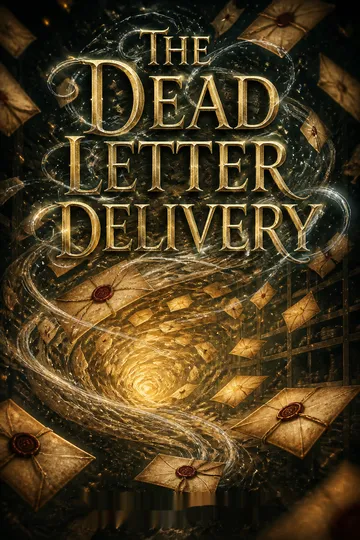
The Dead Letter Delivery receives a 4.08/5 rating with mixed feedback. Readers praise the engaging mystery, worldbuilding, and character development in this fourth Glass Library installment following Sylvia's search for her magical heritage and father's identity. Many enjoy the slow-burn romance with Gabe and the 1920s setting. However, complaints include insufficient magic, slow plot progression, editing errors, and dragging romantic tension. The hospital storyline divided readers. Fans appreciate the wholesome, lighthearted tone and audiobook narration, though some find the pacing frustrating and mysteries overly stretched across books.
Characters
Sylvia Ashe
Paper magician seekerSylvia is a young librarian and paper magician whose family history has been kept from her. She approaches uncertainty with the habits of a researcher: she notices inconsistencies, asks precise questions, and follows evidence even when it unsettles her. Her guardedness comes from losing her mother and brother and from a childhood shaped by secrecy and constant movement. Sylvia is empathetic without being credulous; she recognizes how shame and fear can distort people's choices, but still insists on accountability when others are harmed. Her growing confidence in her magic parallels her willingness to claim an identity that does not depend on a parent's explanation. She is drawn to Gabe, yet careful not to demand more than he is ready to give.
Gabe Glass
Time-bending investigatorGabe is a capable investigator, a former soldier, and Sylvia's closest ally. His time-manipulating magic has made him famous for surviving danger, but it also exposes him to people who want to study or exploit him. He protects his friends with quick judgment and a polished manner, though his restraint can conceal anger and emotional uncertainty. After ending a long engagement, he is not ready to begin another relationship, even as his tenderness toward Sylvia becomes increasingly difficult to disguise. His loyalty is practical as well as emotional: he takes risks, offers shelter, and pays attention to what others need. His arc is less about mastering power than accepting that protection cannot make him invulnerable.
Daisy Carmichael
Restless aspiring novelistDaisy is Sylvia's lively, generous friend, quick to seek new experiences and quicker still to dismiss her own abilities. She dreams of writing adventure and romance but doubts her education and talent, especially when people she admires criticize her work. Her confidence can look effortless, yet her fear of being foolish shapes her choices with Alex. Daisy is emotionally perceptive in practical ways: she offers Sylvia companionship and recognizes the appeal beneath other people's bickering. Her restless energy can make sustained solitary work difficult, but it also makes her brave about trying unfamiliar things. She wants a life of her own, even while measuring herself against people whose approval matters to her.
Alex Bailey
War-scarred protectorAlex is Gabe's imposing, loyal friend and a former soldier whose humor and sociability have been tempered by wartime loss. He is attentive to danger and often acts as the practical counterweight to Gabe's willingness to take risks. His directness can wound Daisy, particularly because he does not always recognize how her insecurity shapes what she hears. Beneath his teasing is a man trying to understand what kind of life he wants after the war. His changed seriousness is not simply gloom; it reflects a new respect for consequences and for the feelings his former self might have treated casually. He and Daisy challenge each other because each sees something the other struggles to believe.
Willie
Unruly loyal defenderWillie is Gabe's outspoken American cousin, a sharp driver, a capable lock-picker, and a fiercely protective friend. She uses bravado, jokes, and a willingness to bend rules to keep fear at bay, especially when Gabe is threatened. Her bluntness can be disruptive, but she is often the first to recognize when someone needs defending. Willie values independence and dislikes being managed, yet her loyalty makes her accept danger on behalf of the group. Her complicated romantic history and appetite for adventure sit alongside a softer capacity for friendship, which gradually extends to Sylvia.
Professor Nash
Library's magic scholarProfessor Nash is the Glass Library's warm, inquisitive scholar and Sylvia's mentor. His knowledge of magical history helps the group interpret the old letters and understand why rare disciplines attract offers of marriage and commercial interest. He is delighted by discovery and generous with his time, but his recent reluctance to leave home suggests that memory can comfort as well as confine. His affection for his late traveling companion informs his interest in adventure and his developing memoir. With Sylvia, he provides intellectual encouragement without treating her questions as foolish.
Mr. Dowd
Keeper of Folgate memoriesMr. Dowd is the Ipswich tailor who knew Marianne Folgate as a girl. His memories and family photograph give Sylvia her first concrete link to her mother's former identity. He remembers the cruelty and control inside the Folgate household, and regrets that he did too little to intervene.
Bernard Reid
Demanding magician fatherBernard Reid is a wealthy wool magician whose emotional reserve and focus on inheritance have shaped his relationship with his only child. He believes he acted for Robin's future, but his expectations make it difficult for him to see how deeply his son feels judged. His grief has left him isolated and almost mechanical in manner. Bernard's story exposes the damage caused when parental care is tied to a child's usefulness or conformity.
Robin Reid
The vanished heirRobin is Bernard Reid's missing son, remembered as a young man whose temperament changed during his final school years. He is central to the investigation because his disappearance intersects with a rare magician's family, a suspicious military record, and Rosebank Gardens. Accounts of him differ, leaving Sylvia and her friends to distinguish what his parents knew from what he may have experienced alone.
Bill Foster
Rosebank's former orderlyBill Foster is the name attached to a former Rosebank Gardens orderly and wartime stretcher-bearer. His kindness toward patients and reluctance to take up arms distinguish him from the threatening figure his size might suggest. He is also a man with reasons to conceal parts of his past, making the question of his identity central to Sylvia's investigation.
Dr. Collier
Witness from the FrontDr. Collier served as a wartime medical officer and remembers the stretcher-bearers who carried the wounded to him. He speaks frankly about the danger and exhaustion of their work, and his memory of a soldier's distinctive face helps challenge an official identification.
Dr. McGowan
Rosebank's guarded directorDr. McGowan is the long-serving director of Rosebank Gardens, a physician responsible for a hospital caring for returned soldiers. He is protective of the institution's reputation and believes medical authority gives him broad discretion over treatment. His confidence makes him difficult to question, while his polished professionalism masks a rigid view of the people in his care. He represents the danger of expertise severed from patient consent and humility.
Thurlow
Criminal bookmakerThurlow is a calculating bookmaker who surrounds himself with enforcers and treats other people's talents as resources to acquire. He prefers insinuation and offers to direct threats, and he is skilled at unsettling opponents by appearing amused. His presence connects the mystery of Robin's debts to the danger surrounding Gabe and Francis.
Francis Stray
Anxious mathematical geniusFrancis is Gabe's intelligent friend, a mathematician with an extraordinary memory and a deeply honest temperament. Social situations and sudden changes can overwhelm him, so he benefits from clear plans and patient explanations rather than pressure. His precise mind makes him valuable to people with dubious aims, but his ethical instincts are inseparable from his talent. He is not merely a vulnerable person to protect; he can decide what kind of work he will accept.
Mrs. O'Brien
A grieving landladyMrs. O'Brien is a working-class landlady whose household has been shaped by bereavement and years of waiting. She guards the memory of a man she loved and resists questions that might expose his past. Her caution is not simple evasiveness: affection, shame, and fear of the authorities are bound together in her silence. She is a witness whose private loyalty carries public consequences.
Stanley Greville
Shell-shocked veteranStanley is a returned soldier coping with shell shock, unstable sleep, and persistent anxiety. He is also intellectually curious, having studied medicine, and retains a strong sense of what responsible care should require. His testimony about Rosebank's treatment of patients comes at personal cost, since discussing the institution reopens difficult memories. He shows that vulnerability does not erase judgment or moral agency.
Matilda Wallbank
Courageous hospital nurseMatilda Wallbank is a nurse at Rosebank Gardens who knows the patients and the routines of the hospital. Her work gives her an intimate view of both their needs and the risks created by the people in authority. She is cautious about her livelihood but unwilling to let that caution silence her when patients are endangered.
Cyclops
Practical police inspectorKnown to his family as Nate Bailey, Cyclops is Alex's father and a senior police inspector. His experience makes him skeptical of unsupported theories, but he understands why Sylvia needs to know her family history. He offers help without promising results and balances affection for his son with professional caution. His authority becomes crucial when the amateur investigation finally produces credible evidence.
Petra Conway
Graphite magician stationerPetra owns a stationery shop with her mother and is both an artist and a graphite magician. She is precise about her craft, quick to challenge Huon's carelessness, and generous in helping Daisy find a writing tool. Her work with Sylvia's paper magic reveals the possibilities of combining disciplines. Her guardedness toward Huon reflects a memory of being disappointed, not an inability to recognize his charm.
Huon Barratt
Careless ink magicianHuon is a wealthy ink magician who resists his family's expectations and spends too much time gambling, drinking, and drifting between amusements. He often hides his curiosity and affection beneath laziness and mockery. His interest in new magical techniques may be commercially motivated, but his attention to Daisy's writing and his friction with Petra suggest more complicated impulses than he admits.
Ivy Hobson
Gabe's former fiancéeIvy is Gabe's former fiancée and the daughter of a family that manufactures magically enhanced boots. She has a nursing background and a composed public manner, but family pressures complicate her relationship with Gabe. Her appearances remind Sylvia that the past engagement remains emotionally present even after it has ended.
Lady Stanhope
Ambitious social protectorLady Stanhope is a wealthy, influential woman who appoints herself a guardian of Gabe's interests. Her concern is genuine, but it is mixed with social ambition and a desire to manage the people around him. She believes powerful connections can protect gifted people from exploitation, even when Gabe rejects the protection she offers.
Mrs. Hobson
Protective business matriarchMrs. Hobson is Ivy's mother and a forceful advocate for her family and its boot business. She is socially ambitious and interprets Gabe's choices as both personal rejection and commercial disloyalty. Her anger helps intensify the unwanted attention surrounding him.
Walter Peterson
Paper magic mentorWalter Peterson is a paper magician who runs a successful paper factory with his sister. He is warm, sociable, and eager to share his knowledge with Sylvia, treating her magical questions as a welcome opportunity rather than an inconvenience. His practical teaching helps her move from studying a spell to understanding it through experience.
Mr. Jakes
Military intelligence observerMr. Jakes works in Military Intelligence and takes an unusual interest in Gabe's wartime survival and magical inheritance. He is courteous but probing, and he frames curiosity as scientific study. Gabe distrusts his motives, though Jakes supplies useful information about Robin's military record.
Plot Devices
The dead letters
Archive opens old woundsTwenty-two undelivered letters preserved at the Ipswich post office carry the story from Marianne's hidden youth into the missing-person mystery. Offers to marry her for her magical lineage reveal the coercive value placed on rare magic, while Bernard Reid's later plea about his missing son suggests a possible connection to Sylvia's birth. The letters are not a complete account, but their dates, addresses, and silences give Sylvia a trail to follow. They also show how a bureaucratic accident can preserve private evidence long after the people who wrote it are gone.
Borrowed identities
Names conceal dangerous historiesThe military record naming Robin Reid appears to confirm his death, but Dr. Collier's memory shows that the soldier was someone else. The false identity redirects the investigation toward Bill Foster, while the search into his past exposes the difference between a name used to escape prosecution and a name used to conceal a death. Identity papers become both evidence and camouflage. The device emphasizes that official records can be internally consistent and still describe the wrong person.
Rosebank Gardens
Care masks institutional harmRosebank first appears as a refuge for returned soldiers, then emerges as a former private hospital where doctors attempted to draw magic from artless patients. Its treatment records are incomplete, its staff protect patient privacy, and its peaceful gardens conceal a history that no official file readily reveals. The same institution's public role as a place of care makes it harder to question its authority. The setting links speculative magical science to real ethical questions about consent, stigma, medical power, and the treatment of traumatized people.
Magical written materials
Magic becomes physical evidenceSylvia's paper magic strengthens a fragile sheet so it cannot be torn, while Petra's graphite magic can combine with it to produce writing invisible to ordinary sight. These practical spells make magical inheritance more than a family label: it is a craft learned, tested, and shared. Their potential also creates ethical pressure, since Huon sees commercial possibilities that may outgrow his judgment. Paper and writing link Sylvia's emerging identity to the letters that began her investigation.
The buried rose bed
Landscape preserves denied evidenceA rose bed planted in 1894 stands apart from the other gardens at Rosebank. Nurse Matilda Wallbank remembers its history and points the police toward it when the hospital's records fail. The garden turns a detail of the landscape into a witness, giving investigators a physical way to test Mrs. O'Brien's account. Its beauty and orderly upkeep conceal a grave, making the contrast between public serenity and buried institutional violence especially sharp.
Glass Library Series



About the Author
Download PDF
Download EPUB
.epub digital book format is ideal for reading ebooks on phones, tablets, and e-readers.








