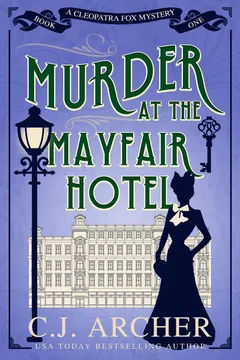


Plot Summary
Cleo Enters the Mayfair
After her grandmother dies, twenty-three-year-old Cleo Fox1 leaves Cambridge and moves into the Mayfair Hotel, the London establishment owned by her estranged uncle, Sir Ronald Bainbridge.3 Her cousin4 Flossy4 welcomes her warmly, while the polished assistant manager,2 Harry Armitage,2 helps settle the confusion over Cleo’s1 arrival.
Cleo1 wants more than a comfortable room: she hopes to work and become independent, despite Sir Ronald’s3 belief that women in his family should not take jobs. Their first private conversation brings an unexpected revelation.
Sir Ronald3 has secretly paid Cleo’s1 modest allowance since birth, a gesture her father’s family concealed because they distrusted the Bainbridges. Cleo1 refuses his offer to increase it, determined not to mistake support for a future of her own.
Cleo’s arrival makes dependence the novel’s first practical problem, not merely an emotional condition. She needs the hotel after losing her grandmother and facing family debt, yet immediately resists the ease Sir Ronald offers. Her refusal of extra money expresses a wish to control her future, though it cannot erase her reliance on him. The concealed allowance also unsettles inherited certainty: the family story that Sir Ronald is simply greedy proves incomplete. Cleo’s attention to discrepancies, from her unrecorded arrival to the hidden source of her money, establishes curiosity as both her intellectual strength and a force that will soon carry her beyond the role her relatives have assigned.
Christmas Brings a Corpse
On Christmas morning, housemaid Harmony7 tells Cleo1 that Mrs. Warrick, a guest on the third floor, has been found dead and may have been poisoned. The police focus first on Danny,15 a footman who delivered Warrick’s hot chocolate after she complained he had damaged her fur coat. Sir Ronald3 fears the scandal will ruin the hotel’s New Year’s Eve ball, while his son Floyd10 wants the police to arrest someone quickly.
Cleo1 questions Detective Inspector Stephen Hobart,6 brother of hotel manager Alfred Hobart,5 and learns the poison was not in the chocolate cup. Danny15 insists Warrick was alive when he served her. Cleo1 sees the danger of blaming an employee for convenience and agrees to help Harmony7 investigate before an innocent person is punished.
The murder converts the Mayfair from Cleo’s promised refuge into a closed social system under pressure. The hotel’s hierarchy shapes every response: Sir Ronald thinks about reputation, Floyd about speed, and Harmony about the vulnerability of workers whose livelihoods depend on the establishment. Cleo’s first moral choice is to doubt the easy accusation, not because Danny is her friend but because the evidence is thin. Her questions to the inspector reveal a mind that tests mechanisms rather than accepting official confidence. At the same time, the hotel’s approaching ball makes justice seem commercially inconvenient, exposing how swiftly a respectable institution can confuse protecting its name with protecting people.
Three Men in Warrick’s Sight
Cleo and Harmony7 question the staff, learning that Warrick apparently neither dined in the restaurant nor received a meal in her room. Maid Edith,8 who discovered the body, describes finding an empty chocolate pot beside Warrick, but tests show no poison in it.
Cleo1 remembers Warrick speaking strangely about a man she had recognized in the foyer, then identifies three possible figures nearby: Harry,2 guest Mr. Hookly,9 and Mr. Duffield.14 When Inspector Hobart6 asks about his movements, Harry2 claims he was in his office before meeting Cleo,1 although she had seen him emerge from the steward’s office.
Cleo1 also learns Harry2 is an orphan taken in by Alfred’s brother.6 The discrepancy makes Harry’s2 composure look suspicious, and Cleo1 begins privately weighing whether the assistant manager2 is hiding more than his whereabouts.
This stage turns ordinary hotel observation into evidence, but Cleo’s method is not yet reliable. Her recollection of Warrick’s remark is specific enough to generate suspects, while Harry’s lie seems to confirm the suspicion she is already forming. The reader can see the danger in that sequence: an unexplained fact gains force because it fits a theory, not because it proves one. The hotel’s routines also begin to matter as investigative infrastructure. Dining records, room deliveries, keys, and staff movements will provide firmer ground than impressions of character. Cleo’s growing alliance with Harmony gives her access to this knowledge, but it also encourages confidence before she has learned how much she does not know.
The Guest Who Lied
Cleo1 approaches Mr. Duffield14 at dinner and discovers that his claims of owning a Lincolnshire estate conceal financial trouble. She follows him to The Evening News and learns he passes gossip to its features editor for money, including information about Sir Ronald’s3 efforts to secure guests for the ball.
Sir Ronald3 chooses not to confront him, fearing further damage to the hotel. Cleo1 also speaks with Mr. Hookly,9 a recent arrival who says he has returned from southern Africa after selling a mine. His parcels and lavish tailor’s orders suggest spending well beyond what his story comfortably explains.
Harry2 catches Cleo1 in the smoking room and mistakes her questions for flirtation with Hookly.9 Their exchange leaves Cleo1 irritated and unable to tell whether Harry2 is protecting hotel privacy or simply refusing to trust her.
The two guests offer contrasting forms of social performance. Duffield tries to preserve gentility while selling private knowledge; Hookly projects prosperity through purchases and a prestigious recommendation. Cleo reads both men through the gap between their presentation and their circumstances, a useful instinct that is not yet enough to solve the murder. Sir Ronald’s decision to absorb Duffield’s betrayal rather than expose it shows how reputation can become a reason for silence. Meanwhile, Harry’s misreading of Cleo exposes the limits of his own observational skill: he notices her behavior but interprets it through assumptions about women and class. Their friction is therefore not simply romantic sparring; it is a conflict over who gets to define what her questions mean.
A File Becomes an Accusation
Convinced Harry’s2 hidden past may explain Warrick’s recognition, Cleo1 recruits cook Victor12 to pick the lock at a boys’ home and steals Harry’s2 file. It records that he was convicted of theft as a thirteen-year-old.
Cleo1 then learns Warrick had complained about Harry2 to Alfred,5 but the complaint concerned his refusal to punish Danny,15 not his childhood record. Before she understands the distinction, Cleo’s1 questions alert Sir Ronald3 to the conviction. He dismisses Harry2 and Alfred5 for concealing it, despite Harry’s2 years of service.
Cleo1 admits she suspects Harry2 of murdering Warrick, but her evidence collapses when Alfred5 explains why he hired his nephew.2 Cleo1 realizes she has damaged two men on the strength of a mistaken interpretation and retreats to her room in tears.
Cleo’s first serious failure comes from the same appetite for truth that distinguishes her. She treats access as permission, breaks into an institution, and converts a childhood conviction into a present character judgment. The file gives her a fact, but she supplies the motive herself. Her mistake reveals how easily a record can flatten the circumstances it was meant to describe, especially when the person documented was a child with little power. Sir Ronald’s swift dismissal of Harry and Alfred shows the opposite failure: he treats past conduct as permanent identity and loyalty as secondary to institutional respectability. Cleo’s grief is not just embarrassment. She must confront that good intentions do not prevent her actions from harming others.
The Price of Being Wrong
Cleo1 urges Sir Ronald3 to reinstate the dismissed men, arguing that the hotel cannot replace Alfred’s5 knowledge and should not discard years of loyal work. He eventually restores Alfred5 to his manager’s position, but Harry2 refuses to return.
Alfred5 explains that Harry2 was mistreated at a factory after becoming an orphan, ran away, and stole to survive before Alfred’s brother6 took him in. Cleo1 apologizes to Harry2 at his family home, but he remains angry that her accusation cost Alfred5 his reputation and him his livelihood.
Back at the hotel, Cleo1 resolves to stop investigating. Then, while ordering supper with Flossy,4 she notices that Warrick may have eaten in a guest’s room rather than the dining room. The idea draws her back toward the case.
Cleo begins to repair the harm by arguing from consequences rather than asking Sir Ronald to forgive her out of sentiment. Her appeal recognizes that a hotel depends on accumulated knowledge and trust, assets that cannot be replaced by a new appointment. Alfred’s account of Harry’s childhood deepens the moral cost: the crime in the file emerged from exploitation and abandonment, not an uncomplicated criminal nature. Yet Harry’s anger is justified, and Cleo cannot make an apology function as instant absolution. The supper-order insight offers a different model of detection. Instead of forcing motive onto a person, she notices a practical possibility hidden in the hotel’s ordinary service system.
A Dead Man’s Reservation
Cleo1 asks porter Goliath17 to keep watch while she enters Alfred’s5 office and searches the room-service records. On Christmas Eve, Hookly9 ordered enough food and wine for two, though he claimed to be staying alone.
A call to the address in the register brings a worse surprise: the real Mr. Hookly9 died two months earlier. Cleo1 alerts the police, then tells the staff not to confront the impostor.9 When Detective Inspector Hobart6 arrives, he rules Hookly9 out as the killer for now.
Tests found no poison in Warrick’s tonic, toothpaste, or face cream, and her body was in bed; the poison must have left with whoever administered it. Since the room was locked, the inspector suspects someone with access to a key. Cleo’s1 strongest lead has become a reason to look elsewhere.
The false identity is a genuine breakthrough, but it does not solve the murder. This distinction matters: Hookly’s deception establishes that he has something to hide, while the forensic evidence contradicts Cleo’s initial theory about how he might have poisoned Warrick. The case becomes more difficult precisely because suspicion and proof diverge. The hotel’s records, initially mere accounting, expose the mismatch between Hookly’s claimed solitude and his actual arrangements. Yet a meal for two can identify a connection without explaining what happened afterward. The locked room shifts attention toward access and procedure, forcing Cleo to reconsider the staff she has come to trust and to accept that a compelling story is not the same as a demonstrated chain of events.
Keys Behind Closed Doors
Cleo1 visits Harry2 again and explains that the poison was absent from Warrick’s room, so the culprit likely carried it away and used a key. Harry2 joins her in checking who could reach the room: Alfred’s spare keys were secured, while housekeeper Mrs. Kettering13 and Edith,8 the maid assigned to Warrick, had their own sets.
Kettering13 insists hers never went missing. Harry2 suspects she may be hiding the hotel’s missing silverware, a separate theft he had been investigating before his dismissal.
He also recalls Kettering’s13 suspicion that a maid was meeting a guest. Cleo1 remembers seeing Kettering13 scold Edith8 on the fifth floor, far above her assigned rooms, and realizes Edith8 may have been visiting Hookly.9 When the pair return to the hotel, Edith8 cannot be found.
The investigation shifts from personality to permissions. A locked door is not an impossible barrier if the hotel’s own labor system distributes keys among managers, housekeepers, and maids. Cleo and Harry work more effectively together because each contributes a different kind of attention: she remembers an overheard exchange, while he understands staff responsibilities and an older theft. Their partnership is still uneasy, but it is grounded in complementary knowledge rather than easy trust. The missing silverware also prevents the murder plot from becoming isolated from the hotel’s daily life. Kettering’s possible theft and Edith’s possible liaison both reveal how authority and intimacy operate in spaces the guests rarely see.
The Witness at Seven
Cleo1 interviews Mr. Sellen,22 the guest opposite Warrick’s room. He remembers hearing a knock before seven, then seeing Edith8 arrive with tea and return moments later in distress.
The sound makes Cleo1 reconsider Edith’s8 account: Edith8 may have deliberately drawn Sellen22 from his room to witness her at Warrick’s door after the poisoning. The maid is missing, and Cleo1 fears Hookly9 has learned what she suspects. Although still in mourning and unwilling to celebrate, Cleo1 accepts the gray gown Flossy4 and Harmony7 prepared for her.
She goes to the New Year’s Eve ball to observe Hookly9 and tell the inspector what she has found. As guests fill the ballroom, Cleo1 searches for the impostor,9 while Harry2 watches the housekeeper13 and the police make their way to the hotel.
The knock is a small, concrete detail that changes the meaning of an apparently routine observation. Sellen did not simply happen to see Edith; someone may have engineered his presence as an alibi. Cleo’s inference remains incomplete, but it makes her reconsider the maid she had treated as a frightened witness. Her decision to attend the ball is not a sudden surrender to society. The gown is a practical disguise for her investigative purpose, and the event becomes a crowded setting where private schemes can converge. The ball’s pageantry also mirrors the case: both depend on carefully arranged appearances, and both can be disrupted when someone notices the mechanism beneath them.
Midnight Turns Dangerous
At the ball, Cleo1 spots Hookly9 speaking with the banker he hoped to impress and watches him leave with a promised loan. He then asks her to dance and admits that Mrs. Warrick recognized him from his former work as a footman, though he denies killing her. Cleo1 links him to Edith8 and the stolen key. As the crowd counts down to midnight, Hookly9 grips her wrist, drags her into a storeroom, and threatens her with a knife.
Cleo1 stays low in the dark, finds a shard from a broken dish, and stabs his thigh. She unlocks the door just as Harry2 forces his way in and restrains Hookly.9 Inspector Hobart6 and a constable take the impostor9 into custody. Elsewhere, Harry2 has caught Kettering13 removing stolen silverware, and the police arrest her too.
The ballroom’s public celebration becomes cover for a private assault. Hookly’s borrowed identity and financial scheme have bought him time, but Cleo’s recognition of his connection to Edith makes her dangerous to him. Her survival depends on practical attention rather than strength: she uses the dark, keeps low, and turns a broken dish into a means of resistance. Harry’s intervention completes a pattern of cooperation that neither character would have predicted after their rupture. The simultaneous arrest of Kettering resolves the hotel’s quieter theft plot and distinguishes two forms of wrongdoing: one hidden within managerial authority, the other pursued through deliberate impersonation and murder.
The Clock Gives Edith Away
The next day, Inspector Hobart6 tells Cleo1 that Edith8 has been found in hospital, injured after a man pushed her into a horse’s path. Cleo1 questions her and learns the impostor’s9 real name is Lawrence Conrad, a married former footman who manipulated Edith8 with promises of marriage.
Edith8 admits she delivered the poison in Warrick’s tea, but insists she acted under Conrad’s pressure. Cleo1 realizes how he arranged the timing: Edith8 moved Warrick’s room clock forward an hour, poisoned her at six, then reset it and returned with tea at seven, creating Sellen’s22 misleading testimony.
Conrad9 had made Edith’s8 apparent alibi part of the plan. With the murder explained and the ball safely concluded, Harry2 decides to become a private detective. Cleo1 leaves tea with the Hobarts resolved to join him as a partner.
The clock transforms a familiar object into a tool for manipulating both a victim and an investigation. Edith’s staged routine works because the hotel depends on precise schedules, yet nobody initially questions the clock that makes those schedules appear reliable. Cleo’s deduction depends on connecting Warrick’s complaint about a late delivery with Edith’s carefully timed return and Sellen’s testimony. The revelation does not erase Edith’s agency: she poisoned Warrick, even as Conrad exploited her loneliness and fear. The ending gives Cleo a future defined by chosen work rather than inherited provision. Harry’s new profession also turns their strained collaboration into a possible partnership, though neither has yet converted the idea into an actual business.
Analysis
The Mayfair Hotel functions as both a home and a workplace, and the murder exposes the unequal risks hidden inside that arrangement. Wealthy guests receive privacy, elaborate service, and the presumption of respectability. Staff members move through the same rooms but are more readily suspected, controlled, or dismissed. Cleo’s1 investigation begins with a humane objection to Danny’s15 convenient arrest, yet her own rush to interpret Harry’s2 childhood record repeats the very injustice she opposes. The book’s most consequential mistake is not made by Scotland Yard but by a well-meaning amateur who confuses access to information with understanding.
Objects and routines carry the mystery forward. The meal register complicates Hookly’s9 story; room keys turn a locked door into a question about labor and authority; the altered clock reveals how a small change can bend several people’s testimony. These clues reward attention to material procedure rather than intuition alone. Cleo’s1 strongest deductions arrive when she checks the practical sequence of events, while her worst errors occur when she fills missing facts with assumptions about character.
The book also treats emotional vulnerability as something that can be exploited. Cleo’s1 grief and financial dependence make her eager to prove her value. Harry’s2 childhood taught him to protect his hard-won dignity. Edith’s8 loneliness leaves her vulnerable to a man9 who offers affection as leverage. These histories do not erase responsibility, but they clarify why people act as they do. The final movement does not promise that love or kindness will fix every injury: Harry2 remains unwilling to return to the hotel, and Cleo1 cannot undo the harm she caused. Instead, they find a possible way forward through work that uses their different strengths. The new century represents not a clean slate, but a chance to choose what to do with what they have learned.
Review Summary
Murder at the Mayfair Hotel receives mixed reviews, averaging 3.84/5. Readers appreciate the charming historical setting of a 1900s London luxury hotel and enjoy several supporting characters. However, many criticize protagonist Cleopatra Fox for being immature, reckless in her accusations, and inconsistently written. Common complaints include slow pacing, underdeveloped characters, and an unconvincing mystery plot. Some readers find the story a pleasant cozy diversion and express interest in continuing the series, while others abandoned it entirely, citing lack of engagement and an unlikable lead.
Characters
Cleopatra Fox
The hotel’s curious newcomerCleo is a twenty-three-year-old orphan who arrives in London after her grandmother’s death, carrying grief, financial anxiety, and a fierce desire not to become dependent on relatives she barely knows. She values education, practical work, and direct answers, and she is quick to notice inconsistencies others overlook. Her curiosity makes her resourceful, but her wish to prove her usefulness can outrun her evidence and lead her to intrude where she should pause. Cleo’s empathy is strongest when she remembers what isolation feels like, yet she must learn that sympathy and certainty are not the same thing. She is determined to build a life through her own abilities, even when her family expects marriage and leisure to define her future.
Harry Armitage
The guarded hotel managerHarry is the Mayfair’s assistant manager, a capable and attentive professional who has spent years learning the hotel from its service corridors to its accounts. He can soothe difficult guests, manage staff, and move comfortably between polished courtesy and blunt humor. Beneath that competence is a strong need for dignity and control, shaped by an unstable childhood and a hard-won place in the adult world. Harry is loyal to his foster family and protective of the hotel staff, but pride makes him slow to forgive a serious wrong. His connection with Cleo1 is charged by their shared intelligence and mutual mistrust: each recognizes the other’s talent, while resenting the judgments that talent sometimes produces.
Sir Ronald Bainbridge
The formidable hotel ownerCleo’s1 maternal uncle, Sir Ronald owns the Mayfair and treats its reputation as both a business asset and a family inheritance. He is shrewd, financially careful, and capable of generosity, though he prefers his generosity to remain under his control. His assumptions about women’s work and marriage reveal a conventional streak that collides with Cleo’s1 plans. He can be abrupt when he feels betrayed, and his temper makes employees cautious around him. At the same time, he is not the simple miser described by Cleo’s1 paternal relatives: his long support of her was concealed by family estrangement. He wants to protect the hotel, but must learn that trust and loyalty cannot be secured by authority alone.
Florence Bainbridge
Cleo’s exuberant cousinFlossy, as she likes to be called, is Sir Ronald’s3 lively daughter and Cleo’s1 first warm connection at the hotel. She loves fashionable clothes, sweets, social plans, and the spectacle of the annual ball, and her enthusiasm can make her seem frivolous. Beneath that surface, she is affectionate and eager for the sisterly closeness she has never had with Cleo1. Flossy has been raised to think marriage is a young woman’s expected destination, so Cleo’s1 resistance genuinely puzzles her. Her loyalty shows in concrete acts, including helping prepare a gown for Cleo1, even when Cleo1 has not yet decided whether she wants to join the festivities.
Alfred Hobart
The hotel’s trusted managerAlfred Hobart has managed the Mayfair since its beginning and understands its guests, staff, and routines with unusual depth. He uses detailed knowledge to anticipate a guest’s needs, from favorite foods to preferred flowers, and has earned loyalty through personal attention rather than grandeur. As Harry’s2 uncle, he is a steady advocate who believes a person’s past should be understood in context. His kindness is not naïveté: he knows that his decision to employ Harry2 carries risk, but judges the young man by the years of work he has seen. Alfred’s instinct is to protect people from needless harm, even when that means withholding information from Sir Ronald3.
Stephen Hobart
The Scotland Yard inspectorStephen Hobart is Alfred’s5 brother and a Scotland Yard detective inspector investigating the hotel murder. He is methodical, skeptical of amateur conclusions, and reluctant to make an arrest without evidence. His manner is considerably less diplomatic than Alfred’s5, and his impatience with Cleo1 grows when she presses him for information. Family loyalty complicates his position because Harry2 is his adopted son, but he insists on following the case rather than simply accepting the hotel’s preferred version. Stephen’s skill lies in procedure and forensic evidence; Cleo’s1 observations sometimes expose details that his formal investigation has not yet made useful.
Harmony
Cleo’s resourceful maidHarmony is a young Mayfair maid who becomes Cleo’s1 confidante and first ally in investigating the murder. She is observant, outspoken, and hungry for meaningful work, and she understands the staff’s relationships better than Cleo1 can from the outside. Her friendship with Danny15 and concern for Edith8 make the investigation personal. Harmony sometimes pushes Cleo1 toward action before the evidence is ready, but she also recognizes the vulnerabilities of workers who can be blamed or dismissed without power to defend themselves. Her talent for arranging hair and clothes contrasts with a sharper ability to read emotional needs.
Edith
The shy chambermaidEdith is a chambermaid whose quiet manner makes her easy for authority figures to overlook. She is nervous around senior staff and sensitive to kindness, particularly in a workplace where her labor is expected but her feelings are rarely considered. Harmony7 regards her as a friend and tries to protect her from Mrs. Kettering’s13 harsh supervision. Edith’s timidity should not be mistaken for simplicity: she watches what is happening around her and understands how much depends on being believed. Her relationship with the other staff reveals the fragile line between private longing and vulnerability to someone9 with more social confidence.
Mr. Hookly
The polished new guestMr. Hookly presents himself as a prosperous traveler recently returned from southern Africa, with plans to attend the Mayfair’s New Year’s Eve ball. He is socially assured, well dressed, and comfortable speaking with both hotel management and wealthy guests. His frequent parcels and expensive orders make him an object of curiosity among the staff. To Cleo1, he initially seems like a useful source of information about the people Mrs. Warrick may have recognized. His confident manner encourages others to accept his account of himself, while his interest in influential company suggests that he sees the hotel as more than a place to sleep.
Floyd Bainbridge
Cleo’s restless cousinFloyd is Cleo’s1 cousin and Flossy’s4 older brother. Wealth and gender give him freedoms his sister does not have, including frequent nights out with influential friends. He is witty and socially confident, but his teasing can hide a lack of seriousness about the hotel’s business pressures. He resents his father’s3 authority while still benefiting from the family position that authority provides. Floyd’s exchanges with Flossy4 reveal a familiar sibling rivalry, and his initial impatience with the murder investigation reflects the family’s wish to contain scandal quickly.
Lady Lilian Bainbridge
Cleo’s estranged auntLilian is Cleo’s1 maternal aunt, a society hostess and the sister who remained within the wealthy family after Cleo’s1 mother married against her parents’ wishes. She bears a striking resemblance to Cleo’s1 late mother, but her health and spirits are fragile, and headaches often remove her from family life. At other moments she is energetic, affectionate, and eager to reclaim time with her niece. Her warmth makes the old estrangement harder for Cleo1 to understand. Lilian’s dependence on family support and prescribed medicine contrasts with Cleo’s1 insistence on self-sufficiency, while her affection for her dead sister remains visible beneath years of separation.
Victor
The knife-skilled cookVictor is a junior cook with a scarred face, damaged fingers, and a habit of tossing his knives with unsettling ease. He speaks plainly, dislikes being ordered about, and seems to enjoy making other people unsure of him. Despite that rough exterior, he helps Cleo1 investigate and proves capable of practical skills far beyond the kitchen. Harmony7 trusts him enough to recommend him when Cleo1 needs a locked door opened, though she remains wary of his taste for dangerous tricks. Victor’s presence reminds Cleo1 that the hotel’s workers have histories and abilities that their job titles do not reveal.
Miss Kettering
The feared housekeeperThe housekeeper, commonly called Mrs. Kettering despite being unmarried, runs the Mayfair’s rooms with strict discipline. She is efficient, proud of her authority, and quick to scold maids she considers careless. Her manner makes her unpopular among the staff, especially Harmony7, who dislikes the way Kettering treats intelligent or outspoken workers. She believes order is maintained through close supervision and has little patience for explanations. Cleo1 finds her difficult to approach, but recognizes that the housekeeper’s knowledge of keys, rooms, and staff schedules makes her an important presence in the hotel’s daily machinery.
Maurice Duffield
The cash-strapped gentlemanDuffield is a guest who presents himself as a landed gentleman with an inherited estate in Lincolnshire. His worn clothes and guarded answers suggest that his finances are less secure than his pedigree implies. He wants to attend the Mayfair ball, where a wealthy marriage may improve his prospects. His pride makes him sensitive to questions about money, while his dealings with a newspaper reveal a willingness to trade private information for cash.
Danny
The accused footmanDanny is a young footman whose mistake with a guest’s fur coat gives the police an early, convenient reason to question him. He is anxious and resentful about being blamed, but the staff know him as a worker rather than a violent man. His private life is carefully guarded in a society hostile to his relationship with another man. Harmony’s7 confidence in him helps bring Cleo1 into the case.
Peter
The attentive front clerkPeter works at the front desk and knows the guests, reservations, and hotel records better than most. He is friendly, observant, and willing to help Cleo1 find information, though he is careful about hotel rules. His attention to names and addresses turns routine paperwork into an investigative resource.
Goliath
The towering porterGoliath is a very tall porter whose size makes him useful when troublesome visitors need removing, but he is also genial and attentive to the staff. He supports Cleo’s1 investigation, keeps watch while she searches an office, and offers theories of his own. His teasing friendship with doorman Frank18 gives the hotel’s service staff a lively presence beyond their official duties.
Frank
The apologetic doormanFrank is the Mayfair doorman who initially mistakes Cleo1 for someone unable to afford the hotel. After learning who she is, he works hard to repair the insult with courteous service. He is proud of his post and quick to defend the hotel entrance from journalists, though Goliath17 enjoys teasing him.
Mr. Chapman
The exacting stewardMr. Chapman oversees the Mayfair’s dining service and maintains records of guests’ meals. He is formal, ambitious, and privately resentful of Harry’s2 rise to assistant manager2. His attention to restaurant routines makes him a useful source of information, though his own professional jealousy colors what he notices.
Mrs. Hobart
Harry’s protective foster motherMrs. Hobart is the wife of Detective Inspector Hobart6 and one of the adults who gave Harry2 a home after his difficult childhood. She is protective of her son2 and initially resents Cleo1 for the harm her accusation causes. Beneath her sharp welcome is a strong sense of family loyalty, and she has a practical understanding of Harry’s2 ambitions.
Reverend Collin Belfour
The boys’ home vicarReverend Belfour teaches at the boys’ home where Harry2 once lived. He is conscientious about the children’s records and refuses to let Cleo1 search them under a false pretense. His brief appearance shows how institutions preserve fragments of children’s lives, while also guarding those records from casual intrusion.
Mr. and Mrs. Sellen
The corridor witnessesThe Sellens are guests staying opposite Mrs. Warrick’s room. Mr. Sellen remembers the maid’s8 early morning visit and the sound that drew him from his room, while his wife is awakened by the same noise. Their ordinary presence in the corridor gives the investigation a crucial piece of testimony.
Plot Devices
The Mayfair’s key system
Access behind locked doorsRoom keys are held by guests, assigned maids, the housekeeper13, and hotel management, with additional spares kept under lock. This arrangement makes a locked room a question of access rather than an impossible puzzle. Cleo1 and Harry2 compare who possessed keys to Mrs. Warrick’s room and discover why the staff must be investigated alongside the guests. The device also makes the hotel’s hierarchy tangible: workers’ responsibilities grant them entry into private rooms, but that access can be misused or taken from them. Its resolution depends on distinguishing which people could enter from who had a reason to do so.
The false Mr. Hookly
Identity used for creditA guest claims the name and recommendation of a well-connected man, orders expensive clothing, and seeks access to a banker. Cleo’s1 discovery that the real Mr. Hookly9 is dead exposes the identity as false, while the room-service records connect the impostor to a second person on the night of the murder. The false identity creates a convincing trail of suspicious behavior, but it does not by itself establish the method or timing of the poisoning. This device links the murder to the impostor’s financial scheme and shows how a borrowed reputation can open doors in a hotel built around status.
Warrick’s altered clock
A fabricated morning alibiThe clock in Warrick’s room is moved one hour ahead, distorting the apparent time of her usual hot chocolate delivery and making an early tea visit seem routine. Later, the clock is reset, while a knock draws a neighboring guest out to witness the maid at the door. The combination of a familiar schedule and a misleading clock lets the poisoning occur earlier than the witness’s account suggests. Cleo1 solves the timing by connecting Warrick’s complaint about a late delivery with the different readings reported the next morning.
The removed poison
Evidence carried from the roomThe police find no poison in the hot chocolate, tea, tonic, toothpaste, or face cream in Warrick’s room. Since the lethal dose would have caused severe symptoms quickly and Warrick died in bed, the poison must have arrived in something that the killer removed. This evidence defeats Cleo’s1 first theory about Hookly9 poisoning a dinner and shifts attention to whoever could enter with a key and leave without a trace. The absence of evidence becomes a clue about the method, narrowing the crime to a deliberate act concealed within the hotel’s routines.
The missing silverware
A parallel hotel theftThe Mayfair has also suffered a series of silverware thefts, which Harry2 investigated before Sir Ronald3 dismissed him. This secondary mystery explains why Harry2 searched other staff members’ belongings and why his movements initially appeared suspicious to Cleo1. His suspicion that the housekeeper13 is hiding the stolen pieces gives him a legitimate reason to watch her during the ball. The theft plot tests Cleo’s1 willingness to revise a theory: the same behavior that looked like evidence of murder can have another cause, while an unrelated crime can reveal who has been abusing access to the hotel’s rooms and stores.
About the Author





Download PDF
Download EPUB
.epub digital book format is ideal for reading ebooks on phones, tablets, and e-readers.








