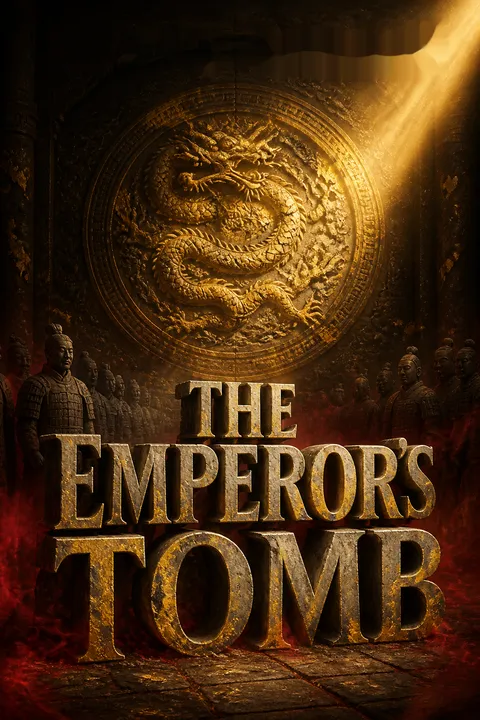


Plot Summary
Prologue
In the mountains near the disputed Chinese-Pakistani border, Cotton Malone and Cassiopeia Vitt flee gunfire toward a rope bridge. A Cobra helicopter attacks as they cross, tearing the bridge apart.
Cotton reaches the far side, but Cassiopeia loses her grip and plunges into the river below. He waits for her to surface. She does not. The scene leaves Cotton staring at the water, apparently alone, before the story rewinds three days to explain how they came to be there.
The opening turns a rescue mission into a question of loss before the reader knows what is being rescued. Cotton’s helplessness is sharply unlike his usual competence: distance, height, and the river make his skill useless. The apparent death also gives emotional weight to the story’s quieter tension between him and Cassiopeia. Their unspoken attachment is established not through confession but through the possibility that one may lose the other before either has risked saying what they feel.
The Drowning Video
Retired Magellan Billet agent Cotton Malone is settling into life as a Copenhagen bookseller when an anonymous message summons him to a live video. A masked captor waterboards Cassiopeia Vitt, the capable adventurer he has grown close to, and demands an object she supposedly left with Cotton.
Cassiopeia manages to warn him not to surrender it, but Cotton has no idea what she means. He has not seen her for weeks and knows only that she was traveling. The captor orders him to bring a package to Tivoli Gardens. Cotton fills an envelope with a random book, retrieves his old pistol, and goes, believing the exchange may be his only chance to find Cassiopeia.
The threat works by turning Cotton’s habitual preparedness against him: he has weapons and training, but no information. Cassiopeia’s warning gives him a reason to resist the demand, while her suffering makes that resistance feel perilous rather than heroic. His bookstore and former career sit uneasily together; retirement has changed his address, not his reflex to answer danger when someone he cares about is involved. The missing object is also a useful structural hinge: it makes the plot begin with a concrete mystery before revealing the larger political stakes.
A Package Goes Wrong
At Tivoli, a Chinese courier takes Cotton’s envelope, then passes it to a man who expected something far more valuable than a book. Cotton follows them through Copenhagen, but a second car shoots both down before he can question them.
Russian operative Ivan Volkov intercepts Cotton and explains that Cassiopeia went to China to help Lev Sokolov, a Russian geologist living there whose young son was stolen. Former Billet chief Stephanie Nelle joins them and confirms that Cassiopeia’s search is entangled with a Chinese succession struggle.
Ivan wants the lamp Cassiopeia sought in Antwerp; Stephanie wants Cotton involved because Karl Tang’s rise could threaten international security. Cotton leaves for Belgium to find Cassiopeia before the trail vanishes.
The failed handoff makes information itself a contested resource. The courier knows too little to complete the exchange, while the people who understand its value are willing to kill to prevent questions. Stephanie and Ivan frame the same crisis differently: she calculates strategic risk, he protects Russian interests, and Cotton focuses on the person in danger. That mismatch establishes the unstable alliance that governs the chase. Cotton’s decision to go to Antwerp is not an endorsement of either power’s agenda; it is a personal commitment that places him inside both.
The Emperor’s Buried Evidence
In China, first vice premier Karl Tang personally oversees the execution of geochemist Jin Zhao, who has been convicted of treason while lying comatose after a beating. Tang then visits the terracotta warrior site, where archaeologists have uncovered a hidden chamber beside Pit 3. It holds ancient manuscripts and a modern watch that links the find to an earlier, secret expedition.
Tang burns the chamber’s contents to erase evidence, but the discovery strengthens his private plan. At a remote drilling site in Gansu, a well produces oil from a field believed dry for centuries. Tang sees the result as proof that China may possess a new, inexhaustible source of power, and learns that Sokolov holds the scientific key to confirming it.
Tang’s violence and his scientific ambition are not separate traits; each serves his conviction that the state must be controlled from above. He kills Zhao rather than risk what the geologist knows, then destroys the archive because knowledge outside his command threatens his political design. The oil discovery gives his authoritarianism an economic promise, not merely a nostalgic one: he can imagine freeing China from dependence and using that freedom to expand its power. The buried library also makes history a physical resource, something Tang can erase or exploit as readily as a well.
Pau Reveals the Ba
Anti-corruption minister Ni Yong visits Pau Wen, an exiled Chinese historian and collector, seeking a bronze dragon lamp Tang wants. Pau reveals that Cassiopeia already stole the lamp, then shows Ni a record of a man undergoing the ancient eunuch initiation. He identifies the Ba, a secret brotherhood descended from historical power brokers, and warns that its members have penetrated government and military ranks.
Ni has underestimated Tang’s reach. When Tang’s gunmen attack Pau’s Belgian home, Pau’s armed followers kill or capture them, forcing Ni to confront the fact that political rivalry has become a fight for survival. Pau sends Ni toward the lamp and Sokolov, whose knowledge may explain Tang’s purpose.
Ni’s professional identity depends on believing that corruption can be exposed through evidence and procedure. Pau’s revelation undermines that confidence by showing that the machinery of oversight may itself be penetrated. The eunuch initiation is not only grotesque spectacle; it gives the Ba an embodied origin story, a ritualized rejection of ordinary family life in exchange for access to power. Pau’s combination of historical insight and armed force complicates Ni’s moral certainty. He is warning Ni about a threat while demonstrating how easily resistance can reproduce the violence it opposes.
Cassiopeia Breaks Free
Cassiopeia entered China after Lev Sokolov, a geologist who once saved her life, pleaded for help finding his stolen son. Tang’s agent Viktor Tomas captured her after she took the dragon lamp from Pau, then kept her locked up and used waterboarding to pressure her into surrendering it. When Viktor sends a guard into her cell, Cassiopeia knocks him down, takes his gun, and confronts Viktor.
He admits working for Tang and claims to know where the boy is, but she distrusts him and escapes alone. Meanwhile, Cotton reaches Antwerp with Stephanie and Ivan. He learns the lamp is hidden in a museum and begins searching for Cassiopeia, unaware that she is already heading there herself.
Cassiopeia’s mission arises from obligation, but it is more than repayment of an old debt: she recognizes the devastation of a family left without recourse. Her ability to fight does not make captivity psychologically easy, and involving Cotton is a practical choice that carries emotional risk. Viktor’s shifting account exploits the gap between useful knowledge and earned trust. Meanwhile, Cotton’s pursuit of her replays their relationship in action: each is willing to enter danger for the other, though neither has yet made that intimacy explicit.
The Museum Burns
Cassiopeia reaches the Dries Van Egmond Museum and retrieves the lamp from a Chinese-style room, just as Tang’s men close in. Cotton slips inside after her, and a gunfight spreads through the building. Attackers pour gasoline across the floors, setting the upper levels ablaze.
Cotton finds the lamp and uses its contents to ignite an armed pursuer, then escapes the flames; Cassiopeia fights off another attacker and flees with Viktor through the basement. The museum burns, and the ancient oil is gone. Outside, Cassiopeia, Cotton, Stephanie, Ivan, and Viktor regroup. Ivan finally makes clear that Tang wanted the oil itself, not merely the bronze artifact, leaving their leverage over him badly damaged.
The museum’s destruction converts a historical object into an irreversible loss. The lamp is first a bargaining chip, then a weapon, and finally a burned sample whose scientific value cannot be recovered from the ruined building. Cassiopeia’s escape depends on temporary cooperation with Viktor, which sharpens the distinction between practical alliance and trust. Cotton’s use of the oil saves him, but it also destroys what might have protected Sokolov’s child. The rescue succeeds physically while failing strategically, an important reversal that keeps the mission from resolving too early.
Oil Beneath the Earth
Stephanie explains why Tang is willing to kill for the sample: geologist Lev Sokolov believes oil can form deep within the earth and replenish some depleted fields, potentially freeing China from foreign energy dependence.
To test his theory, he needs ancient oil from the same Gansu region as a modern sample. Pau Wen offers to guide Cotton and Cassiopeia into Qin Shi’s tomb, where he claims he once found lamps containing that oil. He also reveals his connection to the Ba, while withholding how much he knows about Tang’s plan.
The group flies from Belgium to Halong Bay, then pilots an amphibious plane across Vietnam toward China. A Chinese fighter attacks them over Lake Dian, but Viktor shoots it down with a helicopter and gets the survivors ashore.
The oil plot gives the thriller’s political struggle a material foundation: whoever controls a credible claim of limitless energy can change the terms of international dependence. Yet scientific proof is not politically neutral here. Tang wants evidence as an instrument of dominance; Sokolov’s work is also the result of patient research that could be tested publicly. Pau’s offer is indispensable but suspect, so the expedition advances through an alliance built on incomplete disclosure. The attack over Lake Dian shows that entering China is already a military act, even when the travelers carry no army.
Inside the First Emperor’s Tomb
Pau leads Cotton and Cassiopeia through the drainage tunnels beneath Qin Shi’s burial complex, while Ni enters by a separate passage known only to the premier and Pau. The tomb is empty of its celebrated contents, and its jade platform bears a map that matches one in Pau’s house and another in the premier’s study.
When Tang arrives with Viktor and armed brothers, the clues expose a secret history of exploration. Cotton and Cassiopeia ignite mineral oil floating over the tomb’s mercury channels, creating a burst of fire and toxic vapor that lets them escape.
Ni slips away separately. Tang’s men capture Sokolov in Lanzhou, torture him with heated rats, and threaten his son until he reveals that tiny diamondoids could prove the oil’s deep-earth origin.
The tomb is both a historical spectacle and a working trap: its engineering preserves the emperor’s imagined world while its hidden routes expose how easily a sealed past can be entered by those who know its code. The map’s repetition links political spaces that appear unrelated, revealing how symbols can carry practical instructions across generations. Cotton’s improvised fire converts the tomb’s preservation system into a means of escape, but at the cost of contaminating the chamber. Sokolov’s scientific discovery emerges under coercion, exposing the violence behind Tang’s demand for proof.
The Boy at Batang
Ni’s agents free Sokolov from Tang’s laboratory, and Ni joins Cotton, Cassiopeia, and the geologist as they pursue the ancient sample. Tang uses his influence to have the group detained at Yecheng, but Cotton and Cassiopeia escape the holding room, seize a police vehicle, and drive west toward Batang.
Tang transports Ni and Sokolov to the remote Ba monastery, where Pau reveals that Sokolov’s son has been kept safe there. Father and child reunite, while Tang expects Sokolov to verify the oil theory and Ni to become another obstacle removed. Cotton and Cassiopeia approach through the mountains. Tang has arranged for Pakistani forces to attack them, turning the route to the stronghold into a staged killing ground.
The reunion briefly restores the human scale of a plot dominated by states, doctrines, and commodities. Sokolov’s son is not a token bargaining object to his father; he is the person whose absence has made scientific compliance unbearable. Pau’s choice to keep the boy safe while manipulating everyone around him exposes the moral ambiguity of his strategy: protection is real, but so is coercion. Tang’s use of a foreign military force also reveals the contradiction in his nationalism. He seeks sovereignty through methods that make other people’s violence serve his purpose.
The River Lets Her Go
As the prologue’s attack unfolds, the helicopter destroys the bridge and Cassiopeia disappears into the river. The current carries her into the rocks, where she catches hold and manages to stay above water. Viktor reaches her, hauls her free, and gives her his jacket. Cotton, believing she is lost, follows the mountain trail alone toward the Ba stronghold, intent on protecting Ni and Sokolov.
He reaches the monastery and hears a child speaking Russian from an upper room. Inside, he finds Sokolov and his son, then hides them while moving toward the central hall. Cassiopeia and Viktor climb toward the same confrontation, while Ni holds Pau at swordpoint and Tang waits with armed brothers.
Cassiopeia’s survival does not cancel the prologue’s emotional force; it changes its meaning from final loss to costly uncertainty. Viktor’s rescue complicates Cotton’s judgment of him without erasing the harm he has done. Cotton’s choice to keep moving while grieving shows how action serves him as both duty and emotional defense. The child’s voice gives the rescue effort a concrete destination at last. In the monastery, the various personal and political strands converge, but no one yet knows whether the gathering is a trial, a coup, or another of Pau’s designs.
The Ba Chooses Its Future
In the monastery’s great hall, Cotton finds Ni confronting Tang and Pau. Cassiopeia enters through an upper gallery and knocks down a crossbow guard; Viktor arrives and attacks Cotton, who believes Cassiopeia is dead.
Their fight draws the hall’s attention as Ni challenges Pau over the deaths and deceptions that brought them there. Pau reveals the Ba has not simply served Tang: he engineered the journey to force China’s leaders into a decisive contest, and he intends the brotherhood to back whoever can lead the country.
Tang orders the brothers to move against Ni. Cassiopeia aims her crossbow, while Cotton fights Viktor near burning braziers. The brotherhood’s weapons and old manuscripts make the hall both political chamber and battlefield.
Pau’s revelation recasts the plot’s apparent chain of accidents as a political experiment conducted on living people. His claim that he acted for China does not erase the deaths or manipulation; rather, it forces the question of whether an outcome can be called benevolent when its architect denies others meaningful choice. Ni must decide whether to answer institutional violence with personal violence, while Cotton and Cassiopeia face the same question in immediate form. The hall’s archive and arsenal embody the story’s central tension: inheritance can preserve wisdom, but it can also arm the next ruler.
Tang’s Rule Ends
Tang’s brothers raise crossbows against Ni, but Viktor changes aim and points his gun at Tang instead. The brothers kill Viktor with arrows before he can fire. Cassiopeia shoots at Tang and misses; Cotton, his shoulder injured, finds a gun and shoots Tang as he advances on Ni. Ni takes control, while Pau presents him with a dragon lamp containing ancient oil for Sokolov to test.
Sokolov has his son back, and Ni promises a new constitution and a public account of the discovery. After the fighting, Cotton and Cassiopeia mourn Viktor’s final choice and acknowledge the feelings they have kept hidden. The ending gives neither China nor their relationship an easy cure, but both leave with a chance to begin differently.
The climax distinguishes loyalty from allegiance. Viktor’s final action does not make his earlier betrayals harmless, but it reveals a capacity to choose beyond the shifting employers who have defined him. Tang dies when his attempt to rule through fear meets a coalition he can no longer direct. Ni’s victory is deliberately provisional: he inherits access to power and evidence, not a transformed political system. The closing intimacy between Cotton and Cassiopeia similarly begins with risk rather than certainty. Both resolutions replace evasion with a first act of commitment.
Epilogue
After Tang’s death, Ni prepares to return to Beijing with Sokolov, his son, and the ancient oil sample. He intends to publicize the discovery and use the political opening to reform the government, while Pau claims the Ba will support him.
Cotton and Cassiopeia watch Viktor’s sky burial, then leave the monastery together. They acknowledge that their habit of withholding affection has cost them, and finally choose to stop hiding behind it.
The ending offers transition rather than proof of lasting reform. Ni has a sample, a political opening, and a plan, but he remains surrounded by institutions whose habits predate him. The public disclosure of the oil theory could weaken Tang’s monopoly on knowledge, although it may also rearrange global competition rather than end it. Viktor’s burial gives the characters a ritual way to recognize a man who never fit a stable category. Cotton and Cassiopeia’s final choice is smaller in scale but more immediate: they stop postponing the intimacy their actions have already shown.
Analysis
The novel makes history a contested instrument rather than a stable inheritance. Qin Shi’s tomb, the recovered manuscripts, Pau’s collection, and the maps do not simply preserve the past; characters use them to justify competing futures. Tang wants historical unity as a warrant for centralized force. Ni begins from law and accountability, while Pau treats history as a storehouse of political alternatives, though his manipulation repeatedly compromises the humane ideals he invokes. The recovered Confucian texts matter because they represent not a ready-made cure but an argument that later rulers can either heed or distort.
The oil plot translates these ideological differences into material dependence. If Sokolov’s theory is validated, China’s reliance on imported energy could change, and with it the restraint that dependence imposes on foreign policy. The novel is interested in the difference between a scientific claim and the political use made of it. Tang does not seek knowledge for its own sake; he wants a strategic advantage. Yet the proposed public disclosure of the evidence also risks transferring power rather than abolishing it. The story therefore treats technological abundance as ethically ambiguous: resources can widen a society’s choices or make domination easier to finance.
Its emotional narrative runs beside this national crisis. Cotton and Cassiopeia perform commitment before naming it, while Cassiopeia’s loyalty to Sokolov turns an old debt into present action. Viktor’s shifting service offers a darker version of the same question: whether behavior under pressure can reveal a self that professional roles conceal. The ending does not erase the costs of secrecy, betrayal, or political violence. Instead, it grants the characters a narrow opening in which to choose differently. Both political reform and intimacy begin not as completed victories, but as decisions to stop treating the future as someone else’s responsibility.
Review Summary
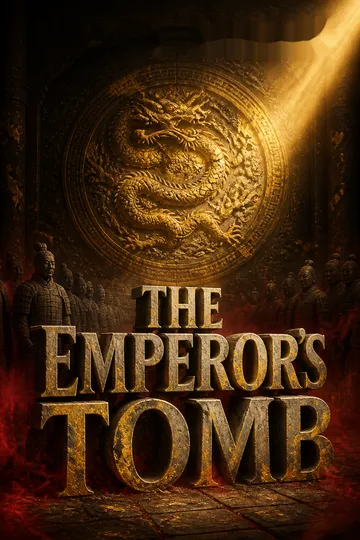
The Emperor's Tomb receives mixed reviews, with praise for its historical research, Chinese setting, and action-packed plot. Critics appreciate Berry's blend of fact and fiction, though some find the narrative convoluted. Readers enjoy Cotton Malone's character development and his relationship with Cassiopeia Vitt. The novel's exploration of Chinese history, politics, and abiotic oil theory intrigues many. However, some reviewers struggle with the complex plot and numerous characters. Overall, fans of the series and historical thrillers find it an entertaining, if sometimes challenging, read.
People Also Read
Characters
Cotton Malone
Reluctant field agentA former Magellan Billet agent who has retired to run a Copenhagen bookshop, Cotton is observant, disciplined, and difficult to surprise. His eidetic memory helps him connect details others overlook, but it also keeps old failures close, particularly the death of his friend Henrik Thorvaldsen. He cares deeply about Cassiopeia, though he tends to express that care through action rather than confession. When her life is threatened, he returns to the dangerous work he meant to leave behind. His central conflict is not whether he can fight, but whether he can admit what matters to him before another crisis makes the choice for him.
Cassiopeia Vitt
Fearless historical adventurerCassiopeia is a wealthy, independent adventurer devoted to preserving history and helping people who have run out of options. Her years of physical training and bold judgment make her effective under pressure, but she is not invulnerable to fear, exhaustion, or the consequences of acting alone. She undertakes the search for Lev Sokolov’s missing son because he once saved her life, and because she understands the desperation of a family ignored by authority. Her connection with Cotton rests on mutual trust and a shared willingness to return when the other is in trouble. She is beginning to question whether self-reliance has become a way to avoid asking for what she wants.
Ni Yong
China’s anti-corruption chiefNi Yong leads the Communist Party’s discipline commission and has built his reputation by investigating powerful officials without public favoritism. A former military commander, he values order and lawful process, but his memories of the 1989 Tiananmen crackdown make him wary of what authority can do when people become expendable. He sees corruption as a structural danger, not merely a collection of bad individuals. His instinct is to investigate before acting, which serves him well until he discovers that the threat around him is secret, organized, and already inside the state. Ni’s challenge is to defend his ethical commitments without mistaking procedural restraint for sufficient protection.
Karl Tang
Ambitious vice premierKarl Tang is a senior Chinese leader whose career rose from geological work into the highest ranks of the Communist Party. He is controlled, strategic, and shaped by a Legalist conviction that stability comes from concentrated authority and disciplined obedience. His deep interest in China’s ancient past is practical as well as personal: history offers models for unification, legitimacy, and state power. Tang interprets foreign dependence as humiliation and believes national strength requires a ruler willing to impose order. His scientific background gives his political ambitions an unusual focus on geology and energy, while his secrecy makes it difficult for allies and rivals alike to know how far his plans extend.
Pau Wen
Exiled historian and collectorPau Wen is a Chinese historian who left his country decades earlier and built a private collection of artifacts he believes were endangered by political upheaval. Learned, patient, and skilled at directing a conversation, he treats history as both a record of cultural achievement and a warning about recurring political failures. His relationships with powerful figures give him unusual access to the present, even from exile. Pau is committed to preserving China’s heritage, but his methods are secretive and his concern for the nation does not always translate into concern for individual consent. He sees political change as inevitable and prefers to shape the conditions under which it occurs.
Viktor Tomas
Unreliable hired operativeViktor is a capable security operative whose career has moved between governments, intelligence services, and private employers. He is physically formidable, quick to improvise, and adept at using humor to conceal what he knows. Cotton distrusts him because their previous encounters have involved shifting loyalties, while Cassiopeia recognizes that his actions do not always match his claims. Viktor has learned to treat allegiance as temporary and survival as a profession, yet his connections to both agents complicate that self-image. He is most dangerous when others assume they understand whom he serves.
Stephanie Nelle
Magellan Billet strategistStephanie created and leads the Justice Department’s Magellan Billet, where she once managed Cotton’s work. She thinks in terms of national security, leverage, and competing political outcomes, and she is willing to make difficult operational choices without explaining every calculation. Her respect for Cotton is real, but she expects him to act when the mission demands it. She approaches the Chinese succession crisis as a strategic threat while Cotton sees Cassiopeia’s immediate danger first, creating tension between their priorities.
Lev Sokolov
Geologist and missing boy’s fatherLev Sokolov is a Russian geologist living and working in China, where his research into the origins of oil has drawn the attention of competing governments. He is brilliant, guarded, and deeply devoted to his young son. His distrust of Chinese authority comes from experience, while his decision to build a life there reflects his love for his Chinese wife. Sokolov’s scientific work is both his life’s purpose and a danger to his family, placing him between the value of evidence and the people others use to force it from him.
Plot Devices
The Dragon Lamp
Ancient oil sampleThe small bronze lamp, shaped with a dragon’s head and a tiger’s body, is the object Tang demands and Cassiopeia steals from Pau Wen. At first it appears to be a valuable artifact and a bargaining chip for Sokolov’s son. Its contents matter more: oil preserved from ancient Gansu could be compared with modern oil from the same region. The lamp’s destruction in the Antwerp fire removes the immediate sample and forces the characters toward Qin Shi’s tomb, where Pau claims other lamps remain.
The Ba Brotherhood
Secret political networkThe Ba is a clandestine brotherhood linked to the historical power of eunuchs. Its members enter government and military ranks, building influence over decades while concealing their allegiance. The organization gives Tang access to loyal officials and armed followers, and allows Pau to influence political events from exile. Its history raises the question of whether a group formed to preserve the state can adapt when its methods become another form of domination.
The Paired Maps
A hidden route encodedMaps in Pau’s house, the premier’s study, and Qin Shi’s tomb appear related but contain different markings. Cotton notices that numbers framing one image align with characters on another, making a grid that points toward the Hall for the Preservation of Harmony. The maps connect private collections, political authority, and ancient architecture, allowing Cotton to recognize how Pau’s historical knowledge can direct the group toward the final meeting.
Sokolov’s Diamondoids
Proof of deep-earth oilSokolov identifies microscopic diamond-like compounds in oil that he believes form under the heat and pressure deep within the earth. Their presence in a modern sample, compared with a verified ancient sample from the same field, could support his theory that some oil is not derived from fossilized organisms and can be replenished. Tang wants the result for its strategic implications; Sokolov needs the comparison to establish the science. The evidence turns geology into a potential instrument of political power.
The Qin Shi Tomb
Buried history becomes a battlegroundThe sealed tomb beneath the First Emperor’s mound contains a hidden passage, a map, mercury channels, and traces of a modern exploration. Pau knows a route through the ancient drainage system, while Ni enters through another passage revealed by the premier. The tomb’s construction and contents link the novel’s historical inquiry to its present-day struggle over political legitimacy. Its oil lamps also provide the sample Tang and Sokolov seek, though the characters’ entry turns the supposedly protected monument into a dangerous arena.
Cotton Malone Series

About the Author
Other books by Steve Berry

Download PDF
Download EPUB
.epub digital book format is ideal for reading ebooks on phones, tablets, and e-readers.








