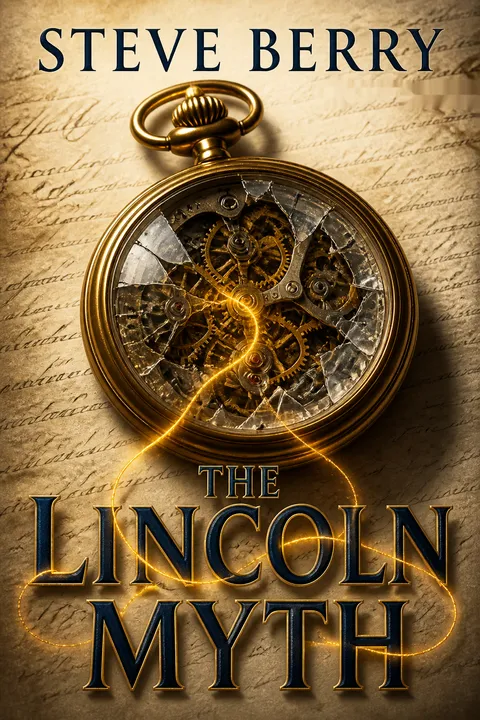


Plot Summary
Prologue
In 1861, Abraham Lincoln confronts Jesse Benton Fremont after her husband, General John Fremont, frees enslaved people in Missouri without authorization and threatens to execute captured Confederates. Lincoln orders Fremont to obey or lose his command, then opens a private letter from former president James Buchanan.
Buchanan says a mysterious document has passed from president to president since George Washington, and warns that the Union may not be as permanent as Lincoln believes. The attached parchment leaves Lincoln stunned. His response to Fremont has been a fight over who may decide the nation’s future; Buchanan’s secret suggests that even the country’s founding may hold a buried answer.
The prologue sets the novel’s central tension in miniature: Lincoln must choose between an abstract principle and the political survival of a fragile Union. Fremont’s unauthorized emancipation makes moral conviction collide with presidential authority, while Buchanan’s letter turns that conflict into a mystery about the nation’s design. Lincoln appears neither as a simple liberator nor as an unquestioned guardian of history, but as a leader forced to act amid incomplete knowledge. The hidden parchment gives private archives the power to unsettle public memory, establishing that the story’s danger lies not only in what happened, but in who gets to define what happened.
Gunfire on the Øresund
Retired Magellan Billet agent Cotton Malone leaves his Copenhagen bookshop after his former boss, Stephanie Nelle, asks him to retrieve Barry Kirk from Sweden. Kirk may know what happened to a missing Justice Department agent, so Malone takes his Beretta and crosses the Øresund by boat. Armed pursuers open fire before they reach Denmark.
Malone shoots one attacker, then turns the chase into a collision course until a low-flying Cessna distracts the second gunman. Its reckless pilot, Luke Daniels, parachutes into the water and identifies himself as a Billet agent. Malone and Luke bring Kirk safely ashore, but the rescue makes clear that someone already knows where the Justice Department is looking.
Malone’s return to fieldwork begins as a favor, not a renewed vocation. That distinction matters: he has built a civilian life around books and routine, yet the danger to a fellow agent reaches the professional loyalty he never quite shed. The boat chase tests his competence before he knows the case, while Luke’s spectacular entrance introduces a younger agent who treats risk as an invitation. Their contrast is practical as well as generational. Malone calculates; Luke improvises. The fact that the attackers were waiting for Kirk turns a simple extraction into evidence of a compromised operation, forcing Malone back into a world he had chosen to leave.
Wagons Behind Stone
In Denmark, Josepe Salazar starves and beats a captive American agent while an angel visible only to him urges violence in the language of religious duty. Salazar believes the prisoner’s death could be an act of mercy, but delays when the apparition says the man is still needed. At the same time, Utah senator Thaddeus Rowan visits a newly exposed cavern in Zion National Park.
Inside, he finds remnants of twenty-two nineteenth-century wagons, four skeletons, and names carved into stone with a denunciation of a prophet. Rowan recognizes the dead as Latter-day Saint pioneers and understands that a church legend has become physical evidence. The discovery gives him fresh confidence in a secret he has been pursuing.
These parallel discoveries establish two kinds of danger. Salazar’s private vision converts religious language into permission to hurt a captive; Rowan’s archaeological find converts inherited legend into political leverage. Their beliefs differ in method but share a hunger for certainty. The carved names point toward a buried institutional history, while Salazar’s unseen angel closes off doubt by speaking as unquestionable authority. The novel links those impulses before the characters fully converge: one man seeks proof that history can be rewritten, the other treats conviction as proof in itself. The cavern’s actual bodies make the coming conflict more than an argument over theology or constitutional interpretation.
Rowan's Washington Shadow
In Atlanta, White House chief of staff Edwin Davis tells Stephanie that Senator Rowan has demanded sweeping access to classified Magellan Billet records. Davis reveals why: Rowan and Salazar are both prominent Latter-day Saints, and the administration suspects they are pursuing a secret tied to the Civil War and the legal right of states to leave the Union.
Davis recounts Lincoln’s bargain with Brigham Young, made when the president needed Utah’s rail and telegraph routes secure. Young agreed to keep the territory neutral, but apparently received valuable collateral.
The newly found wagons may be connected. Davis admits he withheld the larger context when he first asked Stephanie to investigate Salazar, leaving her to realize that her missing agent and the senator’s subpoena are parts of one crisis.
Davis’s disclosure changes the scale of Stephanie’s problem. What began as a field inquiry into a foreign businessman now implicates the White House, Congress, and the constitutional story on which national unity rests. The withheld information also strains the trust that makes intelligence work possible: Stephanie is expected to act decisively while being kept ignorant of the stakes. Her frustration is not mere professional pride. It reflects the moral cost of institutional secrecy, where the people asked to protect the system may be denied the knowledge required to judge what they are protecting. The Lincoln-Young bargain makes that dilemma historical as well as immediate.
Kirk Turns the Gun
At Malone’s bookshop, Kirk identifies Salazar as the employer behind the pursuit and says the missing agent may be held on a Kalundborg estate. Malone spots two watchers outside and leads the group toward a public square, but police arrive with suspicious speed. In a deserted shop, Kirk draws a gun on Luke and admits he planted himself among the Americans to guide them into a trap.
Malone shoots him before he can kill Luke, then uses Kirk’s phone as a decoy and drives with Luke to the estate. In a cellar, they find the missing agent dead behind iron bars, beaten and shot. The discovery confirms Salazar’s violence and gives Luke a personal reason to press the investigation.
Kirk’s reversal exposes the cost of treating information as neutral. He does not merely lie; he engineers the Americans’ movements, turning their rescue attempt into a route controlled by Salazar. Malone’s decision to shoot him protects Luke but destroys the possibility of questioning the one person who might have explained the operation. The dead agent makes that loss irreversible. Luke’s anger is sharpened by having known the victim, while Malone’s practical response keeps them moving despite the emotional shock. The cellar is a literal image of the investigation’s condition: the truth is present, but locked away, surrounded by the machinery of coercion.
The Prophet's Box
After Rowan reports the Zion discovery, church prophet Charles Snow takes him into a restricted room beneath Salt Lake Temple. Snow shows him a private message Brigham Young placed in a temple cornerstone, along with a map.
Young’s account says he and Lincoln exchanged collateral in 1863: the church concealed its gold, while Lincoln entrusted Young with a secret document. The missing wagons were not destroyed by raiders as the familiar story claimed.
Their contents had been hidden elsewhere, and the four murdered teamsters were never part of the account passed between prophets. Snow is troubled that Rowan wants to use the secret to challenge the United States. Rowan, however, sees the discovery as confirmation that his political plan can succeed.
Snow’s disclosure distinguishes institutional memory from institutional innocence. The church has preserved a secret across generations, but its version leaves out the murdered men whose names now reappear in Zion. Rowan treats the recovered account as authorization, while Snow sees the same evidence as a warning about the consequences of turning sacred history into a political instrument. Their disagreement is not simply traditionalism against reform. Both claim stewardship of the past, but one regards inheritance as a mandate and the other as a burden requiring restraint. The map promises recovery; the omission of the victims’ fate shows that recovery alone cannot repair what was concealed.
Cassiopeia's Return
Stephanie recruits Cassiopeia Vitt, a wealthy businesswoman and Cotton’s new romantic partner, to approach Salazar, her childhood friend and former lover. Cassiopeia pretends that she has returned to the Latter-day Saint faith and asks him to help her rediscover it. Salazar welcomes her, shows her Edwin Rushton’s journal, and explains the White Horse Prophecy, which he believes foretells a religious role in America’s future.
He hopes she will join his mission. Meanwhile, Malone and Luke enter the estate and photograph the journal after Salazar leaves. Malone sees Cassiopeia kiss Salazar and learns she concealed both her assignment and their history. The job now threatens not only the investigation but Malone’s trust in the woman he loves.
Cassiopeia’s performance works because it draws on a real history rather than inventing one. She and Salazar share childhood, family, and faith, so her false conversion activates genuine longing in him and genuine guilt in her. Malone’s hurt is similarly grounded: he is not entitled to control Cassiopeia, but he has reason to feel excluded from a life-changing decision. The scene complicates the usual spycraft distinction between role and self. A convincing cover can awaken emotions neither participant fully commands. Salazar reads intimacy as providence; Malone reads it as betrayal; Cassiopeia herself is still trying to determine where her duty ends and her feelings begin.
Madison's Hidden Record
President Danny Daniels brings Stephanie into the larger operation after Mary Todd Lincoln’s letter and a newly found note from James Madison point toward missing presidential records. Madison’s note says his famous account of the Constitutional Convention is incomplete and directs a future reader toward his summer study at Montpelier.
Daniels sends Luke to investigate without alerting the estate. Luke studies the sealed ice pit, meets historian Katie Bishop on a public tour, and returns after dark.
Roman numerals etched across the pit’s bricks guide him to a marked brick, where he finds a glass container hidden inside the wall. Katie catches him with the object and calls the sheriff, forcing Luke to reveal his government role and bring her to Washington rather than abandon the evidence.
Madison’s ice pit makes the archive physical: a public monument to a private man conceals the part of history his published record omits. Luke’s break-in turns abstract constitutional debate into a risky field assignment, while Katie’s arrival prevents the discovery from becoming an uncomplicated spy success. She is neither a guardrail nor a convenient expert; her knowledge forces the operation to account for the people who care for historical sites. Luke’s decision to bring her along shows practical judgment under pressure, even as it bends protocol. The sealed container embodies the novel’s recurring paradox: preservation can protect truth, but secrecy also gives power to whoever controls access.
The Founders' Exit Clause
At the White House, Katie opens the glass container and identifies a handwritten record of a previously concealed Constitutional Convention discussion. Delegates debated whether states could withdraw from the new Union, and Madison proposed a separate agreement preserving that right without placing it in the Constitution.
The record supports Rowan’s legal campaign. In parallel, Rowan examines an 1840 Book of Mormon Abraham Lincoln borrowed from the Library of Congress. Inside, he finds a map and a biblical reference that point toward further clues.
Luke then receives a letter from his late father, delivered by Danny Daniels, explaining that Luke’s father forgave his brother after years of estrangement. The message helps Luke reconsider his uncle just as the national crisis makes their cooperation essential.
The hidden convention record does not prove a simple legal answer; it makes the country’s founding more contested than its public story allows. By locating the withdrawal debate in an unofficial record, the novel asks whether political legitimacy rests on written law, private intent, or the later judgments that stabilize a nation. Rowan sees confirmation; Daniels sees a threat that cannot be casually exposed. Luke’s family letter offers a smaller echo of that problem. His father’s account revises the story Luke inherited about Danny, showing how silence can harden grief into a false history. Both discoveries require characters to decide whether new evidence obliges them to change course.
Deseret's Secession Plan
Rowan meets with a team of lawyers and legislators who have prepared a nonviolent secession campaign. Utah will move first, with Texas, Hawaii, Alaska, Vermont, and Montana expected to follow. He believes the hidden convention record can undermine the Supreme Court ruling that declared secession unconstitutional.
Salazar, convinced the White Horse Prophecy authorizes a new Zion, supports Rowan and deploys Danites to protect their work. At the same time, Malone travels to Salzburg and confronts Salazar at an auction for a rare 1830 Book of Mormon.
He outbids Salazar by offering a million euros, making himself impossible to ignore. Cassiopeia takes Salazar’s side in public, but later uses the confusion to help him recover the book, deepening her separation from Malone.
Rowan’s plan is designed to look like a constitutional procedure rather than a rebellion: ballots, legislation, and litigation replace armies. That strategy makes the threat more difficult for Daniels to dismiss, because its force comes from public consent and legal argument, not a battlefield. Salazar supplies the movement with a militant religious interpretation, while the Danites make its supposedly peaceful project dangerous in practice. Malone’s auction bid is not a solution but a provocation, buying time and drawing Salazar into the open. Cassiopeia’s choice to help Salazar with the book keeps her cover intact, yet every successful act of deception makes her private loyalties harder to disentangle.
The Watch Says Falta Nada
Salazar’s men seize Malone in Salzburg, but Cassiopeia interrupts the confrontation and helps him escape with the auctioned book. Salazar keeps the volume and follows a clue linking Lincoln’s missing message to a second pocket watch, displayed in Des Moines.
He and Cassiopeia fly there, where she cuts power to Salisbury House and breaks the case holding the watch. Luke tries to stop her, but she knocks him down and escapes. Malone intercepts her car and takes the watch before she can deliver it.
He and Luke open it remotely with Stephanie and find two words on its back: Falta Nada, the name of a hidden Utah site. Cassiopeia sees Malone’s intervention as another betrayal and continues with Salazar, now carrying the clue that directs them toward Utah.
The watch turns a sequence of intimate betrayals into a race over physical evidence. Cassiopeia’s successful theft demonstrates competence, but her decision to work alone also leaves her vulnerable to the team that knows her habits. Malone’s interception secures the clue while worsening their relationship; the object is recovered at the precise moment trust is lost. The phrase Falta Nada functions as both a location and a promise that something missing can be restored. Yet the characters do not agree on what restoration means. For Rowan and Salazar it points toward political and religious renewal; for Stephanie it identifies the next place to prevent a national rupture.
The Cave Becomes a Trap
The watch clue sends Rowan and Salazar toward Falta Nada, a remote church property in the Utah mountains. President Daniels and Snow know the original founders’ document is no longer there, but they let Rowan believe it may be.
Stephanie is tasked with keeping the senator and Salazar contained until the government can stop their plan. Cassiopeia arrives with Salazar, believing she can still control the danger; Rowan then learns from his source that she works for Daniels.
Stephanie enters the cave and confirms the accusation, while Cassiopeia admits she was recruited to approach Salazar. The revelation shatters Salazar’s remaining trust. Rowan, meanwhile, has no answer about the document’s location, leaving him exposed as a political ally who cannot deliver what he promised.
The cave is staged as a revelation, but each character enters with a different account of what it contains. Rowan expects proof, Salazar expects sacred confirmation, Cassiopeia expects a chance to manage a volatile man, and Stephanie expects to prevent a larger crisis. Their conflicting purposes collapse when the spy identities become explicit. The location’s beauty and religious associations cannot stabilize the scene; instead, they amplify the difference between spiritual meaning and political use. Rowan’s inability to produce the document isolates him from Salazar, while Cassiopeia’s confession destroys the emotional trust she had cultivated. The trap is therefore psychological before it becomes physical.
The Prophet's Last Command
Salazar insists that the angel he sees is Joseph Smith and treats its commands as authority to kill his enemies. Rowan condemns the Danites and denies ordering murder, confirming that his political project has depended on violence he will not own.
When Rowan turns to leave, Salazar shoots him twice. He then threatens Stephanie, Luke, and Cassiopeia, who tries to reach the gentle man she once knew. Malone draws Luke’s hidden backup gun while Cassiopeia distracts Salazar, but Salazar raises his weapon toward her.
Malone fires twice, killing him. The cave holds no founders’ document, and Rowan and Salazar leave behind a dead political movement, a dead agent’s unanswered loss, and a group of survivors forced to live with the violence used to prevent secession.
Salazar’s delusion becomes most dangerous when it grants him a perfect escape from responsibility: violence is recast as obedience, and murder as mercy. Rowan’s death exposes the gap between his public constitutional idealism and the practical alliance he formed with a violent enforcer. Malone’s shooting is framed as an immediate defense of Cassiopeia, but the novel does not let necessity erase its moral residue. Cassiopeia’s attempt to appeal to Salazar’s earlier self fails because memory cannot compete with a command system that has absorbed every doubt. The cave’s emptiness sharpens the tragedy: the bloodshed cannot even be justified by the prize its perpetrators sought.
The Secret Stays Sealed
After the deaths, Snow reveals that Brigham Young’s original document was sealed inside the stone marker at the Washington Monument, where it will remain. Daniels destroys Madison’s recovered notes so Rowan’s movement cannot use them as proof.
The senator’s death is publicly attributed to a heart attack, while Salazar’s body is returned to Spain. Cassiopeia arranges his burial, then deletes Malone’s contact information, unable to forgive the killing or the government’s manipulation. Daniels later sends Malone the original Book of Mormon from the Salzburg auction as payment.
Luke receives his father’s letter and begins repairing his relationship with his uncle. The United States survives, but the people who saved it do not emerge untouched: Malone returns to Copenhagen alone, wondering whether Cassiopeia will ever come back.
The resolution preserves political continuity by choosing concealment again. The founders’ document remains physically present but unavailable, and Madison’s notes are destroyed, leaving the official national story intact at the cost of full disclosure. Daniels and Snow believe this protects a fragile political system; their choice also repeats the logic of earlier leaders who decided that the public could not bear the truth. On the intimate scale, Luke accepts a revised family history, while Cassiopeia rejects the reconciliation Malone hopes for. Her departure prevents the national victory from functioning as a romantic reward. The ending leaves preservation and honesty in unresolved tension, with the secret secure and the personal damage still open.
Analysis
The Lincoln Myth makes historical memory operational. A letter, a journal, a map, and an altered record do not merely illuminate the past; they give present-day characters tools with which to reorganize political life. The thriller’s central question is therefore not simply whether secession is legally possible, but who has authority to interpret the founding: the public text, private intention, institutional tradition, or the people living under the system now. Rowan treats archival evidence as a mandate, Daniels treats its disclosure as a threat, and Snow sees it as a burden that requires judgment rather than obedience.
The novel also studies how conviction can harden into permission. Salazar’s imagined angel removes moral friction by turning personal violence into religious service. His language of salvation makes him more dangerous than a conventional mercenary because he believes that restraint would itself be a betrayal. Rowan’s political ambition is less overtly violent, yet his alliance with Salazar shows how a clean public aim can depend on compromised means. Their partnership exposes the difference between a declared principle and the human consequences required to pursue it.
The private relationships echo the national crisis. Luke inherits a distorted account of Danny’s grief and must revise it through his father’s letter. Cassiopeia’s effort to separate the gentle young Salazar from the dangerous man he has become fails, while Malone’s attempt to protect her intensifies their estrangement. In each case, affection cannot substitute for accurate knowledge. The ending preserves the Union by keeping the founders’ document sealed, choosing stability over public reckoning. That choice may prevent immediate political fracture, but it repeats the story’s central compromise: institutions survive by deciding which truths must remain hidden, while individuals bear the cost of that decision.
Review Summary
The Lincoln Myth receives mixed reviews averaging 3.89 stars. Readers praise Steve Berry's historical research and blending of fact with fiction, particularly regarding Abraham Lincoln, Mormons, and constitutional questions about state secession. Many appreciate the fast-paced action and new character Luke Daniels. However, critics note character inconsistencies, especially with Cassiopeia Vitt, excessive historical exposition, and a plot less compelling than previous Cotton Malone novels. Some readers found the religious focus uncomfortable, while others valued Berry's accurate portrayal of Mormon history. Overall, fans enjoyed it despite considering it weaker than earlier series entries.
People Also Read

Characters
Cotton Malone
Retired Billet investigatorMalone is a former Justice Department intelligence agent who now owns an old-book shop in Copenhagen. His habit of noticing details and preparing for danger keeps him effective even after retirement, but his return to fieldwork reveals how strongly he remains bound to colleagues who need help. He is guarded with his emotions, shaped by a failed marriage and by the loss of his father, yet his relationship with Cassiopeia has made him consider a future beyond solitary routines. His professional confidence can become stubbornness, especially when he believes he knows what is safest for someone he loves. The case tests whether protecting Cassiopeia means respecting her choices or overriding them.
Stephanie Nelle
Billet founder and chiefStephanie founded and leads the Magellan Billet, a compact intelligence unit designed to serve the executive branch with legal and operational independence. A career lawyer, she is disciplined, politically perceptive, and accustomed to withholding information when she believes disclosure would endanger an operation. Her loyalty to the institution is tested when presidential demands collide with the duty to protect her agents and the people she recruits. She values Malone’s judgment but knows his personal feelings can complicate a mission. Her close, unresolved bond with President Daniels adds another private pressure to a career built around keeping personal loyalties subordinate to public responsibility.
Luke Daniels
Reckless Billet newcomerLuke is a former Army Ranger recruited into the Magellan Billet despite having no college degree. He is daring, quick to improvise, and sometimes too eager to prove that he belongs beside experienced agents such as Malone. His father’s death shaped his insistence on making something of his life and on staying close to his family, especially his mother. Luke has a tense relationship with his uncle, President Danny Daniels, whose authority and emotional reserve have long seemed like indifference. His field assignments demand discipline, while his family history asks him to reconsider judgments passed down through silence. He combines physical courage with a surprisingly strong need for loyalty and belonging.
Cassiopeia Vitt
Independent operative and heiressCassiopeia is a wealthy businesswoman with engineering and medieval-history expertise, a humanitarian foundation, and a long-running project to rebuild a French castle using historical methods. She is self-reliant and dislikes being treated as dependent, in part because she rejected the religious expectations that shaped her childhood. Her earlier love for Salazar and newer bond with Malone pull her between memory, affection, and judgment. She accepts Stephanie’s request because she believes Salazar may be innocent, then discovers that the assignment places her inside a web of political and personal deception. Her confidence is real, but so is the cost of carrying every burden alone.
Josepe Salazar
Devout collector turned zealotSalazar is a wealthy Danish-Spanish businessman who has handed daily management of his family’s company to relatives so he can devote himself to the Latter-day Saint church. His faith is disciplined, intense, and bound to an idealized picture of the church’s early history. He collects religious artifacts and prizes the possibility of restoring a lost political and spiritual order. His affection for Cassiopeia remains powerful long after their separation, and her return feels to him like confirmation that his hopes are justified. He is intelligent and capable of warmth, but his certainty leaves little room for disagreement, making him susceptible to anyone who presents violence as sacred duty.
Thaddeus Rowan
Senator and church apostleRowan is Utah’s senior senator, a long-serving public official, and a member of the Latter-day Saint Quorum of the Twelve Apostles. He has built a reputation for personal discipline, family devotion, and political competence. His commitment to the church and his constitutional convictions reinforce each other, leading him to believe that political independence could restore a community’s freedom. Rowan is patient enough to prepare a national campaign over years, but his confidence in a single interpretation of history risks narrowing his judgment. He sees himself as serving both his constituents and his faith, and the tension between those obligations shapes his choices.
Charles R. Snow
Ailing church prophetSnow is the aging prophet and president of the Latter-day Saint church, a former academic and experienced administrator whose body is failing while his mind remains sharp. His leadership has been quiet and practical, rooted in continuity and the preservation of a community that has endured generations of persecution. Snow believes that inherited secrets create obligations, not automatic permission to act. He is willing to disclose hidden history to Rowan, but fears the senator’s motives and the consequences of treating the past as a mandate. His physical vulnerability contrasts with the weight of his institutional authority.
Danny Daniels
President with private griefDanny Daniels is the outgoing president of the United States, a blunt, politically seasoned leader whose public confidence conceals grief over the death of his young daughter. His long-standing estrangement from his brother’s family grew from that tragedy and from his habit of burying pain rather than discussing it. Luke sees only the distance until a letter from his father reveals the family’s reconciliation and Danny’s enduring sorrow. As president, Daniels faces a choice between exposing destabilizing history and protecting the country he leads. His connection with Stephanie is affectionate but restrained by their offices and the timing of his final months in power.
Edwin Davis
White House strategistDavis is the White House chief of staff, a seasoned civil servant with a doctorate in international relations and a talent for reading political danger. His friendship with Stephanie allows him to approach her candidly, though he initially withholds the larger purpose of the Salazar inquiry. He understands that history can become an active political weapon when institutions fail to control how it is interpreted. His anxiety about Rowan’s campaign reveals how seriously he takes the threat to the Union.
Barry Kirk
A compromised informantKirk is a former personal assistant to Salazar who claims to know about his employer’s interests in Mormon history and a suspicious death. He is frightened, evasive, and useful to the Justice Department because he can point toward the missing agent. His apparent defection encourages Malone and Luke to trust him, even as his actions serve another purpose. Kirk’s role shows how quickly a frightened source can become an instrument in someone else’s operation.
Katie Bishop
Historian at MontpelierKatie is a scholar of James Madison and a member of Montpelier’s restoration staff. Her expertise makes her essential when a newly discovered document emerges from Madison’s ice pit, but she is not simply an academic observer. She notices Luke’s deception, calls the sheriff, and forces him to explain why the artifact matters. Her insistence on protecting the historic site gives the story a civilian perspective on the consequences of covert operations.
Abraham Lincoln
President guarding a secretLincoln appears in the prologue and through documents, artifacts, and contested memories. He is a wartime president whose decisions are presented as strategic responses to threats against the Union, not as simple expressions of moral certainty. His relationship with Brigham Young suggests that he could negotiate privately even while publicly defending national authority. The novel’s central mystery depends on the distance between Lincoln’s public legacy and the private choices attributed to him.
Brigham Young
Pioneer prophet and negotiatorYoung is the nineteenth-century Latter-day Saint leader who organized the migration west and shaped the community’s political and economic life. In the novel, his private writings connect the lost wagons, the church’s gold, and Lincoln’s secret. He is remembered as both a resourceful nation-builder and a leader capable of choices that harmed individuals for the sake of institutional survival. His legacy is therefore not simply heroic or villainous, but contested by the people who inherit his decisions.
Plot Devices
The presidential secret
A hidden national bargainA chain of private presidential records leads from Washington and Buchanan to Lincoln, then to a secret exchange with Brigham Young. The papers imply that the founders considered a state’s right to withdraw from the Union, while Young received a document from Lincoln as collateral. This device turns political history into an active mystery: each new letter or note revises the meaning of an earlier decision. It also gives the central conspiracy plausible institutional weight, because the secret has survived through archives, church records, and presidential custody rather than through a single witness.
The White Horse Prophecy
A faith-based political mandateA prophecy attributed to Joseph Smith predicts upheaval in America and a role for Latter-day Saints in defending the Constitution. Salazar and Rowan interpret it as support for a new Zion and a possible secession, while Snow treats it as an unreliable tradition that must not dictate policy. The prophecy motivates Salazar’s devotion and gives Rowan a spiritual frame for his political project. Its uncertainty is essential: whether it is genuine revelation, later embellishment, or selective interpretation matters less to the plot than the actions people take because they believe it.
The lost wagons
A buried history resurfacesThe legend of twenty-two wagons carrying Latter-day Saint gold becomes concrete when Rowan finds their remains in a Zion cavern. The discovery reveals that the familiar account of the caravan’s disappearance is incomplete and connects the gold to a larger bargain between Young and Lincoln. The wagons also expose the cost hidden beneath the church’s institutional history: four men were killed, yet their fate was omitted from the story passed down to later leaders. The cavern provides both a physical clue and a moral challenge to Rowan’s confidence in inherited narratives.
The artifact trail
Clues turn history into pursuitA sequence of physical objects moves the investigation forward: Rushton’s journal, Madison’s concealed record, a marked Book of Mormon, Lincoln’s watch, and the map hidden in church records. Each artifact provides only part of the answer, so characters must interpret inscriptions, dates, and religious references while racing to control the next clue. The trail links Copenhagen, Salzburg, Washington, Iowa, and Utah without reducing the mystery to exposition. It also makes possession itself a source of conflict, since every discovery can be stolen, withheld, or used to mislead an opponent.
The Danites
Faith becomes organized forceSalazar revives the Danites, a secretive group associated with the early Latter-day Saint community, as a private cadre meant to protect the church and enforce his mission. The organization gives him trained followers, surveillance, and the ability to set traps for Malone’s team. More importantly, it externalizes his belief that loyalty requires obedience without question. In the story, the Danites are not merely hired guards: they make the gap between Rowan’s nominally peaceful political campaign and Salazar’s coercive methods visible. Their presence also helps explain why ordinary police intervention cannot resolve the conflict.
Cotton Malone Series
About the Author
Other books by Steve Berry

Download PDF
Download EPUB
.epub digital book format is ideal for reading ebooks on phones, tablets, and e-readers.








