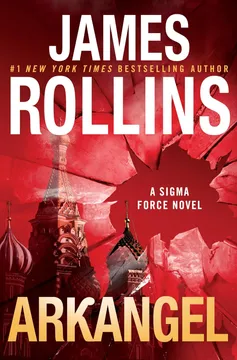


Plot Summary
Prologue
In 1764, Russian commandant Vasily Chichagov brings three frigates to Spitzbergen under a secret order from Empress Catherine the Great. With scientist Mikhail Lomonosov, he examines the frozen bodies of an earlier expedition and finds a carved mammoth tusk depicting an ancient city.
A Greek inscription identifies the place as Hyperborea, the legendary northern homeland. Nearby, the dead explorers have left a warning against disturbing what sleeps there. Chichagov understands that Catherine expects him to continue the search, and the warning does not change his course.
The prologue makes discovery an act of inheritance: Chichagov does not choose the danger so much as accept an imperial ambition passed down through a sealed decree. The tusk is both evidence and temptation, transforming a myth into a political project. Its warning gives the reader knowledge the characters refuse to honor, creating dramatic irony that persists through the modern expedition. Lomonosov’s intellectual wonder and Chichagov’s military obedience also establish the novel’s central tension: knowledge may be valuable, but finding it does not mean humanity is prepared to use it.
The Vault Under Moscow
In Moscow, Vatican archaeologist Alex Borrelli joins student Vadim and archivist Igor Koskov to inspect a hidden chamber of ancient books. When Alex lifts a gold-covered volume of Herodotus, a mechanism brings the vault down, killing Vadim and the other explorers. Alex and Igor escape with the book, and Alex recognizes its pages as a clue to Ivan the Terrible’s lost Golden Library.
A sketch signed by Catherine the Great appears to map its location. Before Alex can reach safety, masked assailants kill Igor, seize the book, and cut Alex’s throat. Dying on Red Square, Alex sends photographs of the book to a secret address supplied by Vatican prefect Finnigan Bailey, leaving Sigma Force his only surviving lead.
The first discovery is inseparable from its cost. Alex’s scholarly impatience helps trigger the collapse, so the deaths beneath Moscow are not merely evidence of an enemy’s violence; they also expose how urgency can turn responsible inquiry into recklessness. His final decision to transmit the photographs converts private guilt into a usable clue, though he cannot know who will receive it. The buried archive consequently functions as both treasure and test. Its first guardians fail, and the people who inherit their evidence must decide whether they can investigate without repeating their mistakes.
Sigma Names Its Enemy
In Washington, Sigma commander Gray Pierce meets director Painter Crowe, Monk Kokkalis, intelligence chief Kathryn Bryant, and Seichan, his partner and the mother of their young son. The Smithsonian Castle bombing has placed the covert agency under political scrutiny, while attacks on its operatives suggest a campaign against Sigma itself.
Kat’s review of prison footage shows former senator Kent Cargill meeting a disguised visitor. Facial analysis identifies the visitor as Valya Mikhailov, Seichan’s former Guild ally and enemy.
When Alex’s photographs arrive, the team learns that he and Igor were murdered in Moscow. Bailey confirms Alex had been searching for the Golden Library, and offers Sigma diplomatic cover to investigate. Crowe has already sent Tucker Wayne and demolitions expert Joe Kowalski into Russia.
The briefing joins two mysteries that initially seem separate: the assault on Sigma and the murder of a Vatican scholar. Its emotional pressure comes from the fact that Seichan has more to lose than professional standing. Sigma gives her protection, belonging, and a future with Gray and their son, so its possible destruction threatens the life she has built beyond the Guild. The team’s decision to enter Russia is therefore tactical and personal. The novel makes institutional secrecy double-edged: it shelters vulnerable people, but it also leaves Sigma isolated when powerful enemies learn where to strike.
A Botanist Taken North
In Saint Petersburg, Tucker follows Serbian courier Arkady Radić through the city with Kowalski and two Belgian Malinois, veteran Kane and trainee Marco. Radić meets armed men beside the botanical gardens, where they have drugged and abducted research botanist Elle Stutt.
Tucker and Kane attack the kidnappers; Kowalski disables the getaway vehicle, and Marco helps subdue Radić after he flees into a greenhouse. The courier cannot identify his employer, but he was ordered to deliver Elle to an address in Moscow.
Tucker refuses to leave her vulnerable and brings her to his Russian contact, industrialist Bogdan Fedoseev. Elle agrees to accompany Tucker and Kowalski after learning that the kidnappers targeted her for her research on carnivorous plants.
Elle’s abduction turns the intellectual mystery into a bodily one. Until this point, the Golden Library offers texts and symbols; now the enemy’s interest in a living scientist reveals that the old drawings may describe knowledge that still has practical value. Tucker’s loyalty to Kane and Marco, and his reluctance to trust people over animals, give the rescue its emotional texture. Yet his instincts do not make him invulnerable. His insistence on protecting Elle pulls him into a conflict whose scale he does not yet understand, while Elle’s curiosity begins to rival her fear.
A Monastery Explodes
Gray and Seichan investigate the Moscow address Radić was given, a church at the ruined Simonov Monastery. From a derelict dyehouse, they watch Archpriest Leonid Sychkin meet a disguised Valya, who admits she expected Sigma to follow the courier.
She has already mined the outbuildings. Explosives rip through the dyehouse, sending Gray and Seichan into the wreckage. Seichan fights armed searchers while Gray, badly injured, tries to reach their motorcycle.
When Russian forces close in, Seichan draws fire away from him, and Gray shoots at the pursuing helicopter from an old tower. They escape together, confirming Valya’s involvement and recognizing that Sychkin is not simply a church official. The ambush proves their opponents know how Sigma thinks.
Valya’s trap is designed to exploit Sigma’s competence: she predicts that the team will pursue the courier, then turns their investigative discipline into a route through a kill zone. The sequence also tests Gray and Seichan’s relationship through action rather than confession. Seichan risks capture to give Gray a chance to escape, while Gray refuses to treat her as expendable. Their loyalty is powerful, but the ambush reveals its vulnerability: enemies can target the bonds that make the team effective. The church setting further complicates moral authority, placing calculated violence inside a landscape meant to signify refuge.
The Third Rome’s Claim
At the Moscow morgue, Bailey and Sigma operatives question Bishop Nikil Yelagin, who arrives with novice Anna Koskov, Igor’s sister. Yelagin identifies the church in Catherine’s drawing as the Holy Trinity Lavra at Sergiyev Posad.
Anna adds that local reports describe a new excavation there, officially searching for an early Tikhvin Icon. Her knowledge of the church and of Igor’s archival work makes her an ally. The team learns that Sychkin leads the Arkangel Society, which wants evidence that Russians descend from Hyperboreans and uses religious destiny to support territorial expansion.
Gray’s group reunites with Tucker, Elle, and Kowalski at the Vatican embassy. There, Elle recognizes ancient drawings of strange carnivorous plants, and Jason uncovers a hidden image beneath Catherine’s map.
The conspiracy gains force because its members do not share a single motive. Sychkin seeks religious and political power, while the Arkangel Society turns a historical myth into an argument for national entitlement. Anna’s grief does not prevent her from helping the investigation; her scholarship becomes a means of continuing her intellectual partnership with Igor. The Tikhvin Icon shows how objects acquire political force through competing interpretations. A relic, a library, and a lost continent are not inherently territorial claims, but institutions can make them serve that purpose. The danger is not belief itself, but belief converted into permission to dominate.
Ivan’s Hidden Coordinates
Jason’s image processing reveals that Catherine’s frontispiece conceals a spherical astrolabe marked with Glagolitic numerals. Anna translates the symbols into coordinates, which point to the Ringing Tower inside the Trinity Lavra. While Gray’s team poses as visitors, Anna guides them into its abandoned cellar.
Beneath it, they find blue floor tiles engraved with the same script. Gray recognizes that some tiles are spring-loaded, and the group tests them until Anna reconstructs a sequence spelling Ivan IV’s full name. Entered quickly, the sequence opens a concealed passage.
A stairway descends into the limestone beneath the Lavra, where they discover the Golden Library: thousands of gold-and-silver-banded chests set into the cavern walls. The archive’s catalog and its hidden map may reveal where Catherine’s expedition went.
The cipher asks its solvers to join disciplines rather than simply crack a code. Jason’s digital tools expose layers, but Anna’s knowledge of old scripts and Gray’s pattern recognition supply the interpretation. The successful sequence is therefore collaborative, a sharp contrast with the solitary ambition associated with Ivan and Sychkin. Yet the hidden mechanism is not a clean invitation. The library’s elaborate locks suggest that intelligence is only one qualification for access; restraint matters too. The team’s entry brings the story’s central question into physical reach: whether recovering knowledge can be separated from claiming it.
The Library Floods
Inside the Golden Library, Gray’s team finds Mikhail Lomonosov’s preserved study, a copy of the lost account Inventio Fortunata, and a Mercator map of a supposed Arctic continent. Lomonosov’s notes suggest the map’s magnetic mountain is a misleading enlargement of a smaller island in the East Siberian Sea.
Before the group can finish tracing the location, Bishop Yelagin touches a mammoth tusk, triggering a flood system. Water pours through the library, and Gray realizes the wax-sealed chests were designed to protect books from the trap.
He leads Anna and Jason up a hidden chimney, but Yelagin and Bailey are swept away. Above ground, Russian soldiers approach. The survivors escape through a cave beyond the Lavra, carrying the coordinates and the cost of the discovery with them.
The library’s defense makes preservation indistinguishable from violence. The chests are sealed against water, but people are not protected, and the archive’s survival depends on sacrificing intruders. Yelagin’s mistake echoes the earlier deaths in Moscow: reverence and curiosity do not automatically produce caution. Gray’s choice to return to Lomonosov’s study shows his strength as a pattern reader, but it also places the group in further danger. The catastrophe changes the expedition from scholarly pursuit into a race against time. The knowledge has been recovered, yet its guardians and interpreters are being lost.
Prisoners at the White Sea
While Gray’s team heads toward the Arctic, Sychkin’s forces capture Tucker, Elle, and Marco and transfer them to the White Sea Naval Base. Kowalski escapes the burning mansion with Seichan’s help, and her decoding of Yerik’s signs identifies the base.
Monk leads a rescue team through a snowstorm, using Kane to find Marco’s trail. They break into the church basement where prisoners are held and discover that Bailey survived the flood, only to be tortured until he revealed Gray’s destination.
Tucker, Elle, and Marco are freed, and the team takes Bailey with them. A firefight at the base forces their escape in an armored vehicle and a small plane. Pilot Fadd is killed as they evade a Russian armored carrier, but the survivors reach the open sea.
This turning point makes rescue a collective obligation rather than a side mission. Kowalski’s determination to return after his own injury, Monk’s medical expertise, and Kane’s tracking all answer the same problem through different forms of loyalty. Tucker’s bond with his dogs is tested when Marco is separated from him, while Elle’s protection of the young animal shows that care has become reciprocal. Bailey’s torture exposes the brutal cost of the leak, but it also gives the Russians a head start. The escape succeeds only partially: the team saves their people, yet Fadd’s death prevents victory from feeling clean.
Landfall on Hyperborea
Aboard the commercial icebreaker Polar King, Gray, Seichan, Jason, and Anna use Lomonosov’s map to search the East Siberian Sea. Chukchi engineer Omryn Akkay shares his grandfather’s account of distant black cliffs, matching the old description of Hyperborea. A violent aurora draws the ship toward the search area, then fog hides the route.
When the ship’s compass spins and settles toward an unseen magnetic source, the fog parts to reveal a ring of black cliffs and a central peak. The icebreaker cannot approach the shallow shore, so the team crosses the ice in snow vehicles. Old ship masts jut from the frozen ground, marking the graves of Catherine’s expeditions. Gray finds a fissure leading beneath the mountain.
The discovery is persuasive because different kinds of evidence converge: an inherited Chukchi story, an obsolete map, an anomalous compass, and the remains of earlier ships. None alone would settle the question, but together they make the myth materially present. The explorers’ arrival also exposes the political stakes. A land hidden beyond ordinary mapping is not only an archaeological wonder; it could become a claim over contested Arctic waters. The wreckage at the shore prevents triumph from becoming uncomplicated. Catherine’s expeditions reached this place, but their ships did not carry everyone home.
The City Beneath Ice
Ryan Marr blasts a route through the ice, exposing an entrance into the mountain. Gray’s team descends into a vast underground city of pyramids, homes, and carved animal totems. A preserved camp holds two bodies overgrown with dried fibers.
The carvings show bowhead whales and carnivorous plants being harvested, leading to a magnetite chamber built for healing. Elle and the ship’s doctor Harper infer that the Hyperboreans combined whale-derived compounds, plant extracts, and magnetism in treatments associated with exceptional longevity.
Deeper inside, they find a living garden of flesh-eating plants and piles of human and animal bones. Jason is struck by a poisonous tendril and collapses, paralyzed. Russian soldiers arrive above, forcing Gray and Seichan to leave the injured team under guard and confront the attackers.
The city turns the Hyperborean legend from a political symbol into an ecological and medical system. Its residents appear to have studied the relationships among animals, plants, minerals, and human bodies with extraordinary sophistication. But the same knowledge is dangerous when detached from its context. The garden that once supplied medicine is now an uncontrolled predator, and Jason’s poisoning makes the past’s costs immediate. Elle’s expertise matters because it is not merely academic: interpreting the plant may decide whether Jason lives. The buried society is neither a paradise nor a monster’s lair, but a world whose ingenious practices depended on limits that outsiders may not understand.
A Garden Bites Back
Harper’s emergency treatment cannot stop Jason’s seizures, so Elle returns to the carnivorous garden with Anna to retrieve jars of a blue-green oil stored beside the harvesting equipment. They pour it over Jason’s wound and into his mouth; his movement gradually returns, suggesting the Hyperborean remedy counters the plant’s toxin.
At the same time, Russian forces enter the city. Gray and Seichan draw fire away from the others, while Tucker uses Kane and Marco to misdirect soldiers through the stone streets.
Kowalski and the Polar King crew sabotage the Russian patrol boat’s propellers, delaying its advance. Seichan lures Valya’s second-in-command Nadira into the garden passages, where a carved thorn fatally impales her. Elle’s antidote works, but the team remains trapped between the collapsing icefall and the Russian assault.
The antidote scene transforms Elle from a protected target into an active interpreter of Hyperborean knowledge. She does not possess a formula, only a pattern inferred from the old harvesting scenes and her own botanical training. Her decision is a disciplined risk, not a magical certainty. Meanwhile, the team’s survival depends on coordination across bodies and machines: dogs extend Tucker’s vision, divers disable a ship, and Seichan uses the garden’s architecture against pursuers. The ancient city’s design becomes an ally and a threat at once. Its remaining mechanisms and organisms do not distinguish between invader and rescuer.
Seichan Spares Valya
As the icefall breaks apart, Seichan draws Valya away from the fleeing group and into the plant chamber. Valya pursues her through the tunnels, but Seichan’s decoy light and hidden position allow her to wound Nadira and turn the cavern’s hazards against her opponent.
She cripples Valya with her own grandmother’s dagger, then refuses to kill her, choosing not to return to the identity the Guild forged in her. Seichan leaves Valya bleeding near the garden, where the carnivorous plants respond to the blood and attack.
Elsewhere, Gray and Tucker reunite with the others, and the survivors escape the collapsing city. Russian commander Sergei Turov and Sychkin are captured, but the archpriest’s forces have already called in a more dangerous weapon.
Seichan’s victory is defined less by physical dominance than by her refusal to let revenge dictate the final act. Valya is her double in a precise psychological sense: both women were shaped by violence, but Seichan has built attachments that let her imagine another identity. Sparing Valya is not absolution, and the danger remains; Seichan disables her and leaves her exposed to the garden rather than offering mercy or execution. The scene therefore resists a simple conversion narrative. Seichan’s past cannot be erased, but she can choose which of its habits to enact. Her self-control is an active practice, not proof that the old violence has vanished.
The Doomsday Torpedo
With the solar storm clearing, Gray learns that the Russian submarine Siniykit has launched a nuclear Poseidon torpedo toward Hyperborea. The weapon cannot be recalled, and the icebreaker cannot outrun it unless both ships move immediately.
Turov recognizes that Vice Admiral Glazkov secretly armed the mission’s failsafe. Gray’s team and the Russian patrol boat’s crew board the Polar King, while Turov transfers to his own vessel. The icebreaker races backward through the channel, dragging the damaged patrol boat with it.
The torpedo detonates beneath the ice after both ships reach what they hope is a safe distance. A blast-driven wave and shattered ice slam into them, but both vessels survive. Hyperborea burns and collapses, its ancient city destroyed before either nation can claim it.
The climax replaces a conventional victory with forced cooperation. The Russian and American crews do not reconcile their political aims; they recognize that the weapon has made those differences temporarily irrelevant. Turov’s ambition brought him into the expedition, but his willingness to help evacuate the enemy marks a distinction between national service and obedience to a reckless command. The destruction of Hyperborea prevents its immediate capture, yet it also destroys a unique human history and leaves the biological threat inaccessible rather than understood. The novel’s resolution is deliberately costly: catastrophe is averted, but the world is saved by losing the very knowledge that provoked the race.
After the Arctic Fire
After the blast, international satellite footage exposes the crisis and makes a Russian territorial claim harder to sustain. Turov is celebrated for helping save the patrol boat’s crew and advances within the Russian Navy; Glazkov disappears.
Sychkin later dies in custody, while the Golden Library is opened to international researchers. Gray and Seichan’s wedding brings the surviving Sigma team together after the campaign, with their son Jack among the guests.
Tucker and Elle build a life in South Africa, where Elle continues her botanical work and Kane and Marco recover in the warmth. Anna relocates to a Chicago diocese, with Jason close by. The survivors have not escaped grief, but they have carried their relationships beyond the battlefield and into ordinary days.
The resolution measures survival through the lives people resume, not merely through the disaster they prevent. The library’s international opening offers a more ethical alternative to national ownership, though it cannot restore Hyperborea or the people erased with it. Gray and Seichan’s marriage makes their private commitment public, while Tucker and Elle’s shared refuge joins scientific purpose to chosen companionship. The novel does not pretend that love cures trauma: Bailey remains badly injured, and the dead remain central to the survivors’ memories. Instead, the ending presents continuity as something built through care, work, and repeated acts of choosing one another.
Epilogue
Months later in Rome, injured Vatican prefect Bailey waits in Cardinal Samarin’s apartment. His investigation has led him to a hidden ring bearing the Arkangel Society’s emblem, linking the cardinal to the conspiracy that enabled the Moscow attack.
When Samarin tries to explain, Bailey shoots him and leaves the apartment with his cane. He knows the killing violates his vows and expects to seek confession, but he intends to remember the act as justice for Alex, Igor, Yelagin, and the others who died.
The epilogue refuses to let the apparent resolution seal every wound. Bailey has survived, but his injuries and his decision to kill Samarin leave him occupying an uneasy border between priest and intelligence operative. His act is not framed as uncomplicated heroism: he knows it is a sin, yet treats punishment and remembrance as part of his own moral accounting. The final revelation also broadens the conspiracy beyond Sychkin and Russia’s military ambitions, implicating a trusted figure inside the Vatican. Institutional loyalty, like religious faith, can shelter people or conceal betrayal, and Bailey’s private justice offers no easy absolution.
Analysis
Arkangel is built around a distinction between discovery and ownership. The Golden Library and Hyperborea are sought by scholars, nationalists, church officials, and military commanders, but each group imagines the find as proof of a prior entitlement. Sychkin wants sacred history to authorize political expansion; Turov wants Arctic recognition and career vindication; Gray’s team wants the evidence made public before any single power can claim it. The conflict shows how archaeology becomes geopolitics when the past is treated as a deed to the present.
The novel also tests knowledge through the ways it is acquired. Alex’s rushed handling of the vault, Yelagin’s touch on the tusk, and the team’s repeated encounters with hidden traps show that intelligence alone cannot guarantee wisdom. The book’s puzzles demand collaboration across technical, linguistic, scientific, and cultural knowledge. This contrasts with the antagonists’ tendency to convert expertise into command. Elle’s botanical insight and Omryn’s inherited Arctic knowledge are not decorative specialties; they alter what the team can understand and survive.
The emotional counterweight is care. Tucker’s partnership with Kane and Marco, Gray’s devotion to Seichan and Jack, Monk’s loyalty to his friends, and Anna’s continuing intellectual bond with Igor make survival relational. The dogs especially sharpen the novel’s moral vision: trust is built through repeated attention, not declared through ideology. Seichan’s confrontation with Valya is the most intimate version of this question. She refuses to let the Guild’s violence dictate her final choice, though she does not confuse restraint with safety.
The ending offers no clean triumph. Hyperborea is destroyed to prevent a nuclear and territorial catastrophe, and its knowledge survives only in records and memory. The decision is ethically uncomfortable: humanity avoids claiming the lost city by losing it altogether. The novel’s final warning is therefore less that curiosity is dangerous than that power can outrun understanding. Historical myths can move armies, but responsible knowledge requires limits, shared stewardship, and an ability to recognize when the price of possession is too high.
Review Summary
Arkangel is the 18th installment in James Rollins' Sigma Force series, earning an overall rating of 4.22/5. Readers praise its relentless action, Arctic setting, and fascinating historical elements surrounding the mythical land of Hyperborea. Long-time fans appreciate the return of beloved characters like Gray, Seichan, Tucker Wayne, and his war dogs. Some criticisms include formulaic plotting, pacing issues, and overly complex storylines. Most reviewers recommend starting the series from the beginning, as the interconnected character histories significantly enhance the reading experience.
People Also Read





Characters
Gray Pierce
Pattern-reading commanderGray commands Sigma Force’s field operations and is known for noticing connections others miss. A former Special Forces soldier, he combines tactical discipline with an unusually associative mind, making him well suited to deciphering the historical clues that lead from Moscow to the Arctic. His leadership is relational rather than merely hierarchical: he trusts specialists, listens to local knowledge, and measures success partly by whether his team returns intact. His bond with Seichan and their young son gives the mission a personal stake, while his battered body repeatedly tests his instinct to remain at the center of every danger. Gray is driven by responsibility, curiosity, and the conviction that knowledge must be handled with care.
Seichan
Former assassin, fierce partnerSeichan is a former Guild assassin who now works alongside Sigma and shares a life with Gray. Her training makes her alert, efficient, and dangerous, but her deeper struggle is learning how to live beyond the violence that shaped her. She is fiercely protective of Gray and their son, Jack, and regards Sigma as the first institution that has offered her a possible home rather than merely a weapon or target. Her suspicion is often useful, though it can isolate her from allies. Seichan’s self-control is hard-won: she understands the brutality she is capable of and works to keep it from defining every choice she makes.
Tucker Wayne
Ranger and dog handlerTucker is a former Army Ranger whose closest working partners are his military dogs. He prefers direct action and tends to trust the bond between handler and animal more readily than human institutions. His history includes the loss of a beloved dog, a grief that has made him protective and sometimes reluctant to risk attachment again. Kane gives him a seasoned partner; young Marco challenges his patience and belief in rehabilitation. Tucker is not formally part of Sigma, but his loyalty to friends repeatedly draws him into their operations. Beneath his guarded, practical manner is a strong capacity for tenderness, especially toward wounded animals and people who have been left without protection.
Kane
Veteran tracking dogKane is Tucker’s experienced Belgian Malinois partner, trained for tracking, tactical work, and independent judgment in the field. His cameras and transmitter extend Tucker’s awareness, but his real value comes from scent, discipline, and an intimate understanding of his handler. Kane is also an older dog carrying the physical cost of past service, though he continues to work with fierce commitment. His bond with Tucker is not simply obedience: the two read each other through movement, breath, and habit. Kane’s patient acceptance of Marco helps the younger dog find a place within the team, making him both an operative and a stabilizing presence.
Marco
Young dog finding trustMarco is a young Belgian Malinois who failed military working-dog training because of his difficult temperament. Tucker takes him in rather than treating him as beyond help. In the field, Marco is energetic, stubborn, and still learning how to manage his instincts, but his courage and intelligence emerge quickly. His developing relationship with Kane offers him a model of steadiness, while his attachment to Elle grows through the danger they share. Marco’s story parallels the human characters’ struggle to move beyond labels imposed by past experience. He is not a polished tool; his value lies partly in the trust he is learning to give and receive.
Joe Kowalski
Explosives and rescue specialistKowalski is Sigma’s imposing explosives specialist, a former Navy man whose blunt humor often conceals his sensitivity to other people’s needs. He is physically powerful and comfortable with weapons, but his loyalty is expressed through practical acts: carrying the injured, improvising equipment, and returning for teammates even when ordered to rest. His disability is partly masked by a highly capable prosthetic hand, and his impatience with being sidelined reflects how much he values usefulness to the group. Kowalski’s friendship with Monk and his growing rapport with Tucker’s dogs give him a place in both Sigma’s human network and its canine working partnership.
Monk Kokkalis
Medic and engineerMonk is a former Green Beret, trained medic, and biomedical engineer. His stocky build and rough manner make him look like a blunt instrument, but his mind is analytical and his medical judgment is central to the team’s survival. He is married to Kat Bryant and is a devoted father, so danger is never an abstraction for him. Monk has lost a hand and uses a sophisticated prosthetic, a fact that informs both his technical ingenuity and his refusal to be reduced to injury. His affection for Gray and the rest of Sigma is expressed through teasing, physical reassurance, and competence under pressure.
Jason Carter
Young codebreakerJason is Sigma’s computer specialist, recruited after his skill as a hacker brought him into conflict with the military. Young, quick, and intellectually restless, he can use digital tools to reveal layers of information hidden from ordinary inspection. He is still more comfortable with analysis than field danger, but his participation in the Russian mission forces him to work beyond the safety of a screen. Jason values structure partly because his earlier life was chaotic, yet his best discoveries come when he improvises alongside people with different expertise. His connection with Anna grows from shared scholarship and mutual respect, complicated by their different callings.
Elle Stutt
Carnivorous-plant botanistElle is a Russian research botanist specializing in carnivorous plants and their unusual adaptations. Her scientific curiosity is rooted in a childhood spent helping her agronomist father, and she has continued his interest in plant genetics in her own way. Elle’s initial instinct is to return to her laboratory and the living things in her care, but she is willing to face danger when she realizes her expertise matters. She is observant, independent, and compassionate, particularly toward animals and people who cannot protect themselves. Her knowledge gives the team a way to interpret the Hyperborean plant carvings, while her growing trust in Tucker develops through shared risk rather than easy reassurance.
Valya Mikhailov
Guild assassin turned foeValya is a former Guild assassin who rebuilds the organization under her own command after its earlier defeat. She is a tactician skilled in disguise, patient surveillance, and the use of other people’s assumptions. Her albinism and facial tattoo make her striking, but she has learned to manipulate how others read her appearance. The death of her twin brother Anton lies close to the center of her hostility toward Sigma, especially Seichan. Valya’s cruelty is not detached from her history: she was shaped by childhood loss and violence, then converted those injuries into a disciplined identity. Her resemblance to Seichan makes their conflict intimate as well as strategic.
Anna Koskov
Novice and script scholarAnna is a novice of the Russian Orthodox Church and the younger sister of archivist Igor Koskov. Before entering religious life, she studied archival work alongside him, and her knowledge of ancient texts and Glagolitic script proves essential to the search. She chose her religious name in memory of a protector associated with people who have lost loved ones, reflecting how grief and faith shape her identity. Anna does not abandon scholarship when she enters the convent; she gives it a different purpose. Her anger at those responsible for her brother’s death coexists with her capacity for careful interpretation and moral reflection.
Leonid Sychkin
Ambitious archpriestSychkin is a powerful archpriest who leads the Arkangel Society and has influence within the Russian Orthodox hierarchy. He presents political ambition as religious purpose, using the stories of the Tikhvin Icon and Hyperborea to support a vision of Russian destiny. His interest in the Golden Library is not purely scholarly: he wants the authority and advantage its discoveries could confer. Sychkin’s calm manner can turn abruptly coercive, and he treats people as instruments when they resist his plans. His relationship with the scarred monk Yerik combines command, dependence, and a carefully cultivated paternal role.
Sergei Turov
Arctic naval commanderTurov commands Russia’s White Sea Naval Base and has spent years building its Arctic capabilities. His professional pride is shadowed by a past naval disaster that damaged his career and left him resentful of superiors who escaped responsibility. The Arkangel Society offers him a route toward recognition and a chance to strengthen Russia’s claim in the north, though he remains skeptical of its more mystical beliefs. Turov is a practical officer caught between personal ambition, military orders, and the human cost of escalation. His caution makes him an important counterweight to Sychkin’s certainty.
Finnigan Bailey
Vatican archivist and operativeBailey is the Irish prefect of the Vatican Archives, an academic in ancient history who also works within the Vatican’s intelligence network. He brings cultural and historical knowledge to Sigma’s investigations and has a personal connection to Alex Borrelli, his former professor and friend. Bailey’s instinct for diplomacy helps him build temporary alliances, but his faith does not insulate him from guilt or the consequences of decisions made under pressure. He is both scholar and field operative, accustomed to balancing institutional loyalty with independent judgment.
Nikil Yelagin
Reform-minded bishopYelagin is a Russian Orthodox bishop who assists the Vatican investigators despite tensions between their institutions. His knowledge of the Golden Library’s history and the church’s political landscape helps the team distinguish Sychkin’s ambitions from the beliefs of the wider clergy. He is cautious, learned, and conscious of the gap between religious devotion and its use as a political instrument. Yelagin’s willingness to share information places him in a delicate position within his own hierarchy, where cooperation with outsiders can be treated as disloyalty.
Mikhail Lomonosov
Catherine’s scientific adviserLomonosov is an eighteenth-century Russian polymath and Catherine the Great’s scientific adviser. His work spans fields from chemistry and physics to geography and history, and his interest in the Arctic grows from his northern upbringing. In the story, his research preserves a trail of clues for later investigators, linking old cartography to the hidden library and the northern expedition. Lomonosov represents intellectual ambition at its most expansive, but his careful annotations also suggest an awareness that discovery can become dangerous when separated from judgment.
Painter Crowe
Sigma’s protective directorPainter directs Sigma Force and carries responsibility for an organization under political pressure after the Smithsonian Castle bombing. He protects his operatives by keeping sensitive information close, though his secrecy can frustrate those who must act without a full picture. Painter balances the agency’s practical survival against its purpose, and he treats the team as people rather than replaceable assets. His decisions place Gray and others in motion before the danger is fully understood.
Kathryn Bryant
Sigma intelligence chiefKat is Sigma’s intelligence chief, formerly naval intelligence, and Monk’s wife. She traces patterns across surveillance footage, international contacts, and digital records, helping identify Valya and establish the Moscow connection. Her competence is matched by a disciplined temperament, but she remains personally invested in the people whose missions she supports. As a mother and military professional, she understands both the emotional cost of danger and the necessity of preparation.
Omryn Akkay
Chukchi Arctic guideOmryn is a Chukchi engineer aboard the Polar King whose family history is rooted in the East Siberian coast. He brings local knowledge and inherited stories that challenge the assumptions of the ship’s charts and instruments. Omryn is reserved, practical, and attentive to the spiritual weight his people attach to the northern landscape. His presence reminds the expedition that the Arctic is not an empty frontier simply because outsiders have failed to map it.
Kent Cargill
Imprisoned political contactCargill is a disgraced former senator imprisoned for betraying his country. His past connection to Sigma gives investigators a reason to examine a visitor who meets him under disguise. Though he does not drive the expedition himself, his political history helps establish how Valya may have learned about Sigma’s headquarters.
Cardinal Samarin
Vatican power brokerSamarin is a senior Vatican figure whose position places him within Bailey’s professional and institutional world. His presence in the epilogue broadens the story’s concern with loyalty inside religious organizations and the difficulty of distinguishing public authority from private allegiance.
Anton Mikhailov
Valya’s lost twinAnton was Valya’s twin brother and a former member of the Guild. His close bond with Valya shaped her sense of family and remains central to her emotional life. His history also connects her to Sigma through a past operation, intensifying the personal dimension of her conflict with Seichan.
Plot Devices
Catherine’s layered map
Cipher becomes a trailThe gilded Herodotus volume contains Catherine the Great’s concealed drawings, annotations, and coordinates. Jason’s image processing reveals an astrolabe beneath the visible map, while Anna identifies the Glagolitic numerals and script. Together, the clues point first to the Trinity Lavra and then to the Ringing Tower. Lomonosov’s later notes and Mercator’s map redirect the search toward a magnetic island in the East Siberian Sea. The device makes historical interpretation a team effort, requiring technology, language, cartography, and pattern recognition rather than a single brilliant answer.
The Golden Library
Archive as guarded inheritanceIvan the Terrible’s hidden collection is both a repository of lost knowledge and the physical route to Hyperborea. Its concealed location is protected by encrypted directions and lethal safeguards, including a flood system beneath the Ringing Tower. The library’s existence motivates the rival searchers, but its contents do not offer a simple reward. Each clue requires further interpretation, and each access point raises the question of whether discovery is the same as a right to possess.
The Hyperborean legend
Myth fuels a territorial raceThe Greek stories of a northern land with extraordinary inhabitants connect ancient accounts, Russian political ideology, and the Arctic expedition. The Arkangel Society treats Hyperborea as evidence of Russian origins and destiny, while Gray’s team initially approaches it as a historical puzzle. The legend becomes more than atmosphere when the search leads to a real settlement beneath the ice. Because the region is strategically contested, even an uncertain myth can provoke real military action before anyone knows what lies at its center.
The Hyperborean garden
Ancient medicine carries dangerThe carnivorous plants depicted in the old book survive in a geothermal cavern beneath the city. Their carvings show how Hyperboreans harvested them alongside bowhead whales, apparently to create a treatment associated with longevity. In the present, their poisonous tendrils and spreading spores threaten the explorers, while Elle’s botanical knowledge helps identify a stored remedy that may counteract the toxin. The garden embodies the difference between a once-managed ecosystem and a dangerous remnant whose practices are no longer understood.
The Arctic solar storm
Blackout intensifies escalationA powerful solar storm disrupts communications, navigation, surveillance, and military coordination across the Arctic. It creates the conditions for covert travel and complicates Gray’s effort to coordinate the expedition with the rescue team. The same blackout gives Russian forces room to approach without immediate international scrutiny. When communications return, the crisis has already escalated to a nuclear weapon, making the delay itself a source of danger rather than merely a technical obstacle.
Sigma Force Series

About the Author
Other books by James Rollins






Download PDF
Download EPUB
.epub digital book format is ideal for reading ebooks on phones, tablets, and e-readers.








