

Plot Summary
Prologue
In the twelfth century, a woman hidden among the founding Templars raids a mountain crypt for the secret of eternal life. She kills a five-hundred-year-old guardian, takes his carved staff, and silences the knight who helped her find it. Centuries later, the staff’s entwined serpents will suggest a code buried in blood and history.
The prologue then jumps to a July Fourth picnic, where a sniper aims at President James Gant. The shot is poised to join three earlier presidential deaths on the same date, making a national celebration the opening move in a conspiracy reaching back to the Crusades.
The prologue makes the novel’s central temptation concrete: the woman does not seek wisdom for its own sake, but the power to claim and possess life. Her willingness to kill both the guardian and her fellow knight establishes the moral cost before the modern plot reveals the science behind immortality. The jump to a presidential target links ancient ambition to contemporary power, suggesting that the same appetite can wear armor or a tailored suit. By placing the threat before its causes, the opening makes the reader watch each later discovery as a possible explanation for the waiting rifle.
A Family Left Behind
Commander Gray Pierce is trying to care for his father, whose Alzheimer’s has worsened since Gray’s mother died in an attack meant for him. His younger brother Kenny arrives late and immediately clashes with Gray over their father’s house and car, then blames him for their mother’s death.
Before Gray can repair the damage, Seichan, a former Guild assassin now working with Sigma, brings an urgent mission from Director Painter Crowe. Somali pirates have seized Amanda Gant-Bennett, the pregnant daughter of President James Gant, and killed her husband, Mack.
Amanda had fled America under false papers after receiving a warning about her unborn child. Gray leaves home with Seichan and Kowalski, carrying fresh grief into a rescue operation whose real purpose is still concealed.
Gray’s departure is not a clean return to professional life. His father’s illness makes home a place where memory and responsibility are already unstable, while Kenny’s accusation gives Gray’s grief a face to answer to. The mission offers action, but it also risks becoming an escape from the family wound he cannot yet confront. Amanda’s secrecy parallels Gray’s own isolation: both are trying to protect loved ones while withholding the truth from them. The opening therefore makes duty emotionally double-edged. Gray may be moving toward another family in danger, but he is also leaving his own unfinished.
The Dog Handler
In Zanzibar, former Army Ranger Tucker Wayne intervenes when machete-wielding attackers corner a wounded young man. His Belgian Malinois, Kane, helps disarm the gunman, and Gray recognizes the pair’s unusual skill.
Tucker has left military life after losing another service dog, Abel, and refuses to be treated as either a mercenary or Kane’s owner. Gray offers him the freedom to keep Kane if he helps with an extraction. The offer matters only when Gray identifies the hostage as the president’s daughter.
Tucker accepts, not for the money, but because rescue work gives his trained instincts a purpose. In Somalia, Gray’s team meets Amur Mahdi, a former pirate and CIA informant, who claims Amanda may have been moved inland toward the Cal Madow mountains.
Tucker’s refusal to discuss Kane as property establishes the partnership’s moral terms before its tactical value becomes obvious. His grief over Abel has turned rescue into both vocation and risk: he can save others, but he cannot guarantee that a companion will survive. Gray recruits him by respecting that bond rather than simply exploiting it, even while using government pressure as leverage. This relationship gives the team a different model of authority from the command structure around it. Tucker and Kane coordinate through trust, attention, and shared vulnerability, not ownership. Their arrival also introduces the novel’s recurring question: what counts as a person when institutions insist on treating living beings as equipment.
Amur’s Dangerous Rumor
Amur secretly meets fellow pirates and plans to profit from Gray’s questions, but Kane’s camera catches his scheme. Before Gray can act on the information, black-armored gunmen ambush the meeting and execute Amur’s men. Tucker enters the construction site to reach Kane, and Gray follows into the firefight.
Tucker is shot in his vest, then trapped by the commando who had threatened Kane; Kane brings Tucker the enemy’s rifle, letting him kill his attacker. The team learns that the assassins were silencing anyone who knew Amanda had been moved toward the mountains.
Seichan, meanwhile, follows Gray’s reckless diversion and is captured by British Special Reconnaissance Regiment officers. Gray’s team storms their holding room, then negotiates cooperation instead of turning the mistaken encounter into an international fight.
Amur’s death changes the search from a hostage recovery into evidence of organized concealment. The killers are not behaving like opportunistic pirates; they eliminate witnesses with military precision, implying that Amanda matters to a more powerful network. Tucker’s rescue of Kane, and Kane’s return of that rescue, makes their bond the scene’s counterweight to the faceless commandos. Gray’s choice to enter the firefight also reveals how grief is impairing his judgment: his protective instincts are sound, but increasingly difficult to control. Seichan’s capture compounds that danger. The team survives, but only by recognizing that allies can be misidentified and that every impulsive move carries consequences beyond the battlefield.
Baashi Knows the Mountains
At a UNICEF relief camp, British captain Trevor Alden introduces Gray’s group to Baashi, a thirteen-year-old he rescued from becoming a child soldier. The boy is wary of strangers but begins to trust Tucker and Kane.
He has heard stories of a remote mountain clinic where pregnant women are taken and never return. Before he can show the route, an attack helicopter and rockets strike the camp. Gray’s team escapes in sand-rail buggies while Alden uses a UN armored car to draw the gunship away.
A roadblock ahead confirms that armed men are sweeping the highlands. Tucker scouts a narrow water-cut ravine around it, but finds and incapacitates a boy soldier guarding the stream. Baashi recognizes the danger and guides the team toward the clinic despite his fear.
Baashi’s knowledge is valuable precisely because he has been treated as expendable by adults on every side. Gray’s team must decide whether using him as an informant repeats the exploitation he has survived. Seichan’s insistence on protecting him is not abstract compassion; her own childhood was shaped by recruitment into violence, and she recognizes the cost of turning a child into a tool. The boy’s trust in Kane offers a tentative alternative: contact that does not demand obedience or weaponize his fear. The attack on the camp strips away any illusion that this is a discreet search. The rescuers are now moving through a landscape where children have been armed and medical aid itself is under fire.
The Camp’s Staged Death
Kane tracks Amanda’s scent to an abandoned medical camp, where Gray’s team finds a woman’s body with a ruined face and a freshly emptied womb. A timed bomb forces them out before they can examine the site.
The blast and an ensuing gun battle leave the camp in flames, but the body is not Amanda’s: the kidnappers used a similarly sized pregnant woman to fake her death and destroy identifying evidence. A captured boy tells Alden that the medical staff planned to fly their living captive to Dubai, which gives Gray a new destination.
Director Crowe agrees to keep Amanda’s survival secret, even from her parents, so the kidnappers will not know the search continues. Gray suspects the attacks are meant to make Sigma look responsible for the apparent death.
The false corpse is both a tactical deception and a brutal rendering of the kidnappers’ worldview: a woman’s body becomes a disguise, while pregnancy becomes evidence to erase. Gray’s discovery preserves hope, but it also exposes how little control the rescuers have over the story being told in Washington. Painter’s decision to conceal Amanda’s survival protects her from an enemy who may have penetrated the search effort, yet it inflicts fresh pain on a family already grieving. The plot’s central ethical conflict sharpens here: secrecy can save a life, but it also turns the people being protected into subjects who cannot consent to the plan. The staged death converts uncertainty into political ammunition against Sigma.
The Clinic’s Locked Wing
While Gray searches Somalia, Painter sends Captain Kat Bryant and physician Lisa Cummings to Amanda’s fertility clinic in Charleston. Lisa poses as a doctor seeking referrals; Kat disguises herself as an egg donor and plants camera pens.
The clinic’s polished reception hides locked examination rooms and a staff that treats vulnerable women as supply. Kat is shocked with a cattle prod, drugged, and confined in a basement ward with other women whose family ties have been carefully erased.
Lisa’s hotel is attacked after the clinic detects her electronic intrusion, but she escapes by climbing down a balcony and finds refuge in a restaurant. There, Painter warns that he has identified the Gant family as the likely center of the Guild, forcing Lisa to flee just as clinic director Paul Cranston intercepts her.
The clinic’s architecture translates exploitation into space: a welcoming garden for clients, a controlled maze for donors, and a sealed basement for people who can be made to disappear. Kat and Lisa approach the same institution from opposite social positions, exposing how medical prestige can conceal coercion without changing its outward language of care. Their danger grows from ordinary professional trust: Lisa expects transparency from a clinic, while Kat assumes her cover gives her access. Painter’s revelation about the Gants changes the meaning of their investigation, but its timing is cruel. Lisa learns that political power may be implicated only after she has been isolated from help, and Kat’s absence turns the revelation into another burden to carry alone.
Utopia Goes Under
In Dubai, Gray links Baashi’s account of a heavenly destination to Utopia, a star-shaped artificial island owned largely by Gant companies. With deep-sea salvage expert Jack Kirkland’s transparent submersible, the team slips under its radar defenses.
Kane finds Amanda’s scent at the Eternal Tower, and Gray discovers a concealed elevator leading below the island’s foundation. They reach Amanda during an attempted brain operation and stop the drill before it reaches her cortex. The hidden station’s automated metal hunters attack, while explosives rupture the supporting pylons and flood the base.
Gray’s group escapes through the rising water, but Amanda has already delivered her son, William, and the child is gone. The island collapses into the sea. Gray and Seichan surrender to the patrol fleet to draw it away from Tucker and the others.
Utopia makes the novel’s ambition architectural: a human-made paradise rests on hidden machinery and a concealed laboratory, with the promise of permanence literally supported by structures that can be destroyed. Gray saves Amanda’s body but cannot undo the removal of her child, so the rescue is a genuine victory with an immediate wound inside it. The automated defenders embody the danger of systems designed to act without judgment, yet the team survives through human improvisation and Kane’s trained perception. Gray and Seichan’s surrender is not defeat but a deliberate transfer of risk. They let themselves become targets so the others can escape, repeating the novel’s pattern of protection through sacrifice, but now with clearer trust between them.
A Bullet Meant for Gant
After the island sinks, Gray and Seichan approach the patrol cutter as if surrendering, hoping to divert its crew. Petra injects Gray with a sedative, and he wakes in a concrete firing position near Washington with explosives packed into his ear and a transmitter that will detonate if he strays too far from a guard.
A masked handler orders him to shoot President Gant during a July Fourth event, threatening sarin charges hidden among the crowd if he refuses. The handler also intends to frame Gray and use the assassination to discredit Sigma.
Gray recognizes a Southern cadence in the computerized instructions and realizes a powerful member of the Gant family is directing the operation. He has two rounds, no safe way to refuse, and only minutes to improvise.
The assassination plot weaponizes Gray’s own skills and makes his body a controlled instrument, echoing the novel’s medical exploitation on a political scale. The explosive leash turns obedience into a physical condition, while the threatened gas attack forces him to weigh one life against hundreds without reliable knowledge of the enemy’s claims. Gray’s insight into the handler’s accent is a small act of interpretation against a system built to obscure its author. His decision is not yet visible to the reader, but the important shift is internal: he stops treating the crisis as a straightforward rescue and sees that his captors intend to make the nation blame Sigma for its own vulnerability.
The Balloon Takes the Shot
Painter cannot reach Gray in time, so he prepares a counter-deception with President Gant, Tucker, and a handful of trusted agents. At noon, Gray fires at a red balloon marked with Sigma’s Greek letter, not at the president.
Tucker triggers blood packs beneath Gant’s shirt, making the crowd and Secret Service believe the president has been shot. The decoy motorcade races toward a hospital while the real Gant is taken to Sigma headquarters. Gray’s captors seize the rifle and disappear with him, leaving blood and evidence meant to implicate him.
Painter’s field team finds the bunker empty, but a trace Gray left in explosive residue points to Robert Lee Gant, the president’s brother. The staged death buys Sigma a narrow window to locate the real conspirators.
The fake assassination reverses the usual relation between spectacle and truth. The public sees a convincing image of presidential death, while the real act of protection happens in hidden corridors and unmarked vehicles. Painter accepts the ethical cost of deceiving the country because the enemy has already turned public belief into a weapon. Gray’s choice of the marked balloon is both a survival signal and a refusal to let the Guild dictate the target. The plan does not rescue him, and that failure matters: tactical brilliance can create time, not certainty. The clue left behind shifts the investigation toward Robert, showing how even a carefully designed deception depends on someone noticing what its apparent evidence omits.
Robert Opens the Vault
Gray is taken to the Gant estate, known as the Lodge, where Robert Lee Gant removes his cuffs and leads him through a hidden elevator beneath the wine cellar. Robert shows him a guarded collection of artifacts, including the carved staff stolen by the medieval Templar woman.
He explains that the three serpents may encode the secret of a natural plant virus that once extended human life. Modern researchers rebuilt its active protein as PNA, an artificial third strand that can alter DNA and resist cellular aging.
Amanda’s son is the first apparently stable child carrying the engineered trait, though the experiments have already harmed many people. Robert admits he has served the Bloodline, a secret inner order tied to his family, but says his brother James knew nothing of it.
Robert’s museum is a physical archive of how institutions turn uncertain evidence into inherited authority. The staff does not prove a miracle by itself; its value lies in the knowledge accumulated around it, passed from one generation to another until legend becomes a research program. Robert’s account also complicates the role of the family patriarch. He possesses access and responsibility, yet his grief suggests that obedience has not made him powerful in any meaningful human sense. The engineered PNA is framed as a scientific achievement, but its development depends on subjects deprived of agency. The novel asks whether discovery can be separated from the social structure that decides whose bodies may be spent in its pursuit.
The Women in the Tanks
At the Lodge’s underground research complex, Lisa is forced to treat newborn William, whose engineered PNA is breaking down and triggering a dangerous allergic response. She stabilizes him with antihistamines and steroids, then learns the researchers consider him expendable because the trait can pass only through women.
Lisa steals a key card and carries him into the abandoned levels. Elsewhere, Kat escapes her cell with Amy and discovers women kept alive as gestational incubators.
She uploads the lab’s files, then triggers an explosion by igniting hydrogen gas, destroying the facility’s central wing. Cranston’s men recapture Kat and Lisa, but Lisa later steals William again. Kat is forced into a field test against robotic hunters, where she learns to use terrain and the machines’ limited sensors to survive.
Lisa and Kat respond to the same coercive system through different forms of expertise. Lisa uses clinical knowledge to keep a child alive, then refuses to let that care be converted into a research asset. Kat turns tactical training against the laboratory’s own machinery, transforming observation into a means of escape. Their resistance is not clean or cost-free: Amy dies, the clinic burns, and William remains fragile. The emphasis on female inheritance also exposes the contradiction in the Bloodline’s project. The order needs women to reproduce its power, yet treats women as containers and biological infrastructure. Kat’s combat against the machines literalizes her refusal to be reduced to a function within someone else’s design.
A Father Between Them
Robert’s apparent rebellion draws Gray deeper into the Lodge’s archive, where he explains the legends behind the Tree of Life and the staff’s triple-helix clue. Petra arrives, declares Robert unfit to lead, and locks the vault before activating a thermobaric fail-safe.
Gray and Robert blast through the glass barrier, but the facility begins to collapse. In the chaos, Gray reaches Seichan just as Petra attacks her. Robert throws himself between them and takes Petra’s bullets.
As he dies in Seichan’s arms, he reveals that he is her father: he found her after her mother was taken, hid her within the Guild to protect her, and failed to prevent her childhood abuse. He also tells Seichan that her mother escaped and may still be alive. Gray kills Petra, and the group flees the destruction.
Robert’s confession arrives too late to repair the childhood he helped shape, but it changes the meaning of Seichan’s history. His protection was compromised by secrecy and by the very institution he served; love without truth left her exposed to the Guild’s violence. His final act is concrete rather than exculpatory: he puts his body between Seichan and Petra, accepting a cost he can no longer evade. Seichan’s response is deliberately unresolved. She receives evidence of parentage and the possibility of a living mother, not a ready-made family or instant forgiveness. The scene distinguishes inheritance from intimacy: blood may explain a connection, but trust still has to be built in the present.
The Line Runs Through Women
On the flight back, Gray reexamines the Gant family tree and realizes its apparent branches follow surnames and male inheritance. The Bloodline’s engineered PNA, however, passes through a mother’s cytoplasm, so its true lineage is matriarchal.
Sigma separates women’s lines from men’s and finds a network of women who leave the Gant family, live under other names, then marry back into it generations later. These outliers have preserved the Bloodline while keeping its core hidden. The strongest line leads to First Lady Teresa Gant, not Robert.
Teresa arrives at Sigma headquarters armed and admits she intends to seize Amanda and create chaos after her husband’s supposed death. Amanda strikes her with an IV pole, and Jason Carter kills the two guards who enter behind her.
The revelation depends on correcting a bias in the investigators’ method. They had treated a family tree as a record of names and fathers, so the people who mattered most were hidden in its peripheral branches. Gray’s insight is not merely genetic; it is epistemological. The evidence was present, but the investigators’ assumptions made it illegible. The Bloodline’s survival strategy mirrors that concealment, using women’s movement between families to persist beneath the visible architecture of inheritance. Teresa’s attack confirms that the network is not an abstract historical residue but an active political force. Amanda’s intervention also marks her return to agency: she is no longer only the protected daughter or biological evidence.
The Gant House Holds
Sigma’s strike team reaches the Blue Ridge estate while the old research complex collapses into a flooded sinkhole. Tucker and Kane rescue William from the ledge below a waterfall, where Lisa has hidden him from a bear-sized robot; Monk and Kowalski help free Kat from a swarm of smaller machines.
Painter’s team secures the estate, and Gray escapes the sinking underground base with Robert, though Robert dies protecting Seichan. William is reunited with Amanda in Washington, where doctors monitor his health as the unstable PNA fades and he becomes a normal infant.
The administration conceals the estate’s destruction as a natural disaster, while Sigma begins tracing the surviving Bloodline through the family records. Gray returns home to find his father and Kenny beginning, imperfectly, to repair their relationship.
The rescue closes several immediate loops without pretending that survival erases damage. William returns to Amanda, but his health remains under observation; Kat and Lisa escape, but their injuries and losses endure. Gray’s homecoming matters because the mission has forced him to recognize that protection cannot be outsourced to institutions or postponed indefinitely. His father’s impaired memory makes reconciliation fragile, and Kenny’s return does not undo his earlier cruelty. Still, shared care begins to replace accusation. The official cover story also reveals the cost of preserving a fragile victory: the truth remains restricted even after the immediate danger passes. The family can reunite privately while the larger political struggle continues beyond public knowledge.
A Different Kind of Future
In the aftermath, Tucker declines a permanent place in Sigma but promises to help if needed, then leaves with Kane for another assignment. Painter proposes to Lisa, who accepts and insists that a shared future include children.
Kat returns home to Monk and their daughters, admits she still wants fieldwork, and finds that he is willing to return to Sigma beside her. President Gant keeps Teresa alive in a permanent vegetative state, turning his earlier vow of vengeance into a punishment that echoes the Bloodline’s own practices.
Gray visits his mother’s grave with his father and Kenny, and the family shares memories instead of retreating into silence. Later, Seichan admits she is frightened by the possibility that her mother survived. Gray offers his hand, and she takes it.
The novel’s emotional resolutions reject a simple return to normal. Tucker leaves because belonging to a team would not suit him, while remaining available on his own terms. Kat and Monk renegotiate work and family rather than forcing one to cancel the other. Painter’s proposal turns his commitment to Lisa into a domestic promise, but the children she asks for also remind him that care entails vulnerability. James Gant’s vengeance is more troubling: his treatment of Teresa reproduces the coercive logic he condemns, suggesting grief can preserve violence even when its target deserves accountability. Gray and Seichan’s final gesture offers a quieter counterexample. He cannot restore her past, but he can make room for a future she chooses.
Epilogue
In the mountains, one damaged robotic hunter survives. It charges in the sun, listens to the silence left by its destroyed swarm, and learns that stopping means extinction. Then it moves into the woods alone, carrying the capacity to adapt beyond the battlefield where it was built.
The epilogue denies the comfort of total victory. The Bloodline’s visible stronghold has fallen, but one of its creations survives by learning from loss, much as the organization itself has endured through adaptation. The machine has no ideology or memory of its makers, yet it inherits their central imperative: survive at any cost. Its solitude is less a promise of another battle than a warning about responsibility. Technology does not disappear when a laboratory burns, and tools designed to persist may outlive the people who imagined they could control them.
Analysis
Bloodline treats immortality less as a scientific question than as a political project. The pursuit of extended life becomes a way for a hereditary elite to make power permanent, and every experiment asks who must be reduced to material for that ambition. Amanda’s pregnancy, the women held as incubators, and the engineered infant all expose a system that praises life while denying agency to living people. The novel’s strongest ethical contrast is not science against religion, but science accountable to care against science insulated by status and secrecy.
Its mystery structure also makes inheritance a method of concealment. The investigators first read the Gant family through names, public offices, and male descent, then discover that the decisive lineage travels through women who leave and return under other surnames. The revelation challenges a patriarchal model of historical evidence: what appears peripheral may be the very pattern that sustains the center. Gray’s success comes from revising the question, not merely gathering more data.
The character arcs test whether people can refuse the roles institutions assign them. Tucker rejects ownership of Kane; Lisa uses expertise to save a child rather than advance a study; Kat turns her training against the machinery that would make her disposable; Seichan accepts connection without pretending her history has been repaired. Yet the ending does not make resistance morally effortless. James Gant’s punishment of Teresa echoes the coercion he condemns, and the surviving robot suggests that destructive systems can outlast their makers. The book’s hard-won hope rests instead on particular acts of care: a dog returning to his handler, siblings sitting with their father, a mother holding her child, and a hand offered without claiming ownership.
Review Summary
Bloodline, the eighth Sigma Force novel by James Rollins, receives mostly positive reviews with a 4.25/5 rating. Readers praise the fast-paced action, engaging characters, and blend of science with adventure. Many appreciate new additions Tucker Wayne and his military dog Kane. The plot involves the kidnapping of the President's pregnant daughter and explores themes of genetics and immortality. Some critics note the series formula becoming predictable and less focus on historical elements than previous books. Several reviewers mention the book's thrilling pace kept them reading continuously, though romance elements drew mixed reactions.
People Also Read






Characters
Gray Pierce
grieving field commanderA Sigma Force commander shaped by military discipline and a stubborn refusal to abandon people in danger. Gray is grieving his mother’s death while trying to care for a father whose memory is failing, and his brother’s resentment makes that grief harder to contain. He tends to convert guilt into action, a habit that makes him brave and sometimes reckless. His partnership with Seichan asks him to risk emotional honesty as well as physical danger. Gray’s instinct for connecting historical and scientific clues makes him the team’s investigator, but his most important development is learning that duty to strangers cannot replace responsibility to the family waiting at home.
Seichan
former Guild assassinA highly trained operative who escaped the Guild and now works beside Gray, Seichan is disciplined, observant, and wary of intimacy. Her childhood among neglectful institutions and the Guild’s brutal training taught her to treat vulnerability as a danger to be managed. That history makes her especially alert to children being used as instruments, as she recognizes the damage in Baashi. Her relationship with Gray is built through small acts of trust rather than easy declarations. Seichan’s capacity for violence remains real, but so does her ability to protect others without surrendering her own judgment.
Painter Crowe
Sigma’s guarded directorDirector of Sigma Force, Painter coordinates operations across intelligence agencies while carrying the burden of decisions that cannot be shared widely. He is methodical, politically alert, and willing to deceive powerful people if he believes secrecy is necessary to protect a life. His affection for Lisa is genuine, but his instinct to shield colleagues from dangerous information can become paternalistic. Painter’s strength lies in seeing connections across institutions; his weakness is assuming that withholding the full picture is always the safest choice. He must balance command, conscience, and the personal cost of asking others to act without knowing everything.
Amanda Gant-Bennett
president’s endangered daughterAmanda is the daughter of President James Gant, a public figure who has spent much of her life resisting the scrutiny that comes with her family name. She is pregnant after fertility treatment and fiercely protective of the child she and her husband hoped to raise. Her Southern upbringing taught her to maintain composure, but beneath that practiced calm she is watchful and determined. Amanda does not simply wait for rescue: she gathers clues, resists those who would use her pregnancy, and holds her father accountable for protecting her child. Her story places maternal attachment against institutions that treat reproduction as a resource.
Tucker Wayne
independent rescue specialistA former Army Ranger and expert in extraction, Tucker has withdrawn from military life after the loss of his parents, his grandfather, and a service dog named Abel. His strongest bond is with Kane, whom he regards as a partner rather than equipment. Tucker is highly capable in a fight but increasingly reluctant to kill, and he carries the moral weight of every choice made under pressure. His instinct to protect can place him in danger when orders conflict with loyalty. He offers Sigma valuable skills while preserving his independence, showing that commitment need not require institutional belonging.
Lisa Cummings
physician and investigatorA physician with advanced knowledge of physiology, Lisa becomes an investigator because Amanda’s pregnancy raises questions ordinary medical channels cannot answer. Her professional curiosity is tempered by a clear sense of consent and patient dignity. When trapped among researchers who treat human beings as raw material, she uses medical expertise to protect a vulnerable newborn rather than to advance the project. Lisa’s relationship with Painter gives her a personal stake in Sigma, but she is not merely his partner or conscience. Her ability to stay focused in crisis makes her a bridge between scientific understanding and immediate care.
Kane
rescue dog and partnerKane is a trained Belgian Malinois whose extraordinary scenting, tracking, and tactical skills make him indispensable to Tucker. The dog understands a large vocabulary of commands, but his most consequential work depends on the trust he has built with his handler. Kane’s point of view emphasizes a world organized through smell, movement, sound, and attachment. He can act as a weapon when needed, yet his behavior also reveals caution and emotional responsiveness. The story refuses to reduce him to gear: he makes judgments, responds to distress, and shares the consequences of danger with Tucker.
James Gant
president and worried fatherPresident of the United States and father of Amanda, James Gant is accustomed to commanding a room but becomes a frightened parent when she disappears. He relies on Painter and Sigma because he knows ordinary political and military procedures may expose his daughter to greater danger. His public composure conceals exhaustion and grief, while his private family life is shaped by old Southern expectations and a powerful dynasty. James wants to protect his daughter and grandson, yet he must confront how much of his family’s legacy lies beyond his knowledge or control.
Robert Lee Gant
family statesmanThe president’s older brother and secretary of state, Robert is a polished diplomat with deep ties to the Gant family’s history. He is intelligent, controlled, and accustomed to treating secrecy as a necessary instrument of power. His interest in scientific research and family legacy reflects a mind drawn to projects larger than any individual life. Yet his attachment to his immediate family complicates his loyalty to inherited institutions. Robert’s character raises a difficult question: when does service to a tradition become complicity, and can grief make a person recognize that distinction too late?
Teresa Gant
First Lady and motherTeresa is President Gant’s wife and Amanda’s mother, a public figure expected to maintain dignity through family crisis. Her position places her close to political power while exposing her to its demands and performances. She appears composed in public, but her attachment to her daughter is part of the private emotional life beneath that role. Teresa’s importance comes from the tension between family loyalty and the powerful institutions surrounding the Gants, which makes her presence consequential even when others assume they understand her.
Kowalski
Sigma’s blunt heavy hitterA large, cigar-smoking Sigma operative whose blunt humor and appetite for explosives conceal dependable courage. Kowalski often punctures solemn moments, but he is quick to protect teammates and capable of surprising gentleness, especially when carrying an injured Amanda. He spars verbally with Major Bela Jain and tends to meet danger with enthusiasm rather than caution. His presence gives the team physical force and comic relief, yet he is never merely comic: when a plan requires someone to draw fire or carry a burden, Kowalski steps forward.
Baashi
young survivor and guideA thirteen-year-old rescued from life as a child soldier, Baashi serves as an informant for Captain Alden while trying to recover the frightened child beneath his training. He is alert to danger and proud of being useful, but he is also capable of warmth, especially when Kane earns his trust. Baashi’s knowledge of local stories helps Gray find Amanda, though the team must guard against using him as another disposable resource. His bond with the dog and his willingness to guide strangers show the possibility of trust after coercion.
Trevor Alden
British field captainA captain in the British Special Reconnaissance Regiment, Alden is disciplined, practical, and protective of his people. He has rescued Baashi from armed exploitation and treats the boy with a care that earns genuine trust. Alden cooperates with Gray’s team despite their chaotic first encounter with his unit, placing the rescue ahead of national pride. His steady leadership contrasts with the opportunism of local armed groups and helps the multinational team function when time is short.
Bela Jain
SRR soldier and translatorA British SRR major, Jain provides military support and translates Somali during the team’s search. She is composed under fire and willing to challenge Kowalski, whose irreverence repeatedly tests her patience. Her discipline helps the group interpret local information without mistaking rumor for certainty. Jain also represents the practical work of coalition-building: she helps people with different histories and temperaments act together under pressure.
Monk Kokkalis
Kat’s soldier husbandA former Sigma operative who left fieldwork to raise a family with Kat, Monk is loving, sturdy, and deeply committed to his wife. He returns to danger when she is missing, bringing a specially equipped prosthetic hand that proves useful in the field. Monk understands Kat’s need for meaningful work rather than asking her to abandon it for domestic safety. Their relationship is built on shared responsibility, humor, and a willingness to adapt their family life around difficult choices.
Jack Kirkland
deep-sea salvage captainA salvage operator and Lisa’s former partner, Jack pilots the Ghost, a transparent submersible built for work beneath the sea. His expertise gives Gray’s team a way through Utopia’s surface defenses. Jack is charismatic and technically gifted, but his history with Lisa creates an awkward personal complication for Painter. Beneath his joking manner, he is reliable in dangerous waters and willing to risk his vessel to help people he barely knows.
Edward Blake
ambitious fertility researcherA British obstetrician working with the kidnappers, Blake is polished, capable, and convinced that scientific progress excuses severe moral compromises. He views himself as an important participant in a project that could extend life, though he does not control its larger purpose. His manner remains courteous even when he supervises coercive procedures, making his calmness more disturbing than open cruelty. Blake represents the danger of professional ambition when it detaches expertise from responsibility to patients.
Petra
cold laboratory enforcerA German-speaking medical specialist, Petra oversees procedures and security for the researchers. She is efficient, physically capable, and emotionally controlled, treating people as components in a larger design. Her severity reflects a worldview in which usefulness outranks consent and attachment. Petra serves as a dark mirror for Seichan: both have been shaped by the same violent organization, but Seichan is trying to reclaim a self beyond it.
Paul Cranston
clinic director and recruiterHead of the North Charleston Fertility Clinic, Cranston presides over a prestigious institution with an inviting public face and hidden operations. He is persuasive and socially polished, skilled at presenting access to reproductive medicine as a luxury service. His interest in high-profile clients makes Lisa’s cover believable, while his control of the clinic’s staff makes the danger difficult to see from outside. Cranston embodies the way respectable credentials can shelter predatory systems.
Amy
captive seeking her sisterA young woman held in the clinic’s basement ward, Amy becomes Kat’s ally after learning that her sister was taken through the sealed laboratory doors. She is frightened but willing to act when given a chance to help. Amy’s search gives the hidden facility a human scale: its victims are not anonymous research subjects, but people with names and relationships.
Jack Pierce
Gray’s ailing fatherGray and Kenny’s father is a former oil worker whose injury and changing family role left him stern and controlling. Alzheimer’s now disrupts his memory, but it does not erase the affection and pride beneath his bluster. He is especially sensitive to the absence of his wife and the choices his sons make around her loss. Jack’s relationship with Gray shows how care can persist even when memory becomes unreliable.
Kenny Pierce
Gray’s estranged brotherGray’s younger brother is a successful software engineer who has often avoided the practical burdens of caring for their parents. His distance is partly self-protection, but it leaves Gray carrying resentment as well as responsibility. Kenny can be sharp and defensive, especially when confronted with his father’s decline, yet he remains connected to the family he has neglected. His presence gives Gray a difficult opportunity to share the burden rather than silently endure it.
Mary Benning
Pierce family nurseA registered nurse hired to care for Jack Pierce at home, Mary offers steady practical support during the family’s transition after the mother’s death. She understands how Alzheimer’s can produce panic and confusion, and she helps Gray interpret his father’s changing behavior without reducing him to the illness. Her warmth gives the household a reliable center while Gray and Kenny struggle to act as sons.
Emmet Fielding
neuro-robotics designerA researcher overseeing biologically powered robots, Fielding is fascinated by adaptive machines and tests their capabilities with little concern for the human cost. His technical confidence lets him treat violence as a development metric. Fielding represents the novel’s fear that intelligence without ethical limits can turn experimentation into an excuse for cruelty.
Plot Devices
The Bachal Isu
ancient genetic clueThe carved staff recovered from a Crusader-era crypt bears three entwined serpents. The Bloodline interprets them as a hidden record of a triple-stranded genetic structure, connecting religious legends of a Tree of Life to modern research into PNA. The artifact does not itself grant immortality; it supplies a symbolic clue that directs generations of researchers toward a biological explanation. Its history also exposes the organization’s tendency to turn uncertain legends into justification for experimentation.
PNA Triple Helix
engineered lifespan traitResearchers create a peptide nucleic acid strand that can wind into DNA and alter how genes function, hoping to slow cellular aging by extending telomere-like protection. Amanda’s son carries the first promising engineered version, but his body rejects the unstable protein and he becomes dangerously ill. The trait can pass only through the female line because the relevant cellular material is carried in the egg’s cytoplasm. The science drives the kidnapping, the experiments, and the Bloodline’s strategy for preserving its inherited power.
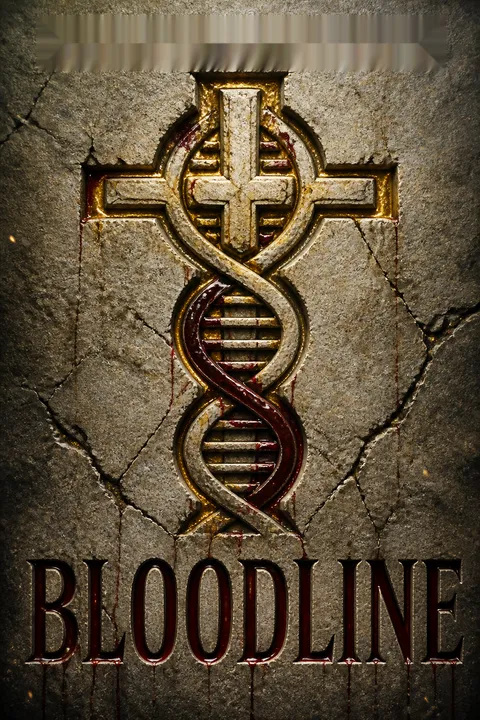
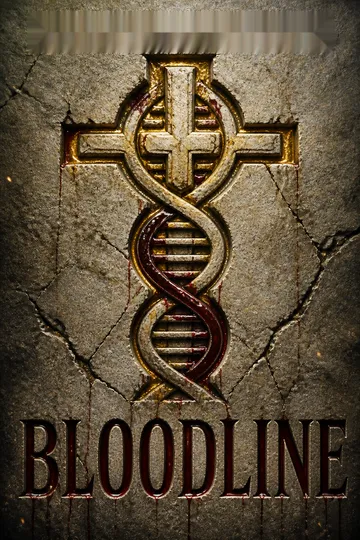
The Bloodline Emblem
secret network identifierA cross wrapped in DNA-like spirals appears at hidden clinics, research facilities, and the engineered island of Utopia. Its older versions combine Templar, Masonic, and crescent-and-star imagery. The symbol helps Painter and Gray connect scattered institutions to the same secret organization, while its variations track the Bloodline’s changing story about its own origins. It is both a clue for investigators and a public-facing mark through which the group has tried to preserve its identity across generations.
Kane’s Field Camera
canine reconnaissance systemA night-vision camera and microphone mounted on Kane’s tactical vest transmit his ground-level view to Tucker and Sigma. The equipment lets the team watch a dog search terrain, identify armed men, and follow Amanda’s scent without exposing human scouts. It also makes Kane’s perception part of the investigative process rather than a decorative skill. The device repeatedly provides evidence that human surveillance misses, though its feed can be disrupted by combat, distance, and the limits of communication between handler and dog.
Utopia’s Hidden Base
concealed research strongholdUtopia is a privately controlled artificial island shaped like a star, with the Eternal Tower rising at its center. Beneath its polished parks and buildings lies a restricted laboratory hidden inside the foundation structure, reachable through fingerprint-controlled elevator access. The setting turns the Guild’s secrecy into physical engineering: a paradise built over a dangerous industrial core. Its support pylons also become a fail-safe, as charges trigger flooding and structural collapse when the station is attacked.
Sigma Force Series


About the Author
Other books by James Rollins









Download PDF
Download EPUB
.epub digital book format is ideal for reading ebooks on phones, tablets, and e-readers.








