

Plot Summary
Prologue
At midnight, five men perform an ancient ceremony beneath a remote island, setting a golden pyramid capstone into place as a purple beam descends from the sky. The next day, Australian soldier Stephen Oakes dies in Iraq, ending eighteen months of uncanny Australian survival in combat.
An encrypted message links his death to the ritual: someone has nullified the protection associated with Tartarus, and the hunt for six ancient stones has begun again.
The opening makes a private ritual legible through its public consequence: one soldier’s death signals that a hidden protection has failed. By connecting an unexplained event to a recognizable casualty, the story gives cosmic danger an immediate human measure. The message that follows turns the death into evidence and establishes the novel’s governing tension: ancient knowledge may preserve the world, but it also invites powerful groups to seize it. The prologue therefore begins not with certainty, but with a warning whose meaning can only be uncovered through action.
Witch Mountain Exposes the Machine
In a flooded hamlet near China’s Three Gorges Dam, archaeologist Max Epper, known as Wizard, finds a hidden chamber covered in inscriptions and a carving called the Mystery of the Circles.
His computer translates a warning about a coming Dark Sun, six stones, and a machine that must be completed before a second arrival. Wizard realizes the deadline is close and suspects the approaching Chinese gunboats know what he has found. He encodes an urgent message for Jack West Jr., his old partner, and sends his photographs to Jack.
Before the transfer is complete, soldiers kill Wizard’s assistant Chow and capture Wizard and his colleague Tank Tanaka. Jack receives the coded warning just as parachutes begin filling the sky above his isolated Australian farm.
The discovery’s first consequence is not understanding but pursuit. Wizard’s translation system turns damaged symbols into actionable intelligence, yet the same clarity makes him vulnerable to a state willing to use torture. The chamber’s ancient mechanisms and the modern data network mirror one another: both preserve knowledge, and both can be penetrated. Jack’s warning arrives through their improvised online code, suggesting that trust between people is already one of the story’s most reliable technologies. The urgency begins when scholarship becomes a contest over who can act on knowledge first.
Paratroopers Over the Farm
Jack has spent eighteen quiet months raising Lily, his adopted daughter, on a remote Australian farm. The invasion destroys that quiet: Chinese troops descend by parachute, and Jack learns they want the Firestone, the small pyramid that crowns the Golden Capstone.
He retrieves it from the hidden mine, then demolishes the entrance so the attackers cannot take the rest of his collection. With Lily, her friend Alby, commando Zoe Kissane, and pilot Sky Monster, he races through traps he built into the farm roads.
They cross a concealed river ford and reach the black 747 Halicarnassus. Chinese fighters pursue them, but Jack and Zoe shoot down two, then drop their dune buggies onto the last jet. They escape toward Dubai, while the attack’s commander reports to the unseen Wolf.
Jack’s preparations are practical expressions of care. The traps, hidden aircraft, and buried artifacts show that he has never entirely trusted peace, but the children make the danger different: his decisions now protect dependents, not simply a mission. Alby’s presence also complicates the team’s escape, since Jack accepts responsibility for a guest who was never meant to enter this world. The attack reveals how quickly domestic life can become operational terrain. Jack’s competence keeps the group alive, but the destroyed farm makes clear that retreat to ordinary life is no longer available.
Dubai’s Burning Tower
At Dubai’s Burj al Arab, Jack reunites with allies and learns from Wizard’s notes that the Dark Sun is an invisible mass approaching the solar system. Six sacred stones are meant to guide the placement of six diamond pillars in hidden underground shrines, rebuilding a planetary machine that can counter its destructive energy.
Nations want the pillars’ promised rewards as well as the chance to save Earth. Saudi intelligence officer Vulture and American representative Paul Robertson disclose that their governments hold a pillar and a sacred stone.
Then a gift box arrives containing the severed head of Jack’s Jamaican friend Fuzzy. At the same time, a cargo jet turns toward the hotel. Jack, Stretch, and Astro escape the collapsing tower by parachute, but the attack confirms that someone is eliminating allies and destroying evidence.
The hotel meeting translates a diffuse apocalypse into a political problem. The machine might save the planet, yet every reward attached to it gives governments a reason to monopolize the process. Fuzzy’s murder turns that abstraction personal for Jack, who treats loyalty as an obligation rather than a strategic luxury. The plane attack also exposes the danger of retaliatory thinking: the attacker has converted grievance into a spectacle that threatens bystanders. The novel’s central ethical divide appears here. Some characters understand power as possession, while Jack’s coalition depends on sharing knowledge and accepting risk for people beyond its own members.
The Prison Train Escape
Jack refuses to leave Wizard in China’s notorious Xintan prison, where he and Tank are being tortured for information. With Stretch, Astro, Scimitar, and Vulture, he intercepts the professors during a transfer between the prison’s two mountain complexes.
Jack and Stretch glide onto the moving train, seize its engine, and blast through the outer gate. While the train races across exposed bridges under helicopter fire, Jack fights through the carriages and reaches the prisoners. He cuts Wizard free as the train derails and hangs over a thousand-foot drop.
Stretch gets Tank to safety; Jack escapes with Wizard using his compact glider, and the team steals the pursuing Hind helicopter. The rescue provides the expertise they need to understand the ancient system, but the damaged professors and the stolen aircraft leave the group under immediate pursuit.
Jack’s rescue is not merely an act of friendship; it is an insistence that people cannot be reduced to useful information. He knows Wizard’s knowledge is essential, but his decision precedes any guarantee that the operation will succeed. The escape also stages the team’s defining method: specialized skills matter, yet survival depends on coordinated trust across people with different loyalties and backgrounds. The prison’s architecture turns bureaucracy into physical danger, with each transfer point designed to prevent return. Jack’s success briefly restores the group’s intellectual center, but it does not restore safety or erase the cost of their choices.
Stonehenge Lights the Map
While Jack’s team races to China, Zoe takes Lily, Alby, and the mathematical twins Lachlan and Julius Adamson to Stonehenge. Alby connects Wizard’s obscure astronomical note to the rare alignment of Earth, Jupiter, and Saturn.
The twins infer that Stonehenge faces the Dark Sun and that the Firestone must be placed on the fallen Altar Stone during Titan’s rising behind Jupiter. Zoe incapacitates the guards, and the group carefully raises the ancient slab. When the Firestone is set into its matching recess, purple light shoots across the circle.
Lichens glow and reveal old images of Earth’s continents, with six beams marking locations around the globe. The team photographs the display before replacing the Altar Stone and leaving the site apparently undisturbed. The light show identifies the six hidden shrines and gives the next stage a map.
The Stonehenge sequence makes interpretation a collective act. Alby notices the astronomical clue, the twins test the geometry, and Zoe manages the physical risk; no single character possesses the whole solution. The luminous continents turn the monument into an archive that only becomes readable under precise conditions. That dependence on timing gives the past an active role without making it infallible: the clues still require contemporary people to interpret them. The children are not passengers in the adventure. Their expertise changes what the adults can do, and their inclusion challenges the assumption that authority follows age or military rank.
Laozi’s Traps Demand Trust
After freeing Wizard, Jack returns to the chamber beneath Witch Mountain to recover Laozi’s Stone, also called the Philosopher’s Stone. The Chinese have lost soldiers to the elaborate defenses, and Wizard explains why force alone will not work: two linked passageways must be navigated together, with each team disabling traps for the other.
Jack, Wizard, Astro, Stretch, and Scimitar solve riddles drawn from Laozi and Confucius, cross spike tunnels and hand-cutting ledges, then enter a vast cavern built around a tower.
Jack runs across sinking stones above liquid mercury, climbs past falling boulders, and takes the Stone from an acid-protected alcove. Stretch catches him when a boulder knocks him from the tower. Together they barely escape before the stepping stones disappear. The recovered Stone makes it possible to cleanse the diamond pillars.
The trap system gives philosophical duality a practical, bodily form. One person’s safety depends on another’s interpretation, so trust is not a sentiment but a condition of movement. The Chinese soldiers’ brute-force approach fails because it treats the system as an obstacle to overpower rather than a relationship to understand. Jack’s speed remains crucial, yet even he cannot finish alone; Stretch’s rescue is indispensable. The sequence also distinguishes knowledge from mastery. Knowing a maxim helps, but the team must act on it together under pressure, where a correct idea can still arrive too late.
The First Pillar Is Cleansed
At the secret K10 base in England, Wizard joins Jack’s allies with the American-held Killing Stone of the Maya and two ancient diamond pillars from Saudi Arabia and the British royal family. The Firestone activates the Mayan stone, whose glowing symbols reveal that the first pillar must be placed on December 10 and the second on December 17, both during rare astronomical alignments.
The group has almost no time. Wizard places the Saudi pillar inside the Philosopher’s Stone, crowns it with the Firestone, and triggers a flash that changes the cloudy diamond into clear crystal with a silver liquid core.
The British pillar remains unprocessed. The team identifies Abu Simbel as the first shrine by aligning the third-eye sightlines of statues of Rameses and Nefertari. They depart with the cleansed pillar, while Wolf’s network watches their progress and prepares to exploit the results.
The cleansing ritual marks a shift from deciphering the machine to operating it. Transformation is visible and measurable, but its meaning remains uncertain, making the characters responsible for acting before they can fully understand the consequences. The hard deadline intensifies the problem: the team must rely on partial knowledge because waiting for certainty would itself ensure failure. The two pillars also expose inherited power. Royal families and states have safeguarded them for generations, but possession has not made their holders morally trustworthy. The new coalition can proceed only by negotiating among competing interests while trying to keep the shared purpose intact.
Abu Simbel’s First Vertex
At Abu Simbel, Jack’s team uses the sightlines of the enormous statues to locate an entrance beneath Lake Nasser. A hidden door opens when Jack fits the cleansed pillar into a carving of the machine. Beyond crocodiles and a vast Egyptian hall, he finds an inverted bronze pyramid suspended above an abyss.
At dawn, Jack inserts the pillar into its summit. A beam plunges toward Earth, the pyramid takes a piece from the pillar, and the remaining crystal fills with the Word of Thoth, the reward of knowledge. Then British emissary Iolanthe reveals her real allegiance.
Royal Marines seize Wizard, Lily, and the pillar, seal Jack and Zoe inside, and abandon Alby, Pooh Bear, and Astro on a sinking boat among crocodiles. Jack escapes through another passage and rescues the three. Wizard gets away with Lily and the pillar, but Jack is separated from them.
The first successful placement proves that the ancient machine is real, but its response is deliberately ambiguous: it grants knowledge while consuming part of the pillar. The revelation makes success more dangerous, because the reward confirms the strategic value that competing powers already suspected. Iolanthe’s betrayal shows that institutional continuity can preserve knowledge and ambition together; her royal duty does not equate to loyalty to the coalition. Jack’s rescue of the abandoned team restores people rather than property as his priority. Yet this decision splits the group at the moment the mission becomes most valuable to its enemies.
Africa Closes Around Them
The Egyptian military pursues Wizard’s fleeing 747 along a desert highway, boarding its wings as the damaged plane struggles to take off. Jack and his allies attack the convoy, but American forces arrive and capture Jack; Pooh Bear is also taken, while Wizard escapes with Lily, Zoe, and the pillar.
Wolf, the American commander behind the hunt, has Jack crucified in an Ethiopian mine, then drops a slab over the pit. Meanwhile, Wizard’s group lands in Rwanda and receives help from Solomon Kol, who finds a working helicopter and guides them toward the Congo.
They follow an ancient explorer’s record to a valley of carved trees, where the Neetha tribe ambushes them and destroys their aircraft. The Neetha take the survivors into their hidden gorge, leaving the rescue team without Jack and forcing them to negotiate for the second pillar.
The widening geography does not make the characters feel more powerful; it makes them more exposed. Wolf converts state resources into a transnational hunt, while the scattered allies must depend on local knowledge, old records, and improvised transport. Jack’s apparent execution creates an emotional vacuum that the others cannot immediately fill. Solomon’s help is a concrete counterweight to Wolf’s money and military reach, but it cannot protect the group from every danger. The story contrasts purchased obedience with personal solidarity, while showing how easily the former can commandeer roads, airspace, and borders.
The Neetha Claim Their Captives
Inside the Neetha’s ravine village, Wizard recognizes the Second Pillar and the Delphic Seeing Stone on a sacred island. The warlock refuses to help save the world, believing the Dark Sun should be welcomed. The Neetha cleanse their own pillar and use the Seeing Stone with a huge sighting device to observe the approaching threat.
When the chief’s son claims Lily as a wife, Solomon challenges him and is killed. Zoe then defeats the warrior in combat and is sentenced to the tribe’s lethal maze. She takes Alby with her because he can read the map hidden in her camera.
They escape the labyrinth as Wolf’s troops storm the village. In the confusion, Zoe and Alby save the Seeing Stone but lose the Second Pillar to Wolf’s men. Alby is shot and captured; Wizard, Zoe, Lily, and two Neetha captives flee through an escape tunnel.
The Neetha society makes violence into a system of status, binding political authority to priestly control of sacred objects. Zoe’s challenge interrupts that order, but victory does not free the captives from the larger conflict. Solomon’s death makes the cost of defending another person devastatingly literal, while Alby faces a comparable choice between saving Zoe and securing the pillar. His rescue of Zoe honors human attachment over strategic calculation, though the loss gives Wolf a decisive advantage. The escape also depends on knowledge held by children and oppressed locals, not simply superior weapons or official command.
Jack Rises From the Pit
Jack survives the falling slab by bracing it on his artificial arm, frees himself despite a nail driven through his other hand, and uses a small explosive to break out. He releases the mine’s enslaved Ethiopian Jewish workers, who overpower the guards and help free Pooh Bear.
The miners give Jack two hidden tablets they had found but concealed from Wolf: the Twin Tablets of Thuthmosis, which Jack identifies as the source of the Ten Commandments and a ritual needed at the final shrine. Jack and Pooh reach Kenya, where the escaped Adamson twins reveal that Wolf’s forces include Switchblade, a Japanese-American Marine serving a group bent on bringing about the world’s destruction.
Pooh leaves to rescue Stretch from the Mossad. Jack and the twins reach Zanzibar, enlist Jack’s brother-in-law J. J. Wickham, and travel toward Cape Town aboard a submarine disguised as a fishing trawler.
Jack’s survival is possible because he turns the body that was meant to destroy him into a tool of escape. His artificial arm is not merely a mark of past injury; here it changes the physical terms of his captivity. More important, the miners’ uprising transforms rescue into reciprocal liberation. Jack frees them, and they entrust him with the tablets that Wolf failed to obtain. The episode challenges the idea that history belongs to rulers or experts. The people forced to excavate the past have secretly protected the knowledge that may determine the future.
The City Beneath Table Mountain
South Africa closes its airspace and waters as Wolf’s forces secure the approaches to Cape Town. Jack’s submarine finds an underwater entrance and rises into an immense buried city modeled on ancient Ur, with towers linked by bridges and an inverted bronze pyramid overhead.
Wolf is already inside, holding Alby captive and carrying the Second Pillar, the Firestone, and the Philosopher’s Stone. The city’s hollow rooftops form a trap: each jump requires answering a riddle from Aristotle’s collection.
Jack calls Wizard, Zoe, and Lily by satellite phone; they identify the riddles from the Neetha maze and guide him across the perilous route. Wolf’s men reach the central ziggurat first, sending Switchblade and a Delta operator toward the pyramid. Jack continues despite gunfire, knowing that the second placement must happen before the deadline.
The second shrine turns the novel’s intellectual scaffolding into a direct contest. Earlier clues return as physical choices, so memory and collaboration become survival skills rather than background exposition. Jack’s call exposes the team’s continued interdependence despite distance: Wizard, Zoe, and Lily can still guide him, while he carries the immediate bodily risk. Wolf’s head start gives the scene a pressure that competence alone cannot erase. The city’s bridges make every connection precarious, an apt structure for a coalition trying to hold together while its enemies exploit the gaps.
Jack Places the Second Pillar
At the pyramid’s peak, the Delta operator prepares to insert the Second Pillar, but Switchblade kills him and declares his intent to destroy the world in revenge for Japan’s defeat. He drops the pillar toward the abyss. Jack swings across the void on a magnetic grappling line and catches it.
As Switchblade unclips his own harness and drags Jack toward a shared fall, Jack reaches the summit and forces the pillar into its socket. The machine fires a beam into the depths, completing the second placement and granting another reward. Jack and Switchblade plunge into the abyss.
Wolf retrieves the newly charged pillar and leaves Alby behind; the Sea Ranger and twins escape. On the Halicarnassus, Lily, Zoe, and Wizard watch Jack disappear, then flee as South African fighters approach. The book ends with Jack’s fate unknown and four pillars still to place.
The climax refuses to separate salvation from sacrifice. Jack completes the task at the exact moment he loses control of his own survival, making the machine’s success emotionally inseparable from the possibility of his death. Switchblade’s motive is national humiliation transformed into suicidal revenge; Wolf’s motive is domination, but both treat other lives as expendable instruments. Jack acts differently by taking the risk himself and saving the placement from deliberate destruction. The ending leaves the world temporarily protected but the coalition fractured, its most capable leader missing, and the larger task unfinished.
Analysis
The novel makes world-saving inseparable from questions of ownership. The machine appears to offer a common defense against extinction, yet every pillar carries a reward that can alter political power. The antagonists do not simply misunderstand the stakes; they understand them and still imagine that survival should serve their nation, dynasty, or grievance. Jack’s answer is a coalition built through acts of trust, especially when trust is least efficient. He rescues friends before knowing whether they can repay him, and he repeatedly shares interpretive authority with Lily, Alby, Wizard, and the twins. The narrative’s strongest counterweight to militarized power is therefore not innocence, but interdependence.
Ancient sites function as operational systems rather than decorative mysteries. Stonehenge, Abu Simbel, and the hidden cities store information in alignments, architecture, and ritual, but no single expert can decode them alone. The story rewards cross-disciplinary attention: mathematical pattern recognition, linguistic skill, archaeological knowledge, and physical courage each solve different parts of the same problem. This distributes heroism without dissolving Jack’s central role. He remains the person most willing to act under uncertainty, while his companions make action informed and survivable.
The book also tests how people respond to humiliation and fear. Wolf converts authority into domination; Switchblade turns historical injury into a desire for mutual annihilation; the Neetha warlock welcomes destruction as divine purpose. These figures differ in ideology but share a refusal of reciprocal life. Against them, loyalty becomes a chosen practice rather than an inherited rule. The cliffhanger makes that practice costly: Jack completes the second placement but disappears into the abyss, leaving the work unfinished and the team scattered. The machine has bought time, not peace. Its rewards remain temptations, and the next stage will depend on whether the survivors can preserve their shared purpose without the leader who first gathered them.
Review Summary
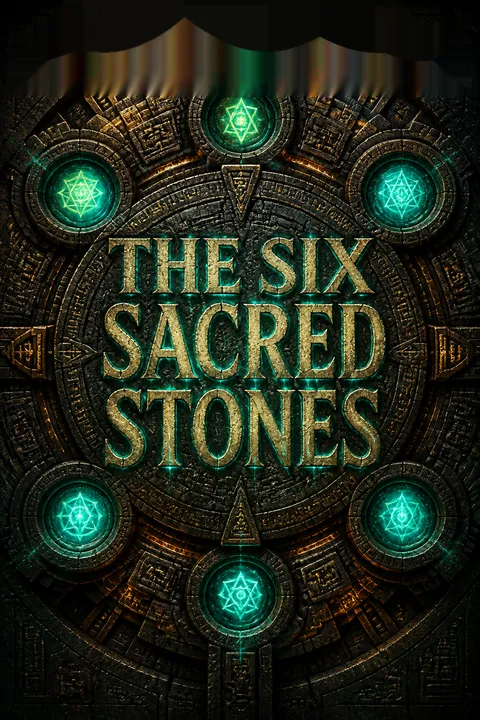
The Six Sacred Stones receives generally positive reviews, averaging 4.20 out of 5. Fans praise its relentless, cinematic action, globe-trotting adventure, and engaging characters, often comparing it to Indiana Jones and Mission Impossible. Many highlight the fun incorporation of ancient history, mythology, and archaeology. Common criticisms include overuse of italics and exclamation marks, repetitive near-death escapes, and emotionally underdeveloped characters. Nearly all reviewers warn that the book ends on a dramatic cliffhanger, strongly recommending readers have the next installment ready.
People Also Read
Characters
Jack West Jr.
Reluctant world-saverAn Australian former special forces soldier turned archaeologist and adventurer, Jack is a tactical thinker with a metal left arm and a talent for reading traps under pressure. He has adopted Lily and built a family around her from the international team that once fought beside him. Jack’s defining instinct is to take responsibility, even when a rescue seems strategically unwise or personally dangerous. His loyalty is not blind: he judges people by what they do for others, not by their rank or national identity. The return of an apocalyptic threat forces him to abandon the quiet life he tried to create and lead a coalition whose members do not always share his motives.
Lily
The young OracleJack’s adopted daughter, Lily is a gifted linguist who can read the ancient Word of Thoth, a skill inherited from her family history. She grew up among soldiers and scholars, so she is both emotionally perceptive and unusually capable under pressure. Her bond with Jack gives the adventure its most intimate stakes; her friendship with Alby gives her a peer who understands the strangeness of her life. Lily is not simply protected by the adults around her. She translates inscriptions, recognizes danger, and helps turn obscure knowledge into decisions the group can act upon.
Zoe Kissane
The steadfast commandoAn Irish commando and veteran of Jack’s earlier expedition, Zoe combines close-combat skill with a clear-eyed understanding of people. She is devoted to Lily and deeply attached to Jack, though she rarely makes her feelings the center of a crisis. Her warmth with the children sits beside a disciplined capacity for violence, allowing her to protect without confusing tenderness with weakness. When Jack is absent, Zoe must make decisions that affect the whole group, relying on her own judgment rather than waiting for his return. Her pink-tipped hair and playful nickname contrast with the seriousness of her work.
Max Epper, Wizard
Keeper of ancient cluesA white-bearded archaeology professor, Wizard has spent his life studying the stones, inscriptions, and structures connected to the machine. His computer database combines scholarship with ambitious pattern recognition, making him the group’s principal interpreter of ancient evidence. He is intellectually restless and emotionally generous, especially toward Lily, whose linguistic gifts he respects rather than controls. Wizard can be excitable when discovery overtakes caution, but captivity and danger reveal his resilience. His knowledge is essential, yet he knows that scholarship alone cannot complete the task; it must be joined to courage, practical skill, and cooperation.
Alby Calvin
The overlooked solverLily’s school friend, Alby is a mathematically gifted boy who is partially deaf and uses sign language when emotion or urgency matters. Adults initially assume he is a child to protect, but his astronomical insight helps identify the timing of the ancient rituals, and his analytical eye repeatedly clarifies the puzzles. Alby’s courage is not fearlessness. He feels danger acutely and acts anyway, especially when someone he cares about is at risk. His friendship with Lily is grounded in mutual respect: she does not mistake his disability for helplessness, and he does not treat her unusual abilities as a spectacle.
Wolf
The imperial strategistWolf is a powerful American commander who believes his country should rule through force rather than negotiation. He operates with a private military network and builds alliances for advantage, treating nations and individuals as pieces in a larger design. His intelligence and physical discipline make him a formidable opponent, but his certainty that strength grants the right to command leaves little room for reciprocity. Wolf is especially interested in the rewards promised by the pillars, which he sees as instruments of permanent power. His presence turns the search for a way to save Earth into a struggle over who will control the future.
Zahir al Abbas, Pooh Bear
The generous explosives expertA UAE commando and explosives expert, Pooh Bear is warm, loyal, and quick to make a family of the people he trusts. Lily gave him his affectionate nickname, which he wears with pride. His humor softens the team’s tension, while his willingness to defend the vulnerable gives him a moral seriousness that contrasts with his older brother’s political calculation. He is particularly close to Jack and Stretch, and his loyalty is expressed through action rather than speeches.
Cohen, Stretch
The watchful sniperAn Israeli-born former Mossad sniper, Stretch is precise, dry-witted, and alert to concealed motives. His difficult history with his former service makes him wary of official assurances, but his loyalty to Pooh Bear and Jack is steady. He brings patience and technical competence to dangerous operations, balancing Jack’s instinct for rapid action. Beneath his guarded manner is a strong sense of chosen family.
Sky Monster
The indispensable pilotJack’s New Zealand pilot and longtime friend, Sky Monster flies the enormous Halicarnassus and keeps its improvised systems functioning through repeated emergencies. His rough appearance and gruff humor conceal deep attachment to the plane and its crew. He is resourceful under pressure and understands that a pilot’s responsibility extends beyond keeping an aircraft aloft: he must bring the people aboard home.
Tank Tanaka
The fellow archaeologistA Japanese professor and Wizard’s longtime research partner, Tank is a gentle scholar whose history is marked by the loss of his parents in the atomic bombing of Nagasaki. He shares Wizard’s expertise in ancient civilizations and has spent years studying the machine. His courteous manner can make him difficult to read, while his profound attachment to Japan’s history shapes his understanding of honor and humiliation.
Solomon Kol
The generous protectorA very tall Kenyan neighbor of Jack’s former farm, Solomon is kind, capable, and deeply protective of Lily. He understands the terrain and people of central Africa, providing practical help when the team has few safe options. His quiet presence offers a contrast to the expedition’s louder personalities, and his loyalty is grounded in personal affection rather than national interests.
Lachlan Adamson
One half of the twinsA Scottish mathematical genius, Lachlan works almost as one mind with his identical twin, Julius. He is quick with geometric patterns and ancient-site analysis, and his energetic banter lightens tense gatherings. Their shared intelligence is not merely comic: it gives the coalition a way to test hypotheses quickly and turn visual clues into locations.
Julius Adamson
The other half of the twinsJulius is Lachlan’s identical twin and mathematical counterpart. Together they bring a playful, competitive energy to difficult scholarly work, but their jokes do not diminish their seriousness when a calculation matters. Julius excels at interpreting spatial patterns and collaborates closely with Alby, Zoe, and Wizard to decipher the ancient system.
Rashid Abbas, Scimitar
The polished princeThe eldest son of Sheik Abbas and commander of the UAE’s elite First Commando Regiment, Scimitar is handsome, disciplined, and politically astute. His bearing contrasts with his younger brother Pooh Bear’s warmth. Scimitar thinks in terms of national advantage and recognizes that alliances are often temporary, making him an important voice when the coalition confronts the ambitions of powerful states.
Abdul Rahman al Saud, Vulture
The calculating intelligence officerA Saudi intelligence officer, Vulture arrives with valuable information about China and the hidden pillars. He is observant, formal, and skilled at reading the room, but his elaborate courtesy does not make his motives easy to judge. His relationship with Scimitar gives him access to the coalition, while his government’s interest in the rewards keeps political calculation close to the surface.
Iolanthe Compton-Jones
The royal archivistA distant British royal relative and keeper of the House of Windsor’s personal records, Iolanthe is confident, incisive, and highly conscious of inherited power. She brings knowledge of the European royal houses and their long history of guarding the pillars. Her polished manner can be charming or cutting, and she views political relationships as exchanges of usefulness. She is both an expert resource and a reminder that ancient objects are bound to modern institutions.
Switchblade
The disciplined MarineA Force Recon Marine in Wolf’s circle, Switchblade is physically capable, controlled, and trained for high-risk operations. His military bearing makes him appear dependable, and his position gives him access to the most consequential parts of the mission. He embodies the danger of assuming that shared uniforms or formal chains of command guarantee shared purposes.
Sean Miller, Astro
The capable MarineAn American Marine officer, Astro joins Jack’s group with military intelligence about Xintan and a store of specialized equipment. He is competent, skeptical of reckless plans, and initially measures decisions through national and operational risk. Working alongside Jack forces him to confront a kind of loyalty that does not stop at borders or official instructions.
Mao Gongli
China’s prison commanderA senior Chinese officer known for ruthless command, Mao captures Wizard and seeks to force the professor’s knowledge into his government’s service. He is patient enough to plan complex operations and brutal enough to treat casualties as acceptable costs. His pursuit makes the Chinese state a direct, material threat to Jack’s group.
Dr. Diane Cassidy
The captive anthropologistAn American anthropologist who disappeared while searching for the Neetha, Cassidy has lived among them long enough to understand their language and customs. Her expertise is essential to the group’s survival, but her position in the tribe is vulnerable and constrained. Years of captivity have not erased her intelligence or her ability to act decisively.
Ono
The curious Neetha youthA younger son of the Neetha chief, Ono is thoughtful, curious, and eager to learn about the world beyond his hidden community. His intelligence offers little protection in a society that prizes physical dominance, so he has learned to observe from the margins. His conversations with Lily reveal a person who questions the assumptions surrounding him.
J. J. Wickham
The outlaw benefactorJack’s brother-in-law and a former US Navy officer, Wickham operates a submarine from a hidden base on Zanzibar. He is independent, resourceful, and willing to defy military orders when he believes they serve corrupt ends. His private campaign against arms traffickers has made him a criminal to powerful governments and a protector to communities harmed by war.
Grant West, Rapier
Wolf’s lethal enforcerA broad, intense special forces soldier, Rapier works as one of Wolf’s most dangerous field operators. He is disciplined and physically formidable, with little outward warmth. His presence gives Wolf’s private force a direct-action edge and places him among the armed men pursuing Jack’s coalition.
Earl McShane
The revenge-driven pilotAn American cargo pilot consumed by anger after the September 11 attacks, McShane turns personal grievance into a terrorist assault on Dubai’s Burj al Arab. His action endangers thousands of people and demonstrates how revenge can imitate the violence it claims to avenge.
Plot Devices
The Firestone
Activates ancient inscriptionsThe Firestone is the small golden pyramid that once crowned the Great Pyramid’s capstone. Jack retrieves it from his farm because the attackers want it, and Wizard’s research identifies it as the object that governs the six sacred stones. When paired with those stones under specific astronomical conditions, it reveals information that ordinary inscriptions conceal. It also helps cleanse the diamond pillars inside the Philosopher’s Stone. The Firestone links separate sites and civilizations, but its power makes it a target for every faction seeking either to save the world or control the machine. Its use advances the plot while steadily increasing the danger surrounding the team.
The Six Pillars
Power the planetary machineThe pillars are enormous, uncut diamonds held by families and governments across the world. Each must be cleansed with the Philosopher’s Stone and the Firestone before being placed at one of six hidden shrines. A successful placement activates part of the machine and grants a reward, such as knowledge or heat. Their sequence and timing matter, and the first two must be placed within days of one another. The pillars make the apocalyptic quest political: their custodians see them as inherited property, while competing powers covet the rewards. The central race is not only to find the objects, but to place them before enemies can divert or destroy them.
The Dark Sun
Creates the extinction deadlineWizard interprets the black orb in the Mystery of the Circles as an invisible dark counterpart to the Sun, a destructive field approaching Earth. The ancient machine is meant to counter its energy and preserve life. Astronomical alignments involving Jupiter, Saturn, and Titan reveal when certain stones and pillars can be activated. The threat is not a villain with intent, but a cosmic phenomenon whose arrival makes human choices decisive. Because the characters cannot see it directly, they depend on ancient images, astronomical calculations, and the machine’s response to know when it is near. The Dark Sun turns archaeological research into a race against a planetary catastrophe.
The Word of Thoth
Makes ancient clues readableThe Word of Thoth is an ancient script that ordinary computers cannot reliably translate. Lily, descended from the line of Siwan Oracles, can read it, allowing the team to interpret inscriptions on the pillars, at the shrines, and on the tablets. The script carries more than directions: it preserves astronomical data, descriptions of the machine, and knowledge left by earlier civilizations. Its difficulty ensures that physical force alone cannot solve the quest. Lily’s translations also give the children a central role in decisions made by soldiers and officials, shifting authority toward skill and understanding rather than age or rank.
The Ancient Trap Systems
Test knowledge and cooperationThe underground shrines and passages are guarded by mechanisms tied to riddles from Chinese philosophy, classical Greek thought, and the Neetha’s own traditions. Some punish a wrong answer with spikes, falling stones, acid, crocodiles, or a plunge into darkness. Others require separate teams to act in synchrony, making trust as important as technical skill. Jack’s speed and experience help him survive, but he repeatedly depends on someone else’s translation or intervention. These systems protect the machine from unprepared intruders while dramatizing a central rule of the expedition: knowledge is useful only when people can share it and act together.
About the Author
Other books by Matthew Reilly
Download PDF
Download EPUB
.epub digital book format is ideal for reading ebooks on phones, tablets, and e-readers.








