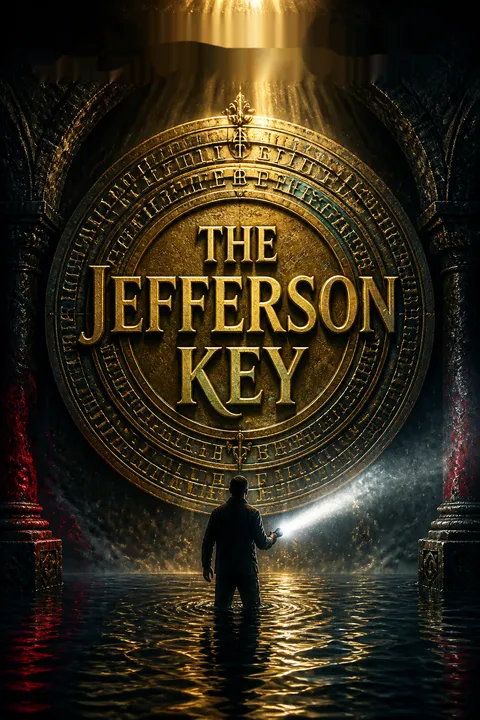


Plot Summary
Prologue
In 1835, President Andrew Jackson survives an attempt on his life when both of Richard Lawrence’s pistols misfire in the damp air. Jackson refuses to believe the attacker acted alone and suspects a conspiracy by the Hales, a family whose privateering privileges he has challenged.
He orders the legal record of their authority removed, but leaves the missing pages hidden behind a cipher devised by Thomas Jefferson. The failed assassination and Jackson’s deliberate concealment become a family grievance that will outlast him by generations.
The prologue establishes the novel’s central collision between public authority and inherited private power. Jackson’s survival does not settle the conflict; it converts it into a durable secret, one that descendants can treat as both legal defense and sacred grievance. His decision to hide rather than destroy the congressional record is psychologically precise: punishment becomes a puzzle, and the puzzle keeps the old dispute alive. The scene also makes chance consequential. A wet charge alters national history, while Jackson’s response ensures that the consequences will not remain in the past.
The Grand Hyatt Gun
Cotton Malone enters a Midtown hotel room expecting former boss Stephanie Nelle, but finds an automated gun rig aimed toward a reception where President Danny Daniels is arriving. A note attributed to Stephanie warns that the president is in danger.
The weapon breaks through the window and opens fire. Malone climbs onto the exposed frame and wrestles its barrel away from Daniels, who is rushed into his armored limousine. A second device reveals the attackers’ plan: a rocket launcher waits to strike the car.
Malone redirects the rifle’s fire into the launcher, damaging its controls and sending its first rocket harmlessly off course. Police and Secret Service agents see him at the window and shoot toward him. He has saved the president, but now appears to be the assassin.
The opening makes rescue indistinguishable from guilt. Malone acts on immediate evidence, not institutional permission, and the very visibility of his intervention makes him a credible suspect. The attack’s design also exposes the limits of routine security: the first weapon is not meant to kill Daniels directly but to force him into the path of a more powerful one. Malone’s practical intelligence defeats that sequence, yet the public image records only a man beside the guns. The result is a thriller premise grounded in a difficult truth: competent action can look criminal when institutions control the story.
The Commonwealth's Reckoning
Off North Carolina, Quentin Hale has an accountant locked in an iron cage aboard his yacht. The man has disclosed records of Hale’s Swiss accounts to federal investigators, though he insists he gave them nothing about the secret family ledger.
Hale believes him, but the Commonwealth’s Articles prescribe death for betrayal, and Hale orders the cage thrown into the sea. His decision reveals the organization’s governing logic: loyalty to the company outweighs personal friendship or an individual’s fear of prosecution.
At the same time, Hale studies the two pages Jackson concealed in 1835, still unread after 175 years. The government’s tax investigation threatens the fortunes of four families, and Hale’s fellow captains are frightened enough to contemplate a desperate response.
Hale’s execution of the accountant shows how a code meant to protect collective survival can become an excuse for cruelty. The accountant’s limited cooperation might have been handled through evidence and negotiation, but the Articles turn a political emergency into a test of absolute loyalty. Hale experiences himself as a guardian of order, not a villain, which makes the violence more revealing than simple sadism would be. His attention to the cipher also binds the present crisis to inherited history. The Commonwealth cannot separate its legal claim from its family mythology, so each new threat is interpreted as another chapter in an old war.
A Suspect in Custody
Jonathan Wyatt, a former intelligence officer working as a contractor, watches the New York attack from the Grand Hyatt restaurant. He recognizes Malone’s likely response and later radios the Secret Service a precise description of Malone’s route through Grand Central.
Malone escapes the hotel by changing clothes and blending into the crowd, but police close in at the terminal and force him to surrender. Meanwhile, armed agents enter Cassiopeia Vitt’s suite at the St. Regis and arrest her for the attempted assassination.
Both are taken to JFK rather than an ordinary station. Aboard Air Force One, White House chief of staff Edwin Davis brings Malone face-to-face with Daniels, who is unharmed. The president makes clear that the attack is only one part of a larger crisis.
Wyatt’s intervention turns pursuit into personal theater. His knowledge of Malone is valuable, but he uses it to direct state power against a man who has not yet been allowed to explain himself. Cassiopeia’s arrest compounds the same reversal: intimacy with Malone becomes evidence against her. The plane offers a temporary space outside ordinary procedure, but not a clean resolution. Daniels trusts Malone while acknowledging that the institutions around them may be compromised. The episode establishes the novel’s recurring problem of divided loyalties: professional systems can be used by people who understand them, and personal trust becomes a necessary but dangerous counterweight.
Jackson's Missing Pages
Daniels and Davis explain why they cannot simply prosecute the Commonwealth. George Washington granted four families letters of marque, and the Constitution gives Congress authority to issue them. Jackson later tore the congressional journal pages recording the grant and hid them behind Jefferson’s cipher, leaving the families’ legal immunity uncertain.
The Commonwealth has exploited that ambiguity for generations, first as privateers and later as covert operators, while also keeping wealth beyond the government’s reach. Federal tax inquiries now threaten its captains with prison and asset seizure.
Daniels reveals that he sent Stephanie Nelle to investigate NIA director Andrea Carbonell, who may be connected to the Commonwealth. Stephanie missed her scheduled check-in and has been missing for days. Malone realizes the note in New York was not written by her.
The legal puzzle is more than an adventure mechanism. It dramatizes how institutions inherit their own unfinished decisions: a missing record can become a weapon because neither revocation nor recognition is politically neutral. Daniels must weigh law, public exposure, and intelligence-agency rivalry while a friend is in danger. The Commonwealth’s claim is not wholly invented, but its historical service does not erase its present exploitation. That ambiguity prevents the conflict from collapsing into a simple contest between lawful government and lawless pirates. Each side can point to precedent, and each uses secrecy to protect its preferred account.
Carbonell's Double Game
Wyatt meets NIA director Andrea Carbonell, who admits that she hired him to interfere with the attack on Daniels because she could not trust her own agency. He refuses to explain his methods and leaves, only to be detained by CIA and NSA officials who suspect him of helping the Commonwealth.
Their interrogation revives the history between Wyatt and Malone: eight years earlier, Malone testified against him after Wyatt’s decisions in a firefight cost two agents their lives.
In Central Park, Carbonell’s intermediary Scott Parrott tells Knox that NIA has solved Jefferson’s cipher. Knox kills Parrott with poison, then returns to the Commonwealth carrying both the cipher news and a new problem: the captains need to know that the government has crossed a line.
The competing agencies make information itself a contested resource. Carbonell employs Wyatt because institutional loyalty has become unreliable, while CIA and NSA treat his independence as evidence of disloyalty. His history with Malone adds a private grievance to an already unstable operation. Parrott’s murder illustrates the human cost of this intelligence economy: an intermediary is valuable until his knowledge becomes inconvenient. Knox’s choice also complicates his role. He is capable of lethal obedience, yet he understands that the captains’ response may destroy the organization they mean to defend. Survival and service are beginning to pull him in opposite directions.
The Cipher's First Key
At the Garver Institute in Maryland, Malone arrives to collect the solution to Jefferson’s cipher. Wyatt has reached the same office, where mathematician Gary Voccio explains that computer analysis has cracked the transposition code.
Before either man can leave, armed attackers cut the building’s power and storm inside. Malone fights through the lobby while Wyatt tries to get Voccio out through another exit. The escape fails when Voccio’s car explodes, killing him.
Malone finds the deciphered file still open on a computer, forwards it to himself, and deletes the visible copy. He and Wyatt flee separately. The document reveals that Jackson’s message refers to the Jefferson Wheel, a rotating set of alphabet disks needed to read the remaining encoded instruction.
The cipher’s solution does not produce safety; it increases the number of people willing to kill for the next clue. Voccio’s death makes the cost of scholarly work immediate, while the destruction of the institute turns knowledge into a fragile, portable object. Malone and Wyatt briefly occupy the same side of a crisis without becoming allies. Their cooperation is functional and uneasy, shaped by the fact that both understand what the other can do. The wheel’s role also changes the story’s scale: a computational breakthrough has only unlocked a physical puzzle, so modern technology cannot simply replace historical material evidence.
The First Lady's Leak
At the White House, Cassiopeia questions First Lady Pauline Daniels about who knew of the New York trip. Pauline admits she told her closest friend, Shirley Kaiser. Their conversation exposes the grief that has divided the Daniels marriage since their daughter Mary died in a house fire, which began after Danny left a cigar burning.
Cassiopeia visits Shirley and discovers a listening device buried beside her telephone lines. Phone records show 135 calls between Shirley and Quentin Hale, the Commonwealth captain.
Shirley admits that she and Hale have been lovers, and that she passed him the travel information without knowing its significance. Cassiopeia also learns that Pauline has grown emotionally close to Davis, though neither has acted on the relationship. The White House leak now points directly toward Hale.
The investigation finds its breach through intimacy rather than a conventional security failure. Pauline shared information because Shirley was a trusted confidante; Shirley repeated it because Hale had cultivated her affection. Private relationships become channels through which political danger travels. Cassiopeia’s questioning also reveals how grief can be mistaken for guilt. Pauline’s resentment of Danny is real, but it does not make her a conspirator. Her story complicates the president’s public composure and gives the thriller an emotional counterplot: people who cannot speak honestly at home are especially vulnerable to manipulation outside it.
The Motorcycle Escape
After forwarding the cipher file, Malone is traced to Richmond and targeted by local police acting on federal instructions. Cassiopeia reconnoiters the Jefferson Hotel and finds the main lobby watched, so she steals the hotel attendant’s motorcycle and rides it through the building to help Malone escape.
At Monticello, where the original Jefferson Wheel is displayed, the two reunite with Davis. Before Malone can examine it, Wyatt sets off flash and smoke devices, steals the antique wheel, and escapes by helicopter.
The curator reveals that the visitor center has an unadvertised replica made to match the original’s disk arrangement. Malone uses it to align the letters in Jackson’s message. The decoded location is Paw Island, Mahone Bay, Dominion, a ruined fort in Nova Scotia.
Cassiopeia’s escape is a concrete expression of partnership: she does not merely advise Malone but changes the physical terms of his capture. The Monticello theft then divides knowledge from possession. Wyatt takes the unique original, while Malone’s memory and the replica preserve enough information to continue. The sequence refuses the assumption that control belongs to whoever holds the artifact. Expertise, observation, and institutional access can each substitute for one another, though none is sufficient alone. The destination also joins the historical and geographical strands, carrying the search from presidential archives into a landscape shaped by colonial conflict and pirate lore.
A Fort Above the Tide
Malone reaches Paw Island as Wyatt searches Fort Dominion and finds the five symbols from Jackson’s coded message carved into a tidal chamber below the ruin. Knox arrives with armed Commonwealth men, and the men exchange fire across the fort’s broken walls.
Malone uses a wooden plank as cover to cross an exposed passage, then knocks one attacker from a battlement. Wyatt and Malone collide in the ruins and crash through rotten flooring into the flooded chamber.
They recognize that the symbols surround a junction of tunnels designed to fill with the tide. Malone identifies the ceiling mark as the likely location of the hiding place. When water surges into the chamber, Wyatt slips into a tunnel and escapes toward the sea, while Malone also finds a route out.
The fort converts historical memory into a physical hazard. Jackson’s choice of site is not merely obscure; its tidal engineering makes time part of the lock. Malone’s reading of the symbols gives him an advantage, but the rising water punishes delay more decisively than any armed opponent. Wyatt’s escape from the chamber preserves their rivalry while revealing a measure of shared competence. The setting also strips away the protective language of legal claims. In the flooded tunnels, the men are not privateers, agents, or patriots; they are bodies negotiating stone, darkness, and breath.
The Prison Break
While Malone is in Nova Scotia, Cassiopeia travels to North Carolina and enters Hale’s estate during a storm. She finds Stephanie imprisoned with Shirley, while armed attackers strike the compound from outside. Hale’s crew moves the two women toward the dock, but Cassiopeia ambushes their electric cart, knocks the guards down, and frees the prisoners.
The three women head through the trees toward the river. Hale’s forces regroup and intercept them at the dock, where the yacht Adventure is ready to sail. Hale takes them aboard, intending to use them as leverage and then dispose of them at sea. Cassiopeia’s rescue has bought Stephanie time, but it has also put her and Shirley under Hale’s direct control.
Cassiopeia’s intervention is effective but not triumphant. She succeeds at the immediate task of freeing Stephanie, yet the estate’s geography and Hale’s authority turn the escape route into another trap. Shirley’s presence matters because she is neither an agent nor a trained operative; her choice to act carries the emotional weight of someone confronting a lover who used her. The storm hides both rescue and violence, making the setting a temporary shield rather than a solution. The episode exposes how hostage-taking depends on controlling movement: whoever controls the dock controls the next chapter of the crisis.
Adventure's Iron Cage
Hale takes the women onto Adventure and orders Cassiopeia locked inside a gibbet, an iron cage his ancestors once endured. Malone has climbed aboard unseen and reaches the aft deck just as Hale’s crew prepares to drag her into the sea. He fights through a guard, shoots two armed men, and wounds Hale, but the crew throws Cassiopeia overboard in the cage.
Malone leaps after her, catches the iron frame, and is dragged behind the speeding yacht. He finds the latch and frees her underwater. On deck, Stephanie and Shirley turn Hale’s weapons against him; Shirley shoots him, ending his hold over the women. Army gunships arrive, and the crew abandons ship before the yacht is destroyed.
The gibbet turns the Commonwealth’s inherited maritime identity into a literal instrument of punishment. Hale believes reenacting old cruelties proves his authority, but the device instead exposes how dependent his power is on bodies he can bind. Malone’s rescue is not a clean duel or a single heroic gesture; it requires him to accept the same danger as Cassiopeia and solve a mechanism while both are being pulled underwater. Shirley’s final action reverses the intimate betrayal that began the crisis. The yacht’s destruction ends the immediate threat, but it also signals that the old order cannot survive by repeating its rituals.
The Pages Dissolve
After escaping the rising water, Wyatt returns to the chamber and finds Knox dead. He removes the stone marked by the ceiling symbol and discovers a glass container holding the two pages Jackson hid. The documents confirm that Congress approved the letters of marque for the four families in 1793, strengthening the Commonwealth’s legal claim.
Wyatt could sell the pages to Hale or Carbonell, but he tears them apart and lets the fragments dissolve in the water. He later meets Malone at the fort, where both understand that the organization’s strongest defense is gone. Wyatt is allowed to leave Canada without arrest. Carbonell remains missing, and no body is recovered from the tidal passages.
Wyatt’s choice rejects the logic that every secret must be converted into leverage. The pages could secure the Commonwealth’s legal immunity, yet their reappearance would also renew the institution that has justified generations of violence. Destroying them is not a neutral act: it prevents one political future while permanently closing off a historical record. Malone accepts Wyatt’s decision because the immediate human stakes outweigh his desire for documentary certainty. Their uneasy respect is built on a shared recognition that knowledge can be both evidence and ammunition, and that sometimes refusing to use it is the only way to stop its circulation.
The Captains Lose Their Company
After the yacht’s destruction, Coast Guard crews recover its survivors, while the White House orders a broader response. FBI and Secret Service agents raid the Commonwealth’s North Carolina compound, arresting the remaining captains and crew and searching the family properties.
Without the hidden congressional pages, the organization can no longer rely on its most compelling legal defense. Stephanie returns to Washington, Shirley receives medical care for her severed finger, and the unresolved search for Carbonell continues.
Daniels faces the personal consequences of the crisis as well: Pauline and Davis acknowledge the closeness between them, and the president accepts that his marriage has long been over. Their daughter Mary’s death, finally discussed openly, no longer has to remain a private silence.
The federal raids close the institutional plot, but the more meaningful resolution is a shift from concealed damage toward acknowledgment. The Commonwealth’s hierarchy depended on a mixture of money, inherited authority, and a disputed document; once that document is gone, its members face ordinary prosecution rather than a mythic claim to exceptional status. The Daniels household offers a contrasting outcome. Its fracture cannot be repaired by force or public image, but honesty makes a livable future possible. The novel places political accountability and emotional accountability beside each other, suggesting that both begin when people stop treating secrecy as the same thing as protection.
A Date Still Waiting
At the White House, Cassiopeia speaks privately with Daniels after he has faced the truth about Pauline and their daughter. He tells her he hopes to find happiness beyond the presidency, while she prepares to reunite with Malone.
Stephanie thanks Malone for answering her call and recognizes that Cassiopeia helped save her. Malone and Cassiopeia decide to revive the New York weekend that the attack interrupted, including the dinner and show they had planned.
Before leaving, Malone asks to detour to Atlanta to see his son Gary, and Cassiopeia agrees. The immediate conspiracy is broken, though Carbonell’s fate remains uncertain. Their departure is not an escape from danger so much as a deliberate return to ordinary plans and chosen companionship.
The final movement restores scale after a story dominated by presidents, agencies, dynasties, and constitutional history. Malone’s wish to visit his son and Cassiopeia’s willingness to join him matter because they are modest decisions made after extreme events. Daniels, too, is no longer only an officeholder defending the state; he must reckon with grief and the life he wants when power recedes. The resolution does not promise that intimacy will erase old wounds. It offers something more credible: people can stop using duty, status, and silence to postpone the next honest choice.
Analysis
The Jefferson Key turns a constitutional footnote into a living instrument of power. The Commonwealth’s claim is persuasive enough to trouble the government and compromised enough to expose the limits of historical legitimacy. Its ancestors served the country, but the modern organization uses that service to protect private wealth, evade scrutiny, and punish dissent. The novel therefore resists a clean distinction between patriotism and criminality. The question is not whether the past happened, but who gets to inherit its authority and decide when its terms have expired.
Secrecy functions as both protection and poison. The missing pages, the cipher, the NIA’s hidden arrangements, and the private relationships around the White House all begin as ways to control risk. Each instead creates new vulnerabilities. Pauline shares the president’s itinerary because she trusts Shirley; Shirley passes it to Hale because she trusts him; Knox follows orders while quietly calculating his own survival. Institutions behave like families, and families behave like institutions, each demanding loyalty while concealing motives from those closest to them.
The character arcs test whether loyalty can survive without obedience. Malone and Cassiopeia become partners by acting for each other without trying to possess or direct one another. Wyatt’s independence is less admirable, but his final choice shows that refusing a profitable use of knowledge can be a moral act. Daniels and Pauline cannot restore their marriage, yet speaking openly about Mary releases them from the fiction that silence was preserving the relationship. Hale, by contrast, treats inherited identity as permission to repeat inherited violence. The destruction of the pages ends his organization’s strongest legal defense, but the deeper resolution lies in the characters who stop mistaking secrecy, tradition, or duty for care.
Review Summary
The Jefferson Key receives mixed reviews averaging 3.92/5 stars. Readers praise Steve Berry's blend of American history with thriller elements, particularly the engaging premise involving pirates, privateers, and presidential assassinations. Many enjoyed the fast-paced action and historical accuracy. However, numerous reviewers criticized the excessive number of characters, lack of character development, and jarring narrative style that rapidly switches between scenes—sometimes paragraph to paragraph. Some found the quick cuts suspenseful while others found them confusing and annoying. Several readers noted this entry felt weaker than previous Cotton Malone novels, with less depth and too much focus on action over substance.
People Also Read




Characters
Cotton Malone
Reluctant field operativeA former Magellan Billet agent who has retired to Copenhagen and opened a rare-book shop, Malone is drawn back into danger by his loyalty to Stephanie Nelle. His background as a navy officer, lawyer, and intelligence operative makes him resourceful under pressure, but his defining strength is not physical skill alone. He notices patterns, weighs practical risks, and acts when institutions hesitate. His relationship with Cassiopeia Vitt is becoming more intimate, forcing him to imagine decisions as shared rather than solitary. He is also a devoted father to Gary, whose place in his life remains important even when work pulls him far from home. Malone’s instincts favor action, especially when someone he trusts is threatened.
Cassiopeia Vitt
Independent strategistA wealthy international businesswoman with a sharp eye for risk, Cassiopeia is also a capable fighter and a trusted partner to Malone. Her confidence comes from long practice managing both people and danger; she does not need to dominate a room to control its possibilities. She treats affection as a choice that requires trust, a new experience after years of self-reliance. Her friendship with Stephanie gives the investigation personal urgency, while her business judgment helps her recognize when a political or emotional relationship has become a liability. Cassiopeia’s courage is practical rather than theatrical: she studies exits, adapts quickly, and accepts responsibility when a plan goes wrong.
Jonathan Wyatt
Disgraced intelligence contractorWyatt is a gifted former field agent who now sells his abilities by contract. He is guarded, observant, and accustomed to letting silence make other people reveal themselves. His career ended after an operation in which Malone challenged his judgment, leaving Wyatt with a lasting grievance and a complicated sense of indebtedness. He dislikes being controlled by agencies, yet he remains attached to the idea that service and competence should mean something. Money draws him into Carbonell’s plans, but his judgments are not reducible to greed. He is capable of hard violence, careful planning, and an uncomfortable awareness of the people harmed by his choices.
Quentin Hale
Heir to pirate powerHale heads one of four families in the Commonwealth and presides over an immense legitimate business empire. He sees himself as the inheritor of a patriotic tradition, not merely a criminal organization, and uses that history to justify the family’s modern operations. He values command, wealth, and loyalty, but the pressure of federal prosecution exposes how easily those values become coercive. Hale is an avid sailor whose estate and yacht preserve a romantic image of the past, even as he uses contemporary technology to protect his interests. His pride is bound to the belief that his family’s service entitles it to exceptional treatment.
Clifford Knox
The company's quartermasterKnox is the Commonwealth’s quartermaster, responsible for its operations and for balancing the captains’ demands against the crew’s welfare. His father held the same role, giving him a deep understanding of the Articles and their claim to shared governance. Knox is disciplined, capable, and loyal to his family, but his responsibilities place him between powerful captains whose decisions grow increasingly reckless. He is also a husband and father who hopes to protect the life he has built outside the company. That domestic attachment does not erase his capacity for violence; it makes the cost of his professional choices more visible.
Andrea Carbonell
Ambitious intelligence directorCarbonell leads the National Intelligence Agency and has risen through its ranks without relying on inherited privilege. She is controlled, strategic, and skilled at making herself useful to competing factions. Her career has taught her that survival in intelligence work depends on anticipating what others need before they ask, though that skill can make her appear incapable of loyalty. She wants a secure future for herself as the NIA faces possible elimination, and she treats information as both currency and protection. Carbonell’s confidence is formidable, but her calculations place other people in danger when they become pieces in her plans.
Stephanie Nelle
Malone's trusted former chiefStephanie heads the Magellan Billet, the covert Justice Department unit where Malone once worked. She is a demanding administrator who relies on discretion and careful timing, but her trust in Malone is personal as well as professional. Their history allows her to ask for help without fully explaining the danger, a choice that reflects both their closeness and the secrecy of their work. Stephanie has endured significant personal grief, which gives her a particular capacity to recognize pain in others, including President Daniels. She is a loyal friend to Cassiopeia and a formidable intelligence officer whose judgment carries considerable weight.
Danny Daniels
President under fireDaniels is a popular president nearing the end of his second term, accustomed to making decisions under public scrutiny. His political instincts are direct and often humorous, but his private life is marked by a grief he has avoided discussing for decades. The death of his daughter Mary shaped his marriage and the way he handles emotion, even as he continued to climb through public office. He trusts Malone and Stephanie, yet must manage an intelligence community that resists presidential direction. Daniels wants to serve effectively, but the crisis forces him to consider what remains of his identity when the presidency ends.
Pauline Daniels
Grieving First LadyPauline has spent much of her adult life beside Danny Daniels, first as a young wife and mother, later as the First Lady. The loss of their daughter left her with grief and resentment that she has never been able to resolve with her husband. Politics gave her a public role but also helped both spouses avoid confronting the damage at home. Pauline is controlled in public and emotionally isolated in private, yet she is capable of honesty when someone asks her to speak plainly. Her friendship with Shirley Kaiser is a rare place where she has been able to discuss the life she cannot share openly with the president.
Edwin Davis
The president's steady counselDavis is the White House chief of staff, a precise and discreet adviser who manages the president’s political and personal crises. He values control, but his relationship with Pauline reveals a more vulnerable side than his professional manner suggests. He is trusted by Daniels and works closely with Cassiopeia, though his own emotional attachment complicates his role in the investigation.
Shirley Kaiser
Confidante caught between sidesShirley is Pauline’s longtime friend and a lively presence in Virginia social circles. She gives the First Lady a place to speak freely, while her relationship with Hale makes her vulnerable to his influence. Shirley is more direct and emotionally expressive than Pauline, and she possesses an unexpected toughness when confronted with the consequences of misplaced trust.
Charles Cogburn
A cautious Commonwealth captainCogburn leads one of the Commonwealth’s founding families. He is practical and wary of Hale’s unilateral decisions, but his caution does not make him a committed opponent of the organization’s methods. He shares the captains’ fear of prosecution and struggles to distinguish collective survival from escalating violence.
Edward Bolton
The impatient captainBolton heads another Commonwealth family and tends toward forceful, impatient solutions. He resents Hale’s influence and is quick to challenge his authority, though his own ideas can be as reckless as the decisions he criticizes. His family’s history of commerce and privateering makes him protective of inherited wealth.
John Surcouf
The conciliating captainSurcouf represents the fourth family in the Commonwealth. His family history includes shipbuilding, civic investment, and privateering, and he often tries to ease conflict among the captains. He recognizes the organization is in danger, though he has no easy answer for how it can survive without further compromising its members.
Scott Parrott
NIA's Commonwealth intermediaryParrott serves as a link between the NIA and the Commonwealth, carrying information between sides that distrust one another. His position gives him access to sensitive plans but also makes him vulnerable to the organization’s suspicion and the agency’s changing priorities.
Gary Voccio
Cipher researcherVoccio is a mathematician at the Garver Institute who uses computer analysis to solve Jefferson’s difficult cipher. He is an academic drawn into a violent intelligence struggle through his specialized work, with little experience of the field operatives who arrive to collect it.
Richard Lawrence
Jackson's would-be assassinLawrence is the unstable man who approaches Andrew Jackson with two pistols in 1835. His failed attack becomes the historical event around which the Commonwealth’s grievance, Jackson’s response, and the hidden cipher are built.
Plot Devices
Letters of marque
A disputed legal shieldThe letters of marque are grants of authority that allowed the Commonwealth’s ancestors to attack the enemies of the young United States. Washington’s grants promise continuing protection, but Jackson removes the congressional pages that record their approval. The missing evidence leaves later presidents unable to dismiss the families’ claim without seeming to validate it. In the present, the captains use the old grants to defend their wealth and covert operations, while the government argues that their modern conduct exceeds any legitimate purpose. The device ties constitutional ambiguity to inherited privilege and drives the search for the missing pages.
Jefferson's cipher wheel
A layered historical lockJefferson’s cipher first conceals a message through a complicated transposition method. Once researchers recover its key, the message still requires the Jefferson Wheel, a set of alphabet disks arranged in a specific order. The wheel reveals the location of Jackson’s hidden congressional records, but its unique original is stolen from Monticello. A replica in the visitor center preserves the same disk sequence, allowing Malone to recover the message from memory. The device makes historical knowledge a chain of separate problems, each requiring a different combination of research, physical evidence, and interpretation.
The Commonwealth Articles
A pirate code of conductThe Articles bind the four families and their crew through shared rules, assigned shares of plunder, and punishments for disloyalty. Their language draws on historical pirate agreements, which treated crew participation and mutual protection as essential to a successful voyage. In the present, the captains invoke the Articles to justify discipline and collective action, while their behavior exposes the gap between a nominally shared code and hereditary power. The rules shape Knox’s duties, Hale’s decisions, and the crew’s response to alleged betrayal.
Automated hotel weapons
A staged presidential ambushRemote-controlled mechanisms hidden in hotel rooms use a rifle to draw attention and a rocket launcher to target the president’s armored car. The rifle’s purpose is partly tactical: it pressures security agents into moving Daniels into a predictable path. Malone disrupts that sequence by forcing the rifle to fire into the second device. The weapons create the novel’s first mistaken identity, making the man who saves the president appear connected to the attack. Their planning also points to a larger conspiracy and to someone inside the intelligence world who knows how Malone will react.
Paw Island's tidal tunnels
A natural trap and archiveBeneath Fort Dominion, hand-cut passages connect to the sea through chutes at different heights. As the tide rises, water fills the tunnels and chamber; as it recedes, the space becomes accessible again. Jackson’s symbols mark the place where the hidden records were sealed. The tunnels turn the search into a timed physical ordeal, and their design recalls the historical deaths of British prisoners held beneath the fort. They also make the final decision about the documents inseparable from the danger of the place that preserves them.
Cotton Malone Series






About the Author
Other books by Steve Berry

Download PDF
Download EPUB
.epub digital book format is ideal for reading ebooks on phones, tablets, and e-readers.








