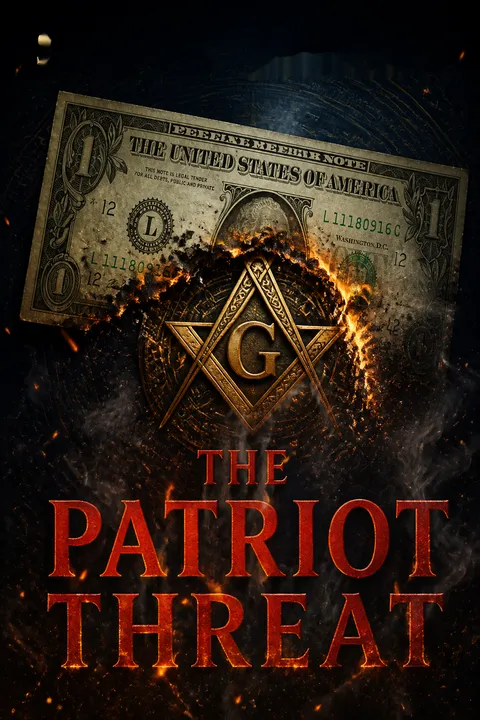


Plot Summary
Prologue
On New Year’s Eve 1936, Andrew Mellon, the dying former Treasury secretary, secures Franklin Roosevelt’s acceptance of his National Gallery donation, then leaves him a private challenge. Mellon says a dollar bill and a coded page point toward two secrets that could damage the president and his New Deal.
Roosevelt dismisses the riddle, but Mellon knows his curiosity will outlast their feud. The museum will become Mellon’s public legacy. His hidden puzzle is designed to make his enemy follow his lead.
The prologue makes a public institution and a private contest share the same foundation. Mellon’s gift seems civic, yet it also gives him a way to keep directing events after his political power has passed. Roosevelt’s dislike of him sharpens the trap: refusing the puzzle would mean letting Mellon define the terms, while investigating it would mean obeying him. Their conflict is therefore not simply ideological. It is a struggle over who controls the meaning of patriotism, and whether private wealth can steer the state even from beyond the grave.
Twenty Million in Ashes
Cotton Malone, a retired Magellan Billet agent temporarily working for Justice, expects to watch a North Korean cash transfer near Venice. Instead, an armed guard kills the exchange’s participants and hunts him through the office.
Malone ignites cleaning fluid to force the attacker into the open, then discovers the real guard dead in an elevator. He follows the gunman to a rooftop, where the man escapes by helicopter with two sacks of cash. Malone hangs from the rising craft, shoots its engine, and drops into a cemetery when it descends.
As the pilot regains control, Malone fires again. The helicopter explodes among the graves with its crew and twenty million dollars aboard, destroying the transfer and leaving Malone stranded in the night.
The opening turns an intelligence assignment into a collision between observation and intervention. Malone is sent to witness a carefully planned transaction, but once civilians and participants are being killed, simply watching becomes morally impossible. His improvisation depends on reading objects around him, from cleaning fluid to a cigarette lighter, and then accepting the physical cost of acting. The burning money is more than a thriller spectacle: it removes a revenue stream for North Korea while obscuring who intended to steal it. Malone has stopped one payment, but the explosion leaves the larger purpose of the operation unanswered.
A Breach in Atlanta
In Atlanta, Magellan Billet chief Stephanie Nelle meets her assistant Terra Lucent in secret after Terra admits that a Treasury agent used blackmail to gain access to Billet computers. Stephanie lets Terra continue cooperating so she can expose the intruder.
At a mall, a Treasury operative threatens Stephanie, smashes her phone, and demands that she call Malone away from Paul Larks, a former Treasury official. Stephanie has already arranged the encounter to flush him out.
Attorney General Harriett Engle then confronts Treasury Secretary Joseph Levy, who admits that Larks copied classified records and that Treasury has been tracking him and Malone. President Danny Daniels joins them, turning the dispute into a White House investigation and revealing that Treasury sent Malone toward the Venice cash transfer without telling Stephanie why.
Stephanie’s first problem is not the historical mystery but the collapse of trust between institutions that are supposed to cooperate. She treats Terra’s breach as evidence to exploit rather than a reason to panic, showing the same disciplined appetite for information that defines her intelligence work. The mall confrontation exposes Treasury’s willingness to use intimidation against a fellow federal agency, while the president’s arrival confirms that the danger reaches beyond a rogue employee. Stephanie’s anger is practical as well as personal: withholding information placed Malone in danger. The scene establishes that secrecy is not neutral here. Each agency’s private agenda can create risk for the people carrying it out.
Larks Dies at Sea
Aboard the cruise ship, North Korean exile Kim Yong Jin questions Paul Larks under a truth-inducing drug. Larks reveals that he gave his copied documents to Jelena, who knows the password Mellon, and plans to meet fugitive tax protester Anan Wayne Howell.
Kim learns that Howell and Larks kept the matter among Americans because they distrusted foreign involvement. He then administers enough drug to kill Larks. His daughter Hana later hides beneath Larks’s bed and injects Malone when he investigates the cabin, leaving him unconscious beside the body.
Treasury agent Isabella Schaefer arrives before Malone wakes, concealing that she has been monitoring Larks throughout the cruise. At disembarkation, Malone and Isabella spot Jelena carrying the satchel, and all three begin following her.
The ship compresses an international conspiracy into a narrow set of rooms, where watching and being watched become almost indistinguishable. Kim’s interrogation gives him information, but Larks’s guarded answers also reveal the fracture among the conspirators: the Americans have begun to treat nationality as a test of trust. Hana’s injection of Malone repeats Kim’s preference for quiet control, while Isabella’s concealed surveillance shows that the state has been observing the same target from another direction. The satchel becomes a mobile archive, carrying proof that no faction can yet interpret fully. Its disappearance from Larks’s cabin turns an abstract dispute into a race with a physical object at its center.
The Two American Secrets
At a secret Washington meeting, Daniels explains that he had asked Larks to investigate an old claim by Haym Salomon, the Jewish financier who helped fund the American Revolution. Salomon’s loans were never repaid, and Andrew Mellon may have removed the records that proved them.
The president also shows Stephanie and Engle evidence that Roosevelt pursued Mellon in a tax case, then gave him a coded dollar bill and a puzzle. A recording from Roosevelt’s final years confirms he later asked a Secret Service agent to investigate the clue, but died before solving it.
Meanwhile, Treasury’s records connect Mellon’s puzzle to the Sixteenth Amendment and irregularities in its ratification. A challenge to the income tax could jeopardize the government’s principal source of revenue.
The investigation shifts from a missing document to the legitimacy of the American state itself. Salomon’s unpaid loans raise a moral question about whether a nation can celebrate a patriot while refusing the obligation his sacrifice created. The amendment controversy makes that question more dangerous: the government may have collected taxes under a legal authority whose adoption was disputed. These are not equivalent wrongs, but Mellon appears to have tied them together so that Roosevelt would have to confront both. Daniels’s research also complicates the usual division between public and private history. Secret presidential recordings and Treasury files reveal a government that has preserved its own doubts while continuing to act as if they did not exist.
Jelena Carries the Evidence
At the Venice terminal, Jelena slips past customs with Larks’s satchel. Isabella moves to seize her, but a man in a red cap shoves Isabella into the lagoon. Malone recognizes the attacker as Howell, the fugitive he was originally hired to find, and follows him with Magellan agent Luke Daniels.
Kim and Hana pursue Jelena toward the ferry terminal, while Isabella accepts Luke’s offer of help in exchange for information. She explains that the satchel contains records about Salomon and the disputed income-tax amendment, though she withholds how serious the documents may be.
Malone boards the ferry to Zadar behind Howell. Kim and Hana board as well, having spotted both men. The passengers are now traveling toward Croatia with rival intentions and the same fragile bundle of evidence.
The chase forces the characters into temporary alliances before they understand one another’s motives. Isabella, who has spent the operation guarding information, must trade some of it to Luke because she can no longer reach Jelena alone. Malone’s recognition of Howell transforms the mission from routine surveillance into the pursuit of a fugitive whose claims may be more than an evasion strategy. Yet the ferry also removes the pursuers’ freedom of movement. Everyone is carried toward the same destination, and the satchel becomes the single point where their competing interests meet. The crowded terminal offers confusion, but once aboard, the characters can no longer pretend the others are incidental.
Fire on the Adriatic
On the ferry, Kim confronts Howell, takes Larks’s satchel, and captures Jelena with Hana’s help. He sets fire to their cabin and releases a lifeboat before the ship reaches Zadar, using the emergency to escape with the documents. Malone follows in another lifeboat with Howell, who refuses to leave without Jelena. Kim throws the drugged woman into the stormy sea to delay them.
Malone dives after her, but the waves and fog hide her, and Howell’s lifeboat must continue without her. Kim reaches the coast first. The failed rescue leaves Howell grieving and Malone responsible for choosing between pursuit and the woman’s life. The original cipher and the copied government records are now in Kim’s hands, giving him the advantage he wanted.
Kim’s escape demonstrates how easily a person can turn institutional procedures into weapons. He does not merely flee the ferry; he creates a fire that forces everyone else to react on his timetable. His treatment of Jelena strips away any pretense that he is pursuing justice alone. Malone’s decision to dive into the sea is an ethical refusal to reduce a person to an obstacle, even though it costs him the chance to catch Kim. Howell’s insistence on saving Jelena makes his attachment visible, but also makes him vulnerable to Kim’s manipulation. The sequence leaves the protagonists with a moral injury as well as a tactical loss.
The Cipher Finds Its Key
In Zadar, Howell explains that his book began as a tax protester’s argument, but Larks’s research supplied evidence he had never possessed. State archives in Kentucky and Tennessee showed possible failures in the Sixteenth Amendment’s ratification, including flawed votes and missing records.
Larks copied a 1913 solicitor general memorandum that warned Secretary of State Philander Knox about such problems, along with an original sheet of numbers Mellon gave Roosevelt. Malone realizes the numbers may work like the Beale cipher and matches them against the Virginia Declaration of Rights, a document associated with George Mason.
The decoded words point to a painting of the Washington family and the Roman numeral sixteen. Malone and Howell use Kim’s interest in the papers to lure him toward Solaris, while Howell agrees to help recover them.
The cipher’s solution depends on linking documents that each seem ordinary in isolation: a list of numbers, a founding-era declaration, a dollar bill, and a painting. The method embodies the novel’s central claim that power often hides in relationships between records rather than in a single revelation. Howell’s argument gains credibility because he distinguishes his earlier speculation from what Larks actually found, although his legal conclusions remain tied to a personal grievance. Malone’s strength is not specialized historical knowledge alone; it is his willingness to test a pattern and act before certainty is available. Their plan converts Kim’s incomplete understanding into a tactical weakness.
Hana Remembers the Camp
Hana’s memories reveal why she has learned to obey without appearing to feel. Born in a North Korean labor camp, she watched Teacher beat her friend Sun Hi to death for hiding a few kernels of corn. Hana had joined the class in spitting on the girl because the guards demanded it, and afterward she swore never to betray a friend in the same way.
Her father, Kim, later removed her from the camp after discovering she was his daughter. At Hana’s request, he had Teacher tortured and killed, teaching her that power could answer a grievance while also making violence seem like justice. Now traveling with Kim toward Solaris, she begins to question whether his promised return to power would change the system that destroyed her childhood.
Hana’s childhood teaches her to survive by dividing obedience from belief. In the camp, refusing an order could mean death, but compliance can also become a source of lasting shame, as her participation in humiliating Sun Hi demonstrates. Her father’s intervention appears to offer rescue, yet it reproduces the camp’s logic: a powerful person decides whose suffering matters and answers it with controlled violence. This history makes Hana neither simply loyal nor simply rebellious. She has been given material freedom without being released from the habits of captivity. The question facing her is whether a private act of vengeance can repair a life formed by institutional cruelty.
The Painting's False Trail
Stephanie applies Malone’s decoded clue in Washington. She and Treasury Secretary Levy locate an elaborate writing cabinet at the Smithsonian and retrieve an aged envelope hidden inside. The Chinese ambassador, who has been monitoring their movements, takes the envelope from them, believing it contains Mellon’s real message.
It is a decoy. Stephanie has used the cabinet to draw China away from the actual trail while the team follows the cipher’s reference to Edward Savage, Eleanor Custis, Martha Washington, and sixteen.
At the National Gallery, curator Carol Williams identifies the painting as Savage’s portrait of the Washington family. Stephanie finds a plug marked with the Roman numeral XVI in its frame and discovers a concealed envelope containing a key and a further message. The path now points beyond the museum.
Stephanie turns the intelligence contest into a contest over attention. The Chinese ambassador has technological reach and political leverage, but those strengths also make him susceptible to information deliberately placed in his path. The Smithsonian decoy works because it resembles the sort of secret he expects to find, while the authentic clue depends on patient attention to a painting and its frame. Stephanie’s strategy is not simply deception for its own sake. She creates a false certainty so she can preserve the one piece of evidence that might settle the crisis. The sequence also makes cultural objects operational: a cabinet and a portrait become parts of a covert communication system.
Solaris Becomes a Trap
As the train approaches Solaris, North Korean agents board at intermediate stops and converge on Kim, who still carries the satchel. Hana spots the danger while Isabella and Luke move through the cars to intercept the gunmen.
Kim confronts four agents, shoots three, and tries to escape with the papers. In the confusion, another attacker fires at him. Kim uses Howell as a shield, and the shots strike Howell in the chest. Malone reaches the platform as the train stops; he and the others exchange fire with the remaining assailants.
Howell collapses, gravely wounded, while Kim and Hana flee into the town. Isabella kills a pursuing gunman, then surrenders to local police to keep the authorities occupied and give Malone time to continue after Kim.
The train attack breaks the illusion that Kim’s scheme is a private contest between a disgraced heir and the United States. North Korean agents have been sent to erase him, and the Chinese have helped expose his location, making the international powers’ cooperation as unstable as their rivalry. Kim’s use of Howell as a shield is a decisive revelation of character: when the plan collapses, people become expendable instruments. Isabella’s choice to surrender after shooting an attacker reverses her earlier need to control every detail. She accepts personal consequences to preserve the pursuit, showing that professional discipline can include improvisation rather than mere rule-following.
Hana Burns the Cipher
Inside Solaris’s church, Hana confronts Kim about how her mother ended up in the camp. Kim admits that he sent her there when she wanted their affair to become permanent, then lied to Hana by blaming his own father. Hana understands that her mother’s suffering was not an unavoidable family decree but Kim’s choice.
When he demands Mellon’s original cipher, she throws the fragile sheet onto the candles and burns it. Kim shoots her twice. Malone, watching from the gallery above, orders Kim to surrender, but Kim raises his weapon instead. Malone shoots him and ends the immediate threat. Hana and Kim lie dead in the church, the cipher destroyed, while the copied records remain for the agents to recover.
Hana’s final decision separates inheritance from identity. Kim has treated family blood as a title that entitles him to rule, while Hana recognizes that the same lineage connects her to the institution that imprisoned her mother and shaped her own childhood. Burning the cipher is not a neat political solution; it is an irreversible refusal to let Kim use history as a weapon. Her action also denies the Americans an easy claim to complete control of the evidence. Malone’s killing of Kim prevents the threat from continuing, but it does not erase the moral cost of the deaths that brought them to the church.
The Secret Beneath Mellon
Stephanie and Levy use Mellon’s key to open his family tomb in Pittsburgh. Behind a marble panel marked sixteen, they find Salomon’s promissory notes and the missing 1913 solicitor general memorandum, which says the amendment may not have been ratified by enough states.
Mellon’s final letter explains that he hid both sets of evidence, then removed state records so the amendment could not be challenged. Stephanie and Levy burn the originals and later destroy the copies, choosing to protect the country from a legal and financial crisis.
Daniels promises pardons for eligible nonviolent tax offenders, while China publicly warns North Korea against further destabilization. Back in Copenhagen, Malone returns to his bookshop, grateful for Luke and Isabella but still carrying the loneliness left by Cassiopeia’s departure.
The resolution refuses a clean division between truth and justice. The recovered records confirm that Mellon’s suspicions were not merely a fantasy, but they also show that he deliberately made the truth impossible to prove. Stephanie and Levy inherit his dilemma: disclosure could expose government misconduct while destabilizing the economy, whereas concealment protects millions from immediate harm but perpetuates the state’s silence. Daniels’s proposed pardons offer a limited repair, not a reversal of the larger choice. Malone’s return to Copenhagen narrows the scale from national crisis to private loss. The country can be stabilized; his personal life remains unresolved.
Analysis
The novel turns historical records into a contested form of power. Mellon’s hidden papers matter because they could make the government answer for actions it has treated as settled: an unpaid Revolutionary debt and an income tax amendment whose ratification may have been defective. Yet Berry avoids making the discovery a simple triumph of truth. The documents could vindicate people punished for challenging the tax system, but public exposure might also deprive the government of its central revenue and destabilize the country. Stephanie and Levy must decide whether the public’s right to know outweighs the immediate consequences of disclosure.
The story also distinguishes patriotism from obedience. Mellon calls himself a patriot while manipulating presidents; Kim invokes American hypocrisy while pursuing personal restoration; Howell’s grievance contains real evidence but is entangled with evasion and self-interest. Hana’s arc supplies the novel’s sharpest moral counterweight. She has lived under a system that calls violence necessary, and she recognizes that Kim’s promised political change would preserve the same machinery of domination. Destroying the cipher is her refusal to let a political cause claim ownership of her life.
The thriller’s objects carry these arguments into action. A dollar bill, a coded page, a portrait frame, and a tomb turn national memory into a trail that can be followed, stolen, or erased. The final choice to burn the records contains the crisis but does not repair the original wrong. Daniels’s promise to pardon some tax offenders is a limited concession, not full accountability. The ending therefore leaves a productive unease: institutions may survive by suppressing evidence, but every act of protection also decides whose injuries will remain unrecognized.
Review Summary
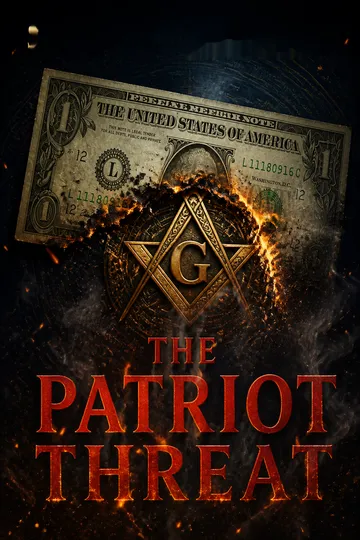
The Patriot Threat, the tenth Cotton Malone thriller by Steve Berry, receives mixed reviews averaging 3.98 stars. Readers praise Berry's historical research, particularly regarding the 16th Amendment's questionable ratification and income tax legality. Many appreciate the international intrigue involving North Korea and the blend of fact with fiction. However, critics note repetitive historical details, information overload about taxes, weak character development, and overly long chase sequences. While some find it a page-turner with fascinating conspiracy theories, others consider it slow-paced and less engaging than earlier installments. The complex plot and extensive research divide readers between those captivated and those overwhelmed.
People Also Read




Characters
Cotton Malone
Retired field operativeA former naval officer and Magellan Billet agent, Malone now owns an antiquarian bookshop in Copenhagen. He accepts Stephanie Nelle’s freelance assignment partly to escape the ache of a broken relationship, though danger soon turns the job into something much larger. Malone thinks in practical sequences, using memory, language skills, and whatever objects are at hand rather than waiting for ideal conditions. His instinct is to protect people caught in an operation, even when doing so complicates the mission. The tension between his professional competence and his guarded personal life gives him a distinctive vulnerability: he can improvise under gunfire more readily than he can repair intimacy.
Stephanie Nelle
Magellan Billet chiefStephanie created and leads the Justice Department’s Magellan Billet, a small intelligence unit trusted with sensitive investigations. She is experienced, controlled, and fiercely protective of her agents, which makes Treasury’s decision to withhold information an immediate breach of both procedure and loyalty. Stephanie treats secrecy as a tool, not a virtue, and is skilled at setting traps that expose what people are trying to hide. Her relationship with Malone combines professional trust with personal history, while her connection to President Daniels remains carefully private. She is most effective when competing institutions are forced to cooperate, though this case tests whether protecting the country requires protecting the secrets that damaged it.
Kim Yong Jin
Exiled North Korean heirOnce positioned to inherit North Korea’s leadership, Kim lives in exile after a disastrous attempt to take his children to Tokyo Disneyland using false passports. He has been dismissed as a playboy and political nonentity, but his appetite for Western culture masks a serious interest in history, finance, and power. Kim longs to reverse his father’s rejection and prove himself more capable than the half brother who took his place. He can be charming and calculating, yet his idea of justice remains bound to personal ambition. The contrast between his grievance against a brutal regime and his willingness to use coercion makes him a dangerous interpreter of patriotism.
Hana Sung
Camp survivor and daughterHana is Kim’s daughter, born to a woman imprisoned in North Korea’s Camp 14. The first years of her life teach her hunger, silence, and constant watchfulness; later education gives her a wider view of the world without erasing the camp’s habits. She is economical with words and difficult to read, partly because survival once depended on hiding what she thought. Her relationship with Kim is shaped by gratitude, dependence, and a persistent awareness that he belongs to the ruling family responsible for the camps. Hana’s struggle is not simply to escape her past, but to decide whether freedom means accepting the identity and purposes others assign to her.
Isabella Schaefer
Treasury field agentA disciplined Treasury investigator, Isabella has built her reputation by pursuing tax fraud, corruption, and financial crimes with meticulous preparation. Her assignment aboard the cruise ship is secret even from much of her own department, leaving her isolated when the operation unravels. Isabella prefers clear rules and direct accountability, but the pursuit of the satchel forces her into partnerships and risks outside her experience. She is ambitious without being careless and wants her work to be recognized on its merits rather than dismissed as administrative enforcement. Her guarded manner can read as arrogance, though it often protects a deeper fear of making a mistake that endangers others.
Luke Daniels
Magellan field agentLuke is a former special forces soldier and Magellan Billet agent, as well as the nephew of President Danny Daniels. He brings field training, confidence, and a Southern sense of humor to a team whose older members sometimes call him Frat Boy. His relationship with Malone mixes teasing familiarity with genuine respect, and he is quick to support Isabella even when their styles clash. Luke often acts before a situation becomes comfortable, a strength in pursuit and a liability when judgment requires patience. He is learning that effective teamwork means more than following orders or proving his own competence.
Danny Daniels
Outgoing American presidentPresident Daniels is a practiced politician from Tennessee whose ease with people conceals a sharp instinct for power and timing. He trusts Stephanie and values the Billet’s ability to act when conventional channels have become compromised. Though he can be impulsive and enjoys controlling a room, he is not naïve about the cost of a national crisis. His private connection with Stephanie adds emotional complexity to a relationship that must remain professional while he is still president. Daniels’s central tension is that political survival and public responsibility sometimes point in the same direction, but not always toward the same truth.
Anan Wayne Howell
Fugitive tax protesterHowell is a convicted tax protester who fled his trial and spent years hiding in Croatia. He wrote The Patriot Threat, arguing that the Sixteenth Amendment may not have been properly ratified and that the country may owe a vast debt to Haym Salomon’s heirs. His legal arguments grew from conviction and resentment: he believes the government punished him for challenging its authority. Howell is neither a trained lawyer nor an entirely reliable analyst, but his research attracts people with access to evidence he lacked. His relationship with Jelena reveals a capacity for attachment that stands in contrast to his rigid public crusade.
Joseph Levy
Treasury secretaryA trained economist and lawyer, Levy serves in President Daniels’s cabinet and initially tries to contain the investigation within Treasury. He believes secrecy can prevent a dangerous disclosure, but his methods include withholding information from Stephanie and putting Malone at risk. Levy is not indifferent to the public good; he fears that the truth could trigger consequences the government cannot manage. His conflict is between candor and institutional survival, and the pressure of the case forces him to work with the very officials he tried to bypass.
Harriett Engle
Attorney generalEngle is a former senator appointed as attorney general after President Daniels lost confidence in earlier choices. Intelligent and politically seasoned, she recognizes when an interagency dispute has become a threat to the administration itself. Her relationship with Stephanie begins with friction but develops into professional respect. Engle listens carefully, asks direct questions, and understands that legal authority can be weakened when officials take shortcuts in the name of security.
Paul Larks
Treasury whistleblowerLarks is a longtime Treasury official forced into retirement after he investigates records connected to Haym Salomon and the Sixteenth Amendment. A widower with few close family ties, he has become angry at the government he served and increasingly protective of the evidence he found. His guardedness and willingness to share documents with Howell make him a key link between the archives and the present operation. He wants to expose what he sees as a wrong, but his isolation makes him vulnerable to people who claim to share his cause.
Jelena
Howell’s Croatian partnerJelena is Howell’s partner in Croatia and the person he trusts to carry Larks’s satchel. She becomes involved because she agrees to help deliver documents, not because she shares Howell’s public campaign or understands every risk. Her presence gives the fugitive a personal attachment that complicates his evasions and makes him vulnerable to coercion.
Andrew Mellon
Treasury’s powerful benefactorMellon was a wealthy industrialist and Treasury secretary whose influence crossed three presidential administrations. He believed in limited government, economic independence, and the preservation of art, and he built the National Gallery as a lasting public institution. His contempt for Roosevelt became personal after the president pursued him over taxes. Mellon’s intelligence and patience made him skilled at shaping events indirectly. His definition of patriotism is complicated by his use of hidden evidence as leverage, leaving open whether his actions protected the country or simply protected his power.
Franklin Roosevelt
President facing MellonRoosevelt is the president who accepts Mellon’s National Gallery gift while locked in a bitter political and personal conflict with him. A forceful advocate for the New Deal, he sees Mellon as an emblem of wealth and influence resisting reform. Roosevelt is curious enough to pursue Mellon’s puzzle but confident enough to postpone it, a choice that gives the mystery its long afterlife. His public authority and private limitations make him an especially tempting target for Mellon’s elaborate challenge.
Haym Salomon
Revolutionary War financierSalomon was a Jewish financier who helped the Continental Congress and its allies sustain the American Revolution. He brokered financial instruments and extended loans when the new government lacked a reliable treasury. His family’s efforts to secure repayment were repeatedly frustrated, making him both a largely forgotten patriot and the center of a long-running moral claim. In the novel, his legacy connects the founding generation to later questions about national debt, public memory, and the obligations a country chooses to honor.
Philander Knox
Secretary facing ratificationKnox served as secretary of state when the Sixteenth Amendment was declared in effect and was a close friend of Andrew Mellon. A prominent Republican with considerable political ambition, he occupies the crucial point where legal doubt meets official authority. The documents associated with him raise questions about what he knew and why he proceeded, while the story leaves his motives open to interpretation.
Edward Tipton
Keeper of Roosevelt’s recordsEdward Tipton is the son of Mark Tipton, a Secret Service agent who worked closely with Roosevelt. He preserves his father’s books and an old dollar bill connected to Mellon’s puzzle. His willingness to meet the president privately gives Stephanie and Daniels access to a forgotten account of Roosevelt’s final investigation.
Chinese ambassador
Beijing’s careful envoyThe ambassador represents China’s interests in Washington and speaks with deliberate restraint. He warns Daniels about Kim while also pursuing the evidence for his own government. His polished diplomacy masks a pragmatic calculation: China wants to protect its relationship with the United States without allowing North Korea to gain leverage over either country.
Terra Lucent
Compromised Billet aideTerra is a reliable night-shift assistant in Stephanie’s unit whose financial and personal troubles make her vulnerable to blackmail. After helping a Treasury intruder, she chooses to tell Stephanie what happened, giving the Billet a chance to trace the breach.
Carol Williams
National Gallery curatorWilliams is a curator whose expertise in Mellon and the National Gallery helps Stephanie interpret the clues in the Washington family portrait. Her knowledge of the painting and its history turns a cryptic phrase into a practical lead.
Plot Devices
The marked dollar bill
Mellon’s first breadcrumbMellon draws lines across the Great Seal on a 1935 dollar bill, connecting letters that spell Mason and form a six-pointed star. The markings direct Roosevelt toward George Mason, whose warnings about concentrated power echo Mellon’s description of the president. The bill is also a physical bridge between the 1936 White House meeting and later investigations. Its symbols are not proof of a conspiracy by themselves; their function is to make Roosevelt and the modern investigators search for a historical key.
The numbered cipher
A puzzle with historical keysA crumpled page of numbers conceals Mellon’s directions. Isabella recognizes its resemblance to the Beale cipher, which uses a text as a key. Malone tests the Virginia Declaration of Rights, associated with George Mason, and decodes references to Edward Savage, Eleanor Custis, Martha Washington, and sixteen. Those clues lead from the dollar bill’s Mason pattern to a specific painting and, ultimately, to the papers Mellon hid. The cipher makes research an active part of the chase rather than background exposition.
The Treasury papers
Evidence against the stateLarks copies records concerning both Salomon’s unpaid loans and the contested ratification of the Sixteenth Amendment. The first set suggests the government suppressed a legitimate debt. The second documents official concern that the amendment may not have received valid approval. Together, the files could expose legal and financial liabilities on a scale that threatens the country’s revenue system. Their classified status, missing originals, and eventual destruction make the papers a test of whether public stability justifies continued concealment.
The Smithsonian decoy
A trap for Chinese surveillanceStephanie and Levy place a convincing but false aged message in a hidden compartment of a Smithsonian writing cabinet. They know the Chinese are monitoring their movements and allow the ambassador to believe he has taken Mellon’s real message. This diversion keeps China occupied while Stephanie follows the genuine clue to the National Gallery. The device uses the adversary’s confidence in surveillance against him: access to more information does not guarantee access to the truth when the target controls which information is visible.
The North Korean insurance fraud
Cash for the regimeNorth Korea’s state insurance company manufactures or exaggerates disasters, then collects payments from international reinsurers through compliant courts that prevent outside investigators from checking claims. A portion of the proceeds becomes an annual cash transfer to the ruling regime. Malone is sent to witness one such payment in Venice, where the theft attempt and helicopter explosion bring him into the larger plot. The fraud establishes the regime’s access to hard currency and connects Kim’s political ambitions to the financial operation that opens the novel.
Cotton Malone Series






About the Author
Other books by Steve Berry

Download PDF
Download EPUB
.epub digital book format is ideal for reading ebooks on phones, tablets, and e-readers.








