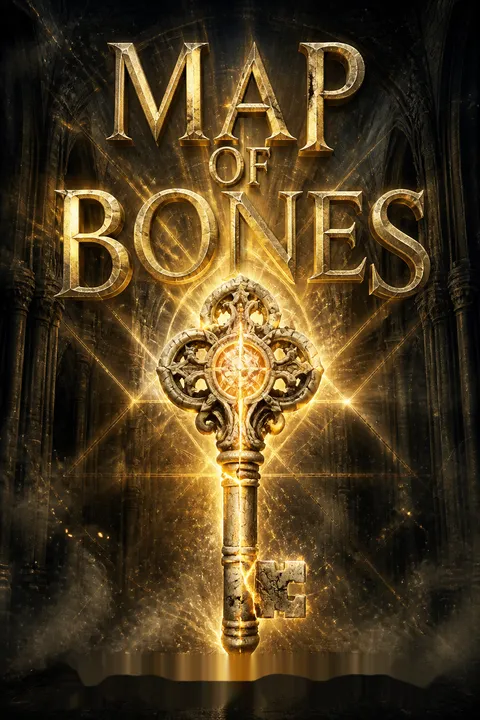


Plot Summary
Prologue
In 1162, as a caravan carrying the Magi’s relics flees Italy for German territory, Friar Joachim watches an enemy archer shatter one of its stone coffins. The pursuing soldiers find it empty.
Joachim has sent the genuine relics ahead, hidden in hay, while the decoy wagon draws the attack. The bones have been moved before, and their journey is already bound to political conflict within the Church. Centuries later, the same relics will become the bait in a much larger hunt.
The opening makes the relics both objects of faith and instruments of concealment. Joachim’s decoy turns apparent loss into a survival tactic, establishing a pattern the modern plot will repeat: what looks like a sacred artifact may be a container, a clue, or a deliberate misdirection. The journey from Italy to Germany also gives the mystery a historical geography. The bones are not merely stolen from a church; they have been moved through centuries of upheaval, leaving their custodians’ motives uncertain.
Anthrax at Fort Detrick
Sigma Force commander Grayson Pierce enters Fort Detrick under cover to buy weaponized anthrax, only to find the seller waiting with a silenced pistol and his identity already known. The Guild operative shoots him, then reveals that explosives will turn the condemned Building 470 into an anthrax dispersal system.
Gray survives because his experimental body armor stops the bullet, and he traps the assassin by using a broken lamp to make her armor stiffen. He finds the vials in a roof vent, jumps onto the base’s giant containment sphere, and throws the timed bomb inside just before it detonates. As he escapes, he finds a dragon pendant on his motorcycle. Sigma director Painter Crowe soon assigns him to investigate a massacre in Cologne.
The opening attack establishes the novel’s governing tension between scientific knowledge and its weaponization. Gray survives through technical understanding, improvisation, and physical risk, but the Guild’s insider knowledge shows that individual competence cannot secure an institution against infiltration. His success is therefore provisional: the pendant converts a contained attack into evidence of a wider campaign. The scene also frames Gray’s leadership problem. He is effective alone, yet the mission ahead will demand that he trust a team rather than rely only on his own reflexes.
A Statue Loses Its Head
In Rome, Carabinieri lieutenant Rachel Verona investigates the theft of a Roman statue’s head from an underground excavation. She spots traces pointing to a young student’s involvement and gets him to admit that gambling debts made him vulnerable to antiquities traffickers.
Before Rachel can return to her family, her uncle, Monsignor Vigor Verona, summons her to the Vatican. There, Cardinal Spera explains that armed men killed worshippers during a Cologne Mass and stole the bones of the Three Magi while leaving the gold reliquary behind.
Rachel sees that the slaughter and theft must be connected. Vigor tells her the Vatican is sending them to Germany under diplomatic cover, but their real assignment is to investigate the relics and the mysterious deaths.
Rachel’s first case gives her a practical method before the story expands into conspiracy: she reads physical evidence, assesses human vulnerability, and accepts the risks of acting before every fact is known. The stolen head also anticipates the larger crime, where a missing piece matters more than a valuable whole. Her recruitment is not simply a family favor. The Vatican needs her expertise precisely because devotion and historical knowledge can both be exploited. Her professional identity begins to collide with institutions that expect her to serve under cover and defer to authority.
The Vatican Burns
As Rachel drives toward the Vatican, two cars pin her Mini Cooper and gunmen open fire. She escapes through the convertible roof, but recognizes the attackers’ license plates as Vatican-issued. At the same time, Vigor and his research assistant Jacob search the Secret Archives for clues about the Magi. A bomb explodes in the Tower of the Winds; Jacob dies shielding Vigor, who escapes with burns and a warning from Cardinal Spera.
Rachel reaches the heliport and reunites with her uncle as the archive tower burns. Vigor identifies the attackers’ coiled-dragon emblem as the mark of the Dragon Court, an ancient aristocratic society that has survived inside modern institutions. The Cologne massacre, he fears, is only the opening move.
The attack collapses the distinction between refuge and danger. The Vatican has the authority to summon Rachel and protect relics, but its walls cannot guarantee safety; its own credentials can be forged and its archives penetrated. Jacob’s death makes the cost of scholarship immediate, while the burning tower threatens collective memory itself. Vigor’s revelation widens the conflict from a criminal investigation to a struggle over who controls the past. The Dragon Court’s power lies not only in force but in its ability to pass as part of the institutions it intends to corrupt.
The Cathedral Ambush
Gray arrives in Cologne with Sigma agents Monk Kokkalis and Kat Bryant, then meets Vigor and Rachel inside the cathedral. As they examine the shattered reliquary, a magnetized cross reveals that the attackers’ device has affected metal. Hooded gunmen storm the nave.
Gray and Rachel draw fire toward the cathedral doors, while Monk and Kat are trapped in the treasure chamber with Vigor. The Guild assassin Seichan, who previously tried to kill Gray at Fort Detrick, appears with the attackers but gives Gray and Rachel a chance to escape, disguising her help by shooting him in the arm.
Kat and Monk survive a grenade by hiding inside a bulletproof display case. They reunite outside as the cathedral is firebombed, but learn that Jason Pendleton, the lone survivor of the first massacre, has been killed in his hospital room.
The second assault turns the investigators into witnesses of the same violence they are trying to explain. Their survival depends on distinct skills and trust under pressure: Monk’s improvisation, Kat’s decisiveness, and Gray’s willingness to draw danger away from the others. Seichan’s unexplained intervention makes allegiance unstable. The cathedral’s repeated violation also complicates the sacred setting. The attackers do not merely steal from a church; they manipulate its architecture, ritual, and public meaning to hide their actions and eliminate the people who could interpret them.
Gold in the Dust
At a hotel, Gray studies a trace of pale powder collected from the reliquary and realizes it matches the substance found in Communion wafers consumed by the dead. Tests identify an unusual form of gold that ordinary instruments cannot detect.
Because the thieves ignored the cathedral’s other treasures, the team suspects the bones themselves produced the powder. Vigor reveals that some Magi relics were returned to Milan in 1906 and remain at the Basilica of Sant’Eustorgio.
Before the group leaves Germany, they also learn that the attack victims had taken Communion, while those who had not were spared the mysterious seizure. The pattern suggests the wafers made worshippers susceptible to the device, turning the service into a controlled experiment.
The clue changes the investigation from motive to mechanism. The bones are no longer merely a religious prize, and the Communion wafers are no longer incidental to the massacre. By connecting residue, ritual participation, and selective deaths, Gray’s team treats faith as a material vulnerability without dismissing its meaning to the victims. The revelation also creates a moral distinction between knowing how a weapon works and deciding what it is for. The Dragon Court has tested power on civilians; the investigators must now understand that power without reproducing the same disregard for human life.
The Relics Are Gone
The team drives through the night to Milan, where increased security has been arranged for the remaining Magi relics. Gray enters the Basilica of Sant’Eustorgio with Monk and Vigor, while Rachel and Kat wait nearby.
A priest soon reveals that a tall man carrying authentic-looking Vatican papers took the bones earlier that morning. The thieves had anticipated Vigor’s mission and used his supposed death in the archive bombing as cover.
In the sacristy, a fake priest and Raoul de Sauvage’s men attack Rachel and Vigor; Rachel fights free and finds the real priest tortured beside Father Belcarro’s body. Hidden among Belcarro’s belongings is a small finger bone he kept back. Gray tests it on the train and discovers it is solid gold, not human bone.
The Milan reversal shows how the Court converts the team’s own plans into opportunities. Vigor’s official assignment to recover the relics becomes a vulnerability because the enemy has access to the same information and can impersonate the same authority. Yet the fragment Father Belcarro preserved prevents the theft from becoming complete. Its discovery changes the meaning of the bones: they are crafted objects, not remains. The scene links institutional deception to physical sacrifice, as the real priest protects a fragment at the cost of his life and leaves the investigators a clue that cannot be replaced by paperwork.
Manna Beneath the Bones
On the train to Rome, Gray confirms that the apparent bone is an amalgam of gold and other rare metals, transformed into a glasslike substance and shaped to resemble bone. Vigor connects the material to ancient Egyptian accounts of a mysterious white powder, to Moses’s manna, and to traditions surrounding the Magi.
Kat explains how the metals might conduct energy in unusual ways, while Monk suggests the relics may be creations made by the Magi rather than their actual skeletons. A coded passage Seichan stole from the Dragon Court points them toward the Catacombs of Saint Callistus. Vigor recognizes that its repeated puzzle phrase and fish imagery direct the team toward early Christian symbols, hidden beneath Rome.
The historical chain is deliberately unstable: it moves among scripture, archaeology, legend, and speculative science without making any one source wholly authoritative. That uncertainty is central to the mystery. The team must read religious texts as records of material knowledge while resisting the Court’s assumption that knowledge automatically grants a right to rule. Monk’s apparently casual observation is especially important because it reframes the relics through grammar and craft, not reverence alone. Expertise emerges through collaboration, as no single discipline can interpret the object, the text, and the history together.
The Fish Points Underground
In the Catacombs of Saint Callistus, the team follows the riddle through paired fish frescoes, images of the Magi, and a painting of Moses striking a rock. Vigor links the word twin to the apostle Thomas, whose followers preserved a different Christian tradition, while Rachel recognizes that the rock points to Saint Peter.
The clues lead them to the tomb beneath St. Peter’s Basilica, where a memorial Mass for Cologne’s victims is about to draw thousands of people. Their search is interrupted by Seichan, who ambushes them outside the catacombs and demands the solution. Gray gives her the location rather than risk the lives of his companions. She shoots the caretaker in the shoulder, then leaves with the answer.
The catacomb sequence turns interpretation into a race against public danger. Each symbol acquires meaning through its location and relation to earlier clues; the fish is not a decorative emblem but a directional instruction. Vigor’s knowledge of Christian schisms and Rachel’s ability to connect imagery to place make the team’s method collaborative rather than purely technical. Seichan’s threat forces Gray to choose between secrecy and immediate protection. His decision reveals that leadership is not the preservation of information at any cost. It is the judgment of which lives can be risked and which cannot.
Lightning Under Saint Peter
Gray’s team enters the Scavi, the ancient cemetery beneath St. Peter’s, while Vigor tries to warn the Vatican leadership and clear the basilica. The Dragon Court tunnels down from the crowded church, fixes electromagnetic plates beside the tomb, and activates the Magi powder. The resulting force makes the tomb seem lighter, opens a concealed chamber, and sends electrical energy up through the bronze canopy above.
The basilica shakes as lightning-like currents strike the dome. Gray’s attempt to ambush the raiders fails, and the team is trapped below with a timed incendiary bomb. They escape through a hidden drainage passage that empties into the Tiber. In the cavern, they find a map etched on a stone slab, pointing toward Alexandria.
The attack’s scale exposes the danger of treating ancient knowledge as a neutral tool. The Court’s apparatus interacts with the basilica in ways its makers could not have foreseen, and a historical clue becomes a present threat to worshippers gathered above. The escape route matters because the secret society built a test, not a simple lock: reaching the next stage requires understanding both the material and the symbolic system. The team survives by inference and cooperation, but its discovery of the map also confirms that the Court has already crossed several thresholds ahead of them.
The Sphinx in the Harbor
In Alexandria, Gray’s team searches the harbor around the Fort of Qait Bey, built over the site of the ancient lighthouse. Their first underwater sweep finds wreckage and scattered sphinxes but no entrance.
Monk notices that one buried sphinx faces the fort, recalling the directional fish in the Roman catacombs. The team follows its orientation to a block of weakly magnetic hematite embedded in the submerged ruins. They use their boat’s anchor to dislodge the stone, revealing a narrow tunnel.
Gray swims through without his air tank, and Rachel and Vigor follow. The passage opens into a dry chamber built like a small pyramid, confirming that the clues are guiding them through successive tests rather than toward an ordinary archaeological site.
The harbor search tests whether the group can transfer a method from one setting to another. Monk recognizes that a landmark can function as an instruction, while Kat’s geological knowledge makes the magnetic stone legible. Their progress depends on treating failed searches as information rather than as proof that the riddle is meaningless. Gray’s risky solo passage shows his appetite for action, but Rachel and Vigor follow, refusing to let him monopolize danger. The teamwork is becoming more intimate and more difficult: trust now means accepting another person’s judgment as well as protecting them.
Alexander’s Glass Tomb
Inside the hidden complex, the team finds a glass pyramid containing Alexander the Great’s body, a bronze finger, and a reflected star field. Vigor identifies the room as a monument to Alexandria’s lost scholarship. He has the team pour acidic soft drinks into four copper vessels, using them as crude batteries. Electricity arcs through the water and activates the pyramid’s stored energy.
A Greek message appears on the ceiling, and a section of the glass dissolves, exposing a gold key in Alexander’s hand. Rachel overlays the Seven Wonders on a map and traces their construction order into an hourglass shape. Gray extends its axis to Avignon, the former seat of the papacy. The team leaves with the key and a new destination.
This discovery turns the novel’s historical puzzle into an experiment the characters must perform, not merely interpret. The improvised batteries make the ancient knowledge physically accessible, yet the blast of energy also warns that understanding is not the same as control. The gold key is valuable because it connects stages of the hunt, not because it can be sold. Rachel’s map-reading and Gray’s spatial reasoning complete Vigor’s historical research. Their success depends on combining disciplines, while the buried tomb suggests that intellectual inheritance can survive only when its custodians build safeguards into it.
The Harbor Turns Hostile
As the team searches the harbor for the next clue, a Dragon Court hydrofoil attacks their speedboat with a torpedo. Monk jumps clear, Rachel and Monk are captured by divers, and Gray escapes underwater with an injured Vigor. Kat kills two attackers and helps Rachel and Monk flee on a stolen underwater sled, but the Court catches Gray and Vigor near the tunnel.
Raoul demands the gold key and uses Monk’s capture to force Rachel to reveal what the team found. The Court cuts off Monk’s hand, then sends him to a Geneva hospital as a bargaining token. Gray agrees to travel to Switzerland alone in exchange for Rachel’s continued safety. The team’s pursuit is now a hostage exchange.
The attack strips away the relative safety of research and turns the team’s knowledge into leverage. Raoul understands that information can be extracted through bodily harm, while Gray and Rachel must weigh one person’s survival against the larger threat. Monk’s injury changes the cost of the mission without reducing him to that injury; his life still matters as a friend and operative, not merely as a bargaining chip. The team’s separation also tests the loyalties formed in the earlier stages. Their survival depends on decisions made at a distance, with incomplete information and no guarantee of reunion.
The Castle’s Inheritance
Gray travels to Switzerland, where Seichan helps him infiltrate Raoul’s castle through an old tunnel. Rachel and her grandmother, Camilla, are imprisoned there. Camilla admits that her family has served the Dragon Court since the Second World War and that Rachel was meant to be joined to Raoul to preserve a supposed royal bloodline.
Gray escapes his cell with Seichan’s help, and she blows up the Court’s vehicles as the prisoners flee. The castle’s fighting dogs attack in the courtyard. Rachel’s injured grandmother is killed in the chaos, while Gray, Rachel, and Seichan escape by helicopter with Monk and Cardinal Spera. The rescue reunites the team, but Rachel must confront a family history that has been rewritten as destiny.
Camilla’s revelation is not simply a surprise about ancestry; it is a coercive story that tries to make violence feel inevitable and privileged. Rachel’s identity has been framed by someone she trusted, but the revelation does not erase her choices or professional history. The rescue makes that distinction urgent: inheritance may explain how the Court claims her, but it does not determine what she will do. Seichan’s shifting alliance remains transactional, yet her actions expose a capacity to choose against the organization that trained her. Survival here requires separating loyalty from obedience.
A Palace Below Avignon
While Gray crosses Switzerland to rescue Rachel, Kat and Vigor reach Avignon and search the Palace of the Popes. They discover that electricity applied to a bauxite-lined hearth releases the stones and opens a staircase. Below lies a vast underground library and museum, built into a Gothic structure of arches, tiers, glass, and timber.
At its lowest level, a platinum-lined labyrinth surrounds a central pillar. Before Kat and Vigor can contact Gray, assassins attack the palace. Gray arrives with Rachel, Monk, and Seichan, but General Rende appears with men posing as French police and takes control. Cardinal Spera is killed at the airport. The Court now has the gold key, the archive, and the captured team in one place.
The hidden archive gives material form to the novel’s conflict over preservation. It is a storehouse built to protect texts and artifacts from both neglect and political violence, but its secrecy has also made it vulnerable to an elite group that regards knowledge as property. The betrayal by Rende demonstrates how easily public authority can become a costume. Spera’s death removes a trusted mediator just as the team reaches the most consequential site. The discovery is therefore both intellectual triumph and strategic disaster: the archive exists, but the wrong people control the threshold.
The Labyrinth Demands Kneeling
Raoul and Rende bind the team and force them down into the hidden archive. They intend to strip the chamber of its treasures and destroy whatever they cannot carry. Alberto Menardi studies the labyrinth while Raoul threatens the prisoners, then Gray explains that a laser aimed at the northern glass plate may activate the mechanism.
The beam creates a star of red light across the chamber. Alberto steps onto the glass floor and is killed by its electrical defenses. Gray recognizes that the maze must be crossed on hands and knees, below the height of the beams. He tells the others enough to keep them alive, but the Court still forces him and Rachel to crawl toward the center with the gold key.
The labyrinth converts interpretation into embodied knowledge. The characters cannot stand above the system and command it; they must lower themselves, accept its constraints, and move along a path they cannot shortcut. This reverses the Court’s hierarchy of domination, where rank and force are treated as proof of entitlement. Gray’s warning to Raoul is a compromised act of protection: he gives away information to prevent torture, while hoping that the deeper mechanism will expose the Court’s ignorance. Rachel’s role in the solution matters because she can read the symbolism that Gray cannot reduce to engineering.
The False Key Opens Nothing
Gray and Rachel reach the labyrinth’s center, where Raoul orders them to stand and uses the gold key. Gray reveals it is a counterfeit; he made the fake in Alexandria and kept the real key hidden. The false key triggers the chamber’s defenses instead of opening them. Light and electrical force surge through the archive, distort the space, and destroy the Court’s troops.
A collapsing pillar crushes Raoul, and Seichan kills him. Aboveground, Painter Crowe arrives with French police and arrests Rende after tracing the leak through Sigma’s intelligence chain. The archive itself vanishes from the chamber, leaving only its ledger. The team survives, but the knowledge they sought has not been handed over as a prize.
The climax turns deception against the Court’s confidence that possession equals mastery. Raoul has the key but not the knowledge required to use it, and the decoy exposes his impatience. The overwhelming light offers no simple victory: it destroys the archive as a physical destination and leaves the characters uncertain whether it moved, transformed, or disappeared beyond their reach. Seichan’s execution of Raoul settles a personal debt but preserves the ambiguity of her ethics. Painter’s arrest of Rende restores a measure of institutional accountability, though it cannot undo the violence or recover the lost library.
The Ledger Remains
After the light fades, the surviving team finds the archive gone, but its ledger remains. Vigor is wounded yet alive, and the team returns aboveground to face Painter and the French authorities. The Court’s conspiracy is exposed, though the vanished library’s fate remains unknown.
In the weeks that follow, Vigor becomes prefect of the Vatican Archives, while the real gold key is sent to him for safekeeping. Rachel and her family arrange to sell the Sauvage castle and give the proceeds to families harmed in Cologne and Milan.
Monk receives a prosthetic hand and grows closer to Kat. Gray returns to his parents’ home and abandons the idea of dosing his father with the mysterious powder, choosing instead to spend the time they have together honestly.
The resolution refuses the fantasy that winning a treasure hunt means owning its answer. The ledger offers a record and a future possibility, not the vanished collection itself. The survivors respond by converting what they can control into care: Vigor protects the key, Rachel directs inherited wealth toward victims, and Gray chooses presence over an experimental shortcut to preserve memory. Monk’s recovery and new relationship with Kat suggest that intimacy can resume after bodily trauma, though not by pretending it never happened. The final emphasis is on stewardship, not conquest.
Epilogue
Three weeks later, Gray visits his parents in Takoma Park. Monk is preparing for a date with Kat, and the team has learned that Seichan left Gray another dragon pendant before disappearing. Gray considers slipping the remaining metal powder into his father’s orange juice, hoping it might help his memory, but stops and pours it away.
His father is still there, reaching for an ordinary lunch and a connection to his son. Gray chooses to tell him about Rachel instead. The story closes not with a recovered miracle, but with Gray making time for the people who are still beside him.
The epilogue answers the novel’s central temptation on a domestic scale. Gray has access to a substance that might improve memory, but he cannot know its cost or whether it would restore the relationship he has neglected. By discarding it, he refuses to treat his father as a problem science can solve. The choice also echoes the lost archive: knowledge may be powerful, but possession does not guarantee wisdom. Gray’s decision to speak about Rachel turns the ending toward ordinary reciprocity, where care depends on attention rather than supernatural intervention.
Analysis
Map of Bones builds its thriller around a collision between systems that claim authority over knowledge. Sigma Force approaches the mystery through science, the Vatican through institutional memory, Rachel through archaeological evidence, and Vigor through religious history. None is sufficient alone. The riddles reward collaboration because their meanings cross disciplines, while the Dragon Court’s belief in hereditary entitlement turns accumulated knowledge into a weapon of domination.
The novel’s recurring objects refuse stable meanings. The Magi bones are crafted metal, the gold powder can become glass, and the key can be counterfeit. These transformations make the plot’s central ethical question concrete: discovering how a powerful thing works does not establish the right to use it. The Court confuses possession with understanding, and its violence is an attempt to force a shortcut through a system designed to demand patience and interpretation.
The sacred settings intensify that conflict. Cologne’s Mass becomes a laboratory for murder; Saint Peter’s tomb becomes a mechanism whose effects threaten the basilica above; Avignon’s palace hides a library beneath a performance of historical spectacle. The novel treats ritual and architecture as forms of stored knowledge, vulnerable to exploitation but not reducible to it. Its speculative science gives physical shape to questions normally assigned to theology, especially the possibility that matter, memory, and light might share a deeper structure.
The emotional resolution narrows the scale. Gray cannot recover the vanished archive or reverse his father’s illness. He can refuse to experiment on his father and choose honest attention instead. Rachel can reject the Court’s inherited story about her bloodline, while turning the castle’s proceeds toward those harmed by the Court’s crimes. These choices do not solve every mystery. They distinguish stewardship from possession and suggest that the most meaningful use of knowledge is not control, but care.
Review Summary
Map of Bones is a fast-paced thriller combining history, science, and action. Many readers enjoyed the blend of real and speculative elements, compelling characters, and exciting plot. Some praised Rollins' research and ability to make complex concepts accessible. Critics found it formulaic or too similar to Dan Brown's works. The romance subplot received mixed reactions. Overall, readers found it entertaining despite some unrealistic elements. The book's exploration of ancient mysteries, religious conspiracies, and cutting-edge technology appealed to fans of adventure thrillers.
People Also Read

Characters
Grayson Pierce
The scientist in commandGray is a Sigma Force commander whose training joins military combat with advanced scientific study. He is perceptive, resourceful, and often most comfortable acting alone, a habit reinforced by his history of conflict with authority and his difficult relationship with his father. His instinct is to solve danger through analysis and decisive movement, but the mission repeatedly requires him to rely on Monk, Kat, Rachel, and Vigor. Gray’s curiosity about religion and unusual physical phenomena sits beside an enduring Catholic inheritance, making him wary of both blind faith and easy dismissal. Beneath his self-containment is a strong capacity for loyalty, especially toward people whose vulnerability he recognizes.
Rachel Verona
The fearless art detectiveRachel is a Roman Carabinieri lieutenant specializing in stolen art and antiquities. Her training in psychology and art history gives her a sharp eye for both physical clues and human motives; she is willing to take a calculated risk when delay could let a trafficker disappear. Independent and quick-witted, she resists being treated as an assistant or protected relative, even when the danger is real. Her bond with Vigor is affectionate but not submissive, and her work reflects a personal devotion to preserving the past. Rachel’s confidence can conceal old family tensions and a private longing for connection, which she does not allow to define her professional choices.
Monk Kokkalis
The irreverent field medicMonk is a former Green Beret and forensic medicine specialist whose compact build leads people to underestimate him. He combines strong tactical instincts with humor, using jokes to ease pressure and to keep his teammates from surrendering to fear. His ability to notice broad patterns complements Gray’s close analysis, while his loyalty makes him an anchor for the team. Monk is not merely comic relief: he understands injury, danger, and grief through lived experience, and his humor often protects feelings he does not easily expose. His working relationship with Kat carries a quiet possibility of intimacy, though both have reasons to be cautious.
Kathryn Bryant
The precise intelligence officerKat is a Sigma operative with a background in Navy intelligence and a developing expertise in geology and engineering. She is disciplined, observant, and alert to details other people overlook, especially in technology and physical environments. Her controlled manner reflects both professional training and a desire to keep painful personal history from governing her choices. Kat is effective under pressure, but the need to anticipate every risk can make her cautious when a mission demands improvisation. She respects Gray’s leadership while challenging his assumptions, and her partnership with Monk offers a counterpoint to her guardedness. She values loyalty deeply, which makes trust both a strength and a source of fear.
Monsignor Vigor Verona
The Vatican’s scholar-spyVigor is Rachel’s uncle, a priest and leading scholar of Christian archaeology who also serves the Vatican’s intelligence interests. His wide historical knowledge lets him connect obscure texts, sacred imagery, and political events across centuries. He is warm with Rachel and intellectually rigorous with colleagues, though his habit of holding back can frustrate those who need immediate answers. Vigor’s faith is neither a rejection of science nor a substitute for it; he sees inquiry as a way to approach spiritual questions. His lifelong service has made him comfortable with secrets, but he also understands the personal cost of drawing loved ones into dangerous work.
Seichan
The Guild’s double agentSeichan is a highly trained Guild operative who moves between alliances with calculated self-possession. She is an expert in surveillance, combat, and disguise, and she treats trust as a temporary arrangement rather than a moral guarantee. Her hostility toward Gray is complicated by a professional respect that neither makes her harmless nor fully predictable. Seichan’s choices are driven by survival, strategy, and a fierce refusal to be controlled by other people’s plans. She can be ruthless, but she is not simply loyal to the most powerful side; her own grievances and objectives shape where she intervenes.
Raoul de Sauvage
The Court’s brutal heirRaoul is a Swiss baron and military leader within the Dragon Court. He treats aristocratic ancestry as a license to command and views violence as a practical tool for getting what he wants. His polished rank sits uneasily beside his appetite for cruelty, and he measures other people according to usefulness, obedience, and bloodline. Raoul is ambitious within the Court and eager to prove himself after earlier failures. He is dangerous not because he is a subtle thinker, but because he combines physical force with institutional backing and a willingness to make other people pay for his mistakes.
Painter Crowe
Sigma’s steady directorPainter directs Sigma Force, balancing operational security with the responsibility of sending agents into danger. He is a former field operative who understands the temptation to intervene personally, but his position requires him to trust Gray and the team. His Native American heritage and scientific background are part of a thoughtful, disciplined character rather than a source of easy certainty. Painter values competence, loyalty, and discretion, and he is willing to investigate suspicions within his own organization instead of accepting the first explanation.
Cardinal Spera
The Vatican’s chief diplomatSpera is the Vatican secretary of state, a young and politically capable cardinal carrying the burden of representing the Church during an international crisis. He recognizes the danger of public panic and must balance institutional secrecy with the need for outside expertise. His willingness to cooperate with Sigma and the Carabinieri reflects pragmatism, while his religious office ties him to the traditions at the heart of the mystery. Spera is careful about what he reveals, not because he lacks conviction, but because he knows information can endanger people as readily as it can guide them.
General Joseph Rende
Rachel’s Carabinieri commanderRende is a senior Carabinieri officer and an old family friend of the Veronas. His authority gives Rachel access to investigations beyond her usual jurisdiction, and his history with her family lends him a trusted presence. He is accustomed to coordinating across law enforcement and Vatican channels, where loyalty and discretion are treated as professional necessities. Rende’s composed manner and established relationships make him a stabilizing figure in a crisis, though the team’s reliance on institutional contacts also makes his role consequential.
Dr. Alberto Menardi
The Vatican’s archive prefectMenardi is a Vatican archivist and scholar with formidable intelligence and a deep familiarity with religious and historical texts. His work gives him access to records few people can interpret, and he is accustomed to treating scholarship as a contest of deduction. He prizes intellectual control and prefers to work through documents, systems, and carefully guarded expertise. Menardi’s position places him close to the Vatican’s most sensitive historical material, where knowledge can be used either to preserve a tradition or to exploit it.
Camilla Verona
Rachel’s formidable grandmotherCamilla is Rachel’s sharp-minded grandmother, a proud Italian matriarch with a strong interest in family, history, and the choices of younger relatives. She has survived hardship and carries herself with a practical toughness that Rachel admires. Her humor and matchmaking instincts give her warmth, but she also has a commanding view of what family members should do. Camilla’s relationship with Rachel is affectionate and unusually perceptive; she notices details others miss and expects her granddaughter to be capable of defending herself.
Jason Pendleton
The surviving cathedral witnessJason is an American college student visiting Germany with friends. His interest in art and history brings him to the Cologne Cathedral for its midnight Mass, where he witnesses the attack. He is inexperienced with violence and initially understands the event only through the shock of what he sees, but his observations provide investigators with a crucial starting point.
Gray’s father
The engineer losing memoriesGray’s father is a retired petroleum engineer who lives with early Alzheimer’s disease. Proud, blunt, and accustomed to being the capable provider, he resists the ways illness has altered his independence. His relationship with Gray is marked by old anger and an affection neither man finds easy to express. He prefers practical gestures to sentimental conversations, but his attempts to reach his son remain visible beneath the teasing.
Gray’s mother
The family’s quiet caretakerGray’s mother is an academic in biological sciences who manages her husband’s care while continuing her own work. She is patient and protective, often smoothing over the friction between father and son. Her refusal to discuss extra help reveals how responsibility can become a private burden, even for someone who understands the science of illness.
Plot Devices
The Dragon Court emblem
A mark of hidden powerThe coiled red dragon appears on a pendant, on the clothing of the Cologne attackers, and in the traces connecting the Guild to the Court. It gives investigators a visible sign to follow across otherwise separate incidents: the Fort Detrick ambush, the cathedral murders, the Vatican attacks, and the hunt for the Magi relics. Its value is not only forensic. The symbol represents a group that claims ancient authority and has embedded itself in modern institutions. Because the mark can be copied or displayed as misdirection, it identifies a network without immediately revealing who within that network can be trusted.
M-state metal
Ancient power in inert matterThe novel’s unusual gold and platinum-group metals appear as an undetectable powder, a glasslike substance, and material shaped into artificial bones. The team links the substance to the deaths in Cologne and to devices built around electromagnetic fields. In the story’s speculative science, the metals can store and conduct energy, levitate objects, and interact with light. The substance makes the relics both evidence and a key to the successive chambers. Its shifting form also frustrates ordinary analysis: testing changes the sample, so the investigators must infer its properties through historical clues and controlled experiments. The device is central to the plot and includes major revelations.
The three-part riddle
A map disguised as sacred imageryA cryptic passage stolen from a Cairo museum leads the characters through fish symbols, the Magi, Saint Peter, the Seven Wonders, and the former papal seat at Avignon. Each clue depends on several kinds of knowledge: biblical history, Greek and Egyptian symbolism, archaeology, geography, and physical science. The riddles are not simply directions. They require the seekers to demonstrate understanding before the next chamber opens, and their answers often have more than one layer. This structure lets the plot move from Cologne to Rome, Alexandria, Switzerland, and France while making interpretation itself a source of suspense.
The gold key
A test of rightful entryA small gold key emerges from Alexander’s tomb and appears to be the object that will unlock the final treasure. The Dragon Court pursues it through hostages and torture, believing possession will grant access to the alchemists’ hidden knowledge. Gray understands that the key’s real purpose is bound to the final chamber’s labyrinth, where the path matters as much as the lock. He also creates a counterfeit to mislead Raoul while protecting the genuine artifact. The key therefore functions as a physical clue, a bargaining chip, and a test of whether the seekers understand the system they are trying to enter.
The labyrinth of light
A lethal measure of understandingBeneath the Palace of the Popes, a glass floor etched with a maze is ringed by mirrors, magnetite arches, and a central pillar. A laser activates the mirrored plates, producing a star-shaped field of energy. The pattern punishes anyone who steps across its boundaries, while the safe route requires crawling along the labyrinth’s path. The chamber’s defenses expose the difference between technical access and genuine understanding: the Dragon Court can activate the system but cannot safely command its consequences. The device becomes the final trial of the historical hunt, and its energy coincides with the disappearance of the archive above.
Sigma Force Series

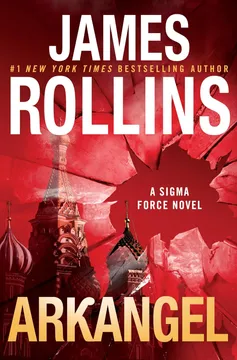
About the Author
Other books by James Rollins




Download PDF
Download EPUB
.epub digital book format is ideal for reading ebooks on phones, tablets, and e-readers.








