

Plot Summary
The Skull Beneath the Serpent
In 1779, French scientist Archard Fortescue and a team of American explorers excavate an enormous serpent-shaped mound in Kentucky. At its center they uncover a painted buffalo hide and a mastodon skull lined with gold, its inner surface marked like a map and inscribed in Hebrew. Before the men can transport their discovery, masked attackers slaughter Billy Preston’s father and uncle.
Fortescue recognizes that the attackers are not Native Americans, but white men disguised with paint. Wounded and outnumbered, he gives Billy the gold-lined skull and orders him to carry it to Virginia’s governor, Thomas Jefferson. The boy rides away with a secret that has already cost lives, while Fortescue stays behind to face the attack.
The opening makes historical knowledge physically dangerous: the map is not merely a record but an object powerful enough to provoke murder. The attackers’ disguise also warns against trusting inherited categories of enemy and ally. Billy’s delivery to Jefferson gives the mystery a national scale, while Fortescue’s decision to remain behind establishes the story’s recurring conflict between preserving knowledge and surviving its pursuit.
The Cave That Kept Its Dead
Centuries later, Ute college student Charlie Reed takes his childhood friend Trent Wilder into a forbidden cave in Utah’s High Uintas. They find a chamber full of mummified people, many holding steel daggers, and flee when someone outside shoots at them. Trent hides in a second chamber and watches Charlie’s grandfather kill Charlie, then take his own life.
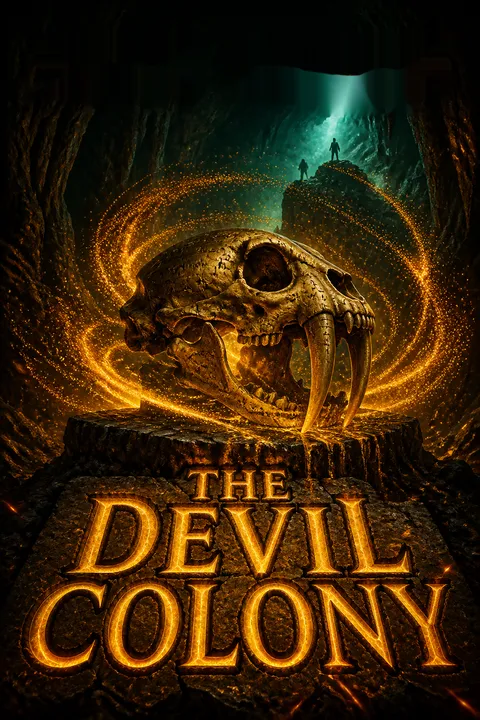
Left alone, Trent discovers a saber-toothed tiger skull displayed on a stone pedestal beside stacked stone boxes. The bodies appear Caucasian despite their Native American clothing, and the steel blades seem far too sophisticated for the period. Trent escapes with one dagger, carrying evidence of a burial site that tribal elders had tried to keep hidden.
The cave turns a childhood dare into a collision with history, but the horror is not simply that the dead are preserved. Charlie’s grandfather enforces an old warning through violence, suggesting that cultural memory can become lethal when fear is inherited without explanation. Trent’s survival makes him a witness rather than an adventurer. His stolen dagger then converts private trauma into public evidence, setting off legal, political, and scientific disputes.
Gold Leaves the Hot Cave
Anthropologist Margaret Grantham and Shoshone historian Henry Kanosh arrive to assess the Utah cave, where Native groups and officials dispute ownership of the remains. When a transport crate knocks open one of the stone boxes, Maggie finds metal plates beneath the tarnish. She and Hank lift the gold-coated saber-toothed skull onto a crate, but the cold artifact reacts violently when exposed to rain.
Kai Quocheets, an eighteen-year-old Pequot activist, has been hiding nearby with explosives intended to bury the site. She steals two gold plates, then emerges into a crowd just as the skull triggers a blast. The explosion erases the cave entrance and takes Maggie from sight. The ground begins to disintegrate, threatening the entire valley.
Kai intends to protect ancestral remains, but her method places her inside a crisis whose true cause she cannot understand. The scene links political distrust to material danger: the state’s removal of an artifact and the activist’s planned demolition both risk repeating the original trespass. Maggie’s disappearance gives the scientific mystery an intimate cost, while the spreading destruction demonstrates that the gold is a container for a process, not simply a treasure.
The Lab Goes Dark
Sigma Force director Painter Crowe recognizes the fugitive bomber as his niece Kai and flies to Utah to find her. Hank shelters Kai after a disguised military helicopter attacks them, and the pair reach Brigham Young University, where physicist Matt Denton examines the stolen plates and the cave’s steel dagger.
Their unusual atomic structure suggests a lost form of nanotechnology. Before they can investigate further, mercenaries cut power and communications, then storm the underground lab.
Painter rigs a Taser shell to detonate Kowalski’s C4 and blasts an escape hole through the ceiling. The team gets out, but Denton is killed. Kai’s explanation and the surviving plates convince Painter that someone powerful is hunting her for what she stole.
The university siege changes the threat from a local political crisis into a covert war. The attackers know where Kai has gone and are willing to kill a civilian scientist to reach her. Painter’s improvisation saves the group, but Denton’s death complicates his protective instincts: he has taken responsibility for Kai while exposing others to danger. The scientific evidence supplies a mechanism for the cave’s destruction, yet it also makes the artifact more valuable to the people pursuing it.
Franklin's Fourteenth Arrow
In Washington, Sigma commander Gray Pierce joins Seichan, a former Guild assassin who has been investigating the organization’s origins. She brings him a coded letter from Benjamin Franklin to Fortescue, which describes a hidden enemy, pale-skinned Indians, and an unrealized Fourteenth Colony.
A draft of the Great Seal shows fourteen arrows instead of the familiar thirteen, while a crescent moon and star match the Guild’s mark. Historian Eric Heisman explains that Iroquois leader Canasatego influenced the founders’ ideas of union.
Gray and Seichan suspect that Franklin and Jefferson were trying to preserve a secret history of Native American allies and an ancient threat. A second letter search points them toward Fortescue’s connection to Iceland.
The historical investigation reframes American founding symbols as contested evidence rather than settled civic decoration. The extra arrow suggests a political possibility deliberately erased from the official story, while the shared Guild emblem makes the modern conspiracy appear continuous with that erasure. Seichan’s expertise is essential, though her former allegiance keeps trust provisional. Gray’s habit of connecting fragments turns archival research into operational intelligence.
Ellirey's Volcanic Escape
Neutrino readings lead Gray, Seichan, and Monk to Ellirey Island off Iceland, where mercenaries have beaten the caretaker and blasted into the island’s rock. The team discovers another cache of gold tablets just as a second unstable deposit begins to trigger a volcanic eruption. They fight their way to a helicopter, but the collapsing island cripples the aircraft and throws them into the sea.
Gray and Monk escape in an emergency raft with the unconscious caretaker; Seichan is swept away and attacked by orcas drawn to her blood. The pod returns her to Captain Huld’s fishing trawler. Gray retrieves a hidden journal from the mercenary’s pack and recognizes Fortescue’s initials, giving Sigma a first-person account of the ancient search.
The Iceland mission confirms that Utah was not an isolated accident: the same technology has been stored at multiple geothermal sites. The eruption also makes the environment both hazard and containment system, as heat may destroy what cold awakens. Seichan’s near loss briefly exposes the vulnerability beneath her controlled competence, while the orcas’ rescue complicates the team’s assumptions about nature as mere threat. Fortescue’s journal converts scattered clues into a usable historical record.
The Neutrino Clock Accelerates
At Japan’s Super-Kamiokande observatory, physicists detect a new pattern of neutrino bursts after the Iceland eruption. Riku Tanaka and Janice Cooper calculate that a third deposit in the western United States is nearing a critical reaction, far larger than the earlier events. Before they can identify its location, Guild gunmen attack the underground laboratory and kill most of the staff.
Janice pulls Riku into the detector’s immense water tank, where they survive the assault. Their measurements eventually provide clues linking smaller emissions to gold artifacts and to sites in Kentucky and Belgium. The attack confirms Seichan’s warning that the Guild will silence anyone who can help Sigma locate the next cache.
Scientific observation becomes a race against the deliberate suppression of knowledge. Riku’s precise pattern recognition matters because the threat is not visible at ordinary scales, yet the Guild’s response shows that data itself can be treated as a weapon. Janice’s physical intervention complements his analytical skill, making survival depend on cooperation across different forms of competence. The attack also establishes that the adversary is not simply seeking treasure; it is controlling who can interpret the evidence.
Anasazi Beneath the Ice
Hank and Painter follow Ute oral history to Arizona, where park ranger Nancy Tso guides them to ancient Pueblo ruins at Crack-in-the-Rock. A moon-and-star petroglyph seals a breathing shaft. Below, the team finds a frozen Anasazi settlement and a golden jar shaped like a wolf, evidence that the Anasazi once stole a dangerous object from the pale people.
Meanwhile, Kai sends an angry email to the militant group that recruited her, unintentionally giving Rafael Saint Germaine’s hackers a route to her hiding place. Rafael captures Kai and Jordan, tortures the Hopi hosts Alvin and Iris for information, and shoots Nancy. Painter’s team descends through the ruins, unaware that Kai is already in Rafael’s hands.
The discovery makes oral tradition a practical map, not a decorative supplement to archaeology. The Anasazi settlement reveals that the original technology had already destabilized communities long before the modern characters arrived. Kai’s email is a psychologically credible breach: she seeks recognition from a group she regards as family, and that need exposes her. Rafael exploits both technological networks and emotional loyalties, while the attack on Nancy marks a new escalation in the cost of seeking knowledge.
The Mud River Trap
Painter finds Kai’s captors in the cavern and offers Rafael the gold plates and wolf jar in exchange for Jordan and Kai. Rafael releases Jordan but uses Ashanda, his powerful and silent bodyguard, to seize the pack and keep Kai. He destroys the bridge behind his men, then demolitions rupture the cavern wall and unleash boiling mud.
Painter, Hank, Kowalski, and Jordan flee through ice tunnels, leap a fault, and follow a faint current of air toward the surface. They emerge through Wupatki’s blowhole after hours underground. Painter reaches safety without Kai, but a call to Rafael confirms she is alive. He bargains for time by offering the location of the Fourteenth Colony.
Painter’s exchange fails because he assumes Rafael’s apparent compliance will hold once the immediate leverage shifts. The bridge’s destruction makes that failure physical, cutting the group off from Kai and from the world above. Yet the underground escape depends on observation rather than force: they follow air currents and old architecture. Painter’s later bargain reveals how protection can become a form of negotiation, especially when the person being protected has been made into currency.
Fort Knox Turns Hostile
Gray reasons that Jefferson may have hidden Fortescue’s map inside colonial gold transferred from the Philadelphia Mint to Fort Knox. With Monk and Seichan, he enters the bullion vault under presidential orders and searches old gold plates stamped with the Great Seal.
They identify one bearing fourteen arrows, but an outside alert brands Seichan a terrorist. Officer Mitchell Waldorf kills the mint staff and orders the team arrested, revealing that the escort was a Guild ambush.
Monk’s prosthetic hand triggers a flash-bang, giving Gray time to recover the plate. The three seize an armored Humvee and smash through the gates, escaping the base while soldiers and helicopters pursue them. Their escape leaves them with the plate and a growing suspicion of government infiltration.
The vault sequence turns national security into a trap: official access and presidential authorization provide the Guild an opportunity to control the investigation from within. Seichan’s criminal reputation makes the false alert plausible, weaponizing her past against her present loyalties. The plate’s significance lies in its placement among ordinary wealth, where concealment depends on abundance rather than secrecy. Monk’s engineered prosthesis becomes more than equipment; it is the practical ingenuity that allows the team to resist institutional capture.
Lewis's Last Cipher
After escaping Fort Knox, Gray traces the historical trail to Meriwether Lewis’s grave in Tennessee. He and his team uncover Lewis’s coffin and find a buffalo hide folded over the remains. A section of its battle scene has been scraped away and replaced with a coded message. Before they can leave, Waldorf’s men attack; Monk is shot, and Gray and Seichan fight their way out with the hide.
Waldorf dies by suicide rather than be captured. Gray later learns that Lewis used a cipher to conceal a warning about an entrenched American family serving the old enemy. The message does not reveal the threatened cache’s exact location, but it connects the founding-era conspiracy to the present hunt.
Lewis’s grave joins bodily remains to political memory: the hide survived because someone treated it as both evidence and a liability. Its scraped surface makes erasure visible, showing that the missing image is itself part of the message. Waldorf’s suicide blocks immediate interrogation and extends the sense that the Guild is embedded beyond any single operative. Gray gains a warning rather than a solution, pushing him to keep reasoning from incomplete records.
The Map Beneath the Seal
Gray takes the Great Seal plate to a Nashville goldsmith and slowly heats it, melting away ordinary gold without damaging the denser metal concealed inside. The revealed object is a sculpted map of North America, with three embedded stones marking Utah, Iceland, and a much larger deposit in the northern Rockies.
The attempt to destroy the map causes it to explode, but Gray has already copied its markings and recognizes Yellowstone as the likely destination. He gives Rafael the location in exchange for Kai’s safety, then adds that the cache may soon ignite Yellowstone’s supervolcano.
Rafael accepts a temporary alliance. Meanwhile, Painter organizes an evacuation and prepares to search the park before the third deposit reaches critical mass.
The map’s concealment literalizes the difference between surface value and structural knowledge: the ordinary gold hides a far more consequential object at its center. Gray’s decision to destroy the map after recording it denies the Guild exclusive possession, though the explosion demonstrates that even careful handling cannot neutralize the material. His bargain with Rafael is morally unstable but strategically necessary. The shift from pursuit to temporary cooperation occurs because catastrophe threatens every faction equally.
Yellowstone's Buried Temple
Painter, Hank, Jordan, Kai, and Rafael’s team search Yellowstone’s Fairyland Basin using a landscape engraved on the wolf jar. The clue where the wolf and eagle stare leads them to two mineral cones and a hidden plug. Beneath it, they find thousands of mummified people dressed as Native Americans, a towering temple modeled on Solomon’s Temple, and the body of Fortescue, buried with his cane and journal.
Behind the inner sanctuary lies a vast treasury of golden skulls, jars, and inscribed plates. The explorers realize the chamber preserves the history and science of the pale people, but the unstable deposit is nearing its predicted ignition. Armed teams clash outside as the deadline is moved forward to 6:04 a.m.
The temple makes the lost community legible through cultural synthesis: Israelite, Egyptian, and Pueblo forms coexist without reducing neatly to one origin. Fortescue’s burial also closes a human loop begun in Kentucky, revealing that he became a guardian rather than merely an explorer. The archive is magnificent but cannot be safely possessed while its technology remains active. The approaching deadline turns reverence into triage, forcing the characters to decide whether preservation must yield to survival.
One Blast to Stop Another
The group finds no time to remove the treasure or neutralize the material by hand. When the detonation begins, Painter leads the others through a narrow passage. Ashanda stays behind long enough to shield them from the blast, while Kai and Rafael remain linked by an explosive handcuff. Rafael gives Painter the release code, then holds the badly injured Ashanda as the spreading nanomaterial consumes them both.
Painter and Chin escape with the survivors and trigger a separate C4 charge inside Yellowstone’s hydrothermal system. The resulting eruption floods the site with extreme heat, destroying the active nanonest before it can reach the supervolcano. Yellowstone’s geysers erupt across the basin, but the caldera remains intact.
The climax resolves the book’s central technical paradox: heat both threatens the characters and is the only force capable of stopping the self-replicating material. Ashanda’s sacrifice is not a sudden conversion but the culmination of a life organized around protecting Rafael, while his final tenderness exposes the emotional cost of treating her devotion as a resource. The counterblast succeeds through coordinated expertise rather than a single heroic weapon. Survival requires destroying the archive that could have transformed human knowledge.
A House Under Bombs
After the danger passes, Gray learns that Waldorf planted a bomb at his townhouse. His mother reaches the house before the bomb squad and dies in the explosion; his father, already struggling with Alzheimer’s, survives but requires memory care.
Seichan stays beside Gray and helps him face his father’s confusion without forcing painful facts on him. Monk, newly a father again, considers leaving Sigma to protect his family. Kai returns to the San Rafael Swell, studies Native American history, and grows closer to Jordan.
Hank secretly removes one gold plate from Rafael’s case and delivers it to the Mormon temple, believing it belongs with his faith’s history. These survivors begin separate forms of repair, none of them untouched by what the expedition cost.
The catastrophe’s aftermath refuses a clean victory. Gray has helped prevent a global disaster but cannot protect his family from a private act of revenge. Seichan’s care matters because it asks him to stop treating grief as a problem solvable through control. Kai’s studies offer a different response to inherited history: patient learning rather than militant certainty. Hank’s quiet transfer of the plate shows how belief can shape custody of evidence, preserving hope while leaving the truth unresolved.
The Name in Turnbull
While Gray and Seichan confront the losses at home, Painter visits the Capitol and studies John Trumbull’s painting of the Declaration of Independence. He applies Lewis’s cipher to the five figures painted there who did not sign the document, extracts their names, and follows the prescribed letter pattern to uncover Ghent.
Research links the name to an old Southern family with deep roots in wealth, slavery, and American institutions. Painter connects that family to the hidden organization Rafael described, then discovers that its modern name is Gant.
The revelation implicates President James Gant, the very leader who authorized Sigma’s mission. The book ends with Painter recognizing that the conspiracy is not merely outside the government. It has reached the country’s highest office.
The final cipher converts national iconography into a map of power, extending the novel’s argument that official histories can conceal as much as they commemorate. Painter’s discovery is especially destabilizing because it implicates the authority that enabled his operation, not a distant enemy beyond the state. The plot closes its historical circuit without offering political resolution: Jefferson and Lewis could not uproot the family without endangering the union, and Painter now faces the same dilemma. The survival of the nation does not mean its institutions are secure.
Analysis
The Devil Colony builds its thriller around a question of custody: who is entitled to interpret the past, and what obligations follow when history contains dangerous knowledge? Native American remains and traditions are repeatedly treated as objects to be claimed, studied, hidden, or exploited. The book gives oral histories practical force by making them guide the protagonists through landscapes that official records fail to explain. At the same time, it complicates any easy division between science and myth. The lost people’s technologies are described through modern nanoscience, while their warnings survive in tribal stories and religious symbols.
The founders’ hidden Fourteenth Colony becomes the political counterpart to the buried caches. Its absence from the public national story suggests that the United States was built not only through inclusion and union, but through exclusions that later generations must decide whether to expose. The Great Seal, the buffalo hide, and the Turnbull painting turn civic imagery into an archive whose meaning depends on close reading. Yet recovering the truth does not automatically repair the harm. The characters can stop the immediate catastrophe, but they cannot restore the people who died or resolve the political structures that helped conceal their history.
The emotional arcs sharpen this argument. Kai must distinguish solidarity from obedience; Hank holds Native and Mormon identities without accepting that one cancels the other; Seichan and Gray confront the difficulty of depending on another person while remaining shaped by violence. Painter’s success is therefore partial by design. He preserves lives but discovers that the conspiracy reaches the presidency. The novel’s final unease comes from the gap between solving a crisis and changing the system that keeps producing one.
Review Summary
The Devil Colony receives mostly positive reviews, praised for its fast-paced action, blend of history and science, and intriguing plot involving Native American history, nanotechnology, and American founding fathers. Readers appreciate Rollins' ability to weave complex storylines and scientific concepts. Some criticize the far-fetched premise and historical inaccuracies. The book is part of the popular Sigma Force series, with many fans eagerly anticipating the next installment. Overall, it's considered an entertaining summer read that keeps readers engaged throughout.
People Also Read
Characters
Painter Crowe
The protective strategistPainter directs Sigma Force, a covert team that applies science and military skill to threats ordinary agencies cannot manage. Of Pequot ancestry and shaped by an unstable childhood, he is alert to the ways institutions fail people who lack power. He often accepts responsibility before considering the personal cost, especially when family is involved. His leadership combines technical curiosity with a protective instinct, but those qualities can pull against each other: urgency may make him expose allies to danger. Painter’s presence connects the modern investigation to its political consequences, and his decisions repeatedly test whether safeguarding people can be separated from safeguarding the systems they depend on.
Gray Pierce
The pattern-finding commanderGray is a Sigma operative whose gift is connecting small historical and scientific details into a workable theory. He approaches mysteries as structures to be tested, from the strange arrows on a seal to the hidden layers of a gold plate. Outside the field, he is carrying the strain of his parents’ declining health and a difficult history with his father. Gray’s discipline gives him a way to act when emotions threaten to overwhelm him, though it can also make him postpone grief. His relationship with Seichan rests on wary respect and an attraction neither can easily name.
Kai Quocheets
The searching young activistKai is an eighteen-year-old Pequot woman who has found belonging among WAHYA, a militant Native American rights group, after losing her father and aging out of foster care. Her commitment to tribal sovereignty is sincere, but her anger makes her vulnerable to leaders who turn grievance into obedience. She values self-reliance and reacts sharply when others treat her as helpless. Her Native and Navajo family histories give her a complicated sense of identity, and her name, meaning willow tree, reflects the endurance she is still learning to trust. Kai’s choices place her at the center of the conflict between political protest, personal responsibility, and inherited knowledge.
Henry Kanosh
The keeper of layered historiesHank is a Shoshone historian and naturalist, a respected scholar who advocates for Native sovereignty while practicing the Mormon faith in which he was raised. Some activists regard that religious identity as a betrayal, but Hank sees culture as a woven inheritance rather than a single allegiance. His knowledge of tribal history, language, and landscape makes him essential to interpreting the caves. He is also shaped by personal regret and a strong impulse to protect young people drawn toward anger. Hank’s work joins evidence to oral tradition without treating either as disposable, and his patience often gives frightened companions room to recover their judgment.
Seichan
The wary former assassinSeichan is a skilled operative who once worked for the Guild and now cooperates with Sigma while trying to destroy the organization that made her. Her loyalty is difficult to read because survival has long been her most reliable motive. Raised without a stable home, she distrusts domestic warmth even as she is drawn to it. She studies danger with precision and is willing to act before others have finished debating. Her connection with Gray is charged by mutual competence, unresolved desire, and the knowledge that both are accustomed to carrying pain privately.
Monk Kokkalis
The inventive field medicMonk is a former Green Beret turned Sigma specialist in forensic medicine and biotechnology. After losing a hand on an earlier mission, he relies on a sophisticated prosthesis that reflects both his practical adaptability and his refusal to be defined by injury. His humor punctures tension, but his devotion to his wife, Kat, and their children is serious and unmistakable. Monk is a dependable partner in dangerous work, willing to improvise with whatever tools are at hand. The demands of field service increasingly conflict with his desire to be present at home, giving his loyalty to Sigma a personal measure.
Joe Kowalski
The demolition-minded bruiserKowalski is a large, blunt former Navy serviceman who serves Sigma as a field operative and explosives expert. His rough manner hides a quick practical intelligence, particularly when a plan requires physical improvisation rather than elegant theory. He is comfortable with danger and often treats complex problems as things that can be opened, moved, or blown apart. His appetite for action can be reckless, but his loyalty to his teammates is steady. Kowalski’s humor and appetite provide a counterweight to the story’s historical and scientific density.
Rafael Saint Germaine
The brittle-boned rivalRafael, usually called Rafe, is a French scientist and heir to a wealthy family with deep interests in nanotechnology. He has osteogenesis imperfecta, a condition that makes his bones dangerously fragile, yet he compensates through discipline, exercise, and an exceptional memory. Rafe longs to prove that physical limitation does not diminish his intelligence or ambition. He treats history as a long strategic game and expects others to function within plans he has calculated. His relationship with his silent attendant Ashanda is more intimate and complicated than his public manner suggests.
Ashanda
The silent digital sentinelAshanda is Rafael’s towering protector and confidante, a woman who survived brutal childhood abuse before his family took her in. Her tongue was cut out, but she communicates through movement, expression, and precise action. She is physically formidable and exceptionally skilled with computers, giving her influence in both combat and information work. Ashanda’s quietness should not be mistaken for passivity: she chooses when to intervene and often understands Rafael better than he understands himself. Her bond with him carries care, dependency, and unspoken longing.
Jordan Appawora
The young Ute intermediaryJordan represents his grandfather on the Northern Ute council, carrying messages and votes while respecting the elder’s authority. He is educated, thoughtful, and more comfortable with tribal history than he first lets on. His restraint is not indifference; he is careful about exposing his community to further conflict. Jordan’s steadiness contrasts with Kai’s initial anger, and his curiosity allows him to meet her as a peer rather than as a cause or a problem.
Kathryn Bryant
Sigma's intelligence anchorKat is Sigma’s intelligence chief and Painter’s trusted second-in-command. She builds networks across Washington and finds useful signals in noisy streams of information. Pregnant during the crisis, she continues directing operations while balancing the risks of work with her responsibilities to Monk and their children. Her competence is analytical and political, but her loyalty is personal as well: she knows what field missions cost the people she loves.
Ronald Chin
The geologist at the edgeChin is Sigma’s geologist, trained to read the behavior of rock, heat, and unstable ground. He approaches extraordinary events with scientific caution, even when the evidence points toward a mechanism no conventional model explains. His past military experience helps him operate calmly in dangerous environments, and he knows when a theory must give way to immediate protective action. Chin’s work translates the ancient threat into a modern technical problem the team can attempt to contain.
Margaret Grantham
The careful anthropologistMaggie is a BYU anthropology professor and experienced advocate for Native American outreach. She is asked to assess the cave’s human remains and mediate between scientific inquiry and tribal rights. Her friendship with Hank carries old affection and the ease of people who know one another beyond their professional roles. Maggie is cautious with evidence and attentive to the political harm that careless handling of Indigenous remains can cause.
Major Ashley Ryan
The pressured field commanderRyan commands the National Guard presence at the Utah site and initially resents being asked to manage a volatile mix of scientists, officials, and Native activists. He is responsible for the safety of his soldiers, a duty that becomes painfully concrete when the geological disaster spreads. His military instincts make him decisive under fire, though he must learn to distinguish genuine threats from political assumptions. Working beside Hank and the tribal allies challenges his prejudices.
Trent Wilder
The shaken witnessTrent is Charlie Reed’s longtime friend, a young man whose life in Roosevelt has begun to diverge from Charlie’s college ambitions. He joins the cave expedition partly to preserve their friendship and partly because the old adventure story still holds him. Trent is less confident than Charlie, but fear sharpens his attention when the cave becomes real. He survives as the witness to what happened inside.
Charlie Reed
The skeptical Ute studentCharlie is a Ute college student who wants to prove himself independent of the elders’ restrictions and inherited stories. His friendship with Trent has been strained by the different paths opening before them. Charlie dismisses the cave legend as superstition, yet his curiosity and pride lead him back to the site. He embodies the tension between rejecting a tradition’s authority and remaining answerable to the history it preserves.
Archard Fortescue
The scientist turned guardianFortescue is a French scientist recruited into Benjamin Franklin’s circle for his learning and his ties to Native American communities. Tall, severe, and comfortable with obscure investigations, he is willing to pursue knowledge that others find too dangerous or strange. His role in the earliest expedition links the founders’ political anxieties to the later discoveries. Fortescue’s careful observations and willingness to bear responsibility make him the central bridge between the eighteenth-century plot and the modern crisis.
Benjamin Franklin
The founding investigatorFranklin is a statesman and scientist who recognizes that the new nation’s survival may depend on knowledge beyond conventional politics. His correspondence with Fortescue shows a man willing to investigate dangerous claims while concealing sensitive information from potential enemies. He is interested in Native American governance and symbols, and understands that the country’s founding story may have more than one source.
Thomas Jefferson
The keeper of coded historyJefferson is a founder, scientist, and practiced user of ciphers who takes an unusual interest in Native American history and artifacts. His correspondence suggests that he fears a hidden enemy within the young republic and trusts only a narrow circle with sensitive discoveries. Jefferson’s choices tie the nation’s public symbols to private knowledge, making him both a political architect and an elusive keeper of secrets.
Meriwether Lewis
The explorer with secretsLewis is Jefferson’s trusted friend and a soldier, scientist, and explorer whose expedition west carries more than a public mission. His experience makes him suited to gather intelligence as well as map unfamiliar terrain. The surviving records portray a man entrusted with coded communication and difficult political judgments. His role connects the nation’s exploration of the West to the search for a hidden Indigenous history.
Eric Heisman
The archival interpreterHeisman is a National Archives curator specializing in colonial history and the relationship between settlers and Indigenous nations. His initial irritation at being summoned gives way to scholarly excitement when he encounters Franklin’s letter. He brings institutional knowledge to the mystery and is willing to follow evidence beyond the boundaries of accepted historical accounts.
John Hawkes
The militant organizerHawkes leads WAHYA, a young militant organization that argues Native communities should not wait for the government to restore their rights. He gives Kai a sense of belonging and channels her anger toward direct action. His leadership appeals to people who feel ignored, but his demands for loyalty leave little room for a member’s mistakes or doubt.
Riku Tanaka
The neutrino pattern readerRiku is a gifted Japanese physicist at the Super-Kamiokande observatory, whose attention to numerical patterns helps reveal the scale and timing of the hidden deposits. He communicates most comfortably through precise data and can struggle to interpret other people’s emotional cues. His scientific persistence is essential when the readings become too complex for ordinary intuition.
Janice Cooper
The observatory's steady partnerJanice is an American postgraduate physicist working with Riku in Japan. Her easy manner contrasts with his reserve, but she respects his intelligence and recognizes when his analysis is being dismissed too quickly. She combines scientific judgment with quick protective action, making her a practical ally under pressure.
Kawtch
Hank's trailwise companionKawtch is Hank’s Australian cattle dog, named with the Ute word for no because Hank repeatedly used it during the dog’s puppyhood. He is alert, stubborn, and skilled at tracking through rough country. His presence gives Hank both companionship and an early warning system, while his loyalty quietly steadies the people around him.
Plot Devices
The gold map and tablets
History hidden inside wealthThe ancient gold objects carry both a map and a written record, but their density and resistance to ordinary heat make them unlike familiar metal. Jefferson conceals the map inside a Great Seal plate, while other tablets and vessels are stored in geothermal caves. Their physical properties provide clues to the lost people’s technology and explain why the Guild pursues them. The devices also make historical preservation dangerous: removing, melting, or transporting them can trigger reactions that ordinary archaeology cannot predict.
The nanonest
A self-spreading material threatThe silvery substance stored in the jars contains microscopic machines that break matter apart and reproduce from what they consume. It remains dormant under stable geothermal heat, but cooling can activate it. Utah and Iceland reveal that an activated nest can spread through rock and trigger volcanic systems. The characters eventually use extreme heat to destroy the active material, but only after it has nearly reached Yellowstone’s supervolcano.
Neutrino emissions
A planetary warning signalThe deposits generate unusual neutrino surges when they begin destabilizing. Physicists at observatories around the world measure and triangulate the signals, allowing Sigma to identify new sites and estimate how close each is to critical mass. The signal is difficult to interpret because it comes from beneath the earth and may overlap with other emissions. It turns invisible atomic activity into a countdown, while exposing the researchers who understand it to Guild attacks.
The crescent and star
A mark across hidden historiesThe crescent moon and star appear in tribal art, on the gold map, in Franklin’s papers, and within the Guild’s symbol. The design points investigators toward the pale people’s sites while connecting their ancient story to a modern secret organization. Its meaning is not immediately obvious: the symbol can represent cultural inheritance, a geographic clue, or the mark of an enemy. Repeated appearances reward attention to visual detail and make national emblems part of the mystery.
The thermal chambers
Storage and destruction by heatGeothermal caves, icy lava tubes, and Yellowstone’s hydrothermal system shape how the nanomaterial behaves. Warm chambers preserve it, cold exposure can destabilize it, and sufficiently intense heat can destroy an active nest. These environments are not merely backdrops: they explain the ancient people’s storage choices, cause the modern disasters, and provide the final means of containment. The same natural forces that threaten the characters also offer their only workable defense.
Sigma Force Series

About the Author
Other books by James Rollins


Download PDF
Download EPUB
.epub digital book format is ideal for reading ebooks on phones, tablets, and e-readers.








