

Plot Summary
Prologue
In 1945, as Soviet forces close on Breslau, SS officer Jakob Sporrenberg evacuates the last pieces of a secret Nazi experiment. His prisoners include Tola Hirszfeld, a young biologist, and the newborn she has been caring for. Tola escapes by throwing herself and the infant from a boat into the Oder.
Wounded and nearly unconscious, she struggles to shore, keeping the child alive with her own breath. A priest finds her dead beside the baby and carries the boy into the church. On the infant’s heel is a red rune, a mark that binds his survival to the experiment his mother tried to escape.
The opening makes the novel’s central conflict intimate before it becomes scientific or political. A newborn is treated by the Nazis as a vessel for their future, while Tola’s actions insist that he is first a child to be protected. Her leap is neither clean martyrdom nor simple despair: she initially means to end both their lives, then fights to save him once the water forces the choice into the present. The priest’s rescue interrupts the machinery of inherited ideology with an ordinary act of care. The rune complicates that mercy, suggesting that history has marked the child even when the rescuer refuses to condemn him for it.
Temp Och's Red Silence
At Everest Base Camp, researcher Lisa Cummings agrees to join Buddhist monk Ang Gelu on a medical call while her mountaineering team waits out uncertain weather. At Temp Och Monastery, dead livestock and hacked bodies reveal that the illness has turned at least one monk into a violent, deranged attacker. Lisa sedates him, but an armed Nepalese soldier kills him before she can treat him.
The monastery’s abbot then cuts his own throat after Lisa’s camera flash startles him. Explosions destroy the helicopter, a sniper kills Ang Gelu and the soldier, and Lisa is left alone in the burning complex. A nearly naked stranger appears behind her, stops her flight, and identifies himself as Painter Crowe, the missing American she had come to find.
Lisa enters the crisis through professional duty, but the monastery strips away the reassuring boundaries of medicine. She can identify symptoms and act quickly, yet she cannot control the soldier’s violence or understand what has made the monks dangerous. The sequence also makes the distinction between illness and intention unstable: the attacker is plainly impaired, while the sniper’s precision proves that a separate human intelligence is directing events. Painter’s arrival offers a possible ally, not an immediate rescue. Lisa’s first defining choice is therefore not a diagnosis but continued action under uncertainty, even after the people who brought her there are dead.
The Bell Beneath the Mountain
Painter explains that strange lights and sickness had already appeared in nearby villages before he lost three days to fever and confusion. He and Lisa evade the monastery’s assassin through underground passages, but the same German-born guard who pursued them captures them after they witness the lights flare again.
Their captor, Anna Sporrenberg, brings them to Granitschloß, a hidden mountain stronghold founded by her grandfather’s Nazi circle. She explains that its Bell, fueled by the rare compound Xerum 525, produces effects that can alter living tissue.
A sabotage event has exposed the monks, villagers, and the castle’s inhabitants to lethal radiation. The Bell is destroyed before it can be used to treat them, so Anna and Painter agree to cooperate in searching for a cure and the person behind the sabotage.
The revelation changes the threat from a local contagion into an inheritance problem. Anna’s account gives the illness a mechanism, but not an ethical excuse: her group’s work has caused the deaths of people outside its walls, and its secrecy has delayed any chance of help. Painter recognizes that the captors are also victims, which permits an alliance without absolution. Their bargain is psychologically practical rather than trusting. Each side needs the other’s expertise, and the shared deadline temporarily outranks the history that made them enemies.
Darwin's Bible Burns
In Copenhagen, Sigma commander Grayson Pierce investigates a black-market auction after terrorist-linked buyers begin collecting Victorian scientific papers. Bookseller Grette Neal reveals that someone has repeatedly searched for Darwin’s family Bible, and her granddaughter Fiona has been following Gray to protect her.
A sniper kills Grette in her shop and firebombs the building; Gray and Fiona escape, aided by the injured shop dog, Bertal. Fiona then forces her way into the auction, where Gray bids against a pale, white-haired pair for the Bible.
After losing, he learns Fiona has secretly swapped the original for a decoy. She also knows the book’s family provenance leads to Germany. When attackers bomb Gray’s hotel, he accepts Fiona’s help, and the two flee through Copenhagen’s crowded amusement park.
The Bible functions first as an object of commerce, then as a dangerous sign that someone is willing to kill for an obscured history. Fiona’s apparent recklessness has a protective logic: after losing Grette, she cannot bear to let the killers take the last thing connected to her foster family. Gray’s professional habit of treating people as liabilities collides with his dawning recognition that Fiona is not merely a witness. Her theft is an act of grief and agency, though it also binds them more tightly to the people hunting the book.
Ukufa in the Bush
In South Africa, game warden Khamisi Taylor and biologist Marcia Fairfield investigate a dead black rhino. Its valuable horn remains, and its calf has been torn apart, leaving Khamisi convinced that an unknown predator is still nearby. A creature attacks, kills Marcia, and drives Khamisi into a water hole.
The next morning, head warden Gerald Kellogg dismisses his account, suspends him, and reports lion tracks instead. Kellogg then receives a private order to make Khamisi’s death look accidental. A poisoned dart and a staged black-mamba bite nearly kill him at home, but a Zulu elder hides nearby and gets him to safety. Khamisi decides the Waalenberg private estate, bordering the reserve, holds the answer.
Khamisi’s danger comes from two systems that reinforce each other: a predator concealed by the estate and an institution ready to discredit the person who saw it. His suspension is not just bureaucratic unfairness; it removes his authority and income precisely when he needs both to investigate. The elder’s intervention gives him a second chance, but it also connects his private survival to communal memory and practical knowledge. The episode turns the reserve’s racial hierarchy into an operational threat, showing how an official lie can protect violence as effectively as a locked gate.
Wewelsburg's Death Rune
Gray, Monk, and Fiona trace the Bible to the Hirszfeld family estate in Germany. Johann Hirszfeld explains that his grandfather Hugo, a Jewish biologist recruited by the Nazis, sent the Bible home shortly before his death. Gray finds a hidden page bearing a rune and a plea for forgiveness.
The family’s papers also point to Wewelsburg, Heinrich Himmler’s former stronghold, where a museum director identifies the mark as a Nazi life rune whose inverted form represents death. The director then locks Gray, Monk, Fiona, and Johann’s son Ryan in the castle crypt and releases poison gas. Gray burns the papers and Bible to make the attackers believe he has destroyed their secret, but the gas knocks the group unconscious.
The family book is not valuable because of Darwin’s ownership alone; its altered binding makes private guilt legible. Hugo’s concealment links scientific work to an effort at moral separation, although the message is not yet understood. Wewelsburg makes ideology spatial: its sacred chamber and inverted runes turn the fantasy of racial renewal into a ritual architecture of death. Gray’s decision to burn the evidence sacrifices an object to preserve a possible secret, but his bluff cannot free the group. Curiosity has carried the investigators into the very symbolic system they hoped to decode.
The Saboteur's False Call
At Granitschloß, Painter and Gunther rig an improvised signal detector and spread word that a reserve of Xerum 525 survived the blast. The bait exposes Klaus, a guard who sabotaged the Bell and secretly hopes another faction can cure his illness.
As Gunther kills Klaus in the struggle, Painter realizes the phone call was a decoy meant to draw attention away from Anna’s study. A second assassin attacks Lisa there, searching for the supposed reserve.
Painter shoots the attacker through the window before her blade reaches Lisa, but a heartbeat-triggered timer begins counting down. The group escapes by helicopter just before the castle is obliterated. Its destruction kills Anna’s community and proves that someone else has built a working Bell.
The false signal works because desperation has made hope itself exploitable. Klaus is neither a simple traitor nor a free agent: he has been offered a cure for the condition that has defined his life, and the offer turns his longing into leverage. Painter’s trap catches him but also reveals a larger opponent who understands the group’s priorities. His decision to shoot the assassin is a moral calculation with immediate cost: preserving Lisa’s life means losing a chance to question the intruder. The ruined castle leaves the survivors with knowledge, grief, and no safe institution to return to.
Everest Becomes a Lifeline
Three armed helicopters pursue Painter, Lisa, Anna, and Gunther after they escape Granitschloß. Gunther pilots their unarmed craft toward Everest, where Lisa knows hundreds of climbers and soldiers have gathered after the storm. Painter uses the helicopter’s winch assembly to disable one pursuer, then leads the group over the South Col and down toward Base Camp.
They crash-land among the tents, where Lisa reunites with her brother Josh. The attackers follow, firing on the camp, but U.S. military jets destroy them before they reach the climbers. Painter contacts Sigma and learns that Gray’s killers bear the same mark found in Europe. The separate investigations now point toward a powerful family operating across continents.
The mountain changes from a test of personal endurance into a public refuge. Lisa’s earlier expertise in altitude, weather, and survival becomes strategically useful, while Painter’s tactical improvisation keeps the group moving through a landscape that punishes hesitation. Their choice to land among civilians is dangerous, but it forces the attackers to risk witnesses and international scrutiny. The rescue also restores connections that the monastery’s destruction severed: Lisa reaches Josh, and Painter reaches Sigma. Yet the shared tattoo makes clear that survival has not solved the mystery; it has joined its two halves.
The Waalenberg Menagerie
Gray and Monk are taken to the Waalenberg estate, where patriarch Baldric displays a huge, altered hyena and demands information about Painter Crowe. Baldric’s heirs, the twins Isaak and Ischke, guard the estate and its prisoners. Monk uses a concealed charge in his prosthetic hand to create an opening, and the partners escape in different directions.
Gray finds Fiona caged above the jungle with Ryan Hirszfeld, while Monk reaches Khamisi Taylor, who has slipped into the estate to investigate its predators. Fiona’s captors release a giant hyena toward her, but Gray reaches the cage and fights Ischke on the overhead walkways. Fiona survives the fall and steals Ischke’s access cards, giving Gray a way into the manor.
Baldric’s estate turns biological control into a household spectacle: the captives are watched, the animals are engineered, and fear is deliberately staged as entertainment. Gray’s split from Monk is an act of triage, not abandonment, but it repeats the emotional risk he took with Fiona in Copenhagen. This time he returns for her. Fiona’s stolen cards matter because they convert a child’s practiced vigilance into access to the system that confines her. The sequence shifts her from protected dependent to active participant, while Khamisi’s independent entry shows that the estate’s borders cannot fully contain local knowledge.
The Buffalo Turns
Khamisi and Monk find Ryan in the jungle as a genetically enlarged hyena hunts him. Khamisi kills the creature with his Zulu spear, then helps bring Ryan and Monk to safety. He also learns that Marcia Fairfield survived her attack and has been held inside the manor. With Paula Kane and Chief Mosi D’Gana, Khamisi plans an assault using hidden explosives, scouts, and the Zulu formation known as the Buffalo.
The diversion destroys sections of the estate’s elevated walkways and opens the perimeter to their forces. Khamisi confronts Kellogg, the warden who ordered his murder, while Paula shoots Kellogg before he can attack another scout. The assault gives Gray’s scattered allies a route into the compound.
Khamisi’s return to the estate reverses the power relation that had made him a disposable employee. His knowledge of tracks and terrain, once dismissed as unreliable, becomes the foundation for the assault. The Buffalo formation is not nostalgia for an unchanging past; Khamisi adapts it to explosives, vehicles, and modern firearms. That adaptation lets the community act collectively without pretending its history is uncomplicated. Paula’s shot at Kellogg closes the immediate threat he posed, while the recovery of Marcia gives the campaign a personal stake beyond retribution.
One Drum for Washington
Gray and Marcia search the estate’s underground laboratories and find records of human embryos cross-referenced with modified animal cells. A lead-lined storage room contains Xerum 525 drums marked for countries around the world, but the United States drum is missing.
Marcia reports that the Waalenbergs have discussed Washington, so Sigma sends Logan Gregory and Kat Bryant to inspect a gold bell recently installed at the South African embassy. A white-haired gunman attacks them there.
The bell rings during the shooting; Logan is killed and Kat badly wounded, but the planned attack is stopped. In Africa, Baldric activates his own Bell and programs it to target the DNA of Gray’s companions. The Zulu assault, meanwhile, draws the estate’s guards away from the laboratory.
The threat expands from an isolated experiment to an exportable system. The labeled drums make the Bell’s reach bureaucratic and logistical, turning an occult inheritance into a supply chain. At the embassy, the gold bell disguises a weapon as a diplomatic gift, while the attack on Logan and Kat shows the cost of treating ceremonial objects as harmless. The two fronts now converge: Gray has uncovered the missing fuel, and Baldric has begun using the same technology against individuals by name. The loss of Logan makes the crisis personal for Sigma, but Kat’s survival keeps the response from becoming solely a story of revenge.
The Star Reassembled
As the estate battle reaches the manor, Fiona uses a stolen controller to redirect the engineered animals, allowing Monk and the others to advance. Gray confronts Baldric beside the active Bell, which is set to kill his team through their DNA profiles. He persuades Baldric to erase those profiles, then realizes the runes Hugo hid in the Bible are not a letter code but pieces of a puzzle.
Reassembled, they form the Star of David. Gray and Lisa connect the symbol to the Bell’s quantum effects and to the focused consciousness Hugo brought into his experiment with an infant. Anna enters the chamber with Baldric to stabilize the device. Gray closes the shield, saving the others, but Anna remains inside and dies.
The solution depends on moving from decoding to interpretation. Hugo’s signs cannot be read as a simple substitution because the secret is not merely information; it is an account of what he believed could influence the experiment. The Star of David also reclaims his Jewish identity from the Nazi project that had tried to absorb his work into Aryan mythology. Anna’s final choice complicates the moral ledger: she has defended an unethical institution, yet accepts personal risk to keep its weapon from killing others. The climax grants her agency without cleansing her history.
The Mountain Opens
Lisa uses the Bell at its reduced setting and concentrates on saving Painter, whose body is collapsing from the radiation. He revives, and the group discovers a second timer on Baldric’s body. They evacuate by helicopter as a zero-point explosion erases the manor and leaves a vast crater.
Khamisi’s forces secure the estate, while Gunther disappears carrying Anna’s body. In Washington, Logan’s funeral follows the failed embassy attack; Kat recovers, and Monk proposes marriage, only to discover Fiona has stolen the ring.
Fiona later receives help entering an early program at Oxford. Painter’s medical tests show recovery, and Gray takes leave to settle matters with Rachel. The conspirators’ active Bell and remaining fuel are gone, though some altered animals may have escaped.
The physical crater gives the plot a decisive end without making its consequences tidy. The Bell’s destructive capacity is buried, but the people who used it leave losses that cannot be repaired: Logan is dead, Anna is gone, and Gunther’s grief has no public resolution. Against that scale, the survivors’ future plans are deliberately ordinary. Marriage, education, medical recovery, and a difficult conversation with Rachel are not trivial after catastrophe; they are choices that return agency to people who have been treated as genetic material or operational assets. The escaped animals preserve an unease the explosion cannot erase.
Epilogue
In Wrocław, Gray interviews Father Piotr, an unusually healthy priest raised in the orphanage where a nameless infant was once brought after the war. The evidence suggests he may be the child Tola saved, though Gray has no proof that the Bell made him perfect.
On the bridge afterward, Gray recognizes that his fear of becoming a father like his own has kept him suspended in his relationship with Rachel. He meets her ready to consider marriage, home, and children, but their conversation remains open rather than resolved. Father Piotr, meanwhile, revives a fallen sparrow and returns it to the evening sky.
The epilogue refuses the cleanest possible scientific answer. Piotr may be the perfected child, but his decency and ordinary health matter more than any extraordinary trait the Bell could have bestowed. Gray’s investigation therefore ends in a human measure of perfection rather than a biological one. His fear of parenthood is rooted less in genetics than in memory: he assumes that a father’s failures will reproduce themselves. The bridge becomes a threshold where he sees that inheritance supplies a possibility, not a verdict. Piotr’s small act with the sparrow echoes this distinction. Care cannot rewrite the past, but it can alter what happens next.
Analysis
Black Order builds its thriller around two competing definitions of improvement. The Nazis and their inheritors treat life as a design problem: identify a desired trait, control reproduction, remove what they call imperfection. Baldric’s breeding programs make that logic brutally literal, but Anna’s more respectable language of research shows how easily technical ambition can preserve the same hierarchy after its original slogans are rejected. The novel’s strongest counterweight is not a rival technology. It is the refusal to reduce a person to a specimen, an enemy, or an asset.
That conflict is distributed across the cast. Khamisi is dismissed because his testimony challenges racial and institutional authority. Fiona is repeatedly treated as a child to manage, although her street knowledge keeps adults alive. Painter’s belief in cooperation does not erase culpability, but it gives him a way to act without pretending that enemies are less human. Lisa’s medical attention begins with observable bodies and ends with a willingness to accept that care may require forms of meaning her methods cannot measure.
The scientific argument is intentionally speculative. Quantum mechanics becomes the story’s language for potential, observation, and the limits of deterministic inheritance, not a demonstrated account of evolution or prayer. Its narrative purpose is to unsettle the fantasy that genes alone dictate destiny. Hugo’s puzzle matters because it changes the meaning of the experiment: the route to an ideal body passes through identity, attention, and moral intention rather than racial purity.
The ending keeps that claim modest. Father Piotr may be the child at the center of the wartime experiment, yet the evidence cannot prove that he is superhuman. His goodness is visible without a laboratory test. Gray’s final choice follows the same principle: he cannot guarantee that he will be unlike his father, but he can decide to risk intimacy rather than let fear make the decision for him. The book’s answer to engineered perfection is therefore not a flawless organism. It is the unfinished human capacity to choose care.
Review Summary
Black Order receives largely positive reviews, with readers praising its blend of science, history, and thrilling action. Many appreciate the exploration of quantum mechanics, evolution, and Nazi experiments. The Sigma Force characters are well-developed and engaging. Some find the book too long or far-fetched, but most enjoy the fast-paced plot and scientific elements. Readers often mention learning new information while being entertained. The novel is seen as a strong entry in the Sigma Force series, with many eager to continue reading Rollins' work.
People Also Read





Characters
Grayson Pierce
The wary Sigma commanderA Sigma Force commander with a soldier’s instincts and a scientist’s education, Gray is skilled at reading threats but less practiced at admitting when another person matters to him. His strained relationship with his father has left him alert to inherited patterns, especially the possibility that he could repeat the anger and distance he grew up with. His long-distance relationship with Rachel tests his ability to choose commitment rather than remain safely in motion. Under pressure, he tends to accept responsibility for people he has already failed once, a quality that makes him brave and occasionally reckless.
Lisa Cummings
The scientist on the mountainLisa is a physician and researcher whose work on human physiology has taken her from deep-sea studies to Everest. She trusts observation and evidence, but her professional composure can also keep personal vulnerability at a distance. She is capable in emergencies because she turns fear into focused action, not because she feels none. Her difficult conversations with Anna challenge her assumptions about science, morality, and consciousness without erasing her skepticism. Lisa’s attachment to Painter unsettles the independence she has cultivated and makes care itself part of the risk she must accept.
Painter Crowe
The searching Sigma directorPainter leads Sigma Force, a covert team that applies scientific expertise to national threats. His Native American heritage and training under Ang Gelu have shaped a search for balance between opposing forces, a perspective that informs both his leadership and his personal reflection. He is practical, inventive, and willing to negotiate with people he distrusts when cooperation offers a chance to save lives. Painter’s physical courage is matched by a need to remain useful, which makes accepting help difficult. Lisa sees both the determination and the cost of that self-reliance.
Fiona
The streetwise young survivorFiona is a resourceful teenager who has lived through bereavement, neglect, and exploitation. She uses theft, sarcasm, and quick observation as defenses, but her loyalty to the people who offer her genuine care is profound. Grette Neal gives Fiona a rare experience of safety, and losing that refuge intensifies her need to act rather than wait for adults to decide what happens. Gray’s protective instincts frustrate her because she has learned to survive by relying on herself. Her ingenuity is valuable, but it does not make her invulnerable.
Monk Kokkalis
The irreverent Sigma operatorMonk is a Sigma operative whose humor and physical confidence conceal a thoughtful, loyal friend. He has adapted to a prosthetic hand after losing his own, and the experience has left him with both practical ingenuity and private insecurity. His relationship with Kat asks him to imagine a future that cannot be managed like a mission. He is especially good at seeing what his friends avoid saying, as when he challenges Gray about commitment. Monk’s bluntness can irritate, but it usually comes from affection and a refusal to let fear masquerade as prudence.
Khamisi Taylor
The game warden who listensKhamisi is a Zulu game warden educated partly abroad and determined to make his position useful to people who will come after him. His experience with wildlife gives him a disciplined eye for tracks, behavior, and danger, while his divided upbringing leaves him negotiating between familiar cultural knowledge and institutions that mistrust it. He initially doubts local stories about a monster, but evidence forces him to revise his judgment. Khamisi’s caution is not cowardice; his growth lies in learning when survival requires retreat and when responsibility requires returning to the danger.
Anna Sporrenberg
The conflicted Bell scientistAnna is a scientist and leader within the secret community built around the Bell. She can explain its history with intellectual precision, yet her confidence in scientific progress often allows her to rationalize secrecy and morally compromised work. Her identity is shaped by an inheritance she did not create but has chosen to maintain. She is capable of tenderness, especially toward her brother Gunther, while remaining guarded with outsiders. Lisa’s questions force Anna to face the distance between claiming to serve humanity and accepting accountability to actual people harmed by the research.
Gunther
The last Knight of the SunGunther is a physically formidable guard whose body bears the visible costs of being raised under the Bell. Others treat him as a relic or a failure, but he continues to serve because he believes the research might spare future people his suffering. His attachment to Anna gives his loyalty a personal center beyond duty. Gunther is sparing with words and wary of outsiders, yet his actions show a capacity for care that the castle’s hierarchy rarely recognizes.
Baldric Waalenberg
The eugenicist patriarchBaldric is the wealthy patriarch of a powerful South African family, a meticulous breeder of orchids and a believer in engineered human perfection. He treats living organisms as designs to be improved and sees moral limits as obstacles imposed by less ambitious minds. His gentility is part of his authority: he can discuss violence in the same cool register he uses for horticulture. Baldric’s worldview makes control seem like stewardship, allowing him to confuse domination with care and racial purity with scientific progress.
Kat Bryant
The intelligence officerKat is a capable intelligence officer who brings discipline and strategic judgment to Sigma’s command structure. Her relationship with Monk draws her into a future she approaches with caution, in part because her professional identity has required her to remain self-sufficient. She wants emotional commitment to be matched by practical honesty, not simply promised in a moment of fear. Kat’s reserve is not a lack of feeling; it is a way of protecting choices she wants to make deliberately.
Rachel Verona
Gray's distant partnerRachel is an Italian carabinieri lieutenant whose relationship with Gray must survive separate careers and an ocean between them. She is affectionate and direct, but she understands that longing alone cannot settle the question of a shared future. Her interest in Gray’s family life shows that she is attentive to the histories shaping him, not merely to his adventures. Rachel’s patience has limits, and her presence asks Gray to decide whether he wants intimacy only when it is convenient or is willing to build a life around it.
Marcia Fairfield
The veteran rhino biologistMarcia is a respected biologist and conservationist whose work has helped protect rhinos. She is determined, physically courageous, and accustomed to acting decisively in the field. Her partnership with Paula Kane gives her both personal and professional roots in the reserve. Marcia’s concern for animals is not sentimental; it is grounded in close observation and a willingness to enter dangerous places to understand what is happening.
Logan Gregory
Sigma's acting directorLogan is Sigma Force’s efficient second-in-command, a precise administrator who keeps operations moving while more impulsive colleagues take risks. His clipped manner can sound impersonal, but it reflects a mind trained to prioritize decisions under pressure. Logan’s command role requires him to balance field agents’ judgment against institutional responsibility, and he is willing to mobilize resources even when he cannot control the outcome.
Isaak Waalenberg
The polished family heirIsaak is one of Sir Baldric’s twin heirs, outwardly composed and attentive to the family’s plans. He moves through the estate’s violence with an unsettling calm, suggesting how thoroughly its ideology has shaped his sense of what is normal. His closeness to Ischke is both familial and intense, and his loyalty to Baldric is bound up with the future he has been taught to expect.
Ischke Waalenberg
The relentless twin hunterIschke is Isaak’s twin and a physically capable pursuer who takes pleasure in controlling the people and animals around her. Her confidence is sharpened by a family culture that prizes perfection and punishes weakness. She is fiercely attached to her brother, and their closeness makes her difficult to read as a solitary actor. Ischke’s poise conceals a predatory temperament rather than softening it.
Tola Hirszfeld
The scientist who defies ordersTola is a gifted biologist drawn into Nazi research through her family and the coercive politics of wartime Germany. She understands more of the project than most people around her and recognizes its moral danger. Her bond with the infant in her care becomes the clearest measure of what she values beyond scientific achievement or political survival. Tola’s story begins in a world where every choice is constrained, but she still seeks a way to protect someone more vulnerable than herself.
Father Varick
The priest who shelters strangersFather Varick is an elderly priest on Cathedral Island who has spent years caring for animals and the people who come to his church. His attention to a faint cry leads him to a wounded woman and the child she has saved. He responds with practical compassion, giving the infant warmth and shelter without treating the mark on the child as a reason for blame.
Josh Cummings
Lisa's mountaineer brotherJosh is Lisa’s younger brother and an experienced expedition leader. He takes his responsibility for the climbers seriously and refuses pressure to ignore the Sherpas’ judgment about dangerous weather. His protective concern for Lisa is affectionate but not controlling, and their reunion at Base Camp briefly restores a family bond amid the larger emergency.
Ang Gelu
The monk who calls for helpAng Gelu is a Buddhist monk with a history of friendship and mentorship with Painter. He seeks outside help when illness and strange events trouble remote Himalayan communities. His calmness under pressure comes from spiritual discipline, but he is not detached from the people he serves. Ang Gelu’s call brings Lisa and Painter into the same crisis.
Grette Neal
Fiona's bookseller guardianGrette is an antiquarian bookseller who treats books as both cultural inheritances and responsibilities. She gives Fiona shelter after finding her trying to steal from the shop, offering practical kindness rather than punishment. Protective of her granddaughter and the Darwin Bible, Grette combines scholarly seriousness with a generous instinct for taking in people who have nowhere else to go.
Father Piotr
The quiet wartime orphanFather Piotr is a priest raised in the orphanage attached to the church on Cathedral Island. He lives modestly, keeps a jigsaw puzzle nearby, and regards the people around him with unshowy kindness. His life is not defined by public distinction or spectacular ability. Gray’s interest in Piotr arises from a question about origins, while Piotr himself remains grounded in service and daily care.
Chief Mosi D’Gana
The Zulu coalition leaderMosi D’Gana is a Zulu chief who helps coordinate a community response to the Waalenberg estate. He remembers the history of violence between his people and the Waalenberg family, and he treats that history as a present responsibility rather than a distant grievance. His leadership joins traditional authority with the practical demands of a modern operation.
Taski Sherpa
The mountain's weather readerTaski is an experienced Sherpa guide who reads the mountain’s conditions with a confidence earned through repeated ascents. He refuses to let impatient climbers mistake a clear sky for safety. His judgment provides the expedition with a grounded counterweight to the tourists’ desire to press on.
Plot Devices
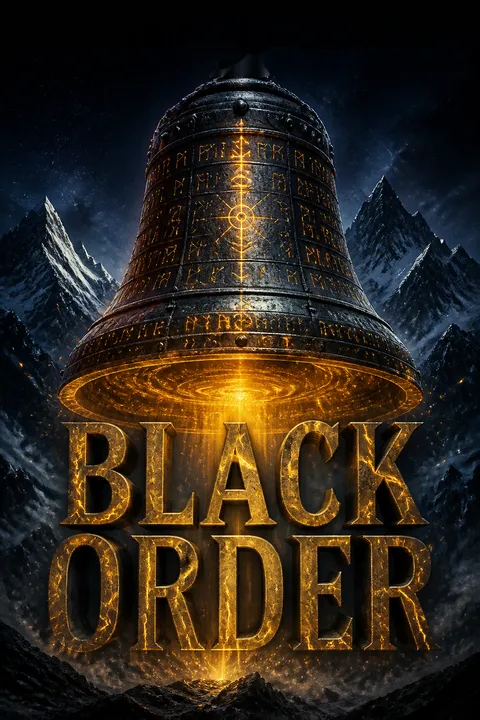
The Bell
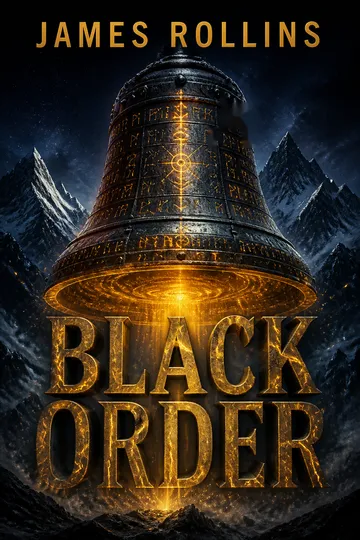
An engine of altered lifeThe Bell is a Nazi-era machine built around rotating metal cylinders and fueled by Xerum 525. In the novel’s speculative science, its field interacts with quantum processes and can change living tissue, producing enhancements as well as catastrophic degeneration. Anna’s group uses it to explain the illnesses in the Himalayas and the altered bodies of the Sonnekönige. Baldric’s version can also be programmed to affect selected DNA, turning a research instrument into a weapon. The Bell concentrates the novel’s central danger: the desire to improve life can become a rationale for deciding which lives deserve to exist.
The Darwin Bible
A family archive in disguiseThe Bible’s value appears to lie in Charles Darwin’s ownership and the scientific documents sold alongside it. In fact, its hidden alterations preserve part of Hugo Hirszfeld’s message. Fiona’s theft keeps the original from disappearing into the hands of the Waalenbergs, while Gray’s inspection reveals the markings that lead him toward the family’s wartime history. The Bible is both evidence and a portable puzzle, joining Darwinian evolution, Nazi runic symbolism, Jewish identity, and the unknown method Hugo concealed. Its importance comes from the conflict between what its owners claim it means and what its altered pages actually contain.
Xerum 525
Fuel that carries the threatXerum 525 is the rare liquid compound required to operate the Bell. Its scarcity creates dependence: Anna’s group cannot reproduce it, while Baldric’s access to a separate supply lets him control the larger experiment. Drums marked for different countries turn that dependence into an international threat. When the United States drum goes missing, Gray understands that the danger is no longer confined to the South African estate. The compound binds the historical research, the modern conspiracy, and the possibility of a zero-point weapon into one material clue.
The Waalenberg shield knot
A crest concealing allegianceThe Waalenberg family’s cloverlike emblem resembles a protective Celtic knot. Its loops, when visually tightened, reveal a swastika at the center. The mark appears on the family crest and on the hands of its agents, connecting the modern assassins to an ideology inherited from the Nazi Black Order. Fiona recognizes the design through her familiarity with Celtic symbols, while Painter later interprets Klaus’s warning about a knot tightening. The symbol turns a decorative family badge into a trail of evidence, showing how an old political project survives by changing its outward form.
The rune jigsaw
A secret resolved by rearrangementHugo’s collection of runes tempts characters to treat the symbols as a substitution cipher. Gray eventually sees that the marks are pieces to be rearranged, not letters to translate. The completed design is the Star of David, which redirects the scientific puzzle toward Hugo’s Jewish identity and the role of focused consciousness in his experiment. The solution does not provide a conventional machine manual. Instead, it changes how Lisa understands the Bell and gives the survivors a possible way to use it without repeating Baldric’s eugenic logic.
FAQ
Synopsis & Basic Details
What is Black Order about?
- Nazi Legacy Unveiled: Black Order by James Rollins plunges readers into a global conspiracy rooted in a secret Nazi project from World War II, involving a mysterious device called "the Bell" (die Glocke) capable of manipulating life at a quantum level. The story follows Sigma Force agents as they uncover a hidden network of descendants and powerful families, like the Waalenbergs, who seek to harness this technology for their own vision of human evolution and global control.
- Race Against Devolution: The narrative intertwines multiple plotlines: Dr. Lisa Cummings and Sigma Director Painter Crowe battling a deadly, mind-altering illness in the Himalayas caused by the Bell's radiation, while Commander Grayson Pierce investigates a series of murders and a coded Darwin Bible in Europe, all connected to the same sinister organization. The core conflict revolves around stopping the Waalenbergs from unleashing a quantum weapon that could "cleanse" humanity according to their eugenic ideals.
- Science, Faith, and Survival: Beyond the action, the novel delves into profound themes of quantum evolution, intelligent design, and the power of human consciousness. Characters grapple with the ethical implications of unchecked scientific ambition, the weight of historical atrocities, and the redemptive power of sacrifice, love, and belief in the face of seemingly insurmountable odds.
Why should I read Black Order?
- Thrilling Blend of History & Sci-Fi: Black Order offers a unique fusion of historical intrigue, drawing on real-world Nazi occult research and scientific theories, with cutting-edge science fiction concepts like quantum evolution. Readers who enjoy fast-paced action, global conspiracies, and intellectual puzzles will find this novel deeply engaging.
- Deep Dive into Ethical Dilemmas: The book doesn't shy away from complex moral questions, exploring the dangers of eugenics, the allure of perfection, and the ethical responsibilities of scientific discovery. It challenges readers to consider the fine line between progress and perversion, making it a thought-provoking read beyond its thrilling plot.
- Rich Character Arcs & Emotional Depth: Despite the high-stakes action, Black Order features compelling character development. From Painter Crowe's struggle with a debilitating illness and his quest for redemption, to Gray Pierce's personal journey confronting his past, and Lisa Cummings's evolution from skeptic to believer, the characters' emotional journeys add significant depth to the narrative.
What is the background of Black Order?
- WWII Nazi Occultism & Secret Science: The novel is heavily grounded in the historical reality of Nazi Germany's fascination with the occult, particularly Heinrich Himmler's belief in an Aryan master race and his expeditions to the Himalayas. It draws on documented "deep black projects" like Operation Paperclip and the real-life mystery of "die Glocke" (the Bell), a purported Nazi wonder weapon. This historical context provides a chilling foundation for the fictional quantum experiments.
- Cutting-Edge Quantum Physics & Biology: James Rollins integrates actual scientific theories, such as quantum mechanics, zero-point energy, and the debate around intelligent design versus Darwinian evolution. The concept of "quantum evolution," where consciousness can influence genetic mutation, is central to the plot, blurring the lines between established science and speculative fiction.
- Global Geopolitical Landscape: The story spans diverse geographical and political landscapes, from the besieged city of Breslau in 1945 to modern-day Copenhagen, the remote Himalayas, and the post-apartheid wilderness of South Africa. This global backdrop highlights the far-reaching influence of the conspiracy and the diverse cultural and historical forces at play.
What are the most memorable quotes in Black Order?
- "It defies God and nature.": Spoken by Tola Hirszfeld in 1945, this quote encapsulates the core ethical conflict of the novel, highlighting the inherent blasphemy and danger of the Nazi's genetic experiments with the Bell. It foreshadows the monstrous outcomes of tampering with life's fundamental processes, a theme that resonates throughout the entire Black Order narrative.
- "Oftentimes, it is madness more than genius that moves the world forward. Who else but the mad would reach so far, stretching for the impossible? And in so doing, prove the impossible possible.": Anna Sporrenberg's chilling reflection on the nature of scientific ambition reveals the dangerous philosophy driving the Black Sun project. This quote, central to understanding the themes in Black Order, suggests that the pursuit of perfection, when unconstrained by ethics, can lead to both groundbreaking discoveries and horrific atrocities.
- "Prayer works.": Lisa Cummings's profound realization at the climax, after Gray deciphers Hugo's code, signifies the novel's ultimate reconciliation of science and faith. This quote, pivotal to the Black Order ending explained, asserts that human consciousness, focused through belief and intent, can directly influence reality at the quantum level, offering a powerful counterpoint to the cold, mechanistic view of genetic manipulation.
What writing style, narrative choices, and literary techniques does James Rollins use?
- Propulsive, Action-Oriented Prose: Rollins employs a fast-paced, direct writing style, characterized by short sentences and paragraphs that maintain high tension and propel the plot forward. His narrative is often visceral, with vivid descriptions of action sequences, scientific phenomena, and grotesque mutations, keeping readers on the edge of their seats.
- Alternating Perspectives and Global Scope: The novel utilizes a multi-POV structure, shifting between different characters (Painter, Gray, Lisa, Monk) and diverse global locations. This narrative choice creates a sense of a vast, interconnected conspiracy, allowing Rollins to build suspense and reveal pieces of the puzzle from various angles, enriching the Black Order analysis.
- Integration of Real-World Science and History: A hallmark of Rollins's style is his meticulous research into scientific theories and historical events, which he then seamlessly weaves into his fictional narrative. This technique lends a veneer of plausibility to even the most fantastical elements, making the themes in Black Order feel grounded and thought-provoking, often blurring the lines between truth and fiction.
Hidden Details & Subtle Connections
What are some minor details that add significant meaning?
- Fiona's "Hope" Bracelet: Early in the novel, Fiona is described wearing a white rubber bracelet with "hope" stamped on it. This seemingly minor detail subtly foreshadows her eventual role as a beacon of hope and resilience in the face of overwhelming darkness, contrasting with the despair and nihilism of the Waalenbergs. It also highlights her inherent goodness despite her street-hardened exterior, a key aspect of her character development.
- The Waalenberg Crest's Hidden Swastika: Gray's discovery that the Waalenberg family crest, a Celtic shield knot, can be "tightened" to reveal a hidden swastika is a crucial, yet easily missed, visual clue. This detail not only confirms the family's deep Nazi ties but also symbolizes how insidious and camouflaged evil can be, hiding in plain sight behind seemingly innocuous symbols. It's a powerful piece of symbolism in Black Order.
- Painter's Missing Fingernail: As Painter's quantum disease progresses, he notices his fingernail has been "ripped away," leaving pale, dry flesh. This detail, initially attributed to an injury, is later revealed to be a symptom of the devolution, mirroring Anna's description of the Sonnekonige's necrosis. It's a subtle, chilling indicator of the disease's advanced stage and Painter's impending fate, adding a visceral layer to his character motivations and the urgency of finding a cure.
What are some subtle foreshadowing and callbacks?
- Jakob Sporrenberg's Revulsion to the Jewish Infant: In the 1945 prologue, SS Obergruppenfuhrer Jakob Sporrenberg expresses profound revulsion that "all of the hopes for the Third Reich lay in his tiny hands—the hands of a Jewish infant." This deeply ironic detail subtly foreshadows the ultimate twist: that Himmler's own genetic material, intended for the Aryan master race, was unknowingly preserved and used by Baldric Waalenberg, making the "perfect" Sonnekonige descendants of the very people the Nazis sought to exterminate. It's a powerful callback to the historical context and a key element of the Black Order ending explained.
- Monk's Prosthetic Hand as a Weapon: Monk's state-of-the-art DARPA prosthetic hand is initially presented as a symbol of his past trauma and resilience. However, the detail that it contains a hidden flash charge, capable of being detonated wirelessly, is subtly foreshadowed by Gray's internal thought that "plastic and metal were not flesh" and Monk's later comment about Fiona not stealing "that, too." This callback to its technological capabilities allows for a crucial, unexpected distraction during their escape from the Waalenberg estate, highlighting the ingenuity of Sigma's tech and Monk's resourcefulness.
- The "Ghost Lights" and the Bell's Energy Venting: The Himalayan villagers' reports of "ghost lights" appearing in the mountains, which Painter initially dismisses as local superstition, are later revealed to be the visible manifestation of the Bell's excess energy being vented. This subtle foreshadowing connects the seemingly disparate elements of local folklore and advanced quantum physics, illustrating how the Bell's power impacts the environment and hinting at its true nature as a source of both illness and potential, a crucial piece of the Black Order analysis.
What are some unexpected character connections?
- Fiona's Unspoken Bond with Grette Neal: While Grette is Fiona's foster grandmother, the depth of their bond is subtly revealed through Fiona's intense grief and her fierce determination to avenge Grette's murder. Fiona's confession about Grette taking her in after she tried to steal from the shop, and Grette's consistent kindness, highlights a profound, almost maternal connection that transcends blood ties. This unexpected emotional depth in Fiona's character development underscores the novel's theme of chosen family and redemption.
- Gunther's Loyalty to Anna: The revelation that Gunther, the hulking, seemingly emotionless Sonnekonige assassin, is Anna Sporrenberg's brother adds a tragic layer to his character. His unwavering loyalty and willingness to sacrifice himself for Anna, despite his own debilitating condition and the disdain he faces from others, transforms him from a brute into a figure of profound, if misguided, familial love. This connection provides a powerful emotional counterpoint to the cold scientific ambition of the Waalenbergs, deepening the character motivations of both siblings.
- Father Piotr's Connection to the "Perfect Child": The epilogue reveals that Father Piotr, the kind priest Gray interviews, is the "perfect child" rescued by Father Varick in 1945—the very infant exposed to the Bell and prayed over by Hugo Hirszfeld. This unexpected connection subtly suggests that the Bell's influence, combined with focused human consciousness (prayer), resulted not in a superhuman, but in a man of profound goodness and resilience. It redefines "perfection" within the themes in Black Order, shifting it from genetic superiority to moral character.
Who are the most significant supporting characters?
- Dr. Marcia Fairfield: A British biologist and MI5 operative, Marcia is crucial for her deep knowledge of the African wilderness and her long-standing surveillance of the Waalenberg estate. Her personal loss (her partner's murder by the Waalenbergs) fuels her determination, and her scientific expertise proves invaluable in understanding the Waalenbergs' genetic experiments and the Bell's effects. Her resilience and intelligence make her a vital ally in the fight against the Black Order.
- Khamisi Taylor: The Zulu game warden, initially suspended for "cowardice," becomes a pivotal figure in rallying the local tribes against the Waalenbergs. His intimate knowledge of the terrain, his tracking skills, and his deep connection to his people provide the ground forces necessary for the assault on the estate. Khamisi's journey is one of reclaiming his honor and fighting for his community, embodying the spirit of resistance against colonial and scientific oppression.
- Ryan Hirszfeld: The grandson of Hugo Hirszfeld, Ryan's personal quest to understand his family's Nazi past provides critical historical context and leads Gray to the Wewelsburg Castle. His discovery of Hugo's cryptic letter and his willingness to share his findings, despite his father's reluctance, directly contributes to deciphering the Bell's secret. Ryan represents the younger generation grappling with inherited historical trauma and seeking truth.
Psychological, Emotional, & Relational Analysis
What are some unspoken motivations of the characters?
- Painter Crowe's Quest for Absolution: Beyond his duty as Sigma Director, Painter's personal journey is driven by an unspoken need for absolution, stemming from his past failures and the guilt of "passing the buck" on Ang Gelu's initial plea for help. His willingness to face the quantum disease head-on and his fierce protectiveness of Lisa are subtle manifestations of this desire to atone and prove his worth, a deep-seated Painter Crowe motivation.
- Anna Sporrenberg's Desire for Legacy and Redemption: While outwardly driven by scientific ambition and a twisted sense of duty to her Nazi heritage, Anna's deeper, unspoken motivation is a desperate yearning for her family's legacy to be redeemed, not just preserved. Her sacrifice, and her final declaration "I'm not a Nazi," suggest a profound internal conflict and a desire for absolution for the sins of her ancestors and her own complicity, making her a complex figure in Black Order analysis.
- Baldric Waalenberg's Fear of Irrelevance: Baldric's relentless pursuit of genetic perfection and his desire to "cleanse" humanity are fueled by an unspoken, profound fear of his own sterility and the end of his family line. His obsession with breeding and control is a desperate attempt to overcome his personal biological failure and ensure his legacy, even if it means monstrous acts. This deep-seated insecurity drives much of his cruelty and ambition, a key aspect of Baldric Waalenberg's motivations.
What psychological complexities do the characters exhibit?
- Gray Pierce's Inherited Trauma and Fear of Fatherhood: Gray's difficult relationship with his father and his fear of repeating past mistakes create a significant psychological complexity. His initial reluctance to commit to Rachel and his panic at the thought of Monk's pregnancy reveal a deep-seated anxiety about his own capacity for fatherhood and the potential for inherited flaws. His journey forces him to confront these fears, culminating in a conscious choice to break the cycle, a central part of Grayson Pierce's character development.
- Lisa Cummings's Battle Between Rationality and Emotion: Lisa, a scientist and doctor, initially approaches the horrors with clinical detachment, a coping mechanism against the overwhelming trauma. However, her growing emotional attachment to Painter and her eventual "leap of faith" to save him reveal a profound psychological shift. She grapples with the limits of pure rationality, learning to embrace intuition, love, and belief as valid forces, showcasing her complex emotional turning points.
- Fiona's Resilience and Vulnerability: Fiona's streetwise exterior hides deep emotional scars from her past trauma and the loss of her foster grandmother. Her sharp tongue and defiant attitude are coping mechanisms, but her moments of raw grief and her desperate need for belonging reveal her underlying vulnerability. Her ability to form new bonds and her fierce loyalty to those she trusts highlight a complex interplay of toughness and tenderness, making her a compelling character in Black Order analysis.
What are the major emotional turning points?
- Painter's Acceptance of His Mortality: A critical emotional turning point for Painter occurs when Anna Sporrenberg clinically informs him he will "die in another three days. Most horribly." This stark confrontation with his own mortality, and the subsequent realization of his "devolution," forces him to shed his scientific detachment and embrace a more desperate, human fight for survival, deepening his bond with Lisa. This moment is crucial for understanding Painter Crowe's motivations.
- Fiona's Decision to Trust Gray: After Grette's murder and their harrowing escape, Fiona's initial anger and self-reliance give way to a desperate plea for Gray's help, culminating in her confession of "I have no one now." Gray's promise, "You have me," and his subsequent decision to take her with him, marks a significant emotional turning point for Fiona, allowing her to begin to heal and find a sense of belonging. This is a key moment in Fiona's character development.
- Lisa's Act of Love and Belief: The climax, where Lisa, despite her scientific skepticism, chooses to enter the Bell chamber with Painter and focuses her "prayer" and "belief" to heal him, is the ultimate emotional turning point. This act transcends her rational training, demonstrating her profound love for Painter and her acceptance of a quantum reality where consciousness can shape outcomes. It's a powerful resolution to her internal conflict between science and faith, central to the themes in Black Order.
How do relationship dynamics evolve?
- Painter and Lisa: From Professional Allies to Deeply Connected Partners: Their relationship evolves from a professional alliance born of necessity in the Himalayas to a profound emotional and spiritual bond. Initially, Lisa is Painter's doctor, and he is her enigmatic patient. As they face shared trauma and Painter's impending death, their connection deepens, culminating in Lisa's act of love that saves him. Their relationship becomes a central example of the novel's theme of integrating science and faith, showcasing evolving relationship dynamics.
- Gray and Fiona: From Reluctant Guardian to Chosen Family: Gray initially views Fiona as a nuisance and a responsibility he wants to shed. Fiona, in turn, is wary and manipulative. However, through shared danger and Gray's repeated acts of protection, their relationship transforms into a surrogate father-daughter bond. Fiona's loyalty and Gray's growing compassion for her highlight the theme of finding family in unexpected places, a significant aspect of Grayson Pierce's character development.
- Monk and Kat: Confronting Vulnerability and Embracing Parenthood: Monk and Kat's relationship, already established as loving but guarded, is tested by Kat's unexpected pregnancy and near-fatal injury. Monk's initial fear of commitment and Kat's anxieties about balancing career and family are brought to the forefront. Their journey forces them to confront their vulnerabilities and embrace the future, culminating in their engagement and a shared commitment to their new family, illustrating evolving relationship dynamics under extreme pressure.
Interpretation & Debate
Which parts of the story remain ambiguous or open-ended?
- The Full Extent of the Bell's Capabilities: While the novel explains the Bell as a quantum-measuring device capable of influencing evolution, the full scope of its potential remains somewhat ambiguous. Could it truly create a "perfect" human, or is that an unattainable ideal? The story hints at vast, unexplored possibilities, leaving readers to ponder the ultimate power and peril of such a device, a key aspect of Black Order analysis.
- Gunther's Ultimate Fate and Future Role: After Anna's sacrifice, Gunther, the last of the Sonnekonige, vanishes with her body, choosing to mourn alone. His future remains open-ended: will he seek revenge, find a new purpose, or simply succumb to his chronic degeneration? His unique immunity and tragic loyalty leave his character arc unresolved, inviting speculation about his potential return or a solitary end. This ambiguity adds depth to his character motivations.
- The Long-Term Effects of Quantum Evolution on Father Piotr: The epilogue reveals Father Piotr as the "perfect child" from Hugo's experiment, now a kind and healthy priest. However, the novel doesn't fully explore the long-term implications of his unique origin. Is his "perfection" purely physical, or does it extend to his spiritual well-being? The subtle hint that he, like Hugo, enjoys jigsaw puzzles, raises questions about inherited traits and the lasting, subtle influence of the Bell, leaving his story with a touch of mystery.
What are some debatable, controversial scenes or moments in Black Order?
- Anna Sporrenberg's Justification of "Mercy Killings": Anna's assertion that the slaughter of the monks at the monastery was an act of "mercy" due to their impending madness is a highly controversial moment. While presented from her perspective as a pragmatic choice to prevent horrific suffering, it forces readers to confront the ethical tightrope walked by characters operating under extreme circumstances, echoing historical justifications for atrocities. This scene sparks debate on the nature of compassion versus control, a central theme in Black Order.
- Baldric Waalenberg's Chimera Experiments and Inbreeding: The revelation of Baldric's grotesque experiments, breeding monstrous hyenas with human stem cells and then implanting hyena cells back into his own children, is deeply disturbing. This controversial aspect pushes the boundaries of genetic manipulation and eugenics, highlighting the depravity of unchecked scientific ambition and the perversion of family lineage. It's a moment designed to shock and provoke strong reactions, emphasizing the novel's warning against playing God.
- Lisa's Use of "Prayer" to Heal Painter: The climax, where Lisa, a scientist, consciously uses "prayer" and focuse
Sigma Force Series

About the Author
Other books by James Rollins






Download PDF
Download EPUB
.epub digital book format is ideal for reading ebooks on phones, tablets, and e-readers.








