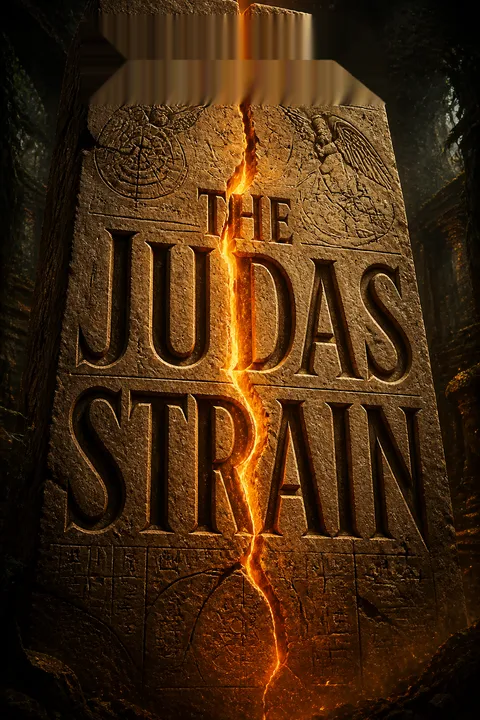


Plot Summary
Prologue
In 1293, Marco Polo watches twelve ships burn off Sumatra after a plague has ravaged his fleet. He, his father, his uncle, and a handful of others have survived by destroying the vessels and everyone still aboard, sick or not.
Months earlier, Marco had led men into a silent jungle city where people and animals lay dead beneath strange glowing water. His father makes him swear never to reveal what they found. Marco keeps the promise publicly, but secretly preserves a map in his memory. The surviving Polos sail home carrying a horror their silence cannot erase.
The opening makes historical secrecy an ethical wound rather than a puzzle-box flourish. Marco’s silence protects ports and populations from panic, yet his destruction of the fleet means that protection is purchased through deliberate erasure of the sick. His private map complicates the vow: he accepts concealment without accepting oblivion. The scene also establishes the book’s recurring tension between preserving dangerous knowledge and suppressing it. Marco’s inherited account becomes a warning that later generations misread as legend, while his guilt survives more faithfully than the facts.
The Sea Turns Milky
Marine biologist Susan Tunis is studying unexplained dolphin strandings with her husband, Gregg, and her former mentor, Professor Applegate, when a vast glow spreads across the Indian Ocean. A tiger shark rises through the luminous water, its flesh blistering away; other dead sea creatures follow. Susan realizes the glow is not harmless algae, but bacteria feeding on living tissue.
She has been diving in it all day. Red welts bloom across her arm, while the reef below lies strangely empty. On a distant island, the toxic tide will soon kill and injure hundreds. Susan’s accidental exposure makes her more than an observer: she becomes the first known human at the center of a disaster whose cause is still unknown.
The first crisis arrives through a scientific misclassification. Susan has a name for the luminous water, but naming its appearance does not explain its behavior. Her training therefore creates a double response: fear for her body and an urgent desire to understand what is happening. The sea’s glow makes danger visible while concealing its mechanism, an apt image for the book’s wider problem of evidence that can be seen but not yet interpreted. Susan’s exposure also binds the personal and ecological plots from the outset: a research trip becomes the point where planetary risk enters one marriage and one body.
The Dragon in the Tower
In Venice, museum curator Stefano Gallo steals a forgotten Egyptian obelisk after discovering that ultraviolet light reveals an ancient script on its black surface. An Egyptian operative pursues him; a masked woman takes the artifact in a Venetian dungeon, then kills Stefano. The woman is Seichan, a dangerous Guild operative with her own reasons for keeping the stone.
In the Vatican, Monsignor Vigor Verona finds a freshly painted Dragon Court emblem surrounding another inscription in the same unknown script. He recognizes the symbol from a past operation and fears the old threat has returned. The message points toward his former ally, Commander Gray Pierce, so Vigor contacts Sigma Force director Painter Crowe and asks for Gray’s help.
The parallel discoveries turn archaeology into an active security problem. The obelisk is not valuable because it is beautiful or politically contested; its writing makes it a carrier of information that several parties are willing to kill for. Vigor’s recognition of the Dragon Court mark shows how institutional memory works: past violence leaves symbols that can be reused to recruit, threaten, or mislead. Stefano’s desperation is equally concrete. Financial pressure makes him vulnerable to bribery, but new evidence forces him to reverse course, leaving him trapped between a hidden warning and an armed pursuer.
Seichan Hits the Driveway
On July Fourth, Gray is helping his parents clean up after a family gathering when a motorcycle crashes into their driveway. Its rider is Seichan, shot and bleeding, with a broken piece of the black obelisk nearby. Gray recognizes her as an enemy from earlier missions, but she begs him for help.
He calls Painter, then drives her to a safe house in his father’s Thunderbird, bringing his parents along despite orders to travel alone. A medical team arrives, but its Egyptian doctor, Amen Nasser, is a Guild assassin in disguise. Nasser demands the obelisk and threatens Gray’s father. Harriet shoots one attacker; Gray and the guard Kowalski fight back, then escape as Nasser’s team fires a rocket at the house.
Gray’s first response to Seichan is neither trust nor simple hostility. He helps because the immediate evidence of her vulnerability overrides his memory of her as an adversary, but his attempt to protect his family exposes them to a wider danger. His parents’ presence makes the mistake irreversible. At the same time, their actions unsettle Gray’s role as sole protector: Harriet can shoot, Jack can carry the wounded woman, and both refuse to be managed like helpless dependents. The ambush turns Gray’s private family life into part of the operation and makes trust a practical decision with human costs.
The Crab Tide
Sigma operative Monk Kokkalis reaches Christmas Island in a contamination suit to collect samples from the coastal die-off. Researcher Richard Graff explains that an unknown slime has poisoned the sea, but the missing red land crabs suggest the animals may be avoiding or responding to the bloom.
Before Monk can investigate further, armed men in improvised protective gear attack the beach and kill their boat pilot. Monk and Graff flee through a hidden tunnel behind a Buddhist shrine, only to find the crabs devouring dead wildlife in the jungle.
Monk uses an air tank and his last bullet to stampede the creatures into the pirates, escaping with Graff. From a ridge they see more speedboats closing around the cruise ship where Lisa Cummings is treating evacuees.
The crab sequence establishes that the disaster changes behavior as well as flesh. The creatures are not merely casualties of contamination; their altered movement becomes a force Monk can use to survive. His improvisation reflects his military past, while his anxiety about his wife Kat and infant daughter makes every calculated risk emotionally specific. Graff’s insistence on collecting a living crab also preserves the scientific question inside an action sequence. The escape does not solve the outbreak, but it leaves behind a clue: the animals’ strange orientation may reveal a destination or compulsion that human investigators have not yet found.
A Ship Becomes a Lab
Masked gunmen seize the cruise ship and demand that Lisa, toxicologist Henri Barnhardt, bacteriologist Benjamin Miller, and other specialists report to the bridge. Their leader, Guild scientist Devesh Patanjali, reveals that ordinary bacteria in the victims have become toxin-producing killers.
He identifies a virus capable of altering bacteria across the biosphere and calls it the Judas Strain. The Guild has already brought laboratory equipment aboard and intends to study the infected islanders as test subjects.
Lisa recognizes that the captors want more than ransom, but Devesh makes the threat plain when he forces her to choose a child as a supposed punishment, then has another doctor murdered. He assigns Lisa to Susan Tunis, who lies catatonic in isolation, because he believes she holds the key to the disease.
The Guild’s language of emergency converts cruelty into procedure. Devesh presents human experimentation as an efficient response to a threat that may destroy all higher life, and that scale makes his argument disturbingly plausible without making it ethical. Lisa’s medical training is used against her: her ability to diagnose and care becomes a resource the captors can compel. The child-selection ordeal attacks her professional identity by forcing her to participate in a false choice. The section’s central conflict is therefore not simply science against ignorance, but whether urgency can erase the obligations that make science worth doing.
Marco’s Missing Voyage
Gray escapes Washington with Seichan and Kowalski, carrying the broken obelisk and the silver crucifix hidden inside it. Seichan says its glowing writing encodes a route left by Marco Polo, while Vigor joins them in Istanbul after decoding the Vatican inscription as a clue to Hagia Sophia.
There, Seichan explains the gap in Marco’s famous travel account: fourteen ships and six hundred men began his return voyage, but only two ships and eighteen men reached Persia. A secret version of Marco’s book describes a plague-struck city in Southeast Asia.
Gray learns that the Dragon Court library he once helped expose was stolen by the Guild, giving them access to that hidden history. Vigor finds the first golden passport beneath the Vatican inscription, proving the clues are material, not merely legendary.
The historical investigation changes the scale of the story without abandoning its human stakes. Gray’s military pattern recognition must now work alongside Vigor’s scholarship and Seichan’s guarded knowledge. Their alliance is productive precisely because none has full control of the evidence. The lost voyage also mirrors the present outbreak: a small number survive, while the missing majority become an unexplained absence in the record. By making the secret archive a consequence of Gray’s earlier operation, the novel gives past choices causal weight. The threat is not newly invented; it has been carried forward by the institutions and people who preserved fragments of it.
The Key Above the Dome
At Hagia Sophia, Gray uses the first golden passport’s symbol as a crude map of the church, then climbs the restoration scaffolding to test a hollow brick in the dome. A hidden cavity yields a second golden passport and a sealed bronze tube containing Marco’s missing pages, embroidered on silk.
The account says glowing strangers offered Marco’s party a blood-and-organ remedy, but Friar Agreer was excluded because he was a Christian. Seichan spots an armed contact leaving the church and shoots him, identifying him as Balthazar Pinosso, the Vatican art historian who had helped Vigor.
She reveals that Balthazar had been feeding information to Nasser. With the Vatican route compromised and police closing in, Gray, Vigor, Seichan, and Kowalski flee Istanbul for Hormuz.
The church’s architecture becomes a working cipher: Gray reads the building not as a static monument but as a map whose proportions and materials preserve decisions made centuries earlier. The discovery joins material history to bodily consequence, since Marco’s pages describe a remedy that is also morally repellent. Balthazar’s exposure shows how easily expertise can become an instrument of access. Seichan’s shooting prevents a leak but also removes a possible source of information, leaving the group with less certainty as it moves forward. Knowledge advances here through both patient inference and abrupt violence.
The Polos Beneath Hormuz
On Hormuz Island, the team follows clues about the Blue Princess, Kokejin, to a Portuguese castle chapel known as the Room of Crosses. Gray matches Friar Agreer’s crucifix to a carving in the ceiling; turning it releases the altar and exposes a tomb beneath the chapel.
Kokejin and Marco Polo lie together under a silk shroud, with the third golden passport and another scroll between them. The final account explains that Marco’s companions survived after consuming infected human blood and thymus tissue, a crude inoculation, while Agreer stayed behind.
A coded map identifies the City of the Dead as a place arranged like the constellation Draco. Meanwhile, Nasser has seized Gray’s parents in Washington. Painter later tracks them through a witness; Jack and Harriet resist their captors until a rescue team reaches them.
The tomb gives the historical puzzle an intimate center: Marco’s secret is not only a record of plague but also an attempt to return Kokejin to the place where he believes she belongs. The burial makes private attachment part of the archive, hidden alongside the dangerous knowledge. At the same time, the parents’ captivity turns Gray’s intellectual pursuit into coercion. Jack’s cognitive illness complicates the family’s vulnerability, yet Harriet and Jack act with resourcefulness rather than serving as passive leverage. Their parallel survival prevents Gray’s search from collapsing into a purely abstract race for information.
Angkor on the Map
Gray reads the coded map as a plan of a city, not a chart of stars, and recognizes the temple complex of Angkor. He tells Nasser that the cure may lie there, buying time by promising the historical account while withholding the final location.
At Angkor Thom, Vigor connects the myth carved on the Bayon’s walls, the churning ocean, poison, and a glowing survivor, to the outbreak. Gray sees that the Bayon’s central tower and the turtle in the carving may conceal a chamber beneath the foundations.
Nasser’s pressure intensifies as he threatens Gray’s captured parents and orders their captors to injure them. In Washington, Painter finally locates Jack and Harriet and leads a raid; Jack helps defeat their captors, and a signal from Rachel later confirms their safety to Gray.
Gray’s interpretive strength lies in revising a mistaken framework. The clue becomes legible only when he stops treating it as a conventional substitution code and asks what kind of object Marco meant to represent. Yet his intelligence is not detached from fear: each delay is measured against the possibility that Nasser will harm his parents. Vigor’s mythological reading supplies a second mode of inference, one that recognizes historical memory encoded as religious imagery. Painter’s rescue provides a counterweight to Gray’s isolation, showing that institutional support can still matter when it is discreet, timely, and directed toward people rather than bureaucratic advantage.
Susan Wakes in Light
Aboard the hijacked ship, Lisa studies Susan’s catatonic condition and notices that her body is healing while the other patients deteriorate. Tests show a different form of the virus in Susan’s brain, alongside cyanobacteria that make her eyes and skin glow.
Lisa suspects the virus has changed from a destructive form to a restorative one, but Devesh keeps her under guard and threatens her when she tries to signal Painter. Monk, who survived the beach attack, infiltrates the ship with nursing student Jessie and secretly arms Lisa and cruise-line owner Ryder Blunt.
During an escape attempt, predatory squid seize Lisa in the lagoon; pirate leader Rakao shocks the creatures with an electrified spear and returns her to the ship, leaving Monk to organize a rescue from the island’s cannibal community.
Susan’s apparent stillness conceals an active biological transition, making the patient both a clinical puzzle and a person whose agency has not yet returned. Lisa’s decision to examine her with empathy, rather than only as a collection of tests, is crucial: she notices changes that Devesh’s research apparatus has not explained. The episode also contrasts two forms of knowledge. The Guild accumulates data through surveillance and coercion; Lisa and Monk build a fragile network through observation, trust, and improvised cooperation. The squid attack intensifies the island’s physical danger while demonstrating that the natural world is not a neutral backdrop.
The Witch Queen’s Rescue
Monk and Ryder reach the island’s cannibal village with Susan, whose glowing skin convinces the tribe that she is connected to their feared witch queen, Rangda. Monk uses his prosthetic hand as a dancing spectacle, then presents Susan as a supernatural sign.
The tribe gives him enough authority to organize an assault on the cruise ship, where Devesh has imprisoned Lisa and other scientists. The attack lets Monk and the surviving researchers free Lisa and reach Ryder’s experimental Sea Dart. Susan is retrieved from the beach, but Rakao ambushes them.
Monk saves Susan and Lisa by helping the aircraft escape, then is shot and left hanging from its wing as the island’s vast concealment net collapses. Lisa and Ryder fly away with Susan, believing Monk has drowned beneath the falling cables.
Monk survives by translating between systems that would usually remain separate: military tactics, prosthetic technology, local belief, and the practical needs of people trapped aboard the ship. His performance does not make the cannibals foolish; it gives them a story through which they can choose to act. That alliance becomes the means of rescuing others. The price is Monk’s apparent sacrifice. His focus on getting Lisa and Susan away reflects the same care that binds him to Kat and Penelope, and the loss lands because the rescue is achieved through cooperation rather than individual heroics.
A Body Points North
After escaping the island, Lisa and Ryder land on Natuna Besar to refuel. Susan, weak and newly conscious, tells Lisa that she is not yet the cure and that she must reach Angkor before time runs out. Her body reacts painfully to sunlight, and Lisa realizes the cyanobacteria inside her are responding to light and may be driving a specific biological urge.
Painter confirms that altered crabs on Christmas Island all crawl in a fixed direction toward Angkor, suggesting a programmed migration. Lisa refuses to leave Susan at a safer floating village and persuades Ryder to fly the Sea Dart toward the ruins. They land in Angkor Wat’s moat, then take a tuk-tuk toward the Bayon, where Guild guards are already controlling the entrance.
Lisa’s judgment depends on distinguishing compulsion from insight. Susan may be biologically driven toward Angkor, just as the crabs are, but Lisa cannot dismiss her warning merely because it has a physiological source. The decision is an ethical wager: protect Susan from a dangerous destination or trust her embodied knowledge enough to pursue a possible cure. Painter’s crab evidence deepens the uncertainty rather than resolving it. The scene resists a simple opposition between reason and instinct; both may be biological, and both may contain information that a purely detached observer would miss.
The Bayon Opens
Gray’s party reaches the Bayon with Nasser’s armed men and searches its central sanctuary. Gray interprets the Churning of the Ocean of Milk as a record of the Judas Strain: poisoned water, a survivor who glows, and a protective turtle beneath a mountain.
Nasser orders the altar blasted with a corrosive charge, exposing a buried foundation vault. Inside, Gray finds holes through the eyes of a stone face leading toward a lower cavern. Lisa and Susan arrive as the group discovers ancient carvings made from the same mysterious script found on the obelisk.
Susan recognizes the danger and urges them to cover the statue’s eyes, cutting sunlight from the chamber. Nasser’s team withdraws, then continues trying to force entry, while the group searches for another way down.
The Bayon’s religious imagery becomes a record of ecological knowledge that was preserved in symbolic rather than scientific language. Gray’s reading is not simply that myth secretly contains facts; the more precise point is that societies encode dangerous experience in forms they can transmit. Nasser’s acid charge repeats the Guild’s central error: treating a complex system as something to open, extract, and control. Susan’s warning temporarily reverses the power dynamic. The person most altered by the disease understands a danger that trained operatives and well-equipped researchers have not yet learned to see.
The Source Awakens
Beneath the Bayon, Lisa identifies the cavern as a sunlit ecosystem linking cyanobacteria, bats, and scavenging arthropods. The Judas Strain manipulates each host, while humans became accidental participants after the Khmers disturbed the chamber.
Susan believes a second exposure will complete the transformation needed for a cure. Above, Nasser’s acid weakens the temple supports; below, sunlight makes the bacterial pool boil with toxic gas. Susan is burned by the source and collapses. Gray crosses the deadly vapor to drag her out, with Seichan helping him back.
A bomb from above triggers the temple’s collapse, sealing the cavern. Lisa revives Susan, while Gray shoots Nasser when he appears with armed men. Painter’s forces arrive, and Rachel’s signal confirms Gray’s parents are safe.
The climax makes cure and catastrophe inseparable: Susan must approach the source that is destroying her, while the others must decide whether to expose themselves to save her. The biological explanation replaces a villain-centered account of evil with a system of interactions, but it does not excuse the Guild’s deliberate release of the pathogen. Gray’s rescue of Susan echoes Marco’s earlier willingness to carry knowledge forward, while his return to the toxic zone converts abstract loyalty into bodily risk. The collapsing temple closes the source, though not without leaving the survivors to manage contamination and uncertainty beyond the chamber.
Freedom Has a Price
In the aftermath, Susan’s cyanobacteria become a treatment that destroys the toxic bacteria and clears the virus, while health teams establish quarantine around Angkor. Lisa reunites with Painter and learns that a witness saw Monk disappear beneath the collapsing island net; she accepts that he is presumed dead.
Gray visits Seichan in the hospital, where she is guarded and scheduled for transfer to Guantanamo Bay. He secretly gives her clothes and money, then allows her to stage a violent escape.
Before leaving, she reveals that she has been a double agent planted inside the Guild, not the promised mole within Sigma. Gray and Painter track her with a hidden tracer, but Gray recognizes that her years of deception were also the means by which she survived. He lets her go, choosing limited trust over custody.
Resolution does not restore the characters to their previous positions. Lisa has survived the crisis but must absorb Monk’s loss; Gray has his parents back yet has become more cautious about the institution he serves. Seichan’s departure reframes her earlier conduct without turning it into innocence. Her deception protected her cover and enabled her to act, but it also damaged the trust she now asks Gray to extend. The cure resolves the medical emergency, not the ethical residue of how it was discovered. Each survivor carries a different cost, and the story refuses to make recovery synonymous with a clean return to normal.
Epilogue
Weeks later, Gray discovers Monk’s restored prosthetic hand tapping an SOS in Morse code, a signal that hints Monk may have survived. In a separate journey through Cambodia’s Cardamom Mountains, Susan finds an underground chamber filled with luminous, humanlike figures and lies down beside one of them.
She understands that the source has been destroyed and that she is the last; then she awakens aboard a boat beside Gregg, apparently returned to the life she lost. Whether the reunion is memory, vision, or something stranger remains unresolved. The novel closes by turning the cure into another mystery: what did Susan become, and what has Monk’s signal reached?
The closing scenes refuse the certainty the main plot has worked so hard to achieve. The hand’s Morse signal offers material evidence against Monk’s presumed death, but not a location or explanation. Susan’s encounter with the luminous figures is even less stable: it may be a supernatural event, an altered consciousness, or a narrative image of biological inheritance exceeding ordinary identity. Her return to Gregg gives the personal story an emotional shape without clarifying its literal status. Both scenes extend survival beyond the categories the novel has used, leaving the reader with possibility rather than proof.
Analysis
The novel builds its thriller from a collision between two ways of reading the world. Sigma Force treats evidence as a problem to solve through intelligence, instruments, and coordinated action. The historical trail insists that evidence can also survive in architecture, myth, ritual, and private memory. Neither method is sufficient alone. Gray’s pattern recognition finds Angkor, but Vigor’s scholarship explains why Marco’s story matters; Lisa’s clinical attention identifies Susan’s transformation, while Susan’s embodied certainty directs them toward the source.
The Judas Strain gives this epistemic conflict a biological form. It turns familiar bacteria into agents of harm, making the body’s normal dependence on microbial life feel suddenly precarious. Yet the virus itself has no human intention. The Guild supplies that intention when it plants the ancient ship timber, contaminates an island, and uses the cruise ship as a laboratory. Devesh’s case for harsh measures gains force from the scale of the threat, but his experiments expose the danger of treating people as expendable material. His methods do not merely violate ethics; they also narrow what the scientists can understand by replacing cooperation with control.
The novel’s emotional structure works through competing forms of responsibility. Gray tries to protect his parents by keeping them out of danger, but his secrecy and isolation leave them exposed. Lisa seeks professional independence from Painter, then discovers that independence does not mean emotional detachment. Monk’s devotion to Kat and Penelope makes his field courage feel costly rather than glamorous. Seichan complicates every easy distinction between traitor and ally: survival has trained her to deceive, but her actions also resist the Guild’s plans.
The ending refuses a tidy victory. A workable cure emerges, the immediate outbreak is contained, and Nasser is stopped, yet Monk’s fate remains uncertain and Susan’s final experience exceeds scientific explanation. Survival is therefore not a return to innocence. It is a temporary achievement made possible by shared knowledge, imperfect trust, and the willingness to keep investigating what no single discipline can explain.
Review Summary
The Judas Strain receives mostly positive reviews, with readers praising its blend of history, science, and action. Many enjoy the fast-paced plot involving a deadly virus, Marco Polo's journey, and global adventure. Rollins' research and ability to weave fact with fiction are highlighted. Some criticize pacing issues and far-fetched elements. The Sigma Force characters are well-developed, and readers appreciate the series' continuity. While some find it formulaic, most consider it an entertaining and engaging thriller.
People Also Read

Characters
Gray Pierce
The pattern-reading commanderGray commands Sigma Force missions and combines military training with a talent for connecting evidence that seems unrelated. His relationship with his parents is strained by years of distance, then deepened by his growing awareness of his father’s illness and his mother’s independence. Under pressure, Gray tends to take responsibility for everyone around him, a strength that can become a refusal to share risk. He approaches Seichan with justified suspicion, yet repeatedly has to decide whether caution has become an excuse for inaction. His defining conflict is not simply duty versus family, but whether he can protect people without trying to control every outcome.
Lisa Cummings
The field doctorLisa is a physician and physiologist whose marine research background makes her unusually suited to investigate the Christmas Island outbreak. She is also Painter Crowe’s partner, a relationship that leaves her negotiating the line between intimacy and professional independence. Lisa’s first instinct is to help the person in front of her, even when that compassion makes her vulnerable to manipulation. Her clinical discipline does not erase empathy; instead, she uses attention to the individual patient to notice evidence others overlook. She wants meaningful work beyond Sigma’s orbit and must determine what kind of risk she can accept without allowing either fear or romance to make the decision for her.
Monk Kokkalis
The irrepressible field medicMonk is a Sigma operative with forensic and biological expertise, a soldier’s instincts, and a prosthetic hand built with advanced technology. His rough humor masks an intensely affectionate nature, especially toward his wife, Kat, and their infant daughter, Penelope. Leaving them for a supposedly low-risk assignment unsettles him more than he admits, but he continues to put himself between danger and the people who need help. Monk adapts quickly, whether he is improvising a way off a poisoned beach or trying to communicate across a language barrier. His strength lies in treating practical ingenuity and tenderness as compatible rather than opposing qualities.
Seichan
The unreadable operativeSeichan is a highly trained Guild operative whose history with Gray includes both lethal opposition and uneasy cooperation. She is controlled, physically capable, and skilled at withholding information until she believes disclosure will serve a purpose. That habit makes her effective in a world of surveillance and competing loyalties, but it also leaves allies unsure whether her help is genuine. Seichan approaches danger with a pragmatism that can look like coldness, especially when other people’s emotional needs threaten an operation. Beneath that discipline is a person shaped by coercion, ambition, and a long struggle to retain control over her own choices.
Painter Crowe
Sigma’s watchful directorPainter directs Sigma Force and balances strategic judgment with personal investment in the people he sends into danger. His relationship with Lisa gives him an intimate reason to worry, but he tries to keep his decisions grounded in her abilities rather than his fear for her safety. As director, he must coordinate agencies that compete for information and authority, often while working around the very systems meant to provide security. Painter is observant and suspicious by profession, yet his best leadership appears when he trusts skilled colleagues enough to let them act. He also understands that command entails emotional labor, especially when an operation leaves families grieving.
Vigor Verona
The Vatican’s historianVigor is a Vatican archivist, former archaeologist, and experienced intelligence asset whose scholarly knowledge becomes essential to interpreting the clues. He is still haunted by past violence in the Vatican and by the loss of people who served alongside him. That history makes him cautious, but not passive: when a new inscription appears, he calls Gray despite the personal discomfort of reopening old relationships. Vigor’s faith does not prevent him from questioning institutions or evidence. Rather, it gives him a language for considering sacrifice, moral responsibility, and the limits of human knowledge. He brings patience and historical perspective to a team inclined to act at speed.
Susan Tunis
The marine biologistSusan is a marine biologist whose study of dolphin strandings leads her into the first human exposure to the strange oceanic bloom. She shares a life of research and adventure with her husband, Gregg, and trusts observation over easy explanations. Her scientific curiosity is sincere, but it is joined to a strong personal attachment to the natural world and the people she loves. When her body begins to change, she has to face a loss of control that medical expertise alone cannot explain. Susan’s perspective is crucial because she experiences the outbreak from within, while retaining the ability to notice how it connects to the larger environment.
Amen Nasser
The Guild’s relentless hunterNasser is an assassin who pursues Seichan and Gray while serving the Guild’s historical investigation. He is patient, disciplined, and adept at turning personal relationships into leverage. His upbringing taught him to treat vulnerability as a liability, and he has built a professional identity around emotional control. Yet that control is not the same as impartiality: ambition and old grievances shape his choices, sometimes making him more personally invested than his methods suggest. Nasser regards information as power and expects people to cooperate when their lives are placed in his hands. His confidence makes him dangerous, but it can also narrow his view of what others may do.
Devesh Patanjali
The Guild’s biotech chiefDevesh leads the Guild’s scientific operation aboard the cruise ship. He is intelligent, persuasive, and convinced that an extinction-level threat justifies ruthless choices. His scientific vocabulary lends authority to his arguments, but his willingness to imprison specialists and experiment on patients reveals how readily he treats people as instruments. Devesh is not ignorant of the moral cost; he regards it as an expense that must be paid. His conflict with Lisa is therefore a clash between competing definitions of usefulness and responsibility, not a simple contest between science and superstition.
Jack Pierce
Gray’s stubborn fatherJack is Gray’s father, a disabled former oil worker and gifted mechanic living with Alzheimer’s disease. His pride and temper have long complicated his relationship with Gray, but beneath the friction is a man who fears losing the independence he has fought to preserve. He finds focus in restoring machines and relies on familiar routines to steady himself. Jack can be harsh when he feels diminished, yet his loyalty is expressed through practical gestures and physical courage rather than easy declarations. His illness does not define every moment of his character, though it changes how he and Harriet must navigate danger.
Harriet Pierce
Gray’s resourceful motherHarriet is Gray’s mother, a biology professor, and Jack’s longtime partner. She is warm and socially capable, but she is not sheltered from risk or dependent on others to act. Her support for Jack requires patience, improvisation, and a clear-eyed understanding of how his Alzheimer’s affects him. Harriet also knows that protecting her family sometimes means making choices others would consider counterintuitive. She can insist on caring for Jack while still recognizing his agency. Her steadiness challenges Gray’s tendency to regard himself as the only person capable of keeping his parents safe.
Kowalski
Sigma’s blunt muscleKowalski is a former sailor and Sigma operative who supplies strength, weapons skills, and irreverent commentary. His apparent simplicity hides a practical eye for the obvious solution, which can cut through the group’s overcomplicated theories. He is impatient with guard duty and eager for action, yet repeatedly follows Gray into danger and protects the team without demanding recognition. Kowalski’s humor is a way of managing fear and discomfort, not evidence that he fails to understand the stakes. He often says less than he notices.
Ryder Blunt
The adventurous shipownerRyder owns the cruise ship and is a wealthy Australian entrepreneur known for taking physical risks and supporting ambitious ventures. His confidence and appetite for adventure make him quick to act when the ship is attacked, while his business experience gives him a practical sense of resources and escape routes. Ryder dislikes being controlled, but he is not merely a thrill seeker; he can recognize when others need help and lend his equipment, judgment, and courage. His private Sea Dart reflects his personality: ingenious, fast, and built for someone who refuses to accept ordinary limits.
Richard Graff
The island’s marine researcherGraff is an ocean researcher whose work on cyanobacteria brings him to the Christmas Island disaster. He is methodical and curious, especially about the red land crabs and their altered behavior. Though he is not trained for combat, he continues to gather evidence under dangerous conditions and helps Monk survive the pirate attack. Graff’s scientific persistence offers a counterpoint to the Guild’s extraction-driven research: he wants to understand the organisms without assuming that every discovery should be controlled or weaponized.
Jessie
Lisa’s courageous assistantJessie is a nursing student who assists Lisa during the evacuation and proves more capable under pressure than his slight build suggests. His medical training, language skills, and martial arts experience make him useful in the ship’s chaos. He takes risks to protect others and is willing to act before fear has time to paralyze him. Jessie’s loyalty is practical rather than grandstanding: he carries information, helps people move, and keeps working when the adults around him are overwhelmed.
Henri Barnhardt
The Dutch toxicologistHenri is a large, thoughtful toxicologist who recognizes that ordinary bacteria are producing extraordinary poisons. His size contrasts with his careful manner, and he treats patients with a gentleness that the Guild’s researchers lack. Henri is willing to work with people whose methods he distrusts when doing so offers a chance to understand the disease. His caution helps keep the scientific claims grounded, while his willingness to accept unsettling evidence shows intellectual flexibility.
Balthazar Pinosso
The Vatican art historianBalthazar is a towering art historian who oversees restoration work at the Vatican and knows Hagia Sophia’s architecture. His knowledge of buildings and materials assists Vigor and Gray as they search for historical clues. Balthazar’s genial teasing makes him approachable, while his professional confidence helps the team move through spaces where they would otherwise draw suspicion. He represents the practical value of scholarship: knowing not only what a monument means, but how it was built and where its secrets might survive.
Surina
Devesh’s silent shadowSurina accompanies Devesh and rarely speaks, presenting herself as controlled and inscrutable. Her skill with concealed weapons and her quiet attention make other characters wary of her. Yet her stillness does not make her simple or predictable; gestures that seem cold can coexist with flashes of concern. She moves through the Guild’s violent world with a discipline that suggests both training and a private code. The tension between her apparent obedience and her capacity for independent action makes her difficult to read.
Rakao
The tattooed pirate chiefRakao commands the armed force controlling the island and cruise ship. He is a patient hunter who understands terrain, weapons, and the value of waiting for an advantage. His service to the Guild is linked to ambitions beyond the island, giving him reasons to cooperate without making him a subordinate in spirit. Rakao respects competence and prizes control, but the unfamiliar biological dangers around him expose the limits of ordinary force.
Marco Polo
The keeper of the lost accountMarco is the Venetian traveler whose hidden account connects the modern outbreak to a medieval catastrophe. His public chronicles preserve his celebrated journeys, while the missing parts reveal a more intimate and terrifying return voyage. He is curious enough to enter a forbidden city and troubled enough to preserve what his father ordered him to conceal. Marco’s story provides more than historical background: it shows how a witness can be both an explorer and a custodian of knowledge he does not know how to interpret.
Kokejin
The Blue PrincessKokejin is the Mongol princess whom Marco Polo escorts from China to Persia. Her political marriage makes her the human center of a journey usually remembered as exploration and commerce. Her private connection to Marco survives in the clues and burial choices left behind, giving the historical mystery a personal dimension.
Friar Antonio Agreer
Marco’s hidden confessorAgreer is the Dominican friar who accompanies Marco Polo in secret and serves as his confessor. His faith is tested by a crisis that places religious belonging in tension with survival. The objects and inscriptions associated with him guide the modern investigators through the historical puzzle. His choices suggest a form of courage grounded less in certainty than in accepting responsibility for others.
Gregg Tunis
Susan’s diving partnerGregg is Susan’s husband, a boat mechanic and avid wreck diver who shares her life at sea. His enthusiasm for maritime discoveries draws him toward the wreck Susan finds, while their affectionate marriage gives the outbreak an immediate personal cost.
Kat Kokkalis
Monk’s waiting familyKat is Monk’s wife and Penelope’s mother. Her concern for Monk is sharpened by the demands of caring for a new baby while he is away on assignment. She is part of the emotional life Monk carries into the field, not simply a person waiting at home.
Applegate
Susan’s former mentorProfessor Applegate is an elderly geologist and Susan’s former mentor. He accompanies Susan and Gregg on their research voyage, bringing experience, dry humor, and a willingness to question the first scientific explanation that presents itself.
Plot Devices
The Judas Strain
Bacteria turned against lifeThe Judas Strain is a virus that alters bacteria, transforming ordinarily harmless organisms into sources of lethal toxins. Its spread creates a linked biological disaster rather than one conventional infection: the bacteria attack animals and humans, while the virus exploits existing relationships among organisms. The Guild seeks to understand and weaponize it; Lisa and Gray seek a way to stop it. The name reflects the central mechanism of betrayal, but the story makes clear that the virus is not morally evil. It is a replicating force whose effects become catastrophic when human ambition deliberately releases it.
The Angelic Script
A map hidden in symbolsThe unknown script appears on the obelisk, the Vatican floor, and the Bayon’s buried walls. Its markings form a layered puzzle rather than a simple alphabet substitution. Three golden Mongol passports provide keys that establish reading order and identify locations along Marco Polo’s route. Gray must interpret the marks as a map of a city, not a star chart, before the trail points to Angkor. The script binds modern codebreaking to ancient architecture and to the novel’s speculation about language embedded in biology.
Marco’s Secret Chronicle
History conceals the first outbreakMarco Polo’s hidden account fills the gap in the famous story of his return voyage. It describes a dead city, a cannibal horde, a strange remedy, and a map of the place where the disaster began. The Guild’s copy is incomplete, so the investigators must recover missing scrolls and compare them with the three passports. The chronicle provides historical evidence, but it is not a complete scientific explanation; the characters must test its claims against present events. Its preservation also reflects the tension between warning future generations and preventing dangerous knowledge from spreading.
The Glowing Survivor
Susan links illness to cureSusan’s altered body produces a visible glow as cyanobacteria spread through her tissues and eyes. Lisa observes that Susan’s condition differs from the destructive infections affecting other patients, while the Guild treats her as a uniquely valuable test subject. Susan’s reactions to sunlight and her insistence on reaching Angkor help direct the modern team to the source. The glow is first a symptom, then a navigational clue, and finally evidence of a biological transformation. It draws attention to Susan’s agency even when she cannot fully explain what her body is doing.
The Island’s Living Traps
Nature reshapes the escapeThe story’s animals are not decorative hazards. Christmas Island’s red crabs behave in an altered, directional frenzy that helps Monk escape pirates and later hints at Angkor. Bioluminescent squid hunt in the lagoon and nearly kill Lisa, while Rakao’s electrified spear reveals the means by which they can be driven off. These encounters make the environment an active participant in the plot, one that can destroy, mislead, or provide clues. Their behavior also foreshadows the way the Judas Strain manipulates host organisms rather than acting as a simple contagion.
Sigma Force Series

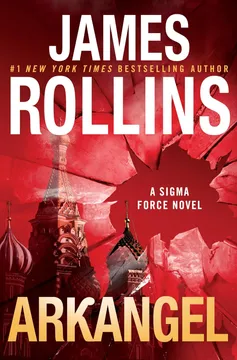
About the Author
Other books by James Rollins


Download PDF
Download EPUB
.epub digital book format is ideal for reading ebooks on phones, tablets, and e-readers.








