

Plot Summary
Prologue
As Henry VIII lies dying in 1547, he entrusts his last wife, Katherine Parr, with a secret meant for his son, Edward. A hidden Tudor refuge holds wealth beyond measure, he tells her, and the knowledge must pass down the royal line.
In the present-day frame, Cotton Malone begins explaining to his ex-wife, Pam, how a London assignment two years earlier became entangled with Henry’s deathbed confidence. Their son Gary has recently learned that Cotton is not his biological father, and a news story about a dying terrorist prompts Pam to ask what the Tudors have to do with their family’s crisis.
The prologue makes secrecy an inheritance before the modern plot turns it into a weapon. Henry’s confidence in Katherine is an intimate act of political management: he cannot pass the secret to his heir himself, so he makes another person responsible for preserving a dynasty’s hidden property. The frame with Cotton and Pam echoes that transfer on a smaller, more painful scale. A parent’s withheld truth has already unsettled Gary, so the ancient mystery arrives inside a family story primed to ask whether concealed knowledge protects people or merely postpones the damage.
The Mews Ambush
For Thanksgiving, retired agent Cotton Malone agrees to escort fifteen-year-old Ian Dunne from Atlanta back to London, where British police are meant to take custody of him. Cotton brings his son, Gary, whose anger has sharpened since learning that Cotton is not his biological father. At Heathrow, two supposed inspectors offer a lift toward Gatwick.
Cotton spots signs that the men are impostors only after the car is underway, when one points a gun and demands a flash drive from Ian. In a mews courtyard, the kidnappers attack. Cotton fights back and orders Gary to flee with Ian, but a second assailant knocks him unconscious. Ian escapes across a canal, leaving Gary captured and Cotton waking alone.
The ambush fuses the two kinds of vulnerability already surrounding Cotton. His professional reflexes can protect him from armed men, but they cannot control where Gary runs or what his son has been told about family. The false police uniforms also make authority itself unreliable: Cotton’s plan depends on handing Ian to legitimate custody, yet the signs of legitimacy have been copied by the people who want him. Ian’s escape is practical rather than heroic, while Gary’s capture turns Cotton’s protective instinct into immediate leverage for whoever controls the operation.
Ian's Stolen Secret
A month earlier, Ian had been living by pickpocketing commuters around Oxford Circus. When a man is shoved in front of an approaching Underground train, Ian realizes he has stolen a small computer drive from the victim. A gray-haired stranger pursues him, and Ian escapes a second attempt to seize it by using pepper spray he had just lifted from another passenger.
With no family and little trust in adults, Ian hides the drive among the few possessions he keeps in London. Now, after escaping Cotton’s abductors, he circles back to the mews for those possessions and finds Cotton conscious. Ian admits he was present when the man died, giving Cotton the first clear reason the boy has been hunted across an ocean.
Ian’s criminal skill is also his first instrument of agency. The same practiced attention that lets him steal from strangers allows him to notice danger, retain the drive, and survive adults who assume a homeless child can be frightened into compliance. Yet his independence is defensive: he has made abandonment into a rule that keeps him from asking anyone for help. Returning for his books and knife, rather than the injured Cotton, preserves that rule for a moment. His confession begins to weaken it because Cotton treats his testimony as consequential, not as another nuisance from the street.
Henry's Broken Tomb
Kathleen Richards, a headstrong Serious Organised Crime Agency officer suspended after a reckless motorway pursuit, is summoned to Windsor Castle. Someone has blasted open the floor of St. George’s Chapel and disturbed Henry VIII’s coffin, ignoring the graves of the other monarchs nearby.
Her director connects the break-in to earlier thefts of historical documents and warns that her career is close to ending, then returns her badge because a senior intelligence official specifically requested her.
At Middle Temple Hall, Sir Thomas Mathews, head of the Secret Intelligence Service, tells Kathleen that the missing material may concern a Tudor fortune and Robert Cecil’s coded journal. He chooses her because she once knew CIA officer Blake Antrim, who is pursuing the same mystery.
Kathleen’s professional flaw and professional value are inseparable. Her appetite for decisive action has produced collateral damage, but it also makes her difficult to dismiss when a crisis demands an investigator willing to enter dangerous spaces. Mathews exploits that tension by offering a route back into service while withholding the facts that would let her judge the assignment. The violated royal grave gives the historical mystery physical stakes: the past is not merely being debated in archives. Someone is willing to break into a monarch’s tomb to force it to yield information.
The Drive Changes Hands
Cotton learns that Ian’s drive may belong to Farrow Curry, a CIA analyst who died beneath an Underground train after making a breakthrough. He and Ian retrieve it from Ian’s hidden cache in Holborn and open it at an internet café. Curry’s notes describe Katherine Parr’s knowledge of a secret and a letter she sent to the young Elizabeth, while another file contains coded pages from Cecil’s journal and a third file remains locked.
Blake Antrim’s men arrive with Gary, whom they have rescued, but Ian sees official-looking strangers and bolts with the drive through the café’s back exit. Cotton is left with Gary and a partial account suggesting that the mystery concerns Elizabeth I, not simply missing treasure.
The drive changes the story from a pursuit of a street witness into a contest over historical evidence. Curry’s incomplete work creates a useful asymmetry: Cotton knows enough to recognize the scale of the question, but not enough to interpret it or control its consequences. Ian’s flight shows that safety cannot be separated from trust. The agents may be real, yet they resemble the men who already tried to seize him. Gary’s rescue gives Cotton a moment of relief, but the boy’s presence among CIA operatives places him in a new danger that his father does not yet understand.
Bookseller Under Fire
Cotton follows Ian to Any Old Books, where the kindly owner, Miss Mary, has given the boy shelter and books. She has read Curry’s notes and directs Cotton to Bram Stoker’s account of the Bisley Boy, a village legend claiming that the child Elizabeth died and was replaced by a boy. Before they can pursue the clue, armed men enter the shop demanding the drive.
Cotton fights one attacker while Kathleen Richards arrives and shoots through the front glass to stop another. The local police then turn on Kathleen and detain her. During the confusion, Ian recognizes Sir Thomas Mathews as the older man connected to the original pursuit. Cotton, Ian, and Miss Mary escape the police, but Kathleen is taken away.
Miss Mary’s shop is more than a hiding place: it gives Ian the first stable relationship in his life and gives Cotton access to a history that official institutions have kept obscure. Stoker’s legend converts an implausible rumor into a question with evidence attached. The police arresting Kathleen after she intervenes further erodes the boundary between public protection and private coercion. Ian’s recognition of Mathews makes the conflict personal and specific. The person directing Kathleen’s new assignment may also be tied to the men who have pursued a child across borders.
A Father Appears
At the CIA warehouse, Antrim tells Gary that he is the boy’s biological father, a fact Pam had concealed from both Gary and Cotton. He explains that he learned the truth only after seeing Gary in Atlanta, then takes DNA samples to confirm it. Gary, already angry at his mother for withholding his origins, is drawn toward the stranger who seems to answer his question directly.
Antrim uses that opening to keep Gary close while he considers Cotton an obstacle. He has been under pressure since Curry’s death and has met a secretive group calling itself the Daedalus Society, which offers him money to abandon his operation. Antrim accepts the bargain and asks that Cotton be eliminated.
Antrim understands that biological fact can be made to feel like emotional entitlement. He approaches Gary at the moment the boy most wants an answer and frames his own arrival as honesty, while concealing the surveillance and manipulation that brought them together. Gary’s desire to know his origins is legitimate, but it leaves him exposed to a stranger who can exploit the difference between genetic connection and parental care. Antrim’s willingness to arrange Cotton’s death reveals the weakness beneath his performance of fatherhood: he treats relationships as possessions and measures other people by their usefulness to him.
Hampton Court Pursuit
Cotton and Kathleen travel to Hampton Court to consult Tanya Carlton, Miss Mary’s twin sister and a Tudor specialist. Tanya explains why Elizabeth’s surviving images, altered by the Crown’s Mask of Youth, and her guarded private life leave room for the Bisley story. Kathleen, still trusting Mathews’s claim that Britain is in danger, takes Cotton’s printed notes and leaves to deliver them.
A staged pursuit by Eva Pazan and another agent ends with Kathleen captured, but she attacks her captors and escapes. Cotton and Tanya flee through the palace kitchens and old drainage tunnels as armed pursuers close in, then take a boat onto the Thames. From the water, Cotton sees Kathleen cornered by gunmen and realizes he has left her behind.
Hampton Court makes history a landscape that can be entered, navigated, and weaponized. Tanya’s expertise complicates the official image of Elizabeth without yet proving the legend, while Kathleen’s choice to take the notes shows how effectively Mathews has joined patriotism to obedience. Her capture breaks that alignment: the people who claimed to be protecting the country now threaten her life. Cotton’s escape is aided by Tanya’s local knowledge, but it costs him certainty about Kathleen. The palace’s hidden passages mirror the political operation itself, offering escape routes while concealing who controls them.
The Tower Turns
At the Tower of London, Antrim meets Denise Gérard, the former lover he thought had betrayed him in Brussels. She reveals that the breakup was staged and that she has monitored him for a group within the British intelligence operation.
When she tells him his agents have been killed and demands Ian, Antrim realizes the supposed Daedalus Society has been watching him closely. Gary helps him escape the Tower’s waiting gunmen, and they return to the warehouse. Denise follows with two armed men, seeking Cecil’s journal and Curry’s files.
Antrim triggers percussion explosives he had prepared, killing all three and destroying the evidence on the worktables. Gary survives the blast beside him, but has now seen the cold violence Antrim is willing to use.
The Tower meeting strips Antrim of the story he has been telling himself: he is not a clever operator controlling a secret society, but a compromised man whose intimate and professional relationships have both been used to monitor him. Gary’s rescue of him creates a brief bond based on courage, yet the warehouse explosion immediately reveals the cost of that loyalty. The device Antrim uses is already established as a tool of destruction, and its blast turns his covert research into ash. Gary’s firsthand exposure to violence begins to test the idealized version of his biological father.
The Blackfriars Descent
While Cotton searches for Gary, Ian and Miss Mary use Antrim’s stolen phone to obtain the unlocked translation of Cecil’s journal. It claims Elizabeth died as a child and was replaced by a male descendant of Henry VIII’s illegitimate son, Henry FitzRoy.
The replacement later became queen, while Katherine Parr entrusted him with the location of a Tudor sanctuary beneath the former Blackfriars Abbey. Cotton learns that revealing the substitution could invalidate Elizabeth’s Irish land grants and reopen the legal question of British rule in Northern Ireland.
At Blackfriars, Mathews lures Antrim toward the hidden chamber and sends Cotton after him, using Gary as bait. Ian and Gary evade their escorts and enter the underground tunnels, setting the stage for all sides to converge.
The journal makes the conspiracy consequential by tying a private royal substitution to public law. Its claim does not merely revise a portrait or a family tree: it threatens the legal foundation of land ownership in Northern Ireland, where historical grievances remain politically active. The revelation therefore complicates any simple demand for truth. The CIA wants the secret as leverage, while British intelligence wants it buried to prevent renewed violence. At the same time, the family plot echoes the historical one: children and heirs are repeatedly treated as instruments through which adults try to secure power.
The Chamber Gives Way
In the chamber beneath Blackfriars, Mathews reveals that Daedalus is his own fabrication, created to mislead Antrim while he protected the secret. He admits that his agents killed Curry and tried to kill Cotton, then confirms Antrim’s paternity to Cotton. Mathews leaves the two men to fight, but Kathleen shoots him on the river bridge after he throws away the key to the boys’ prison.
Inside, Gary and Ian move Antrim’s explosive pack away from Cotton; Antrim still triggers a charge and dies as the chamber collapses. Cotton shields the boys from the blast. Kathleen breaks into the sealed passage and guides them by her voice through falling stone and rising water. They escape with Cecil’s journal, but Mathews and Antrim are dead.
The climax forces every false allegiance into the open. Mathews’s claim to protect national stability has required murder and the deliberate endangerment of children; Antrim’s claim to fatherhood collapses under his own willingness to abandon Gary. Cotton’s choice is simpler and harder: he protects the boy who needs him, regardless of blood. Gary and Ian become active partners in survival rather than pieces moved by adults. Kathleen’s lethal decision breaks with the obedience Mathews expected, while her rescue of the others turns her earlier recklessness into accountable action.
A Secret Burned
At Hatfield House, British and American officials agree to end the covert operation without public retaliation. The planned release of the convicted Lockerbie bomber will proceed, while both governments conceal the deaths and the attempted blackmail.
Cotton gives up the flash drive, and the Home Department secretary burns Cecil’s journal, ensuring that no physical proof of Elizabeth’s substitution survives. Kathleen returns to her SOCA post, and Miss Mary offers Ian a home.
Gary remains with Cotton, acknowledging that the man who raised him is his father in every meaningful sense. Before leaving England, Cotton and Gary agree to keep the Tudor secret private. The settlement protects a fragile peace, but it also leaves the public history uncorrected and the political danger unresolved.
The resolution refuses the easy comfort of disclosure. The characters possess a truth that could challenge centuries of law, but its release might turn old dispossession into a fresh warrant for violence. Destroying the evidence is an ethically compromised act of containment, not proof that the historical claim is false. The intimate resolution is firmer: Gary can acknowledge Antrim’s biological role without surrendering his bond with Cotton. Ian’s possible home with Miss Mary offers a quieter counterpoint to the governments’ bargain, showing care established through repeated action rather than inherited status.
Epilogue
Back in Atlanta, Cotton finishes telling Pam what happened in London. Pam explains that Antrim confronted her at the mall, forcing her to reveal Gary’s parentage before Antrim could tell Cotton himself. She also admits that her affair in Germany was retaliation for Cotton’s own infidelity, and that Antrim’s violence made her determined to keep him away from Gary.
Cotton recognizes that her silence hurt the family but also understands the fear behind it. He and Pam stop measuring blame against blame. Cotton leaves for Denmark with the sense that they have finally told one another the truth that matters.
The epilogue brings the ancient succession dispute back to the ordinary scale of a kitchen table. Pam’s confession does not undo the consequences of secrecy, but it gives those consequences a human cause: retaliation, fear, and the wish to control a danger she could not safely name. Cotton’s response is not absolution so much as a refusal to keep the marriage’s injuries active through endless accounting. The story’s final inheritance is therefore not genetic or political. It is the chosen relationship between parent and child, sustained by honesty after concealment has done its damage.
Analysis
The novel’s central question is not simply whether Elizabeth I was an impostor. It asks what happens when historical truth becomes legally actionable. The coded journal converts a rumor into evidence, and the evidence threatens to invalidate land titles that underpin the political division of Ireland. In that setting, disclosure is not automatically virtuous: the characters must weigh the value of historical correction against the prospect that old grievances could become a fresh justification for violence. The governments choose containment, destroying the archive while allowing a morally repellent political bargain to proceed.
The personal plot gives this conflict emotional scale. Gary’s discovery that Cotton is not his biological father parallels the uncertainty surrounding Elizabeth’s identity, but the novel refuses to equate blood with legitimacy. Antrim claims a genetic bond while behaving as though a child is an asset; Cotton earns fatherhood through the repeated act of protecting Gary. Ian’s movement from solitary survival toward a possible home with Miss Mary offers a second version of chosen kinship, built from shelter, books, and trust rather than ancestry.
Secrecy is therefore neither wholly protective nor wholly corrupt. Pam withholds the truth from fear and shame, Mathews withholds it in the name of national stability, and Antrim withholds it to manipulate people. Their motives differ, but concealment steadily transfers the cost to children and witnesses who had no power to choose the arrangement. The ending cannot repair the state’s compromised history or undo the deaths. It can, however, restore some honesty within the family. The book’s most durable resolution is not the burial of a secret, but Gary’s recognition that the father who raised him remains his father by choice.
Review Summary
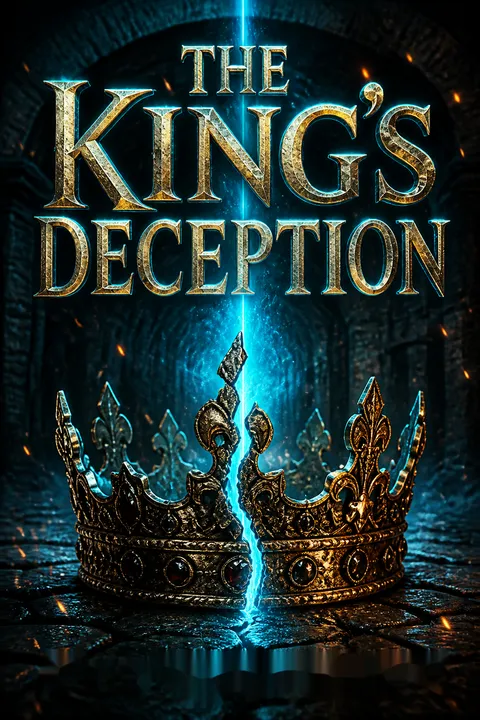
The King's Deception receives mostly positive reviews (4/5 overall) for its blend of historical conspiracy and thriller elements. Readers praise Steve Berry's research into Tudor history, particularly the "Bisley Boy" legend suggesting Elizabeth I was an imposter. The fast-paced plot combines British history, international intrigue, and protagonist Cotton Malone's family drama. Critics appreciate Berry's author's note distinguishing fact from fiction. However, some reviewers cite clunky writing, editing issues, contrived plotting, and underdeveloped characters. The historical elements generally overshadow criticism of the contemporary storyline.
People Also Read


Characters
Cotton Malone
The reluctant protectorA former Navy officer and Justice Department agent, Cotton has retired to Copenhagen to run an old-book shop, but favors and unfinished obligations keep drawing him back into danger. He relies on physical discipline, legal training, and an unusually precise memory, yet his emotional judgment is less dependable, especially around his ex-wife Pam and their son Gary. Cotton has to learn that protecting a child is not the same as controlling every risk around him. His instinct to act remains strong, but his most important strength is his willingness to listen when someone else, including a streetwise boy or a bold investigator, sees the danger more clearly.
Gary Malone
The searching sonGary is fifteen, thoughtful, active, and used to the stable routines of school and family life. Learning that Cotton is not his biological father unsettles his sense of where he belongs, and he wants the missing name and history rather than a comforting half-truth. His anger is not a rejection of Cotton so much as a demand to be treated as old enough to face reality. Gary also has courage and a strong instinct for loyalty, though he is vulnerable to adults who offer answers at exactly the moment he feels most uncertain. His relationship with Cotton is central to the book’s distinction between biological origin and lived parenthood.
Ian Dunne
The streetwise witnessIan is a fifteen-year-old Scottish runaway surviving on London’s streets through pickpocketing, quick observation, and careful distrust. His mother abandoned him in infancy, and the aunt who briefly cared for him has not been able to draw him back into family life. Ian reads avidly, values his battered books, and knows the city’s back routes better than the adults pursuing him. He presents independence as self-sufficiency, but his attachment to Miss Mary and his growing trust in Cotton reveal how much he wants dependable care. His courage is practical and improvisational, formed by the need to act before anyone else decides his fate.
Kathleen Richards
The rule-breaking investigatorA SOCA inspector with a strong record and a poor tolerance for cautious colleagues, Kathleen is suspended after a pursuit causes serious collateral damage. She is intelligent, physically capable, and proud of her work, but often treats risk as the price of decisive action. Her old connection to Blake Antrim makes her useful to Mathews, while her instinct to question authority makes her difficult to direct. Kathleen’s tension is not between courage and fear, but between personal conviction and institutional obedience. She wants to serve her country without surrendering her judgment, and the assignment repeatedly tests whether those aims can coexist.
Blake Antrim
The compromised CIA officerAntrim leads the CIA’s covert King’s Deception operation in Europe, a veteran officer whose work has been marked by recent failures and mounting pressure from his superiors. He is skilled at gathering intelligence and arranging people to serve an objective, but his private relationships expose a need for control that can harden into aggression. Antrim is drawn to women who challenge him, then resents the independence he initially admired. His professional ambition and personal grievance repeatedly blur, making it difficult to separate duty from self-interest. The contrast between his intelligence work and his emotional immaturity is essential to understanding the danger he brings into other people’s lives.
Sir Thomas Mathews
The guarded spymasterAs head of the Secret Intelligence Service, Mathews speaks for national security with the authority of a man accustomed to secrecy and obedience. He is polished, patient, and adept at controlling what other people are allowed to know. His years in intelligence have made him pragmatic about law, but his confidence in institutional necessity can shade into contempt for individual rights. Mathews views history as a present danger when it threatens the state’s legal foundations. His guarded manner makes him hard to read, and his treatment of Kathleen shows how readily he expects capable subordinates to accept an incomplete explanation.
Pam Malone
The guarded ex-wifePam is a capable Atlanta lawyer and Gary’s mother, practical in court and protective at home. Her marriage to Cotton ended after years of distance, infidelity, and accumulated resentment, but she has worked toward a more cooperative relationship with him. Pam tends to manage painful truths by controlling when and how they are disclosed, a habit that is meant to protect her family but can leave others feeling excluded. She loves Gary deeply and struggles with the consequences of a choice made when she was hurt and afraid. Her story gives the novel’s larger secrets a domestic, emotionally recognizable counterpart.
Miss Mary
Ian's bookseller guardianThe owner of Any Old Books, Miss Mary is gentle without being naïve and practical without making kindness feel conditional. She lets Ian read, gives him a safe place to sleep, and understands that a child may refuse help if it is offered too directly. Her interest in books makes her a natural bridge between Ian’s street life and the historical puzzle, while her concern for him gives the story one of its clearest pictures of chosen family. Miss Mary’s care is expressed through ordinary acts that accumulate into trust.
Tanya Carlton
The Tudor-minded guideTanya, Miss Mary’s identical twin, works at Hampton Court and has spent years studying Tudor history. Her knowledge is grounded in the buildings, portraits, and routes she knows firsthand, making her more than a source of dates and names. She is warm, composed, and more adventurous than her sister, and she responds to danger with a clear sense of direction. Tanya helps Cotton and Kathleen distinguish what the historical record says from what the old legend might imply.
Stephanie Nelle
Cotton's former chiefStephanie heads the Magellan Billet, where Cotton once served as an agent. She remains a trusted source for him, able to check intelligence claims and understand the political cost of an operation gone wrong. Direct and experienced, she is willing to advise Cotton without pretending she can remove the danger for him. Her presence connects his retired life to the government service he left behind.
Farrow Curry
The absent codebreakerCurry is a CIA analyst specializing in encryption, assigned to decipher Robert Cecil’s coded journal. His research gives the operation its first substantial lead, but his sudden death leaves crucial work scattered across a flash drive and computer files. Curry’s absence shapes the investigation: other characters must reconstruct what he discovered without knowing how far he had progressed.
Eva Pazan
The Tudor historianIntroduced as an Oxford historian, Eva provides Kathleen with a dense account of Elizabeth I, the Cecil family, and the politics of succession. Her confident expertise deepens the historical mystery and sends Kathleen toward evidence that official briefings have not explained.
Denise Gérard
Antrim's former companionA sophisticated Brussels professional with a talent for reading people, Denise once had a relationship with Antrim. She is confident, self-possessed, and unwilling to accept his assumption that intimacy entitles him to control. Her history with him reveals the volatility beneath his polished intelligence-officer persona.
Henry VIII
The dying Tudor kingThe formidable Tudor monarch appears at the end of his life, physically diminished but still accustomed to command. His concern for the family’s wealth and succession shapes the historical mystery, while his final confidence in Katherine Parr gives the novel its first link between private trust and dynastic secrecy.
Katherine Parr
The learned queen consortHenry VIII’s sixth wife is educated, observant, and practiced at surviving a court where a queen’s security depends on reading the king’s moods. She is entrusted with a final royal confidence and later becomes associated with the young Elizabeth’s household. Her intelligence and guarded compassion make her an important witness to the Tudor world.
Robert Cecil
The queen's chief secretaryA disciplined statesman and spymaster, Robert Cecil serves both Elizabeth I and James I, managing succession and government through careful preparation. His secrecy is matched by a desire to shape how posterity remembers his service. The coded journal attributed to him becomes the main bridge between Tudor politics and the modern investigation.
Elizabeth I
The long-reigning monarchThe last Tudor ruler of England is remembered for a long reign, political skill, and deliberate control over her public image. Her refusal to marry and the carefully managed portraits of her later years leave gaps that historians and characters interpret differently. In the novel, the question of her identity gives the modern plot its most consequential historical problem.
Plot Devices
Cecil's coded journal
A cipher hiding state secretsThe journal, attributed to Robert Cecil, contains a concealed account of Tudor succession and the hidden refuge Henry VIII described to Katherine Parr. Its script resists ordinary reading until Farrow Curry connects it to symbols on a stone from Nonsuch Palace and uses modern computing to decode it. The journal first appears as a hard-to-interpret artifact, then becomes the source of the novel’s central historical claim and the location of the underground sanctuary. Its contents also create the crisis: a true account could undermine the legal legitimacy of land grants in Ireland. The text is destroyed at the end, leaving its truth without publicly usable proof.
The stolen flash drive
A portable trail of evidenceIan steals the drive from Farrow Curry’s pocket during the chaos of the Underground death. Because Ian does not know its value, he keeps it with his small collection of belongings rather than handing it to the people who pursue him. The drive contains Curry’s preliminary translation, images of Cecil’s coded pages, and a password-protected file holding the fuller account. Its movement from Ian to Cotton, then through the bookstore and Antrim’s stolen phone, carries the investigation across London and brings the competing agencies into the same spaces. The drive is also a liability: possession turns a homeless teenager into a witness sought by armed intelligence operatives.
The Nonsuch stone
A key for translating symbolsA carved slab recovered near the former Nonsuch Palace bears a mixture of abstract marks and familiar letters. The CIA team discovers that the symbols correspond to the unusual characters in Cecil’s journal, allowing Curry to build a translation system. The slab’s history matters as much as its function: it was used for centuries as an ordinary bridge support, so the key to a major secret has remained physically visible but intellectually overlooked. The device turns archaeological attention into practical codebreaking and shows how material evidence can outlast the political systems that created it. It is later left behind when the warehouse evidence is destroyed.
Percussion explosives
A silent tool of destructionThe story’s fictional percussion explosives produce intense localized heat with relatively little noise or blast pressure. Their first major use cracks open Henry VIII’s tomb at Windsor, revealing that the CIA operation is willing to violate sacred royal remains. Antrim later uses them to kill Denise and two armed operatives at the warehouse, then carries the remaining charges into the Blackfriars tunnels. There, the explosives turn a fight over historical evidence into a physical race against collapse. Their recurring use links political secrecy to material damage: each attempt to control the truth destroys people, archives, or the very chamber meant to preserve the past.
The Tudor sanctuary
A vault beneath a vanished abbeyCecil’s translation directs the searchers beneath the former Blackfriars Abbey, now covered by a modern transport site. The hidden rooms contain royal plate, the remains of the man at the center of the Bisley legend, and the accumulated Tudor wealth. The sanctuary fulfills the secret passed from Henry VII to Henry VIII and from Katherine Parr onward, while its concealed location explains why the fortune disappeared from the public record. More dangerously, its evidence could challenge Elizabeth’s authority and the legal chain of ownership for Irish lands. The vault is therefore both treasure chamber and political weapon, and its destruction helps the governments contain the crisis.
Cotton Malone Series




About the Author
Other books by Steve Berry

Download PDF
Download EPUB
.epub digital book format is ideal for reading ebooks on phones, tablets, and e-readers.








