

Plot Summary
Prologue
In 1982, young Janusz Czajkowski is taken to Warsaw’s Mokotów Prison, where Major Aleksy Dilecki forces him to watch a political prisoner being beaten. Dilecki offers Janusz a choice shaped by terror: become an informant or suffer the same treatment.
Janusz agrees, though the prisoner’s defiant recitation of Poland’s national anthem stays with him. Decades later, Janusz is president of Poland, but the bargain he made under coercion has not vanished. It has been waiting in the dark, preserved in the records of a dead regime.
The opening makes fear a political instrument before the novel turns it into a marketable secret. Janusz’s agreement is not presented as simple cowardice: Dilecki manufactures a situation in which survival and complicity appear to be the same choice. The prisoner’s defiance gives Janusz an alternative image of Polish courage, one he cannot yet enact. That unresolved memory becomes the novel’s moral pressure point. When the past resurfaces, the question is not only whether Janusz lied to the regime, but whether his later resistance can justify what he did to survive it.
The Holy Blood Vanishes
At the Basilica of the Holy Blood, retired American agent Cotton Malone notices three men watching one another rather than the relic. During the veneration, one fires into the ceiling while another releases smoke, sending tourists surging for the exit. The third smashes the reliquary case and knocks down the priest.
Cotton pursues the thieves through Bruges, commandeers a canal tour boat, and nearly reaches their craft before gunfire forces him into the water. Police pull him from the canal and lock him up for stealing and wrecking the boat. Stephanie Nelle, his former boss at the Magellan Billet, secures his release. She tells him the theft is being concealed and asks him to help uncover why sacred relics are disappearing.
Cotton’s return to danger begins as an instinctive act, not a patriotic assignment. He intervenes because a priest has been hurt and the relic is being stolen, then discovers that official silence matters as much as the crime itself. The hidden theft turns a local chase into an intelligence problem: someone powerful wants the disappearance managed, not solved. Cotton’s arrest also reintroduces the friction between his chosen retirement and the trained reflexes that still govern him. The action is thrilling, but its consequence is more important: Stephanie can once again draw him toward a conflict he would rather believe he has left behind.
An Auction Needs a Lance
Stephanie explains that five of Christianity’s seven revered Passion relics, the Arma Christi, have been stolen in recent months. The White House believes the thefts are tied to Jonty Olivier, a British-Swiss broker who has invited governments to bid for damaging information about Polish president Janusz Czajkowski.
The sale matters because President Warner Fox wants Poland to accept an American missile defense installation, despite Polish and European resistance. Olivier has made the Spear of St. Maurice the price of admission for the American delegation.
Deputy national security adviser Tom Bunch joins Stephanie in Bruges, but Cotton distrusts his bluster and learns that Bunch will not explain what the Polish president supposedly did. Cotton refuses the job, unwilling to serve an administration that hides its purpose.
The relics operate as credentials in a contest where governments treat history as both sacred inheritance and bargaining chip. Their thefts are not random vandalism; each one opens a door to a sale whose political value depends on who can enter. Cotton’s refusal is an ethical judgment as much as a practical one. He will not take orders from a man who demands trust while withholding the stakes. Bunch, meanwhile, embodies a dangerous form of inexperience: he confuses proximity to power with understanding. The section establishes that the central conflict is not simply whether missiles should be deployed, but who has the right to manipulate another nation into accepting them.
Sonia Sets the Hook
Cotton spots Sonia Draga, a Polish foreign intelligence operative with whom he shares a complicated past, near the restaurant where he meets Stephanie and Bunch. When he follows her through Bruges, two of the relic thieves trap him and lead him to Ivan, a Russian intelligence officer.
Ivan warns that Moscow will prevent American missiles from reaching Poland. Later, Sonia meets Cotton in his hotel room and urges the United States to abandon the auction, explaining that Poland and Russia both oppose the proposed deployment.
She also identifies the other stolen relics and warns that the remaining objects are in danger. Cotton still leaves, but Stephanie’s peril and the possibility of a wider conflict change his mind. He secretly travels to Kraków to help her.
Sonia’s double use of attraction and intelligence is not merely a personal game. She treats Cotton as someone who can understand the danger without needing to be commanded, but she also conceals the boundaries of her own mission. Ivan makes the threat unmistakable, replacing the abstract language of policy with a promise of force. Cotton’s decision to return is therefore neither simple loyalty to Washington nor surrender to Sonia’s appeal. He chooses Stephanie, while knowing that she may be caught between competing governments. His divided loyalties become the novel’s practical test of judgment: the people he trusts are not necessarily on the same side.
Dilecki’s Cabinet of Secrets
In Poland, President Janusz Czajkowski learns that documents kept by the late Aleksy Dilecki, the Security Service major who recruited him in 1982, have resurfaced. Dilecki’s son sold papers to Olivier’s associate Vic DiGenti, and the president fears they contain records from his years in Solidarity.
The son is arrested; his mother, horrified by his sale of the family archive, dies by suicide, and the son later dies in custody. Janusz orders the remaining files secured, but the crucial papers are already with Olivier.
He recalls how Dilecki’s intimidation began at Mokotów Prison and understands that the records could brand him a communist informer just as he faces reelection. The threat is personal, yet it could also determine Poland’s military future.
The family tragedy gives the archive a human cost before the documents’ contents are fully known. Janusz’s fear is not only of public disgrace. He knows that a political scandal could alter the country’s alignment and invite foreign pressure at a moment when Poland’s independence remains fragile. The files are powerful because they survive their original context: coercive records created by an authoritarian state can still dictate choices decades later. Janusz’s instinct to contain the crisis reflects both his political skill and his vulnerability. He has spent years believing that the past could be managed; now the archive makes that belief untenable.
A Pantry Beneath Wieliczka
Olivier’s plan is threatened when rival information broker Eli Reinhardt appears with the stolen Nail from Bamberg, replacing the Germans who declined to attend. Reinhardt reveals that he knows of a hidden trove of communist-era surveillance records, the Spiżarnia, or Pantry, and forces his way into Olivier’s operation.
They travel with guide Dawid Konrad into the Wieliczka Salt Mine, where a concealed chamber holds bins of preserved Security Service reports. The archive may expose thousands of informants, including people who later gained influence.
Reinhardt and Olivier agree to investigate it together, while keeping the larger auction on schedule. Olivier believes his carefully arranged event can still proceed; Reinhardt sees the mine’s papers as a second, potentially larger market.
The Pantry expands the novel’s idea of information from one man’s compromising past to a whole society’s hidden record. The salt mine preserves paper as effectively as it preserves the labor and legends of Poland, turning an industrial landmark into a vault of political memory. Olivier and Reinhardt’s partnership is less a reconciliation than a transaction between men who know they can damage one another. Their shared discovery also creates a second source of danger: the auction can no longer be contained to the documents about Janusz. A private scheme built around one secret now threatens to expose a much wider history of surveillance and collaboration.
Czajkowski Turns the Tables
Polish intelligence escorts Cotton to a secluded monastery, where President Czajkowski confronts him about the planned auction. Bunch arrives and claims the White House has stopped the American bid and will withdraw the missile proposal, presenting Cotton as an unauthorized agent.
Cotton recognizes that the assurances are meant to placate the president while preserving Washington’s options. Once Bunch and Cotton leave, President Fox contacts Cotton directly. Fox confirms that America will still pursue the information and threatens Stephanie’s career if Cotton does not steal the spear and attend the sale.
Cotton accepts, knowing Fox is using Stephanie’s loyalty against her. He also suspects Czajkowski is playing along rather than believing the American promises, so he agrees to the mission without mistaking the White House’s order for an honest one.
The monastery scene makes deception the shared language of statecraft. Fox’s lie is not a temporary tactic that protects peace; it is a way to buy time while forcing Poland into a decision. Cotton recognizes that the president’s pressure on Stephanie is designed to turn personal loyalty into an instrument of policy. His acceptance is therefore compromised from the outset, but not morally empty. He chooses to protect a friend while retaining his skepticism about the mission. Czajkowski’s apparent compliance is equally strategic. The scene shifts the question from who is lying to whom, to who can still act freely once every promise has become a lever.
The Spear Leaves Wawel
At Wawel Castle, Cotton slips into the rooms where the Spear of St. Maurice has been stored during renovations. He breaks a window, takes the labeled wooden case, and escapes down the castle wall after Sonia and guards block his route. Sonia’s resistance is carefully limited, but Cotton still falls hard and must carry the relic out through the Dragon’s Den.
At the American consulate, Bunch confirms the spear and submits the required auction response. Cotton and Stephanie find a tracker in the original case, then replace it with another container so the relic can pass inspection. Cotton later slips the tracker into the transport car, giving Sonia a way to follow the Americans toward the auction without revealing their own route.
The theft converts a national heirloom into a ticket, and the staged resistance shows how easily a security breach can be made to resemble an authentic one. Cotton’s physical escape is not the real victory; the tracker is. By redirecting it into the transport car, he turns the surveillance intended to monitor the spear into a channel for Sonia to locate the auction. The episode also reveals the practical intelligence of their cooperation: Sonia can help without disclosing everything, and Cotton can assist Washington while keeping a line open to Poland. Yet the scheme rests on a fragile distinction between controlled deception and actual betrayal.
The Protocol’s Buried Truth
As the auction approaches, Czajkowski visits Father Mirek Hacia, a former intelligence organizer for Solidarity who now lives as a monk at Jasna Góra.
Mirek refuses to expose the old Warsaw Protocol, then explains what it was: Solidarity recruited informants already working for the Security Service and fed their handlers a mixture of harmless reports and deliberate lies. The strategy protected the underground movement and sent the regime after people it believed were disloyal.
Lech Wałęsa had first used the tactic on himself, then Mirek expanded it to hundreds of recruits. Some were killed as a result. Mirek will not release his proof or defend Janusz publicly, leaving the president to face the auction’s threat without the history that could explain his actions.
The Warsaw Protocol complicates the familiar opposition between resistance and collaboration. Janusz’s records may show that he worked for the Security Service, but Mirek’s account reveals that the work also served a counterintelligence purpose. The strategy saved the movement while causing deaths, so it cannot be made innocent simply by declaring its goal just. Mirek’s refusal preserves an oath and protects a collective secret, but it abandons Janusz to public judgment. The conflict is therefore not between truth and lies in the abstract. It is between different obligations: to history, to the dead, to the country, and to the people still living under the consequences.
The Bids Reach Five Hundred
At Sturney Castle, six delegations gather around Olivier’s auction, each bringing one of the stolen Arma Christi relics. Cotton and Bunch arrive with the Spear of St. Maurice.
Olivier projects a signed 1982 commitment by Janusz to inform for the Security Service, then supplies translated documents and expert findings that support their authenticity. The packet lists 147 pages, including payment receipts and reports attributed to Janusz under the code name Baran.
The bidders understand that the papers could destroy the Polish president’s credibility and influence the missile decision. Russia, Iran, North Korea, and the United States drive the price upward in enormous jumps. Bunch finally bids 500 million euros, and the Russians withdraw, leaving America apparently victorious.
Olivier’s presentation turns handwriting into political theater. The documents seem persuasive not because the bidders know their full history, but because they can see signatures, dates, receipts, and expert validation arranged as a coherent case. The auction’s escalating price gives the secret a second life as a commodity: each government values the papers according to what it can force Poland to do. Bunch treats winning as proof of American strength, but the scale of the bids should instead signal that the room has become unstable. The relics, supposedly the point of entry, now sit beside a contest in which power is measured by the ability to make another nation afraid.
Sturney Castle Opens Fire
Before the winning payment can settle the matter, Reinhardt and his armed associate kill Vic DiGenti upstairs and disable the castle’s communications jammer. The Russian delegates then open fire from the gallery, killing the French, Chinese, Iranian, and North Korean bidders.
Cotton tries to pull Bunch to cover, but Bunch rushes toward Olivier and is shot by Ivan. Sonia enters and fires back. With the room in chaos, she confronts Olivier and kills him, ending his control of the sale.
Ivan’s men withdraw, but the archive’s location remains uncertain. Cotton searches the dead broker’s effects and finds a salt crystal, then discovers a mine guidebook marked with the clue 9 Bobola. He recognizes the link to the Wieliczka Salt Mine and leaves to find the documents.
The massacre exposes the limit of Olivier’s belief that competing interests can be balanced by procedure. He designed the auction to keep governments mutually cautious, but the Russian attack turns those rivalries into a shared vulnerability. Cotton’s attempt to save Bunch fails because Bunch still believes that proximity to the seller can restore control. Sonia’s killing of Olivier stops the sale but does not erase its consequences; it leaves a secret that can still be found by whoever understands the clue. The section converts the auction’s abstract stakes into bodies and immediate responsibility. Every government came to purchase leverage, and the cost of that leverage is now visible.
The Clue Says Bobola
Cotton takes the guidebook to Stephanie at the consulate and connects its handwritten clue to the salt mine’s levels and the carved figure of Saint Andrew Bobola. He realizes the auction papers may be hidden near the statue on Level IX. The pair drive toward Wieliczka, but an armed pursuer tries to force their car off the road.
Cotton rams the attacker’s vehicle while Stephanie shoots out its tire, allowing them to escape. The American ambassador’s contact arranges access through Patrycja, a mine guide, who outfits them for the miners’ route. Meanwhile, Reinhardt, Ivan, and their associates also head underground, while Czajkowski and Sonia learn of the convergence through the mine’s surveillance system.
The clue rewards attention to the material world rather than to a coded message alone. Cotton recognizes that the crystal, the book, and the statue belong to the same physical landscape, so the archive becomes locatable through accumulated detail. The road attack confirms that the documents are not merely a political embarrassment; they remain valuable enough to kill for. Stephanie’s return to fieldwork also matters. She cannot protect herself through institutional authority now, so she acts beside Cotton, relying on skill rather than rank. The mine’s surveillance network makes the pursuit more crowded, but it also gives the Polish president a chance to intervene before the archive leaves the country.
The Packet Beneath the Pew
Patrycja leads Cotton and Stephanie through Level IX to the Chapel of St. Francis, where the Bobola carving stands among other worn figures. Cotton searches the stone niche and floor, then lifts and breaks apart a crude wooden pew.
Inside its base, taped beneath the boards, he finds a vacuum-sealed packet containing the documents. A gunshot interrupts their discovery. Ivan and Reinhardt’s men arrive, and Cotton throws the packet toward the entrance to protect Stephanie and Patrycja.
Munoz retrieves it, and the group escapes toward an elevator after Ivan’s side kills Konrad, another mine guide. Cotton refuses to abandon the pursuit. He, Stephanie, and Patrycja follow a different route upward, determined to keep the archive from reaching Moscow.
The hiding place is deliberately humble: not a vault or altar, but the underside of a working bench. The secret survives because it is tucked inside an object that belongs to the miners’ daily devotional life. Cotton’s choice to surrender the packet is tactical, not surrender; he prioritizes the safety of two people who cannot be treated as expendable pieces. Konrad’s death shows how the intelligence contest consumes local workers who never chose to enter it. The pursuit now shifts from finding evidence to deciding who may control it. Once recovered, the documents are no longer a historical record alone. They are a weapon moving through a confined underground world.
The Saltwater Reckoning
On the upper tourist levels, Ivan fires into the air to scatter visitors and uses the panic to move toward an underground lake. Cotton follows him by boat while Reinhardt and Munoz seize President Czajkowski, who has come down with Sonia. Janusz bargains with Reinhardt, then draws the concealed pistol Sonia gave him and shoots Reinhardt.
When Munoz raises his weapon, Janusz shoots him too. On the lake, Cotton evades Ivan’s fire by slipping into the buoyant brine and then shoots the Russian, who falls into the water and dies. Cotton recovers the packet and gives it to Janusz, refusing to let the United States use blackmail to dictate Poland’s decision. Sonia secures the mine and arranges to conceal the deaths.
The climax brings the novel’s opening image back into focus: Janusz again faces a man with a weapon and must decide whether fear will make the decision for him. This time he acts, but his action does not make him untouched by the violence he once helped organize. Cotton’s refusal to hand the archive to Washington is likewise an ethical choice grounded in a specific abuse of power. He does not claim the documents are harmless; he rejects the idea that American policy can be imposed through coercion. The brine, which once threatened to trap miners, becomes an unlikely aid in Cotton’s struggle, turning the mine’s physical properties into the means of stopping Ivan.
Ashes, Then Copenhagen
Back in Warsaw, Janusz and his wife Anna burn the auction papers alongside the records she recovered from Mirek’s room. Their marriage remains public and politically useful, but they agree to end it after Janusz’s reelection campaign; his private future with Sonia remains uncertain. Janusz tells Fox that Poland will not accept the missiles and plans to make that refusal part of his campaign.
Cotton returns to Copenhagen and tells Cassiopeia what happened. Stephanie has been suspended and may be fired, while Cotton has lost the freelance work Fox could have provided. Their quiet evening is interrupted when former president Danny Daniels arrives and asks Cotton and Cassiopeia for help, leaving a new task unresolved.
The burning of the documents ends their immediate use as leverage, but it does not make the past morally simple. Janusz and Anna choose containment rather than public vindication, accepting that the story of their resistance will remain incomplete. His refusal of the missiles restores agency to a decision Washington had tried to control, while the costs fall unevenly on Stephanie and Cotton. The Copenhagen scene returns Cotton to intimacy and ordinary life, yet Daniels’s arrival prevents that return from becoming a tidy escape. The ending balances closure with continuation: one political crisis is contained, but the characters’ habits of service and intervention remain stronger than their desire for quiet.
Analysis
The novel’s central conflict turns on the difference between historical truth and politically usable truth. Janusz’s documents appear to establish that he informed for the Communist Security Service. The Warsaw Protocol does not simply disprove them; it supplies a context in which collaboration was deliberately used as a weapon against the regime. Yet that context includes deaths and deception, so it cannot restore innocence by declaration. The past remains morally consequential even when its records are incomplete.
Poland’s vulnerability gives the political thriller its scale. Fox treats the country as a location for American strategy, while Russia treats it as a border whose security can be dictated from Moscow. Janusz’s refusal to accept either power’s coercion is an assertion of sovereignty, but his own wish to remain president complicates that stand. The question is never simply whether he is right. It is whether a leader can protect a nation without making personal survival indistinguishable from public duty.
The relics, archive, and salt mine form a chain of preserved objects. Each carries authority because people believe it contains something beyond ordinary use: sacred blood, the evidence of a secret police state, or the proof of a resistance operation. Their value changes according to who controls them. Olivier turns history into a commodity; governments seek to convert it into leverage; Cotton finally refuses to let the United States use it to compel Poland. That choice is not a denial of history but a rejection of blackmail as policy.
Cotton and Stephanie’s loyalty offers a smaller counterpoint to state power. Their trust is built through shared work and candor, not rank. The novel suggests that institutions become dangerous when they demand loyalty while withholding truth. In the end, the documents are burned, the missiles refused, and the political crisis contained, but the cost remains: deaths, a damaged career, and an unresolved history that cannot be made harmless simply by hiding it again.
Review Summary
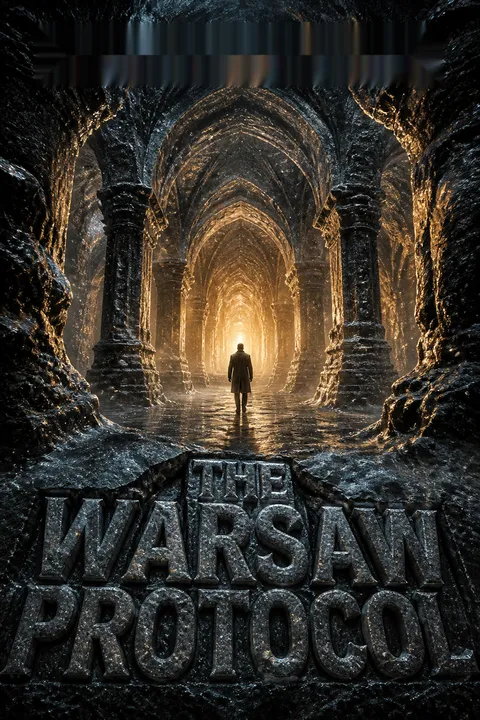
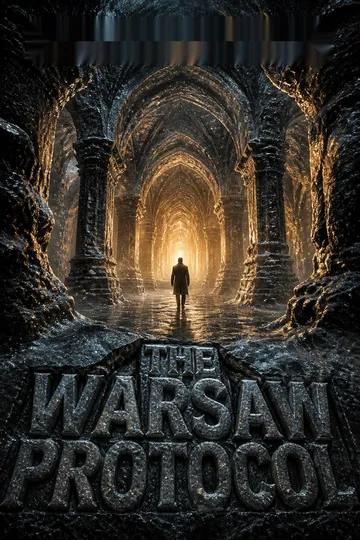
The Warsaw Protocol is the 15th Cotton Malone thriller by Steve Berry, featuring the former Justice Department agent caught up in an international conspiracy involving stolen Christian relics, Polish politics, and missile installations. Reviews are mixed, with ratings averaging 4/5. Fans praise Berry's historical research, vivid descriptions of Poland and locations like Wieliczka salt mines, and engaging plot. However, multiple reviewers criticized political bias against President Trump through the character "President Fox," finding it distracting. Some felt this entry lacked the historical depth of earlier books, while others appreciated the Polish history and geopolitical intrigue woven throughout.
People Also Read






Characters
Cotton Malone
Reluctant field agentA former Navy lawyer and Magellan Billet operative, Cotton now runs a rare-book shop in Copenhagen and takes occasional intelligence work. He notices details quickly, remembers them with unusual precision, and distrusts official explanations when they fail to match what he sees. His instincts can pull him into danger before he has chosen a side, but his loyalty to friends is deliberate and enduring. Cotton is wary of institutions that demand obedience without candor, a suspicion shaped by his own history with government secrecy. His relationship with Cassiopeia gives him a life beyond the work, though he has not fully learned how to keep danger from entering it.
Janusz Czajkowski
Poland’s embattled presidentJanusz is a veteran politician shaped by Communist rule, Solidarity, and the long effort to restore Polish independence. He is attentive to history because he knows how easily foreign powers have treated Poland as territory to be bargained over. His public composure hides a private fear of losing control over decisions that affect the nation. Janusz is pragmatic and proud, but he can mistake personal survival for national necessity. His deepest conflict is between preserving his own position and protecting Poland from becoming a proxy in another country’s strategic contest. He carries the habits of someone who learned to survive by reading both danger and the people wielding it.
Sonia Draga
Polish intelligence operativeSonia is a highly capable agent of Poland’s Agencja Wywiadu, skilled at observation, improvisation, and reading the motives behind a conversation. She has a history with Cotton Malone, whose instincts she respects even when their objectives diverge. Sonia keeps her emotions guarded, but she is not detached: loyalty and personal affection can coexist with the difficult judgments her work requires. She tends to act before others have finished debating, and she accepts responsibility rather than hiding behind procedure. Her professional independence makes her effective in a crisis, while her private relationships leave her more exposed than her composed manner suggests.
Stephanie Nelle
Magellan Billet directorStephanie leads the Justice Department’s Magellan Billet and has spent decades handling sensitive operations with precision and little appetite for public credit. She recruited Cotton into intelligence work and trusts him because he combines courage with independent judgment. Her loyalty to the agency is profound, though she is not blind to the costs of serving administrations that may use or discard its people. Stephanie is disciplined, direct, and hard to intimidate. Beneath that control is a life shaped by work and solitude, now complicated by her relationship with former president Danny Daniels. She sees herself as a public servant, not a political operator, which makes her vulnerable when politics takes command.
Jonty Olivier
Broker of dangerous knowledgeJonty is a British-Swiss information broker who builds deals by finding what governments, businesses, and individuals want to know. Cultured and attentive to comfort, he presents himself as a neutral professional rather than an ideologue. His childhood instability helps explain his preference for control, money, and relationships that remain safely transactional. Jonty believes information gains value through circulation, and he treats secrecy as both a product and a source of pleasure. He has rules about the kinds of clients he will serve, but his self-image as a principled businessman is strained by the scale of the bargains he is willing to arrange.
Eli Reinhardt
Rival information brokerAugustus Eli Reinhardt V is a wealthy, meticulous broker who competes with Jonty Olivier for clients and leverage. He is patient enough to study a rival’s habits and confident enough to enter dangerous situations when the possible reward is large. Eli prefers to make other people’s information serve his own bargaining position, and he rarely mistakes courtesy for trust. His polished appearance masks an appetite for risk and a flexible moral code. In a world where information has a price, he treats partnership as a temporary arrangement that lasts only while both parties benefit.
Tom Bunch
Fox’s inexperienced envoyBunch is a deputy national security adviser and deputy assistant to President Warner Fox. He arrives in Europe with authority borrowed from his access to the president, but little practical understanding of intelligence work or the risks surrounding it. His confidence comes from believing that personal loyalty and political proximity can substitute for experience. Bunch wants to be seen as decisive and important, and he often mistakes disagreement for insubordination. His role exposes the danger of placing an ambitious novice between seasoned operatives and a volatile international crisis.
Ivan
Russian intelligence enforcerIvan is a Russian intelligence operative whose rough humor and self-deprecation conceal a serious willingness to use force. He has dealt with Cotton before and understands that charm can unsettle an opponent as effectively as a threat. Ivan speaks plainly about Moscow’s strategic interests, especially its opposition to American missiles in Poland. He sees intelligence work as a job to be completed, not a moral puzzle to be debated. That practical outlook makes him unpredictable: he can negotiate patiently, but he is prepared to escalate without warning.
Vic DiGenti
Olivier’s trusted associateVic is Jonty Olivier’s longtime associate, valued for his discretion, competence, and lack of greed. He handles practical details that allow Jonty to focus on the larger bargain, from security to logistics. Their relationship is built on trust earned through years of shared work rather than easy sentiment. Vic rarely speaks more than necessary, but his steady presence gives Jonty a dependable partner in a business full of shifting loyalties.
Mirek Hacia
Monk with a hidden pastMirosław Mirek Hacia is a Pauline monk at Jasna Góra and a former organizer within Solidarity’s clandestine intelligence network. He is disciplined, sharp-minded, and protective of the boundary between private faith and public history. Mirek believes that some truths should remain sealed when exposing them would harm people who already paid a high price. His reserve can seem like coldness, but it comes from years spent making decisions whose consequences were irreversible. He is a figure of memory and restraint, unwilling to treat the past as material for convenient political defense.
Anna Czajkowska
The president’s estranged wifeAnna is Janusz’s wife and Poland’s First Lady, though their marriage has long since become a public arrangement rather than an intimate partnership. She understands political life and knows how to stay informed without announcing what she knows. Anna is proud, perceptive, and capable of confronting Janusz when he hides behind official explanations. Their shared history gives her a clear view of his strengths and evasions. She values the country and its public duties, but she also wants the truth from the man with whom she has built a life.
Cassiopeia Vitt
Cotton’s closest companionCassiopeia is Cotton’s partner, a determined and capable woman with her own work and a strong sense of independence. She and Cotton value their shared affection without demanding that either surrender personal space. Their relationship offers warmth and steadiness in contrast to the secrecy and improvisation of Cotton’s professional life. Cassiopeia is observant enough to know when he is withholding something, and she expects honesty even when she understands why danger may have delayed it.
Warner Fox
Transactional American presidentFox is the president of the United States, a former businessman who approaches foreign policy as a contest of leverage and visible wins. He is confident in his instincts and impatient with advice that complicates his plans. Fox sees the proposed missile installation in Poland as a way to demonstrate American strength, and he is willing to pressure allies to obtain it. His governing style rewards loyalty over expertise, leaving capable people to manage the risks created by decisions made at the top.
Dawid Konrad
Wieliczka mine guideKonrad is a guide and working miner at the Wieliczka Salt Mine, familiar with its lower levels, old routes, and hidden chambers. Financial strain makes him willing to accept paid work beyond ordinary tours, but he is not a trained intelligence operative. His knowledge of the mine gives outsiders access to places few visitors can reach. Konrad represents the local expertise that powerful outsiders depend on while often underestimating the risks they impose on those who help them.
Patrycja
Guide through Level NinePatrycja is a mine guide whose fob and knowledge open the restricted routes below Wieliczka’s public tourist levels. She understands the mine as a working place, not merely a historic attraction, and can navigate its tunnels without relying on the familiar visitor paths. When unexpected danger enters her workday, she proves alert and resourceful. Her expertise gives Cotton and Stephanie access to the place where their search leads.
Aleksy Dilecki
Security Service recruiterDilecki was a major in the Communist-era Security Service who recruited Janusz Czajkowski as an informant. He used intimidation and calculated cruelty to make cooperation seem like the only route to survival. His records outlasted him, giving the methods of the old regime a renewed hold over people who thought that history had ended.
Art Munoz
Reinhardt’s hired muscleMunoz is a Bulgarian associate hired by Eli Reinhardt for protection and difficult assignments. He is a quiet, capable presence whose loyalty is tested by the increasingly dangerous work around the auction. His physical competence makes him useful to Reinhardt, but he remains an employee in a business where loyalty has a price.
Michał Zima
Head of presidential protectionZima leads Poland’s Government Protection Bureau and is responsible for the president’s security. He is cautious, disciplined, and accustomed to being kept outside the political reasoning behind his assignments. His practical loyalty to the state sometimes conflicts with his desire to know why a risk is being taken. Zima’s attention to procedure and personal safety makes him an important counterweight to Janusz’s tendency to carry crises alone.
Lech Wałęsa
Solidarity’s public leaderWałęsa is the shipyard electrician who becomes the best-known leader of Solidarity and a central figure in Poland’s struggle against Communist rule. His public stature contrasts with the underground work carried out by less visible organizers. In the novel, his history helps frame the costs and compromises hidden beneath a celebrated political movement.
Plot Devices
The Arma Christi
Relics as entry tokensThe Arma Christi are seven relics associated with Christ’s suffering, including the True Cross, Crown of Thorns, Holy Blood, Holy Nail, and Holy Lance. In the novel, thieves steal them in a coordinated series, while Jonty Olivier makes possession of a relic the price of admission to his information auction. The objects turn religious history into logistics: each government must acquire a sacred artifact to reach the political secret for sale. Their disputed authenticity also sharpens the difference between symbolic value and verifiable evidence. They are revered objects, stolen property, and bargaining chips at once.
Dilecki’s 147 Pages
A past made leverageThe documents kept by Aleksy Dilecki record Janusz Czajkowski’s work as a Security Service informant during the 1980s. They include a signed commitment, receipts for payments, and reports attributed to Janusz under a code name. Their apparent authenticity gives Olivier the means to threaten the Polish president and influence the missile dispute. Their deeper meaning changes when the Warsaw Protocol is explained: Janusz’s reporting was part of a clandestine effort to mislead the regime. The papers remain dangerous because the truth behind them is difficult to prove publicly, even when it is morally and historically more complicated than the documents suggest.
The Warsaw Protocol
Resistance through deceptionThe Warsaw Protocol is the clandestine Solidarity strategy developed by Mirek Hacia and associated with Lech Wałęsa. It used people recruited by the Security Service as counter-informants, feeding handlers a mixture of harmless reports and deliberate misinformation. The operation protected the underground movement and confused the regime, but it also helped direct suspicion toward informants, some of whom died. Its existence complicates the meaning of Janusz’s records: he did cooperate with the Security Service, yet his work was part of resistance. The protocol offers no clean absolution, only a history in which survival, deception, and responsibility became entangled.
Wieliczka Salt Mine
A vault beneath historyThe salt mine at Wieliczka is both a real historic workplace and the hiding place for two different caches of political information. Its lower chambers, chapels, walls, and mine routes give characters a physical maze in which knowledge can be concealed or pursued. Salt helps preserve paper, while the mine’s scale and restricted access make it difficult for outsiders to search. The carved figure of Saint Bobola becomes a clue that leads Cotton toward the auction documents. The mine’s underground lakes and narrow routes also shape the final confrontations, making its geography an active part of the plot rather than mere scenery.
The Spear’s Tracker
A stolen object tracks its thievesA GPS tracker hidden in the Spear of St. Maurice’s original wooden case allows Sonia to follow the American delegation toward the auction. Cotton and Stephanie discover the device and remove it from the case so it will not expose the relic during the auction’s security check. Cotton then places the tracker in the transport car, preserving Sonia’s ability to follow the route while keeping the spear itself clean. The device makes surveillance reversible: the object meant to reveal the Americans’ movement becomes a trail that helps Poland locate the hidden sale. It also shows how small technical details can redirect a larger intelligence operation.
Cotton Malone Series








About the Author
Other books by Steve Berry

Download PDF
Download EPUB
.epub digital book format is ideal for reading ebooks on phones, tablets, and e-readers.








