

Plot Summary
Prologue
At a Ukrainian orphanage housed in an abandoned hospital, American volunteer Anna Royko helps hide children as Russian soldiers approach. When one soldier discovers the kitchen, Anna fears he is about to uncover the infants and toddlers concealed behind a false refrigerator wall.
She attacks with an expired fire extinguisher, blinding him and striking him dead. A second figure enters the kitchen with a cocked pistol before she can learn whether the children are safe.
Anna’s courage is established not as fearlessness but as a decision made under pressure. She breaks the hiding rule she helped create because the children’s lives outweigh her own safety. The false wall and the quiet children turn protection into a physical, fragile act, while the abrupt arrival of another armed figure denies her even a moment to measure the cost. Opening with this crisis also makes the novel’s central stakes immediate: war reaches civilians not as an abstraction, but as a threat in the room where children are hiding.
Boathouse in Belarus
Scot Harvath, a veteran operative leading the private Carlton Group, authorizes a strike on Faisal Al-Masri, the Iranian commander supplying attack drones to Russia. Al-Masri is traveling through Belarus with Iranian instructors and Russian guards, so Harvath’s team avoids a conventional gunfight. They destroy the armored vehicles at both ends of the motorcade with rocket launchers, then detonate claymore mines beside the unarmored SUVs.
Harvath confirms Al-Masri’s death, gathers evidence for the CIA, and leaves a Ukrainian resistance emblem on the wreckage. The operation succeeds, but it does not bring Harvath home. His employer keeps him overseas, where waiting for the next assignment begins to feel like another form of punishment.
The mission shows Harvath at his most capable, but the clean execution also sharpens the conflict inside him. He treats fieldwork as both vocation and proof of continued worth, even as age and injury make the work harder. His superiors see accumulated knowledge that should be passed on; Harvath sees a life he is not ready to surrender. The ambush also establishes the book’s political scale: Iranian technology, Russian aggression, Ukrainian resistance, and American deniability meet in one carefully staged attack. Tactical success is real, but it does not resolve the larger war that gives the operation its purpose.
The Penthouse Fall
FBI supervisor Joseph Carolan and his deputy, Jennifer Fields, arrive at a Washington luxury building after Russian-born technology investor Dimitri Burman falls from his penthouse. Burman had publicly criticized President Fedor Peshkov, making Russian retaliation plausible, but the scene offers no immediate proof.
His wallet is missing, his white shoes are scuffed at the toes, and the rear security camera has stopped working. Carolan suspects someone carried Burman to the terrace and pushed him, while the missing wallet recalls earlier Russian killings disguised as accidents.
Fields finds a yacht-club valet ticket in Burman’s closet. Carolan recognizes that the clue matters, but he does not yet know how the club connects to the dead man or to Moscow.
The investigation begins with a familiar forensic problem, but the political setting distorts every ordinary inference. A fall can be accident, suicide, or assassination, and the missing wallet makes evidence itself seem staged. Carolan’s instinct may help him notice details that a routine investigation would overlook, yet intuition also tempts him to fit a crime to a geopolitical theory before he can prove it. Fields functions as a counterweight: she is attentive without being credulous. Their partnership turns the case into a test of whether national-security urgency can sharpen law enforcement or make it reckless.
Anna’s Empty Place
In Warsaw, Harvath’s old intelligence ally Nicholas arrives with files that explain why Harvath has been held in Romania. Russian forces have killed American aid workers and journalists in Ukraine, and a Wagner mercenary unit called the Ravens is suspected of slaughtering children at an orphanage.
Anna Royko, a Chicago attorney who left her job to care for Ukrainian children, has vanished from the site. Nicholas asks Harvath to find her and rescue her if she is alive.
China’s theft of American personnel records makes sending Harvath’s full team politically dangerous, so Ukraine can offer only four International Legion fighters. Harvath abandons his long-delayed weekend with his fiancée, Norwegian intelligence officer Sølvi Kolstad, and accepts the mission.
The briefing converts Harvath’s abstract frustration with being sidelined into a morally specific obligation. Anna’s disappearance gives the mission a human center, while the slaughtered children make delay feel intolerable. Yet the constraint on manpower is not merely a thriller obstacle: it reflects how intelligence, privacy, and nuclear escalation narrow the choices available to governments. Harvath’s decision also costs him a rare chance to discuss a shared future with Sølvi. Duty is not presented as a clean virtue here. It is a choice that protects strangers while postponing intimacy with someone he loves.
The Yacht Club Wheel
Carolan learns that Burman visited the private Commodore Yacht Club, whose influential members strongly support aid to Ukraine. Russian troll networks have already built a fabricated scandal around the club, using false stories about undocumented workers to suggest that its powerful members protect criminals and hide children.
The blog spreading those claims, The Public Truth, also publishes photographs of Carolan and Fields at the crime scenes, supplied by freelance photographer Mike Taylor. Fields objects when Carolan investigates Taylor without proper legal process, but Carolan sees the images as evidence of a wider operation.
In Moscow, intelligence officer Leonid Grechko reports Burman’s death to presidential adviser Oleg Beglov and is told to accelerate the campaign. The murder is meant to amplify distrust, not simply silence a critic.
The club’s imagined secret basement matters less than the social machinery that makes the story believable to people already distrustful of institutions. The campaign does not need citizens to agree on one explanation; it only needs them to keep suspecting. Carolan understands that political manipulation exploits emotional appetite, while his own willingness to bend legal boundaries risks weakening the very institutions he claims to defend. Grechko’s assignment makes that tension concrete: a murder can be both a physical act and an information product, with its public interpretation treated as another target to control.
The Train Stops
Harvath and Nicholas board an overnight train toward Kyiv, where Harvath signs up with Ukraine’s International Legion and receives four battle-tested but unfamiliar teammates as his future unit.
Nicholas and his dogs leave the train in Kyiv, while Harvath continues east with Ukrainian intelligence escorts Symon and Artem. Near Kharkiv, the train brakes after the tracks have been sabotaged. A sniper kills Symon through the vestibule window, then Russian mortars begin pounding the stationary cars.
Harvath runs through the burning train and escapes a final explosion. He kills one sniper and, with Artem’s help, drives off another. Artem has given his tourniquet to a pregnant passenger and is badly wounded himself, so Harvath treats him and gets both survivors to help.
The attack strips the journey of any romance and forces Harvath into the kind of decisions that define his work: move now, assess later, and accept that not everyone can be saved. Symon’s death makes the cost immediate, while Artem’s choice to give away his tourniquet shows courage as care rather than aggression. The pregnant passenger’s survival complicates the familiar battlefield image of the lone operative. Harvath’s skill matters, but chance matters too. His escape is not proof that he controls the violence; it is a narrow passage through it.
The False Escort
At Kharkiv station, Harvath meets a woman using the name Zira, who claims she will take him to his team. Her changing explanations and strained behavior make him suspicious, but he follows her to a damaged dacha outside the city. When she draws a pistol and demands to know his mission, Harvath shoots her and kills a second gunman.
Upstairs, he finds the real Zira tied to a chair, then fights a third attacker who fires from the attic. Harvath and Zira escape the burning house and reach a Ukrainian checkpoint, where she confirms that Russian operatives kidnapped and threatened her. She refuses to abandon her assignment and drives him toward the military base, exposing a breach inside Ukrainian intelligence.
The false escort exploits a basic human need in wartime: the need to trust someone who appears to know the route. Harvath survives because he notices discrepancies, but his caution cannot protect the real Zira from what has already been done to her. Her decision to continue after captivity shifts her from a rescued victim to an active professional with agency. The episode also widens the danger beyond the front line. The enemy can interfere with the mission by corrupting its channels of trust, making intelligence compromise a threat as immediate as a bullet.
The Bridge Becomes Front
At the base, Harvath discovers that his promised equipment and team are not waiting; the Ukrainians need the available soldiers at the front, so he boards an old armored personnel carrier alone. A Russian sniper attacks the vehicle near a village, and Harvath takes the exposed machine gun to answer fire.
When an RPG forces the Ukrainian crew to abandon the carrier, he helps organize the soldiers defending a school. The fight costs young Ukrainian soldier Oleh his life, though Harvath kills the sniper who shot him.
The survivors secure a bridge that Givi, their truck-driver-turned-soldier, needs to hold. Harvath checks the bridge for explosives, then Givi drives him toward the front in a captured vehicle marked with crosses made from improvised paint.
The bridge changes the meaning of Harvath’s assignment: the route to his mission is itself part of the battle. His authority is not earned through ceremony but asserted amid confusion, when a group of tired soldiers needs someone to make decisions. Oleh’s death punctures any fantasy that expertise can make combat fair. Harvath can avenge him, but he cannot return the young man’s future. Givi’s care for the bridge shows how civilian skill becomes military service, while the improvised markings reveal a country adapting with whatever remains. The mission advances only because ordinary people keep making practical choices under impossible pressure.
The Convent’s Empty Vault
Harvath reaches the front and meets his four assigned fighters: Hookah, Krueger, Jacks, and Biscuit. He brings them to a convent in Kolodyazne, where they find twelve murdered nuns and a hidden chamber stripped of its contents.
The Ravens had tortured the sisters while searching for a massive Ukrainian altarpiece concealed there. Harvath explains that museum workers, collectors, and religious communities have hidden important art to keep Russia from stealing the country’s cultural inheritance.
The attack proves the Ravens are targeting more than civilians and supplies. The team also recalls a previous battlefield discovery: a group of unusually clean Russian dead, with packing materials nearby, suggesting that the Ravens killed a government looting unit and took over its work.
The convent makes cultural theft visible as violence rather than as an administrative crime. The Ravens have attacked both living custodians and the objects that carry communal memory, collapsing bodily harm and cultural erasure into one operation. Harvath’s explanation of the hidden network gives the atrocity a strategic context without making it any less senseless. The team’s earlier discovery of the clean Russian corpses adds a further moral complication: the looting operation began within the Russian system before the Ravens seized it for themselves. The conflict is not between order and chaos, but between competing forms of predation.
Spetsnaz at the Convent
After Harvath sends a brief encrypted report from the convent, a Russian electronic-warfare unit detects a phone using an unfamiliar secure system. Russian Spetsnaz soldiers attack the compound, apparently hoping to capture its owner and the device. Harvath, Hookah, Jacks, and Krueger fight from a small chapel, but Biscuit is shot in the neck during the opening exchange.
The team kills most of the attackers and keeps one alive long enough to learn that a Russian command vehicle is nearby. They evacuate the wounded Biscuit and leave the exposed convent. The assault tells Harvath that someone has identified a high-value presence in the area, and that his secure communications may be making him easier to locate.
The attack turns a technical safeguard into a source of danger. Harvath’s encrypted phone protects the content of his communication, but its unfamiliar signal draws attention to the people using it. The episode distinguishes secrecy from invisibility, a crucial difference in a battlefield where signals can betray a position even when messages remain unreadable. Biscuit’s injury also makes the team’s limited resources personal: every equipment choice and every moment spent in the open can become a bodily consequence. Their retreat is not defeat. It is recognition that survival depends on changing the conditions of the fight.
The Colonel’s Treasure Map
The Ravens’ leader, known as the Colonel, had spent years serving Wagner in conflicts from Africa to the Middle East. He learned to value violence as both power and pleasure, and he saw the Kremlin’s treatment of prisoners as proof that its leaders considered men like him disposable.
During a battle in Ukraine, his Ravens encounter Russian personnel carrying a detailed list of hidden Ukrainian artworks. The Colonel’s men kill them, take the map, and disguise the killings as a Ukrainian attack.
He then abandons Wagner’s command structure and directs the Ravens toward the concealed collections. Their raids now combine looting with terror: the Colonel wants valuable objects, while his men’s cruelty helps clear villages and break anyone who might resist.
The Colonel’s history explains his choices without excusing them. He has learned to treat people as instruments, first through family violence, then through military institutions that reward aggression and finally through Wagner’s expendable-warrior system. His theft of the art map is an act of opportunism, but it also marks a shift from serving a state to serving himself. The stolen objects become currency in his private attempt to escape the hierarchy that formed him. That ambition does not soften his brutality. Instead, it gives the brutality direction, joining personal greed to the larger machinery of cultural plunder.
The Villages Send Warning
At a winery on the Ravens’ route, Harvath’s team finds the wheelchair-using vintner murdered, his wife killed, and three protected paintings removed from insulated barrels. An elderly neighbor emerges from hiding and explains how villages warn one another when the painted mercenaries approach.
Harvath and the old woman find Vesna, a local with a working phone, and use the network to gather reports from nearby communities. Their calls reveal the Ravens’ convoy pattern, their looting habits, and the violence they inflict when residents cannot flee.
Harvath plots their movements and identifies likely operating territory. At the same time, he and his teammates study the roads and decide they must capture a Raven rather than simply chase the unit from one crime scene to another.
The bush telegraph is a fragile but effective alternative to centralized intelligence. It depends on neighbors remembering one another, charging a phone, and passing a warning before danger arrives. Its strength is social trust, exactly what the Ravens try to destroy through terror. Harvath’s methods change accordingly: instead of treating the landscape as empty space to cross, he begins to rely on civilian knowledge embedded in it. The dead family at the winery gives that collaboration a painful urgency. The network can save those who hear in time, but it cannot undo the violence already committed.
Wilson Sells the Pause
Former Senator Greg Wilson, eager to accumulate enough money to leave the United States, works with Russian handler Joseph Nistal while pretending to lobby for wealthy donor Kyle Paulsen. Paulsen wants American aid to Ukraine cut and citizens barred from fighting there.
Wilson carries that agenda to congressional leaders, proposing a military-readiness review that could delay weapons and a bill that would frighten volunteers even if it never passes. Meanwhile, Grechko urges the Kremlin’s influence campaign forward, while President Peshkov’s adviser Beglov demands faster results.
Wilson is anxious after Burman’s death, but Nistal coaches him to describe their dinner as a routine client meeting. Wilson’s ambition and wounded pride give him a reason to treat betrayal as a business transaction.
Wilson’s political work is dangerous precisely because it wears respectable clothes. A readiness review and a proposed restriction on volunteers can sound prudent while serving an adversary’s strategic objective. His private shame and desire to escape his life do not mechanically cause his treason; they provide a story he can tell himself to make it feel deserved. The novel places his choices beside the public debate over aid, showing how foreign influence often amplifies existing divisions rather than inventing them. Grechko’s pressure from above adds a parallel mechanism: a failing war makes leaders demand speed, even when acceleration increases risk.
The Tracker’s Trail
Carolan and Fields discover that Taylor’s photographs were directed by an unseen employer, then find tiny tracking devices hidden on their vehicles. Fields traces Wilson’s Boston meeting to Nistal, who rented a storage unit in Burman’s building under a false address.
Security footage shows Nistal entering with a heavily loaded trunk and leaving the next day with the car riding higher, then taking the vehicle to the Russian Embassy. FBI agents raid his Maryland home.
Nistal escapes into the woods and shoots at Fields before Carolan reaches her. Her vest stops his close-range shots, and Carolan captures him. When agents confront Wilson, he realizes Nistal has exposed him and is arrested after the FBI lays out the evidence of his Russian ties.
The investigation’s breakthrough comes through mundane traces: a rental address, a vehicle’s altered suspension, and a tracker concealed beneath a wheel well. Such details make covert power legible without making it omniscient. Fields’s willingness to challenge Carolan’s illegal shortcuts also matters; her insistence on procedure strengthens the case rather than obstructing it. Carolan’s choices remain morally compromised, but his collaboration with Fields prevents instinct from becoming the only standard. Wilson’s arrest completes the personal consequences of his bargain, while Nistal’s violence shows that the campaign’s public-facing disinformation depends on real coercion behind the screen.
Four Ravens Taken
Using Vesna’s reports, Harvath’s team reaches a village before the Ravens can finish looting it. Most residents have fled, leaving the fighters free to act without putting civilians in the line of fire.
Harvath and his men seize four guards at one end of the village, then use captured rocket launchers to destroy the two Humvees protecting the looting teams. They escape in their armored vehicle before the Ravens can regroup. Harvath interrogates the prisoners separately, with Nicholas checking the Russian translation.
Their accounts agree: Anna is alive, though gravely weakened, and held in an old stone fortress less than thirty kilometers away. The fortress is mined and heavily defended, but it has an abandoned escape tunnel that may give the rescuers a way inside.
Harvath’s plan turns the Ravens’ own routine into a vulnerability. Their guards expect danger from outside the village, not a coordinated strike from within, and their confidence in unopposed raids leaves them exposed. Capturing prisoners rather than killing everyone immediately is a practical shift from vengeance toward rescue: information has greater value than another body. The agreement among separate interrogations gives Harvath a basis for action, but the time pressure remains severe because Anna may not survive much longer. The tunnel offers an opening, not a guarantee, preserving the uncertainty that makes the final assault costly.
The Fortress Opens
Harvath’s team uses the fortress’s old tunnel, breaks through a rusted gate, and enters the courtyard, where defenders ambush them. Biscuit is gravely wounded, but the others fight into the main building and reach Anna’s locked room. She is chained to a bed, battered and barely able to speak. Anna tells Harvath that the two little girls from the winery are also prisoners.
As Jacks and Krueger carry her out, Harvath and Hookah search for the children. They find the twins locked in a kennel, but the Colonel attacks. Harvath kills him at close quarters, then helps Hookah, who has been wounded, protect the girls. The remaining Ravens flee in vehicles, and Harvath detonates the mines along their escape route.
The rescue forces Harvath to choose between the mission’s stated objective and the fuller human reality Anna reveals. He came for one American aid worker, but the twins’ captivity makes a narrow definition of success impossible to accept. The team’s injuries expose the price of that choice: Biscuit and Hookah are not interchangeable pieces in a tactical plan, but vulnerable people who have committed themselves to it. Anna’s concern for the girls also shows that torture has not erased her capacity to recognize another person’s danger. The Colonel’s death ends his immediate control, not the damage he has caused.
A Mole in Kyiv
After the fortress assault, Harvath learns that Biscuit survived because Nicholas and Ukrainian intelligence secured an evacuation helicopter; Hookah is also expected to recover. Anna is transferred to a German military hospital, and the twins are placed with a family from their village.
In Moscow, Grechko grows alarmed by Peshkov’s reliance on corrupt intimates and leaves Russia for Norway, where Sølvi receives him for intelligence debriefing. Nicholas, meanwhile, confirms that someone inside Ukrainian intelligence has been leaking the hidden-art list and other sensitive information to Russia.
The GUR has identified the source and fed the mole false material, but Nicholas realizes the danger remains inside his own office. When Yulia enters, the hidden surveillance system registers her as the suspected insider.
The novel’s victories remain deliberately incomplete. Anna and the children are physically safe, but recovery will take time; the surviving fighters carry injuries; and the intelligence war continues inside the institution meant to defend Ukraine. Grechko’s defection reverses his former role, turning a practiced influence operator into a potential source, but his motives remain entangled with self-preservation and fear of Peshkov’s failing circle. The reveal around Yulia makes betrayal intimate rather than abstract: the threat has shared food, work, and trust with Nicholas. His counterintelligence lesson is therefore not simply to find the enemy, but to recognize how closeness can disguise access.
The Train Toward Oslo
The FBI confronts Wilson with Nistal’s capture and evidence of his cooperation with Russia; Wilson is taken into custody. Harvath returns to Kyiv, thanks Nicholas for helping save his wounded teammates, and declines to remain for an award ceremony there.
On the train back toward Poland, he meets Ukraine’s president, gives him a blunt account of the mission, and accepts a medal from the Ukrainian government. Once across the border, Harvath texts Sølvi and begins planning a beach break.
She tells him that a senior Russian intelligence defector has just come into her care. Rather than insist that she leave the job, Harvath changes course and decides to travel to Oslo, stepping toward a shared life without asking either of them to abandon their work.
Harvath’s return is not a conventional homecoming. He accepts recognition but remains uncomfortable with praise, and his attention quickly turns to the next threat and the people waiting for him. The final choice to go to Oslo differs subtly from the decision that took him away: he does not simply cancel intimacy for duty, but asks whether duty and partnership can occupy the same future. The ending offers movement rather than settlement. Wilson’s arrest closes one political strand, yet the defector and the mole ensure that neither the intelligence conflict nor the couple’s difficult negotiation is finished.
Analysis
Dead Fall sets two kinds of violence beside each other: the visible violence of invasion and the quieter violence of manipulating what a society believes. The Ravens kill civilians and steal art, while Russian intelligence turns Burman’s death, a private club, and American political divisions into material for a disinformation campaign. The book’s central insight is that these actions are not separate fronts. Physical terror can create images and rumors that travel farther than the attackers, while false narratives can weaken the institutions that might respond.
Harvath’s mission dramatizes the limits of individual competence. His training repeatedly saves lives, but it cannot erase bad luck, replace missing resources, or make war fair. Symon and Oleh die; Biscuit and Hookah are badly wounded; civilians remain traumatized. Tactical victory therefore carries a cost that medals cannot cancel. The book resists the fantasy that skill grants control, even as it celebrates the courage required to act without control.
The Ukrainian characters and communities offer a counter-model to the Ravens’ predation. Zira returns to her assignment after being threatened. Givi fights despite believing that killing should remain morally difficult. Vesna turns neighborly communication into intelligence. The hidden-art network protects objects not as prizes but as pieces of collective identity. These actions show resistance as a social practice, sustained by ordinary forms of loyalty as much as by weapons.
The American subplot asks whether democratic restraint can survive an opponent who exploits it. Carolan fears that lawful procedure may be too slow, while Fields insists that abandoning it would damage the very system they are trying to defend. Wilson’s betrayal reveals how easily self-interest can borrow the language of patriotism. The novel does not resolve that dilemma with a tidy rule. It argues instead that defending a country requires both effectiveness and standards, and that the tension between them must remain visible.
Finally, Harvath’s choice to go to Oslo suggests a modest alternative to endless self-erasure. He does not retire from danger, nor does he demand that Sølvi surrender her work. He begins to imagine commitment as something that might be built alongside service, rather than postponed until service is over.
Review Summary
Dead Fall receives mixed reviews, averaging 4.39/5 stars. Fans praise Thor's timely use of the Ukraine-Russia conflict as a backdrop, highlighting the fast-paced action and Harvath's resourcefulness. Many appreciate the novel's gritty realism and geopolitical depth. However, critics cite a rushed, unsatisfying ending, an underdeveloped subplot involving a Washington conspiracy, and graphic depictions of war crimes as drawbacks. Some readers feel the book leans too heavily on political commentary, while others consider it among Thor's best work in years.
People Also Read




Characters
Scot Harvath
Relentless field operativeHarvath is a former Navy SEAL who now leads dangerous missions for the Carlton Group, a private intelligence agency. He trusts preparation, observation, and decisive action, but his identity is tightly bound to remaining in the field. That commitment strains his body and his relationship with Sølvi Kolstad, whose demanding intelligence career keeps her in Norway. Harvath is not emotionally untouched by violence: the deaths of civilians, especially children, shape his choices and his willingness to risk himself for strangers. He has a tactical mind, a dry sense of humor, and difficulty imagining a future that does not involve action. His central tension is whether service requires perpetual self-sacrifice or can coexist with a life shared with someone else.
Anna Royko
Orphanage defenderAnna is a twenty-five-year-old Chicago attorney of Ukrainian descent who leaves her legal job to work at a Ukrainian orphanage. Her fluency in Ukrainian makes her useful to an aid organization, but her decision to stay with one vulnerable community comes from a more personal refusal to witness suffering from a distance. She is energetic, resourceful, and willing to act even when afraid. The orphanage staff admire her directness, while the children respond to her warmth and attention. Anna’s protectiveness is practical rather than performative: she knows the building, helps make hiding plans, and steps into danger when a child’s hiding place is threatened. Her care for others remains a defining part of her identity.
Nicholas
Harvath’s intelligence allyNicholas is a diminutive intelligence specialist known in the trade as the Troll. Once a source and broker of sensitive information, he has built a close professional and personal bond with Harvath, who vouched for him at the Carlton Group. He is fluent in Russian, exceptional at finding patterns in fragmented information, and skilled at turning digital access into operational advantage. His two large dogs, Argos and Draco, are both companions and protectors. Nicholas’s history makes trust complicated: he understands how easily loyalty can be questioned, yet he chooses to put his expertise at the service of people resisting Russian aggression. His friendship with Harvath is practical, affectionate, and founded on shared risk.
Joseph Carolan
FBI counterintelligence chiefCarolan is a large, experienced FBI supervisor placed in charge of Operation Quick Silver after his predecessor suffers a medical crisis. He is a gifted investigator with a blunt manner, a strong instinct for patterns, and a deep belief in public service. Russian attempts to manipulate American institutions make him furious, especially when citizens amplify falsehoods for attention or profit. That anger can push him toward shortcuts, a tendency his deputy repeatedly challenges. Carolan values competence over appearances and knows that difficult local partners can become useful allies when treated with respect. His struggle is to protect the country without compromising the law and principles he believes make it worth protecting.
Jennifer Fields
Carolan’s sharp deputyFields is a young FBI agent with strong academic credentials, athletic ability, and specialized tactical training. Raised in Harlem by a police officer and a nurse, she brings both discipline and a clear sense of what public service demands. She is quick-witted and comfortable using humor to reduce pressure, but she does not confuse rapport with obedience. When Carolan is tempted to bypass legal safeguards, Fields insists that the Bureau’s methods matter as much as its goals. Her skepticism improves their investigation by forcing assumptions into the open. She respects Carolan’s experience while remaining willing to confront him, making their partnership a genuine exchange rather than simple deference.
Sølvi Kolstad
Norwegian intelligence leaderSølvi is a senior Norwegian intelligence officer responsible for a highly secretive resistance program in case Russia invades. Her promotion has pulled her away from fieldwork and deepened the demands on a life already separated from Harvath’s by distance and dangerous schedules. She is perceptive, disciplined, and emotionally direct enough to recognize what Harvath leaves unsaid. Their engagement is sustained by affection, professional respect, and the difficult work of imagining a shared future across two demanding careers. Sølvi is not simply waiting for Harvath to return; she has her own responsibilities and risks. Her steadiness challenges his assumption that a life together must require one of them to stop serving.
Leonid Grechko
Russian influence architectGrechko is a cultivated, experienced Russian intelligence officer tasked with rebuilding the state’s capacity for political warfare. His assignments have taught him to study foreign cultures closely and to treat propaganda, espionage, and sabotage as connected tools. He is observant, composed, and ruthless when his work requires it, yet his private life reveals a man vulnerable to desire and disappointment. Grechko believes in service to Russia but is increasingly confronted with the damage caused by Peshkov’s leadership and the war’s failures. He is intelligent enough to notice when the people around power have become liabilities, although recognizing danger and deciding what to do about it are not the same thing.
Greg Wilson
Disgraced former senatorWilson is a former U.S. senator turned lobbyist whose political career collapsed after several affairs became public. He remains skilled at reading Washington’s incentives and speaking the language of power, but humiliation has hardened into resentment. He blames others for the consequences of his choices and longs to build enough wealth to leave the country behind. Wilson is not a grand ideological thinker; he is adept at converting self-interest into polished arguments that sound like public principle. His access to lawmakers and his appetite for proximity to influence make him useful to people with agendas larger than his own, while his need to feel important makes him susceptible to flattery and reward.
Joseph Nistal
Polished political intermediaryNistal is a charming, American-sounding man who understands political culture, popular references, and the habits of Washington insiders. He presents himself as a reassuring adviser, especially when Wilson is anxious, and uses calm explanations to make risky decisions seem manageable. His skill lies in adapting his demeanor to the person in front of him and keeping conversations focused on the version of events most useful to him. Nistal’s professional polish contrasts with the violence surrounding his work, making him an unsettling figure even before his role becomes clear.
Fedor Peshkov
Expansionist Russian presidentPeshkov is Russia’s president and the political force behind the invasion of Ukraine. He frames conquest as national restoration and responds to Ukrainian resistance by escalating attacks on civilians and infrastructure. He places little value on the lives of ordinary Russians, repeatedly spending them to pursue his ambitions. As the war falters, he becomes more impatient and more involved in covert operations, narrowing the space for advisers to challenge him. Peshkov’s power depends on a carefully maintained image of strength, but his conduct exposes a leader increasingly surrounded by failure, flattery, and fear.
Oleg Beglov
Presidential adviserBeglov is a senior adviser in Peshkov’s inner circle and a direct channel between the president and Grechko. He is socially confident and accustomed to making demands without regard for other people’s time or boundaries. His private conduct suggests entitlement, while his political role shows how quickly access to power can become a substitute for judgment. Beglov wants results from intelligence operations but rarely appears interested in the risks borne by those carrying them out.
The Colonel
Ravens commanderThe Colonel leads the Ravens, a Wagner-linked unit assembled from violent prisoners and people recruited from institutions. He is physically imposing, strategically alert, and capable of turning disorder into a tool. His life has been shaped by violence, self-interest, and institutions that reward domination, but he has never treated those conditions as reasons to restrain himself. The Colonel measures people by usefulness and sees war as an opportunity to exercise power without ordinary limits. His command combines tactical calculation with sadism, making him especially dangerous: he can plan patiently and still take pleasure in cruelty.
Zira
GUR field operativeZira is a Ukrainian intelligence operative assigned to work with the International Legion. After enemy agents kidnap and threaten her, she still insists on completing her assignment and getting Harvath to the base. She is practical, capable, and familiar with the roads and checkpoint routines around Kharkiv. Her warmth emerges in small moments, including her explanation of a Ukrainian identity test, but she is not defined by charm. Zira’s professionalism means accepting danger without pretending it has not affected her.
Kozar
Ukrainian intelligence commanderKozar is a Ukrainian intelligence officer who coordinates Harvath’s entry into the International Legion and oversees support for Nicholas in Kyiv. He is direct about the limits of what Ukraine can spare, including fighters and sensitive information, because the front line is consuming the country’s best resources. Kozar understands operational security as a matter of survival, not bureaucratic caution. He is professional, pragmatic, and willing to trust outside expertise while protecting his own people and intelligence.
Yulia
Young Ukrainian hackerYulia, who uses the online name Valkyrie, is a twenty-one-year-old Ukrainian hacker fluent in Ukrainian, Russian, and English. She is curious, ambitious, and eager to learn techniques that could help her country. Her attention to Nicholas’s dogs and her easy rapport with him reveal a caring side alongside her technical confidence. Yulia represents a younger generation of intelligence workers who approach the war through networks, code, and rapid information exchange rather than only through traditional field operations.
Hookah
American Legion veteranHookah is a former U.S. Army staff sergeant and one of the most experienced members of Harvath’s small International Legion team. He is blunt about the dangers of the mission and initially doubts that a tiny group can defeat the Ravens. His skepticism is grounded in combat experience, not cowardice. He smokes heavily, uses humor to manage tension, and remains loyal to teammates when the situation turns dangerous. His practical instincts help Harvath test plans against the realities of the field.
Krueger
Marine riflemanKrueger is a former Marine lance corporal, fit and composed after months fighting in Ukraine. He contributes discipline, tactical experience, and a steady presence to Harvath’s group. His humor often arrives at tense moments, helping the team preserve its camaraderie without minimizing the danger. Krueger is willing to question a plan and then commit once the decision is made, a balance that makes him a dependable partner in close combat.
Jacks
British team leaderJacks is a former British Army second lieutenant who brings experience, composure, and a dry sense of humor to the International Legion team. He is quick to notice when Harvath’s plan lacks information and willing to raise uncomfortable questions about manpower and risk. His instincts are collaborative rather than deferential: he supports the mission while making sure the team understands what it is being asked to face.
Biscuit
Canadian Legion fighterBiscuit is a former Canadian Army corporal who struggled to readjust to civilian life and worked hard to regain his fitness before joining the International Legion. He is the youngest member of Harvath’s team, observant and often willing to puncture tension with a joke. His call sign reflects his past rather than the soldier he has worked to become. Biscuit is motivated by a desire to be useful in a fight that feels more meaningful than the life he left behind.
Givi
Truck driver turned soldierGivi is a Ukrainian truck driver who enlisted after the invasion and asked to serve near the front. He is honest about his fear when he first fights and believes taking a human life should never feel casual, even in war. His practical knowledge of vehicles and roads helps Harvath reach the battlefield, while his moral seriousness offers a civilian perspective on combat. Givi’s courage does not depend on enjoying violence; it comes from choosing to support the people defending his country.
Vesna
Village warning networkVesna is a local woman who uses her phone and relationships with nearby communities to track the Ravens’ movements. She asks the questions Harvath needs answered and keeps the informal warning network alive even after her own village has been attacked. Her usefulness comes from patience, initiative, and local trust rather than formal training. Vesna shows how civilians can provide intelligence while still trying to protect neighbors and children.
Kyle Paulsen
Wealthy political patronPaulsen is a wealthy businessman who made his fortune developing durable road-paving material and now wants to shape national policy. He is impatient, combative, and convinced that his money gives him both access and leverage. His opposition to American involvement in Ukraine becomes a project he expects his lobbyist to pursue aggressively.
Plot Devices
The Bush Telegraph
Village warning chainA loose network of villagers uses phones, personal contacts, and quick warnings to alert neighboring communities when the Ravens are approaching. Harvath reverses the chain to learn where the mercenaries have been, what vehicles they use, and which routes they favor. The system is imperfect, vulnerable to delays and lost signals, but it gives the team local knowledge unavailable through official channels. Its effectiveness depends on trust and cooperation among people who have reason to fear one another’s fate.
The Missing Wallet
Assassination clueBurman’s missing wallet, scuffed shoe toes, and broken rear camera make a staged fall look increasingly unlikely. The wallet recalls a prior suspicious death in which Russian operatives reportedly kept victims’ personal effects as proof of a successful killing. Carolan uses the detail to connect a seemingly local crime scene to a broader pattern of Russian intimidation. The clue gains meaning only in combination with the CCTV gaps, Burman’s political profile, and the evidence later connecting Nistal to the building.
The Public Truth
Conspiracy amplifierA fabricated online news site blends real events, invented connections, and provocative questions to make a private Washington club seem sinister. Russian troll networks use the site to intensify distrust of political institutions and to exploit the club’s prominent pro-Ukraine membership. Taylor’s photographs of the investigators become another piece of the campaign, showing that the operation monitors law enforcement as well as public opinion. The site turns Burman’s death into a story designed to spread, regardless of whether readers believe any one version of it.
Ukraine’s Hidden Art
Cultural resistance networkBefore and during the invasion, Ukrainian museum workers, collectors, religious communities, and local residents conceal significant artworks in secret locations. The network is intended to prevent Russian forces from looting the country’s cultural inheritance. The Ravens obtain a list of these repositories and turn the rescue effort into a map for theft. This device links the convent, the winery, and the fortress, making the fight about both the living people under attack and the historical memory the invaders seek to carry away.
The Hidden Trackers
Surveillance breadcrumbTiny devices concealed on FBI vehicles allow the Russian operation to follow Carolan and Fields without obvious surveillance teams. Finding them forces the agents to consider that their movements and homes may already be exposed. The trackers also prompt a search for links between Burman’s murder, Taylor’s photographs, Nistal’s access to the building, and the Russian Embassy. Their discovery converts a vague suspicion of monitoring into physical evidence, while demonstrating that even apparently routine urban infrastructure can be turned into an intelligence tool.
Scot Harvath Series





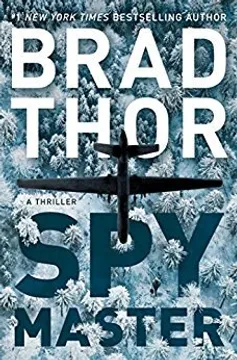
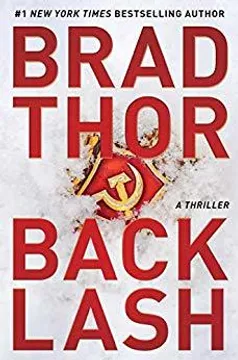

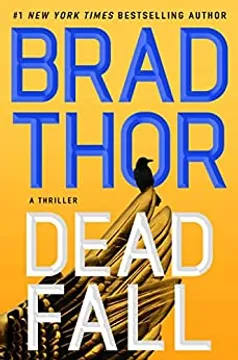
About the Author

Download PDF
Download EPUB
.epub digital book format is ideal for reading ebooks on phones, tablets, and e-readers.








