

Plot Summary
Norway's Frozen Kill Zone
Norwegian counterterrorism officer Monika Jasinski and a joint team of police and commandos approach a remote cabin during a blizzard, where a suspected anti-NATO cell is hiding. Scot Harvath, an American operative sent without weapons, recognizes the danger too late to prevent the hidden mines from shredding the team. He knocks Jasinski down and shields her, then takes a concealed pistol into the firefight.
The Norwegians blast the cabin with grenades, setting it ablaze; Harvath pursues a fleeing man through the forest and kills him when he turns to shoot. The raid leaves Norwegian dead and wounded, but Harvath retrieves the runner's phones and identification before reporting that his mentor, Reed Carlton, is deteriorating.
The Old Man's Handoff
At the Carlton Group, intelligence chief Lydia Ryan watches Carlton's Alzheimer's erode the memory that once held decades of secrets. When he begins revealing classified information to a nurse, Ryan and Harvath move him to a guarded cottage on Lake Winnipesaukee, where Navy corpsmen can protect him and tend to his health.
Harvath stays long enough to share a final evening with his mentor, whose paternal affection touches the old wound left by Harvath's distant relationship with his own father. Ryan has taken over as director because Harvath refused the post, agreeing only to divide his time between fieldwork and the office. Now the Old Man is slipping away, and the organization he built must act without his mind to guide it.
The Front Is Fiction
After Norway, Harvath takes Jasinski to the team's Belgian base and introduces her to Nicholas, a former information broker who now works for the Carlton Group. He lays out the pattern she suspected: attacks on NATO diplomats in Portugal, Spain, and Greece, followed by the Norway plot, are attributed to the People’s Revolutionary Front, a fabricated organization created by Russian intelligence.
Its killings and propaganda are meant to drain NATO's attention and weaken public support before Russia moves against the Baltic states. Harvath admits that he learned this from GRU officer Viktor Sergun, whom he secretly captured in Berlin.
Jasinski objects to the lawless methods, but the prospect of Poland and its neighbors being left exposed changes her calculation. Her husband and unborn child were lost in a plane crash in Russia, deepening her distrust of Moscow. She agrees to work with Harvath.
Six Crates, One Secret
In Poland, thieves lift six crates from a U.S. military convoy and move the cargo toward Belarus. The crates are believed to contain upgrade kits for Gryphon ground-launched cruise missiles, weapons supposedly destroyed under a treaty with Russia and capable of carrying nuclear warheads.
Ryan cannot risk involving the Polish government, so she asks veteran Polish intelligence officer Artur Kopec to investigate. He traces the abandoned van and empty crates, then suspects the kits crossed into Belarus. The recovery could become dangerously expensive, and Kopec asks for access to Matterhorn, a covert asset recruited by Carlton.
Ryan cannot name the asset because Carlton never disclosed the identity and his dementia has closed off the memory. She nevertheless promises to pursue the request, leaving both the missing weapons and Matterhorn's identity unresolved.
A Hat Missing in Visby
Harvath's team flies to Gotland to meet Lars Lund, a Swedish intelligence officer who was supposed to arrange their transport and safe house. Instead, Gotland police tell Harvath that Lund died in a car crash on the way to the airport. Harvath identifies the body and notices that Lund's phone is missing. At the wrecking yard, he finds an olive-green scrape on the wrecked car, a clue suggesting another vehicle struck it.
He tells Chief Inspector Anders Nyström that Staffan Sparrman, son of the island's governor, is a person of interest. Nyström knows Sparrman but agrees to give Harvath forty-eight hours to investigate before taking over. Harvath's team rents a secluded house and begins watching the farm where Sparrman lives and works.
Sparrman Leaves the Bar
When Sparrman drives into Visby with several farmhands, Harvath sends Sloane Ashby and Jasinski into a sports bar to draw him away from the others. Sloane plays the role of a visiting American and coaxes Sparrman outside for a cigarette, while Jasinski keeps the Russian farmhands occupied. Harvath's team stuns and hood-masks Sparrman in an alley, then spirits him to a shed for questioning.
Jasinski creates a blackout to escape the bar, but a Russian operative spots her in the service passage. Harvath pulls her over the roof and gets her into the waiting car. At the shed, Sparrman begins naming his Russian contacts, but local police officer Magnus Johansson arrives with a gun and demands Harvath surrender.
The Farm's Hidden Army
Jasinski appears behind Johansson with a pistol, giving Harvath time to disarm and restrain the corrupt officer. Sparrman identifies the farm's Russian contingent and its leader, Dominik Gashi, who works at an animal-processing plant. Harvath persuades Nyström to help without officially involving the police, then asks the plant owner, former Swedish Ranger Martin Ingesson, to take him to Gashi's cabin.
The cabin is empty, but a warm kettle and a vehicle matching the paint on Lund's wreck connect Gashi to the murder. A property ledger points to a beach house. There, Gashi recognizes Harvath and slashes Nyström with a knife. Harvath shoots Gashi in the shoulder and knee as the hidden Spetsnaz team opens fire.
Europe's Bloodied Warning
While Harvath's team fights at the beach house, the PRF bombs a crowded restaurant in Rome, killing and injuring civilians while targeting former NATO official Giovanni Lorenzo. The attackers then strike Istanbul's railway system, killing hundreds and threatening to push Turkey further from its NATO allies.
At the same time, cyberattacks disrupt Baltic hospitals, banks, energy systems, and political institutions. President Paul Porter considers exposing Russia, but Ryan and CIA Director Bob McGee argue that public accusations without hard proof could reveal the operation and help Moscow control the story.
Harvath's team extracts the wounded Nyström and captures Gashi, while Swedish intelligence prepares to take over the Gotland arrests. The worsening attacks make clear that the Russian campaign is not a string of isolated killings. It is an attempt to make NATO doubt its own unity.
Kuznetsov Names Tretyakov
At the Belgian compound, interrogation specialist Matthias Vella confirms that Gashi is actually Ivan Kuznetsov, a GRU officer. Because Kuznetsov has bullet wounds, Vella warns that aggressive questioning could kill him. After hours of interrogation, Kuznetsov offers to cooperate in exchange for safe passage for his family.
He wants them moved from Russia to Florence, and Harvath uses the promise as leverage for useful intelligence. Kuznetsov identifies Colonel Oleg Tretyakov, the GRU's chief of covert operations in Eastern Europe, as the architect of the attacks and the planned invasion.
Porter agrees to seek asylum for Kuznetsov's family if his intelligence helps identify the Rome bombers. With the target finally named, Harvath prepares a small team to enter Kaliningrad, Tretyakov's heavily guarded Russian enclave.
The Parkside Capture Fails
Harvath, Sloane, Chase Palmer, and Tyler Staelin enter Kaliningrad by a high-altitude parachute jump, then reach the city hidden in a Lithuanian produce truck. Harvath follows Tretyakov to a riverside island where the Russian colonel goes to think. He approaches with a plan to incapacitate him, but Tretyakov has anticipated a possible breach and surrounded himself with armed GRU operatives.
They overwhelm Harvath and begin marching him toward their cars. Chase, who disobeyed orders and followed Harvath, opens fire with Sloane and Staelin, killing the guards. Tretyakov escapes into the park, but Sloane runs him down with a stolen car and the team captures him. Their surprise is gone, and Russian police are converging on the scene.
Goldap's Burning Crossing
The team hides in an abandoned car wash while Harvath arranges a new pickup. Russian patrols discover Chase, who kills two officers before the others hide their bodies and squeeze a third vehicle into the building.
A Lithuanian truck driver gets them near the Polish border, but the final route runs past a Russian spy campground crowded with soldiers. Harvath's planned underwater crossing is no longer possible. At the lake, Tim Barton drives a rigid inflatable boat toward the fighting and Jasinski takes a belt-fed machine gun.
She fires across the shore as Barton reaches Harvath's pinned-down group. With ammunition nearly spent and Tretyakov wounded, the team makes it to the boat under fire. Jasinski covers their retreat across the water into Poland.
A War Deferred
Four days later, Harvath and Ryan reveal that the supposed Gryphon arsenal was part of a deception. The theft, crates, and evidence of missile components were staged to make Russia fear that the United States had secretly restored nuclear-capable weapons to Europe.
Nicholas also exposes the Russian troll operation, identifying fake accounts and helping reveal the people behind them. Tretyakov's intelligence allows NATO to strengthen vulnerable points in the Baltics, and Russia cancels its exercise and moves military equipment away from the theater.
The false arsenal buys time; it does not erase the danger. Carlton's dementia has also left the identities of other valuable spies unrecoverable. Harvath, now accepting the responsibilities he once avoided, assigns Sloane and Chase to pursue the remaining PRF leaders.
Matterhorn's Last Shadow
At Carlton's New Hampshire home, Kopec visits his old friend but finds him too ill to recognize their shared history. Harvath supervises the visit and later confirms to Ryan that Kopec is Matterhorn, the secret channel Carlton had cultivated to feed the Russians misinformation.
Kopec does not know the codename or how Harvath and Ryan have used the connection. Ryan and Harvath also discuss the false missile kits and the operation's success, then Harvath turns toward Lara, who has returned from a walk.
Before he reaches her, he reads alarm in her posture and realizes armed attackers are present. Lara sees the danger first and warns him to run. Harvath understands that Kopec has betrayed them, but the novel ends before the attack or betrayal is explained.
Analysis
Spymaster makes alliance politics tangible by turning them into a sequence of choices made under incomplete information. The Russian plan does not begin with tanks crossing a border. It begins with false claims, murdered diplomats, cyberattacks, and local recruits whose grievances can be redirected. Each act is calibrated to make NATO argue over whether the next response is justified. The threat is therefore not only military. It is a contest over what evidence people trust and whether allies believe one another before the emergency becomes undeniable.
Harvath's willingness to break rules is presented as both an operational advantage and a moral hazard. He saves lives and reaches targets because he can act faster than institutions, but his methods place Jasinski, Nyström, and the alliance itself in danger. Their objections matter because they expose the cost of treating legality as a nuisance: covert action may prevent a larger catastrophe, yet it can also damage the cooperation that makes collective defense possible. The novel offers no clean procedure for balancing those demands. It makes Harvath's judgment, and the trust others place in him, carry the burden.
Carlton's dementia gives this political crisis an intimate counterpart. Intelligence depends on people who remember names, histories, and hidden obligations, but those memories can vanish with the person who holds them. Ryan inherits an organization with missing knowledge; Harvath inherits a leadership role he has long avoided. His movement toward responsibility is not a triumph over fear so much as an acceptance that refusing command is also a choice with consequences.
The ending refuses a full sense of safety. The false missile threat and Tretyakov's capture buy time, not certainty, and the final attack turns a moment of domestic possibility into fresh danger. Harvath can delegate the next mission, but he cannot yet leave the violence behind. The book's final pressure comes from the collision of public victory and private vulnerability.
Review Summary
Spymaster holds an overall Goodreads rating of 4.24/5 across nearly 16,000 reviews. Readers frequently praise the timely, Russia-focused political plot involving NATO destabilization and Brad Thor's ability to craft ripped-from-the-headlines storylines. Many appreciate Scot Harvath's character development and the strong supporting cast. However, criticisms are common regarding the cliffhanger ending, which divided readers sharply. Some found the pacing slow and the plot overcrowded with characters, while others called it Thor's best work yet, citing its action-packed narrative and eerily accurate geopolitical predictions.
Characters
Scot Harvath
Field operative turned leaderA former Navy SEAL and covert counterterrorism operative, Harvath trusts preparation, improvisation, and his ability to read danger. He prefers fieldwork to administration, but his loyalty to Reed Carlton repeatedly pulls him toward the organization Carlton built. Harvath's professional confidence contrasts with his hesitation about leadership and family life. He can treat rules as obstacles when he believes lives or alliances are at stake, yet he also knows that every shortcut carries a cost. His partnership with Monika Jasinski forces him to explain his methods to someone who shares his urgency but still believes institutions and law matter.
Monika Jasinski
NATO's sharp-eyed investigatorA Polish military intelligence officer assigned to NATO's terrorism cell, Jasinski is observant, disciplined, and unwilling to accept unexplained orders. Her training makes her a strong investigator; her personal history gives her deep reasons to distrust Russian denials. She initially resists Harvath's methods because she sees legality as a safeguard, not a luxury. As the threat grows, she learns to act decisively without surrendering her judgment. Her relationship with Harvath is built on wary respect, shared danger, and a willingness to challenge one another.
Lydia Ryan
Carlton Group's new directorRyan leaves a senior CIA position to lead the Carlton Group, a private intelligence organization entrusted with sensitive government work. She is pragmatic, self-possessed, and skilled at managing both political pressure and operational uncertainty. Carlton's decline leaves her responsible for preserving knowledge that may be disappearing faster than she can recover it. She must negotiate with allies, protect classified secrets, and give Harvath room to act without losing control of the larger mission. Her steadiness is professional rather than effortless; the burden of the work often reaches her beneath the composure.
Reed Carlton
The fading spymasterA celebrated former CIA officer, Carlton created the Carlton Group to carry out intelligence work he believed bureaucracy could no longer handle effectively. Brilliant, strategic, and unsentimental about the demands of a mission, he has also acted as a father figure to Harvath. Alzheimer's steadily erodes the memory that holds his professional knowledge, forcing Ryan and Harvath to protect both him and the secrets he carries. Carlton's leadership is defined by his talent for finding capable people and giving them responsibility, even when they doubt themselves.
Nicholas
The information brokerOnce an international trafficker in sensitive information, Nicholas now works as a valued member of Harvath's team. His technical intelligence and broad network make him useful against both spies and online propaganda operations. Harvath's trust gives him a chance to belong to something more stable than the dangerous world he once inhabited. Nicholas brings warmth and humor to the team's tense work, but his past means that his judgment and loyalties are never treated as automatic.
Artur Kopec
Poland's veteran spy-runnerAn experienced Polish foreign intelligence officer, Kopec is a skilled recruiter and operator whose long service has made him resourceful, worldly, and comfortable with ambiguity. He has worked with Carlton and understands the favors and hidden bargains that sustain intelligence partnerships. Kopec's personal warmth can make him seem trustworthy, while his appetite for leverage shows how readily he treats secrets as currency. He is an important ally to Ryan as the stolen cargo draws Poland into the crisis.
Oleg Tretyakov
GRU architect of subversionA senior Russian military intelligence officer, Tretyakov combines strategic patience with a belief that Russia should regain power and territory. He plans operations as interlocking systems of recruitment, sabotage, propaganda, and force. His ambition is sharpened by the fear that failure will destroy his career and possibly his life. Tretyakov's methods reveal a leader who regards public confusion as a weapon and human casualties as instruments of state policy.
Dominik Gashi
The farm's quiet caretakerGashi works at an animal-processing plant on Gotland and earns extra money caring for vacation homes. He has made himself useful to local employers and seems at ease in rural life. His employment and low-key presence place him within a close-knit island community, where trust often grows through routine favors. Gashi's quiet manner helps him move through the story without attracting much attention.
Sloane Ashby
The team's adaptable operatorA highly trained former soldier and intelligence operative, Sloane is intelligent, funny, and confident under pressure. She can use social expectations to her advantage without reducing her work to appearance; her real strengths are observation, discipline, and fast decisions. She respects Harvath as a leader but is comfortable teasing him and challenging his assumptions. Her field experience has been shaped by being pushed away from combat despite her ability, making meaningful operational work especially important to her.
Anders Nyström
Gotland's stubborn inspectorA local police chief inspector, Nyström is a careful investigator who must balance the urgency of Harvath's claims against Swedish law and his responsibility to the island. He is practical, proud of his community, and reluctant to accept intelligence that cannot withstand scrutiny. His running habits and local connections make him part of Gotland's social fabric. Nyström's willingness to listen grows from evidence and personal risk, not simple deference to American authority.
Staffan Sparrman
The governor's farm-owning sonSparrman manages his maternal grandparents' farm and keeps a complicated distance from his politically prominent mother. He is young, restless, and vulnerable to people who recognize his ideological frustrations and desire to matter. His rural independence gives him a life apart from the expectations attached to his family name.
Lara
Harvath's anchor at homeHarvath's partner, Lara is intelligent, loving, and realistic about the risks of his work. She is raising her young son, Marco, while Harvath spends long stretches overseas. Their relationship offers him the possibility of a settled family life, but his repeated choices to remain in the field leave that possibility unresolved. Lara understands his silences without pretending they are easy.
Chase Palmer
The bold young operatorA skilled special operations veteran, Palmer is quick, observant, and willing to act on his own judgment. His confidence sometimes outruns his orders, but his instincts and initiative make him valuable in fluid situations. Harvath sees both his potential and the need to teach him when independent action helps and when it endangers a team.
Mike Haney
The team's technical MarineA Marine reconnaissance specialist, Haney handles surveillance equipment, drones, and practical field logistics. His steady technical work gives Harvath better information before dangerous decisions.
Tyler Staelin
The careful Delta operatorA member of the Army's elite special operations community, Staelin is a disciplined field operator and capable medic. He helps keep the team functional when plans break down.
Tim Barton
The team's Navy SEALA seasoned SEAL, Barton brings maritime skills and calm under pressure. His expertise becomes particularly useful when the operation requires movement across water.
Lars Lund
Sweden's intelligence contactA Swedish intelligence officer with experience in clandestine operations, Lund is the local contact expected to help Harvath's team navigate Gotland. His trusted relationships connect him to Harvath's wider intelligence network.
Carl Pedersen
Norwegian intelligence liaisonA veteran of the Norwegian Intelligence Service, Pedersen is one of Harvath's discreet European contacts. He helps bridge national services when official channels are too slow or exposed.
Martin Ingesson
Gotland's former RangerA local processing-plant owner and former Swedish Ranger, Ingesson understands how an adversary could hide in ordinary island life. His military experience and community ties make him a valuable local source.
Matthias Vella
The interrogation specialistA psychiatrist and neurochemist who runs a secret detention facility, Vella studies how interrogation affects the brain and body. He is methodical and cautious about the physical limits of detainees, even when Harvath is impatient for results.
Plot Devices
NATO Article 5
The alliance's war thresholdArticle 5 makes an attack on one NATO member a potential commitment by all. The plot turns this defensive guarantee into a vulnerability: Russian planners try to provoke or weaken the alliance while avoiding an obvious act of war. Harvath's mission is framed around preventing the crisis from reaching the point where the treaty forces a military response. The device gives political stakes a concrete mechanism, while making delay, uncertainty, and public trust part of the battlefield.
The People’s Revolutionary Front
A false flag for disorderThe PRF is presented as a homegrown anti-NATO movement, but Russian intelligence has manufactured it and its propaganda. The attacks on diplomats and military targets give the fictional group credibility, while bots and fake news amplify its claims. The deception is designed to distract NATO, divide its members, and make Russia's later actions harder to identify. It links physical violence to information warfare and forces Harvath to distinguish the visible perpetrators from the state directing them.
Matterhorn
A hidden intelligence channelMatterhorn is a highly protected asset recruited by Carlton and used to feed Russian intelligence a mixture of legitimate information and misinformation. The asset's identity is so carefully guarded that even Ryan cannot retrieve it from Carlton's failing memory. Kopec's demand for access to Matterhorn turns the search for stolen weapons into a separate contest over secrets and leverage. The concealed identity later connects Carlton's old tradecraft to the final betrayal.
The Gryphon Upgrade Kits
A manufactured nuclear threatThe missing crates appear to hold upgrade kits for prohibited, potentially nuclear-armed cruise missiles. Their apparent presence in Europe makes Russia fear that an invasion could meet a hidden nuclear response. The cargo mystery draws Polish intelligence into the operation and gives Ryan a bargaining problem with Kopec. The apparent arsenal is eventually revealed as staged evidence, part of Harvath's plan to distort Moscow's assessment and buy NATO time.
The Gotland Cell
A foothold on the BalticGotland's position in the Baltic makes the island valuable to any force seeking to isolate Lithuania, Latvia, and Estonia. The Russian network hides behind the governor's farm, ordinary local employment, and a trusted police officer. Its existence gives Harvath a local path toward the larger invasion plan, while the island's limited defenses make every hour of delay consequential. The operation also tests whether local law enforcement can cooperate with covert action without losing its own legitimacy.
Scot Harvath Series




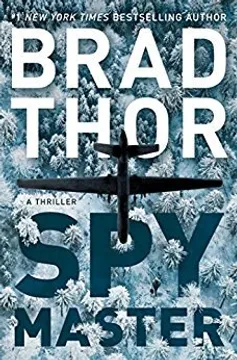
About the Author

Download PDF
Download EPUB
.epub digital book format is ideal for reading ebooks on phones, tablets, and e-readers.








