

Plot Summary
Anbar's Last Cookout
In an Iraqi safe house, CIA officer Ashleigh Foster joins her boyfriend, former Ranger Ken Berglund, and two embassy friends for a forbidden weekend. Berglund's six-man paramilitary team is waiting to enter Syria, but the mission has been delayed, so Ashleigh brings food and company instead. Mortars shatter the meal.
Dozens of attackers surround the fort, destroy its vehicles, and shoot down two rescue helicopters before the team runs out of ammunition. The women hide in an underground interrogation room, where Ashleigh uses her pistol to defend them. The attackers force their way inside and kill the survivors. Their leader, Sacha Baseyev, spots the women's belongings and turns the massacre into a propaganda opportunity.
The safe house's convivial details make the violence more than a tactical reversal: the steaks, wine, and borrowed coolers expose a private breach in a world governed by secrecy. Ashleigh's visit is reckless, but the narrative does not let that choice explain away the massacre. Baseyev converts the evidence of intimacy into a weapon, showing how propaganda begins with control over the story of an atrocity. The attack also establishes the novel's central moral pressure: operational failures carry human consequences, and Harvath's later investigation begins under the weight of lives lost before he can even identify the enemy.
Vienna's Public Execution
Scot Harvath, a former Navy SEAL working as an intelligence operative, walks into a Vienna cafe and shoots Abubakar al-Shishani, an ISIS-linked attacker responsible for killing Americans in Paris. He escapes through the back, sheds his weapon, and returns to the cruise ship where he has been vacationing with Lara Cordero, a Boston homicide detective.
Lara has been offered command of her department after the pandemic took two of her superiors. She wants to stay near her aging parents and her son, Marco; Harvath cannot move his work to Boston. The couple acknowledge that their lives are pulling them apart, though they postpone the final reckoning. Before they can enjoy Budapest, Harvath receives a call that draws him back into service.
Harvath's public killing and private farewell sit side by side, revealing the split that governs his life. In Vienna, he performs violence as a deliberate message; on the ship, he cannot turn that clarity into a decision about Lara. Her promotion is not an obstacle invented for romance but a meaningful commitment to work, family, and place. Harvath respects those commitments while continuing to choose a vocation that consumes ordinary time. The juxtaposition makes his loneliness less a matter of emotional incapacity than of practiced deferral: he can decide who must die, yet delays deciding what kind of life he wants.
The Informant's Red Trail
After Senator Daniel Wells blames CIA Director Bob McGee for the Anbar deaths, Harvath reaches Brussels to find Salah Abaaoud, his well-connected informant. Salah's clinic and home are deserted, but Harvath discovers him and his mistress murdered with professional precision.
The scene suggests the killer also wanted the mistress silenced, buying time to escape. Harvath sends photographs to Nicholas, a gifted intelligence analyst who uses surveillance footage and gait-recognition software to identify the suspected assassin as Sacha Baseyev.
Nicholas traces Baseyev through a Lufthansa crew disguise and a false German identity. The attacker who vanished after Anbar is no longer just a name in a video. Harvath now has a trail leading through Europe's airports and into Russian intelligence.
Salah's murder turns an intelligence failure into an intimate betrayal of trust: Harvath's source was not merely wrong or compromised, but part of a chain whose purpose he could not see. The forensic clues matter because they convert grief into a method of inquiry. Nicholas's gait analysis likewise makes identity a pattern that survives costume and false documents. The section's emotional movement is from Harvath's self-blame toward disciplined suspicion. He still does not know how Salah was used, but he refuses the comforting explanation of coincidence, treating the killer's carefully managed exit as evidence that the attacks belong to a larger design.
Antalya's Burning Motorcade
While Russian operative Baseyev poses as a trusted ISIS commander, he directs an attack on U.S. Defense Secretary Richard Devon in Antalya. Gunmen funnel the motorcade through narrow streets, then car bombs destroy the vehicles and kill Devon's protection team.
Baseyev records the assault for propaganda. In Washington, President Paul Porter debates how to defeat ISIS without giving it the vast occupation it wants. After the group releases its slick video, Porter launches Operation Iron Fury against ISIS command sites and oil infrastructure.
He also considers repudiating the borders imposed by the Sykes-Picot agreement, hoping Muslim nations will confront the political conditions feeding extremism. Harvath sees the attacks as too coordinated for ISIS alone, but still lacks proof of who is helping it.
The attack on Devon is designed to manipulate the response as much as to kill its target. Baseyev stages a spectacle that pressures Washington toward precisely the kind of intervention the conspirators want, while Porter tries to distinguish forceful action from strategic surrender. The debate over territory and political reform broadens the novel beyond an assassin hunt, but it also exposes a governing paradox: leaders must act under public anger while resisting the enemy's attempt to dictate the form of that action. Porter's strike is decisive, yet his larger proposal recognizes that military capacity cannot by itself settle the political conditions the conflict exploits.
Lufthansa's Hidden Passenger
Nicholas tracks Baseyev's Lufthansa alias, Peter Roth, through a shared crew apartment in Frankfurt. The trail exposes airline scheduling specialist Jörg Strobl, who altered rosters for money, and his wife Anna, a federal police officer.
Harvath confronts Jörg at home; Anna arrives armed and learns that her husband's secret payments helped an assassin travel undetected. Jörg identifies airport operations employee Sigmar Eichel as his recruiter. Under pressure, Eichel names Russian mobster Mikhail Malevsky and admits that he helped Baseyev reach private aviation.
The last flight took Baseyev to Antalya. Each answer tightens the route between the Anbar massacre and Devon's assassination, replacing Harvath's suspicion of an ISIS leak with evidence of a Russian logistics chain.
The airline plot makes bureaucracy a battlefield: a crew roster, a staff badge, and access to airport corridors become covert weapons. Jörg's motive is not ideological. He tells himself he is providing for Anna as his illness advances, but his attempt to turn care into money has exposed both of them to danger. Anna's police instincts and her refusal to accept his excuse give the scene its human cost. Harvath's investigation advances through compromised ordinary systems rather than a single dramatic clue. The chain also complicates the idea of a lone mastermind: Baseyev's mobility depends on people who each perform a small, deniable service.
The Estate's False Calm
At Malevsky's Bavarian estate, Harvath unexpectedly finds Alexandra Ivanova, a Russian operative he once trusted, working as a nanny. She reveals that Malevsky supplies ISIS with medicine, night-vision equipment, and advanced weapons, receiving priceless antiquities in return.
Salah's smuggling routes helped move the goods, meaning Harvath's trusted informant had been feeding a Russian operation. Harvath's attempt to enter the estate turns deadly when Malevsky's drunken associate Valery Kumarin dies in a fall.
Alexandra protects her position by framing the death as an assault gone wrong. Harvath abandons a direct grab and later uses Anna and Herman Toffle to intercept Malevsky's car. Captured and interrogated, Malevsky identifies Colonel Viktor Sergun as the GRU link to Baseyev.
The estate's luxury conceals an economy in which cultural objects, humanitarian supplies, and weapons circulate through the same criminal channels. Alexandra's revelation forces Harvath to reinterpret Salah's usefulness: the informant did not simply provide bad intelligence, he sat within a system designed to make useful information serve another power. Kumarin's accidental death then narrows Harvath's options, showing how a tactical improvisation can endanger an undercover source. Alexandra's cover, Anna's assistance, and Herman's practical support demonstrate that trust is never uncomplicated in espionage. Harvath's growing guilt becomes actionable, but it also risks making him move faster than evidence permits.
The White House Breach
An ISIS-inspired attacker crosses the White House grounds and detonates near the North Portico, killing three Secret Service officers and injuring others. President Porter refuses evacuation and addresses the country from the Oval Office, treating the bombing as an act of war.
In Berlin, Harvath changes his plan: rather than stage a public kidnapping of Sergun, he hides in the Russian officer's dark apartment and incapacitates him with a Taser when he reaches for the fuse box. Harvath and Herman carry Sergun out in a body bag and fly him to Malta. The attack on the White House has raised the stakes, but the captive Russian colonel may finally explain why the assaults keep arriving with such careful timing.
The bombing collapses the distance between distant counterterrorism operations and the national symbols they are meant to protect. Porter's refusal to leave the White House presents leadership as visible presence, but also exposes the danger of turning symbolic courage into a substitute for security. Harvath's decision to abandon the public spectacle of Sergun's abduction is a tactical correction, not a retreat: after the attack, secrecy matters more than manipulating appearances. The body bag becomes a grim instrument of containment, carrying the investigation across borders. The section turns the novel's accumulating violence into a demand for causal knowledge, not simply a larger retaliatory gesture.
The Colonel Breaks
At Malta's Solarium, interrogator Vella uses a synthetic fear scent and Sergun's knowledge of Dante to break through the colonel's resistance. Sergun admits that the GRU orchestrated the Anbar ambush, Devon's assassination, and the White House bombing, using ISIS as a proxy.
Russia wanted the United States to destroy ISIS while Moscow protected its position in Syria and forestalled the return of Russian-speaking jihadists. The revelation turns Harvath's hunt into a confrontation with a state, not merely an extremist cell.
President Porter, McGee, and Reed Carlton authorize Harvath to enter Syria and pursue the operation's architect. Because an intelligence leak may still expose the mission, McGee creates misleading reports to test who carries secrets out of Langley.
Sergun's confession reframes the violence as strategic coercion: civilian and military deaths are meant to make American policy predictable. Vella's method also makes the novel's pursuit of truth ethically uneasy. Information arrives through engineered fear, so the state can condemn manipulation by its adversaries while using its own coercive machinery to extract answers. Harvath's personal responsibility remains emotionally potent, but the revelation relocates causation from his bad judgment to a deliberate campaign. The false reports at Langley echo the larger deception, turning intelligence itself into a test of loyalty and making the coming Syrian mission vulnerable not only to armed enemies but to compromised institutions.
The Syrian Crossing
Disguised as a Canadian journalist, Harvath travels from Amman with Syrian trucker Yusuf, bribing the Jordanian checkpoint and trusting Yusuf to negotiate the more dangerous Syrian side. Armed guards beat Yusuf and seize his cargo, the money he had hoped to use for cancer treatment.
Harvath helps him continue to Damascus, where he meets CIA partners Thoman and Mathan Hadid, brothers whose father was killed by the regime. To reach a target near ISIS territory, Harvath asks Yusuf to bring in Riad Qabbani, a farmer with an extensive local network.
Qabbani initially refuses because helping could endanger his wife and children. Harvath offers safe passage for both families, turning a desperate military mission into a promise he must later keep.
The crossing strips away the clean abstractions of strategy. Yusuf loses the goods meant to pay for treatment, and the cost of Harvath's mission becomes visible in the ordinary economy of survival. Harvath's cover as a journalist is a useful disguise, but his relationship with Yusuf is built through shared risk rather than false credentials. Qabbani's refusal is equally important: protecting his family is not cowardice but a rational response to life under armed factions. Harvath's promise recruits him, yet also binds the operative to a responsibility beyond the target. The mission now has two measures of success, stopping the plot and bringing civilians out alive.
The Saltbox Assault
Using Sergun's information, Harvath locates GRU General Oleg Proskurov at a Damascus safe house called the saltbox. He and the Hadid brothers assemble a small rebel team with the weapons available, including two Yugoslav antitank rockets.
They destroy Proskurov's armored SUVs, cut the neighborhood's power, and storm the building. The Russians flee across rooftops; Harvath's team kills several and captures Proskurov, who carries an encrypted laptop.
At Mathan's garage, the general convulses and dies after apparent cyanide poisoning, before Harvath can record his confession. Proskurov's biometric laptop remains accessible, however. Nicholas extracts encrypted files linking the GRU operation to a gathering in Furat, where Baseyev is expected to receive honors.
The saltbox operation turns resource scarcity into both tactical ingenuity and vulnerability. The rebels' weapons are imperfect, their team is small, and their victory depends on surprise rather than overwhelming force. Capturing Proskurov seems to promise a human source who can confirm the conspiracy, but his death removes that certainty and reminds Harvath that control ends abruptly in the field. The biometric laptop substitutes data for testimony, though its encrypted files still demand interpretation. The general's death therefore does not resolve the operation. It pushes Harvath toward a riskier decision: trust the evidence enough to penetrate Furat, where the enemy's propaganda apparatus and its celebrated infiltrator are gathered.
Furat's Propaganda House
Harvath's drone surveillance identifies Baseyev's home in Furat and a nearby building powering ISIS's media operation. Yusuf and Qabbani help him move through the town, where a confrontation over a bag of dates nearly exposes the team. Harvath and the Hadids then kill Baseyev's guards and take him alive from his bedroom.
Baseyev reveals that Rafael, a British ISIS media strategist, is inside the neighboring house with editors and social-media operatives. Harvath shoots the guards from a rooftop while Thoman Tases Rafael and Mathan leads the assault. The Hadids clear the building, seize its hard drives, and capture Rafael. Harvath orders an airstrike on the ISIS gathering, then races his prisoners and evidence toward the border.
The operation attacks ISIS at two connected points: Baseyev's physical role inside the organization and Rafael's machinery for turning violence into recruitment. Capturing rather than killing them reflects Harvath's need for evidence and intelligence, but it also raises the danger of keeping adversaries alive in a collapsing operation. The near-exposure over the dates is a small, absurd interruption with serious stakes; local life does not pause to accommodate covert plans. The Hadid brothers act with increasing authority, not as passive auxiliaries but as the people who can clear the media house. Their work converts a raid into an assault on the story ISIS tells about itself.
The Desert Extraction
As Harvath and the Hadids cross the desert with Baseyev, Rafael, and the captured hard drives, a Russian drone launches a missile at their Land Cruiser. The blast destroys their vehicle, but the prisoners and operatives survive by reaching a rocky embankment.
A CIA Reaper destroys the attacking drone, and specially modified Black Hawks carry the team to safety in Kurdistan. Thirty-six hours later, Harvath returns to the Syrian-Jordanian border with Williams and the Hadids to extract Yusuf, Qabbani, and their families.
When the Syrian commander demands another bribe, Harvath and Williams draw him close with a fake envelope and open fire. A Jordanian Cobra helicopter, flown by King Abdullah, destroys the approaching gun trucks, clearing the way for the families to cross.
The missile strike is the material cost of having uncovered a state operation: Russia can reach beyond the battlefield and erase both captives and evidence in one attack. The survivors' escape depends on allied technology, but the later border crossing depends on a different kind of power, the willingness of Jordan's king to act personally. Harvath's promise to Yusuf and Qabbani is not an ornamental subplot; it determines that the operation continues after the primary targets are secured. The border scene reverses the earlier extortion. Instead of helpless travelers paying armed men, the rescue team forces the checkpoint's violence back on its perpetrators.
The Leak Inside Langley
While Harvath pursues Baseyev, Senator Wells uses a supposed warning about Devon's security to accuse Porter of hiding covert operations from Congress. The warning originated as disinformation planted by McGee to expose a mole.
Wells's chief of staff, Rebecca Ritter, passes it to the press and plants a question on television, hoping to damage Porter's standing. Her source is CIA technology specialist Joe Edwards, whose access gives her additional secrets. Investigators trace the leak, and FBI agents arrest Rebecca at the Hay-Adams Hotel.
McGee confronts Wells with the evidence and informs him that the investigation has reached his office. Wells is not shown as the Russian spy, but his willingness to exploit the leak for political gain leaves his ambitions and authority in ruins.
The leak plot mirrors the foreign conspiracy in miniature: access is converted into leverage, and a partial truth is made more dangerous by the motive of the person carrying it. Wells wants political advantage, while Rebecca seeks money and promised power; their interests briefly align without making them equally culpable. McGee's planted warning succeeds as counterintelligence, but it also shows how easily public trust can be damaged by a carefully seeded rumor. The section resists a simple division between patriotic institutions and corrupt individuals. The same systems that protect classified work can conceal manipulation, while oversight can be both a constitutional necessity and a campaign weapon.
Epilogue
In the aftermath, Harvath watches President Porter launch Operation Full Justice against Russia's naval base at Tartus and its airfield in Syria, devastating Moscow's military position without drawing an immediate response. Rebecca, Joe, and their Russian connection remain in custody, while the captured operatives continue to yield intelligence.
Harvath helps arrange new lives in America for Yusuf and Qabbani's families, and Yusuf begins cancer treatment. He leaves Washington and moves to Boston, where Lara and her son Marco welcome him into their home. Harvath has not abandoned his work, but he has stopped treating intimacy as something that must wait until the mission is over.
The resolution gives Harvath two forms of consequence. The military strike answers the Russian operation with overwhelming force, while his move to Boston answers a quieter question the novel has carried since the cruise: whether duty must consume every other attachment. His choice is not a conversion from violence to domestic life. He remains an operative, and the political consequences remain unsettled. Instead, the ending changes the terms of his loyalty. He accepts that protecting a country includes building a life within it, and that love cannot survive indefinitely as a promise deferred. Yusuf's treatment and the families' resettlement make that ethic concrete: survival must be followed by care.
Analysis
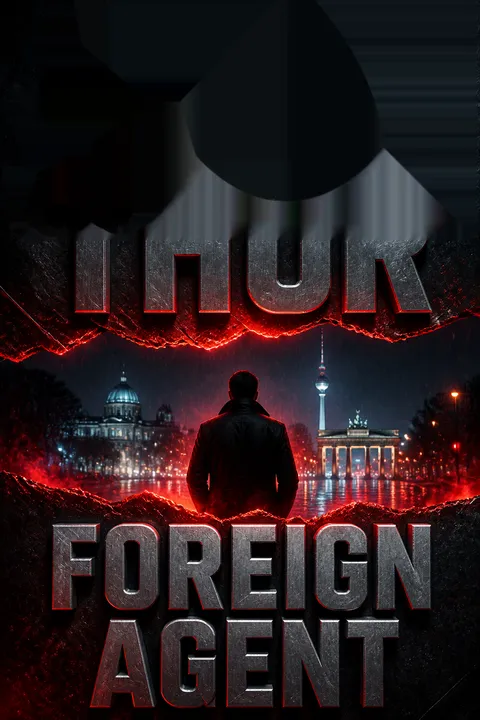
Foreign Agent builds its suspense around a distinction between the actor seen and the actor directing events. ISIS commits real atrocities, yet the GRU manipulates its violence to provoke a predictable American response. That design makes intelligence failure more than a question of bad information. Harvath's source, Salah, is useful precisely because his network is compromised, and the institutional channels meant to interpret evidence are themselves vulnerable to political ambition and espionage. The novel repeatedly shows systems becoming weapons: airline schedules enable covert movement, social platforms amplify propaganda, surveillance feeds guide raids, and congressional oversight becomes a route for leaks.
Harvath's professional strength is adaptation, but his deepest vulnerability is the belief that every death can be charged to his own account. The story does not simply absolve him when he discovers Russian interference. Instead, it makes guilt productive and dangerous: it drives him to pursue the truth, but it can also push him toward escalation before he has full control. His promise to Yusuf and Qabbani offers a counterweight. The mission becomes more than neutralizing targets when Harvath takes responsibility for people who cannot protect themselves through force.
The book's political imagination remains deliberately severe. Porter treats retaliation as an instrument of national credibility, while also recognizing that an enemy can bait a country into fighting on unfavorable terms. His proposal to challenge inherited borders imagines a structural answer, but it risks turning vast populations into pieces on a strategic board. The novel does not resolve that contradiction so much as dramatize it. Its clearest ethical distinction is personal: tactical violence may be necessary, but leaders and operatives remain accountable for whom their plans endanger.
The emotional resolution complements the geopolitical one. Harvath cannot repair the dead or undo his years of absence, but he can stop treating love as an obligation to be postponed until the world becomes safe. Moving to Boston does not erase his vocation. It marks a change in how he distributes loyalty, making room for a life that his work is supposed to protect.
Review Summary
Foreign Agent receives mostly positive reviews (4.25/5) for its fast-paced, action-packed thriller plot involving ISIS, Russia, and protagonist Scot Harvath. Readers praise Brad Thor's ability to craft compelling, ripped-from-headlines scenarios that are both entertaining and plausible. Many appreciate Harvath's character development and the non-stop suspense. Common criticisms include excessive political commentary, overly detailed weapon descriptions, repetitive Arab terrorist villains, and some convoluted plot elements. Several reviewers note it's accessible to series newcomers while longtime fans debate whether it matches earlier installments' quality.
People Also Read




Characters
Scot Harvath
America's field operativeA former Navy SEAL and seasoned intelligence operative, Harvath is prized for improvisation, patience, and a willingness to act beyond ordinary limits. He believes protecting Americans is a personal obligation, and he measures himself against the people his decisions place in danger. That sense of responsibility makes him formidable, but also leaves him vulnerable to guilt and overwork. His relationship with Lara exposes the cost of organizing an entire identity around service. He is not emotionally cold; he is practiced at postponing the parts of life that cannot be solved by speed, force, or planning.
Sacha Baseyev
The infiltrator in ISISA highly trained Russian operative who can disappear into the organizations he enters, Baseyev combines discipline, language ability, and a talent for earning trust. His outward devotion to ISIS makes him valuable to its leaders, while his competence lets him shape events from inside the group. He is defined by a capacity to compartmentalize: identity becomes a tool, and other people become pieces in a plan. The novel links his work to childhood trauma, but his operational self is built on control, concealment, and the conviction that past suffering can be converted into purpose.
Lara Cordero
Harvath's Boston anchorA Boston homicide detective, Lara is perceptive, independent, and deeply connected to her family and city. She has earned the opportunity to lead her department through competence rather than proximity to Harvath, and she is unwilling to treat her career as a disposable accessory to his. Her directness helped Harvath reconsider the emotional evasions he had mistaken for independence. She loves him without surrendering her own judgment, which makes their conflict a real negotiation between two adults rather than a test of devotion.
Bob McGee
The reforming CIA directorMcGee is an experienced operations officer brought in to cut through the CIA's bureaucratic habits and restore attention to people in the field. He is protective of his agency but not blind to its failures, and he is willing to risk personal relationships and institutional comfort to pursue a leak. His conflict with Senator Wells grows from both principle and political vulnerability. McGee's judgment is often sound, yet the novel shows that even a capable director cannot control how carefully planted information will be used once it leaves his hands.
Paul Porter
The pressured presidentPresident Porter leads through a succession of national shocks, balancing public demands for revenge against the strategic dangers of reacting on an enemy's terms. He values forceful action and personal presence, but also thinks beyond immediate retaliation toward the political roots of conflict. His willingness to take risks gives Harvath room to operate, while his decisions carry consequences far beyond either man. Porter is neither a detached strategist nor simply a commander seeking vengeance; he is a politician trying to convert grief and fear into policy without allowing them to dictate every choice.
Daniel Wells
The ambitious senatorWells chairs the Senate Intelligence Committee and sees political opportunity in the CIA's failures. He is sharp enough to understand how classified information can damage an opponent, but his ambition frequently outruns his concern for accuracy or institutional stability. His hostility toward McGee is personal as well as political, rooted in the loss of influence inside the agency. Wells represents a form of opportunism that feeds on crisis: he can voice legitimate oversight concerns while still treating tragedy as campaign material.
Rebecca Ritter
Wells's political operatorWells's young chief of staff is socially skilled, ambitious, and unusually adept at reading what influential people want from her. She understands that access is a kind of currency and uses charm as deliberately as other aides use briefing papers. Rebecca is drawn to the promise of power and to the chance to shape events from inside Washington's machinery. Her polish makes her difficult to read, even to people who believe they know her motives.
Nicholas
The digital pattern finderKnown in intelligence circles as the Troll, Nicholas is a digital savant whose physical stature contrasts with his reach across surveillance systems, databases, and encrypted networks. He notices patterns others dismiss, whether in a person's walk, an airline roster, or a mass of unstructured files. His dry humor and careful technical work make him a crucial partner to Harvath, though his interventions are usually remote. Nicholas's power comes not from physical force but from making hidden connections legible.
Salah Abaaoud
Harvath's Brussels informantA doctor with a public reputation for generosity, Salah has deep roots in Brussels and an extensive network formed through medical work, community relationships, and past smuggling. He understands how aid routes and local loyalties can be used to move people and goods. His value to Harvath rests on his access to information rather than a clean moral record. Salah is a reminder that intelligence partnerships often depend on people whose usefulness and trustworthiness are not the same thing.
Yusuf
The Syrian truckerYusuf drives freight between Jordan and Syria to support his wife and children, even as cancer threatens his future. He is cautious, resourceful, and accustomed to surviving by judging the mood of armed men before they act. His dry humor persists alongside his exhaustion, but the loss of his cargo shows how fragile his plans are. Yusuf becomes Harvath's guide because he knows the roads and their dangers; his loyalty develops through shared risk rather than ideology.
Thoman Hadid
The Syrian field allyOne of two brothers working with the CIA-backed opposition, Thoman drives a taxi and helps Harvath move through Damascus without drawing attention. The murder of his father by the regime gives his resistance a personal history, but he remains practical rather than romantic about the work. He knows the city, reads local danger, and contributes to operations as a trained and committed participant.
Mathan Hadid
The mechanic and fighterThoman's twin, Mathan runs a small mechanic's shop that doubles as a useful meeting place and operational base. Like his brother, he fights the Syrian regime after their father's death, yet he balances conviction with the practical demands of keeping people and equipment functioning. His language skills and willingness to take responsibility make him a valuable partner to Harvath. The brothers' connection is a source of trust, but each has his own judgment and role.
Anna Strobl
The alert federal officerA German federal police officer, Anna is observant, decisive, and better at reading a situation than her modest career record suggests. She notices the suspicious car near her home, follows her instincts, and enters carefully when she finds the back door unlocked. Her marriage to Jörg is strained by his illness and by what she does not know about his choices. Anna's strength lies in the capacity to respond under pressure without confusing loyalty with approval.
Jörg Strobl
The compromised schedulerA Lufthansa crew-scheduling specialist living with ALS, Jörg is a talented employee facing the loss of control over his body and his future. He accepts money to alter flight rosters, telling himself that the money will protect Anna after he is gone. His motive grows from love and fear, but neither makes his decision harmless. Jörg's story captures how illness can narrow a person's sense of available choices, while still leaving responsibility for the harm those choices enable.
Alexandra Ivanova
The guarded Russian operativeA skilled Russian woman with a history shared with Harvath, Alexandra is disciplined, attractive, and careful about what she reveals. Her work requires her to inhabit a role close to Malevsky's household, where every exchange can expose her. She cares about ordinary Russians more than she trusts the government that claims to represent them. Harvath's unexpected arrival forces her to weigh her assignment against the danger posed by a larger operation.
Herman Toffle
Harvath's German allyA former member of Germany's counterterrorism unit, Herman is a large, experienced operator who has built a successful private security business. His humor softens his blunt manner, but he is meticulous about the practical risks Harvath sometimes dismisses. Their old friendship allows him to challenge Harvath without ceremony. Herman's loyalty is active and concrete: he supplies equipment, recruits trusted colleagues, and insists that an operation account for what happens when the plan fails.
Riad Qabbani
The farmer with a networkAn older farmer near the Euphrates, Qabbani has survived successive armed groups by protecting his family and holding onto his land. His connections with local farmers, shepherds, and traders make him an unusually valuable guide. He is hospitable but not naïve: he initially refuses Harvath because the risk extends to his wife and children. Qabbani's choices are shaped by the hard arithmetic of survival, not by a lack of courage.
Lydia Ryan
McGee's fieldwise deputyThe CIA's deputy director is a former field operative who understands both the demands of covert work and the institution's political limits. Ryan coordinates Harvath's mission, relays urgent intelligence, and pushes resources into place when delay could cost lives. She is direct and pragmatic, but not careless about the consequences of action. Her ability to translate Washington's decisions into support for people in the field makes her an essential link between Harvath and the agency.
Vella
The Malta interrogatorA psychiatrist and neurochemist who runs interrogations in Malta, Vella approaches questioning as a scientific problem. He studies each prisoner and uses carefully selected psychological pressures to make resistance harder. His calm manner contrasts with the coercive nature of his work. Vella's professionalism impresses Harvath, but it also highlights how easily expertise can serve institutions that claim moral authority while using methods they would condemn in an adversary.
Ken Berglund
The Ranger team leaderA former Army Ranger leading the CIA's paramilitary team in Anbar, Berglund is a capable soldier whose affection for Ashleigh helps prompt the ill-advised visit to the safe house. His competence is established in the way he organizes a defense under fire, while his personal judgment proves less reliable when duty and longing collide.
Ashleigh Foster
The CIA officer at AnbarA CIA collection management officer stationed in Jordan, Ashleigh sorts and encrypts intelligence for headquarters. Confident with weapons and unwilling to let others dictate her life, she combines technical work with a strong appetite for adventure. Her decision to visit Berglund at the safe house brings the personal and operational worlds into dangerous contact.
Richard Devon
The traveling defense secretaryThe U.S. Secretary of Defense, Devon travels to Turkey to speak with a senior military counterpart about regional tensions and the risk of escalation. He approaches the meeting as a difficult alliance-management problem, balancing American pressure with Turkey's security concerns.
Plot Devices
Baseyev's False Allegiance
An enemy inside ISISBaseyev enters extremist groups under a convincing identity, rises by supplying useful intelligence and equipment, and then steers their actions toward the GRU's larger purpose. His apparent loyalty gives Russia deniability while letting it manipulate ISIS's capabilities and public image. The device makes the attacks difficult to interpret: the visible perpetrators are real, but an outside state is shaping their targets and consequences. It also connects the massacre in Anbar to the later attacks without making ISIS merely a fabricated threat.
The Lufthansa Cover
A passport through the systemBaseyev travels under a false identity connected to Lufthansa, using manipulated crew schedules and airport access to pass through borders with less scrutiny. Nicholas traces him through purchase records, employee files, and gait-recognition software, which spots the same walking pattern beneath altered appearances. The cover turns ordinary travel infrastructure into a covert route and gives the investigation a concrete trail to follow. It also shows how one compromised scheduler and one airport employee can open gaps in systems built to manage millions of passengers.
The Fear Compound
A chemical interrogation keyAt the Solarium, Vella uses a synthetic scent modeled on fear pheromones to provoke distress in a prisoner. He combines the compound with Sergun's known interests and memories, including Dante, to make the experience feel personally inescapable. The method helps produce a confession, but its effectiveness is not a neutral shortcut: it raises questions about coercion, reliability, and the state's own use of manipulation. Later, Harvath uses the compound on Proskurov, whose sudden death prevents the technique from yielding a second account.
The Reaper's Eye
Remote sight over SyriaCIA and military drones provide Harvath's team with surveillance across dangerous stretches of Syria. The live feed helps locate targets, avoid patrols, and time attacks, while armed drones can strike enemy aircraft or buildings. The technology extends the team's vision but cannot remove uncertainty: coverage can fail, an adversary can arrive unseen, and an aircraft can mistake a moving convoy for a threat. Its usefulness therefore depends on people interpreting images correctly and accepting that remote protection is not the same as control.
McGee's False Warning
A leak exposed by baitMcGee plants false information suggesting that the White House knew of a specific threat to Devon before the Antalya trip. He expects the fabricated warning to tempt a source into passing it onward, revealing where sensitive material escapes Langley. Rebecca carries the claim to Wells and the press, turning it into a political accusation and exposing the leak. The device shows how counterintelligence can use deception to identify a traitor, but it also demonstrates the danger: even a false claim can damage public trust once it reaches the news cycle.
Scot Harvath Series






About the Author

Download PDF
Download EPUB
.epub digital book format is ideal for reading ebooks on phones, tablets, and e-readers.








