

Plot Summary
Prologue
At an Isfahan weapons site, Iranian intelligence chief Azad Ashani watches Quds Force officers celebrate a test amid the wreckage of a nuclear facility.
He believes their coming operation against the Americans could bring catastrophe to Iran, but his terminal illness leaves him little time to stop it. His deputy, Darian Moradi, quietly shares his doubts. Ashani decides to enlist the one man he thinks can disrupt the plan: CIA operative Mitch Rapp.
The opening makes Ashani’s body and Iran’s political crisis echo one another. He is still skilled at concealment, but the blood in his handkerchief marks the limits of control; the ruined nuclear site gives physical form to the cost of grand strategic ambition. Moradi’s questions create a narrow space for dissent inside a system built to reward public certainty. Ashani’s choice to approach Rapp is therefore more than a defection risk. It is an attempt to use the machinery of espionage against a policy he believes will destroy the country he serves.
Rapp Loses His Target
In Islamabad, CIA assassin Mitch Rapp waits at a café for FAIRBANKS, a Pakistani financier whose money helped enable the murder of an American journalist. Before Rapp can act, Iranian Quds Force commander Dariush Ruyintan recognizes his cover identity, Farid Saeed, and takes the seat beside him.
Ruyintan offers cooperation against Americans and promises a demonstration of a new weapon near the Spin Ghar mountains. Rapp’s target slips away while he listens. Ruyintan then directs him to meet Iranian intelligence chief Ashani in Kabul, leaving Rapp with a warning, a phone number, and a choice between his carefully planned assassination and a potentially larger threat.
The interruption tests the distinction Rapp tries to maintain between professional violence and personal vengeance. FAIRBANKS is not merely a target; Rapp’s history with the journalist’s murder makes the assignment emotionally charged. Yet Ruyintan presents a threat with wider consequences, forcing Rapp to rank lives and risks rather than simply pursue the man he hates. The scene also establishes a key asymmetry: Rapp is adept at reading danger, but Ruyintan has already penetrated his disguise. Their encounter turns intelligence into a contest of what each man knows, and what he can make the other do with that knowledge.
The Night Raid Breaks
Captain Mark Garner leads Rangers toward a HIG compound across the Afghan-Pakistani border, hoping to capture a senior insurgent leader long protected by politics. Intelligence warns that the operation may be compromised, but Garner sees no confirmed reason to abandon a rare opportunity. As the assault helicopters approach, a hidden gunner fires a shoulder-launched missile at the Chinook.
The aircraft catches fire and crashes; a second missile forces the Black Hawk to evade. Garner’s Rangers still assault the compound, while Green Beret Doug Peluso’s team diverts to help the casualties. In the confusion, the Rangers capture their target but lose track of Sergeant Fred Saxton, who is presumed taken by fleeing fighters.
Garner’s decision is not simple recklessness. He weighs uncertain intelligence against a target unlikely to become accessible again, a familiar command problem in which waiting for certainty can itself become a choice with costs. The ambush exposes the danger of that calculation without making it foolish in retrospect: the intelligence was incomplete, and the threat has capabilities the Americans do not yet understand. Saxton’s disappearance converts the raid’s abstract casualty count into a personal obligation for Garner. The damaged helicopter also gives Ruyintan’s promised demonstration a concrete meaning, shifting the story from covert maneuvering to a rescue crisis with a technological mystery at its center.
The Missiles Take Priority
After Ruyintan leaves, Rapp escapes a staged mugging by killing both attackers and uses one man’s phone to reach CIA director Irene Kennedy. He reports that an American raid near Spin Ghar is flying into an ambush, then returns to the hookah lounge where FAIRBANKS has resumed his routine. Kennedy calls with confirmation that a Chinook has been shot down at night.
Rapp understands that the weapon could threaten aircraft across the war zone, not just the Rangers on this mission. He calls Ruyintan and accepts a meeting in Kabul with Ashani, even though the change costs him his chance at FAIRBANKS. The threat of a missile that can find helicopters in darkness now outranks his personal target.
Rapp’s restraint is made legible through a sacrifice rather than a declaration. He does not become less committed to justice for the murdered journalist; he postpones that justice because the missile threat could expose many more people to danger. The sequence also shows how his methods create their own risks. He kills the muggers efficiently, but the violence forces him to use an insecure phone and move quickly through a city where he may already be watched. Tactical competence does not remove uncertainty; it lets him act inside it. His decision marks a shift from a controlled assassination to a chain of improvisations whose consequences will depend on other people.
Abbottabad Enters the Picture
At Langley, Kennedy tells President Alexander that the CIA has linked a message to Osama bin Laden, who is believed to be inside a guarded compound in Abbottabad. A planned DNA collection through a Pakistani doctor has failed, and the president still wants direct proof before authorizing a raid.
Kennedy assigns Mike Nash to make a conspicuous visit to Pakistan and recruits Noreen Ahmed, a case officer on leave who speaks Urdu and knows the country, to approach the compound under non-official cover. Noreen’s personal life is already strained by the demands of CIA work, but Nash persuades her to return for one final assignment. Her task is to help establish who lives behind the walls.
The Abbottabad operation runs beside Rapp’s hunt for the missile network, and the two missions share a problem: evidence is not the same as conviction. Alexander must weigh the danger of acting against Pakistan without proof against the danger of waiting until bin Laden disappears. Noreen is chosen because her biography can pass where institutional authority cannot, making identity itself an operational instrument. Nash’s public-facing role supplies a distraction, but it also reflects his uneasy movement from field operative to executive. The section makes the intelligence service’s central contradiction vivid: the people best able to act are often the ones who must remain unseen.
Rapp Rewrites the Convoy
Rapp reaches Jalalabad as Garner searches for Saxton and finds a CIA chief of base unwilling to act without approval from Kabul. He orders the captured HIG leader, code-named CYCLONE, and other prisoners moved by truck rather than aircraft. During the journey, Rapp poses as a hooded captive while Scott Coleman’s team stages an attack on the convoy.
Rapp frees himself, convinces CYCLONE that the assault is a rescue, and helps him escape while the other prisoners are left behind. He carries the warlord into the mountains, hoping CYCLONE’s local network can lead him to Saxton. The ruse gives Rapp access to territory that American forces cannot quietly enter.
Rapp’s operation depends on a carefully manufactured misunderstanding. He uses CYCLONE’s assumptions about who is attacking and why, turning the warlord’s survival instinct into a route through hostile ground. The choice is ethically uncomfortable: Rapp saves a dangerous commander because the man may be useful, while other prisoners remain beyond his reach. The scene makes instrumental trust a central feature of the story. Neither man needs to believe the other is virtuous; each needs to believe that cooperation is temporarily safer than refusal. Rapp’s talent is not only violence but the ability to make an enemy’s self-interest carry him toward a desired outcome.
A Ranger Belowground
CYCLONE takes Rapp to a concealed cave complex in the Spin Ghar mountains, where he offers the captured American to competing buyers. Rapp recognizes a Quds Force operative among them, but the Iranian recognizes Rapp as the feared Angel of Death and draws a pistol. CYCLONE’s men turn on the Iranian, and Rapp exploits the confusion to fight his way toward the prisoner, Saxton.
He and Saxton drive off attackers, then flee through the cave’s dark passages. When gunmen close in, Rapp pushes the nonswimming Ranger into an underground stream and follows him through a flooded tunnel. They plunge down a waterfall, where Coleman helps pull Saxton from the water.
The cave is both a marketplace and a battlefield, collapsing the story’s political alliances into a crude transaction over one captive body. Rapp’s cover nearly fails because the Iranian’s recognition is more powerful than his invented identity. His survival depends on quick violence, but escape depends on accepting Saxton’s vulnerability and adapting around it. The river sequence strips away professional roles: Rapp’s skill as a swimmer cannot substitute for Saxton’s fear, while Saxton’s grit keeps him moving despite it. Their rescue is not a triumph of individual mastery so much as an improvised dependence between men who would rather argue than admit how much they need one another.
The War Room Says No
Back at Jalalabad, Rapp learns that CYCLONE has drowned and that the Iranian operative escaped the cave. He needs troops to search for the man, but Colonel Nick Petrie’s staff and a Department of Agriculture civilian resist a new operation near the border. Rapp loses his temper and is barred from the brigade headquarters.
Rather than wait for a chain of command he no longer trusts, he asks Coleman to assemble a force. Coleman turns to Garner, whose Rangers can provide a blocking force, and Captain Kelsey Smith’s Apache cavalry troop, which agrees to search the roads. The hunt must proceed without reliable surveillance, while Rapp leaves for Pakistan to pursue Ashani and the larger Iranian plan.
The institutional conflict is not merely a clash between action and bureaucracy. Petrie’s caution reflects the real consequences of a failed raid, while Rapp sees delay as a way for a trained operative to escape and a threat to grow. The novel places those competing forms of responsibility in the same room and shows how each can become self-protective. Rapp’s outburst may clear space for action, but it also burns relationships and narrows his options. Coleman’s practical coalition offers a countermodel: rather than wait for perfect authority, he brings together people whose different capabilities can compensate for missing intelligence.
Two Missiles Go Missing
Coleman and Garner’s improvised search finds three vehicles near the Torkham crossing. Apache gunships disable the lead and trailing cars while Coleman’s team captures a surviving HIG fighter from the middle van. The interception secures six Iranian-modified missiles, but Rapp’s earlier count was eight.
The prisoner confirms that another group of Quds Force officers and HIG fighters separated before the border, carrying the remaining two weapons. He claims the first convoy was bound for Kabul but cannot name the second group’s target. Coleman realizes that destroying the visible shipment has not ended the danger. The missing weapons have become a separate operation, one that may be aimed somewhere far more consequential.
The capture produces a useful tactical success and a more dangerous strategic uncertainty. Six missiles in hand could invite premature relief, but the missing pair demonstrate how a fragmented operation can survive the loss of its largest element. Coleman’s restraint in demanding a living prisoner matters as much as his team’s firepower: the enemy’s intentions are now the crucial resource. The section also shows how intelligence can be partial without being false. The HIG fighter’s account is credible but incomplete, leaving the protagonists to infer the route and target from geography, timing, and Iranian presence at the regional conference.
Moradi Becomes the Lead
Ashani fails to meet Rapp in Kabul and travels onward to Islamabad, where Ruyintan’s pressure closes around him. In Islamabad, Rapp confronts Moradi at a hilltop overlook and demands the Quds Force plan. Moradi admits he lacks operational details, but Rapp’s threat forces him to provide what he knows about the Iranian activity and Ashani’s position.
Moradi later seeks Mike Nash, while Rapp arranges to reach Abbottabad and join the CIA team watching bin Laden’s compound. The two Iranian officials are now exposed in different ways: Moradi is frightened and compromised, while Ashani is trying to trade intelligence for his family’s safety before Ruyintan can silence him.
Moradi’s fear does not make him a clean ally, and Rapp understands this. Their encounter is a coercive exchange between professionals who recognize that neither can afford a simple moral posture. Moradi gives information partly to survive, while Rapp accepts it because delay may cost lives. Ashani’s absence sharpens the story’s emotional and operational pressure: his family is both the reason he is bargaining and the leverage that makes him vulnerable. The section links private loyalty to statecraft, showing how intelligence officers use intimate attachments as currency even when they are trying to protect the people they love.
The Gate Opens Once
Rapp reaches Abbottabad and brings Noreen into the operation after judging her field instincts stronger than her poor performance review suggests. She approaches bin Laden’s compound as a health worker carrying polio vaccine. The courier FLACO lets her inside, but the second courier, GORDO, knocks her down and tries to drag her toward the family quarters.
Rapp intervenes by posing as an electricity-company worker and firing a suppressed round into an exterior meter, creating a credible reason to inspect the property. He gets Noreen out safely, but the couriers refuse him entry and remain alert. The attempt yields no direct proof of bin Laden’s presence, leaving the president’s decision dependent on Ashani.
Noreen’s assignment turns on whether she can inhabit an ordinary identity under extraordinary pressure. Her medical cover grants access because it fits local needs, yet the men controlling the gate can revoke that access at any moment. Rapp’s rescue is deliberately theatrical, but its purpose is limited: he protects Noreen without making a violent breach that would warn the compound. The failure to confirm the occupant is therefore not simple incompetence. It is a costly restraint imposed by the need to preserve surprise and avoid a crisis with Pakistan. Noreen’s courage matters, but the mission still exposes the limits of courage without evidence.
Ashani’s Final Warning
Ruyintan arrests Ashani and prepares to fly him to Iran. Rapp and Noreen reach the airport with help from Mike Nash and an airport security contact, then board the charter plane carrying the wounded intelligence chief. Rapp kills the Quds Force guards in the cramped cabin, but Noreen is shot during the struggle and dies.
Ashani, also mortally wounded, tells Rapp that Ruyintan is carrying the missing missiles toward bin Laden’s compound. He explains that the weapons were originally intended to strike aircraft carrying delegates from the regional conference. Ashani’s information confirms both the immediate danger and bin Laden’s location, but it arrives at the price of two lives and leaves Rapp racing against the incoming SEAL mission.
This is the story’s deepest convergence of personal loss and strategic necessity. Rapp reaches Ashani in time to extract the truth, but not in time to save either Ashani or Noreen. The narrow cabin turns the intelligence trade into physical proximity: no briefing room can soften the cost of what is learned. Ashani’s final disclosure also revises the missile threat from battlefield disruption to political sabotage, aimed at breaking the relationship between Washington and Islamabad. Information can still save lives, but here it arrives inseparably bound to the lives already lost.
Hurley Finds the Van
Rapp leaves the airport with pilot Derek Richardson and calls Stan Hurley, who arrives with weapons, armor, and night-vision equipment. A hacker traces a phone associated with Ruyintan toward Abbottabad, allowing the team to locate a van approaching the compound. Rapp and Hurley attack it from a helicopter, killing its occupants and finding one missile, but Ruyintan and the other weapon are absent.
Rapp realizes the Iranian has split the team and searches near the Pakistan Military Academy. With fuel nearly gone, Richardson crash-lands the helicopter beside the remaining missile crew. Rapp fights Ruyintan’s bodyguard, kills the missile operator, and shoots Ruyintan before he can launch.
Rapp’s usual advantage is control over time and place; here both are failing. He has too little fuel, too few people, and no certainty about the missing weapon. Hurley’s arrival supplies practical competence and an older form of trust, but even that cannot make the mission safe. The crash forces Rapp into immediate, bodily action, where a tactical error would expose the SEALs approaching the compound. The moment also sharpens his relationship with risk: he is not invulnerable, and his success depends on a pilot’s judgment and Hurley’s help as much as on his own violence.
The Compound Is Confirmed
From the airfield, Rapp reports Ashani’s confirmation to Kennedy: bin Laden is in the Abbottabad compound. The SEAL Team 6 strike package is already approaching, and President Alexander has insisted on proof before the commandos cross into Pakistan. Rapp’s report supplies it just in time.
The intercepted Iranian plan no longer threatens to divert the raid or destroy its helicopters, and the SEALs can continue toward their target. Rapp has stopped Ruyintan from using the last missile and prevented the Iranian from warning or shielding bin Laden. The book does not linger over the assault itself; it establishes that the operation goes forward and brings the hunt for the terrorist leader to its decisive end.
The resolution depends on a distinction between certainty and timing. Alexander’s demand for proof is politically and morally consequential, but a proof delivered too late would be equivalent to no proof at all. Rapp’s work joins separate evidentiary strands: Ashani’s firsthand knowledge, the surveillance operation, and the destruction of the missile threat. The raid’s success is not presented as a triumph of technology alone. It rests on human judgment under pressure, including the willingness to trust another person’s information when verification can no longer be leisurely. The restrained account of the assault keeps attention on the chain of decisions that made it possible.
Epilogue
Six weeks later, Irene watches her son Tommy play lacrosse when Rapp appears beside her. He admits that he recognized her panic attacks because he suffered them after losing his own family, and urges her to seek help. He also acknowledges ordering the later assassinations of people connected to her kidnapping, so the perpetrators would understand the cost of harming her.
Ashani’s family is safe in California, and Moradi has opened a back channel with the CIA. Noreen’s star has been carved into the Agency’s memorial wall. Rapp has returned to his work, but Irene and Tommy’s embrace leaves room for a different kind of recovery.
The epilogue refuses to treat a successful operation as emotional closure. Noreen’s memorial star records the institution’s debt, while her family’s absence from public recognition reflects the price of clandestine service. Rapp’s confession reveals that his capacity for action has long concealed grief and anxiety rather than erased them. His retaliatory killings offer Irene a form of protection, but his most consequential gesture is urging her to seek help, a tenderness expressed through practical knowledge rather than comfort. The final image places national security beside ordinary family life, suggesting that survival means returning to relationships, not merely eliminating threats.
Analysis
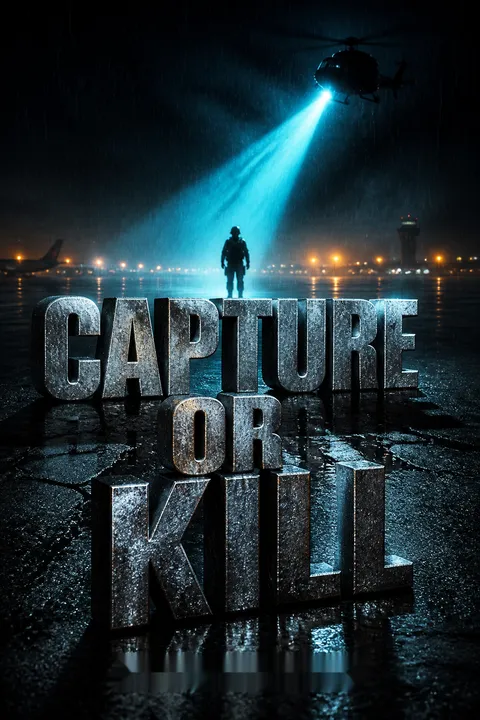
Capture or Kill is structured around two operations that keep threatening to collide: stopping an Iranian plot involving night-capable missiles and proving that Osama bin Laden is inside an Abbottabad compound. The plot’s suspense comes from incomplete knowledge. A downed helicopter confirms that Ruyintan has a dangerous weapon, but neither the number of missiles nor their intended targets are initially clear. Likewise, surveillance makes the compound suspicious without proving who lives there. Each new fact narrows the possibilities while making delay more expensive.
Rapp’s defining strength is not invulnerability but his speed at converting fragments into action. He changes targets, adopts a prisoner’s disguise, and improvises access in Abbottabad, yet the story repeatedly shows that his success relies on others: Coleman’s operators, Garner’s Rangers, an Apache crew, Kennedy’s political judgment, and Noreen’s cover. His independence is therefore both a tactical advantage and a source of strain. Rapp can move before institutions agree, but he cannot make the consequences of his choices private.
The Iranian characters complicate the familiar division between American protectors and foreign enemies. Ashani’s opposition to Ruyintan comes from loyalty to Iran and fear of an avoidable catastrophe. Moradi is caught between political ambition, survival, and the possibility that the state’s own strategy is suicidal. Their motives do not make them allies in any uncomplicated sense; they make the conflict intelligible as a struggle within competing definitions of patriotism.
The emotional resolution resists the thriller’s temptation to equate victory with healing. The mission succeeds, but Noreen’s death and the memorial star remain. Rapp’s later confession about panic attacks recasts his relentless movement as a defense against grief, while his concern for Irene offers care without sentimentality. The book’s central lesson is practical rather than consoling: decisive action can prevent disaster, but it cannot restore what that action costs.
Review Summary
Capture or Kill receives mixed reviews from readers. Many praise Bentley's writing style, character development, and action sequences, appreciating his take on a younger Mitch Rapp. Some fans find the book engaging and true to Flynn's legacy. However, others criticize the decision to set the story in 2011, feeling it disrupts the series' continuity. Some readers find the narrative overly descriptive and slow-paced. Despite varying opinions, most agree that Bentley shows potential in continuing the Mitch Rapp series.
People Also Read









Characters
Mitch Rapp
The CIA’s lone hunterRapp is the CIA’s most capable counterterrorism operative, a trained assassin whose talent lies as much in reading people and improvising as in combat. He prefers working alone, but his missions increasingly depend on trusted partners such as Irene Kennedy and Scott Coleman. Rapp is decisive and unsentimental in the field, yet not indifferent: his pursuit of FAIRBANKS is rooted in a murdered journalist, and his choices are shaped by a fierce refusal to leave American personnel behind. He understands his own appetite for violence and tries to keep it subordinate to the mission. Beneath his confidence sits unresolved grief, which he rarely allows others to see.
Irene Kennedy
The CIA’s strategic centerKennedy is the CIA director and Rapp’s longtime boss, balancing the demands of intelligence, presidential authority, and the safety of her officers. Her careful reasoning contrasts with Rapp’s instinctive speed, but she knows that controlling him too tightly can make an operation less effective. She advocates for evidence before action while recognizing that evidence can arrive only through risk. Kennedy is also a mother, and her private devotion to Tommy exists alongside a professional life that rarely permits emotional ease. Her authority is built not on distance from field work but on having learned how decisions made in Washington reach the people operating under cover.
Azad Ashani
Iran’s uneasy spymasterAshani leads Iran’s Ministry of Intelligence, a veteran officer whose loyalty to his country is stronger than his loyalty to the regime’s most aggressive faction. He distrusts the Quds Force’s appetite for escalation and understands how a single covert operation could provoke consequences far beyond its intended target. His intelligence background makes him cautious about what he reveals and to whom, while his devotion to his wife and daughters gives his political calculations an intimate center. Ashani is neither an uncomplicated ally nor a simple defector. He wants to protect Iran and his family without handing foreign powers every secret he has spent a career guarding.
Dariush Ruyintan
The Quds Force commanderRuyintan is an Iranian Quds Force commander with a record of directing operations against American forces. He combines field experience with an engineer’s understanding of weapons, and his polished public manner conceals a disciplined capacity for violence. Ruyintan believes that strategic shocks can reshape political relationships, making him more dangerous than a commander focused only on battlefield victories. He recognizes skill in others and uses patience, intimidation, and selective disclosure to draw them toward his plans. His rivalry with Rapp is not merely personal: each man understands that the other can alter the outcome of a much larger contest.
Noreen Ahmed
The undercover case officerNoreen is a CIA case officer on terminal leave, trained at the Farm and familiar with Pakistan through family heritage and language. Her marriage to Brian has been strained by the demands of intelligence work, and she has begun questioning whether the profession is right for her. That doubt does not erase her discipline or her ability to think under pressure. Noreen notices small security details, follows a surveillance-detection route, and can inhabit an ordinary cover without making it theatrical. She is not a combat specialist, and the distinction matters: her effectiveness comes from judgment, cultural fluency, and emotional control rather than force.
Mike Nash
The field officer turned executiveNash is a former Marine and CIA paramilitary officer who has recently moved into senior management. He is still learning how to use executive authority without losing the practical instincts that made him valuable in the field. His friendship with Rapp is close but complicated by the fact that Rapp remains difficult to direct, even on paper. Nash’s assignment in Pakistan requires him to attract attention through diplomacy rather than combat, a role that tests his patience and identity. He is also a husband and father, and his family has helped him recognize the personal costs of a life spent in operations.
Scott Coleman
Rapp’s trusted team leaderColeman is a former SEAL commander who now supports Rapp through a small, highly capable team. He is experienced enough to question a plan without losing faith in the person leading it, and his calm under pressure makes him an effective counterweight to Rapp’s intensity. Coleman thinks in terms of people, timing, and tactical risk, especially when a mission requires capturing an enemy rather than simply killing him. His loyalty is practical rather than blind: he speaks plainly, protects his operators, and accepts responsibility when events move beyond the plan.
Darian Moradi
The cleric in intelligenceMoradi is Ashani’s young deputy at the Ministry of Intelligence, a cleric whose political connections brought him into a world he is still learning to navigate. He is observant and thoughtful, but his lack of operational experience leaves him vulnerable to more seasoned players. Moradi understands the danger of the Quds Force’s ambitions and has to decide how much he can risk in resisting them. His religious identity does not make him a zealot; it coexists with a pragmatic concern for Iran’s survival and his own ability to stay alive.
Mark Garner
The Ranger company commanderGarner commands the Rangers sent against the HIG compound. A West Point graduate from North Carolina, he is patriotic, ambitious in the field, and impatient with political limits that leave dangerous targets untouched. The ambush forces him to confront the difference between leading an assault and managing a rescue from outside the objective. Garner is emotionally invested in his soldiers, but he continues to think in operational terms, seeking intelligence and resources rather than treating concern as a substitute for action.
Fred Saxton
The captured RangerSaxton is a Ranger sergeant who disappears during the assault on the HIG compound. He is tough, sharp-tongued, and stubbornly self-reliant, traits that help him endure captivity but do not make him invulnerable. His inability to swim becomes a practical danger during the escape, forcing him to trust Rapp in a situation where neither man has time for pride. Saxton’s dry humor is a form of resistance, a way to preserve his judgment and identity while surrounded by men who want to turn him into leverage.
Stan Hurley
Rapp’s hard-edged mentorHurley is a veteran clandestine operative who trained Rapp and still knows how to equip and challenge him. He is blunt, irritable, and deeply experienced, with a field philosophy built from decades of surviving operations that rarely went as planned. Their relationship is affectionate but not gentle. Hurley can criticize Rapp without diminishing his abilities, and Rapp can push back without denying the debt he owes his mentor. Hurley’s arrival brings both practical support and a reminder that Rapp’s independence grew out of years of instruction.
Irene Kennedy’s son Tommy
Kennedy’s family anchorTommy is Irene’s young son, an enthusiastic lacrosse player whose ordinary childhood sits at the edge of his mother’s secretive work. His games give Kennedy a place to be a parent rather than a director, and his presence helps make the private costs of her position visible without turning him into part of the intelligence plot.
CYCLONE
The HIG mountain warlordCYCLONE is a HIG leader with influence among fighters along the Afghan-Pakistani border. He is a survivor who understands that loyalties shift and that survival often depends on reading the person across from him. His criminal pragmatism sits beside the traditions of hospitality and obligation that shape his dealings with Rapp. He can be calculating without being foolish, and he sees value in people and information as readily as in weapons.
President Alexander
The commander in chiefAlexander is the president who must decide whether the evidence justifies an operation in Pakistan with potentially enormous diplomatic consequences. A former football player, he is charismatic but increasingly burdened by the failures and risks of wartime decisions. He respects Kennedy’s judgment while insisting that the intelligence meet a high standard before he authorizes action. His caution is not simple indecision; he understands that a mistaken order could provoke a crisis between nominal allies.
Doug Peluso
The Green Beret partnerPeluso is a Green Beret team sergeant whose detachment works alongside Garner’s Rangers and Afghan commandos. He adapts when the Chinook crashes, redirecting his people to help the wounded and secure the scene. His practical cooperation helps keep the failed raid from becoming an even larger disaster.
Kelsey Smith
The Apache troop commanderSmith leads an Army Apache troop at Jalalabad. He values initiative and accepts a difficult reconnaissance task even when higher-level schedules and safety restrictions complicate it. His aviation expertise allows Coleman’s team to search for the Iranian convoy and conduct a precise interception.
Saad Chutani
Pakistan’s political leaderChutani is Pakistan’s president, a former general who presides over a government balancing foreign pressure, domestic politics, and the country’s security establishment. He treats Nash’s visit as a negotiation over the costs of American operations, not merely a diplomatic courtesy.
Bilal Dogar
The quiet ISI intermediaryDogar is an ISI officer who keeps a low profile while moving information between Pakistani and American officials. His discretion makes him useful in a setting where overt contact can attract dangerous attention. He approaches Nash with a message concerning the Iranians.
Plot Devices
Farid Saeed identity
A portable false selfRapp’s cover as Farid Saeed, an Iraqi former soldier turned illicit businessman, lets him move through the region without presenting himself as an American. The identity is built to withstand scrutiny, with a history, accent, and connections that make it useful for more than a single assassination. Ruyintan’s recognition of the cover turns it from shelter into a point of leverage, while Rapp later uses it to approach Iranian and HIG networks. The legend demonstrates that disguise in espionage is not a costume alone; it is a biography that must survive other people’s expectations.
Night-seeking missiles
A new aerial threatRuyintan’s modified shoulder-fired missiles can target helicopters at night, undermining an assumption that has protected American aircraft. Their limited number makes them seem like a localized hazard, but the missing weapons imply a larger purpose. The missiles link the Chinook ambush, the Iranian convoy, and the planned operation around Abbottabad. Their targeting mechanism is ultimately identified as acoustic, giving the intelligence gathered in the field a practical countermeasure value. The device turns technical uncertainty into strategic suspense: until the missiles are located, every low-flying aircraft may be exposed.
The Abbottabad compound
A fortress hiding proofThe compound’s high walls, razor wire, divided courtyards, private utilities, and careful household routines make it difficult to learn who lives inside. A CIA safehouse can observe the property but cannot establish its central fact: whether bin Laden is there. The failed medical visit, Noreen’s vaccination cover, and Rapp’s electricity-worker disguise each try to turn ordinary access into evidence without triggering a breach. The compound is both a physical obstacle and a test of intelligence discipline. The protagonists must distinguish suspicion from proof while the opportunity to act narrows.
The staged prisoner rescue
A disguise within a rescueRapp allows himself to be transported with captured HIG fighters so Coleman’s team can stage an attack that appears to free him. The performance gives Rapp a plausible reason to leave with CYCLONE, whose local authority can carry him into the mountains. The plan depends on controlled violence, selected weapons, and a convincing distinction between attackers and captives. It also depends on CYCLONE believing that Rapp’s interests align with his own. The ruse grants access to the hidden cave network, but its success brings Rapp face-to-face with an Iranian who recognizes him.
The surveillance toolkit
Tracking without contactRapp’s treated clothing and ingested tracer compounds allow CIA personnel to follow him with remote sensors even after he is searched and separated from conventional communications. The tools help Coleman’s team locate Rapp and Saxton in the mountains, while satellite imagery and covert cameras support the Abbottabad operation. These technologies are useful but imperfect: weather, terrain, limited satellite windows, and enemy countermeasures all restrict what the operators can see. The devices amplify human judgment rather than replace it. A sensor can mark a location, but it cannot decide what the people there intend to do.
FAQ
Synopsis & Basic Details
What is Capture or Kill about?
- High-stakes intelligence race: Capture or Kill plunges readers into a relentless race against time as CIA operative Mitch Rapp navigates a treacherous landscape of international espionage. After a Ranger raid in Afghanistan is ambushed, Rapp uncovers a sinister Iranian plot involving advanced missiles and a high-value target, forcing him to make impossible choices to protect American lives and national security.
- Unsanctioned covert operations: The narrative follows Rapp as he deviates from conventional protocols, undertaking unsanctioned missions to gather critical intelligence and neutralize threats. His journey takes him from the bustling streets of Islamabad to the rugged mountains of Afghanistan, culminating in a desperate pursuit to prevent a catastrophic attack.
- Geopolitical chess match: Beyond the action, the story explores the complex geopolitical tensions between the U.S., Iran, and Pakistan, revealing the intricate web of alliances, betrayals, and hidden agendas that define the war on terror. It's a high-stakes game where loyalty is fluid and the lines between ally and adversary are constantly blurred.
Why should I read Capture or Kill?
- Relentless, high-octane action: Don Bentley delivers a pulse-pounding thriller filled with expertly choreographed combat sequences, daring infiltrations, and a constant sense of urgency. Readers seeking non-stop action and tactical realism will find themselves immersed in Rapp's dangerous world, from helicopter crashes to close-quarters gunfights.
- Deep psychological character dives: The novel offers a compelling look into the minds of its protagonists, particularly Mitch Rapp and Irene Kennedy, exploring their personal sacrifices, moral dilemmas, and the psychological toll of their work. It delves into themes of duty, trauma, and the blurred lines of justice, providing a richer understanding of the human cost of espionage.
- Timely geopolitical relevance: Set against the backdrop of the hunt for Osama bin Laden and the complexities of U.S. relations with Pakistan and Iran, the story feels incredibly current. It provides a fictionalized yet insightful commentary on the challenges of counterterrorism, the nature of intelligence gathering, and the delicate balance of power in a volatile region.
What is the background of Capture or Kill?
- Post-9/11 counterterrorism landscape: The novel is set in April-May 2011, directly referencing the actual raid to capture or kill Osama bin Laden (Operation Neptune Spear). The author's note explicitly states, "WHILE this book draws upon some of the actual elements surrounding the raid to capture or kill Osama bin Laden, it is still a work of fiction." This historical context grounds the high-stakes narrative in a period of intense counterterrorism efforts.
- Complex U.S.-Pakistan-Iran relations: The story highlights the fraught relationship between the U.S. and Pakistan, an "unreliable ally" (Chapter 16) whose intelligence service (ISI) is suspected of double-dealing and harboring terrorists. Simultaneously, it explores the deep-seated animosity and covert warfare between the U.S. and Iran, particularly through the actions of the Quds Force and MOIS, reflecting real-world geopolitical tensions.
- Technological and operational realism: Bentley, a former FBI agent and Apache pilot, infuses the narrative with authentic details about military and intelligence operations, from night-vision technology and drone surveillance (Reaper UAV, Chapter 24) to specialized weapons (explosively formed penetrators, Chapter 4) and clandestine tradecraft (burner phones, dead drops, Chapter 6). This technical accuracy enhances the immersion and credibility of the high-stakes missions.
What are the most memorable quotes in Capture or Kill?
- "Sometimes survival required a willingness to do the unthinkable." (Ashani, Prologue): This quote encapsulates Azad Ashani's desperate moral calculus as he contemplates betraying his country to save his family, setting the stage for his pivotal role as a reluctant informant. It highlights the extreme pressures and ethical compromises inherent in the world of espionage.
- "The old rules no longer applied." (Rapp, Chapter 1): Mitch Rapp's internal declaration regarding his mission to kill FAIRBANKS signifies a shift in the U.S. approach to counterterrorism, moving beyond diplomatic niceties to blunt-force action. This quote defines Rapp's relentless, uncompromising nature and the escalating stakes of the global conflict.
- "I will never fail you like I failed them, Irene. Never." (Rapp, Epilogue): This deeply personal confession from Rapp to Irene Kennedy reveals the profound impact of his fiancée's death on his psyche and his unwavering commitment to protecting those he cares about. It underscores the emotional core beneath his hardened exterior and explains his relentless pursuit of justice.
What writing style, narrative choices, and literary techniques does Don Bentley use?
- Third-person limited perspective: Bentley primarily employs a tight third-person limited point of view, often shifting between key characters like Rapp, Kennedy, Nash, Ashani, and Garner. This allows readers deep access to their internal thoughts, motivations, and emotional states, building empathy and tension, as seen in Rapp's internal monologue about FAIRBANKS in Chapter 12.
- Propulsive, action-driven pacing: The narrative maintains a relentless, high-stakes pace, characterized by short, impactful chapters and frequent scene changes. Bentley uses vivid, visceral descriptions of combat and tactical maneuvers, creating an immersive and adrenaline-fueled reading experience, exemplified by the Chinook ambush in Chapter 9 and Rapp's cave escape in Chapter 34.
- Foreshadowing and thematic echoes: Subtle hints and recurring motifs are woven throughout the story, such as Ashani's worsening cough foreshadowing his terminal illness (Prologue) or the repeated mention of "missing missiles" (Chapter 72) building suspense. Bentley also uses contrasting character arcs and mirrored relationships to explore themes of loyalty, betrayal, and the personal cost of war.
Hidden Details & Subtle Connections
What are some minor details that add significant meaning?
- Ashani's Red Handkerchief: The recurring detail of Ashani's "red handkerchief" (Prologue) and his refusal to check it for blood speckles (Chapter 17) subtly but powerfully symbolizes his terminal illness and his acceptance of his impending death. This seemingly minor detail underscores his desperate motivation to secure his family's future, driving his risky betrayal.
- Rapp's Meticulous French Persona: Rapp's exaggerated attention to detail, like perfectly placing his spoon "exactly ninety degrees from the cup" (Chapter 1), is not just a quirk but a deliberate part of his "legend" as a meticulous French businessman. This subtle act of tradecraft highlights his deep commitment to his cover and his ability to manipulate perceptions, even in high-stress situations.
- Compound's Trash Burning: The observation that the bin Laden compound's residents "burn their trash" (Chapter 59) is a seemingly mundane detail that signifies an extreme level of operational security. This small act reveals the inhabitants' paranoia and meticulousness, reinforcing the CIA's belief that a high-value target is indeed present and actively trying to avoid detection.
What are some subtle foreshadowing and callbacks?
- Ruyintan's "Unambiguous Message": Ruyintan's statement that killing FAIRBANKS would send "an unambiguous message—the old rules no longer applied" (Chapter 1) subtly foreshadows the escalating, brutal nature of the conflict. This callback to Rapp's initial mission sets the tone for the subsequent unsanctioned assassinations Rapp carries out, demonstrating the shift in the war on terror's rules of engagement.
- Irene's Panic Attacks: The brief, almost imperceptible moments where Irene struggles with her composure, like her chest tightening (Chapter 25) or fighting the urge to shiver (Chapter 26), subtly foreshadow her later revelation of panic attacks. This callback to her past kidnapping and torture by Iranian Quds Force (Chapter 53) adds a layer of psychological depth, showing the lasting trauma of her experiences.
- The "Missing Missile" Motif: The repeated discovery of "missing missiles" – first the two from Coleman's interdiction (Chapter 72), then the one from Ruyintan's van (Chapter 92) – serves as a crucial callback and escalating plot device. It subtly hints at Ruyintan's larger, more complex plan beyond simple attacks, forcing Rapp to continually re-evaluate the threat and ultimately leading him to the final confrontation.
What are some unexpected character connections?
- Moradi as Ashani's Unwitting Pawn: Darian Moradi, initially presented as a rising cleric and Ashani's deputy, is unexpectedly revealed to be an unwitting pawn in Ashani's scheme to contact Rapp. Ashani "played" Moradi by having him suggest the Farid Saeed dossier to Ruyintan (Chapter 51), creating a subtle, indirect connection between Ashani and Rapp that Moradi himself was unaware of, highlighting Ashani's cunning.
- Rapp's Personal Vendetta for Irene: The brutal interrogation of Moradi reveals Rapp's deeply personal connection to Irene Kennedy's past kidnapping and torture. Rapp explicitly states, "Your Quds Force thugs snatched one of my closest friends and beat the shit out of her" (Chapter 53), transforming his professional duty into a personal vendetta against those responsible, an unexpected layer of motivation.
- Saxton's Unexpected Camaraderie with Rapp: Despite their initial antagonistic dynamic (Rapp pissing on him, Saxton's "I hate you" in Chapter 40), Ranger Fred Saxton and Rapp develop an unexpected, albeit begrudging, camaraderie. Saxton's resilience and Rapp's willingness to save him forge a bond that transcends their initial animosity, showcasing the unexpected connections formed under extreme duress.
Who are the most significant supporting characters?
- Stan Hurley: The Unseen Hand: Rapp's mentor, Stan Hurley, plays a crucial, albeit initially unseen, role in Rapp's operations. His unexpected arrival in Islamabad with a full kit (Chapter 89) and his willingness to "save your ass" (Chapter 89) provides Rapp with critical tactical support and a much-needed sounding board, reinforcing his enduring influence on Rapp's methods and mindset.
- Derek: The Resourceful CIA Pilot: Derek, the CIA Air Branch pilot, emerges as a vital supporting character, demonstrating exceptional skill and resourcefulness. His ability to "steal" a Bell JetRanger (Chapter 88) and fly it under extreme conditions, including a crash landing (Chapter 94), is instrumental in Rapp's desperate pursuit of Ruyintan, highlighting the unsung heroes of clandestine operations.
- Bilal Dogar: The Subtle ISI Ally: Bilal Dogar, the ISI corporal, initially appears as a minor contact, but his subtle assistance proves significant. His willingness to provide uniforms and the patrol car (Chapter 78), despite the risks, underscores the complex, often contradictory, nature of alliances within Pakistan's intelligence apparatus, hinting at internal divisions within the ISI.
Psychological, Emotional, & Relational Analysis
What are some unspoken motivations of the characters?
- Ashani's Legacy of Protection: Beyond merely saving his family, Ashani's unspoken motivation is to leave a legacy of protection for them, even in death. His terminal illness (Prologue) and the realization that he "could no longer shoulder the effort to save himself and his nation alone" (Chapter 17) drive him to make a deal with the Americans, ensuring his family's safety long after he's gone, a profound act of paternal love.
- Rapp's Quest for Absolution: While Rapp claims to have moved beyond revenge (Chapter 4), his relentless pursuit of Ruyintan and other Iranian operatives is subtly driven by a deeper, unspoken motivation: a quest for absolution for his perceived failure to protect Anna (Epilogue). His brutal efficiency is a manifestation of his need to prevent similar tragedies, making his actions a form of self-punishment and redemption.
- Nash's Search for Relevance: Mike Nash's eagerness to engage in high-stakes operations, despite his new executive role, is motivated by an unspoken desire to prove his continued relevance in the field. His internal struggle with being a "suit" (Chapter 46) and his longing to "get back in the game" (Chapter 73) reveal a deep-seated need for the adrenaline and purpose that clandestine operations provide, even at personal cost.
What psychological complexities do the characters exhibit?
- Irene's Hidden Trauma and Resilience: Irene Kennedy exhibits profound psychological complexity through her struggle with panic attacks, a direct consequence of her past torture by Iranian Quds Force (Epilogue). Her ability to maintain composure and lead the CIA despite these debilitating episodes showcases immense resilience, but also the hidden psychological scars borne by those in her profession.
- Rapp's Intuitive "Sixth Sense": Rapp displays a unique psychological complexity through his "operational sixth sense" (Chapter 15), an intuitive ability to perceive threats and opportunities beyond logical deduction. This manifests as a visceral "feeling" that bin Laden is in the compound (Chapter 71) or sensing an ambush, highlighting a predatory instinct honed by years of combat and a deep understanding of human behavior.
- Garner's Burden of Command: Captain Mark Garner's psychological state is marked by the immense burden of command, particularly after the loss of his Rangers. His visible anguish, dark rings under his eyes (Chapter 30), and desperate pursuit of his missing soldier reveal the profound emotional toll of leadership in combat, contrasting with the detached analytical approach of some intelligence officers.
What are the major emotional turning points?
- Rapp's Decision to Save Saxton: The emotional turning point for Rapp occurs when he prioritizes the rescue of Sergeant Saxton over the immediate assassination of FAIRBANKS (Chapter 6). This decision, driven by the Ranger Creed's ethos of "never leave a fallen comrade" (Chapter 25), signifies Rapp's evolution from a purely revenge-driven killer to a protector of his fellow operatives, deepening his character.
- Noreen's Transformation from Fear to Resolve: Noreen Ahmed experiences a significant emotional shift from initial fear and stammering (Chapter 58) to resolute determination after Rapp's "test." Her defiant "These men can die of polio for all I care" (Chapter 67) after being manhandled, marks her emotional turning point, showcasing her inner strength and commitment to the mission despite personal indignity.
- Irene's Confrontation with Her Trauma: The most profound emotional turning point for Irene is her raw, vulnerable conversation with Rapp in the epilogue, where he acknowledges her panic attacks and shares his own past struggles. This moment of shared vulnerability allows Irene to begin processing her trauma, signaling a path toward healing and a deeper bond of trust with Rapp.
How do relationship dynamics evolve?
- Rapp and Irene: From Handler to Confidantes: Their relationship evolves from a traditional handler-asset dynamic to one of deep mutual trust and confidantes. Irene increasingly relies on Rapp's intuition and judgment, even when it defies protocol (Chapter 71), while Rapp, in turn, offers her personal support and understanding regarding her trauma (Epilogue), showcasing a profound, almost familial bond.
- Nash's Struggle for Identity and Acceptance: Mike Nash's relationship with Rapp is initially defined by his struggle to adapt to his new executive role and his desire for Rapp's approval. His frustration at being sidelined (Chapter 73) and Rapp's blunt assessment of his "executive persona" (Chapter 73) highlight this tension. However, Rapp's eventual acknowledgment of Nash's "good work" (Chapter 87) signifies a shift towards mutual respect and acceptance of their new dynamic.
- Rapp and Saxton: Adversaries to Allies: The dynamic between Rapp and Sergeant Fred Saxton transforms from initial antagonism, marked by Rapp's "pissing" on him and Saxton's defiant "I hate you" (Chapter 40), to a grudging but effective alliance. Their shared ordeal in the cave and waterfall forges a bond of mutual respect, culminating in Saxton's humorous acceptance of being rescued by a SEAL (Chapter 44), highlighting the unexpected camaraderie forged in combat.
Interpretation & Debate
Which parts of the story remain ambiguous or open-ended?
- Extent of Pakistani Complicity: The novel leaves ambiguous the full extent of the Pakistani government's complicity in harboring terrorists like bin Laden. While the ISI is described as an "unreliable ally" (Chapter 16) and elements within it are suspected of thwarting the U.S., the direct involvement of high-ranking officials in protecting bin Laden remains an open question, allowing for reader interpretation of their true allegiances.
- Moradi's Long-Term Loyalty: Darian Moradi's ultimate loyalty remains open-ended. While he provides critical intelligence under duress (Chapter 53) and later opens a "diplomatic back channel" (Epilogue), his true motivations—whether genuine defection, self-preservation, or a deeper, long-term Iranian strategy—are left for the reader to ponder, suggesting his continued role as a complex, morally ambiguous character.
- Future of Rapp's Unsanctioned Operations: The epilogue reveals Rapp's continued "string of killings" (Epilogue) of Iranian and Hezbollah operatives, unsanctioned by Irene. This leaves open the question of how long Rapp can operate outside official channels without severe repercussions, and whether Irene's tacit approval will eventually lead to a major political fallout or a shift in U.S. policy.
What are some debatable, controversial scenes or moments in Capture or Kill?
- Rapp's "Pissing" on Saxton: Rapp's deliberate act of urinating on Sergeant Saxton (Chapter 29) to provoke a reaction is a highly controversial moment. While tactically effective in confirming Saxton's identity and resilience, it raises ethical questions about Rapp's methods and the dehumanizing aspects of his tradecraft, sparking debate among readers about the line between necessary brutality and gratuitous cruelty.
- The Brutal Interrogation of Moradi: Rapp's torture of Darian Moradi, including threatening to "snap your fucking wrist like kindling" and "remove your eyeball" (Chapter 53), is a deeply controversial scene. It forces readers to confront the efficacy versus morality of extreme interrogation techniques, prompting debate on whether the ends (preventing a major attack) justify such violent means, especially against a non-combatant intelligence official.
- The Decision to Proceed Without Definitive Proof: President Alexander's decision to launch the SEAL raid on bin Laden's compound based solely on Irene's "assurances that Rapp would come through" (Chapter 76) is a highly debatable moment. It highlights the immense pressure on political leaders and intelligence chiefs to act on imperfect information, raising questions about the acceptable level of risk in high-stakes national security operations and the potential for catastrophic failure.
Capture or Kill Ending Explained: How It Ends & What It Means
- Bin Laden's Demise and Noreen's Sacrifice: The novel culminates in the successful SEAL Team 6 raid on Osama bin Laden's compound, directly facilitated by Rapp's last-minute confirmation of bin Laden's presence and his neutralization of Ruyintan and the remaining missiles. However, this victory comes at a tragic cost with the death of Noreen Ahmed, whose bravery in the compound and during the plane interdiction is ultimately recognized with a star on the CIA Memorial Wall (Chapter 85, Epilogue).
- Rapp's Unsanctioned Retribution and Irene's Trauma: In the aftermath, Rapp continues his unsanctioned assassinations of Iranian and Hezbollah operatives responsible for Irene's past torture, acting as a personal avenger. This reveals his deep loyalty and his own unresolved trauma. Irene, grappling with panic attacks stemming from her ordeal, finds solace in Rapp's understanding and his brutal form of justice, highlighting the profound psychological toll of their work.
- The Ongoing, Evolving War on Terror: The ending signifies that while a major victory has been achieved, the war on terror is far from over. The revelation of Iran's sophisticated missile technology and their continued efforts to destabilize the region (Epilogue) underscores the persistent and evolving nature of the threat. The personal sacrifices of characters like Noreen and the psychological burdens carried by Rapp and Irene emphasize that the fight continues, often with unseen costs and moral ambiguities.
Mitch Rapp Series Series








About the Author
Download PDF
Download EPUB
.epub digital book format is ideal for reading ebooks on phones, tablets, and e-readers.








