

Plot Summary
Prologue
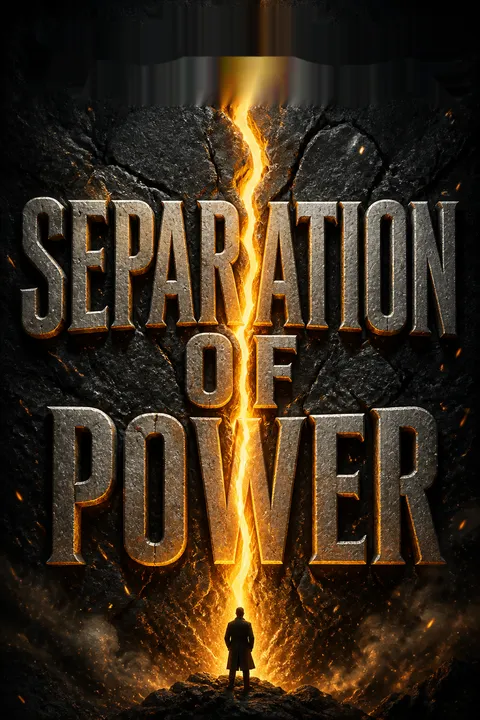
At Thomas Stansfield's quiet South Dakota funeral, CIA counterterrorism chief Irene Kennedy grieves for the mentor who prepared her to lead the Agency. President Hayes has promised her the directorship, but Washington will test her before she can take it.
Kennedy considers abandoning the job and raising her young son far from the capital's political predators. Remembering the promise she made to Stansfield, she leaves his grave and returns to Washington, carrying both his legacy and the knowledge that powerful people fear what he knew.
The funeral frames the novel's political struggle as a question of inheritance. Kennedy inherits not only a powerful office but also Stansfield's methods, secrets, and enemies. Her private grief collides with public duty: retreat would protect her and her son, yet would abandon the institution her mentor shaped. The opening makes leadership less a prize than an obligation accepted under pressure. It also places the story's central tension in view early: whether secret power can be passed on responsibly, or whether its accumulated knowledge makes the new leader dangerous to everyone who benefited from it.
Stansfield's Empty Chair
Mark Ellis, a Silicon Valley investor whose fortune has shrunk with the market, flies to Senator Hank Clark's private Bahamian compound demanding a way to restore his access to intelligence. Ellis had profited from Echelon, an NSA surveillance program that supplied business information to favored American companies, until a whistleblower exposed it and the program was shut down.
Clark reassures him that Kennedy can still be stopped, though he warns that she may have inherited Stansfield's damaging files. Ellis wants a compliant CIA director; Clark wants the presidency. Their bargain turns Kennedy's confirmation into a threat to both men's ambitions, and Clark begins looking for someone else to do the politically dangerous work.
Ellis treats intelligence as a market advantage, not a public trust. Clark is more patient: he understands that access is valuable only when its recipient can deny having sought it. Their alliance reveals two kinds of ambition working together, one impatiently transactional, the other procedural and concealed. Echelon matters because its exposure has not ended the appetite for surveillance; it has only interrupted the profits. Kennedy's nomination threatens the arrangement by putting an independent custodian over the secrets. The novel thus begins its political plot with a conflict over who may convert state knowledge into private wealth.
Rapp's German Setup
Mitch Rapp has spent a decade killing terrorist leaders for the CIA's secret Orion Team, but he now hopes to leave field work and build a life with his girlfriend, White House reporter Anna Rielly. His last operation, in Germany, was meant to stop industrialist Heinrich Hagenmiller from selling nuclear equipment to Iraq.
After Rapp kills Hagenmiller, fellow operatives Jane and Tom Hoffman shoot him and flee, leaving him beside the body. Kevlar and a head injury keep him alive long enough to escape Germany alone. Back in Washington, he learns that former CIA security officer Peter Cameron arranged the ambush, then died before Rapp could question him. With the person behind Cameron still unknown, Rapp cannot safely retire.
Rapp's competence has always depended on separating himself from ordinary life. The German ambush makes that separation untenable: the danger has followed him home and implicated the institution he trusted. His wish to stop killing is real, but it is not yet a decision he can act on while the threat remains unidentified. The episode also unsettles the familiar moral structure of his work. He is no longer simply hunting enemies abroad; someone inside the American system has made him a target. His survival instinct now serves a private purpose as well as a national one: protecting a possible future with Anna.
Clark Loads the Trap
Clark needs a public reason to block Kennedy without appearing to betray his promise to President Hayes. He encourages Albert Rudin, a House intelligence chairman who already despises the CIA, to investigate her.
Clark then steers CIA deputy director Jonathan Brown toward Norbert Steveken, a former FBI agent, so information about the Orion Team can reach Rudin through an apparently independent channel. Rudin believes he is defending congressional oversight and protecting his party. Brown, frustrated that Kennedy is favored for the directorship, cooperates.
Clark's arrangement gives Rudin a trail toward classified operations while insulating the senator from the coming attack. The target is Kennedy, but the evidence could expose Rapp and destroy the secrecy that has protected the Orion Team.
Clark's method is to make other people's convictions do his work. Rudin's hostility to the CIA is genuine, Brown's professional resentment is genuine, and Steveken's appetite for a difficult assignment is genuine. Clark connects these motives while concealing his own stake. This is more than political manipulation: it is a study in how institutions can be weakened by actors who sincerely believe they are repairing them. Rudin mistakes access to a secret for proof of corruption, while Clark uses his fear of exclusion to make him reckless. The chain of intermediaries lets each participant claim limited responsibility, even as the consequences grow harder to contain.
Three Bombs Under Baghdad
Mossad chief Ben Freidman arrives in Washington with photographs showing North Korean nuclear physicist Park Chow Lee entering Baghdad's Al Hussein Hospital. Israeli intelligence believes Lee and other North Korean scientists have helped Saddam Hussein hide three nearly completed nuclear weapons in a hardened facility beneath the hospital.
President Hayes, alarmed that his own intelligence services missed the construction, orders Kennedy to verify the report and tells General Flood to prepare military options.
Satellite images of years of excavation and concrete work support the Israeli warning. A direct air strike could destroy the weapons, but would likely kill patients above them. Hayes therefore keeps the circle of people informed small while the military considers a riskier way to reach the bunker.
The hospital is both a physical shield and a moral trap. Saddam's decision to place a weapons facility beneath patients transfers the cost of his concealment to civilians, while forcing Hayes to choose between immediate danger and foreseeable casualties. Kennedy's satellite evidence gives the warning credibility, but the president's distrust of Israeli motives prevents simple reliance on an ally. The crisis exposes a central asymmetry of political decision-making: the person who orders violence must answer publicly for consequences created by an adversary. Hayes's insistence on verification is not hesitation for its own sake. It is an attempt to keep intelligence, moral responsibility, and military action aligned.
A Lover in Milan
Kennedy sends Rapp to Milan to question Donatella Rahn, a former Mossad operative who may connect Cameron to the person who hired him. Rapp travels with Anna, intending to ask her to marry him, and carries a concealed pistol despite the risks of bringing it into Italy. At Donatella's Armani office, their old intimacy resurfaces before Rapp asks whether she was in Washington when Cameron died.
Her hesitation confirms what he suspected: she killed Cameron. Donatella admits she was in the United States but will not explain who arranged the job. She also learns that Rapp is serious about Anna, leaving both their professional history and their personal past unsettled. They agree to meet again, but someone is already watching Donatella's home.
Milan puts Rapp's desired future beside the life he hopes to leave. The engagement ring and the concealed weapon travel in the same luggage, making his divided identity literal. Donatella's welcome is affectionate, but Rapp's questioning turns their reunion into an intelligence interview. His decision not to tell Anna about their former relationship protects him from an uncomfortable conversation at the cost of her trust. Donatella, meanwhile, is asked to choose between a past bond and present loyalties. The scene's emotional pressure comes from the fact that neither intimacy nor secrecy stays in its proper compartment.
The Flat Turns Violent
Rapp spots a watcher outside Donatella's apartment and runs to intercept him while Donatella enters alone. Two Mossad operatives attack her inside; she is shot in the shoulder, kills one, and wounds the other before Rapp drags the surviving watcher upstairs. Donatella then shoots the captive, denying Rapp a chance to question him.
Under morphine and pressure, she admits that Freidman arranged Cameron's killing through her freelance network and paid her half a million dollars. She insists Mossad itself was not officially involved. Rapp gets her medical treatment through CIA contacts and flies her to the United States, but the crisis destroys the evening with Anna: Donatella reveals their past, and Anna leaves the hotel.
The attack converts Donatella's divided loyalties into immediate bodily danger. She has been valuable to powerful institutions, but value offers no protection once she becomes a loose end. Rapp's rescue is both practical and personal, shaped by their history, while her execution of the captive shows how little control he has over her choices. Anna's departure grows from a different breach: Rapp withheld a fact that mattered to her, then brought his former lover into their room under emergency conditions. The sequence binds national-security secrecy to intimate mistrust, showing how the habits that protect Rapp in the field corrode the relationships he wants to preserve.
The Mission Replaces Marriage
After bringing Donatella back from Italy, Rapp learns that Saddam's weapons crisis needs an immediate answer. Colonel Gray proposes sending Delta Force commandos into Baghdad during an air campaign, rather than simply bombing the hospital and killing the patients above the bunker. Rapp agrees to help, though Anna has already told him she cannot live with the danger and secrecy of his work.
At Fort Bragg, he studies the plan and rejects a risky solo reconnaissance trip into Baghdad. Instead, he offers a way to impersonate Uday Hussein, whose white Mercedes convoys can move through Iraq largely unchallenged. Rapp knows Uday's gait, limp, speech, and scars, and his expertise turns the operation from a raid into a deception.
Rapp's choice is not simply between Anna and duty. The mission offers him a familiar arena in which competence can replace emotional uncertainty. Gray's plan gives him a way to protect civilians, but taking it also postpones the reckoning with Anna. His impersonation of Uday extends the novel's interest in identity: Rapp's skill lies in inhabiting a brutal man's public signals while using them to prevent a greater harm. The strategy depends on precise knowledge of another person, a form of attention Rapp has not given Anna. His professional intimacy is exact; his personal honesty remains incomplete.
Rudin Takes the Cameras
Steveken delivers Brown's envelope to Rudin, who finds records of Orion Team killings, covert funding, and Special Forces support. Rather than keep the material private, Rudin appears on Meet the Press and accuses Kennedy of deceiving Congress and directing unauthorized operations.
He identifies Rapp by name and shows his photograph, exposing an operative whose identity was meant to remain secret. Clark has achieved the public crisis he wanted, but Rudin's appearance also threatens the Baghdad mission, already moving toward execution.
President Hayes realizes the leak could compromise both Kennedy's confirmation and the safety of the team. He orders the FBI to investigate the source of Rudin's documents and prepares a response that will connect the scandal to the imminent military operation.
Rudin mistakes visibility for accountability. By putting Rapp's face on national television, he transforms a debate about oversight into a direct security threat, without first establishing what the information means or who benefits from its release. Clark's manipulation succeeds because Rudin's self-image as a principled watchdog is stronger than his caution. The broadcast also collapses two political clocks: Kennedy's confirmation and the operation in Iraq. This is the novel's sharpest account of media speed. A secret painstakingly protected over years can be made operationally dangerous in a few minutes, while the public still lacks the context needed to judge it.
Kennedy Refuses the Script
The FBI raids Rudin's home and office after Hayes and Kennedy argue that his possession of classified files threatens national security. At her Senate confirmation hearing, Kennedy acknowledges advising the president to authorize the search, then refuses to answer questions about Orion or Rapp while the Iraq operation is under way.
Her silence makes her look evasive, and she leaves the hearing before the committee can press further. Outside, the uproar intensifies as Rudin's supporters call the raid an attack on Congress. Kennedy's choice preserves operational secrecy, but it costs her political control of the story. Meanwhile, Clark expects the spectacle to end her nomination and clear a path for Brown.
Kennedy accepts the political cost of refusing an answer because disclosure would endanger people who cannot defend themselves publicly. Yet the same silence that protects the operation is easily interpreted as guilt. This is a structural trap, not merely a communications failure: the institution's secrecy deprives Kennedy of the evidence that could persuade the public, while the public demand for evidence threatens the mission. Her departure from the hearing is an assertion of priority, but it also gives Clark's narrative room to grow. The scene asks whether democratic accountability can function when the most relevant facts are necessarily withheld.
Uday's Face at Night
At Fort Bragg, Rapp shows Delta Force commander Colonel Gray that he can convincingly pass as Uday Hussein, including the limp and mannerisms that Iraqi guards would recognize. The team prepares three white Mercedes sedans taken from a drug dealer and modified with armor, mapping systems, and hidden firepower.
They fly the cars and commandos to a secret staging base near the Saudi-Iraqi border, where Rapp and Major Berg rehearse the final plan. The White House authorizes an air campaign to suppress Iraqi defenses while preserving a safe route for the team. At launch, Rapp wears an Iraqi Republican Guard uniform and carries the insignia of a general. The disguised convoy lifts off for Baghdad.
The plan's plausibility rests on social recognition as much as military equipment. Iraqi soldiers are trained to fear Uday, so Rapp's performance can open doors that weapons alone could not. The white sedans work as an emblem of concentrated authority: their familiar presence discourages scrutiny. Yet the disguise is also fragile, dependent on details that only Rapp's sustained study can reproduce. By giving the team a human method of entry, the operation substitutes impersonation for overwhelming force. Its ethical promise is equally practical: if the commandos can verify and remove the weapons directly, the hospital need not be destroyed from above.
The Hospital's Hidden Door
The Mercedes convoy drives through Baghdad as American aircraft begin striking Iraqi targets. Delta operators pass a police cruiser without challenge, then reach the hospital's side entrance amid explosions and sirens. Rapp orders the guard to open the underground facility and demands access to the nuclear devices in Uday's name.
Inside, the team finds Park Chow Lee and other scientists working in a sealed laboratory. Rapp's performance keeps the guards compliant long enough for Major Berg's commandos to search the bunker and identify the weapons. The plan begins to unravel when Saddam's other son, Qusai, orders troops to secure the site. Rapp knows the team has only moments before their disguise stops working.
Rapp's impersonation turns fear into a temporary access credential. His success depends not on persuading the guards that he is a good man, but on making them believe resistance will be more dangerous than obedience. The scene's abrupt shift from controlled entry to Qusai's order exposes the limits of that borrowed authority. The team's cover can survive routine hierarchy, not competing commands from within Saddam's family. This is the point where deception must be backed by force. The novel does not present the disguise as magic; it buys time, and the commandos must spend that time correctly.
Warhead and Escape
When Qusai's troops arrive in armored carriers, Rapp shoots the Iraqi colonel who recognizes something wrong and has Delta destroy both vehicles with antitank rockets. The team loads the crucial nuclear components and captures Dr. Lee, then places explosives in the bunker and elevator to disable the facility.
With Iraqi forces closing in, the commandos race out of Baghdad along a preplanned route while American aircraft strike air defenses and military targets. Every American involved returns safely, and the weapons are secured for inspection. Hayes then addresses the nation, explains the imminent nuclear threat, and confirms the raid prevented civilian deaths. He also reveals that Rudin exposed Rapp's identity and endangered the mission.
The raid's success is measured in two forms of restraint: the team removes the weapons without leveling a hospital, and it brings back evidence rather than asking the public to trust an assertion. Rapp's killing of the colonel marks the moment when impersonation can no longer control events; force becomes unavoidable, but remains directed at armed opponents. Hayes's address turns operational success into political testimony. By making the danger and the rescue legible, he recasts the secrecy that looked like evasion as a condition of protecting lives. The public explanation cannot erase the moral cost, but it gives the cost a concrete purpose.
Rudin's Last Meeting
The president's address leaves Rudin disgraced and facing an FBI investigation into his handling of classified material. Rudin rushes to Clark for help, believing his supposed ally can persuade Hayes to stop the inquiry. Clark listens, then pushes the congressman through an open window in the Capitol, killing him.
He tells authorities that Rudin was despondent after losing his position and political standing, and the death is ruled a suicide. Clark has removed a liability, but the murder does not erase the evidence that his scheme endangered Kennedy and Rapp. The senator shifts attention to survival, while Washington accepts the convenient account of a fallen politician who could no longer bear his defeat.
Rudin's death completes Clark's strategy of converting other people into disposable instruments. The man who treated classified evidence as a weapon becomes one himself once his usefulness ends. Clark's ability to shape the official account depends on the same political machinery he manipulated earlier: reputation, access, and a story that sounds plausible enough to close inquiry. The scene is not a sudden departure from his character but its logical endpoint. He has spent the novel hiding behind institutions; now he uses their credibility to conceal direct violence. The apparent suicide preserves the public fiction that political ambition alone destroyed Rudin.
A Ring After Baghdad
After returning to Maryland, Rapp finds Anna absent and reads her silence as a final refusal. He lights the fire she once gave him and, for the first time, lets himself grieve the future he thought they would share. Anna has come back quietly and watches him before stepping from the shadows. She explains that she wanted him to feel the fear she had lived with whenever he disappeared.
Rapp admits that the waiting was unbearable and promises not to leave her in that uncertainty again. He asks whether she still believes their meeting was fate, then proposes. Anna accepts. The promise does not erase their conflict, but it gives them a shared condition for marriage: his work cannot remain consequence-free at home.
The reconciliation changes the terms of intimacy rather than resolving the danger around Rapp. Anna does not simply forgive him; she makes him experience the uncertainty he has treated as an unavoidable feature of his work. His answer matters because he recognizes her fear as a real cost, not an irrational obstacle. The proposal follows that recognition, not the victory in Iraq. In this way, the book links public heroism to private accountability: Rapp can save strangers through disciplined action, but loving Anna requires him to acknowledge what his absences do to her. Their future rests on a promise of consideration, not on a fantasy of safety.
Freidman Names Clark
After Kennedy becomes CIA director, Hayes confronts Freidman in private and uses financial records to challenge his account of Donatella's freelance work. Rapp is present, and Freidman finally admits that Clark hired him to arrange Cameron's killing. The revelation connects the German ambush, Cameron's murder, and the attack on Donatella to Clark's attempt to block Kennedy and reclaim intelligence access.
Freidman bargains for his hidden money, but Rapp wounds him and demands the rest of what he knows. The confession gives Rapp and Donatella a clear target. Instead of leaving Clark's death to another political investigation, they begin planning a direct reckoning that will make the senator answer for his own methods.
Freidman's confession closes the causal loop that began with Ellis's demand for intelligence and Clark's search for leverage. Cameron was not an isolated rogue, and Donatella was not acting within an official Israeli operation; both were drawn into Clark's private campaign. The president's use of financial records demonstrates that counterintelligence can answer covert power with its own tools, but Rapp's violence complicates any clean institutional resolution. His threat is personal as well as strategic. The revelation restores a legible antagonist, yet it does not restore legal trust: the people who exposed Clark are still operating beyond ordinary accountability.
Epilogue
At a crowded Christmas party, Donatella drugs Clark's wine while Rapp, disguised as an older man, approaches him under a false name. Rapp tells the senator that he knows Clark killed Rudin, then watches as the drug takes effect and Clark suffers a fatal heart attack. Rapp reveals his real identity before leaving with Donatella.
The death is staged to look natural, closing the trail from Clark's political ambition to the violence he ordered and committed. Kennedy holds the CIA directorship, Rapp and Anna are engaged, and the senator who treated people as tools becomes the final target of the machinery he set in motion.
The ending offers revenge where the main political process has failed to deliver justice. Clark escaped scrutiny for Rudin's death and used public institutions to protect himself, so Rapp and Donatella answer with a carefully staged killing of their own. That symmetry is satisfying but deliberately uncomfortable: the protagonists defeat a corrupt operator by adopting his secrecy and lethal certainty. The epilogue therefore refuses to equate success with moral cleansing. Kennedy's confirmation and Rapp's engagement offer public and private forms of continuity, while Clark's death leaves the deeper question unresolved: whether hidden violence can defend democratic institutions without quietly becoming another source of unaccountable power.
Analysis
Separation of Power builds its thriller around a contradiction: the state may need secret violence to prevent mass violence, yet secrecy also makes democratic accountability vulnerable to manipulation. The Iraq crisis gives that contradiction physical form. Saddam hides weapons beneath a hospital, forcing Hayes to choose between a militarily reliable strike that may kill patients and a clandestine raid that risks American lives. The rescue succeeds because Rapp and Delta can verify the threat directly, but the method remains dependent on deception, impersonation, and lethal force.
The political plot mirrors the military one. Clark does not attack Kennedy openly; he recruits people whose grievances and ambitions make them useful intermediaries. Rudin's real concern about oversight becomes a vehicle for a private campaign, while Brown's disappointment makes him susceptible to Clark's encouragement. The novel treats institutional failure as a chain of human rationalizations rather than a single corrupt decision. Each participant can tell himself he is serving a legitimate purpose until the accumulated consequences become undeniable.
Rapp's emotional story gives this public conflict a domestic cost. He wants a life with Anna but assumes that withholding information is a form of protection. Milan forces him to see that his professional habits can make love feel like another operation conducted without consent. Anna's return and acceptance of his proposal do not erase the danger; they follow his recognition that her fear deserves an answer. Their reconciliation is therefore a small but meaningful correction to the book's larger world of secrecy.
The ending refuses a clean moral resolution. Clark is exposed through Freidman's confession, yet Rapp and Donatella kill him outside the legal process. The act offers closure for characters whom official institutions failed to protect, while echoing the unaccountable violence they oppose. The novel's final question is not whether power can be kept clean, but whether those entrusted with hidden power can recognize when necessity has become appetite. Its answer is uneasy: individuals may act with courage and restraint, but institutions remain vulnerable to the people who learn to exploit their blind spots.
Review Summary
Separation of Power receives mostly positive reviews, with an average rating of 4.33/5. Readers praise the fast-paced action, political intrigue, and character development. Many enjoy the continuation from the previous book and the satisfying conclusion. Some criticize repetitive descriptions and unrealistic plot elements. The relationship between Mitch Rapp and Anna Rielly is controversial, with some readers finding it frustrating. Overall, fans of the series appreciate Flynn's writing style and the thrilling storyline, while a few find it lacking compared to other spy novels.
People Also Read








Characters
Mitch Rapp
America's hidden operativeRapp is the field operative at the center of the Orion Team, trained to penetrate hostile networks and kill terrorist leaders before they can strike Americans. His intelligence, language skills, and extreme self-reliance make him effective, but they also leave him poorly prepared for ordinary intimacy. He wants to stop living as an assassin and build a family with Anna, yet his sense of responsibility keeps pulling him back into danger. Rapp trusts action more readily than explanation, a habit that protects him in the field and wounds the people closest to him. His deepest struggle is not whether he can survive violence, but whether he can acknowledge its costs to those who love him.
Irene Kennedy
Stansfield's chosen successorKennedy directs the CIA's Counterterrorism Center and is nominated to lead the Agency after the death of Thomas Stansfield, her mentor. A disciplined analyst and administrator, she understands both the necessity and the danger of covert action. She is also a mother, and her private responsibilities give her a life beyond Washington's contests for power. Kennedy's leadership style is careful rather than theatrical: she weighs political consequences, protects sources, and knows when silence is the least harmful answer. Her challenge is to inherit an institution built around secrecy without becoming answerable only to its own traditions. Loyalty to Stansfield matters to her, but so does making the Agency her own.
Anna Rielly
Reporter who loves RappAnna is a White House correspondent whose curiosity, quick wit, and professional instincts make her a natural questioner. She loves Rapp, but does not want affection to require surrendering her judgment or accepting fear as a permanent condition of partnership. Her family includes Chicago police officers, so she understands the anxiety that follows dangerous work, even if Rapp's world is far more secretive and lethal. Anna's tension with him grows from a conflict between her need for honesty and his belief that silence is protection. She is not simply a civilian in danger: she has a demanding career and a clear sense of what she expects from an equal relationship.
Hank Clark
Senator with presidential ambitionsClark is a Republican senator from Arizona, charming in public and meticulous in private. His poverty-stricken childhood and later rise through business and politics have left him hungry for achievement and determined never to be controlled by anyone else. He reads other people's weaknesses well and prefers to make allies feel valued before asking them to serve his purposes. Clark presents himself as a pragmatic dealmaker who can work across party lines, but his ambition extends beyond his current office. His skill lies in shaping events while keeping his own name away from their visible consequences. He regards influence not as a public trust but as a tool to secure the future he believes he deserves.
Mark Ellis
Investor hungry for secretsEllis is a Silicon Valley venture capitalist who measures success through risk, returns, and control. His losses after the technology boom unsettle him, and the shutdown of Echelon feels like the removal of an advantage he paid to obtain. He dislikes rules when they limit his access and expects political connections to solve problems that ordinary investors must accept. Volatile and blunt, Ellis pressures Clark rather than patiently negotiating, making him a useful source of urgency in the senator's plans. His role exposes how easily national intelligence can look like another asset to someone accustomed to buying information.
Robert Hayes
President facing impossible choicesHayes is a moderate Democratic president who values decisive government but is acutely aware of the political and human costs of his decisions. The threat beneath the Baghdad hospital forces him to choose between a devastating air strike and a dangerous ground operation. He is wary of being manipulated by allies, yet understands that delay could leave millions at risk. Hayes can be impatient and blunt, especially when aides disguise moral choices in bureaucratic language, but he listens when the evidence changes. His presidency is tested simultaneously by an international crisis and an attack on his CIA nominee, forcing him to weigh military secrecy against the public's right to know.
Donatella Rahn
Former Mossad operativeDonatella is an Italian-Austrian former model whose beauty has often made others underestimate her intelligence and discipline. After a period of addiction and instability in her youth, she was recruited and trained for intelligence work, developing the skills of an accomplished operative. She is passionate, proud, and fiercely loyal to people who have earned her trust. Her history with Rapp combines professional intimacy and romantic attachment, complicating their ability to treat one another as simple colleagues. Donatella wants a life that belongs to her, not one permanently governed by an intelligence service, yet leaving that world does not erase the loyalties or risks it created.
Ben Freidman
Mossad's hard-line chiefFreidman leads Mossad and sees the security of Israel as a duty that overrides comfort, reputation, and often ordinary rules. A former battlefield soldier, he is tenacious, calculating, and accustomed to making decisions whose consequences remain hidden from the public. He respects capable operators and understands the personal bonds that can develop inside clandestine work, but he is also willing to treat people as assets when he believes the state's interests require it. His alliance with American officials is pragmatic rather than sentimental. Freidman embodies the uneasy difference between shared security goals and national loyalty: cooperation can be genuine while trust remains conditional.
Thomas Stansfield
Kennedy's legendary mentorStansfield is the longtime CIA director whose death precedes the main action. Raised in South Dakota, he served behind enemy lines during World War II and spent much of his career building intelligence networks abroad. He is remembered as a private, disciplined man who valued competence over recognition and taught Kennedy how to navigate the Agency's political dangers. His legacy is present in the files, relationships, and covert structures he leaves behind. To Kennedy, he is more than a former director: he is the standard against which she fears she will be measured, and the person whose trust gives her the resolve to accept the job.
Albert Rudin
House chairman against the CIARudin chairs the House Permanent Select Committee on Intelligence and believes the CIA should be sharply curtailed or dismantled. He is a longtime Democrat who feels betrayed by a centrist president and resents being excluded from decisions he considers his responsibility. Cranky, suspicious, and self-righteous, he sees himself as a principled defender of congressional oversight. His convictions are not fabricated, but his need to be vindicated makes him vulnerable to people who flatter his sense of persecution. Rudin represents the danger of a watchdog who mistakes personal grievance for evidence and loses sight of the consequences of exposing secrets.
Jonathan Brown
Deputy CIA directorBrown is the CIA's deputy director, a former federal judge who brings a legal temperament to an institution he does not fully understand. He is disappointed when Kennedy is chosen for the top job and believes his own experience qualifies him to lead. His sense of procedure is real, but so is his desire for advancement. Brown is cautious enough to recognize that passing classified information carries risks, yet willing to rationalize a step that may improve his position. His character shows how professional disappointment can alter a person's judgment without requiring them to abandon their self-image as a rule-bound public servant.
Norbert Steveken
Freelance investigatorSteveken is a former FBI agent who left government work for a private security-consulting business. He enjoys investigative challenges and values his independence, especially after years of bureaucratic frustration. Senator Clark's patronage helped him build his career, leaving Steveken grateful but not blindly obedient. His blunt humor makes him difficult to manage, while his professional instincts tell him when information may be dangerous. As a go-between, he is caught between political clients and the habits of a law-enforcement officer who still wants to know what is inside the envelope.
General Flood
Chairman of the Joint ChiefsFlood is the large, blunt chairman of the Joint Chiefs, a career soldier who thinks in terms of readiness, casualties, and the consequences of leaving threats unresolved. He argues for decisive action against Saddam's nuclear program and is skeptical of plans that offer too little certainty. Although he understands that political considerations matter, he resists allowing them to obscure the military stakes. Flood respects Rapp's field ability and wants him involved in the operation. His impatience with euphemism reflects a soldier's demand that civilian leaders confront what their orders will actually do.
Colonel Gray
Delta Force commanderGray commands Delta Force and specializes in planning operations where ordinary military methods would create unacceptable risks. He is physically disciplined, direct, and confident in the abilities of his operators, but his confidence is grounded in rehearsal rather than bravado. The plan to use Saddam's white-car convoys reflects his willingness to turn an adversary's habits into an advantage. Gray respects Rapp's judgment and invites him into the operation because the mission needs knowledge that military training alone cannot provide. He represents the disciplined creativity of special operations forces.
Scott Coleman
Rapp's trusted protectorColeman is a former SEAL commander and one of Rapp's most trusted colleagues. He arrives with two experienced operators to guard Donatella when she is brought to the United States. Quiet and practical, he understands that a frightened, armed operative needs both protection and room to make decisions. Rapp's confidence in Coleman matters more than his official connection to the CIA, since Donatella worries that intelligence services have penetrated one another. Coleman serves as a reliable link between Rapp's solitary habits and the teamwork needed to keep a vulnerable ally safe.
Major Berg
Delta assault leaderBerg commands the Delta team assigned to the Baghdad operation. He is a capable officer who coordinates the assault while allowing Rapp's local knowledge to shape the plan. His professionalism keeps the team focused when Qusai's forces arrive and the disguise begins to fail.
Park Chow Lee
North Korean nuclear physicistLee is a North Korean scientist whose expertise is central to Iraq's effort to acquire nuclear weapons. He works under cover in Baghdad, where the hospital above the facility disguises the purpose of the underground complex. His presence makes the international threat tangible.
Uday Hussein
Saddam's feared sonUday is Saddam Hussein's son, a senior Iraqi official feared for his cruelty and unpredictable violence. His white Mercedes convoy and recognizable physical mannerisms carry authority throughout the regime. The terror he inspires shapes how soldiers and officials respond to anyone they believe is acting in his name.
Plot Devices
The Orion Team
Secret force with public stakesThe Orion Team is a covert CIA-supported organization created to pursue terrorist leaders through operations that cannot survive ordinary public scrutiny. It gives Rapp a mission structure and connects his field work to Kennedy and Stansfield. Because it operates outside normal visibility, it also creates the political vulnerability that Clark exploits: evidence of its actions can be presented as proof of lawlessness, even when the operations were authorized through classified channels. The team represents both the practical appeal and democratic danger of secret force. Its existence drives the conflict between security professionals and lawmakers demanding oversight.
Echelon
Surveillance turned into profitEchelon is an NSA communications-interception program that gathers messages and sorts them with advanced recognition systems. Its original intelligence purpose becomes compromised when information about foreign companies and technology is passed to American commercial interests. Ellis's wealth and Clark's access grow from this misuse, while public exposure shuts the program down. Echelon provides the economic motive behind the political plot: the conspirators want a CIA director willing to restore privileged access to government secrets. It shows how a program built for national security can be redirected toward private advantage when oversight and secrecy are manipulated.
Uday's White Convoy
Fear becomes a disguiseSaddam's family uses conspicuous white cars that Iraqi forces associate with supreme authority. Colonel Gray's team plans to exploit that recognition by moving Delta operators through Iraq in seized, modified Mercedes sedans. Rapp's ability to imitate Uday's appearance and behavior gives the convoy credibility at the hospital entrance. The device makes the operation depend on a social signal rather than simply firepower. Its effectiveness comes from the same atmosphere of fear that sustains Saddam's rule, which turns the regime's own habits into a temporary passage for the people sent to dismantle its nuclear weapons.
The Hospital Bunker
A moral trap undergroundSaddam's nuclear facility is concealed beneath Al Hussein Hospital, placing civilians above a hardened military target. The location frustrates satellite interpretation, complicates the president's choice of weapon, and makes a conventional air strike likely to kill patients without guaranteeing that the bombs are destroyed. The bunker forces the story's military and political plots into the same decision. It also gives the Delta raid its purpose: verify what is present, remove the nuclear components, and avoid turning the hospital into collateral damage. The facility is both a physical obstacle and a deliberate attempt to make an enemy hesitate.
Stansfield's Files
Secrets as political leverageStansfield's files preserve records of covert activity and sensitive information about influential lawmakers. They give Kennedy and the president a way to answer Rudin's accusations, because the documents support the claim that required congressional leaders were notified. The same files also explain why Clark fears Kennedy's nomination: she may possess material capable of exposing people who benefited from the Agency's work. Files are not neutral archives in this story. They can protect an institution, threaten a politician, or be selectively leaked to manufacture scandal. Their power depends less on what they contain than on who controls their timing and audience.
Mitch Rapp Series Series

















About the Author
Download PDF
Download EPUB
.epub digital book format is ideal for reading ebooks on phones, tablets, and e-readers.








