

Plot Summary
Prologue
At a secret CIA facility in Virginia, Mitch Rapp watches interrogator Bobby Akram try to break Colonel Masood Haq, a Pakistani intelligence officer suspected of helping al-Qaeda. Two CIA agents are already dead, and Rapp believes Haq is hiding a larger plot.
Rapp has arranged the colonel’s capture without authorization, and he abandons patience for a direct threat: Haq must reveal what he knows or face Rapp’s violence. Haq finally gives up intelligence about al-Qaeda’s renewed leadership and a coming attack. His information sends Rapp toward Pakistan, while the illegal methods used to obtain it place the coming operation beyond ordinary oversight.
The opening makes secrecy both a practical tool and a moral hazard. Rapp’s decision to seize Haq outside official channels reflects his belief that delay can cost civilian lives, but it also removes the safeguards that might restrain his own judgment. Akram’s controlled interrogation and Rapp’s threat establish contrasting approaches to coercion, neither free of ethical cost. The secret facility embodies the novel’s central institutional contradiction: a democracy protects its public through practices it cannot comfortably acknowledge. The prologue therefore begins not with a clean distinction between lawful and unlawful action, but with a crisis that makes that distinction unstable.
The Captain's Last Crossing
Thomas Scott, a former Royal Navy captain, carries a secretive passenger north from Cuba aboard a luxury yacht. The passenger is Mustafa al-Yamani, a veteran jihadist who has spent years preparing an attack on the United States. When al-Yamani emerges from the cabin, he stabs Scott and throws him into the sea, then takes the wheel and steers toward Florida.
He is gravely ill from radiation exposure, but believes his remaining time is enough to complete the mission. Other operatives are already approaching America by different routes. The yacht, a false identity, and al-Yamani’s knowledge of the coast let him bypass the airports and the ordinary scrutiny he expects American security to impose.
Al-Yamani’s entrance turns the ocean into a security gap rather than a scenic border. His willingness to kill Scott shows how completely he has reduced other people to instruments or obstacles, while his radiation sickness makes his mission a literal race against a dying body. The chapter also establishes a dangerous asymmetry: the United States sees fragments of the threat, but al-Yamani understands the separate movements as parts of one design. His confidence rests not only on ideology but on careful logistics, from disguises to navigation. That combination makes him more than a zealot with a weapon. He is a planner who has made self-erasure part of the plan.
A Raid Without Permission
At the new Joint Counterterrorism Center, Rapp brings CIA director Irene Kennedy intelligence suggesting that al-Qaeda’s leaders are meeting in a Pakistani village and discussing a bomb. Financial accounts linked to suspected supporters have shifted money into gold, while intelligence intercepts indicate a major attack is approaching.
Rapp wants to cross the border with a military task force before the targets disappear into the mountains. The move risks alienating Pakistan and inviting political scrutiny, so Kennedy takes the plan to President Hayes herself.
She emphasizes the danger to both public safety and the economy, and Hayes authorizes the operation. Rapp heads for Afghanistan, where General Kevin Harley and his special operations force prepare to act quickly and quietly.
The authorization scene presents intelligence as a chain of decisions rather than a body of certainty. Kennedy has troubling patterns but no complete picture, while Rapp’s confidence depends partly on a source he refuses to identify. Hayes must choose between diplomatic caution and the possibility that hesitation will leave the country blind. The political stakes are not abstract: an unauthorized strike could fracture an alliance, while an attack could devastate the capital and economy. The scene shows Kennedy translating Rapp’s field urgency into terms a president can act on. Her institutional skill is not the opposite of his impatience; it is what gives that impatience a route into power.
Zubair Clears Customs
Imtaz Zubair, a brilliant Pakistani nuclear scientist turned extremist, lands at Los Angeles International Airport using an Australian identity and the cover of a computer programmer. He is sweating, frightened of flying, and visibly uneasy with the secular world he has been taught to despise.
His professional ambitions collapsed after Pakistan’s political leadership removed him from the nuclear program, leaving him bitter and receptive to a recruiter who framed his scientific knowledge as a religious mission.
Customs searches his bags, but the dangerous information is encrypted on his computer and the agents let him pass. Zubair leaves the airport believing he has defeated American scrutiny. His arrival places technical expertise inside the country just as al-Yamani’s wider operation begins to converge.
Zubair’s passage through customs turns a familiar security checkpoint into a study of misread signals. His anxiety appears as ordinary fear of travel, while the threat is concealed not in a visible weapon but in specialized knowledge and encrypted files. His radicalization is tied to humiliation as much as belief: professional exclusion gives the recruiter a way to convert resentment into purpose. The novel does not make scientific intelligence a safeguard against fanaticism. Zubair’s command of physics coexists with magical certainty about divine approval. His successful entry exposes a system built to inspect objects and identities, yet less able to recognize the psychological story that has made a person dangerous.
Task Force Strikes Gulistan
Harley sends helicopters and a Delta Force assault team into the mountain village before dawn. The soldiers breach the target house, kill armed defenders, and seize prisoners while the surrounding fighters begin shooting back.
Harley brings in Rangers, mortars, Apache helicopters, and Navy SEAL vehicles, using the force of the larger operation to keep the enemy from organizing a counterattack. The battle drives fighters toward the mountains, where another unit waits to intercept them.
Delta holds the target house long enough to secure several prisoners and search the rooms. What begins as a high-risk capture becomes a wider assault across the village, with American forces trying to isolate the al-Qaeda leadership before the defenders can vanish into familiar terrain.
The raid gives physical form to the abstract intelligence that brought Rapp to Pakistan. Harley’s plan succeeds through layered force, but its scale raises the moral question that will shadow the operation: civilians and fighters are difficult to distinguish in a village where weapons are common. The soldiers rely on speed to avoid a prolonged battle, yet speed increases the possibility of misidentification and collateral harm. Harley’s tactical design is therefore not simply a display of competence. It is a calculated response to terrain, enemy habits, and political limits. Rapp’s presence connects the military’s disciplined machinery to a more personal hunger for answers, setting up tension between operational success and what the raid reveals.
Washington on the Basement Wall
After the firing eases, a Delta soldier finds a concealed room under the target house containing computers, files, maps, and shipping records. Rapp is flown in to examine the cache. On one wall he recognizes a map of Washington, D.C., marked with expanding blast circles, projected temperatures, and casualty estimates.
The notes analyze local weather, suggesting someone has studied how a nuclear detonation would affect the city. Rapp orders the seized material brought back for immediate translation, while Harley insists the force leave before daylight exposes the cross-border operation.
The map transforms the raid from an effort to capture senior terrorists into a race to locate a weapon that could already be moving toward the American capital.
The map is the novel’s decisive change in scale. A village raid, initially framed as a targeted operation against al-Qaeda leadership, suddenly points toward mass civilian death in the center of American political life. Its circles translate catastrophe into measurements, exposing the planners’ attempt to treat a city as a set of variables. Rapp’s recognition is personal and professional at once: he knows the capital’s geography, and he understands what the markings mean before the full evidence is assembled. The scene also makes the hidden room an inverse of the secret facility in the prologue. One concealed space holds coercive state power; the other contains the design for violence against an entire city.
The Interrogation's Price
Back in Afghanistan, Rapp and CIA officer Jamal Urda question the captured men before the intelligence can grow stale. Rapp kills senior al-Qaeda figure Ali Saed al-Houri when the commander’s certainty threatens to stiffen the others’ resistance.
He then persuades nineteen-year-old Ahmed Khalili, an orphan recruited through religious schooling, to cooperate. Khalili says the terrorists plan to kill the president and describes a large bomb, though he cannot confirm its construction.
Another prisoner, Waheed Abdullah, admits that a nuclear weapon is intended for Washington and says it may arrive by air. His account conflicts with Khalili’s, leaving Rapp with a credible threat but no reliable route. Meanwhile, translators begin finding bills of lading for ships bound for American ports.
Rapp’s use of lethal force is presented as a tactic with immediate consequences, not as a simple triumph of toughness. Al-Houri’s death removes the most committed voice from the group, but it also establishes that Rapp is willing to cross a line others will not. Khalili’s cooperation depends on his vulnerability and on Rapp’s ability to recognize the frightened orphan beneath the trained recruit. Their exchange complicates the category of enemy: indoctrination has shaped Khalili, but it has not erased his capacity to choose. The contradictory account from Abdullah shows the limits of coercive intelligence. A prisoner may disclose facts, distort them, or exploit the questioner’s urgency.
The Capital Empties Quietly
When Rapp reports the Washington map, Kennedy weighs the evidence against the risk of provoking panic and decides she cannot wait. She moves the president and key officials toward secure locations, while the Secret Service evacuates Hayes and the First Lady in a hurried nighttime transfer.
The operation, known as Operation Ark, puts continuity-of-government plans into motion and threatens to alert the press. At the same time, federal teams begin checking four East Coast ports named in the shipping records: New York, Miami, Baltimore, and Charleston.
President Hayes convenes his national security advisers, but they disagree over whether to close roads, transit, and markets. Kennedy argues that a public lockdown could warn the terrorists before investigators find the device, so the search continues with the city still moving.
Operation Ark makes the state’s fear visible through the absence of its leaders. The evacuation is meant to preserve the government, yet its secrecy creates a second threat: discovery could trigger panic or accelerate the attack. Kennedy’s decision is an exercise in managing uncertainty, but it also concentrates enormous power in a few people acting before the wider administration understands the danger. The disagreement over shutting down the city reveals competing definitions of protection. One side seeks to reduce exposure immediately; the other fears that conspicuous safety measures will make the threat harder to stop. The chapter’s tension comes from a paradox: normal life is both vulnerable and strategically useful.
A Core at Charleston
The bills of lading identify four ships due at East Coast ports, and the Liberian container ship Madagascar is already docked in Charleston. FBI agents hold its cargo while a Nuclear Emergency Support Team searches for the container.
Physicist Debbie Hanousek detects radioactive material and uses X-rays to inspect the sealed box. The team confirms it holds a sphere of weapons-grade nuclear material, but no firing system or explosive charge. The discovery is terrifying, yet it means the package cannot produce a full nuclear yield as it sits.
Separate searches uncover components aboard other vessels. The government has stopped one part of a larger plan, but officials do not yet know whether this is the only bomb or how the intercepted shipments were meant to fit together.
The Charleston discovery offers relief only by narrowing the form of the danger, not by removing it. The package is a nuclear core, but its incompleteness leaves open the question of what else is already in motion. Scientific procedure becomes a dramatic counterweight to political speculation: Hanousek’s measurements, images, and cautious inspection replace guesses with evidence. Yet even reliable technical knowledge has limits, since the team does not know the weapon’s broader purpose. The split components echo the novel’s fractured intelligence system. No single agency possesses the whole picture, and every partial success risks being mistaken for resolution. The bomb is physically present, while its meaning remains uncertain.
The Lawyer Takes Charge
Ahmed al-Adel and an accomplice arrive in Charleston to collect the container, but FBI agents trap their truck in the port yard and arrest them. Al-Adel hires Atlanta civil-rights lawyer Tony Jackson, and the Justice Department treats him as a citizen with legal protections rather than transferring him to the CIA.
Rapp is shut out of the questioning, while Attorney General Martin Stokes and deputy Peggy Stealey weigh prosecution and election-year consequences. Across town, al-Yamani watches investigators identify the shipment.
He stabs his Kuwaiti contact, Ibrahim Yacoub, then escapes toward Atlanta rather than risk capture. He reconnects with Zubair and other operatives, shifting the mission toward a second plan. The first intercepted cargo has exposed the network, but its surviving leader is still free.
The legal dispute makes the counterterrorism struggle domestic and procedural. Al-Adel’s rights are not presented as a trivial obstacle, but the timing makes every delay feel consequential to Rapp, who sees the suspect as a possible source of life-saving information. Stealey and Stokes are also navigating career incentives, and the novel shows how political calculation can shape a legal decision without making the law itself meaningless. Meanwhile, al-Yamani responds to the port seizure by sacrificing a fellow operative and changing plans. The contrast is stark: the state argues over jurisdiction while the attacker adapts without hesitation. Each side operates by a different clock, and the gap between them is dangerous.
Radiation on the Highway
Zubair joins al-Yamani in Atlanta, where two operatives have kept another nuclear core hidden. They shield the material with depleted uranium and lead, then move it in a trailer.
The shipment has passed through Mexico aboard a truck driven by Manny Gomez, who develops acute radiation sickness after exposure and dies before he can reach his family. His illness leads federal investigators to the truck and contaminated equipment near a construction site.
The evidence tells Rapp and Nuclear Emergency Support chief Paul Reimer that the Charleston package was not the whole plot. The attackers have another core, and Zubair’s technical skill may let them assemble it. As the search shifts toward Virginia, al-Yamani’s group has already left Atlanta with the material.
Gomez’s death gives the weapon’s invisible danger a human face. He is not a combatant or official, but a working father whose ordinary route becomes part of a terrorist supply chain without his understanding. Radiation turns the body into evidence, linking a distant nuclear site to a truck, a construction yard, and a wider attack. Zubair’s expertise enables the group to manipulate the same physical properties that make the material detectable. This is a contest over knowledge as much as force: shielding buys time, while exposure leaves traces. The scene also punctures al-Yamani’s rhetoric of sacrifice. His mission consumes the lives of people who never chose to join it.
Two Cities, Two Clocks
Rapp and FBI chief Skip McMahon secretly remove al-Adel from the Fairfax jail after official channels refuse to give them access. Under interrogation, al-Adel reveals that the Charleston weapon was intended for New York, while the second bomb is meant for Washington during the World War II memorial dedication.
The New York attack is scheduled for the following Tuesday; the Washington strike is imminent. Rapp brings this information to the president and forces the political advisers to confront what their cautious handling has concealed.
He argues that the leaders must leave the capital without warning the attackers or the public. Hayes accepts the urgency and heads to Camp David with other leaders. The government now knows the scale and timing of the plan, but al-Yamani remains unaccounted for.
This revelation converts a vague national emergency into a double timetable. The first device and the second are not redundant attempts but coordinated strikes aimed at political leadership and economic confidence. Rapp’s unauthorized removal of al-Adel repeats the prologue’s pattern: he acts outside the system because he believes the system’s pace is incompatible with the danger. Yet this time the consequences are visible to senior officials, who must decide whether to trust him despite the breach. Hayes’s choice to leave the capital marks a shift from debating evidence to acting on it. The scene also exposes how crisis can make personal conviction politically persuasive, even when the method undermines institutional authority.
The York River Refuge
North of Richmond, a deputy stops the fugitives’ pickup and recognizes that something is wrong. A passing car strikes him before he can call for help, and the group flees with Mohammed Ansari, an Afghan immigrant who once fought beside al-Yamani. Ansari guides them away from the main roads to a home on the York River.
They overpower Julia and Tom Hansen; Tom dies during the struggle, and Julia is left bound. The house gives the attackers a secluded route to the water and a thirty-seven-foot cabin cruiser. When Ansari decides not to continue with them, al-Yamani has him killed as well. The surviving men load the assembled bomb onto the boat and head north, leaving police to piece together the fugitives’ trail.
The stolen home marks the point where the threat invades an intimate, ordinary space. The Hansens’ house is not a strategic installation; it is a family refuge filled with traces of children and grandchildren. Al-Yamani’s men turn it into a staging ground, and his treatment of Ansari shows that even an old comrade has value only while he serves the mission. The deputy’s injury and the subsequent escape demonstrate how a minor interruption can redirect the entire pursuit. Geography becomes decisive again: roads expose the fugitives to checkpoints, while the river offers mobility and concealment. The chapter strips away al-Yamani’s language of holy purpose by showing the private lives his plan consumes.
The Potomac's Final Minutes
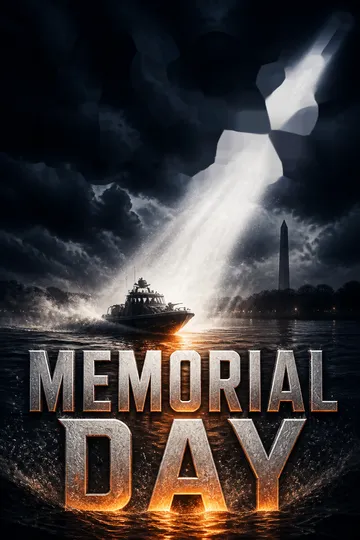
On Memorial Day, al-Yamani steers the boat toward Washington while the dedication crowd begins gathering. Rapp spots the cabin cruiser from a helicopter and sees a large cooler lashed to its stern. As the boat passes beneath the Woodrow Wilson Bridge, a CIA team boards it; Rapp shoots the armed men and finds al-Yamani dying inside.
The bomb is already counting down, and Navy specialists cannot promise they can disarm it. Rather than risk a blast in the city or radioactive fallout across the Chesapeake, Rapp flies the cooler to Mount Weather, whose occupants evacuate and close the blast doors. The device detonates underground. The bunker absorbs the explosion, stopping the attack without destroying Washington or the memorial gathering.
The climax forces a choice between imperfect outcomes rather than offering a clean technical solution. Rapp can neither trust that the bomb will be defused nor accept the predictable harm of a detonation in the city or bay. Mount Weather becomes a sacrifice of infrastructure to preserve human life, turning a Cold War shelter into the answer to a threat its designers could not have imagined. The memorial setting heightens the irony: a public ceremony honoring past wartime service is nearly destroyed by an attack meant to kill current leaders and civilians. Rapp’s decision is decisive, but its success depends on Reimer’s calculations, the evacuation, and a margin of time measured in minutes.
A Victory Without Rest
With the bomb contained, the immediate attack on Washington is over, and the components recovered from the ships prevent the planned strike on New York from proceeding. The government returns to the public eye, but the press has already noticed the overnight evacuations and begins probing for the reason.
Officials describe the intercepted material in less alarming terms to avoid panic, while the legal and political consequences of the operation remain unsettled. Rapp has saved the capital, but he has also defied orders, bypassed the courts, and challenged senior officials in front of the president.
He leaves Washington for Wisconsin rather than seeking praise. His exhaustion is not relief; the week has convinced him that success cannot depend on repeatedly fighting his own government for permission to act.
The resolution refuses the easy comfort of a victory speech. The attack is stopped, but the agencies must decide how much of the truth to reveal, how to handle the suspects, and who deserves credit. Rapp’s competence has protected the country, while his methods have intensified institutional distrust. That contradiction is central to his exhaustion: he is not simply tired from violence, but from having to argue that violence is already underway. The public memorial and the private secrecy surrounding its near destruction reveal competing needs for remembrance and reassurance. The win is real, yet its political narration threatens to obscure the people and choices that made it possible.
Epilogue
On Memorial Day weekend in Wisconsin, Rapp finally reaches his wife, Anna, and her family’s lakeside cabin. Irene Kennedy tells him that the blast at Mount Weather has triggered international concern and that President Hayes intends to recognize his role publicly. Rapp refuses the honor.
He tells Kennedy he may leave the CIA unless the president removes officials who obstructed the response and gives him freedom to pursue the remaining terrorists. Kennedy says Valerie Jones will soon step down and suggests that Stealey can also be moved aside. Rapp agrees to return, not because the conflict has eased, but because he still believes the fight cannot be abandoned.
The epilogue makes Rapp’s survival of the crisis conditional rather than triumphant. He has returned to the domestic world he fought to protect, but a public medal would turn his labor into a reassuring story without addressing the institutional failures that anger him. His demand is not for personal praise but for operational latitude and the removal of political barriers. Kennedy’s answer offers a compromise: reform from within, purchased through influence and personnel changes. The quiet lake contrasts with the week’s machinery of surveillance and force, yet Rapp cannot remain outside the conflict. His return is an act of commitment, but also a warning that loyalty to the mission does not mean loyalty to every official who claims to direct it.
Analysis
The novel’s central conflict is not simply between American security and terrorist violence. It is between different forms of responsibility under extreme uncertainty. Rapp sees delay as a choice with bodies attached to it; Kennedy sees the political, legal, and diplomatic consequences that can make a hurried response self-defeating. Their conflict is not solved by declaring one side right. The plot repeatedly shows that intelligence arrives in fragments, interrogations produce contradictions, and even technical experts cannot promise that a nuclear device can be stopped once armed.
The attackers exploit the very systems meant to make modern life reliable. Commercial shipping, immigration procedures, trucking routes, online communication, and abandoned Soviet test sites become parts of their infrastructure. Their ideology gives violence a moral disguise, but the story keeps exposing the people erased by that disguise: a boat captain, a truck driver, an elderly couple, and a recruit who is still capable of doubt. Al-Yamani’s conviction does not make him principled in any humane sense. It enables him to sacrifice comrades and strangers without hesitation.
The Memorial Day setting sharpens the book’s argument about public memory. The ceremony honors a past generation’s service, while the plot tests whether current institutions can protect the living without abandoning the values they claim to defend. The climactic use of Mount Weather is a fitting answer: a relic built for catastrophic war is sacrificed to contain a weapon that conventional procedures cannot disarm. Rapp’s success saves the city, but it does not reconcile his methods with the law or politics. His final demand for freedom is therefore both a professional ultimatum and a warning. A state may depend on people willing to act beyond its comfort, but that dependence becomes dangerous when it refuses to examine what such action costs.
Review Summary
Memorial Day receives high praise from readers, with an average rating of 4.33/5. Fans applaud Flynn's fast-paced storytelling, intense action scenes, and the compelling character of Mitch Rapp. Many appreciate the political intrigue and realistic portrayal of counterterrorism efforts. Some readers note the book's right-wing leanings and occasionally predictable plot, but most find it an engaging and thrilling read. The novel's exploration of nuclear terrorism and government bureaucracy resonates with many, making it a standout in the Mitch Rapp series.
People Also Read





Characters
Mitch Rapp
The impatient field operativeRapp is the CIA’s premier counterterrorism operative, trained to pursue threats directly and accustomed to working beyond ordinary diplomatic channels. He is disciplined, physically formidable, and impatient with officials who weigh political consequences while lives may be at risk. His past experience has made him suspicious of delay and convinced that adversaries exploit procedural hesitation. Beneath his bluntness is a strong protective instinct, especially toward civilians who cannot see the danger approaching. He is married to journalist Anna Rielly and values the rare time he gets with her, though work repeatedly intrudes. Rapp’s central tension is that his effectiveness depends on independence, while the democratic institutions he serves must answer for the methods he uses.
Irene Kennedy
The intelligence directorKennedy directs the CIA and serves as Rapp’s closest institutional ally. Calm under pressure, analytical, and politically perceptive, she translates fragmentary intelligence into decisions that presidents and agencies can act upon. Her relationship with Rapp combines professional trust with personal familiarity; she knows his strengths and the risks created by his impatience. Kennedy must balance the urgency of preventing attacks against the dangers of public panic, diplomatic rupture, and internal leaks. She is also a mother, and her son Tommy’s needs give her a private life that the demands of the agency continually threaten to displace. Kennedy’s composure is not detachment. It is a practiced way of carrying responsibility without allowing fear to dictate every choice.
Mustafa al-Yamani
The dying attack plannerAl-Yamani is a Saudi jihadist and experienced organizer who believes a spectacular attack can transform the political balance between America and the Muslim world. His years of militant service have left him physically disabled and, by the time of the plot, gravely ill from radiation exposure. He treats secrecy, travel, and violence as logistical problems to be solved, and he can move between patient planning and sudden brutality. His religious conviction gives him a sense of purpose, but it also lets him erase distinctions between comrades, civilians, and expendable tools. Al-Yamani’s relationship to death is unusually intimate: he expects to die soon and interprets that expectation as proof of his commitment rather than a reason to reconsider the mission.
Imtaz Zubair
The recruited nuclear scientistZubair is a gifted Pakistani nuclear scientist whose career has been damaged by political exclusion and resentment. He is intellectually capable but socially awkward, anxious about travel, and deeply attached to a religious worldview that gives meaning to his professional humiliation. Recruiters offer him a role in a grand cause, turning scientific expertise into a form of revenge against the institutions that denied him recognition. Zubair’s character is shaped by the uneasy coexistence of technical rationality and absolute ideological certainty. He understands radiation, shielding, and explosive design, yet his faith in the mission often overwhelms his judgment about its human cost. His knowledge makes him valuable to people whose plans he does not fully control.
President Hayes
The crisis-time decision makerHayes is an elected president facing a national security crisis during a reelection year. He must decide whether to trust Kennedy and Rapp, how much authority to give emergency agencies, and when protecting the public requires withholding information. He is personable and politically aware, but the demands of office pull him between immediate danger and the consequences of visible action. His relationship with Rapp is marked by respect and frustration: he values the operative’s results, yet cannot ignore the legal and political costs of Rapp’s methods. Hayes’s decisions reveal how executive leadership depends not only on courage but on choosing which risks to accept when no option is safe.
Jamal Urda
The Kandahar field officerUrda is a former Marine and CIA officer working among Afghanistan’s shifting alliances. His language skills and familiarity with local factions make him essential to Rapp’s interrogation effort. He is wary of headquarters officials who do not understand the realities of the field, but he also knows that covert work can cross moral boundaries quickly. Urda’s personal life has suffered from his commitment to the job, including a marriage strained by years of absence. When Rapp asks him to help question captured terrorists, Urda must confront the distance between a theoretical debate about coercion and the possibility of a nuclear attack near his own family.
Bobby Akram
The methodical interrogatorAkram is one of the CIA’s most skilled interrogators, fluent in several regional languages and meticulous about controlling the conditions of questioning. A Pakistani-born Muslim, he sees the struggle against al-Qaeda as a defense of a faith distorted by extremists. His method relies on patience, manipulation, and psychological pressure rather than personal rage. Akram respects Rapp but recognizes that Rapp’s temper can undermine careful interrogation. Their different temperaments make them useful counterparts: Akram designs a process, while Rapp is willing to disrupt it when he believes the clock has run out.
General Kevin Harley
The raid's military architectHarley commands the American task force in Afghanistan and approaches combat as a problem of preparation, terrain, and force protection. He studies the history of warfare in the region and builds an operation that combines Delta Force, Rangers, SEALs, helicopters, and mortar teams. His respect for Rapp grows from their shared focus on defeating the threat, though Harley remains attentive to military discipline and the safety of his people. He is neither a detached strategist nor a reckless warrior; his plans reflect the knowledge that a raid can succeed tactically and still carry political consequences.
Ahmed Khalili
The frightened young recruitKhalili is a nineteen-year-old computer specialist from Karachi, recruited after growing up without parents and receiving religious instruction shaped by extremists. He is intelligent enough to understand communications systems and the habits of American surveillance, but young enough to remain frightened by what his organization is planning. Rapp’s questioning forces him to weigh the authority of his teachers against the possibility that their teachings have been manipulated. Khalili’s position makes him more than a source of information: he represents the human vulnerability that recruitment networks exploit and the possibility that indoctrination does not extinguish moral hesitation.
Waheed Abdullah
The captured Saudi financierAbdullah is a wealthy Saudi militant who has been drawn into al-Qaeda’s operation through connections, money, and ideological sympathy. He is less hardened than the veteran fighters around him and becomes a source of information when confronted with the consequences of silence. His shifting accounts make him difficult to trust, forcing Rapp to test each detail against documents and other prisoners. Abdullah’s character exposes the gap between the grandeur of a terrorist plan and the limited understanding of some people who help carry it out.
Ali Saed al-Houri
The unyielding commanderAl-Houri is an Egyptian militant whose history includes imprisonment, torture, and long service within Islamist movements. Physical injuries and years of hardship have not weakened his conviction; he interprets suffering as confirmation that his cause is just. His certainty makes him a powerful influence on younger operatives and a difficult source of intelligence. Al-Houri’s worldview treats violence as a sacred defense against cultural and political encroachment, leaving little room for self-doubt or compromise.
Ahmed al-Adel
The Atlanta trucking ownerAl-Adel is a Saudi immigrant who owns a small trucking company in Atlanta and sees himself as a man of religious discipline in a society he considers corrupt. He resents the American customs and social freedoms around him, including the independence of women in his own extended family. His business offers a respectable public identity, while his dealings attract the attention of federal investigators. Al-Adel’s confidence in his own moral clarity makes him resistant to the idea that his actions could be understood as criminal rather than righteous.
Skip McMahon
The veteran FBI investigatorMcMahon leads the FBI’s Counterterrorism Division and brings decades of investigative experience to a crisis that threatens to overwhelm normal procedure. He is blunt, observant, and skeptical of political interference, but understands the legal responsibilities of the Bureau. His partnership with Rapp is built on mutual respect despite their different institutional roles. McMahon knows that a decision to act outside the law may cost him his career, yet he is willing to listen when evidence suggests that ordinary channels are too slow.
Paul Reimer
The nuclear response chiefReimer directs the Department of Energy’s nuclear emergency response teams. A former Navy SEAL, he combines technical expertise with the concise habits of a field commander. His teams identify radioactive material, analyze the device, and advise the president on the consequences of different choices. Reimer is confident in his specialists but does not pretend that every danger can be solved through technical skill alone. His assessments help the government compare the risks of a city detonation, a bay explosion, and a controlled blast inside a hardened facility.
Peggy Stealey
The ambitious Justice officialStealey is a senior Justice Department lawyer whose intelligence and drive have carried her rapidly through Washington’s political world. She is forceful, competitive, and skilled at framing arguments for both legal and electoral audiences. Her concern about the Patriot Act is genuine, but her proximity to Attorney General Stokes and her own ambitions complicate how others read her motives. Stealey sees Rapp as a threat to legal order and institutional credibility, while he sees her as an obstacle to urgent action. Their conflict is sharpened by mutual confidence and a shared refusal to yield easily.
Martin Stokes
The politically minded attorney generalStokes is the attorney general, a capable political figure whose future ambitions shape how he approaches the crisis. He worries about preserving public confidence and the legal credibility of the Justice Department, while also wanting to be seen as an effective national leader. His relationship with Stealey includes a history of attraction and professional dependence that complicates their work together. Stokes can recognize useful advice, but he is vulnerable to the temptation to treat a crisis as an opportunity to strengthen his standing.
Valerie Jones
The president's chief of staffJones is President Hayes’s chief of staff, a disciplined political operator with fierce loyalty to the administration and the Democratic Party. She understands schedules, media pressure, and the mechanics of keeping a government functioning, but her adversarial manner alienates colleagues. She believes Rapp’s disregard for procedure could expose the administration to scandal, while Rapp believes her political instincts distort security decisions. Jones’s role shows how political management can be both necessary and dangerous when it enters decisions that require specialized threat assessment.
Tony Jackson
The civil-rights defense lawyerJackson is a high-profile Atlanta attorney known for using media attention as well as courtroom skill. He represents clients who believe their civil liberties have been violated, and he brings confidence, theatrical force, and political connections to the case. His defense of al-Adel puts him in conflict with federal investigators who see the accused as a source of urgent intelligence. Jackson’s presence ensures that the legal argument cannot be reduced to a private dispute between interrogators and suspects.
Mohammed Ansari
Al-Yamani's old comradeAnsari is an Afghan immigrant who fought alongside al-Yamani during the Soviet-Afghan war and later built a life in America as a taxi driver. His history links the current plot to an older conflict and to the networks created by past alliances. Ansari is not as committed to the new mission as his former comrade expects, and his unease reveals how time and ordinary life can alter an old warrior’s loyalties. His choice to help al-Yamani places his past and present in dangerous collision.
Anna Rielly
Rapp's waiting wifeAnna is Rapp’s wife and a journalist whose professional life gives her some understanding of public events, even as she remains largely outside the covert world that consumes him. She wants ordinary time with her husband and family, especially during the planned Wisconsin holiday. Her patience has limits, and each interrupted visit reminds Rapp that his choices carry a private cost. Anna’s presence grounds the story in the domestic life that the operation is meant to protect, but cannot fully restore.
Tommy Kennedy
Kennedy's young sonTommy is Irene Kennedy’s first-grade son, proud to be moving up a grade and eager for time with his mother. His homework, bedtime routine, and beach plans give Kennedy a private life beyond the CIA. He depends on her attention even as her work repeatedly pulls her away.
Plot Devices
Bills of lading
A paper trail across portsThe shipping records seized in Pakistan connect hidden planning to freighters bound for Charleston, New York, Miami, and Baltimore. Because the documents are scattered among files in several languages, translators must sort them under time pressure. The records lead investigators to specific vessels and containers, but they do not immediately explain how the cargo fits together or which city each component targets. This delay gives the attackers room to adapt and forces the FBI, CIA, military, and nuclear-response teams to coordinate. The bills of lading function as both evidence and a puzzle: they point toward the conspiracy while withholding its complete design.
The Kazakh test site
A buried weapon sourceThe failed Soviet nuclear tests along the Caspian Sea left radioactive material buried in a vast, poorly guarded range. Al-Qaeda’s operatives exploit that forgotten history to obtain a second core, while the scientists’ knowledge of radiation and shielding helps move it toward the United States. The source is introduced through a map and later confirmed through technical analysis with Russian cooperation. It expands the danger beyond the shipments already under FBI scrutiny and explains how a second device can exist after the first materials are intercepted. The site embodies the long afterlife of Cold War decisions, in which abandoned weapons research becomes a present-day vulnerability.
Radiation shielding
Concealment that leaves a trailAl-Qaeda’s planners use dense materials, including granite, lead, and depleted uranium, to hide nuclear material from sensors and to move it through ordinary commercial routes. Shielding makes detection harder, but it exposes the people handling the material to dangerous doses and leaves contaminated vehicles, clothing, and equipment behind. A truck driver’s fatal illness becomes the clue that reconnects the hidden core to the Atlanta cell. The device therefore works in two directions: it protects the weapon during transport while turning the bodies and objects around it into evidence. Its use makes technical knowledge inseparable from human cost.
Memorial Day convergence
A crowded target and a deadlineThe dedication of the World War II memorial draws the president, senior officials, foreign leaders, veterans, and a large public crowd to Washington. Al-Yamani’s plan exploits that concentration of political leadership and symbolic attention, while a separate attack is intended to follow in New York. The approaching ceremony compresses every decision into hours and makes public evacuation potentially dangerous: visible precautions could warn the attackers or provoke panic. Memorial Day is therefore more than a backdrop. It creates the opportunity, the schedule, and the emotional contradiction of an event honoring sacrifice becoming the target of a mass-casualty plot.
Mount Weather
A bunker becomes a blast shieldMount Weather is a hardened Cold War government facility designed to preserve command functions during nuclear war. When specialists cannot guarantee that the armed device can be defused, Reimer proposes using the mountain’s deep rock and blast doors to contain the explosion. The choice requires evacuating the facility and accepting the destruction of a costly government site to reduce casualties and environmental damage. It turns an old structure built to endure nuclear attack into an improvised protective instrument. The plan’s success depends on accurate timing, the evacuation of personnel, and Rapp’s willingness to act before every official has finished debating the alternatives.
FAQ
Synopsis & Basic Details
What is Memorial Day about?
- Averting Nuclear Catastrophe: Memorial Day by Vince Flynn plunges counterterrorism operative Mitch Rapp into a frantic race against time to prevent a catastrophic nuclear attack on Washington, D.C. The story begins with Rapp's intuition sensing a major threat, leading him to Afghanistan where a daring raid uncovers evidence of a sophisticated al-Qaeda plot.
- Unorthodox Methods, High Stakes: As the plot unfolds, Rapp employs his signature, often brutal, interrogation techniques to extract critical intelligence from captured terrorists, revealing a network of cells and the involvement of rogue nuclear scientists. The narrative follows the intense efforts of various U.S. agencies to track and neutralize the nuclear device, which is eventually located in Charleston, South Carolina.
- Political Intrigue & Moral Dilemmas: Beyond the action, the novel explores the bureaucratic infighting and political maneuvering within Washington, D.C., as Rapp clashes with officials over the best course of action. The climax sees Rapp in a desperate pursuit of a second, active nuclear bomb heading for the capital, culminating in a high-stakes decision that ultimately saves countless lives and the nation's capital.
Why should I read Memorial Day?
- Pulse-Pounding Thriller: Readers seeking a relentless, high-stakes thriller will find Memorial Day delivers non-stop action and suspense. Vince Flynn masterfully builds tension, making every page a race against time to prevent a devastating terrorist attack, keeping you on the edge of your seat until the very end.
- Deep Dive into Counterterrorism: The novel offers a gritty, unvarnished look into the world of counterterrorism, showcasing the moral ambiguities and difficult choices faced by operatives like Mitch Rapp. It explores the clash between legal protocols and the urgent need for decisive action, providing a thought-provoking commentary on national security in a post-9/11 era.
- Insightful Character Dynamics: Beyond the plot, the book delves into the complex psychology of its characters, from Rapp's unwavering resolve to the nuanced motivations of the terrorists. The interplay between Rapp and his allies, particularly Irene Kennedy and Skip McMahon, adds depth, highlighting the personal toll and unwavering commitment required in this dangerous field.
What is the background of Memorial Day?
- Post-9/11 Geopolitical Landscape: Memorial Day is deeply rooted in the anxieties and realities of the post-9/11 world, reflecting the heightened focus on counterterrorism, the threat of WMDs, and the complex relationships with countries like Pakistan and Saudi Arabia. The narrative explicitly references 9/11 as a driving force for Rapp and the nation's security apparatus, shaping the urgency and methods employed.
- Cold War Relics & Nuclear Proliferation: The story leverages the lingering dangers of the Cold War, particularly the existence of unsecured Soviet nuclear material and test sites in former Soviet republics like Kazakhstan. This historical context provides a plausible, terrifying source for the nuclear devices, highlighting the ongoing threat of proliferation and the challenges of securing such materials globally.
- Washington D.C. Bureaucracy & Politics: The novel vividly portrays the intricate, often frustrating, political and bureaucratic environment of Washington, D.C. It delves into the internal conflicts between government agencies (CIA, FBI, DOJ, DHS), the influence of political ambition (Attorney General Stokes, Valerie Jones), and the constant pressure from the media, all of which complicate the urgent mission to protect the nation.
What are the most memorable quotes in Memorial Day?
- "I am a man of my word, Masood. If you ever want to see your children again, you'd better give me a reason to let you live." (Chapter 1): This quote encapsulates Mitch Rapp's ruthless pragmatism and his willingness to cross ethical lines to extract information. It defines his character as an operative who prioritizes results and lives saved over conventional morality, a central theme in Memorial Day analysis.
- "The absolute last thing we need right now is for you to lock down Charleston. Let my people and the feds down there do what they're trained to do. We should give them whatever it is that they need and other than that we should just stay the hell out of their way." (Chapter 37): Spoken by Paul Reimer, this quote highlights the critical tension between bureaucratic interference and operational effectiveness. It underscores the novel's theme of trusting experienced professionals in a crisis, a key element in the themes in Memorial Day discussion.
- "The debate portion of the evening is over. You are an idiot! You have no idea what you are talking about, and you have no idea what it takes to wage this war. Now sit down, and don't interrupt me again or I will throw you out of this room by the scruff of your neck." (Chapter 81): This explosive declaration by Rapp to Peggy Stealey and Valerie Jones perfectly illustrates his contempt for political posturing in the face of existential threats. It's a defining moment for Mitch Rapp's motivations and his frustration with Washington's bureaucracy.
What writing style, narrative choices, and literary techniques does Vince Flynn use?
- Propulsive, Lean Prose: Vince Flynn employs a direct, unadorned writing style that prioritizes action and forward momentum. His prose is lean and efficient, avoiding elaborate descriptions to maintain a high pace, which is crucial for a Memorial Day thriller analysis. This choice immerses the reader directly into the urgent unfolding of events.
- Multiple Perspectives & Shifting POVs: The narrative frequently shifts between various characters' perspectives—from Mitch Rapp's intense field operations to Irene Kennedy's strategic oversight and even the terrorists' internal thoughts. This technique provides a comprehensive view of the crisis, building suspense and allowing readers to understand the multifaceted nature of the threat and response, a key aspect of Memorial Day narrative choices.
- Foreshadowing & Dramatic Irony: Flynn skillfully uses subtle foreshadowing, such as early mentions of financial market anomalies or Rapp's unease after the initial raid, to build anticipation. Dramatic irony is also prevalent, where the reader is privy to information (like the existence of a second bomb) that key characters are not, intensifying the Memorial Day suspense and emotional impact.
Hidden Details & Subtle Connections
What are some minor details that add significant meaning?
- Al-Yamani's Prosthetic Leg: The detail of Mustafa al-Yamani's prosthetic leg (Chapter 14) is not just a character quirk but a crucial plot point explaining his unconventional entry into the U.S. by boat, bypassing airport security. This subtle detail highlights the terrorists' adaptive strategies and the specific vulnerabilities they exploit, enriching the Mustafa al-Yamani analysis.
- The "Facility" as a Cold War Relic: The CIA's secret interrogation site, referred to only as "the Facility" (Prelude), is described as a relic from the Cold War, intentionally designed for sensory deprivation. This background detail subtly connects the modern war on terror to historical intelligence operations, suggesting a continuity of methods and a darker, less transparent side of national security, a key element in CIA operations explained.
- Pat Holmes's Political Savvy: Pat Holmes, the DNC Chairman, is depicted as remembering everyone's name and being gregarious (Chapter 9, 60). This seemingly minor social detail is crucial to understanding his political power and influence, enabling him to broker deals and manipulate situations, including the potential replacement of the Vice President, a subtle insight into Washington D.C. political dynamics.
What are some subtle foreshadowing and callbacks?
- Financial Market Anomalies: Early in the novel, Irene Kennedy notes "strange trends in the financial and currency markets" (Chapter 4) and flagged accounts making moves that suggest the U.S. economy is "about to take a hit." This subtly foreshadows the economic devastation intended by the terrorists' multi-pronged attack, linking financial intelligence to the physical threat, a key aspect of Memorial Day foreshadowing.
- Rapp's Wife's Absence: Rapp's wife, Anna, leaving for her family's cabin in Wisconsin (Chapter 2) is initially presented as a simple detail. However, it subtly foreshadows the immense personal risk Rapp faces and the emotional distance he maintains from his personal life to protect it, making her eventual call in the epilogue a poignant callback to his sacrifices, central to Mitch Rapp's character development.
- The Caspian Sea Map: The discovery of a map of the Caspian Sea region in the al-Qaeda camp (Chapter 28) initially puzzles Rapp. This detail subtly foreshadows the later revelation that the nuclear material originated from a Soviet test site on the northern edge of the Caspian, connecting disparate pieces of intelligence and highlighting the global reach of the threat, a crucial element in Memorial Day intelligence gathering analysis.
What are some unexpected character connections?
- Mohammed Ansari's CIA Link: The cab driver, Mohammed Ansari, who aids al-Yamani, is revealed to have immigrated to the U.S. with the help of the CIA after fighting the Soviets in Afghanistan (Chapter 70). This unexpected connection highlights the complex and often unintended consequences of past geopolitical interventions, showing how former allies can become adversaries, a deep dive into Mohammed Ansari's motivations.
- Pat Holmes and Peggy Stealey's Past Affair: The revelation of a past "torrid" affair between DNC Chairman Pat Holmes and Peggy Stealey (Chapter 3) adds a layer of personal history and unspoken power dynamics to their professional interactions. This connection explains their unique rapport and Stealey's career trajectory, offering a subtle insight into Peggy Stealey's character analysis and the transactional nature of Washington relationships.
- Rapp's Mentorship by Thomas Stansfield: Rapp's recruitment into the covert Orion Team by Thomas Stansfield, a Cold War veteran (Chapter 18), establishes a deep, almost paternal, connection. This mentorship explains Rapp's unorthodox methods and his unwavering commitment, linking his modern counterterrorism efforts to a legacy of clandestine operations and providing context for Mitch Rapp's origins.
Who are the most significant supporting characters?
- Bobby Akram, the Master Interrogator: Akram, a Pakistani immigrant and devout Muslim, is the CIA's top interrogator (Prelude, Chapter 51). His unique cultural and linguistic skills, combined with his clinical detachment, make him indispensable in extracting truth from terrorists. He represents the nuanced approach to intelligence gathering, contrasting with Rapp's more brutal methods, and is crucial for Bobby Akram's role explained.
- Paul Reimer, the Nuclear Expert: As the head of the Department of Energy's Nuclear Emergency Support Teams (NEST), Reimer provides critical scientific and technical expertise throughout the crisis (Chapter 27, 41, 90). His calm, precise assessments and strategic advice are vital in understanding and neutralizing the nuclear threat, highlighting the importance of specialized knowledge in counterterrorism operations.
- Peggy Stealey, the Ambitious DOJ Official: Stealey, the Deputy Assistant Attorney General in charge of counterterrorism, embodies the political and legal obstacles Rapp faces (Chapter 3, 50, 57). Her ambition and adherence to legal protocol, even in crisis, create significant friction, showcasing the bureaucratic challenges and the clash between law enforcement and intelligence approaches in Washington D.C. politics.
Psychological, Emotional, & Relational Analysis
What are some unspoken motivations of the characters?
- Rapp's Quest for Retribution: While Rapp explicitly states his mission is to protect innocent lives, his relentless, often brutal, methods are implicitly fueled by a deep-seated desire for retribution for the Lockerbie bombing that killed his fiancée (Chapter 18). This unspoken motivation drives his extreme actions and his contempt for bureaucratic delays, central to Mitch Rapp's motivations explained.
- Al-Yamani's Desire for Legacy: Mustafa al-Yamani, despite his radiation sickness, is driven by an unspoken need to achieve a glorious martyrdom and ignite a global jihad (Chapter 14, 53, 86). His willingness to sacrifice himself and others, and his meticulous planning, stem from a desire to leave a lasting legacy in the "thousand-year-old battle" against infidels, a key insight into Mustafa al-Yamani's psychology.
- Attorney General Stokes's Presidential Ambition: Martin Stokes's actions, particularly his initial handling of the Charleston prisoners and his political maneuvering, are subtly motivated by his aspiration for the White House (Chapter 3, 43, 57). His concern for public perception and his willingness to align with Peggy Stealey's legalistic approach are unspoken strategies to advance his political career, a crucial aspect of political motivations in Memorial Day.
What psychological complexities do the characters exhibit?
- Rapp's Moral Ambiguity: Mitch Rapp grapples with the psychological toll of his work, acknowledging that he is an "assassin" (Prelude) and that his methods are "barbaric" to many (Chapter 20). His internal conflict between the necessity of his brutal actions and the ideals of a civilized society creates a complex psychological profile, exploring the dark side of heroism in Mitch Rapp's psychological analysis.
- Khalili's Indoctrination and Doubt: Ahmed Khalili, the young Pakistani scientist, exhibits the psychological complexity of indoctrination. Initially a devout Wahhabi, his fear and Rapp's questioning sow seeds of doubt about his religious instructors' interpretations (Chapter 21). This internal struggle highlights the psychological manipulation inherent in radicalization and the potential for breaking through it, a key element in Ahmed Khalili's emotional journey.
- Al-Yamani's Fanatical Resolve Amidst Decay: Mustafa al-Yamani's psychological state is a paradox: unwavering fanatical resolve in the face of severe physical decay from radiation sickness (Chapter 14, 53, 74). His ability to push through extreme pain, driven by a vision of "glorious vengeance," showcases a mind completely consumed by his mission, offering a chilling insight into terrorist psychology explained.
What are the major emotional turning points?
- Rapp's Execution of Al-Houri: The execution of Ali Saed al-Houri by Rapp (Chapter 20) is a brutal emotional turning point, not just for the narrative but for Rapp himself. It solidifies his commitment to extreme measures and sends a clear, terrifying message to the other prisoners, marking a shift from conventional interrogation to raw, visceral coercion, a pivotal moment in Mitch Rapp's emotional analysis.
- The Discovery of the Second Bomb: The revelation from Ahmed al-Adel that a second nuclear bomb is headed for Washington, D.C. (Chapter 81) is a major emotional shockwave. It shatters any complacency and elevates the stakes to an unimaginable level, creating a desperate urgency that drives the final act of the story and intensifies the Memorial Day plot twists.
- President Hayes's Decision to Sacrifice Mount Weather: President Hayes's agonizing decision to use Mount Weather as a containment site for the active nuclear bomb (Chapter 93) is a profound emotional turning point. It signifies his acceptance of extreme measures to protect the greater population, showcasing the immense burden of leadership and the difficult choices made under pressure, a key aspect of President Hayes's leadership analysis.
How do relationship dynamics evolve?
- Rapp and Kennedy's Deep Trust: The relationship between Mitch Rapp and Irene Kennedy evolves into one of profound, almost unspoken, trust and mutual respect. Despite Kennedy's initial attempts to rein in Rapp, she ultimately becomes his staunchest advocate, understanding his methods are necessary (Chapter 2, 55). Their dynamic highlights a partnership built on shared commitment and a willingness to bend rules for the greater good, central to Rapp and Kennedy's relationship.
- McMahon's Shifting Allegiance to Rapp: Skip McMahon, initially wary of Rapp's unorthodox approach, gradually develops a deep respect and even complicity with him. His decision to "break the law" by aiding Rapp in extracting al-Adel (Chapter 77) marks a significant evolution, demonstrating his prioritization of national security over bureaucratic adherence, a key aspect of Skip McMahon's character arc.
- Al-Yamani and Mohammed Ansari's Betrayal: The relationship between Mustafa al-Yamani and Mohammed Ansari, initially based on shared history and trust, ends in betrayal and murder (Chapter 64, 74). Mohammed's wavering commitment to the cause, contrasted with al-Yamani's ruthless fanaticism, highlights the corrosive nature of extremism and the ultimate expendability of individuals in the terrorist's eyes, a tragic evolution in terrorist relationship dynamics.
Interpretation & Debate
Which parts of the story remain ambiguous or open-ended?
- The Fate of the Charleston Prisoners' Lawyer: The story leaves the ultimate fate and reaction of Tony Jackson, the "Mouth of the South" lawyer for the Charleston prisoners, ambiguous (Chapter 76, 78). While Rapp dismisses him with a threat, the potential for a media firestorm and legal challenge remains open-ended, prompting debate on the long-term consequences of Rapp's actions and the legal system's response, a key point for Memorial Day legal implications.
- The Full Extent of Saudi Royal Family Complicity: While Rapp explicitly states the Crown Prince "profits from his business dealings with America" and would "gladly round up al-Adel's family and begin torturing them" (Chapter 78), the full extent of the Saudi royal family's complicity or knowledge of terrorist financing remains somewhat ambiguous. This leaves room for interpretation regarding the deeper geopolitical corruption and the compromises made by the U.S., a crucial aspect of Memorial Day geopolitical analysis.
- Rapp's Future in the CIA: The epilogue leaves Rapp's long-term future in the CIA open-ended, with him demanding "carte blanche" and threatening to quit if his demands aren't met (Epilogue). While Kennedy offers concessions, the question of whether Rapp can truly reconcile his methods with the bureaucratic system, or if he will eventually leave, remains a central interpretive debate for Mitch Rapp's future.
What are some debatable, controversial scenes or moments in Memorial Day?
- Rapp's Interrogation of Colonel Haq: The prelude, detailing Rapp's brutal interrogation of Colonel Masood Haq, including physical violence and threats against his children, is highly controversial. This scene sparks debate about the effectiveness and morality of torture, forcing readers to confront the ethical lines crossed in the name of national security, a central point in Memorial Day interrogation ethics.
- The Execution of Al-Houri: Rapp's cold-blooded execution of Ali Saed al-Houri (Chapter 20) in front of other prisoners is a shocking and highly debatable moment. It challenges conventional notions of justice and due process, raising questions about extrajudicial killings and the psychological impact on the perpetrator, a key discussion point for Mitch Rapp's controversial actions.
- The Decision to Use Mount Weather as a Bomb Site: The National Security Council's decision to detonate a nuclear bomb inside Mount Weather, a multi-billion dollar government facility (Chapter 93), is a controversial strategic choice. It highlights the extreme measures considered in a crisis and the utilitarian calculus of sacrificing infrastructure to save lives, prompting debate on the value of human life versus national assets in Memorial Day ethical dilemmas.
Memorial Day Ending Explained: How It Ends & What It Means
- The Second Bomb's Containment: The climax of Memorial Day sees Mitch Rapp successfully intercepting the second nuclear bomb, which was being transported by boat on the Potomac River towards Washington, D.C. After a tense pursuit and neutralizing the terrorists, Rapp, in coordination with Paul Reimer and President Hayes, makes the critical decision to transport the armed device by helicopter to Mount Weather, a hardened underground government facility. The bomb detonates within Mount Weather, which successfully contains the blast and fallout, averting a catastrophic nuclear attack on the capital. This is a crucial part of the Memorial Day ending explained.
- Rapp's Ultimatum and Future: In the aftermath, Rapp, exhausted and disillusioned by the political infighting and bureaucratic obstacles, issues an ultimatum to Irene Kennedy. He demands "carte blanche" to hunt down terrorists without interference from the White House or Justice Department, threatening to quit and expose political machinations if his demands are not met. Kennedy, recognizing his indispensability and the president's shaken resolve, agrees to some of his terms, including the removal of Valerie Jones and Peggy Stealey. This sets the stage for Rapp's continued, albeit contentious, role in counterterrorism, a key aspect of Mitch Rapp's motivations.
- The Enduring Threat and Moral Compromises: The ending signifies a victory, but not a definitive one. The terrorists are thwarted, but the underlying threat of global jihad remains, and Rapp acknowledges they "will come at us again." The novel concludes with a stark reminder of the moral compromises and brutal force required to wage this war, emphasizing that there is "no walking away from this fight." It underscores the idea that while immediate disaster was averted, the long-term struggle against terrorism is complex, ongoing, and demands unconventional, often ethically challenging, responses, providing deep insight into themes in Memorial Day.
Mitch Rapp Series Series








About the Author
Download PDF
Download EPUB
.epub digital book format is ideal for reading ebooks on phones, tablets, and e-readers.








