


Plot Summary
Prologue
At the CIA’s covert training site, handler Irene Kennedy2 watches recruits struggle through combat drills while worrying about Mitch Rapp,1 the young operative1 she recruited. In barely a year, Rapp1 has killed a succession of terrorists across Europe and the Middle East, working alone and leaving fear in his targets’ wake.
Psychologist Dr. Lewis12 sees both his extraordinary focus and the danger in it: Rapp1 believes killers should be punished, and he resists control. Kennedy2 is sending him into Paris to assassinate a Libyan official,19 an operation whose political fallout could threaten the entire hidden program.
The prelude establishes the story’s central tension before the plot detonates: Rapp’s effectiveness is also a management crisis. Lewis does not fear that Rapp is emotionally fragile; he fears that a man trained to judge and execute enemies may eventually decide that institutional power deserves the same judgment. Kennedy’s concern is more immediate and personal, because she has made herself Rapp’s lifeline while defending his independence. Their disagreement frames the novel’s moral problem in operational terms: a covert organization wants a weapon precise enough to control, but its best weapon’s defining trait is that he acts on his own sense of justice.
Paris Becomes a Kill Zone
On a Paris rooftop, Rapp1 prepares to kill Tarek al-Magariha,19 Libya’s oil minister and a former intelligence figure on his list of terrorist-linked targets. He has watched the hotel, learned the minister’s habits, and entered the suite alone, expecting little resistance. Two suppressed shots kill Tarek,19 but movement at the door exposes a team of armed men waiting to attack.
Rapp1 dives behind the raised bed as their automatic fire shreds the room. When the attackers pause to reload, he shoots several of them and makes for the balcony. A bullet strikes his shoulder as he escapes on the rope, leaving his pistol behind and the reason for the trap unanswered.
The mission begins with Rapp’s practiced conviction that intimate knowledge of a target can make violence almost mechanical. He studies Tarek’s routine, enters alone, and completes the killing with the economy he considers professional. The ambush breaks that rhythm. His enemy has studied him in turn, transforming his preferred isolation into a vulnerability. That reversal makes the violence more than a failed operation: it tests whether Rapp’s confidence is earned or merely reinforced by a long run of success. The shoulder wound supplies a bodily limit to a character who has treated pain and risk as manageable costs.
The Seine Takes Him
Rapp1 descends the rope under fire, retrieves his fallen pistol, and runs toward the Seine before the attackers can reach the street. Hidden beneath a bridge, he packs the bullet wound with gauze and injects clotting agent and sealant, then slips into the river to evade approaching police.
The current carries him through Paris until he reaches an industrial yard, where he breaks into a warehouse, takes work clothes, eats, and warms himself under a shower. He realizes the advance team somehow missed the men waiting at the hotel. Rather than use the team’s safe house or report in, he destroys traces of his disguise and decides to stay off the CIA’s radar until he knows who exposed him.
Rapp survives through trained procedure, but each improvised step deepens his isolation. He treats his wound himself, discards evidence, and refuses the familiar chain of command because the ambush has made that chain look suspect. His decision is not simply rebelliousness: he has no reliable way to distinguish a compromised handler from a loyal one. Yet self-protection carries its own cost. By withholding information, he deprives the people most able to help him of a chance to assess the danger. The river becomes a literal interval between institutions, a place where Rapp can remain alive while postponing the question of whom he still serves.
Nine Bodies, No Story
French Judicial Police commandant Francine Neville6 arrives at the hotel to find Tarek,19 the prostitute, four armed men, two hotel guests, and a hotel worker dead. The number of victims turns a covert killing into a public crisis, and DGSE officer Paul Fournier7 quickly inserts himself into her investigation.
He identifies Tarek19 but offers little else, while Neville6 senses that he is withholding information. In Washington, CIA chief Thomas Stansfield3 learns that Rapp1 has failed to check in.
He orders Kennedy2 and trainer Stan Hurley4 to establish what happened and bring Rapp1 back. Hurley4 blames Rapp1 for the carnage; Kennedy2 refuses to accept that judgment without evidence. The operation now threatens both French-American relations and the secret team that authorized it.
The massacre’s immediate consequence is not merely a police case; it is a contest over who gets to define the event. Neville needs a coherent account for victims, superiors, and the press, while Fournier’s arrival signals that another institution has an interest in controlling the evidence. In Washington, the same uncertainty becomes a test of loyalty. Hurley treats the body count as proof of Rapp’s recklessness, whereas Kennedy recognizes that the facts remain incomplete. The novel places competing professional cultures in collision: law enforcement seeks admissible explanation, intelligence seeks containment, and Rapp’s survival cannot yet be separated from either.
A Target Was Bait
After leaving the warehouse, Rapp1 retrieves his emergency bag at Gare de Lyon and changes into tourist clothes before checking into a hotel under a false identity. News reports say the dead gunmen were Tarek’s19 bodyguards, but Rapp1 knows they were not with the minister during his movements. Their presence, the surveillance equipment, and the failed advance work point toward a trap designed for him.
He avoids calling Kennedy2 until he can think clearly, though he does contact Greta,5 his Swiss partner, and arranges for her to come to Paris. Rapp1 weighs fleeing across the border against staying to find the source of the leak. He chooses to remain, convinced that someone in his small circle knew his target19 and route.
Rapp’s central inference comes from contradiction rather than revelation: the official story calls the dead men bodyguards, yet his own surveillance never showed them protecting Tarek. The discrepancy turns a failed assassination into evidence of deliberate manipulation. His response reveals both discipline and a dangerous narrowing of trust. He does not abandon the mission, but he considers abandoning everyone who authorized it. Greta is the one human connection he chooses to preserve, although he withholds the truth even from her at first. Suspicion here functions as a survival skill that may also become a self-fulfilling prison.
Cooke Courts Power
While Rapp1 hides in Paris, Secretary of State Franklin Wilson15 meets CIA deputy director Paul Cooke8 in a private room at Wilson’s15 Georgetown home. Wilson15 says he wants Stansfield3 restrained and offers Cooke8 a path to become CIA director if he can investigate the Paris killing and keep the Agency’s involvement out of public view. Cooke8 accepts the assignment and agrees to report only to Wilson.15
Wilson15 suspects Stansfield3 ordered the assassination, though he has no proof. Cooke8 already has a file on Stansfield3 and Hurley,4 making the offer useful to his own ambitions. The political inquiry therefore begins with a compromised premise: the man tasked with finding the truth has personal reasons to weaken the people under suspicion.
Cooke’s ambition converts oversight into an instrument of private advancement. Wilson frames the director’s position as a prize for restoring lawful control, but Cooke’s existing dossier makes clear that he is not entering the inquiry as a neutral observer. His willingness to accept secrecy and exclusive reporting creates a parallel chain of command inside the government. That structure echoes the covert unit itself: both rely on restricted knowledge and personal trust, but neither guarantees accountability. The scene’s danger lies in how easily a reasonable demand for oversight can be recruited into a power struggle.
Fournier’s Dangerous Arrangement
At Sacré-Coeur, Fournier7 meets Max Vega,11 Samir Fadi,10 and Rafique Aziz, whose organization had helped arrange the hotel ambush. Samir10 insists the attackers were set up, but Fournier7 accuses him of losing control and killing civilians while escaping. Fournier7 says Tarek was bait and that the failed operation has drawn police and foreign intelligence services into Paris.
He urges the men to leave France and suggests the assassin may now be hunted by his own employers. Above the crypt, Monsignor Peter de Fleury14 hears the meeting through a confessional vent. Recognizing that Fournier7 is helping dangerous militants, de Fleury14 decides he must pass what he heard to a trusted ally.
Fournier’s language of national security masks a bargain in which civilian safety is treated as a negotiable asset. He has helped place Tarek in danger to advance a political arrangement, then focuses on containing the fallout rather than accounting for the dead. Samir’s anger does not make him innocent, but it exposes how unstable Fournier’s alliance is: each participant expects the others to absorb the risk. De Fleury’s accidental access creates a counterweight to secrecy. His religious vocation does not make him naïve about power; it gives him a moral standard against which he can recognize the meeting as more than ordinary intelligence work.
Neville Refuses Silence
Neville6 and her deputy, Martin Simon,13 find shell casings beneath Tarek’s19 balcony, rope marks on the roof, five hotel guests who cannot be accounted for, and a surveillance room falsely listed as under renovation. The evidence suggests that the supposed bodyguards were part of a separate operation and that at least one person escaped by rope.
Neville6 confronts Fournier7 at the Hotel Balzac, but he denies knowledge and warns her to back away. Her superiors then remove her from the case after Fournier7 supplies accusations meant to discredit her. Rather than leave quietly, Neville6 tells reporters that the DGSE may be interfering with the investigation and names Fournier7 publicly. Her decision makes the cover-up harder to contain.
Neville’s investigation advances through material residue: casings, rope fibers, missing guests, and a room whose official status contradicts its equipment. She builds a case by refusing to let a plausible story substitute for physical evidence. Fournier counters with a familiar institutional tactic, attacking the investigator’s credibility rather than answering her questions. Neville’s public statement is a calculated risk, not a sudden lapse in judgment. Once her superiors remove her, formal channels have become part of the obstruction. By naming Fournier, she converts a private suspicion into a public liability that other officials cannot quietly bury.
Luke Takes the Bullet
Still unable to trust the people watching his safe house, Rapp1 recruits Luke Auclair,20 a Paris drug dealer, with a fabricated story about money and jewels hidden in an apartment. Rapp1 gives Luke20 the key and entry codes, planning to watch how the surveillance team responds when someone enters. He warns Luke20 to come alone, but Luke20 brings a hulking friend and tries to intimidate him.
Rapp1 incapacitates the friend and sends Luke20 to the apartment. From across the street, Rapp1 sees Victor,9 Hurley’s4 volatile operative, emerge from hiding and follow Luke20 outside. Victor9 shoots Luke20 in the back of the head, mistaking him for Rapp,1 then kills two teammates who witnessed it. Rapp’s1 test exposes a threat and costs an innocent man his life.
Rapp’s experiment is meant to produce information without exposing him, but he underestimates the moral and practical consequences of turning a stranger into bait. Luke’s greed makes him willing to take a risk, yet he has no understanding of the lethal system he has entered. Victor’s decision to shoot him reveals that the threat is not simply bureaucratic suspicion; it is a person prepared to erase witnesses. Rapp’s shock is sharpened by responsibility. He did not pull the trigger, but he arranged the conditions that put Luke in its path. The scene forces his strategic intelligence to confront an ethical failure he cannot outsource.
A Witness Survives
After Victor9 shoots Luke,20 he turns his weapon on two approaching DGSE agents, killing one and critically wounding the other. Rapp1 charges from the apartment building, fires at Victor,9 and forces him toward the surveillance van. Victor9 escapes under automatic fire, leaving a teammate’s body behind.
Instead of fleeing immediately, Rapp1 uses his field kit to treat the wounded French agent, then gives him Victor’s9 name before vanishing into the night. Network journalist Brian Jones17 and cameraman Dick Bernstein18 arrive and help keep the agent alive. By morning, Rapp1 understands that Victor9 may blame the murders on him. Running in a hotel-park, he concludes that the dead teammates were killed because they saw Victor9 execute Luke.20
Rapp’s choice to treat the wounded agent interrupts the logic of pure self-preservation. He is injured, exposed, and likely to be blamed, yet he stays long enough to slow the bleeding and leave a usable identification of the shooter. That act gives the investigation a witness and a clue, but it also deepens Rapp’s personal cost: his attempt to test the organization has now endangered people beyond his original target. His run the next morning is less an athletic reset than a moral reckoning. He rejects the convenient explanation that Luke’s death was inconsequential, and begins to see Victor’s actions as a deliberate effort to frame him.
The Priest Breaks the Cover
De Fleury14 brings his notes to Stansfield3 through trusted British intelligence contact Rollie Smith. The priest’s account confirms that Fournier7 discussed Tarek as bait, acknowledged the failed attempt to kill Rapp,1 and described an arrangement known to his superiors.
The testimony supports Rapp’s1 belief that the hotel attack was organized rather than accidental. At the same time, Jones17 and Bernstein18 report that Rapp1 treated the wounded agent instead of attacking him.
Stansfield3 begins to doubt Victor’s9 account and orders Kennedy2 to keep Hurley4 and Victor9 apart from Rapp.1 Neville’s6 public accusation has also made the DGSE’s interference a political problem. Separate witnesses and evidence are converging, even as the Agency’s own chain of command remains compromised.
De Fleury’s notes matter because they bridge a gap no single institution can cross alone. A priest’s memory, an MI6 relationship, the journalists’ eyewitness account, and Rapp’s field actions all corroborate different parts of the story. This is not simply a triumph of information sharing; it is an indictment of the assumption that secrecy protects truth. Stansfield’s response also marks a shift from managing personalities to managing danger. He recognizes that Hurley’s hostility and Victor’s volatility could destroy the inquiry from within. Evidence gains force here through convergence, not through one omniscient source.
Victor Names Cooke
Kennedy2 and Stansfield3 meet Rapp1 in the McMahons’ empty Paris apartment, where Greta5 confirms that she watched Victor9 kill Luke20 and the two French agents. Rapp1 explains the sequence and points out that the bullets recovered from the scene can distinguish his nine-millimeter weapon from Victor’s9 .45.
Stansfield3 accepts that Rapp’s1 account fits the evidence better than Victor’s.9 Back at the Embassy, Rapp1 confronts Victor9 during questioning and wounds him until he admits that Paul Cooke8 was his outside contact.
Victor’s9 confession links the internal violence to the political maneuvering in Washington. Stansfield3 and Hurley4 now have reason to suspect that Cooke8 supplied information about Rapp1 and the target list, while Rapp1 has little patience left for procedure.
The meeting restores a narrow channel of trust through independently verifiable facts. Greta’s testimony supports Rapp, while the weapons’ calibers offer a forensic check that does not depend on his credibility. His interrogation of Victor, however, shows how readily he returns to coercion when he believes the institution is too slow or too compromised to protect him. The confession does not settle every question, but it shifts suspicion upward, toward a senior official who can weaponize access rather than force. Rapp’s certainty is useful and dangerous at once: he has identified a likely traitor, but his methods risk making justice indistinguishable from revenge.
The Hotel Sale
Stansfield’s3 team plants surveillance on Cooke8 and Fournier7 as they meet Max Vega11 at the Hotel Balzac. Rapp1 and Hurley4 listen from a car while Cooke8 accepts cash and hands Vega11 a dossier identifying Rapp,1 listing his background and possible vulnerabilities, including his brother. Fournier7 confirms the meeting’s purpose: the information is being traded to men connected to the plot against Rapp.1
Rapp1 recognizes Samir10 as the likely shooter from the hotel ambush and sees that the conspiracy now includes both a French intelligence official and a CIA executive. He asks Hurley4 to take him to the hotel, knowing that leaving the men alive could mean he is hunted and his family used against him. Hurley4 lets him go.
The dossier turns abstract institutional betrayal into a transaction with a price, a recipient, and a human target. Cooke is not merely pursuing a leadership struggle; he is selling Rapp’s identity and family vulnerability to people who have already tried to kill him. The scene completes the chain begun with the leaked target list, showing how bureaucratic access can become a weapon more precise than a gun. Hurley’s decision to drive Rapp to the hotel is morally compromised but consequential. His earlier hostility gives way to recognition that Rapp has been betrayed, and that delay would hand the conspirators another advantage.
Rapp Leaves the Chain
Rapp1 enters the Hotel Balzac through a service door, uses the wounded DGSE agent’s identification, and shoots the guard outside Vega’s11 suite. Inside, he kills Vega,11 Samir,10 Fournier,7 and Cooke,8 then arranges the weapons and papers to muddy the account of what happened. He takes the dossiers that identify him and Hurley4 before leaving.
Hurley4 waits nearby and drives him to a Metro station, apologizing for having misjudged him and suggesting he lie low. Rapp1 expects the Agency may hunt him, but he boards the train thinking he could disappear for a while. The thought does not hold: he knows he would return to the work if they let him. He ends the story alive, but no longer willing to mistake obedience for trust.
The ending gives Rapp a tactical victory but withholds the comfort of institutional restoration. He eliminates the men who sold him out and protects the information that could endanger his brother, yet he does so through unilateral violence and a staged scene that further blurs justice and execution. Hurley’s apology acknowledges a personal failure, not a repaired organization. Rapp’s imagined retreat collapses because the work has become more than employment: it is the identity and purpose he has built since loss transformed his life. His final uncertainty is therefore meaningful. He is free of immediate control, but not free of the choices that made him dangerous.
Analysis
Kill Shot treats covert power as a problem of judgment, not simply secrecy. Rapp1 is trained to make lethal decisions quickly, but the novel repeatedly tests whether speed can remain morally disciplined. His pursuit of Tarek19 follows a clear private logic: punish men who have harmed civilians. Yet when he uses Luke20 as a decoy, an innocent person dies because Rapp1 has mistaken tactical control for moral control. That consequence punctures his confidence more sharply than his own wound.
The institutional plot mirrors Rapp’s1 personal one. Fournier7 and Cooke8 each justify self-serving choices through national security or reform, while Kennedy,2 Neville,6 and Stansfield3 struggle to distinguish loyalty from complicity. Evidence moves across boundaries that official channels would rather preserve: Neville6 reads the crime scene, de Fleury14 remembers a private meeting, journalists witness Rapp1 saving an enemy agent,7 and ballistics challenge Victor’s9 account. Truth emerges through converging fragments rather than the authority of any one institution.
The book’s deepest tension lies in the difference between accountability and revenge. Rapp’s1 targets are guilty, but his own power to decide guilt is never made harmless by their crimes. His final killings stop the immediate threat and punish betrayal, yet they do not repair the system that enabled the plot. Hurley’s4 apology acknowledges a failure of judgment without restoring the chain of command. Rapp1 ends with freedom from immediate supervision, but not with an ordinary life waiting to receive him. The story leaves him in a deliberately unstable place: he knows he belongs to the work, while recognizing that the people who claim authority over it may be more dangerous than he believed.
Review Summary
Kill Shot receives high praise from readers, with an average rating of 4.32/5. Fans appreciate Flynn's tighter plotting, character development, and intense action sequences. Many compare Mitch Rapp favorably to other thriller protagonists like Jason Bourne and Jack Reacher. Readers enjoy the prequel aspect, seeing Rapp's early career and raw skills. Some note the book's violence and pacing as strengths. A few critics found the plot predictable or the protagonist too perfect, but most reviewers eagerly anticipate continuing the series.
People Also Read




Characters
Mitch Rapp
The solitary hunterRapp is a young CIA-trained operative whose precision, physical courage, and ability to study routines make him a formidable assassin. He was recruited after the terrorist attack that killed his girlfriend and dozens of other Syracuse students, and he channels grief into a belief that perpetrators must face consequences. Rapp prefers working alone because he thinks a small footprint is safer, but this independence also makes it difficult for him to rely on colleagues or accept oversight. He is not emotionally empty: his loyalty to Irene Kennedy2 and his love for Greta5 reveal the life he tries to keep separate from his work. His central tension is whether private certainty can remain just when he has the power to kill.
Irene Kennedy
Rapp’s handlerKennedy recruits and manages Rapp1, serving as his operational link to the CIA’s covert Orion team. Intelligent, guarded, and accustomed to working in a male-dominated institution, she trusts Rapp’s1 ability but worries that his autonomy can expose him and the Agency. She argues with Stan Hurley4 because she believes results do not excuse careless command or reflexive blame. Her concern for Rapp1 is not simply personal affection; she understands that she helped shape the conditions in which he operates and feels responsible for his survival. Kennedy’s challenge is to protect him without mistaking protection for control, while also defending the institution’s mission from its own internal rivalries.
Thomas Stansfield
The covert chiefStansfield is the CIA deputy director of Operations and the senior authority behind Orion. A veteran strategist with a calm manner, he prefers evidence to impulse and understands how quickly an unofficial mission can become a national crisis. He has long trusted Stan Hurley4, perhaps more than is prudent, while also recognizing Kennedy’s2 judgment and Rapp’s1 exceptional abilities. Stansfield’s leadership is shaped by the burden of protecting both the country and the people who carry out its most deniable work. He tries to maintain a balance between operational secrecy and accountability, but the Paris crisis exposes how easily personal loyalties and internal politics can undermine that balance.
Stan Hurley
The brutal trainerHurley is an old-school clandestine operator who trains recruits and expects unquestioning discipline. He is profane, combative, and deeply suspicious of Rapp’s1 independence, partly because he sees qualities in the younger man that resemble his own. Hurley values patience and secrecy, yet his methods and personal loyalties often create conflict inside the team. His history with Stansfield3 gives him unusual influence, and his protective attachment to some operatives can cloud his judgment of others. Beneath the bluster is a capable field officer who understands the cost of covert work, though he struggles to distinguish hard-earned caution from personal resentment.
Greta
Rapp’s hidden partnerGreta is Rapp’s1 Swiss partner, a composed and capable woman from a family connected to discreet international banking. She is not sheltered from danger: she grew up hunting, has practical first-aid skills, and can recognize the physical consequences of violence. Her affection for Rapp1 is bound to an honest awareness that his work may injure or kill him. Greta wants a future in which he can step away, but she does not try to remake him by force. She offers him intimacy and care without pretending that love makes his profession safe. Her presence gives Rapp1 a glimpse of ordinary life, while her family connections place her close to the same intelligence world he inhabits.
Francine Neville
The tenacious investigatorNeville is a commandant in the French Judicial Police, known for competence earned in a workplace where some colleagues assume her advancement is political. She approaches the hotel massacre through physical evidence and refuses to accept convenient explanations when shell casings, missing guests, and surveillance equipment contradict them. Her former relationship with Paul Fournier7 gives him a way to attack her credibility, but it does not erase her professional judgment. Neville’s sense of duty is public-facing: she believes the police owe the victims and the city an honest account. She is persistent, sometimes forceful, and willing to risk her career when she believes a powerful agency is interfering with justice.
Paul Fournier
The French spymasterFournier leads the DGSE’s Special Action Division and is skilled at charm, manipulation, and managing political relationships. He sees intelligence work as a contest in which influence and deniability matter as much as facts. His polished manners conceal a calculating approach to people, and he is comfortable making bargains that place others at risk if he believes France will benefit. Fournier has a complicated past with Neville6 and knows how to exploit personal history when professional pressure rises. His confidence depends on controlling the story around an operation. He is therefore most threatened when evidence, witnesses, or public attention make his private arrangements difficult to conceal.
Paul Cooke
The ambitious deputyCooke is the CIA’s deputy director, a senior administrator who has spent decades inside the Agency and hopes to become its director. He is polished and politically alert, with a talent for presenting his ambitions as institutional reform. Cooke understands that access to information is a form of power and cultivates relationships with officials who can advance his position. Unlike field operatives, he works through meetings, files, and political channels, but his decisions can place people in the field at grave risk. His role brings together the novel’s two arenas, covert action and Washington politics, showing how career calculations can have consequences far beyond an office.
Chet Bramble, called Victor
The volatile enforcerBramble, known in the team as Victor, is a physically imposing former special-operations soldier recruited by Hurley4 after trouble in the Army. He has a long history of aggression and treats intimidation as a natural way to settle disputes. His loyalty to Hurley4 is strong, but his contempt for people he sees as weak or insubordinate makes him difficult to manage. Bramble’s size and willingness to use violence can make him useful in dangerous situations, yet those same traits create risks for colleagues and bystanders. He represents the kind of operative whose force may be mistaken for control.
Samir Fadi
The eager militantSamir is a militant operative tasked with leading the armed team waiting for Rapp1 in Paris. He believes success will bring status and recognition, and his confidence often outruns his discipline. He wants to be seen as a decisive leader, but pressure exposes his insecurity and poor judgment. His relationship with his brother and his need for approval complicate his performance as a commander. Samir’s presence reveals the internal rivalries and vanity within the group that seeks to kill Rapp1, rather than presenting its members as a unified force.
Max Vega
The polished financierVega is a wealthy Spanish businessman with a powerful Saudi father and connections to radical Islamist networks. He presents himself as a cosmopolitan executive, moving comfortably among corporate, political, and militant circles. That adaptability makes him difficult to read: he can speak the language of business while participating in arrangements shaped by violence. Vega is ambitious and guarded, careful about what he reveals to allies such as Fournier7. His character embodies the way money and respectable public identities can connect distant political worlds without making their underlying conflicts disappear.
Dr. Lewis
The watching psychologistLewis is the psychologist responsible for assessing the mental fitness of the covert team. He studies the strain of field work without confusing emotional restraint with psychological health. His conversations with Kennedy2 raise questions about Rapp’s1 unusual motivation and the institution’s ability to control what it has created. Lewis is patient and observant, willing to tell senior officials when a trusted operative may be dangerous. He provides a perspective that neither the field operators nor the political leadership can easily supply: the long-term psychological consequences of training people to kill in the name of justice.
Martin Simon
Neville’s steady deputySimon is Neville’s6 deputy in the Judicial Police and a careful investigator who notices details others overlook. His reasoning about the casings and the balcony helps redirect the inquiry from the first, misleading version of events. He tempers Neville’s6 appetite for confrontation with practical concern, while respecting her instincts and professional courage. Simon is especially alert to the danger of confronting intelligence officers who are accustomed to operating without ordinary scrutiny. His dry humor eases their partnership without diminishing his seriousness about the case.
Peter de Fleury
The listening priestMonsignor de Fleury is an elderly priest with a long history of helping French and allied intelligence services. He has spent a lifetime observing people and understands that piety does not guarantee virtue. When he hears Fournier’s7 meeting through an acoustic quirk in the basilica, he recognizes the danger in what is being arranged. His response is cautious rather than theatrical: he records what he can and seeks a trusted channel to pass it on. De Fleury’s role connects moral judgment to practical action, showing that age and diminished physical strength do not make him irrelevant.
Franklin Wilson
The grieving secretaryWilson is the elderly secretary of state, a respected political figure whose wife’s Alzheimer’s disease has left him grieving and isolated. He wants the CIA to answer to elected leadership and fears Stansfield’s3 covert operations could provoke scandal. His personal loss makes him vulnerable to arguments that appear to offer control and stability. Wilson is not simply a political opportunist; he believes the executive branch must restrain secret agencies. But his reliance on Cooke8 shows how private pain and institutional concern can be manipulated by someone with a competing agenda.
Rob Ridley
The advance-team chiefRidley runs the advance teams that prepare operations and provide support when Rapp1 is in the field. His work depends on careful surveillance, secure movement, and anticipating what may go wrong before an operative arrives. Because he has access to operational details, his role becomes important when Rapp1 suspects information has leaked. Ridley is experienced and methodical, a practical counterweight to the more personal conflicts among Kennedy2, Hurley4, and Rapp1.
Brian Jones
The wary correspondentJones is an American television correspondent working in Paris and one of Hurley’s4 long-standing intelligence contacts. He is cautious and uneasy about the ethical compromise of cooperating with the CIA, even as his work has benefited from the relationship. At the scene of the later shooting, his presence helps preserve the life of a wounded agent and supplies an independent account of Rapp’s1 actions.
Dick Bernstein
The resourceful cameramanBernstein is Jones’s17 photographer and a freelance journalist accustomed to working in dangerous places. More pragmatic than his colleague, he understands the leverage Hurley4 holds over them and tries to keep their work focused. His quick response at the shooting scene helps a wounded French agent survive and gives the CIA a witness it can trust.
Tarek al-Magariha
The minister under watchTarek is Libya’s oil minister and a former intelligence official whose comfortable diplomatic life conceals a violent past. He is selected as a target because Rapp1 believes he remains connected to terrorism. His movements in Paris draw several agencies into the same operation, making him more consequential to the plot than his brief appearance suggests.
Luke Auclair
The unwitting decoyLuke is a Paris drug dealer whose laziness and financial desperation make him receptive to Rapp’s1 offer of easy money. He expects a burglary, not an encounter with intelligence operatives. His willingness to take a risk gives Rapp1 a way to test the surveillance around the safe house, though Luke has no understanding of the danger he is entering.
Plot Devices
The Orion target list
Maps the hidden campaignThe list records the people Rapp1 is authorized to hunt and the order in which he will pursue them. It gives the covert team a strategic structure while also creating a single point of exposure: anyone who knows the next target can anticipate Rapp’s1 movements. The list is memorized and destroyed to protect it, but its existence still shapes decisions across the story. Once the enemy appears to know that Tarek19 is next, the list becomes evidence that the breach may be inside the intelligence apparatus rather than in Rapp’s1 fieldcraft.
Tarek as bait
Turns hunter into targetThe plotters use Tarek19, a prominent official with a secret intelligence past, to draw Rapp1 into a hotel suite where armed men can attack him. The tactic exploits Rapp’s1 predictable commitment to pursuing people on his list and the belief that he will work alone. It also produces political fallout because Tarek’s19 death and the gunmen’s escape leave a crowded crime scene. The trap is not a simple ambush: it ties covert French dealings, militant ambition, and the CIA’s target information into one operation.
Cover identities
Keep Rapp untraceableForged passports, aliases, cash, and changes of clothing let Rapp1 move through Paris without presenting a stable identity. He retrieves an emergency bag, discards a compromised disguise, and uses a different name when approaching Luke20. These identities are practical tools, but they also dramatize the distance between the college student Rapp1 once was and the operative he has become. The cover system protects him from police and hostile services, yet every hidden identity makes ordinary trust harder: even allies know only selected pieces of his life.
The decoy at the safe house
Tests the watchersRapp1 sends Luke20 into the monitored apartment to see whether the men watching the safe house will react and how they will treat an apparent intruder. The test is meant to distinguish observation from an active effort to kill him. Instead, Victor9 mistakes Luke20 for Rapp1 and executes him, then kills witnesses. The device exposes the danger inside Rapp’s1 own organization, but it also implicates Rapp1 in the conditions that led to an innocent man’s death. Its consequences force him to confront the ethical cost of using people as pieces in an intelligence operation.
The surveillance trail
Makes secrets audibleHotel cameras and microphones, a surveillance van, a wired phone, and a tracking device let multiple sides observe one another. The devices help Samir’s10 group prepare its ambush, help the CIA monitor Cooke8 and Fournier7, and leave physical traces for Neville6 to find. Their value is never absolute: equipment can be removed, recordings destroyed, and surveillance itself can expose the observer. The novel uses this trail to show that information is not neutral. The same tools that make covert action possible can supply evidence, implicate their operators, or be turned against the people who believe they control them.
FAQ
Synopsis & Basic Details
What is Kill Shot about?
- Synopsis: Kill Shot follows CIA operative Mitch Rapp as he's sent to Paris to eliminate a Libyan oil minister with terrorist ties. However, Rapp is quickly ambushed, revealing a deep-seated betrayal within the CIA and forcing him to question everyone he trusts.
- Driven by betrayal: The story centers on Rapp's struggle to survive, uncover the mole, and bring the traitors to justice, all while navigating a complex web of international espionage and political intrigue.
- High-stakes mission: The novel explores themes of trust, loyalty, and the moral ambiguities of the intelligence world, as Rapp's personal vendetta clashes with the greater good.
Why should I read Kill Shot?
- Intense action: Kill Shot delivers non-stop action and suspense, keeping readers on the edge of their seats with thrilling fight scenes and daring escapes.
- Complex characters: The novel features a cast of complex and morally ambiguous characters, each with their own motivations and secrets, adding depth and intrigue to the story.
- Exploration of espionage: Kill Shot offers a realistic and gritty portrayal of the world of espionage, exploring the ethical dilemmas and personal sacrifices faced by those who operate in the shadows.
What is the background of Kill Shot?
- Post-9/11 world: The novel is set in the post-9/11 world, reflecting the heightened tensions and political complexities of the global war on terror.
- CIA operations: It delves into the inner workings of the CIA, exploring the clandestine operations and power struggles that take place behind the scenes.
- Terrorist networks: The story touches upon the intricate network of terrorist organizations and their sources of funding, highlighting the challenges of combating terrorism on a global scale.
What are the most memorable quotes in Kill Shot?
- Hurley's warning: "You gave that boy way too long a leash." This quote foreshadows Rapp's increasing autonomy and the potential consequences of his unchecked actions.
- Lewis's concern: "What happens if he wakes up one day and realizes some of the bad guys are right here? Living in America, working for the CIA, working on Capitol Hill." This quote highlights the central theme of betrayal and the potential for corruption within the very institutions meant to protect national security.
- Kennedy's frustration: "If you want more bodies, then send Stan and his goons over there to try to collect him. Mark my words, sir, it won't end well." This quote underscores the conflict between different approaches to espionage and the potential for violence when personal vendettas clash with professional duty.
What writing style, narrative choices, and literary techniques does Vince Flynn use?
- Fast-paced narrative: Flynn employs a fast-paced, action-oriented writing style that keeps the story moving forward at a rapid clip.
- Third-person perspective: The novel is narrated from a third-person perspective, allowing readers to follow multiple characters and gain insights into their thoughts and motivations.
- Realistic dialogue: Flynn uses realistic dialogue that captures the gritty and often cynical tone of the intelligence world.
Hidden Details & Subtle Connections
What are some minor details that add significant meaning?
- The Sacré-Coeur Basilica: The choice of the Sacré-Coeur Basilica as a meeting place for Fournier and the terrorists highlights the hypocrisy and moral decay at the heart of their alliance.
- The brand of Rapp's gun: Rapp's silenced Beretta is a symbol of his training and lethal efficiency, but also a potential liability as it could be traced back to the CIA.
- The description of the weather: The gray, overcast skies in Paris mirror the dark and uncertain mood of the story, foreshadowing the betrayal and violence to come.
What are some subtle foreshadowing and callbacks?
- Hurley's initial skepticism: Hurley's initial skepticism about Rapp's abilities and his warnings about giving him too much freedom foreshadow the events that unfold in Paris.
- Kennedy's concern for Rapp: Kennedy's concern for Rapp's well-being, as noted by Dr. Lewis, foreshadows her willingness to go against protocol to protect him.
- The mention of Beirut: The reference to Rapp saving Hurley's life in Beirut is a callback to a previous mission and highlights the complex relationship between the two men.
What are some unexpected character connections?
- Greta's grandfather and Stansfield: The revelation that Greta's grandfather is a close friend of Stansfield adds a layer of complexity to their relationship and raises questions about Stansfield's true intentions.
- Fournier and de Fleury: The connection between Fournier and Monsignor de Fleury reveals the deep-seated corruption and moral decay within the French intelligence community.
- Cooke and Wilson: The alliance between Cooke and Wilson highlights the political machinations and power struggles that take place behind the scenes in Washington.
Who are the most significant supporting characters?
- Monsignor de Fleury: His moral compass and access to information make him a key player in uncovering the truth.
- Rob Ridley: As the leader of the advance team, his competence and loyalty are crucial to the success of Rapp's missions.
- Paulette LeFevre: Her relationship with Hurley and her position as a journalist give her access to valuable information and insights.
Psychological, Emotional, & Relational Analysis
What are some unspoken motivations of the characters?
- Stansfield's guilt: Stansfield's guilt over the death of Kennedy's father may influence his decisions and his willingness to give her more autonomy.
- Hurley's envy: Hurley's envy of Rapp's abilities and his resentment of his independence may drive his desire to control him.
- Cooke's ambition: Cooke's ambition to become the director of the CIA may motivate his betrayal and his willingness to align himself with dangerous individuals.
What psychological complexities do the characters exhibit?
- Rapp's trauma: Rapp's past trauma and his thirst for revenge create a complex and often conflicted character.
- Hurley's control issues: Hurley's control issues and his inability to trust others stem from his own past experiences and his belief in the need for absolute authority.
- Fournier's narcissism: Fournier's narcissism and his need for validation drive his actions and his willingness to manipulate others for his own gain.
What are the major emotional turning points?
- Rapp's ambush: The ambush in Paris is a major emotional turning point for Rapp, forcing him to confront the reality of betrayal and the potential for death.
- Kennedy's realization: Kennedy's realization that she may have been wrong about Rapp and that she may have put him in danger is a major emotional turning point for her.
- Stansfield's betrayal: Stansfield's discovery of Cooke's betrayal is a major emotional turning point for him, forcing him to confront the possibility that someone he trusted has turned against him.
How do relationship dynamics evolve?
- Rapp and Kennedy: The relationship between Rapp and Kennedy evolves from a professional partnership to a more personal and trusting bond, but it is constantly tested by the realities of their work.
- Hurley and Rapp: The relationship between Hurley and Rapp remains contentious and often adversarial, but there is also a grudging respect and a shared sense of duty.
- Stansfield and Hurley: The relationship between Stansfield and Hurley is a long-standing and complex one, marked by loyalty, respect, and a shared history, but it is also tested by their differing approaches to espionage.
Interpretation & Debate
Which parts of the story remain ambiguous or open-ended?
- The extent of the DGSE's involvement: The full extent of the DGSE's involvement in the plot against Rapp remains ambiguous, leaving open the possibility that there are other players and motives at work.
- The identity of the ultimate mastermind: While Cooke is revealed to be a traitor, it is unclear whether he is acting alone or under the direction of someone else.
- Rapp's future: The novel leaves open the question of Rapp's future and whether he will be able to overcome the trauma and betrayal he has experienced.
What are some debatable, controversial scenes or moments in Kill Shot?
- Rapp's torture of Victor: Rapp's torture of Victor raises ethical questions about the use of violence and the potential for abuse of power.
- The killing of Luke Auclair: The death of Luke Auclair is a controversial moment that highlights the moral ambiguities of Rapp's work and the potential for collateral damage.
- The decision to trust Stansfield: The decision to trust Stansfield, despite the evidence of corruption within the CIA, is a debatable one that raises questions about the characters' judgment and their ability to see the truth.
Kill Shot Ending Explained: How It Ends & What It Means
- Justice is served: While the novel doesn't have a traditional "happy ending," justice is ultimately served as the traitors are exposed and punished.
- Trust is shattered: The events of Kill Shot leave Rapp with a deep sense of distrust and a questioning of his own values and beliefs.
- Moral ambiguity: The ending underscores the moral ambiguity of the world of espionage and the difficult choices that must be made in the name of national security.
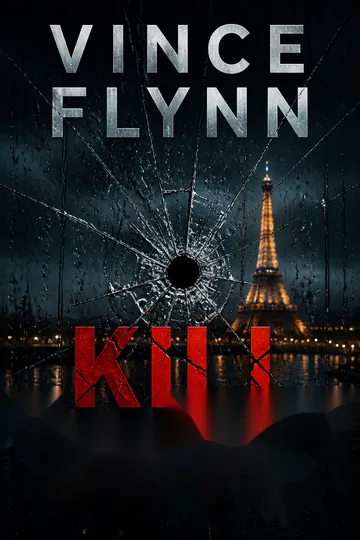
Mitch Rapp Series Series







About the Author
Download PDF
Download EPUB
.epub digital book format is ideal for reading ebooks on phones, tablets, and e-readers.








