


Plot Summary
Prologue
In Rabat, Prince Talal bin Musaid,13 a Saudi royal embittered by his family’s refusal to give him power, carries a million dollars to an ISIS representative. He believes a spectacular attack in the United States will deepen American hostility toward Muslims and help build a caliphate.
His fantasies of religious destiny sit beside the luxuries he refuses to surrender, and his contempt for ordinary people leaves him blind to the danger his ambition creates.
Talal’s opening scene establishes the novel’s central political contradiction: the people claiming to defend faith and order are often driven by grievance, privilege, and appetite. His money gives him access to a violent movement, but not understanding of it. He imagines that social fracture will make him a ruler, overlooking how readily extremists could consume the royal system he hopes to inherit. The contrast between his insulated life and Rabat’s crowded streets turns wealth into more than scenery. It is the distance that lets him mistake other people’s suffering for a useful instrument.
Rapp Returns to al-Shirqat
Mitch Rapp,1 a CIA operative haunted by a previous mission in al-Shirqat, parachutes into the ISIS-held city to rescue five Iraqi allies whose identities have been exposed. He reunites with Gaffar,15 a former soldier, and finds the group weakened by hunger, cold, and fear. Mohammed Qarni16 insists that his new wife, Shada,18 must come too; Rapp1 accepts, recognizing the danger she faces if left behind.
When an injured member makes the planned walk across the desert impossible, Rapp1 changes course and uses Gaffar15 to draw an ISIS patrol into a trap. They seize its truck, but another patrol catches them outside the city. Rapp1 and Gaffar15 hold off the pursuers long enough for the others to reach the helicopter, then escape aboard it themselves.
Rapp’s return is driven less by operational value than by a personal code: people who once stood beside him are not expendable simply because headquarters considers them inconvenient. That choice complicates his reputation as a detached instrument of force. He can assess civilians’ limits with unusual clarity, even while instinctively volunteering for the most dangerous role himself. Mohammed’s question about Laleh, Rapp’s sister, whom Rapp killed to prevent her capture by ISIS, brings private grief into the extraction without displacing its immediate stakes. The rescue therefore establishes both his loyalty and the wound that makes loyalty costly.
The Wrong Courier
In Rabat, Joe Maslick11 leads a CIA-backed team expecting to seize an aging ISIS money courier called the Egyptian. Their source, Hayk Alghani,14 is a former ISIS financial operative whom Rapp1 turned into a reluctant informant. Alghani’s14 meeting instead brings Prince Talal bin Musaid,13 arriving in an armored Mercedes with guards and a suitcase of cash.
Maslick’s11 plan to box in the car would risk killing embassy employees and abducting a royal from an allied country. With no time to reach Langley for authorization, he aborts, leaving the prince13 free to depart. Alghani14 keeps the money and faces a dangerous choice: report the unexpected meeting to the CIA, run from both ISIS and Rapp,1 or wait to see which side has discovered his deception.
Maslick’s retreat is not cowardice but a collision between delegated responsibility and political reality. He has been told that the operation is simple, yet the sudden appearance of a royal transforms a tactical decision into an international crisis. His habit of following stronger leaders leaves him poorly equipped to improvise when authority is absent. The missed capture also gives Talal room to act and exposes how easily intelligence labels can conceal the real stakes. Alghani’s uncertain position reinforces the instability of informant work: survival depends on choices made under incomplete knowledge, and even a correct choice may look like betrayal to someone else.
Nassar Plays Both Thrones
Saudi intelligence chief Aali Nassar3 joins Colonel Maheer Bazzi’s20 operation to capture former Iraqi general Dabir al-Omari, an ISIS commander. Bazzi’s20 team takes the compound, but Nassar3 shoots Bazzi20 and stages the death as a combat casualty. Alone with al-Omari, Nassar3 reveals that he has helped direct Saudi money to ISIS, including the Rabat payment, and offers intelligence, access, and funds in exchange for influence over the kingdom’s future.
He wants the dying King Faisal5 to rely on him rather than the Americans. In Washington, President Alexander confronts Nassar3 over Talal’s13 suspected payment; Nassar3 denies the charge and threatens to expose the old American-Saudi arrangement that concealed Saudi complicity in 9/11.
Nassar’s double game is built from a sharper political insight than Talal’s: institutions can be hollowed out by managing the fears that keep them standing. He offers ISIS resources while presenting himself to Faisal as the defender of the monarchy, betting that an aging king will confuse apparent competence with loyalty. His killing of Bazzi shows the personal cost of that strategy, while the Oval Office exchange shows how the United States is trapped by its own prior bargain. The scene makes secrecy reciprocal: Washington hid evidence to preserve stability, and Nassar now uses that silence as leverage against Washington.
A Mission Without Orders
After the Rabat failure, Rapp1 returns to a life that has begun to include Claudia Gould2 and her daughter, Anna. Claudia2 wants meaningful work rather than a permanent domestic role, while Rapp1 fears that anyone close to him will be hurt.
President Alexander privately asks him to investigate Talal13 and kill him, if necessary, while keeping the operation deniable. Rapp1 accepts, then resigns from the CIA and tells Scott Coleman’s12 team that he cannot continue in his official role. Claudia2 joins as logistics lead.
To replace the loyal team he is leaving behind, Rapp1 recruits Grisha Azarov,8 the Russian operative who once nearly killed Coleman,12 former assassin Donatella Rahn,9 and young arms dealer Kent Black.10 Their skills are formidable, but their loyalties are untested.
Rapp’s resignation is the novel’s decisive shift from institutional authority to personal responsibility. Alexander gives him an order while denying him the protection that normally makes an order legitimate. Rapp accepts because he believes the threat is real, but the choice also lets him avoid a harder question: whether he can build a life with Claudia without treating intimacy as a temporary weakness. Claudia’s insistence on work marks her as a partner rather than someone to be protected into passivity. The new team mirrors Rapp’s predicament. Each person brings unusual talent, but none supplies the trust and shared history he had with Coleman’s people.
Terry’s Turns into a Battlefield
Claudia2 traces Talal’s assets and moves roughly seventy million dollars into an account Rapp controls, leaving him financially exposed and likely to seek help from his estranged brother in Monaco. The team plans to drug him at his favorite club, Terry’s, and question him privately.
Donatella9 draws the prince’s13 attention while Azarov8 gains entry through a business contact; Black10 watches from a rooftop. Before the extraction begins, armed attackers storm the club, killing patrons and security staff as they hunt Talal.13
Rapp1 and Azarov8 fight through the gunmen. Rapp1 gets the wounded prince13 into his car, and Talal13 identifies Nassar3 as the force behind the financing network. With the attackers pursuing them and Talal13 dying, Rapp1 abandons him on the road; the pursuers shoot the prince13 dead.
The planned operation collapses into a moral and tactical test before Rapp can control it. The attack makes the prince both a target and a source, but Rapp’s attempt to extract information cannot undo the harm Talal has helped set in motion. His decision to leave the dying man is an ugly calculation, not a clean victory: it may protect Rapp and his team, yet it also deprives them of a formal witness and guarantees a public scandal. The club’s wealthy clientele and the attackers’ indiscriminate violence make the conflict visible, expanding a covert investigation into an event governments will compete to explain.
The Dead Men Point Back
Talal’s13 accusation sends Rapp1 and Claudia2 looking for Nassar’s3 associates, but Nassar3 moves first. He arranges the murder of his friend Mahja Zaman19 and Saudi diplomat Ahmed el-Hashem, making both killings resemble Rapp’s1 methods.
He also passes the location of General Fares Wazir to ISIS; an American raid on Wazir’s hideout ends in an ambush that kills Anthony Staton and his team. Nassar3 sends the footage to Irene Kennedy4 to signal that he knows about the leak.
In the United States, Nassar3 recruits Joel Wilson,7 an embittered FBI agent who already hates Rapp,1 and feeds his obsession with a promised chance to arrest him. Wilson7 obtains a warrant and leads a destructive search of Rapp’s1 Virginia home, finding a family photograph that exposes Claudia2 and Anna’s connection to him.
Nassar turns counterintelligence into authorship: he does not merely hide evidence but manufactures a story in which Rapp’s known capacity for violence makes him the obvious villain. Killing associates removes witnesses; feeding Wazir’s location to ISIS turns American intervention into proof of a leak; recruiting Wilson gives the false account an official investigator. Wilson’s grievance is not invented by Nassar, only redirected. The ruined home is the intimate consequence of that manipulation, converting Rapp’s carefully built refuge into a crime scene. The section shows that reputations are operational assets: a credible lie can move institutions faster than a difficult truth.
Juba’s Church Becomes a Trap
Rapp’s1 crew hides in Juba, where Black’s10 arms business has made him vulnerable to rival rebel groups. Black10 secretly returns to his abandoned church to destroy a dossier about the team, and Rapp1 catches him there after killing a local enforcer who threatened their operation.
Claudia2 learns that Wilson7 is approaching with Nassar’s3 men, but Rapp1 stays inside the church, expecting to use the danger against Nassar.3 Wilson7 arrives just as Abdo’s fighters smash into the building, turning the search into a crossfire.
Rapp1 could escape unseen, but instead shoots the attackers threatening Wilson7 and takes a wounded Saudi operative alive. During questioning, the captive admits loyalty to ISIS and says Nassar3 has been using the group to weaken Faisal’s5 faith in American protection. Rapp1 releases Wilson7 with evidence and a warning.
The church sequence changes Wilson from a pursuing instrument into a possible witness because Rapp refuses the simple solution of letting him die. That restraint is strategic, but it also reflects Rapp’s conviction that enemies can still be useful and that killing them is not the only way to end a threat. Black’s concealed dossier reveals how fear has distorted the team’s sense of its own place: he assumed he would be discarded and prepared to expose everyone. The ISIS captive’s explanation clarifies Nassar’s mechanism of control. His partnership relies on maintaining a manageable threat, so Faisal will continue to need the very intelligence chief secretly enabling it.
A King Hears the Case
After leaving Wilson7 alive, Rapp1 returns to Irene Kennedy,4 who puts the FBI agent to work identifying Nassar’s3 men and accepts his offer to help clear Rapp.1 Kennedy4 then accompanies Rapp1 and Wilson7 to Saudi Arabia, where they ask King Faisal5 to consider evidence against his intelligence chief.3
Rapp1 makes the king5 face the possibility that Nassar3 has manipulated him, while Kennedy4 proposes a test instead of demanding an immediate arrest: Faisal5 should quietly detain Nassar’s3 assistant, Hamid Safar, and observe Nassar’s3 reaction.
The king5 agrees. When Nassar3 sees evidence that Rapp1 has reached Faisal5 and learns Safar is missing, he understands the alliance is exposed. He steals intelligence and funds from Saudi accounts, abandons his position, and flees toward Mullah Halabi’s6 ISIS network.
The audience with Faisal is a contest over what counts as proof when a ruler has invested his survival in a particular adviser. Rapp’s bluntness breaks through courtly language, but Kennedy supplies the more durable method: create a condition in which Nassar’s behavior can reveal what documents and denials obscure. The test is also a concession to Faisal’s need to preserve authority. He is not asked to confess that his judgment failed, only to observe. Nassar’s flight shows that the strategy worked, but it also removes the protection of state office and drives him toward a more openly extremist alliance.
The Bridge Hides a Passage
Nassar3 reaches Halabi6 by a deliberately confusing route that includes a vehicle exit beneath a newly built bridge. Rapp1 follows the movement with CIA surveillance restored to him, then abandons his electric dirt bike when he spots a concealed cave passage under the bridge.
Inside, Nassar3 tries to make himself useful by offering stolen Saudi intelligence and money, along with knowledge of American security vulnerabilities. Rapp1 crawls toward the voices and finds Halabi6 surrounded by former Iraqi officers and armed guards.
He cannot get a clear shot at the ISIS leader, so he fires at Nassar3 and throws a grenade into the chamber. The explosion collapses the passage. Rapp1 is buried under rock and earth, while Halabi6 and the leadership group are trapped in the cave.
The bridge is a physical expression of Nassar’s strategy: a structure that appears to connect places conceals an exit from ordinary visibility. His offer to Halabi is not ideological surrender so much as another bid to preserve agency by making himself indispensable. Rapp’s attack recognizes that a network cannot be dismantled by chasing each intermediary forever; he goes for the men and command structure at its center. Yet the cave’s collapse denies him the certainty of a completed mission. His action may have stopped the conspiracy, but it also leaves him buried beside the consequences, with no immediate way to know who survived.
Buried Beneath the Caliphate
Pinned beneath the collapsed passage, Rapp1 loses consciousness and wakes trapped with dust filling the narrow space around him. His thoughts turn not to medals or victories but to his estranged brother, his dead wife, and the fatherly life he has only begun to imagine with Claudia2 and Anna.
Joe Maslick11 reaches him with a shovel and digs him free, restoring a friendship strained by the Rabat failure. Later, President Alexander tells Rapp1 that U.S. forces struck the buried ISIS position and believes Halabi6 and much of the leadership were killed, though Rapp1 refuses to treat unconfirmed deaths as fact.
For political stability, the president and Faisal5 make Nassar3 a public hero and describe the operation as joint. Rapp1 returns to Claudia2 and Anna, carrying the cost of the mission home.
Near death strips Rapp’s identity down to what remains emotionally unfinished. His regret concerns not professional failure but neglected relationships, suggesting that the domestic life he once treated as an interruption has become a measure of what his work is supposed to protect. Maslick’s rescue also closes the earlier Rabat wound without erasing it: the subordinate Rapp doubted returns when the leader himself is helpless. The political settlement is deliberately unsatisfying. Nassar’s public rehabilitation protects Faisal’s legitimacy and hides the scale of the betrayal, while Rapp’s refusal to certify Halabi’s death preserves the distinction between a likely outcome and a known one.
Epilogue
Back in South Africa, Rapp1 helps Claudia2 repair the house damaged by Wilson’s7 search while Anna tidies her room. Alexander confirms that an American strike hit the collapsed ISIS position, but Rapp1 remains uncertain that Halabi6 died. The president and King Faisal5 agree to credit Nassar3 publicly as a hero, concealing his treachery to protect the kingdom’s appearance of control.
Rapp1 gives Anna a huge water blaster for the closet monsters. When she aims it at her teddy bear, Claudia2 stops the attack and orders the family out to dinner, leaving Rapp1 to face the domestic consequences of his daughter’s borrowed military vocabulary.
The ending refuses a clean political victory. Rapp may have destroyed the ISIS leadership, yet governments preserve a false public account because admitting the truth would threaten the monarchy and expose another compromise. His private return is modest by design: he repairs a damaged home, gives Anna a toy, and is corrected by Claudia when play turns destructive. The child’s use of military language links the household to Rapp’s world, but Claudia’s interruption sets a boundary between them. The final movement does not make violence disappear; it shows the work of limiting its reach, one ordinary family decision at a time.
Analysis
The novel’s central conflict is not simply between the United States and ISIS, but between immediate security and the compromised arrangements meant to preserve it. The post-9/11 bargain gives Washington leverage over Saudi Arabia while also making public accountability dangerous. Nassar3 understands that dependency and exploits it: he presents himself as a stabilizing official while secretly feeding the movement whose threat makes his authority seem necessary. His strategy turns a state’s fear into a source of power.
Rapp’s1 role is shaped by the same contradiction at a personal scale. He believes in the mission of protecting ordinary people, yet the institutions that authorize his work repeatedly demand secrecy, deniability, and political convenience. When Alexander sends him after Talal13 but offers no public protection, Rapp1 moves from government operative to private actor without abandoning the moral purpose he associates with service. That choice is brave, but not pure. His refusal to involve Kennedy4 protects her, while also denying himself the strategic partnership he needs.
The story tests whether competence can substitute for trust. Rapp1 assembles an extraordinarily skilled team, but Claudia’s2 warnings about their motives prove important: loyalty cannot be assumed from talent. Wilson7 presents the darker mirror. His intelligence is real, but resentment narrows it until he serves the very network he believes he is exposing. The contrast suggests that information alone does not produce judgment. Character determines which facts a person can bear to see.
Finally, the book refuses to equate tactical success with political repair. Rapp1 may have destroyed Halabi’s6 leadership, but Faisal5 and Alexander still preserve a false public account to protect their governments. The conspiracy is disrupted, not cleanly resolved. Against that compromised ending, Rapp’s1 return to Claudia2 and Anna offers a smaller measure of meaning: a life worth defending is built not only through force, but through the ordinary relationships his work has so often endangered.
Review Summary
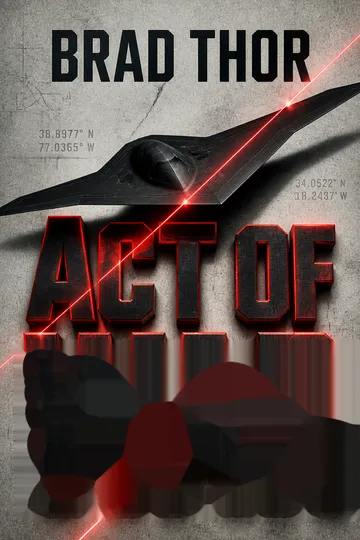
Enemy of the State receives mostly positive reviews, with fans praising Kyle Mills' continuation of the Mitch Rapp series. Readers appreciate the fast-paced action, character development, and political intrigue. Some note it's not quite at the level of Vince Flynn's originals but still enjoyable. The plot, involving Rapp going rogue to tackle Saudi-funded terrorism, is seen as timely and thrilling. A few critics find the story less engaging than previous installments, but overall, the book is well-received by series fans.
People Also Read









Characters
Mitch Rapp
Relentless CIA operativeA highly capable counterterrorism operative whose instincts favor direct action and personal responsibility. Rapp has survived years of violence but carries the death of his wife and the memory of Laleh17, an Iraqi woman he killed to prevent ISIS from capturing her. His loyalty to people who have helped him can override institutional advice, as his return to al-Shirqat shows. At the same time, he struggles to let others share danger or build a life beside him. Claudia2 and Anna expose a question he has long avoided: whether survival means more than remaining useful in the field.
Claudia Gould
Strategist seeking purposeA gifted planner and former partner in her late husband’s dangerous work, Claudia is raising Anna while trying to reclaim a professional identity of her own. She is practical, observant, and unwilling to be treated as a fragile dependent. Her relationship with Rapp1 gives her both intimacy and reason to challenge his habits, especially his tendency to confuse protection with making decisions for other people. Claudia’s logistical skill is paired with a clear moral sense about the costs of being hunted. She wants a life that includes family without reducing her to family alone.
Aali Nassar
Ambitious intelligence chiefSaudi Arabia’s intelligence director is a disciplined former soldier with a working-class background, elite education, and an acute understanding of power. Nassar is ambitious but not impulsive; he studies how fear, loyalty, and political dependency can be managed. His rise challenges a royal order that traditionally reserves authority for the House of Saud, while his hatred of Western influence gives his public piety a strategic edge. Nassar’s defining strength is his ability to make other people believe their interests align with his. He is most dangerous when he can present manipulation as stability.
Irene Kennedy
CIA director and strategistThe head of the CIA, Kennedy combines patience, political fluency, and a formidable grasp of intelligence networks. She has worked with Rapp1 for years and understands both his value and the damage institutions can do when they use him as a deniable tool. Her instinct is to preserve room for action, weighing immediate justice against diplomatic consequences. Kennedy’s calm manner is not detachment; it is a discipline that allows her to keep functioning while powerful people make compromised choices. Her bond with Rapp1 is built on trust, but she will not confuse friendship with certainty.
King Faisal
Aging Saudi monarchFaisal is an elderly king whose health and authority are both failing as Saudi Arabia faces pressure from extremists, economic strain, and uncertainty over succession. He has long relied on American support while trying to contain the religious forces fostered within his own kingdom. His political instinct is compromise, often postponing a reckoning rather than risking immediate disorder. Faisal respects competence but is vulnerable to advisers who make themselves appear indispensable. He represents a monarchy attempting to outlast the consequences of policies that once seemed useful.
Mullah Sayid Halabi
ISIS’s calculating leaderHalabi leads ISIS through a blend of religious charisma and organizational discipline. Unlike a merely reckless zealot, he recognizes the practical value of former Iraqi officers, financial networks, and political openings. He imagines a caliphate built not only through attacks but through the collapse of trust between societies. His pale-eyed calm unsettles those around him because it makes cruelty seem like administration. Halabi’s confidence depends on reading other people’s fears and ambitions, then offering them a place inside his plans.
Joel Wilson
Grievance-driven FBI agentWilson is a capable investigator whose professional judgment is compromised by resentment toward Rapp1 and Kennedy4. Earlier setbacks have hardened his conviction that powerful people conspired to ruin his career, leaving him susceptible to anyone who promises vindication. He is methodical with evidence and skilled at extracting patterns from scattered details, but personal obsession narrows what he is willing to see. Wilson’s conflict is psychological as much as professional: he must decide whether being wrong is a fact he can absorb or an insult he must explain away.
Grisha Azarov
Russian operative in retreatA former Russian special operator, Azarov is an elite combatant who has stepped away from government service to build a quieter life with Cara Hansen. His athletic discipline and tactical instincts make him formidable, but he is not simply a weapon waiting to be hired. He values independence and has had to consider what remains of a self formed by years of obedience and violence. Rapp’s1 competence earns his respect, while the prospect of returning to danger tests the peaceful identity he is trying to construct.
Donatella Rahn
Former model and assassinOnce a celebrated model and highly skilled assassin, Donatella now lives under restrictive protection after a career that left her with powerful enemies. Her beauty is both an asset and a reminder of the identity she has been forced to abandon. She is proud, volatile, and quick to turn vulnerability into provocation, especially around Rapp1, with whom she shares an old intimacy. Beneath the theatrical confidence lies a woman trying to preserve a sense of self after her former life has been stripped away. She wants freedom, not merely safety.
Kent Black
Reckless arms dealerA former Army Ranger and skilled sniper, Black sells weapons in South Sudan while trying to stay beyond Rapp’s1 reach. His aliases and bravado conceal a childhood shaped by an abusive survivalist father and a career damaged by insubordination. He is resourceful and brave, but his insecurity makes him assume that stronger people will eventually discard him. Black’s moral judgment is unreliable, especially when money and self-preservation are involved. He admires Rapp1 intensely and wants to prove he belongs near him, even when that desire leads him into avoidable danger.
Joe Maslick
Reluctant field commanderA former Delta operator, Maslick is most comfortable supporting a trusted leader rather than making decisions alone. He is an excellent fighter, but his first command in Rabat exposes how badly uncertainty affects him. His caution comes from understanding that a tactical success can create political catastrophe, even when that judgment leaves him ashamed. Maslick’s loyalty to Rapp1 is genuine, and their relationship depends on both men recognizing that a failed operation does not erase years of service.
Scott Coleman
Wounded team commanderA former SEAL and founder of Rapp’s1 trusted support organization, Coleman is recovering from severe injuries that prevent him from leading in the field. He is direct, loyal, and unusually perceptive about the emotional evasions of his friends. His concern for Rapp1 is expressed through practical advice, particularly when Rapp1 avoids decisions about Claudia2 and his future. Coleman’s physical vulnerability unsettles him because he has long defined himself through competence and protection of his team.
Prince Talal bin Musaid
Disgraced Saudi royalTalal is a privileged nephew of King Faisal5 who believes his royal birth entitles him to authority the family has never granted him. He has spent years in luxury abroad, cultivating resentment toward the king5 and admiration for the promise of a caliphate. His political imagination is grandiose, but his experience is narrow; he treats money and personal access as proof that he understands power. Talal’s confidence rests on wealth, status, and the assumption that others will protect him from the consequences of his choices.
Hayk Alghani
Turned ISIS financierA former fraudster whose talent for financial crime makes him useful to ISIS, Alghani never becomes the committed believer his wife hoped he would be. His attraction to Mira’s certainty once carried him into the movement, but self-preservation remains his deepest motive. Rapp’s1 interrogation gives him a chance to break with the organization, though that choice leaves him exposed to both ISIS and the intelligence service using him. Alghani understands scams well enough to recognize how often powerful men mistake flattery for loyalty.
Gaffar
Iraqi resistance veteranA former Iraqi soldier and Rapp’s1 ally, Gaffar is physically imposing, tactically capable, and more sociable than Rapp1. He accepts responsibility for protecting the people hiding with him and helps Rapp1 move them through dangerous territory. His humor does not erase his fear; it gives him a way to act despite it. Gaffar’s loyalty is rooted in his commitment to his country and its people rather than in allegiance to an outside power.
Mohammed Qarni
Iraqi resistance leaderMohammed is one of the Iraqi brothers Rapp1 helped during an earlier operation. He is determined to remain in his country and fight for it, even when his physical limits make escape difficult. His marriage to Shada18 is an attempt to protect someone he has known since childhood from ISIS’s system of captivity. Mohammed also carries grief and questions about his sister Laleh17, whose fate binds his family to Rapp’s1 past.
Laleh Qarni
Rapp’s painful memoryMohammed’s16 sister, Laleh was a courageous Iraqi woman who resisted the men controlling her. Her memory remains central to Rapp’s1 private grief and to the trust Mohammed16 must decide whether to place in him.
Shada
Woman rescued from ISISMohammed’s16 young wife, Shada is trying to survive ISIS captivity and the dangerous escape from al-Shirqat. Her presence reminds Rapp1 that extraction plans must account for civilians rather than treating them as burdens.
Mahja Zaman
Nassar’s wealthy confidantA prosperous Saudi businessman and Nassar’s3 childhood friend, Zaman combines religious devotion with intelligence and social influence. Their long connection gives Nassar3 access to a trusted intermediary rather than a disposable source of money. Zaman’s privilege has not erased his desire to serve a cause larger than wealth, which makes his loyalty valuable and complicated.
Maheer Bazzi
King’s young commanderA Saudi special forces colonel recently elevated to command, Bazzi is eager to serve King Faisal5 but lacks the political experience of older power brokers. His loyalty is sincere, and his cooperation with the Americans makes him an uneasy figure within the kingdom’s shifting hierarchy.
Plot Devices
The Rabat cash exchange
A missed capture sparks crisisThe million-dollar handoff is intended to expose ISIS financing and deliver a courier into CIA custody. The operation changes when the expected Egyptian is replaced by Prince Talal bin Musaid13, whose royal status makes an immediate seizure politically dangerous. Maslick’s11 abort allows the money and prince13 to leave Rabat, but the failed operation links Talal13 to ISIS and puts pressure on Rapp1 to act outside normal channels. The exchange is also the first visible strand of Nassar’s3 larger network.
The stolen fortune
Money becomes leverageClaudia2 traces Talal’s13 bank accounts, shell companies, and offshore assets, then transfers his wealth into an account controlled by Rapp’s1 operation. She leaves small balances to avoid triggering immediate bank closures and empties them later. The theft weakens Talal’s13 ability to move freely and makes his brother’s home in Monaco a likely refuge. It is also a tactical way to isolate a wealthy target without assaulting a civilian household. Later, the money funds Rapp’s1 independent operation and the team assembled around him.
Wilson’s evidence trail
Clues become a false mapNassar3 exploits Joel Wilson’s7 hatred of Rapp1 by supplying him with a story that makes Rapp1 appear responsible for the Saudi killings. Wilson7 then uses emails, weather references, shelling reports, and local geography to locate the Juba church. The trail is persuasive because its details are real, even though their interpretation is manipulated. Rapp1 turns the same vulnerability back on the pursuers by allowing evidence to point toward a location where rival forces can collide. The device shows how data can mislead when an investigator’s assumptions decide what the clues mean.
The concealed desert bridge
A route hides a transferA newly built bridge appears to lead nowhere, but Nassar’s3 vehicle passes over it while he exits into a hidden cave passage beneath. The apparently pointless structure conceals a transfer route and helps ISIS frustrate surveillance. Rapp1 notices the mismatch between the bridge, the road, and the vehicle’s movements, then abandons his electric bike to investigate on foot. The passage leads him to Halabi’s6 gathering and the final confrontation. It turns landscape into an intelligence problem: what appears to be infrastructure is also cover.
The post-9/11 bargain
Old secrecy buys new leverageAfter 9/11, the United States concealed evidence of Saudi involvement in exchange for cooperation and stability. The agreement remains politically dangerous because public disclosure could damage both governments and expose American officials who upheld it. Nassar3 uses that vulnerability to intimidate President Alexander and to frame the dispute as a threat to the alliance itself. The bargain explains why leaders hesitate to confront Saudi complicity even when evidence accumulates. It also gives Rapp1 a moral reason to distrust political assurances and to act when institutions prioritize their own survival.
Mitch Rapp Series Series


















About the Author

Download PDF
Download EPUB
.epub digital book format is ideal for reading ebooks on phones, tablets, and e-readers.








