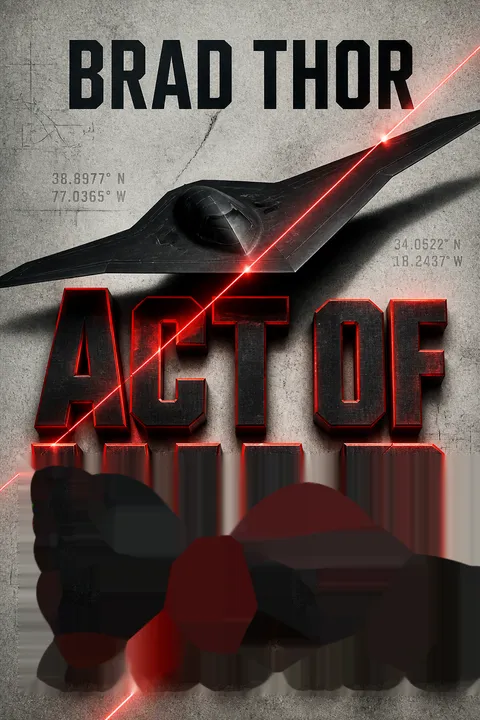


Plot Summary
Prologue
A week before the crisis reaches Washington, CIA operative Ken Harmon meets Mingxia, a Chinese DJ recruited by the dead agent David Cahill. She has returned after vanishing and brings evidence of a planned attack called Snow Dragon. Using intelligence glasses Cahill left her, Harmon studies what she has gathered and learns that the name evokes a creature associated with darkness and death.
Mingxia cannot yet explain the attack's timing or mechanics, but her information is credible enough to alarm Langley. The CIA has sent Harmon because he stays calm under pressure, and the meeting turns a missing asset's warning into an urgent national security problem.
The opening turns espionage into an act of interpretation. Harmon does not receive a neat plan, only fragments passed through a frightened intermediary and a dead agent's network. The glasses make intelligence feel both intimate and precarious: information can be shared in public, yet erased if the meeting goes wrong. Mingxia's return also complicates the familiar spy logic of trust. Her disappearance could mean coercion, betrayal, or survival, and the Agency must act before it can know which. Snow Dragon arrives first as an image, then as a threat, giving the plot a name whose mythic scale contrasts with the small, careful transactions that reveal it.
The Snow Dragon Briefing
In the White House Situation Room, CIA analyst Stephanie Esposito explains that China's doctrine of unrestricted warfare favors attacks that hide behind criminal or terrorist proxies.
Intelligence from Hong Kong suggests Snow Dragon could kill most Americans within a year, while a specially trained Chinese force waits in North Korea to exploit the aftermath. President Paul Porter authorizes two investigations without publicly accusing Beijing: a private operation to seize Al Qaeda fixer Ahmad Yaqub, and a Navy SEAL reconnaissance mission into North Korea.
The President also asks Treasury Secretary Dennis Fleming to investigate a separate economic clue in secret. His team now has three urgent tasks, but none yet knows whether the warning describes a real Chinese operation or a trap.
The briefing makes uncertainty the engine of action. Porter cannot wait for proof, but any visible response could expose suspicion and provoke the very conflict he hopes to prevent. The two missions embody different ways of knowing: Harvath's team will extract testimony from a suspected facilitator, while the SEALs will observe a hidden training site. Fleming's quiet assignment widens the frame from immediate violence to the structures that might make an attack profitable. The President's choice is therefore not simply military or diplomatic. It is a decision to risk covert force while preserving enough ambiguity to keep an adversary from learning what America knows.
Yaqub Taken in Karachi
Scot Harvath, a former SEAL now working for private intelligence chief Reed Carlton, tracks Yaqub through Karachi with Delta veteran Chase Palmer and sniper Sloane Ashby. Their Kurdish partners are ambushed when a truck slams into their car, forcing Harvath's team to intervene in a street firefight.
The partners escape, but the attack alerts Pakistan's intelligence service and sends Yaqub's motorcade deeper into the city. Harvath anticipates its route, uses local Pakistani assets to immobilize the vehicles, and takes Yaqub alive after killing his armed guards. He then smuggles the prisoner to a submarine offshore. The capture preserves a lead on Snow Dragon, but Yaqub knows only part of the scheme.
Harvath's competence is measured less by flawless planning than by his ability to keep a failed plan from becoming a fatal one. The ambush destroys the original arrangement and compromises the Kurdish partners, yet he changes routes and uses local assets rather than abandoning the target. His ruthlessness is present from the outset, but so is operational discipline: Yaqub must be captured alive because information matters more than revenge. The episode also establishes the novel's recurring tension between public authority and private action. Harvath works under presidential direction while relying on deniable contractors, a structure that gives the state reach but blurs who will answer for its methods.
A Child Finds the SEALs
On the North Korean coast, Lieutenant Jimi Fordyce leads two SEALs and CIA officer Billy Tang inland to watch a concealed valley where Chinese forces are reportedly training. Tang has built a covert network there, and his smuggler contact Hyun Su drives the team toward its mountain hide. Before dawn, an eleven-year-old prisoner named Jin-Sang wanders close while checking rabbit snares.
He steps on Fordyce, panics, and breaks his leg as he runs. The team now faces exposure: daylight is near, the boy knows their hiding place, and his return could draw guards to them. Fordyce considers silencing him, but Tang refuses and learns that Jin-Sang may know why the Chinese are in the valley.
Jin-Sang's arrival converts reconnaissance into an ethical crisis without making the danger abstract. The boy is not an enemy combatant, yet his presence could expose four Americans in a country where capture would have devastating consequences. Fordyce treats the mission's objective as the team's governing obligation; Tang sees a child whose survival has already been shaped by state violence. Their disagreement reveals two forms of responsibility, one tied to command and collective survival, the other to refusing the logic that makes vulnerable people expendable. The broken leg binds them to a consequence they cannot simply observe from a distance. From this point, the mission's intelligence and its human cost are inseparable.
The Box in Dubai
After Yaqub identifies recruiter Khuram Hanjour, Harvath follows the trail to Dubai with CIA officer Anne Levy. They lure Hanjour to a hotel room by exploiting his secret meetings with Yaqub's money broker, then stun him and smuggle him out inside a wheeled case. Hanjour's claustrophobia helps Harvath control the interrogation.
He confirms that Yaqub paid him to recruit six engineering students from the Emirati city of Al Ain and arrange their entry into the United States. Their visas came through a NASA summer program intended as outreach to Muslim students. Hanjour claims not to know what they will do. His records, however, may identify the students and reveal the path by which they entered America.
The capture exposes a weakness that is institutional rather than technological: an ordinary public program can be repurposed as cover because its administrators do not imagine themselves inside a covert operation. Hanjour's private appetites provide the intelligence service with leverage, while his fear of confinement gives Harvath a means to compel answers. Both mechanisms reduce a person to a vulnerability, which reflects the novel's hard-edged view of tradecraft. Yet Hanjour's limited knowledge prevents interrogation from becoming an easy solution. The plot shifts from finding one terrorist facilitator to locating six dispersed young men, and the apparent legitimacy of their travel makes the search more difficult than a border breach.
China Sends Its Cleaner
In Beijing, Colonel Jiang Shi learns that a Somali member of the operation has disappeared and may have been compromised. The Politburo's leaders still want Snow Dragon preserved, but they also want their children, studying in American universities, removed before the crisis.
Shi sends Tai Cheng, a highly capable operative familiar with the United States, to assess the missing cell and retrieve the five students. Cheng is emotionally adrift after discovering that a Communist Party official blackmailed his wife; he killed the official and has since withdrawn from duty.
Shi nevertheless trusts Cheng's tradecraft and gives him room to act. Cheng enters America under the identity Bao Deng, carrying instructions that may require him to protect the operation by eliminating anyone who threatens it.
Cheng arrives as both a state instrument and a damaged person. His private grief has made him unreliable by the standards of his own service, but Shi sees precisely the qualities that make him useful: patience, adaptability, and a capacity for violence that does not require ideological enthusiasm. The Politburo's demand to save its children exposes the hierarchy beneath its public rhetoric. Leaders who accept mass sacrifice for the nation draw a private boundary around their own families. Cheng is tasked with serving that contradiction, and his assignment joins two plots that otherwise seem separate: the American search for the cells and China's effort to preserve its ruling class.
The Debt Has Collateral
While Harvath returns from Dubai, Fleming presents Porter's secret inquiry to the national security team. He has found evidence that a previous administration backed loans from China with concessions involving American oil, gas, minerals, farmland, water, ports, and other resources.
A Treasury whistleblower was pressured into silence, and the records are still being traced. If a catastrophic attack crippled the United States, China could argue that the collateral remained enforceable even when the government could no longer function.
Meanwhile, the FBI identifies Tommy Wong, a Los Angeles triad member, in footage of someone buying the six students' phones. A Chinese traveler using the identity Bao Deng has also entered the country, suggesting a professional has come to repair a failing operation.
The debt revelation reframes the threat from a mass-casualty plot into an attempted transfer of sovereignty. Violence is not an end in itself; it could clear the ground for a legal and economic claim already hidden inside government transactions. That possibility makes the financial subplot structurally central, not decorative. It also exposes the limits of democratic oversight when officials suppress a whistleblower and negotiate away public assets beyond public view. The concurrent identification of Wong and Bao Deng gives the investigators two different kinds of evidence: one captured by a camera, the other inferred from suspicious movement. The plot's scale grows because the state's own records may be part of the weapon.
Farms Built for Ruin
Tang questions Jin-Sang and learns that the Chinese are building farms and a mock American town inside the valley. Prisoners are made to attack the farms, while Chinese trainees practice defending them with rubber bullets. Jin-Sang's sister Hana, a role-player who speaks English and Chinese, may know more.
Against Fordyce's orders, Tang slips into the labor camp to reach her. She is gravely ill with tuberculosis, but confirms that the Chinese are preparing for life in American farms and villages after an attack.
A wounded Chinese officer arrives, believing Tang is medical staff. While treating him, Tang draws out that North Korea's supposedly modest nuclear tests were designed to conceal an unconventional electromagnetic weapon. He kills the officer and escapes, but Hana dies before he can leave.
The valley's pastoral appearance conceals a rehearsal for social collapse. Farming is not simply a survival skill; it is part of a plan to occupy a country whose institutions and infrastructure have been disabled. Hana's knowledge comes from being forced to perform a role for the very people preparing the attack, an especially stark example of knowledge extracted from the powerless. Tang's choice to enter the camp is both a breach of command and a moral response to the children's captivity. His success costs Hana her remaining time and places the team at greater risk. The revelation about the electromagnetic weapon transforms the threat from an unknown catastrophe into a targetable mechanism.
Nashville Burns Its Evidence
In Nashville, police arrest Somali operative Wazir Ibrahim after his wife reports domestic violence. Cheng reaches the city to find Wazir in custody, pays his bail through a local taxi driver, and questions him at home.
Wazir admits that he suspects the cell's canisters contain an electromagnetic weapon. Cheng garrotes him during prayer, then tracks down the Emirati engineer Mirsab, who has guessed the devices' purpose, and shoots him. A police officer investigating Cheng's storage unit surprises him; Cheng kills the officer, rigs the patrol car, and escapes as the facility explodes.
Harvath and FBI agent Dennis Urda arrive amid the fire and discover the dead officer and wreckage. The destroyed unit leaves them with a murder investigation and a vanishing suspect.
Cheng's efficiency makes violence seem almost administrative: he removes a compromised partner, silences a student, and destroys a cache rather than allowing uncertainty to spread. Yet the episode also reveals the fragility of a network built on compartmentalization. Wazir knows little, but one student's inference is enough to trigger a chain of lethal decisions. Harvath and Urda encounter the result only after the evidence has been transformed into smoke and debris, so the investigation must reconstruct motive from traces. The scene mirrors the larger plot: systems are designed to leave no obvious point of failure, but each human being remains capable of noticing what the plan's designers hoped would go unseen.
The Balloons Carry EMP
Harvath pieces together the six cells from phone records, Facebook logins, and the Nashville explosion. FBI teams raid storage units in Las Vegas, Dallas, and Des Moines while the NSA loops the camera feeds to conceal the entries.
Inside, agents find hydrogen cylinders, weather balloons, lead-shielded cases, and equipment consistent with EMP weapons. Harvath realizes the danger is not a conventional bomb but a coordinated strike meant to disable electricity and the systems that keep food, water, transport, and emergency services moving.
Investigators trace a forged driver's-license copy to a Boise print shop and identify Ren Ho, a Chinese-born American citizen living in Idaho. Ho's ranch becomes the next target, as the team races to learn whether the six devices are the entire plan.
The discovery depends on combining scraps that appear trivial in isolation: a social media login, a copied license, a storage contract, and a cylinder hidden in a box. The novel presents intelligence work as pattern recognition under time pressure, but the pattern is only useful when investigators resist premature certainty. The EMP threat is terrifying because it attacks dependencies rather than people directly. A failed grid would make ordinary needs lethal, turning infrastructure into an invisible civilian battlefield. The raids also force the investigators to act without knowing whether they have found every weapon. Their victory is therefore provisional: identifying the mechanism answers one question while enlarging the uncertainty about scale and timing.
Daiyu Slips the Net
As the FBI watches five children of Politburo leaders in American universities, Cheng reaches Boston's Chinatown to gather them for evacuation. Four follow their escape procedures, but Daiyu Jinping ignores them, carries her phone, and draws an FBI tail.
Cheng takes her phone, changes her clothes, and uses a hotel fire alarm to blur her escape among evacuating guests. An FBI agent catches sight of them outside and calls Cheng by his Bao Deng identity.
Cheng shoots him and flees with Daiyu, while the other princelings disappear from their surveillance teams. The killing confirms that the Chinese operation is no longer merely protecting assets. Cheng is moving people and a concealed device toward a rendezvous in Florida, and the clock is closing in.
Daiyu's carelessness is not a minor character flaw; it forces Cheng to reveal the violence beneath his careful cover. Her escape shows how discipline can fail at its most ordinary point, a phone kept close because a privileged young woman assumes the rules are optional. Cheng's response is effective but costly: the FBI now has a dead agent, a named suspect, and a reason to widen its pursuit. The fire alarm turns a public building into camouflage, making collective panic a tactical resource. This sequence also gives the princelings a human dimension without making them innocent symbols. They are privileged, frightened, and trained to survive, yet their choices affect everyone around them.
Ho Opens the Network
Harvath and his team bait Ho out of his Idaho ranch by appearing to need help for an injured dog, then stun and capture him. The FBI and a nuclear search team clear the buildings while Harvath uses photographs of Ho's son to make cooperation consequential.
Ho confirms that he is the handler, identifies the six cities and the recruits, and explains how the students were paired with Somali operatives. He provides records, device details, and the name of the Chinese unit supporting the operation.
His information also clarifies Cheng's role and helps Harvath anticipate the princelings' evacuation route. Harvath accepts Ho's offer to cooperate in exchange for protecting his son, turning a captured enemy into the source needed to coordinate the response.
Ho's surrender is organized around a contradiction: he has spent years hiding his identity, yet his attachment to his son makes him legible to Harvath. The interrogation is not simply a contest of intelligence. It is an encounter between two men who understand that family can override institutional loyalty. Harvath's threat is coercive, but he also promises protection and binds himself to that promise. Ho's cooperation changes the investigation from scattered inference to an operational map, showing how trust can be extracted but also how it can redirect violence. The scene moves the story toward resolution while refusing to present the state as morally clean.
Jin-Sang Leaves the Camp
After Tang obtains Hana's information, the SEAL team abandons its planned withdrawal to bring Jin-Sang with them. A storm makes the coastal extraction dangerous, and the boy's broken leg prevents a fast march, but Fordyce refuses to split the team. Hyun Su's original truck breaks down, so he returns with a stolen replacement.
At a North Korean checkpoint, Tang tries to bribe six officers with whiskey, cigarettes, and money. When the officers insist on inspecting the cargo, the SEALs erupt from hiding and kill them before the team drives on. Fordyce and Johnson swim to the waiting minisub, then return by inflatable boat to collect Tang, Tucker, and Jin-Sang. All four Americans and the boy reach extraction.
The escape tests whether the team can honor its stated values when doing so makes the mission harder. Tang's insistence on saving Jin-Sang risks the reconnaissance objective, while Fordyce's eventual commitment accepts danger he had initially tried to prevent. The checkpoint then forces the team to choose between concealment and survival; the bribery fails, and violence becomes the only available exit. Jin-Sang's rescue is not a clean victory. His sister is dead, and the team has killed six officers to get him out. The emotional resolution comes instead from keeping one child alive and refusing to let operational necessity erase the person who first exposed the mission's moral stakes.
A Shark Tank Deception
Using Ho's intelligence, Harvath's team locates Cheng's route to the Florida Keys, where he is taking the princelings toward Cuba aboard a fishing yacht. Harvath, Sloane, and Chase pose as the crew and stage a fake kidnapping, using a disguised corpse and a blank shotgun blast to convince the students that their escort has been murdered.
The real crew is subdued, and Cheng is captured before he can deliver the concealed EMP device. A Coast Guard team takes the yacht and its passengers, while the device is secured separately. Ho's cooperation has given investigators the cells and weapons; the ruse now removes the operative who could still connect those pieces to the Chinese command structure.
The operation turns deception into a counterweapon. Harvath borrows Cheng's own habits of concealment, using a staged death to manipulate the princelings and buy control of the boat. The spectacle is deliberately cruel, particularly for young passengers who believe they are witnessing a real corpse, but it avoids a direct confrontation that might destroy the device or cost lives. The scene is a contest over who controls the story as much as who controls the vessel. Cheng has spent the novel shaping appearances to protect the operation; Harvath defeats him by making a false narrative more convincing than the truth, then taking the physical object that could have made the threat real.
The Dragon Is Silenced
Two weeks later, Cheng, Yaqub, and Hanjour are in U.S. custody, and the rescued North Korean boy is part of the evidence that helped expose the plot. Porter builds an international case that China's attack attempt voids its claims on American resources; allied governments support him, and the Chinese are forced to release the debt collateral.
The United States also compels North Korea to accept inspectors and other concessions for helping develop the weapon and host the training. Harvath then travels to a Chinese mountain retreat under the cover of an official visit. He leaves Colonel Shi a carved snow dragon and a warning that America will not submit, then garrotes the architect of Snow Dragon. Harvath reports the operation finished.
The ending resolves the immediate threat through both public policy and private violence. Porter uses the exposed conspiracy to reclaim the nation's economic independence, while Harvath ensures that the operation's architect cannot design another version of it. These resolutions are deliberately asymmetrical: diplomacy restores institutional authority, but the final killing remains outside the procedures that give that authority legitimacy. The snow dragon changes from a codename into a physical message, a symbol Shi believed he could command and Harvath turns against him. The novel closes on certainty after a story built from incomplete intelligence, though the certainty is purchased through methods that leave the ethical question of who may act, and under what limits, unresolved.
Analysis
Act of War builds its thriller around a threat that attacks the conditions of ordinary life rather than a single landmark. The EMP plan matters because its consequences would travel through dependencies: power supports water treatment, refrigeration, communications, transport, and medical care. Snow Dragon therefore imagines catastrophe as a systems failure, one in which people can be endangered without a conventional battlefield ever appearing.
The story's political argument links physical security to economic sovereignty. Fleming's discovery that American resources were pledged as collateral turns the attack into an attempt to make force and contract reinforce one another. The conspiracy is not only foreign. It exploits domestic secrecy, a compromised outreach program, weak visa oversight, and political decisions made without public consent. The threat becomes persuasive within the novel because the institutions charged with protection are shown as vulnerable to both malice and self-interest. Harvath and Tang embody competing but overlapping forms of duty. Harvath trusts decisive action and sees himself as a protector, yet his methods repeatedly strain legal and ethical limits. Tang is equally capable of violence, but his attention to Jin-Sang and Hana insists that civilians cannot be reduced to mission variables. Their approaches do not cancel each other. The plot depends on Harvath's operational speed and Tang's human access, while their disagreements expose what each method overlooks.
The ending offers two kinds of closure. Porter uses the evidence to reclaim national leverage through diplomacy, while Harvath delivers private retribution to Shi. That pairing is dramatically satisfying but morally unstable. The novel celebrates institutional resilience while allowing its hero to act beyond institutional restraint. Its deepest question is not simply whether a country can defend itself, but whether survival can be secured without becoming indistinguishable from the forces it opposes.
Review Summary
Act of War receives mixed reviews, with an average rating of 4.19/5. Many praise Thor's research and thrilling plot, focusing on a Chinese threat to America. Some enjoy the fast-paced action and plausible scenarios. However, critics note repetitive themes, underdeveloped characters, and rushed endings. Several readers find Thor's political views too overt, detracting from the story. Despite criticisms, fans appreciate the complex plot and Scot Harvath's return, though some feel the character lacks depth compared to earlier books.
People Also Read




Characters
Scot Harvath
The deniable field operatorA former Navy SEAL and Secret Service agent, Harvath now works for Reed Carlton's private intelligence group and is trusted with missions the government cannot publicly own. He is physically formidable, observant, and impatient with bureaucracy, but his self-image is built around protecting people who cannot protect themselves. A childhood shaped by his SEAL father and his own demanding career has taught him to equate responsibility with action. He fears failing his team and country, yet understands that his work makes an ordinary family life difficult. His relationships with Sloane and Chase combine mentorship with mutual respect, while his developing attachment to Lara and her son reveals the quieter life he hopes might still be possible.
Billy Tang
The Korean-speaking infiltratorA CIA operative of Korean heritage, Tang speaks the language fluently and has entered North Korea repeatedly by cultivating a network of citizens who depend on his help. He supplies medicine and practical goods as well as money, building trust through favors rather than ideology. Tang is both a skilled intelligence officer and a father who cannot easily separate a vulnerable child from his own children at home. That empathy can put an operation at risk, but it also gives him access to people whom a more detached agent would never reach. He respects the SEALs' toughness while resisting their tendency to treat human costs as unavoidable. His central strength is the ability to understand what ordinary people need in a system designed to deny them choices.
Tai Cheng
China's patient operativeTai Cheng is a deep-cover Chinese intelligence officer whose American identity is Bao Deng. He is disciplined, physically capable, and skilled at moving through other people's assumptions about him. Cheng's professional life depends on patience and close observation, qualities he also brings to his marriage, though his need to understand his wife leads him to violate her privacy. He has a strong personal code about protecting family and punishing exploitation, but the code sits uneasily beside his willingness to serve a plan that treats millions as expendable. His emotional isolation makes him dangerous: he can feel loyalty and grief, yet translate both into controlled action rather than intimacy.
Colonel Jiang Shi
The architect of Snow DragonShi leads the People's Liberation Army's unrestricted warfare program and believes China must act before its environmental and economic crises leave it powerless. Strategic and skeptical of politicians, he sees unconventional attacks as a rational answer to America's conventional advantage. His confidence in analysis does not erase his capacity for self-deception: he assumes that deniable proxies and carefully managed timing can keep the state insulated from consequences. Shi is a planner who prizes control, yet must depend on operatives such as Cheng and on political leaders whose private interests alter his designs. His conflict is between strategic foresight and the human and political variables no plan can fully contain.
Paul Porter
The decisive presidentThe new American President is an affable former governor who values plain speech and believes national leadership requires acting before danger becomes undeniable. He listens to competing advisers, but resists delay when uncertainty itself carries risk. Porter's concern for American liberty informs his choices, while the scale of Snow Dragon tests whether conviction can coexist with restraint. He must balance diplomacy, covert action, and the economic consequences of a concealed debt arrangement.
Ren Ho
The hidden cell handlerA Chinese-born naturalized American, Ho lives quietly on an Idaho ranch while coordinating the six Snow Dragon cells. His cover as a business intermediary lets him work across borders without attracting attention. He is methodical and deeply attached to his son, a private bond that complicates his loyalty to the Chinese operation. Ho's domestic life, tastes, and careful routines make him more than a faceless handler, while his secrecy shows how long-term espionage can hide inside ordinary citizenship.
Jimi Fordyce
The SEAL team leaderFordyce leads the North Korea reconnaissance team with a commander's insistence on discipline, timing, and the safety of his people. He initially resents replacing a SEAL with CIA officer Billy Tang, but recognizes that Tang's language and local relationships may be essential. Fordyce's strongest instinct is to keep the mission bounded, especially when an unexpected child threatens to expose the team. His leadership is tested when responsibility for success collides with responsibility for the lives in front of him.
Lester Johnson
The irreverent SEALA highly capable SEAL with a rebellious past, Johnson brings blunt humor and hard-won discipline to Fordyce's team. His childhood course correction came through a police chief and a Navy recruiter, and he has turned earlier recklessness into an appetite for demanding work. Johnson distrusts Tang at first and speaks sharply when the mission seems endangered, but he is loyal to the team and alert to practical solutions.
Eric Tucker
The team's combat medicTucker is the youngest SEAL on the reconnaissance team and serves as its corpsman. His medical training gives him a practical response to injury and illness, even when treatment complicates a covert mission. He is prepared to follow Fordyce's commands, but his concern for Jin-Sang and Hana makes the cost of those commands visible. Tucker's steadiness links tactical competence to care for the wounded.
Sloane Ashby
The fearless Delta operatorAshby is an elite soldier whose extraordinary record has made her a target for the Taliban and Al Qaeda. Removed from combat and assigned to train an all-female Delta unit, she misses fieldwork and joins Carlton's group to return to it. She is sharp, funny, and comfortable challenging authority, traits that match Harvath's own temperament. Her confidence is backed by precise judgment rather than bravado, and she earns her place through skill.
Chase Palmer
The gifted Delta veteranPalmer became one of the youngest soldiers admitted to Delta Force and has already accumulated more operational experience than many older soldiers. Smart, aggressive, and quick to act, he resembles Harvath enough to be mistaken for his brother. A clash with a powerful general threatened his military future, but Reed Carlton offered him a new path into private operations. Chase is ambitious without losing his humor, and he values difficult work over institutional status.
Jin-Sang
The camp-born survivorJin-Sang is an undernourished boy born inside a North Korean labor camp, where his father and mother died. He survives by trapping rabbits and bargaining with guards, but his strongest attachment is to his older sister, Hana. His knowledge of the camp and the Chinese training gives the Americans a path to information they could not otherwise obtain. Jin-Sang's loyalty to his sister is not an abstract virtue; it shapes where he goes and what risks he takes.
Hana
The dying camp witnessJin-Sang's older sister, Hana has been imprisoned since childhood and is now gravely ill. Their father taught her English and Chinese, skills later used when she was made to act in the Chinese training exercises. She is a fragile but crucial witness whose knowledge comes from surviving a system that treats prisoners as expendable.
Ahmad Yaqub
The Al Qaeda facilitatorA Saudi militant based in Pakistan's Waziristan region, Yaqub funds and coordinates attacks through local networks. His past includes helping arrange the assassination of Pakistani politician Benazir Bhutto. He is useful to Snow Dragon because he can recruit men without needing to know the larger sponsor or plan. His survival instinct becomes a vulnerability when Harvath presses him for information.
Khuram Hanjour
The discreet recruiterHanjour is an experienced recruiter who has worked across criminal and extremist networks. He is meticulous about records and comfortable using financial intermediaries, but he keeps his role narrow and claims not to know the full purpose of the operation. His private life creates leverage for Harvath, while his recruitment work connects the Pakistani fixer to the six Emirati engineers.
Reed Carlton
Harvath's private spymasterCarlton is a former CIA officer who founded a private intelligence group with extensive human networks in Afghanistan and Pakistan. He recruited Harvath and sharpened the former SEAL's tradecraft, then brings him into operations requiring deniability. Carlton can be demanding and inclined to critique decisions after the fact, but he understands Harvath's strengths and trusts him with high-stakes work.
Stephanie Esposito
The China intelligence analystEsposito is the CIA's senior China analyst and a careful student of the military doctrine behind Snow Dragon. Her explanation of unrestricted warfare gives the White House a framework for understanding proxy attacks and plausible deniability. She is nervous when first briefing the President, but insists on presenting the strategic context others might prefer to skip.
Anne Levy
The Dubai case officerA CIA case officer with years of experience across the Middle East, Levy combines language ability with practical local knowledge. She helps Harvath identify Hanjour's habits, build the hotel trap, and avoid drawing the Emirati authorities into the operation. Her willingness to question plans makes her a useful partner rather than a passive support figure.
Nicholas
The intelligence hackerKnown to adversaries as the Troll, Nicholas is a gifted computer specialist with a brutal childhood and a history of selling or stealing intelligence. He now works with Carlton's group, applying his skills to problems that serve a larger purpose. His diminutive stature contrasts with his formidable mind and the enormous guard dogs he keeps close. Nicholas thrives on patterns, data, and leverage.
Mingxia
The returning CIA assetA Shanghai DJ whose parties bring her close to China's wealthy and powerful, Mingxia was recruited by CIA agent David Cahill. After disappearing following Cahill's death, she resurfaces with intelligence about Snow Dragon. Her access comes from social fluency and careful observation, but her uncertain circumstances make the Agency question whether she can be trusted.
Wazir Ibrahim
The compromised Somali cell memberA Somali refugee living in Nashville, Ibrahim is recruited as muscle for one of Snow Dragon's cells. He is controlling toward his wife and has connections to a local child-sex network. His arrest for domestic violence draws police attention at the worst possible time, making him a liability to the larger operation.
General Yi Ming Wu
Shi's political superiorWu directs the PLA's Second Department and mediates between Shi and the Politburo. He understands the risks of the operation but ultimately conveys the leadership's shifting orders, including the demand to protect its children in America. His cigarette-heavy presence and pragmatic manner contrast with Shi's more strategic self-image.
Plot Devices
Snow Dragon
The concealed master planSnow Dragon is the code name for China's effort to cripple the United States through attacks disguised as terrorism. Its designers rely on proxies, false trails, and dispersed cells so that no conventional invasion force or single command structure points back to Beijing. The name begins as an unexplained phrase in Mingxia's intelligence and gradually gathers meaning as the investigators connect recruiters, engineers, Somalis, storage units, and North Korean training. It gives the novel a single organizing threat while allowing the operation to remain only partially understood until the separate clues converge.
Unrestricted warfare
A doctrine without boundariesThe Chinese strategy rejects a fair fight on a conventional battlefield and instead treats economic pressure, cyberattacks, proxies, deception, and covert violence as parts of one campaign. The doctrine explains why American investigators find no obvious troop buildup and why terrorism appears to be the public face of the plot. It also shapes the novel's moral argument: the United States must decide how far it can go to prevent an attack without surrendering the principles it claims to defend.
Balloon-borne EMP devices
The grid becomes the targetHydrogen cylinders, weather balloons, and shielded cases are distributed among storage facilities in several American cities. Together, the equipment points to a plan to deploy electromagnetic weapons across the country. Their threat is not confined to the blast itself; disabling the power grid would disrupt water, food distribution, communications, hospitals, and emergency response. The dispersed caches force investigators to find several locations at once, while the balloons offer a way to bypass ordinary security. The device's full purpose is revealed only after physical evidence and intelligence from North Korea are combined.
Cutouts and false identities
The trail points sidewaysSnow Dragon is insulated by layers of recruiters, money brokers, criminal organizations, aliases, and private intermediaries. Hanjour recruits engineers, Wong buys phones, Ho coordinates cells, and Cheng enters the country as Bao Deng. Each person knows only a fraction of the plan, which delays the investigation and makes every arrest an incomplete victory. The chain also lets the Chinese exploit legitimate systems, including visas, airport procedures, and storage rentals. Its weakness is that the layers leave small administrative traces that can be linked when investigators compare them across cities.
Digital and paper breadcrumbs
Small traces map the cellsThe investigators use Facebook access locations, phone purchase footage, storage records, CCTV, and a photocopied driver's license to locate a network designed to stay invisible. None of these clues is decisive by itself. Harvath recognizes that the students may keep checking their accounts even if they stop posting, while Nicholas and the NSA turn scattered records into a map. A poor copy on a rental form eventually leads back to the machine used to create several fake identities. The device makes surveillance reciprocal: systems the plot uses for concealment also preserve evidence of its passage.
FAQ
Synopsis & Basic Details
What is Act of War about?
- Imminent Threat to America: Act of War centers on a clandestine Chinese operation, codenamed Snow Dragon, designed to cripple the United States through unconventional means.
- Race Against Time: The story follows various characters, including CIA operatives and Navy SEALs, as they race against time to uncover and thwart the impending attack.
- Complex Global Intrigue: The narrative weaves together elements of espionage, military action, and political maneuvering, highlighting the complex geopolitical landscape.
Why should I read Act of War?
- High-Octane Thriller: The book offers a fast-paced, action-packed narrative with plenty of suspense and twists to keep readers engaged.
- Intricate Plot: The story delves into complex geopolitical themes, exploring the intricacies of international espionage and military strategy.
- Compelling Characters: The book features a diverse cast of characters, each with their own motivations and complexities, adding depth to the narrative.
What is the background of Act of War?
- Geopolitical Tensions: The story is set against a backdrop of rising tensions between the United States and China, exploring the potential for conflict in the modern world.
- Unconventional Warfare: The book delves into the concept of unrestricted warfare, a Chinese military doctrine that emphasizes unconventional tactics and asymmetric warfare.
- Global Espionage: The narrative spans multiple locations, including Hong Kong, North Korea, Pakistan, Dubai, and the United States, highlighting the global nature of espionage and counterterrorism operations.
What are the most memorable quotes in Act of War?
- "Let her sleep. For when the dragon wakes, she will shake the world.": This quote, attributed to Napoleon Bonaparte, foreshadows the immense power and potential destruction associated with the Snow Dragon operation.
- "The first rule of unrestricted warfare is that there are no rules.": This quote, attributed to Colonel Liang, encapsulates the ruthless and unconventional nature of China's military doctrine.
- "I'm the Angel of Death, and I'm taking you back to hell where you belong.": This quote, spoken by Scot Harvath to Ahmad Yaqub, highlights the character's relentless pursuit of justice and his willingness to use extreme measures against terrorists.
What writing style, narrative choices, and literary techniques does Brad Thor use?
- Fast-Paced and Action-Oriented: Thor employs a rapid, action-driven style, using short sentences and quick scene transitions to maintain a sense of urgency.
- Multiple Perspectives: The narrative shifts between various characters' viewpoints, providing a comprehensive understanding of the complex plot and the motivations of different players.
- Foreshadowing and Suspense: Thor uses subtle hints and foreshadowing to build suspense, keeping readers guessing about the true nature of the threat and the characters' fates.
Hidden Details & Subtle Connections
What are some minor details that add significant meaning?
- The Heart Origami: Ken Harmon's use of a heart-shaped origami instead of the usual swan when meeting female assets subtly reveals his unique approach and attention to detail.
- The Significance of "Xuĕ Lóng": The Chinese codename for the operation, meaning "snow dragon," foreshadows the cold, dark, and deadly nature of the attack.
- The Magnificient Seven: Harvath's reflection on the movie and his father's love for it reveals his personal code and his view of himself as a protector.
What are some subtle foreshadowing and callbacks?
- The mention of the "doubles program": The discussion of the Chinese "doubles program" foreshadows the later use of a similar tactic by Tai Cheng to evade capture.
- The emphasis on the importance of timing: The repeated discussions about the timing of the attack, initially set for September 11th and then moved to Chinese New Year, foreshadows the significance of the date in the plot.
- The description of the Otanashi noh Ken: The detailed description of Billy Tang's knife foreshadows its use in a later, critical scene.
What are some unexpected character connections?
- The link between Khuram Hanjour and Najam Fahad: The connection between the recruiter and the Hawaladar through the Grindr app reveals a hidden layer of their relationship and their shared proclivities.
- The connection between Wazir Ibrahim and the child sex ring: The revelation of Ibrahim's involvement in a child sex ring adds a layer of complexity to his character and his motivations.
- The connection between the NASA internship and the terrorists: The use of a NASA internship program to facilitate the entry of terrorists into the U.S. highlights the vulnerability of seemingly benign programs.
Who are the most significant supporting characters?
- Anne Reilly-Levy: As a CIA case officer, she provides crucial support to Harvath in Dubai, showcasing her expertise in the region and her ability to navigate complex situations.
- Hyun Su: The North Korean smuggler who assists Billy Tang, reveals the personal cost of the DPRK regime and the potential for resistance from within.
- Detective Hoffman: The Nashville PD detective who is initially investigating Wazir Ibrahim, becomes a key ally in uncovering the broader plot, highlighting the importance of local law enforcement in counterterrorism efforts.
Psychological, Emotional, & Relational Analysis
What are some unspoken motivations of the characters?
- Harvath's Fear of Failure: Harvath's relentless pursuit of justice is driven by a deep-seated fear of failing his team, his country, and himself.
- Cheng's Desire for Control: Tai Cheng's meticulous planning and ruthless actions are motivated by a need to control every aspect of the operation and to protect his own interests.
- Billy Tang's Empathy: Despite his professional demeanor, Billy Tang's actions are often driven by a deep sense of empathy for the victims of oppression, particularly children.
What psychological complexities do the characters exhibit?
- Harvath's Internal Conflict: Harvath struggles with the emotional toll of his work, balancing his desire for a normal life with his commitment to protecting his country.
- Cheng's Moral Ambiguity: Tai Cheng's actions reveal a complex character who is both ruthless and calculating, yet also capable of moments of introspection and self-doubt.
- Billy Tang's Moral Dilemma: Billy Tang grapples with the ethical implications of his work, particularly when it involves children, highlighting the psychological toll of covert operations.
What are the major emotional turning points?
- Harvath's encounter with the little boy in North Korea: This encounter forces Harvath to confront his own fears and the moral implications of his actions.
- Cheng's discovery of his wife's infidelity: This betrayal triggers a downward spiral for Cheng, leading to his ruthless actions and his eventual capture.
- Billy Tang's interaction with Jin-Sang: This interaction highlights Tang's empathy and his willingness to risk his own life to protect the innocent.
How do relationship dynamics evolve?
- Harvath and Sloane's Professional Partnership: Their relationship evolves from a purely professional partnership to one of mutual respect and understanding, with a hint of underlying attraction.
- Harvath and Carlton's Mentor-Mentee Bond: Their relationship is characterized by mutual respect and a shared commitment to national security, but also by a subtle tension stemming from their different approaches.
- Tang and Hyun Su's Uneasy Alliance: Their relationship evolves from a purely transactional one to one of mutual respect and understanding, highlighting the potential for unlikely alliances in the face of adversity.
Interpretation & Debate
Which parts of the story remain ambiguous or open-ended?
- The full extent of China's plan: While the main attack is thwarted, the full scope of China's long-term strategy and their ultimate goals remain unclear.
- The fate of the other cell members: The story focuses on the Nashville cell, but the fates of the other cell members and their handlers are left somewhat ambiguous.
- The long-term consequences of the EMP attack: The story does not fully explore the long-term consequences of the EMP attack, leaving the reader to imagine the potential for societal collapse and the challenges of rebuilding.
What are some debatable, controversial scenes or moments in Act of War?
- Harvath's torture of Ahmad Yaqub: The scene where Harvath tortures Yaqub raises ethical questions about the use of extreme interrogation techniques.
- The decision to use a child as bait: The decision to use Jin-Sang to gather intelligence raises questions about the moral implications of using children in covert operations.
- The killing of the police officer by Cheng: The scene where Cheng kills the police officer highlights the ruthless nature of espionage and the moral compromises that are often made in the name of national security.
Act of War Ending Explained: How It Ends & What It Means
- The Thwarting of the EMP Attack: The main plot of the EMP attack is thwarted, but the underlying tensions and threats remain unresolved.
- The Capture of Key Players: The capture of key figures like Tai Cheng and Ren Ho provides valuable intelligence, but also highlights the ongoing nature of the conflict.
- The Nullification of Debt: The President's decision to nullify the debt to China is a bold move that has significant geopolitical implications, but the long-term consequences are left open to interpretation.
Scot Harvath Series





About the Author

Download PDF
Download EPUB
.epub digital book format is ideal for reading ebooks on phones, tablets, and e-readers.








